 Henna House tells the tale of the little-known world of the Jews of Yemen in the early 20th century, taking place largely during the tumultuous years of the 1920s and 1930s. As seen through the eyes of Adela Damari, whom we meet for the first time at age five, the Jewish community of the village of Qaraah is small and isolated, steeped in a tradition and a simple way of life that seems at odds with the modernity of the time period.
The Jewish community of Yemen at that time was by law an underclass, kept subservient and oppressed through a string of harsh restrictions and edicts, none more feared than the Orphan Decree. According to the Orphan Decree, an unmarried Jewish child left orphaned would be confiscated by local authorities, adopted by a Muslim family, and permanently removed from his or her relatives, community, and faith. Families lived in fear of confiscation, taking the preventive measure of betrothing children at birth so that hasty marriages could be enacted when needed.
Adela first enounters the Confiscator when she is five years old, and is terrified. This official routinely visits her father’s marketplace stall, observing her father’s illness, and practically counting the days until his death so that Adela can be taken. Despite having a very large family, Adela is at risk, as all of her potential betrothals have come to naught. One day, however, her young cousin Asaf comes to live in Qaraah, and the two children become fast friends — and more. Despite their young age, they form a deep bond, and it’s only natural that their betrothal is announced.
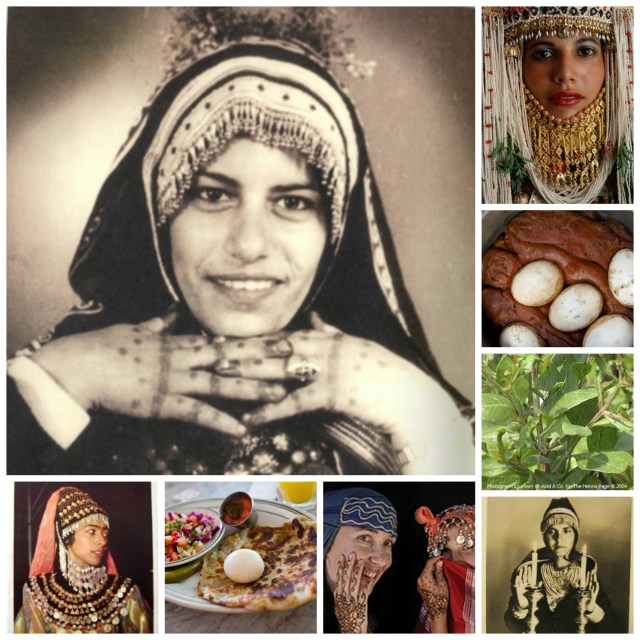
Other arrivals in Qaraah further change Adela’s life. Her uncle Barhun moves to the village with his wife Rahel, a skilled henna artist, and their daughter Hani, who quickly becomes Adela’s closest friend and confidante. Adela is introduced to the women’s henna rituals, in which symbols and patterns are painstakingly painted onto the skin to celebrate happy occasions, commemorate significant events, and represent a secret language full of mystical power and meaning.
That first night I was a novitiate. Soon, like the others, I would learn about the stars in the heavens by reading the astronomical tables they inscribed on my feet, shins, and fingers. Soon, I would grow to believe that I myself was an actual text, and that my skin without henna was like a holy book without words — a shameful, almost blasphemous, thing. Without henna, I wouldn’t know how to read myself. With henna, I was as sacred as a sanctified Torah. With henna, I was the carrier of ancient tales — a living girl-scroll replete with tales of sorrow, joy, and salvation.
The story of Henna House moves from the small mountain village of Adela’s birth to the city of Aden, through the anti-Jewish riots of the 1940s to the rescue of the Yemenite Jews by the newly declared nation of Israel. The story of Adela is at once large in scope, covering the significant events in the global Jewish community during the devastating years during and after the Holocaust, and at the same time, is a deeply personal tale.
Adela herself is a girl and then a young woman finding her way through an ever shifting series of homes and relations, experiencing both joy and love as well as terror and grief. She values the traditions of her people and the rituals of the henna house, yet also finds an inner strength that sees her through horrible loss and betrayals.
I was incredibly moved by this lovingly crafted story. The writing is often poetic, rich with tradition and symbolism, yet the pace never slackens or drags. The forward momentum of the story is engaging while also allowing the emotions of the characters room to breathe.
I was quite taken with the use of traditional rituals and foods to highlight the lives of the Jewish families, and found the depiction of their lives in Yemen completely fascinating.
Henna House is an intimate look at a time, a place, and a people, at a by-gone world with rich yet mysterious traditions. As historical fiction, it’s deeply affecting as well as informative and revealing. And as a novel, Henna House succeeds in telling a story full of love, wonder, loss, and excitement.
_________________________________________
I leave you with a collage of images (scavenged from Pinterest, thank you very much…) which bring to mind some of the people and food mentioned in Henna House.
_________________________________________
The details:
Title: Henna House
Author: Nomi Eve
Publisher: Scribner
Publication date: August 12, 2014
Length: 320 pages
Genre: Historical fiction
Source: Review copy courtesy of Scribner via NetGalley



 Title: The Gallery of Vanished Husbands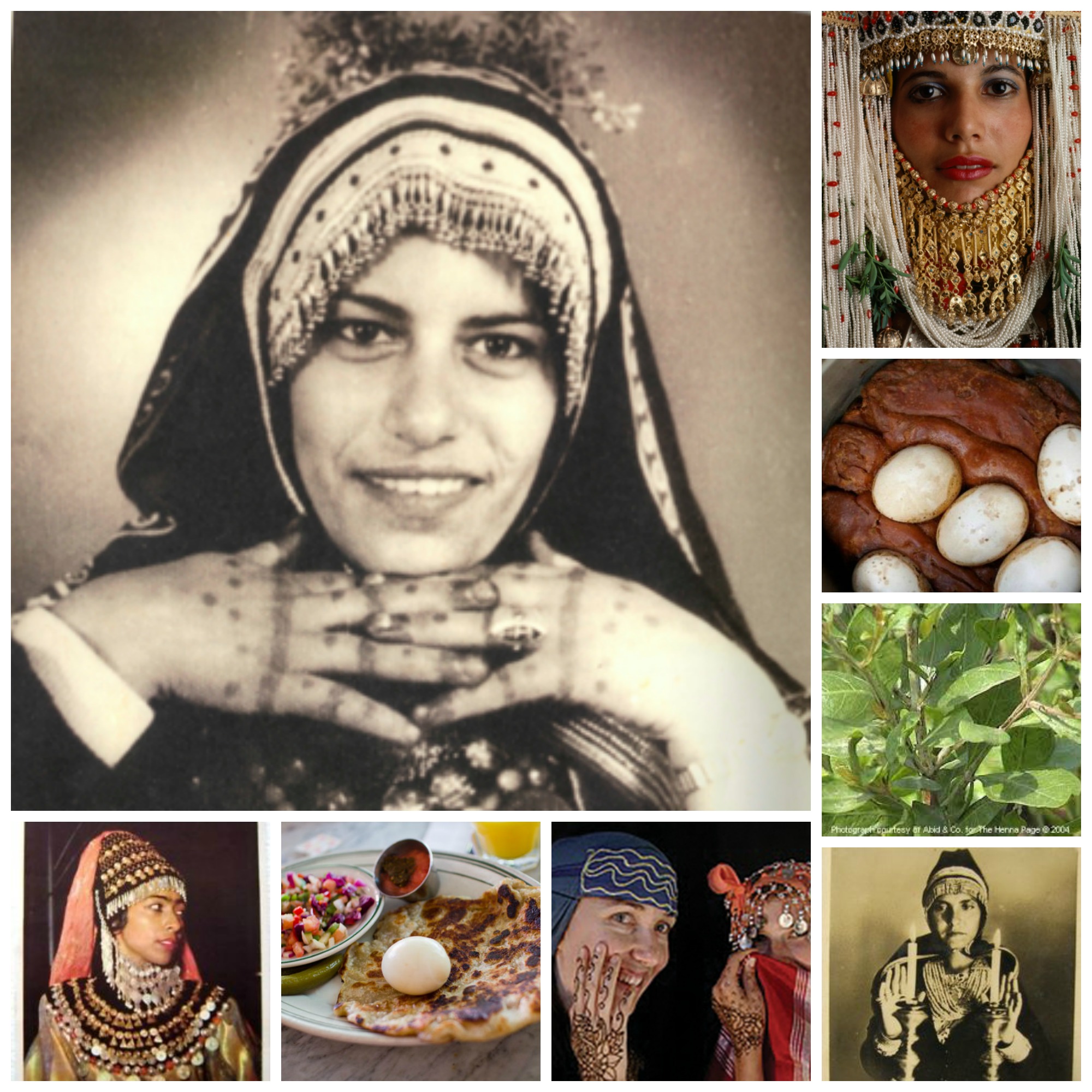
 Bookshelf Fantasies