
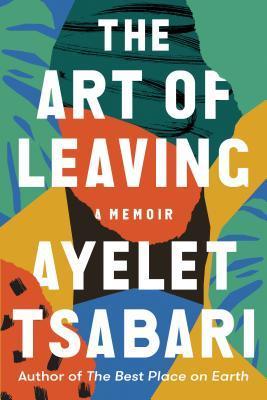
Book Review: The Art of Leaving: A Memoir by Ayelet Tsabari

Title: The Art of Leaving: A Memoir
Author: Ayelet Tsabari
Publisher: HarperCollins
Publication date: February 1, 2019
Length: 317 pages
Genre: Memoir
Source: Library
Rating:

Rating: 3.5 out of 5.

An unforgettable memoir about a young woman who tries to outrun loss, but eventually finds a way home.

Ayelet Tsabari was 21 years old the first time she left Tel Aviv with no plans to return. Restless after two turbulent mandatory years in the Israel Defense Forces, Tsabari longed to get away. It was not the never-ending conflict that drove her, but the grief that had shaken the foundations of her home. The loss of Tsabari’s beloved father in years past had left her alienated and exiled within her own large Yemeni family and at odds with her Mizrahi identity. By leaving, she would be free to reinvent herself and to rewrite her own story.

For nearly a decade, Tsabari travelled, through India, Europe, the US and Canada, as though her life might go stagnant without perpetual motion. She moved fast and often because—as in the Intifada—it was safer to keep going than to stand still. Soon the act of leaving—jobs, friends and relationships—came to feel most like home.

But a series of dramatic events forced Tsabari to examine her choices and her feelings of longing and displacement. By periodically returning to Israel, Tsabari began to examine her Jewish-Yemeni background and the Mizrahi identity she had once rejected, as well as unearthing a family history that had been untold for years. What she found resonated deeply with her own immigrant experience and struggles with new motherhood.

Beautifully written, frank and poignant, The Art of Leaving is a courageous coming-of-age story that reflects on identity and belonging and that explores themes of family and home—both inherited and chosen.

I read Ayelet Tsabari’s beautiful first novel, Songs for the Brokenhearted, just a few months ago, and loved it. I haven’t been able to get that book out of my mind, and decided to give the author’s memoir a try as well.

In The Art of Leaving, the author shares moving stories from her life, from the loss of her father when she was just ten years old, through her years of wandering and distance as a young adult, and finally, her reconnecting with her roots, her family origins, and a side of herself that finds peace in staying put.

Leaving is the only thing I know how to do. That seemed to be the one stable thing in my life, the ritual of picking up, throwing out or giving away the little I have, packing and taking off. That was what home had become for me.

After the tragedy of her father’s death, Ayelet seemed to internalize the idea of leaving before being hurt, never truly connecting in relationships, never staying in one place for very long, skimming the surface of her own life. She leaves her family and home in Israel to travel, and spends years away, living on beaches in India and Thailand with whomever she happens to befriend, seeing life through a weed and acid haze, not particularly present or invested in much of anything.

Eventually, she finds a way back to her family, learns more about their shared history than what was known previously, and starts to reinvest in connecting with her Yemenite/Mizrachi heritage — the foods, spices, music, and language of her youth and her family’s past.

Many of the chapters in The Art of Leaving were published as essays elsewhere first; perhaps for that reason, the whole doesn’t necessarily feel cohesive in tone, and the book doesn’t entirely follow a chronological flow. Memories pop up in different times and in different ways; a chapter about life with her newborn daughter may suddenly give way to a story about her parents’ courtship.

I was less interested in the descriptions of her wanderings, the drugs, the beaches, the aimlessness. For me, stories of friendships made and abandoned along the way were much more compelling, and the chapters and scenes set within her family’s homes, showing their traditions and culture, were the best part of the book.

A chapter about cooking with her mother is a stand-out, but throughout the book, I found descriptions of experiences, places, and people that evoked a tangible sense of the author’s life in those moments.

The Art of Leaving is well-written and open-hearted. The author shares her thoughts and feelings on a deep level. I’m glad to have read it, although I have to say that it did not resonate as strongly for me as Songs for the Broken-Hearted (although that may have a lot to do with the fact that I’m a fiction reader through and through, and novels always have the biggest impact on me as a reader).

Readers who enjoy memoirs as a gateway into another person’s life and experiences will find a lot to appreciate in The Art of Leaving.
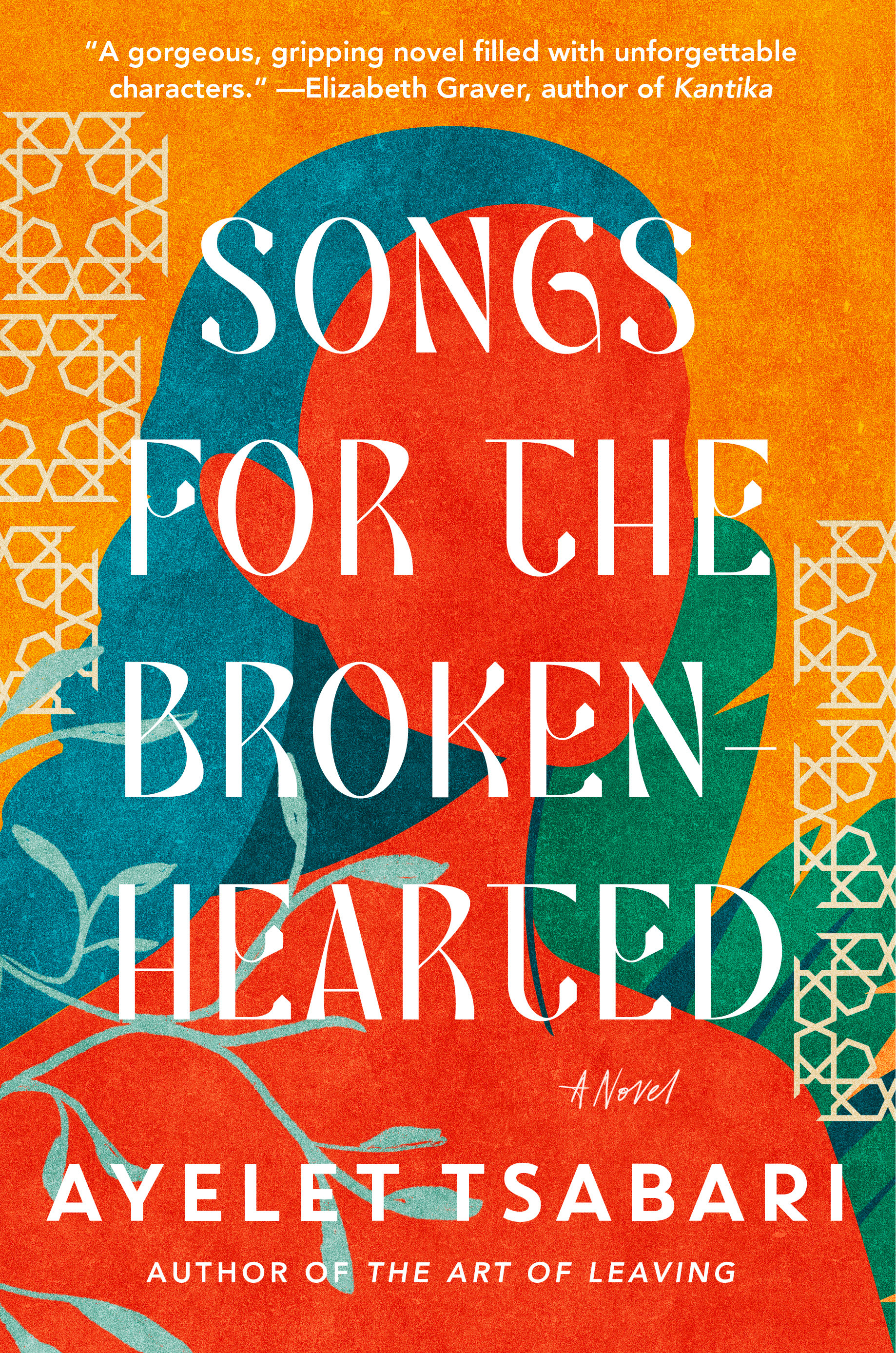

Book Review: Songs for the Broken-Hearted by Ayelet Tsabari

Title: Songs for the Broken-Hearted
Author: Ayelet Tsabari 
Publisher: Random House
Publication date: September 10, 2024
Length: 352 pages
Genre: Historical fiction
Source: Review copy courtesy of the publisher via NetGalley
Rating:

Rating: 5 out of 5.

A young Yemeni Israeli woman learns of her mother’s secret romance in a dramatic journey through lost family stories, revealing the unbreakable bond between a mother and a daughter—the debut novel of an award-winning literary voice.

“A gorgeous, gripping novel filled with unforgettable characters.”—Elizabeth Graver, author of Kantika

1950. Thousands of Yemeni Jews have immigrated to the newly founded Israel in search of a better life. In an overcrowded immigrant camp in Rosh Ha’ayin, Yaqub, a shy young man, happens upon Saida, a beautiful girl singing by the river. In the midst of chaos and uncertainty, they fall in love. But they weren’t supposed to; Saida is married and has a child, and a married woman has no place befriending another man.

1995. Thirty-something Zohara, Saida’s daughter, has been living in New York City—a city that feels much less complicated than Israel, where she grew up wishing that her skin was lighter, that her illiterate mother’s Yemeni music was quieter, and that the father who always favored her was alive. She hasn’t looked back since leaving home, rarely in touch with her mother or sister, Lizzie, and missing out on her nephew Yoni’s childhood. But when Lizzie calls to tell her their mother has died, she gets on a plane to Israel with no return ticket.

Soon Zohara finds herself on an unexpected path that leads to shocking truths about her family—including dangers that lurk for impressionable young men and secrets that force her to question everything she thought she knew about her parents, her heritage, and her own future.

Songs for the Broken-Hearted is a beautiful look into women’s lives, intergenerational misunderstandings and traumas, and the hidden histories of women’s communities and their art. Above all, it’s the story of a woman processing grief over the loss of a mother she never fully knew, learning more about herself through learning about her mother’s life.

It’s 1995, and Zohara is on a break from her doctoral program in New York, vacationing in Thailand, when she’s summoned back home to Israel with the news that her mother Saida has died. The youngest daughter in this Yemeni Israeli family, Zohara has felt disconnected from her homeland and her family, and has never really known her mother in a deep way.

Upon her return, Zohara is confronted by just how much she may have missed, as she begins to learn more about Saida’s role within the family and community, and discovers tapes of her beautiful singing. As Zohara eventually learns, Saida wrote her own songs — and within the world of Yemeni Jewish women, singing is the art form that allows expression, creativity, and emotion, especially important for the immigrant generation who arrived in Israel with limited or no knowledge of Hebrew and were illiterate, as learning was the domain of men.

Through Zohara, we learn more about the history of the Yemeni community within Israel, and as we meet others in her family, we also see the extreme political upheaval of the time. The Oslo accords had only recently been signed, and while Yitzhak Rabin is seen as a hero by some, there’s an increasingly strident and violent opposition building, deeply opposed to the planned concessions of the peace process.

Meanwhile, interspersed with Zohara’s experiences, we have chapters sets in 1950, told from the perspective of Yakub, a young man who meets Saida in the immigrant camp to which they’re assigned upon arrival in Israel from Yemen. Amidst the squalor and deprivations of the camp and the discrimination experienced by the new immigrants, Yakub and Saida find an unexpected connection, as he hears her singing by the river, and they bond over their love of words.

Through Yakub and Saida’s story, as well as the dominant storyline focused on Zohara, we get an inside view of the experience of Yemeni immigrants to Israel, including the horrifying (and real) events surrounding the disappearance of Yemeni children and other children of Jewish immigrants from Arab countries. And yet, there’s also the uplifting elements as we see more of the Yemeni culture, from food to music to family traditions, language, observances, and more.

Songs for the Broken-Hearted is truly a beautiful book, telling a powerful story about family connections and secrets, and showing how grief in its many forms can change the course of individual lives and carry down through generations.

Zohara’s story is affecting, and while it can be frustrating as a reader to see this smart woman make unwise choices, we can easily understand how her loss turns her life upside down and leads her down unexpected paths. Grief also leads to renewed hope, as only through her loss does Zohara come to discover and then immerse herself in the world of women’s songs that was so important to Saida. Through these songs and the community of women who keep them alive, Zohara finds new meaning, learns deeper truths about her mother, and even manages to reignite the passion missing from her academic life.

As Zohara reimmerses herself in family, she also reengages with Israel itself, and is there to witness the upheaval and divisions that culminate in Rabin’s assassination. It’s very heavy, and for readers familiar with that chapter of history, the inevitability of the coming violence can be very painful to experience alongside the characters.

What I loved most about Songs for the Broken-Hearted is the tangible, evocative way the author shares the Yemeni culture. References to specific foods and spices, particular singers and pieces of music — all bring this world to life in a way that feels immersive and immediate.

Songs for the Broken-Hearted is powerful on so many levels, and is an absorbing work of fiction that pulls the reader in right from the start. I loved the cultural aspects as well as the exploration of family bonds, the relationships between mothers and children, and the process of grief and healing.

Highly recommended.

Songs for the Broken-Hearted is author Ayelet Tsabari’s debut novel. She’s previously published a collection of stories (The Best Place on Earth), and a memoir, The Art of Leaving, which I’d especially like to read.

For a taste of Yemeni women’s music, check out the samples below (or search for Yemenite music by Ofra Haza or Gila Beshari, as a starting place — there’s much more available with a bit of looking):

Book Review: Promised Land by Martin Fletcher


Promised Land is the sweeping saga of two brothers and the woman they love, a devastating love triangle set against the tumultuous founding of Israel.

The story begins when fourteen-year-old Peter is sent west to America to escape the growing horror of Nazi Germany. But his younger brother Arie and their entire family are sent east to the death camps. Only Arie survives.

The brothers reunite in the nascent Jewish state, where Arie becomes a businessman and one of the richest men in Israel while Peter becomes a top Mossad agent heading some of Israel’s most vital espionage operations. One brother builds Israel, the other protects it.

But they also fall in love with the same woman, Tamara, a lonely Jewish refugee from Cairo. And over the next two decades, as their new homeland faces extraordinary obstacles that could destroy it, the brothers’ intrigues and jealousies threaten to tear their new lives apart.

Promised Land is at once the gripping tale of a struggling family and an epic about a struggling nation.

Promised Land is an ambitious novel about family and love, set in the aftermath of the Holocaust and tracking two brothers’ lives during the early years following Israel’s independence.

As the book opens, Peter and Arie are young boys living with their family in Germany as war looms. Their parents are able to send Peter to America, but the rest of the family can’t avoid the Nazi terror, ultimately being sent to concentration camps.

Peter spends his teens with a kind American family before fighting in WWII, then ultimately moving to the new state of Israel and joining its intelligence service. Arie survives Auschwitz, but the rest of the family perishes, and Arie too ends up in Israel, where the brothers are reunited. A meeting with an Egyptian Jewish refugee, Tamara, changes both brothers’ lives. Peter and Tamara have an instant connection and a moment of passion, but Peter is sent on a mission with no communication possible for months. Meanwhile, Arie woos Tamara, and by the time Peter returns home, Arie and Tamara are married and expecting a child.

Promised Land takes place over a roughly 20-year period, from Israel’s birth in 1948 through the Six Day War in 1967. As the brothers and their families build their lives, we see the country also build and develop. Peter rises in the ranks of the Mossad, known for his operational expertise and sense of honor, while Arie becomes an astute businessman, always ahead of the curve in seeing opportunities for making money and profiting from the growth of the nation. Peter marries a lovely woman, a fellow agent, and has a good life with her; Arie and Tamara, while becoming fabulously wealthy, have a rocky marriage due to Arie’s excesses and infidelities.

Eventually, the love triangle between Peter, Arie, and Tamara explodes, which isn’t surprising… the only surprising element is how long it takes to reach that point.

In terms of my reaction to the book, I was hooked from start to finish, but at the same, I felt that the emotional set-up of the relationships in the story was somewhat flimsy and not well-developed. Arie is a terrible husband, no two ways about it, and just isn’t a particularly good guy. Why Tamara chose to stay with him really makes no sense, and neither does his reaction to learning the truth about Tamara and Peter, other than demonstrating Arie’s possessiveness and selfishness.

Peter really is a good person, a devoted family man and brother, and he acts in Arie’s best interest even when Arie is engaging in shady, criminal behavior. He is a good loving husband to his first wife, and (spoiler alert) after her untimely death, denies  his love for  Tamara well past the point when there was a reason for either of them to think that her marriage was worth saving.

What this book does very well, and what makes it a deeper read than a typical love triangle story, is the positioning of these characters at such a distinct and eventful moment in history.  The author, a former news correspondent, uses his well-researched knowledge of the events of the time to paint a portrait of a people’s psychology.

We come to understand the underlying needs, fears, and guilt of a Holocaust survivor. While despising much of Arie’s actions, I could also sympathize with his pain and understand why he acts the way he acts and what drives him to pursue wealth, power, and admiration.

We also learn about the psychology of the early Israelis, coming from the horrors of genocide, knowing that their new homeland may not be a safe place, and wanting desperately to find the security so long denied. The author does not sugarcoat the more unpleasant aspects of Israel’s creation, but does show a context and depth of understanding that’s often missing in today’s narratives.

At the same time, as the characters live through Israel’s cycles of war, we get a more in-depth look at the political machinations behind the scenes, thanks to Peter’s role in the intelligence service. It’s fascinating to read about the hidden reasons for Israel’s actions, the lingering impact of Nazi scientists on Middle Eastern politics, and the ways in which Cold War politics play into Israel’s strategies.

Overall, I found myself immersed in the story, fascinated both by the historical setting and the characters’ lives. Yes, I found the characterizations a little formulaic (good brother, bad brother, exotic love interest), but the story progresses in a way that kept me engaged and made me care about these people and their lives.

I did find the ending somewhat abrupt. The story seems to just end. I think even one more chapter, perhaps an epilogue, might have helped to create a better sense of completion and satisfaction.**

**While doing a final proofread of this review, I popped over to Martin Fletcher’s author page in Goodreads and discovered that this book is the first in a trilogy! I guess that explains why it ends when and how it does, and why I was left feeling that there was more of the story to be told.

Despite a few drawbacks that got in my way here and there, I’m glad to have read Promised Land. For anyone interested in Israel’s early years, this is a fresh take on the history of the time, and the characters in the story are memorable and relatable – you won’t soon forget them or their struggles.

_________________________________________

The details:

Title: Promised Land
Author: Martin Fletcher
Publisher: Thomas Dunne Books
Publication date: September 4, 2018
Length: 416 pages
Genre: Historical fiction
Source: Review copy courtesy of the publisher via NetGalley

**Save

Save

Save

Save

Save

Save

Save

I’m back! Where I went, what I did, and what I read

Hi all! Happy 4th of July!

After three weeks away, I arrived home safe and sound early yesterday morning, and promptly fell into bed to sleep myself back to some degree of being human again. (Only partially successful, but hey, it’s only been one day.)

So what have I been up to while being absent from my blogging life? Quite the whirlwind, in fact.

First, I started off with five days in New York. We stayed at a hotel right at Times Square — and no, that’s not a mistake I’m likely to repeat. The hotel was fine, but the crowds were awful. No need to be quite that touristy! The absolute highlight was seeing the oh-so-glorious Harry Potter and the Cursed Child!

Side note: Going to see the HP production is an adventure two years in the making! Two years ago, when tickets were first released for the London production, I jumped through about a million hoops to get tickets for my daughter and me. We had plans for a trip to London last June… and then complications with my elderly father arose, forcing me to cancel my part of the trip. (Darling daughter and her boyfriend enjoyed the show tremendously, lucky them.) When the Broadway ticketing process opened, I was absolutely determined to make it happen… and it did!

For those not familiar with the HP production, it’s a two-part show, which we saw on two consecutive nights. Really, it’s the equivalent of seeing two full-length Broadway shows. Each part ran about 2 hours, 40 minutes, with intermissions. Drink lots of coffee before you go!

What can I say about the show itself? It’s magnificent. If you’re a Harry Potter fan, chances are you’ve read the book already. I had — but even knowing the plot basics, I wasn’t prepared for the spectacle and wonder of the live show. The staging, the lighting, the effects, and above all, the acting, make this a story that has to be seen to be fully appreciated. We were lucky enough to see the original London cast in the Broadway production… and, no surprise, they were simply amazing. One thing I didn’t get from reading the book is just how awesome the character of Scorpius Malfoy is — he really stole the show (and my heart.)

Around the theater, staff gives out buttons saying #keepthesecrets, so I suppose I’m duty-bound not to reveal too much! All I can say is that the show is magical and delightful, and well worth every moment.

Okay, that’s the Harry Potter stuff! Also in New York, my family and I went to see The Band’s Visit, which is a beautiful musical, full of humor and emotion, tightly woven together into a 90-minute production that’s human and moving and has truly lovely music. If you have the chance, definitely check it out! And what’s a trip to New York without a visit to the top of the Empire State Building and an afternoon at the Metropolitan Museum of Art? Add in some great deli, a walk through Central Park, and oodles of people-watching, and who could ask for more?

From there, I headed to Connecticut for a few days of family time, visiting my dad, spending time with other relatives, and basically just chilling out before stage 3 of the vacation, which was…

A two-week trip to Israel!

My husband was born and raised in Israel, and we try to get back to see his family every few years. Somehow, we let more time than usual go by, so this was our first trip in four years! A big chunk of the time there was spent in Tel Aviv, where the family is. Days of hitting the beach, nights of eating at different relatives’ homes. Food. So much food. So much hummus. So much yum.

Because we were traveling with our teen son, I wanted to make sure to include some travel and culture while we were there (although the boy probably would have been happy with nothing but beach, all day, every day.) So we spent two days in Jerusalem, including solemn places (Har Hertzl, Israel’s military cemetary, and Yad Vashem, the incredibly powerful Holocaust museum), the Old City of Jerusalem, the Western Wall, dinner in the newer parts of the city, and a spectacular light show at night within the walls of the Old City. If we’d had more time, we could have spent days and days exploring, but at least we have something to look forward to on the next trip!

Onward we went, heading into the desert for a night at the Dead Sea, where we did our requisite floating! From there, we ventured to Masada — by cable car, no climbing for me in the incredible heat. Masada is always fascinating, and the views are amazing.

One final road trip before heading home — Rosh HaNikra, at the northern tip of Israel along the Mediterranean, where we took cable cars down to the sea grottoes — one of my all-time favorite places! I try to get there on every trip to Israel.

This slideshow requires JavaScript.

And now… ta da! We’re back home in SF, where the skies are cool and cloudy, and I have mountains of laundry, mail, and bills to tackle. The joys of post-vacation tasks!

Okay, as for the “what I read” part — here’s a peek at the reading that kept me busy during my quiet moments (amazingly, there were actually a few) during the last few weeks:

I’ll be doing some mini-review posts to talk more about what I read, once I finally catch my breath and finish unpacking and figure out what time zone I’m in!

It’s great to be home! I may be a bit slow to get back into my blogging groove, but I’m excited to be here and look forward to catching up with everyone!