Thursday Quotables: The Theory of Everything / The Shadowy Horses

tq7Welcome back to Thursday Quotables! This weekly feature is the place to highlight a great quote, line, or passage discovered during your reading each week.  Whether it’s something funny, startling, gut-wrenching, or just really beautifully written, Thursday Quotables is where my favorite lines of the week will be, and you’re invited to join in!

If you’d like to participate, it’s really simple:

  • Follow Bookshelf Fantasies, if you please!
  • Write a Thursday Quotables post on your blog. Try to pick something from whatever you’re reading now!
  • Link up via the linky below (look for the cute froggy face).
  • Make sure to include a link back to Bookshelf Fantasies in your post (http://www.bookshelffantasies.com).
  • Have fun!

tq5I’m cheating a bit this week. I just couldn’t make up my mind whether to go with a snarky quote or a more serious (and lovely) descriptive passage. So… why choose? This week, I’m going with two Thursday Quotables.

Here’s Quotable #1:

The cop clears his throat. “Please state what happened.” He looks me up and down; his eyes linger on my forehead (which is throbbing in pain, thank you very much) and — yep, there it is — he glances at my boobs, like he doesn’t mean to but he can’t help it. Dudes think they’re completely 007 about the boob eye-flick, but I can always tell. It’s a a gift.

Source:  The Theory of Everything
Author: J. J. Johnson
Peachtree Publishers, 2012

And Quotable #2:

A man was coming across the moor.

It might have been the fogged window, or the wild weather, or the rough and rolling landscape that, like all the Scottish Borderlands, held traces of the harsh and violent past — the echoed din of charging hooves, of chilling battle-cries and clashing broadswords. Whatever it was, it tricked my senses. The man, to my eyes, looked enormous, a great dark giant who moved over bracken and thorn with an effortless stride. He might have been a specter from a bygone age, a fearless border laird come to challenge our rude intrusion on his lands — but the illusion lasted only a moment.

Source:  The Shadowy Horses
Author: Susanna Kearsley
Sourcebooks Landmark, 2012 (originally published 1997)

What lines made you laugh, cry, or gasp this week? Do tell!

Link up, or share your quote of the week in the comments.

Book Review: The River of No Return by Bee Ridgway

Book Review: The River of No Return by Bee Ridgway

Lord Nicholas Falcott, Marquess of Blackdown, facing certain death on the the battlefield, suddenly and inexplicably jumps from his own time in 1815 into the future — 2003, to be precise. There, he is greeted and inducted into the Guild, a society whose purpose is to assist time jumpers like Nicholas with adapting to their new worlds. The Guild has only four rules:

There Is No Return.
There Is No Return.
Tell No One.
Uphold the Rules.

Yes, that is, in fact, four different rules. Number one refers to time, and number two refers to location. After spending a year in “future school”, during which Nick learns the basics of 21st century life, catches up on decades’ worth of TV viewing, learns to speak a more modern version of English, and has the sharp edges of his upper-crust snobbery sanded down, he is packed off to life in America, never to return to the United Kingdom and the land of his ancestors. And for ten years, that’s pretty much okay. Bankrolled by the Guild, Nick settles into a life as a wealthy playboy in New York with a little Vermont getaway for when he wants peace and quiet.

But when the Guild recalls Nick to London for a meeting, it turns out that rules are made to be broken — at least, if you’re in the inner circle and in the know. For ten years, Nick took it as a given that it was impossible to travel back through time. Turns out — well, not so much. Time travel is possible, if you know how, and Nick is taught the biggest lesson of all: Time is a river, and trained members of the Guild can use the currents of the river to travel to precise points in the past and future. The mission of the Guild is to protect the river, and Nick has been brought into the inner circle to learn a well-guarded secret: A splinter group called the Ofan are trying to tamper with time, and must be stopped. The Guild needs Nick to go back to his original time, infiltrate the Ofan, and do whatever it takes to prevent catastrophe.

Nick has a secret too: He’s never quite forgotten the dark-eyed girl from his youth who once comforted him in a moment of sorrow. Thrust back into his own past, Nick once again encounters the beautiful, tragic Julia Percy, now grown up and in need of his help. Nick cannot deny the growing passion and deep-seated love he feels for Julia, but events and secrets threaten to keep them apart. And Julia has secrets of her own, secrets that may rock Nick’s world if he can manage to unravel the clues.

Enough with the synopsis, don’t you think? I certainly don’t want to reveal too much and ruin the fun. And fun it is! I loved The River of No Return. From the first pages, I couldn’t wait to find out more. Who is Nick Falcott? Who is Julia Percy? What does the Guild want from them? Is there more to the secrets of time manipulation than they’ve been told? And how can they get at the truth? With each new chapter, more pieces of the puzzle are assembled, but the plot twists and turns in so many deliciously unpredictable ways that when the big reveals finally come, they’re still a complete surprise.

Nicholas and Julia are well-defined, sympathetic, strong characters. Nick is handsome, rugged, a soldier, an aristocrat — but also quite happy to put on his 21st century jeans, kick back, and enjoy the freedoms of the modern era, particularly the lack of social constraints based on gender and class. Julia is an orphaned girl raised in relative isolation by a doting grandfather, but this seemingly meek woman has a backbone and a will of her own, and when she finally starts to realize her own strengths and gifts, she’s a force to be reckoned with. Together, Nick and Julia are magical. Their passion is intense and smoldering, and you can feel from their very first kiss that their connection will not be denied.

The River of No Return has so many elements that really make a book sing for me. It’s part historical fiction, part time travel fantasy, with heaping doses of mystery and romance as well. I was reminded in tone, though not really in content, of Deborah Harkness’s books, A Discovery of Witches and Shadow of Night — not that The River of No Return has supernatural characters, but rather because of the well-researched historical detail intertwined with a modern love story and mystery, the drama of two lovers having to struggle against sinister forces that they don’t fully understand, and the passionate link between two people who probably have no business being in each other’s lives at all.

The writing in The River of No Return is both elegant and fast-paced. As the characters inhabit different eras, their language and surroundings change as well, and it’s vastly entertaining to see them adjust and readjust to the customs, manners, and dress of each world. I loved, too, the characters’ obvious delight in the various sights and smells of the the different times. Nick has a visceral, overpowering reaction to his reentry into the 19th century:

Before opening his eyes he breathed, and immediately he was weeping. The air was sweet, sweeter than any air he had breathed in ten years, and it smelled so powerfully of home that Nick began to sink to his knees.

In less dramatic moments, it’s a treat to see the time travelers and the Naturals (basically, the Muggles of the time-travel world) react with pleasure or confusion as they encounter anachronistic artifacts and articles, such as a photograph, a Rubik’s cube, and a jacket with a zipper — all in the wrong place and the wrong time. It’s all put together with skill and flair, so that the story elements never feel too far-fetched or fantastical. Instead, in The River of No Return, the author creates a world that feels very much like our own, in which there are secret forces at play that affect everything but remain undetected by all but a chosen few.

My only quibble — and it’s a product of how much I enjoyed this book — is that by the time I got to within 100 pages of the end of The River of No Return, I started to have that sinking feeling I get when I realize that there’s no possible way to fully wrap up this story in the pages that remain. And sadly, that turned out to be the case here. While there’s no mention of a sequel on the book jacket or on the author’s website, there are loose ends and further conflicts that remain unresolved at the end of the book. Not to say that The River of No Return ends badly; on the contrary, I loved the ending, and especially loved the promise of what must come next in the characters’ lives. Still, I’d also love to know that there will, in fact, be a sequel. I’m hooked, and I want more!

Do I recommend The River of No Return? Absolutely. Fans of Deborah Harkness and Diana Gabaldon should definitely pick up this terrific novel — and really, so should just about anyone who appreciates good writing, an engrossing plot, and sharply developed characters. Be warned: I lost sleep over The River of No Return, and you probably will as well. Once you start, it’s hard to walk away. I enjoyed this centuries-spanning novel of romance, intrigue, and time travel, and would love to see it become a big success.

Check it out! And then stop by again and let me know what you think. Let’s discuss!

Review copy courtesy of Dutton Publishing.

Book Review: The Imposter Bride by Nancy Richler

Book Review: The Imposter Bride by Nancy Richler

Nancy Richler The Imposter Bride

In the wake of World War II, the world was filled with refugees, some seeking shelter, some seeking new homes, some seeking forgiveness, some seeking peace. In Nancy Richler’s The Imposter Bride, one determined young woman arrives in Montreal seeking a new life, and more importantly, a new self. But can a person really reinvent herself? And what happens when her old life catches up to her?

Lily Azerov arrives by train in Montreal as a mail-order bride for Sol Kramer, whose family had settled in Canada one generation earlier and is now established within the Jewish community there. But for whatever reason, Sol sees Lily at the train station and changes his mind, leaving Lily without a plan or a future until Sol’s brother Nathan steps in and marries Lily instead. Nathan is drawn to Lily’s fierceness and determination, and falls for her almost instantly. And what does Lily feel for Nathan? Is he more than just a solution to a problem?

The Imposter Bride is layered throughout with mysteries. Lily, we quickly discover, is not who she says she is. We don’t know who she was exactly, but this stranger in a strange land has picked up the name and history of another girl. The original Lily and her entire family, like so may others, lie dead in Europe, leaving no trace behind. The new Lily does not have long to hide behind her new self, as the original Lily’s cousin also lives in Montreal and is quick to sniff out the deception.

After a dramatic first chapter, in which the point of view shifts radically from character to character, so that we see events through the eyes of Lily, Nathan, Sol, and others, we learn in the second chapter that the new Lily is long gone. Lily stuck around only long enough to give birth to a baby girl, and then left suddenly one day, never to return. From this point forward, we hear parts of the story through the words of Ruth, Lily and Nathan’s daughter, who narrates a life lived amongst a large, loving family and yet with a key piece of her own identity permanently denied her.

Throughout the remainder of the story, Ruth and other family members pour out their thoughts and emotions as they recount their experiences with faux Lily as well as the paths their lives have taken after her departure. The shifting points of view are quite effective in places, as we hear, one after the other, radically different interpretations of the same set of events.

The author skillfully creates distinct voices for the characters, each easily recognizable and with his or her own story to tell. The older generation recounts their stories of losses and loves; we see Ruth growing up from early childhood through middle age; we even get brief moments of Lily’s thoughts and experiences.

Sadly, for me at least, the pieces never really gel into a whole that’s greater than the sum of its parts. Key elements of the central mystery are left unresolved — or are finally revealed in such a brief overview that I couldn’t relate to the events at all. What happened to the original Lily? What was her connection to the faux/new Lily? Why did new Lily choose to start over in Canada, despite knowing she’d have little chance of maintaining her charade? Who, really, was new Lily before she found her new name and new life? And why did she feel that she had to leave her husband and baby girl? There are answers provided, mostly, but I found them unsatisfying and not entirely convincing.

On the positive side, The Imposter Bride is richly detailed, and the author’s language is heartfelt and lovingly crafted. Through the words of the characters, the deep sense of loss so central to the Jewish community in the wake of the Holocaust is finely portrayed, as each of the characters are impacted in different ways by the horrors and suffering of that time.

A central theme that emerges is the pain of not knowing. Many of the characters simply do not know what has become of the families they left behind in Europe. While the pain and questioning may become less acute over time, the absence never really goes away. So too is the case with Ruth, who has lost her mother, but spends most of her life not knowing how or why. Finding a way to keep going, to create a life for oneself, and to find joy despite deprivation and pain is a challenge for all of the characters in The Imposter Bride. Both Ruth and her missing mother are forced by their losses to redefine themselves and figure out just what kind of new identities they can forge. Do they let themselves be defined by the events that have happened to them? Or do they decide for themselves who they want to be and how they want to live, and find a way forward?

Overall, reading The Imposter Bride was a mixed experience for me. The details are wonderful, the characters feel real, and yet the narrative itself fails to coalesce into a powerful whole, so that the novel felt to me more like a collection of moving stories and vignettes rather than a solid work of fiction with a begininng, middle, and end. I’m glad to have read it, but unfortunately, I didn’t enjoy The Imposter Bride or feel its impact nearly as much as I’d hoped to. Still, Nancy Richler is clearly a gifted and sensitive writer, and I’m sure I’ll seek out her works in the future.

Wishlist Wednesday

Welcome to Wishlist Wednesday!

The concept is to post about one book from our wish lists that we can’t wait to read. Want to play? Here’s how:

  • Follow Pen to Paper as host of the meme.
  • Do a post about one book from your wishlist and why you want to read it.
  • Add your blog to the linky at the bottom of the post at Pen to Paper.
  • Put a link back to Pen to Paper somewhere in your post.
  • Visit the other blogs and enjoy!

My Wishlist Wednesday book is:

The House Girl

The House Girl by Tara Conklin

From Amazon:

Two remarkable women, separated by more than a century, whose lives unexpectedly intertwine . . .

2004: Lina Sparrow is an ambitious young lawyer working on a historic class-action lawsuit seeking reparations for the descendants of American slaves.

1852: Josephine is a seventeen-year-old house slave who tends to the mistress of a Virginia tobacco farm—an aspiring artist named Lu Anne Bell.

It is through her father, renowned artist Oscar Sparrow, that Lina discovers a controversy rocking the art world: art historians now suspect that the revered paintings of Lu Anne Bell, an antebellum artist known for her humanizing portraits of the slaves who worked her Virginia tobacco farm, were actually the work of her house slave, Josephine.

A descendant of Josephine’s would be the perfect face for the lawsuit—if Lina can find one. But nothing is known about Josephine’s fate following Lu Anne Bell’s death in 1852. In piecing together Josephine’s story, Lina embarks on a journey that will lead her to question her own life, including the full story of her mother’s mysterious death twenty years before.

Alternating between antebellum Virginia and modern-day New York, this searing tale of art and history, love and secrets explores what it means to repair a wrong, and asks whether truth can be more important than justice.

Why do I want to read this?

I seem to be drawn to novels with historical settings lately, and I love these type of stories-within-stories, in which the past is brought to life by someone in the present. I’m really looking forward to reading this one, and hope to get my hands on a copy soon!

Quick note to Wishlist Wednesday bloggers: Come on back to Bookshelf Fantasies for Flashback Friday! Join me in celebrating the older gems hidden away on our bookshelves. See the introductory post for more details, and come back this Friday to add your flashback favorites!

Wishlist Wednesday

Welcome to Wishlist Wednesday!

The concept is to post about one book from our wish lists that we can’t wait to read. Want to play? Here’s how:

  • Follow Pen to Paper as host of the meme.
  • Do a post about one book from your wishlist and why you want to read it.
  • Add your blog to the linky at the bottom of the post at Pen to Paper.
  • Put a link back to Pen to Paper somewhere in your post.
  • Visit the other blogs and enjoy!

My Wishlist Wednesday book is:

The Painted Girls by Cathy Marie Buchanan

From Amazon:

1878 Paris. Following their father’s sudden death, the van Goethem sisters find their lives upended. Without his wages, and with the small amount their laundress mother earns disappearing into the absinthe bottle, eviction from their lodgings seems imminent. With few options for work, Marie is dispatched to the Paris Opéra, where for a scant seventeen francs a week, she will be trained to enter the famous ballet. Her older sister, Antoinette, finds work as an extra in a stage adaptation of Émile Zola’s naturalist masterpiece L’Assommoir.

Marie throws herself into dance and is soon modeling in the studio of Edgar Degas, where her image will forever be immortalized as Little Dancer Aged Fourteen. There she meets a wealthy male patron of the ballet, but might the assistance he offers come with strings attached? Meanwhile Antoinette, derailed by her love for the dangerous Émile Abadie, must choose between honest labor and the more profitable avenues open to a young woman of the Parisian demimonde.

Set at a moment of profound artistic, cultural, and societal change, The Painted Girls is a tale of two remarkable sisters rendered uniquely vulnerable to the darker impulses of “civilized society.” In the end, each will come to realize that her salvation, if not survival, lies with the other.

Why do I want to read this?

Paris. Ballet. Sisters. What more do I need to convince me?

The combination of historical figures with fictional characters, the setting in 19th century Paris in the art world, and the drama of two girls struggling to survive sounds fascinating to me. This is one new novel that I’m definitely eager to read.

Quick note to Wishlist Wednesday bloggers: Come on back to Bookshelf Fantasies for Flashback Friday! Join me in celebrating the older gems hidden away on our bookshelves. See the introductory post for more details, and come back this Friday to add your flashback favorites!

Wishlist Wednesday

Welcome to Wishlist Wednesday!

The concept is to post about one book from our wish lists that we can’t wait to read. Want to play? Here’s how:

  • Follow Pen to Paper as host of the meme.
  • Please consider adding the blog hop button to your blog somewhere, so others can find it easily and join in too! Help spread the word! The code will be at the bottom of the post under the linky.
  • Pick a book from your wishlist that you are dying to get to put on your shelves.
  • Do a post telling your readers about the book and why it’s on your wishlist.
  • Add your blog to the linky at the bottom of the post at Pen to Paper.
  • Put a link back to Pen to Paper somewhere in your post.
  • Visit the other blogs and enjoy!

My Wishlist Wednesday book is:

The Chaperone by Laura Moriarty

From Amazon:

The Chaperone is a captivating novel about the woman who chaperoned an irreverent Louise Brooks to New York City in 1922 and the summer that would change them both.

Only a few years before becoming a famous silent-film star and an icon of her generation, a fifteen-year-old Louise Brooks leaves Wichita, Kansas, to study with the prestigious Denishawn School of Dancing in New York. Much to her annoyance, she is accompanied by a thirty-six-year-old chaperone, who is neither mother nor friend. Cora Carlisle, a complicated but traditional woman with her own reasons for making the trip, has no idea what she’s in for. Young Louise, already stunningly beautiful and sporting her famous black bob with blunt bangs, is known for her arrogance and her lack of respect for convention. Ultimately, the five weeks they spend together will transform their lives forever.

For Cora, the city holds the promise of discovery that might answer the question at the core of her being, and even as she does her best to watch over Louise in this strange and bustling place she embarks on a mission of her own. And while what she finds isn’t what she anticipated, she is liberated in a way she could not have imagined. Over the course of Cora’s relationship with Louise, her eyes are opened to the promise of the twentieth century and a new understanding of the possibilities for being fully alive.

Drawing on the rich history of the 1920s,’30s, and beyond—from the orphan trains to Prohibition, flappers,  and the onset of the Great Depression to the burgeoning movement for equal rights and new opportunities for women—Laura Moriarty’s The Chaperone illustrates how rapidly everything, from fashion and hemlines to values and attitudes, was changing at this time and what a vast difference it all made for Louise Brooks, Cora Carlisle, and others like them.

Why do I want to read this?

I seem to be drawn to historical fiction lately, and I do love the 1920s/New York setting. I adored The Diviners by Libba Bray, which was a supernatural-tinged YA novel set in the same era. The Chaperone, with its hint of glamour and promise of empowerment for the lead female characters, sounds like both a great story about personal change and an exciting trip back to the roaring ’20s.

Have you read The Chaperone? What did you think? And what are you wishing for this week?

Quick note to Wishlist Wednesday bloggers: Come on back to Bookshelf Fantasies for Flashback Friday! Join me in celebrating the older gems hidden away on our bookshelves. See the introductory post for more details, and come back this Friday to add your flashback favorites!

Book Review: Mariana by Susanna Kearsley

Book Review: Mariana by Susanna Kearsley

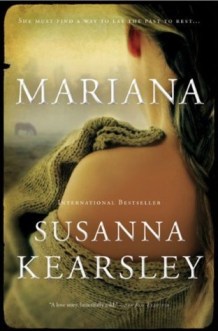
The newest cover. My favorite.

Julia Beckett is an independent woman of 30, living in London and succeeding professionally as an illustrator of children’s books. Since childhood, Julia has felt a strange calling to a house in the rural English town of Exbury, and when she happens to pass by the house once again as an adult, fate intervenes. The house is for sale, Julia’s recent inheritance means that she has the wherewithal to make a spur-of-the-moment purchase, and voila! Julia is now the owner of the lovely but mysterious Greywethers.

Uprooting her London life, Julia settles in and is immediately welcomed by the locals, especially the friendly pub owner Vivien, the lord of the nearby manor, Geoffrey de Mornay, and Geoff’s best friend Iain. As she adjusts to her new surroundings, Julia begins to see a dark man on a gray horse at the edges of her property, and that’s just the beginning of strange occurrences.

Soon, Julia begins to have momentary lapses in which she slips through time.

It is difficult to describe the sensation of sliding backwards in time, of exchanging one reality for another that is just as real, just as tangible, just as familiar. I should not, perhaps, refer to it as “sliding,” since in actual fact I was thrust — abruptly and without warning — from one time to the next, as though I had walked through some shifting, invisible portal dividing the present from the past.

When she enters this alternate world, it is as a young woman named Mariana, and the time is the mid-17th century.  As Mariana, Julia relives key events from the other woman’s life, and during those spells knows no other reality – she is, in fact, Mariana. When she returns to herself, Julia remembers what she has experienced as Mariana, but cannot understand why she slips into the past or how these episodes are relevant to her own life.

With the help of her brother Tom, Julia comes to believe that she is Mariana reincarnated, destined for some as-yet-undiscovered purpose related to Mariana’s life. As Julia digs deeper, she comes to understand the love and sorrows that Mariana experienced, and must find a way to live in the present when the past holds so much that tempts her.

I’ll just come right out and say that I love the writing in Mariana. Lush and romantic, Susanna Kearsley’s writing captures the small moments and glances that build to deeper connections and passions. Rustic village life is conveyed in all its quaint charm, and yet the 1600s version of the same village is dark and mistrustful, full of superstition, plotting, and deception. As Julia explores the town, I could practically see the gardens and streams come to life, and would have liked nothing more than to wander the country lanes with her and explore the old manor house and its magnificent library.

As I read Mariana, I became enthralled by the mystery of Mariana’s past and how it could possibly intersect with Julia’s present. The alternating timeframes were so engaging that I never wanted either one to end. By the end of the book, I was completely hooked on the central romance and (without giving anything away here) felt keenly Mariana’s joys and sorrows.

My only quibble with the book is that Julia and Tom arrive at an explanation for Julia’s time slips almost immediately, never question their explanation, and indeed are proven correct pretty much off the bat, with no alternate theories or trial and error. I understand that investigating the cause of the timeslips isn’t really the point here, but it felt a bit too neat to me.

Other than that, there isn’t much that I would change about Mariana. The pace is lively, but with enough suspense and dramatic timing to keep me coming back for more. There’s a sense of impending tragedy – something must have happened to cause Mariana to need to come back across the centuries to find resolution and peace. I especially loved the main plot twist that occurs in Mariana – but again, not wanting to enter spoiler territory, I won’t say what the twist is or when it occurs.

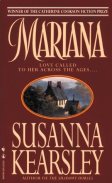
Mariana was first published in 1994 and has been reissued several times since. Call me shallow, but what originally drew me to Susanna Kearsley’s books was the newest set of covers. I was hooked as soon as I saw The Winter Sea on a bookstore shelf, had to have it, and have since snapped up several others. Although Mariana has had several covers since its original publication, the current cover, with its sense of sensual, moody introspection, is the one that really captures the feel of the book for me.

Really, how could you not fall in love with these covers?

I’ve read two other Susanna Kearsley books, The Winter Sea and The Rose Garden. Each involves some sort of time displacement or time slippage, each for difference reasons or using different mechanisms. In all three books, the heroine experiences something inexplicable in which she is thrust into another life or another timeline; she must figure out why it happens and what is expected of her. And of course, in each of the three books, true love – a deep, abiding love that knows no boundaries of time – is at the center of the plot. The romances at the heart of the author’s writings are desperate, lovely, dangerous affairs, and the passion is palpable.

What I also appreciate and enjoy in these books is the historical element. Without feeling like a history lesson, these books manage to convey a time and place gone by. They present the drama of the day’s events, politics, and social structures in a way that feels current and vibrant, with special emphasis on the role of women in these times and the choices (or lack of choices) available to them.

Mariana is a fine example of this type of journey to the past, combined with a contemporary woman’s search for identity and meaning, and as such, is both engaging as fiction and emotionally compelling as well.

I highly recommend Mariana to anyone who enjoys historical fiction, love stories, strong female characters… and simply gorgeous English countryside. An appreciation for dashing men on horseback wouldn’t hurt either.

I have another Susanna Kearsley book, The Shadowy Horses, all queued up and ready to go on my e-reader. As soon as I get over the emotional ups and downs of Mariana, I’ll be ready to dive right in.

Wishlist Wednesday

Welcome once again to Wishlist Wednesday!

The concept is to post about one book from our wish lists that we can’t wait to read. Want to play? Here’s how:

  • Follow Pen to Paper as host of the meme.
  • Please consider adding the blog hop button to your blog somewhere, so others can find it easily and join in too! Help spread the word! The code will be at the bottom of the post under the linky.
  • Pick a book from your wishlist that you are dying to get to put on your shelves.
  • Do a post telling your readers about the book and why it’s on your wishlist.
  • Add your blog to the linky at the bottom of the post at Pen to Paper.
  • Put a link back to Pen to Paper somewhere in your post.
  • Visit the other blogs and enjoy!

My Wishlist Wednesday book is:

The Dressmaker by Kate Alcott

From Amazon:

Tess, an aspiring seamstress, thinks she’s had an incredibly lucky break when she is hired by famous designer Lady Lucile Duff Gordon to be her personal maid on the Titanic. Once on board, Tess catches the eye of two men—a kind sailor and an enigmatic Chicago businessman—who offer differing views of what lies ahead for her in America. But on the fourth night, disaster strikes, and amidst the chaos, Tess is one of the last people allowed on a lifeboat.

The survivors are rescued and taken to New York, but when rumors begin to circulate about the choices they made, Tess is forced to confront a serious question.  Did Lady Duff Gordon save herself at the expense of others? Torn between loyalty to Lucile and her growing suspicion that the media’s charges might be true, Tess must decide whether to stay quiet and keep her fiery mentor’s good will or face what might be true and forever change her future.

Why do I want to read this?

To tell the truth, I’ve long been fascinated by the story of the Titanic, even before Kate and Leo brought us Rose and Jack (sniff…). I’ve read other novels either centering on the sinking of the Titanic (Every Man For Himself by Beryl Bainbridge) or featuring the Titanic as a catalyst for plot developments or as an event that sets the tone for a particular period (most recently, The House of Velvet and Glass by Katherine Howe).  I only just stumbled across a reference to The Dressmaker this past week, but I think it sounds wonderful, especially the combination of historical figures (Lady Lucile Duff Gordon was a real survivor of the Titanic) with fictional characters who can provide a more intimate point of view. One of the synopses of this book mentions that the plot focuses a great deal on the aftermath of the sinking and the trials that were held, and while I’ve read a great deal about the tragedy itself, I haven’t seen much about the fall-out afterward such as the public reactions and the official investigations.

The Dressmaker sounds like a book that I’ll love! I can’t wait to get my hands on a copy.

Have you read The Dressmaker? What did you think? And what are you wishing for this week?

Quick note to Wishlist Wednesday bloggers: Come on back to Bookshelf Fantasies for Flashback Friday! Join me in celebrating the older gems hidden away on our bookshelves. See the introductory post for more details, and come back this Friday to add your flashback favorites!

Flashback Friday: Morgan’s Run by Colleen McCullough

It’s time, once again, for Flashback Friday…

Flashback Friday is a chance to dig deep in the darkest nooks of our bookshelves and pull out the good stuff from way back. As a reader, a blogger, and a consumer, I tend to focus on new, new, new… but what about the old favorites, the hidden gems? On Flashback Fridays, I want to hit the pause button for a moment and concentrate on older books that are deserving of attention.

If you’d like to join in, here are the Flashback Friday book selection guidelines:

  1. Has to be something you’ve read yourself
  2. Has to still be available, preferably still in print
  3. Must have been originally published 5 or more years ago

Other than that, the sky’s the limit! Join me, please, and let us all know: what are the books you’ve read that you always rave about? What books from your past do you wish EVERYONE would read? Pick something from five years ago, or go all the way back to the Canterbury Tales if you want. It’s Flashback Friday time!

My pick for this week’s Flashback Friday:

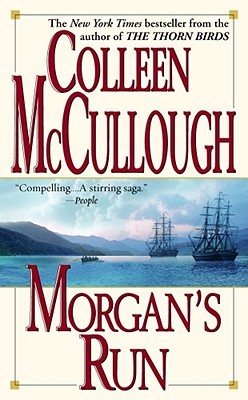
Morgan

Morgan’s Run by Colleen McCullough

(published 2000)

My go-to book by Colleen McCullough would probably be The Thorn Books. I read The Thorn Birds many, many years ago, but it still remains a point of reference for me in many ways. Who can forget Father Ralph and Meggie? (Insert big, romantic sigh right here…) Still, a more recent book by Colleen McCullough had quite an impact on me, and that book is Morgan’s Run.

From Amazon:

It was one of the greatest human experiments ever undertaken: to populate an unknown continent with the criminals of English society. For Richard Morgan, twelve months as a prisoner on the high seas would be just the beginning in a soul-trying test to survive in a hostile new land where, against all odds, he would find a new love and a new life. From the dank cells of England’s prisons to the unforgiving frontier of the eighteenth-century outback, Morgan’s Run is the epic tale of one man whose strength and character helped settle a country and define its future.

Morgan’s Run is a terrifically detailed historical novel, telling the tale of the prisoner transports from England to the Australian penal colonies through the experiences of a remarkable individual. Lead character Richard Morgan is an honorable man, falsely accused and convicted, who suffers unimaginable horrors during the sea voyage and the struggle to survive in a harsh, undeveloped land. I learned a great deal about the experiences of the transported convicts and the early days of English settlement down under, but what really made this an engrossing tale for me was the more personal story of Richard and his challenges, sufferings, and survival.

For those who enjoy historical fiction, I heartily recommend Morgan’s Run. And of course, if you’ve never read The Thorn Birds, read that one too!

So, what’s your favorite blast from the past? Leave a tip for your fellow booklovers, and share the wealth. It’s time to dust off our old favorites and get them back into circulation! 

Note from your friendly Bookshelf Fantasies host: To join in the Flashback Friday bloghop, post about a book you love on your blog, and share your link below. Don’t have a blog post to share? Then share your favorite oldie-but-goodie in the comments section. Jump in!


Book Review: A Trail of Fire by Diana Gabaldon

Book Review: A Trail of Fire by Diana Gabaldon

If you happened to read my blog post earlier in the week, then you’ll know that I was doing imaginary cartwheels and handsprings over the arrival of A Trail of Fire. Needless to say, I read it and I loved it. Perhaps that should be the entirety of my review right there.

A Trail of Fire is essential reading for fans of Diana Gabaldon’s Outlander series and its related spin-off novels and novellas. I have a hard time imagining that someone who had never read any of Ms. Gabaldon’s works would enjoy this collection, as they’d have no familiarity with the main characters and their associated backstories. So if you’ve read this much of my review, and haven’t read Outlander — well, what are you waiting for? It’s an outstanding work of historical fiction, and your life will be better for having read it. So go! Get thee to a bookstore!

A Trail of Fire is a compilation of “four Outlander tales”, as it says on the cover. Of the four, three have been published previously as part of anthologies, and one is brand new. Here’s the catch: A Trail of Fire has not been published in the US, and my understanding is that it won’t be, at least not for some time to come. Bear with me if my understanding of copyrights leaves a bit to be desired, but the gist of the matter is that the three anthologized stories belong, in essence, to those anthologies, and therefore can’t be republished (at least not yet) in some other format. The new story will be published in the US in March 2013 as part of yet another anthology, but readers in the US who are chomping at the bit and just can’t wait another moment will have to get their fix by ordering from an overseas supplier (such as Amazon UK — which is what I did — or The Book Depository, to name but two potential resources) or from Diana Gabaldon’s hometown bookstore, The Poisoned Pen in Phoenix, Arizona, which has a supply of signed editions available for shipment.

Back to the review! The contents of A Trail of Fire are:

1) A Leaf on the Wind of All Hallows: Previously published in the Songs of Love and Death anthology, this tale tells the story of Roger McKenzie’s parents, Jerry and Dolly. From the Outlander series, we know that Roger was orphaned during WWII and then raised by his uncle, the Reverend Wakefield. Roger tells Claire that his father was a Spitfire pilot, shot down over the English Channel, and that his mother died during the London Blitz. That’s all we know, and all that Roger knows as well. This lovely story fills in the blanks, and it’s both tragic and achingly romantic. Jerry and Dolly’s love story is incredibly moving and terribly sad, and it’s a tribute to Diana Gabaldon’s mastery of her art that we come to care so deeply about these previously unknown characters in such a short tale. (Short, by the way, is relative — most Gabaldon novels tend to the 1,000 page length, so a story of under 50 pages is practically miniscule by comparison). Because “Leaf” has woven into it some plot points from the seventh book in the Outlander series, Echo in the Bone, it should only be read after that novel. Hands down, this is my favorite piece in A Trail of Fire.

2) The Custom of the Army: This story originally appeared in the Warriors anthology, and fittingly, has a very military theme. “Custom” is a Lord John story, focusing on Lord John Grey, who plays a supporting yet important role throughout the Outlander series and is the star of his own spin-off series as well. The Lord John books and novellas tend to be historical mysteries in which Lord John’s aristocracy and military position come into play, and “Custom” fits right in. Set in London and Quebec in 1959, “Custom” is an enthralling look at the inner workings of the British army and a dramatic battlefield adventure as well. Lord John himself, as always, is a charming and honorable protagonist.

3) Lord John and the Plague of Zombies: This story first appeared in the anthology Down These Strange Streets, and is another historical mystery featuring our beloved Lord John. “Plague of Zombies” is set in Jamaica in 1761, and features Lord John taking command of a battalion tasked with controlling a slave rebellion, until events take a turn toward the unexplained, creepy, and supernatural. This story in particular ties in nicely with the main Outlander series, bringing in settings and characters also encountered in the third book, Voyager.

4) The Space Between: The new one! This is the story responsible for all those overseas orders from the rabid fans who just can’t wait… and a nice addition to the canon it is indeed. The Space Between takes place after events in Echo in the Bone. The storyline follows two family members we’ve not spent much time with before, new widower Michael Murray and nun-to-be Joan McKimmie, as they return from Scotland to Paris to embark on new chapters in their lives. Familiar characters from earlier in the Outlander series pop up as well, including Mother Hildegarde, the mysterious Master Raymond, and the presumed dead Comte St. Germain. The Space Between provides more theories and new tidbits on the rituals and necessities of time travel (which is quite important in the series), and adds many new clues for fans to mull over while waiting for the next big novel — expected by the end of 2013, or so we all hope.

As I think I’ve made clear, a reader who is unfamiliar with the Outlander series will most likely be completed befuddled by A Trail of Fire. But for the Outlander devotees, it just shouldn’t be missed. I gave in to temptation and bought A Trail of Fire instead of waiting for The Space Between to become available in the new anthology, The Mad Scientist’s Guide To World Domination. Did I need to? Not really… but it is nice to have the stories collected in one volume.