Book Review: In the Unlikely Event by Judy Blume

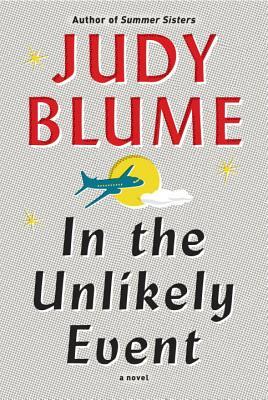
In the Unlikely EventWhen you think of historical fiction, if you’re like me, images of petticoats, palaces and kilts might fill your head. But how about fiction that tells a story of a more recent history? In Judy Blume’s new novel, In the Unlikely Event, the plot revolves around real events from the 1950s, and the effect is stunning.

If you didn’t grow up in New Jersey and weren’t around in the 1950s, you might be as shocked as I was to realize that the plane crashes that serve as a catalyst for the drama of this book actually happened. If these events weren’t actual documented history but rather a fictional invention, we’d all be shaking our heads and saying that’s it’s just too unbelievable.

The facts are these: In the winter of 1951 – 1952 in Elizabeth, New Jersey, three different planes crashed into the town within a span of three months. How is this even possible?

In the Unlikely Event shows us the horrifying plane crashes and the devastating effect on the residents of Elizabeth through the eyes of a large cast of characters, all of whom bear witness in one way or another.

The main character is 15-year-old Miri Ammerman, who lives with her mother Rusty, uncle Henry, and grandmother Irene. Miri’s best friend is Natalie Osner, daughter of the town’s very successful dentist. Each person is connected to other people, so that we meet the best friend of Natalie’s brother, the high school senior who assists in Dr. O’s office, the orphan boy who falls for Miri, the girlfriend of Miri’s uncle, and on and on in interlocking, expanding circles.

The time itself is exquisitely drawn in loving details, from the cashmere sweaters of the rich girls to the Lanz nightgowns that Miri’s friends all wear to sleep-overs, from 17-inch TVs to telephones with long cords — in all sorts of little ways, the author paints a picture of a particular era in American life. World War II is in the past, but not so distant as to be forgotten. American boys are serving in Korea. And air travel is new and fresh and glamorous. Airline stewardesses must be pretty, perky, flirty, and single. Traveling by air is a luxury, and going on an airplane is all part of the excitement.

And then the crashes start. As each plane crash occurs, the impact is felt more and more deeply by Miri and her circle of friends, family, and acquaintances. Boys at school claim it’s either UFOs or Commies behind the whole thing. One of Miri’s friends descends into mental illness and anorexia, consumed by thoughts of one of the dead airline passengers. People on the ground lose their lives as well as the passengers who fell from the sky, and the loss is random, tragic, and incomprehensible. Miri’s life changes in unpredictable ways, marriages disintegrate, friendships are changed forever, and indeed the entire community seems to lose its heart and its center.

In the midst of all this loss and suffering are some quintessential Judy Blume moments. The scenes of Miri and her friends bring back memories of the author’s classic books about preteen and teen girls, as they deal with their parents’ flaws, differences in economic status, pressure to fit in — and boys. Make-up and clothes, flirting and making out, worrying about going all the way and getting “in trouble”, fretting over missed periods — all of this is told in the voice we’ve trusted to portray young womanhood in so many earlier books, and it’s comforting and familiar here in her newest.

My only minor quibble with In the Unlikely Event is that we’re dropped into the world of Elizabeth and immediately introduced to just about every character in the story, and it’s a lot to track. Eventually, we get to know them all individually and it’s easier to understand who’s who and how they connect, but at the beginning, I found myself doing a lot of flipping backwards to figure out who a particular person was and where I’d seen them before.

Other than the early clutter of characters, the structure and richness of In the Unlikely Event works very, very well. The story is framed at the beginning and end by Miri traveling back to Elizabeth for a commemoration of that awful winter, 35 years later. It’s interesting and touching to see how all the people we followed in the 1950s have turned out, and how each has had his or her life changed and shaped by that one fateful year.

With detailed, evocative writing and characters whom we come to truly know and care for, In the Unlikely Event is a touching, compelling story that really holds a reader’s attention from start to finish. I’m very glad to have read it, and strongly recommend it.

End note: Way back when in my early days of blogging, I wrote a little salute to Judy Blume. Want to read it? You can find it here.

_________________________________________

The details:

Title: In the Unlikely Event
Author: Judy Blume
Publisher: Knopf
Publication date: June 2, 2015
Length: 397 pages
Genre: Adult fiction
Source: Library
Take A Peek Book Review: All the Light We Cannot See by Anthony Doerr

“Take a Peek” book reviews are short and (possibly) sweet, keeping the commentary brief and providing a little peek at what the book’s about and what I thought.

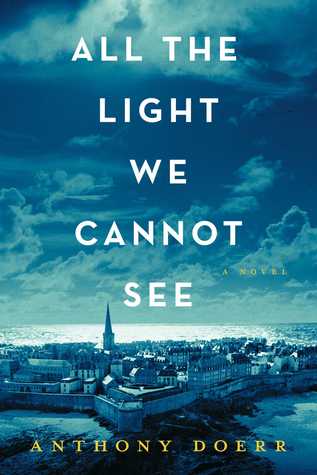
All the Light


Synopsis:

(via Goodreads)

Marie-Laure lives with her father in Paris near the Museum of Natural History, where he works as the master of its thousands of locks. When she is six, Marie-Laure goes blind and her father builds a perfect miniature of their neighborhood so she can memorize it by touch and navigate her way home. When Marie-Laure is twelve, the Nazis occupy Paris, and father and daughter flee to the walled citadel of Saint-Malo, where Marie-Laure’s reclusive great-uncle lives in a tall house by the sea. With them they carry what might be the museum’s most valuable and dangerous jewel.

In a mining town in Germany, the orphan Werner grows up with his younger sister, enchanted by a crude radio they find. Werner becomes an expert at building and fixing these crucial new instruments, a talent that wins him a place at a brutal academy for Hitler Youth, then a special assignment to track the resistance. More and more aware of the human cost of his intelligence, Werner travels through the heart of the war and, finally, into Saint-Malo, where his story and Marie-Laure’s converge.

My Thoughts:

I’m not sure I have anything new to add to the oodles of gushing reviews already written about this book. The writing is thoughtful and lovely, with surprising imagery and carefully crafted descriptions of the world inhabited by the characters. Despite the horrors of war, the book itself is beautiful, even when depicting horrific acts and circumstances.

It did take me a good third of the book to truly get into the back and forth approach to the narrative, with shifts in perspective, character focus, and timelines. That being said, I ended up completely enthralled by this book, and despite its length, felt that I would have wanted even more. The two main characters themselves, Marie-Laure and Werner, are both so well-developed that I came to care deeply about them and felt that I really understood them. Even Werner, who tacitly condones terrible acts by doing nothing to prevent them, has an inner life that makes him a very flawed but understandable character, and his life is tragic in its own way every bit as much as some of the more obviously heroic characters’ lives.

The setting and the supporting characters are all lovingly drawn, and the writing simply glows. This book is hard to describe, other than to call it a must-read.

_________________________________________

The details:

Title: All the Light We Cannot See
Author: Anthony Doerr
Publisher: Scribner
Publication date: May 6, 2014
Length: 531 pages
Genre: Historical fiction
Source: Purchased


Take A Peek Book Review: The Day of Atonement by David Liss

“Take a Peek” book reviews are short and (possibly) sweet, keeping the commentary brief and providing a little peek at what the book’s about and what I thought.

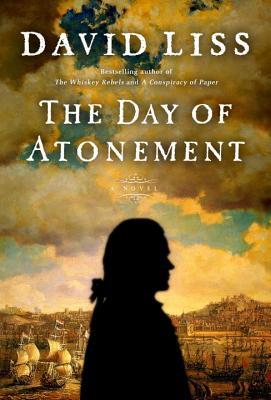
Day of Atonement

Synopsis:

(via Goodreads)

Sebastião Raposa is only thirteen when his parents are unjustly imprisoned, never to be seen again, and he is forced to flee Portugal lest he too fall victim to the Inquisition. But ten years in exile only serve to whet his appetite for vengeance. Returning at last to Lisbon, in the guise of English businessman Sebastian Foxx, he is no longer a frightened boy but a dangerous man tormented by violent impulses. Haunted by the specter of all he has lost—including his exquisite first love—Foxx is determined to right old wrongs by punishing an unforgivable enemy with unrelenting fury.

Well schooled by his benefactor, the notorious bounty hunter Benjamin Weaver, in the use of wits, fists, and a variety of weapons, Foxx stalks the ruthless Inquisitor priest Pedro Azinheiro. But in a city ruled by terror and treachery, where money and information can buy power and trump any law, no enemy should be underestimated and no ally can be trusted. Having risked everything, and once again under the watchful eye of the Inquisition, Foxx finds his plans unraveling as he becomes drawn into the struggles of old friends—and new enemies—none of whom, like Lisbon itself, are what they seem.

Compelled to play a game of deception and greed, Sebastian Foxx will find himself befriended, betrayed, tempted by desire, and tormented by personal turmoil. And when a twist of fate turns his carefully laid plans to chaos, he will be forced to choose between surrendering to bloodlust or serving the cause of mercy.

My Thoughts:

What a captivating book! The narrator is a fascinating man, whose description of himself is not particularly trustworthy. Sebastian describes himself early on as a monster, someone whose sole purpose in life is vengeance. Yet as we follow his intrigues and alliances while he moves his chess pieces into place, we come to see him also as a man with a moral core. He is a ruthless fighter who does not hesitate when violence is called for, yet his time in Lisbon becomes more and more complicated due to his sense of personal obligation to those he becomes entangled with. He defends those who need it; he strives to right old wrongs; he grants forgiveness to people who cause him pain because he realizes they had only poor choices to make. Yes, he’s still violent, but his rage is directed against the true villains, and the more people he embroils in his plots, the more people he ends up trying to rescue.

I was very interested in the historical setting, having previously not read much about Portugal during this time period. The Inquisition and its cruelty and corruption is awful to read about, and the author does a masterful job of making the dread and menace feel real. I was also fascinated to read about the massive earthquake that leveled Lisbon in 1755, which is used to great effect as part of the dramatic escape efforts of the main group of characters.

I’m grateful to my online book group for selecting The Day of Atonement as a book-of-the-month discussion book. I might not have come across it otherwise, but I’m very glad that I did. This is David Liss’s 8th novel, and I look forward to reading more of his work.

PS – I discovered after the fact that supporting character Benjamin Weaver is in fact the main character in three previous novels by this author. I’ll have to check them out!

_________________________________________

The details:

Title: The Day of Atonement
Author: David Liss
Publisher: Random House
Publication date: September 23, 2014
Length: 384 pages
Genre: Historical fiction
Source: Library

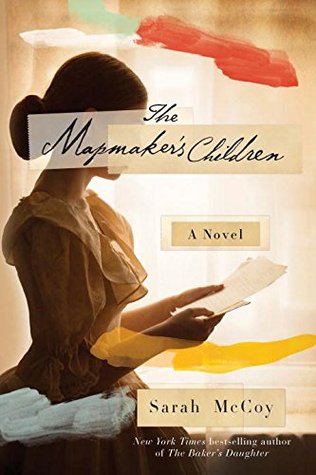
Take A Peek Book Review: The Mapmaker’s Children by Sarah McCoy

“Take a Peek” book reviews are short and (possibly) sweet, keeping the commentary brief and providing a little peek at what the book’s about and what I thought.

Mapmaker's Children

Synopsis:

(via Goodreads)

When Sarah Brown, daughter of abolitionist John Brown, realizes that her artistic talents may be able to help save the lives of slaves fleeing north, she becomes one of the Underground Railroad’s leading mapmakers, taking her cues from the slave code quilts and hiding her maps within her paintings. She boldly embraces this calling after being told the shocking news that she can’t bear children, but as the country steers toward bloody civil war, Sarah faces difficult sacrifices that could put all she loves in peril.

Eden, a modern woman desperate to conceive a child with her husband, moves to an old house in the suburbs and discovers a porcelain head hidden in the root cellar—the remains of an Underground Railroad doll with an extraordinary past of secret messages, danger and deliverance.

Ingeniously plotted to a riveting end, Sarah and Eden’s woven lives connect the past to the present, forcing each of them to define courage, family, love, and legacy in a new way.

My Thoughts:

The two timelines in this split-narrative story are united by place, centered on a single home in New Charleston, West Virginia.

In the contemporary storyline, we follow Eden, a woman whose marriage is on the rocks after years of failed fertility treatments. In a last-ditch effort to both conceive a child and repair their relationship, Eden and husband Jack have left city life behind to settle in a small town. Here, Eden gets to know the cute neighbor kid and then the other townspeople, finding in this little place a welcoming community and a home.

Meanwhile, in the historical chapters, we meet Sarah Brown, daughter of radical abolitionist John Brown. The books opens right around the time of the failed Harper’s Ferry uprising, closely followed by John Brown’s hanging. Sarah vows to carry on her father’s work with the Underground Railroad (the UGRR), using her artistic talents to create pictographs that escaping slaves can use as maps as they find their way to freedom.

Sadly, neither storyline drew me in. Sarah’s story should have been interesting, yet there were big gaps that kept me from connecting with her. Perhaps it was the choppy approach to the narrative, jumping forward months at a time and with the alternating timeline constantly breaking up any momentum in her story. In any case, Sarah’s art and her work for the UGRR are not adequately explained or developed, and I never got a strong sense of the impact of her artwork or felt that her personal story had a true dramatic arc.

Meanwhile, Eden’s part of the story is all fairly trite. A small town full of quirky townspeople, a whimsical bookstore, a cute girl and adorable puppy, a corporate career woman embracing a slower yet more meaningful way of life — none of it seems particularly new or engaging.

The connection between the two halves of the tale is a porcelain doll’s head that Eden finds in a hidden cubby in her house. The doll’s head prompts Eden to try to get the house listed as an historical site — and of course, this head can be traced back to Sarah and the UGRR.

I fully expected to love this story, based on the description. It sounds like the sort of thing I’d usually enjoy. Something about the execution, though, made the book feel really bland to me. The characters felt flat and lifeless. Sarah seemed very cookie-cutter to me, lacking true agency, and Eden could have been anyone.

I was interested to note, via the author’s note at the end, that all of the places and dates in Sarah’s story were real. Knowing nothing about John Brown’s family previously, I had no real sense in reading the story as to which bits were based on history and which were purely fictional. I wish I’d read the notes ahead of time — perhaps that might have helped me feel more engaged.

The history itself is interesting — the aftermath of Harper’s Ferry, the secret network that kept the UGRR alive in the South, and the impact of the Civil War on the townspeople, both during and after the war. The novel itself, though, lacks a sense of energy and movement. Ultimately, I had to force myself to keep reading and came close to abandoning the book several times. In fact, even close to the end, I didn’t really care very much, and had to actually remind myself that there was still more to read.

Those interested in Civil War history may find this an interesting perspective on the role of women in the abolitionist movement. However, I suspect that reading historical non-fiction about the Browns might prove more enlightening and engaging than this novel.

_________________________________________

The details:

Title: The Mapmaker’s Children
Author: Sarah McCoy
Publisher: Crown
Publication date: May 5, 2015
Length: 320 pages
Genre: Historical fiction
Source: Review copy provided by the publisher

Thursday Quotables: The Day of Atonement

quotation-marks4

Welcome back to Thursday Quotables! This weekly feature is the place to highlight a great quote, line, or passage discovered during your reading each week.  Whether it’s something funny, startling, gut-wrenching, or just really beautifully written, Thursday Quotables is where my favorite lines of the week will be, and you’re invited to join in!

NEW! Thursday Quotables is now using a Linky tool! Be sure to add your link if you have a Thursday Quotables post to share.

Day of Atonement

The Day of Atonement by David Liss
(published 2014 )

This historical novel, set in Portugal during the Inquisition, is the story of one man’s quest for vengeance, no matter the cost:

How could I make peace with the dead? How could I atone for leaving my parents behind to be tortured and die in their prison cells? It had been a strange jumble of ideas. I was not even sure they made sense to me, but I had begun to sense that I needed to leave London and come to Lisbon. I needed to restore order to my broken life, and that could only happen in the city that had broken me. And now here I was. I had left my friend and mentor; I had abandoned everyone and everything in London. I was alone and vulnerable and in danger.

I was glad I had come.

This book is dark and ominous, page after page, but it’s also a compelling read:

I am not a kind person. That much, I believe, I have established in the previous account of enraged rival-pummeling. If I am a monster, however, then I am monster made, not born.

Indeed, I was made by men such as the priest who stood before me.

What lines made you laugh, cry, or gasp this week? Do tell!

If you’d like to participate in Thursday Quotables, it’s really simple:

  • Write a Thursday Quotables post on your blog. Try to pick something from whatever you’re reading now. And please be sure to include a link back to Bookshelf Fantasies in your post (http://www.bookshelffantasies.com), if you’d be so kind!
  • Click on the linky button (look for the cute froggie face) below to add your link.
  • After you link up, I’d love it if you’d leave a comment about my quote for this week.
  • Be sure to visit other linked blogs to view their Thursday Quotables, and have fun!

Blog Tour & Giveaway: The Mapmaker’s Children by Sarah McCoy

TMCBanner

Today, I’m celebrating the release of The Mapmaker’s Children, a new historical novel by Sarah McCoy, and I’m delighted to be participating in the blog tour sponsored by TLC!

Mapmaker's Children

Synopsis:

When Sarah Brown, daughter of abolitionist John Brown, realizes that her artistic talents may be able to help save the lives of slaves fleeing north, she becomes one of the Underground Railroad’s leading mapmakers, taking her cues from the slave code quilts and hiding her maps within her paintings. She boldly embraces this calling after being told the shocking news that she can’t bear children, but as the country steers toward bloody civil war, Sarah faces difficult sacrifices that could put all she loves in peril.

Eden, a modern woman desperate to conceive a child with her husband, moves to an old house in the suburbs and discovers a porcelain head hidden in the root cellar—the remains of an Underground Railroad doll with an extraordinary past of secret messages, danger and deliverance.

Ingeniously plotted to a riveting end, Sarah and Eden’s woven lives connect the past to the present, forcing each of them to define courage, family, love, and legacy in a new way.

Add to Goodreads badge

Purchase Links

Amazon | IndieBound | Barnes & Noble

About the Author:

Sarah McCoySARAH McCOY is the  New York TimesUSA Today, and international bestselling author of The Baker’s Daughter, a 2012 Goodreads Choice Award Best Historical Fiction nominee; the novella “The Branch of Hazel” in Grand Central; The Time It Snowed in Puerto Ricoand The Mapmaker’s Children (Crown, May 5, 2015).

Her work has been featured in Real Simple, The Millions, Your Health Monthly, Huffington Post and other publications. She has taught English writing at Old Dominion University and at the University of Texas at El Paso. She calls Virginia home but presently lives with her husband, an Army physician, and their dog, Gilly, in El Paso, Texas. Sarah enjoys connecting with her readers on Twitter at @SarahMMcCoy, on her Facebook Fan Page or via her website, www.sarahmccoy.com.

_________________________________________

The details:

Title: The Mapmaker’s Children
Author: Sarah McCoy
Publisher: Crown
Publication date: May 5, 2015
Length: 320 pages
Genre: Historical fiction
Source: Review copy courtesy of TLC Book Tours

tlc logoFor further information, stop by TLC Book Tours to view other blog tour hosts.


GIVEAWAY!

Want to win a copy of The Mapmaker’s Children? No fancy footwork required — just leave a comment below answering any one of these questions:

– What’s your favorite historical novel?
– What historical figure would you love to see featured in fiction?
– What time period do you enjoy reading about the most in historical fiction?

Extra credit: Do you follow Bookshelf Fantasies? Let me know in the comments if you follow me and how (email, Twitter, WordPress, etc), and you get an extra entry in the giveaway!

That’s it! I’ll do a random drawing on May 20th to pick a winner. Thanks for playing along!

(Sorry — US/Canada only this time around)

Thursday Quotables: The Mapmaker’s Children

quotation-marks4

Welcome back to Thursday Quotables! This weekly feature is the place to highlight a great quote, line, or passage discovered during your reading each week.  Whether it’s something funny, startling, gut-wrenching, or just really beautifully written, Thursday Quotables is where my favorite lines of the week will be, and you’re invited to join in!

NEW! Thursday Quotables is now using a Linky tool! Be sure to add your link if you have a Thursday Quotables post to share.

Mapmaker's Children


The Mapmaker’s Children by Sarah McCoy
(published May 5, 2015 )

In this historical novel about the daughter of abolitionist John Brown and their family’s legacy, Sarah Brown experiences a terrible loss and its aftermath:

The grief that had hardened to bitterness in her brothers was purified like boiled water in Sarah. Her father’s death wasn’t an end to his mission but the beginning of something greater.

People were capable of more love and benevolence than they realized. The collective public voice did not always represent the individual heart. Yes, there were terrible men doing terrible deeds to one another. Men in this very town who abused others based on the color of their skin. There were prideful men who thought their marrow was made of more golden stuff than others’. Her father had proven to them all: when a beating heart stopped, there was no black or white, only blood-red. The flesh was equal. It was the character of a man that made him better or worse.

What lines made you laugh, cry, or gasp this week? Do tell!

If you’d like to participate in Thursday Quotables, it’s really simple:

  • Write a Thursday Quotables post on your blog. Try to pick something from whatever you’re reading now. And please be sure to include a link back to Bookshelf Fantasies in your post (http://www.bookshelffantasies.com), if you’d be so kind!
  • Click on the linky button (look for the cute froggie face) below to add your link.
  • After you link up, I’d love it if you’d leave a comment about my quote for this week.
  • Be sure to visit other linked blogs to view their Thursday Quotables, and have fun!

Book Review: A Desperate Fortune by Susanna Kearsley

Desperate FortuneSusanna Kearsley is back with a new novel, doing what she does best — telling a rich historical tale framed by a parallel contemporary story. In A Desperate Fortune, we follow two compelling stories which share some common themes and complement each other quite nicely.

In the contemporary story, we meet 30-year-old Sara Thomas, a computer programmer with Asperger’s syndrome who relies on Sudoku puzzles to stay calm in challenging situations. Sara dabbles as an amateur code-breaker, and when her cousin Jacqui, a successful publisher, enlists Sara to help an author decode a centuries-old diary written in cipher, Sara is thrust into both an historical mystery and a present-day romance.

Sara’s project is deciphering the diary of Mary Dundas, a young Scottish woman living in France in the 1730s and the daughter of a Jacobite loyalist. Mary’s life is quite ordinary until her long estranged brother draws her into an entirely new life. An important Jacobite ally needs to be hidden, and as part of his false identity, Mary is sent to pose as his sister in order to maintain the subterfuge needed for his escape. Suddenly, Mary is thrust into a world of secrets and danger, as she accompanies the slippery Mr. Thomson and his silent escort, the Highlander Hugh MacPherson, as they flee Paris and try to elude pursuit.

Much of Mary’s story is one of flight, as the small group seems to always be one step ahead of danger, constantly hiding and creating new cover stories to explain who they are and where they’re going. As they travel, Mary entertains the various people met along the way with her imaginative fables and fairy tales. As the author shows us, women of that time were not taken seriously as literary contributors, and yet managed in their own subversive way to create their own form of narratives through fairy tales such as these.

Naturally, Mary and the mysterious MacPherson form a connection, and her initial fear of him grows into something much, much more.

In the present day, as Sara works her way through Mary’s secret diary, she begins to understand more of her own nature and to question the assumptions she’s always held about herself. She’s always believed herself to be incapable of sustaining a relationship, but as she begins to know a kind man named Luc and his eager and adorable son Noah, Sara realizes that more may be possible in her own life than she’d ever dared to dream.

So what did I think of A Desperate Fortune? Let’s start with the positive: Susanna Kearsley is a meticulous researcher, and it’s always startling to read the afterwords to her books and find out how much of her fictional worlds are rooted in documented historical fact. It’s fascinating to find out how the history of King James VIII’s court in exile, Jacobite sympathizers in Spain and Russia, and a major London financial scandal in the 1730s became pieces of the fabric of this fictional creation.

Mary is an interesting and sympathetic character, as is Sara, her modern-day counterpart. I enjoyed the parallels in their stories, as two talented young women claim their own lives and find their own way toward a happiness that had previously seemed unattainable. In both halves of the story, a woman who considered herself unlovable and unremarkable discovers that with the right person, love is not only possible but is life-altering in all the best ways.

Also wonderful is the concept of women using their talents in unconventional ways, with Mary’s storytelling forming a crucial element in her group’s adventures on the road and Sara’s talent for codes and ciphers taking her into new opportunities that she’d never expected.

However… and this is a big “however”: There was something just a little bit dull about large swaths of the story. Mary’s story takes an awfully long time to develop any sense of excitement, and perhaps that’s because the stakes aren’t always clear. Mr. Thomson, whose escape she’s a part of, is not a heroic or admirable character, and his backstory, once explained, is mired in a stock fraud scandal that just isn’t very interesting to read about. Why are King James’s followers so keen on protecting this man and getting him safely to Rome? His importance seems odd (although, apparently, historically accurate — Mr. Thomson is a real historical figure and his role in the scandal is every bit as confused in the historical record as it is in this story). Because Mary’s mission is all rather nebulous, it lacks a certain nobility of mission to make it seem worthwhile. There are exciting moments of risk and outright danger, but it’s not until the romantic elements come more into the foreground of the story that it really becomes compelling and emotionally rich.

Likewise, Sara’s story is interesting, but the pacing feels a bit off. Her Asperger’s seems to come and go as a plot point, and I’d have liked to know more about Sara’s earlier life and challenges up to this point in order to understand the emotional baggage she carries with her. Her love story is sweet, but rather sudden — and yet it’s also fairly predictable. Luc is the only man she interacts with, he lives next door, he’s super attractive, and is a perfect gentleman as well as a lovely father and friend. Of course they’re going to fall in love; it’s sweet, but not particularly surprising.

I feel somewhat disloyal giving A Desperate Fortune anything but an absolutely stellar review. I’m a big fan of Susanna Kearsley’s books, and I’ve read almost all of them by now. A few are among my all-time favorite books (The Winter Sea, The Firebird, Mariana), and even the ones that aren’t quite my favorites are still quite good and are books that I’d have no problem recommending.

Given all of that, I’d say that A Desperate Fortune falls among the second-best set of Susanna Kearsley books for me. It lacks the compelling, tragic, dramatic momentum that’s on display so spectacularly in the books I consider her best — and yet, it’s still a really good book that is sure to interest fans of historical fiction, particularly those with an interest in the 1700s and the Jacobites.

_________________________________________

The details:

Title: A Desperate Fortune
Author: Susanna Kearsley
Publisher: Sourcebooks Landmark
Publication date: April 7, 2015
Length: 528 pages
Genre: Conteporary/Historical fiction
Source: Purchased

Blog Tour & Book Review: The Witch of Painted Sorrows by M. J. Rose

04_The Witch of Painted Sorrows_Blog Tour Banner_FINAL

I’m delighted to be participating in the blog tour ( courtesy of Historical Fiction Virtual Book Tours) for the newest historical fiction release from M. J. Rose, author of The Collector of Dying Breaths, Seduction, and The Book of Lost Fragrances.

Publication Date: March 17, 2015
Atria Books
Formats: Hardcover, Ebook
Pages: 384

Genre: Historical Mystery

Possession. Power. Passion. International bestselling novelist M.J. Rose creates her most provocative and magical spellbinder yet in this erotic, gothic novel set against the lavish spectacle of 1890s Belle Époque Paris.

Sandrine Salome runs away to her grandmother’s Parisian mansion to escape her dangerous husband, but what she finds is even more menacing. The house, famous for its lavish art collection and elegant salons, is mysteriously closed up. Although her grandmother insists it’s dangerous for Sandrine to visit, she defies her and meets Julien Duplessi, a mesmerizing young architect. Together they explore the hidden night world of Paris, the forbidden occult underground and Sandrine’s deepest desires.

Among the bohemians and the demi-monde, Sandrine discovers her erotic nature as a lover and painter. Then darker influences threaten – her cold and cruel husband is tracking her down and something sinister is taking hold, changing Sandrine, altering her. She’s become possessed by La Lune: A witch, a legend and a sixteenth-century courtesan, who opens up her life to a darkness that may become a gift or a curse.

This is Sandrine’s “wild night of the soul,” her odyssey in the magnificent city of Paris, of art, love and witchery.


My thoughts:

The Witch of Painted Sorrows surprised me in all the right ways! Elegant, steamy, and haunting, The Witch of Painted Sorrows follows a young woman, Sandrine, as she seeks a new beginning away from her cruel husband and painful memories. She takes refuge with her grandmother, a renowned and sought-after courtesan, who seems fearful when Sandrine arrives unexpectedly in Paris. Sandrine’s grandmother’s cardinal rule has always been to never fall in love — but why? To remain free and unattached, admired but never trapped? Or is there something more to the warning, something perhaps much more sinister?

There’s so much to enjoy in The Witch of Painted Sorrows. We view the thriving, competitive world of art academies and ateliers, as Sandrine pursues her new-found calling. We see a young woman’s awakening to lust and sexual satisfaction. We also see the hidden world of occult enthusiasts, séances, alchemists, and more, as the odd occurrences that surround Sandrine become harder and harder for her to ignore.

I loved the many layers of the story, as the writing takes us through hints of dark secrets, supernatural phenomena, and human emotions. The answers aren’t as easy as they might seem, and it becomes increasingly difficult to know whether we’re seeing through Sandrine’s eyes or through the eyes of the obsessed spirit of La Lune. As an added bonus, the depiction of Paris at the end of the 19th century is stimulating and visceral, capturing the sense of grandeur on the cusp of a new, exciting era. The familiar Parisian landmarks add a touch of realism to the story, rooting it deeply in a particular time and place, and at the same time conveying the wonder of it all.

There are some wonderful characters in this story. Sandrine herself goes through the most startling and dramatic transformation, but I also really enjoyed her grandmother, a woman of sixty-six who’s vital, sexy, and smart, and absolutely knows how to use her brains and beauty to get her way. It’s refreshing to see a woman of her age who so clearly is still at the center of a non-stop crowd of adoring men. Sandrine’s lover, Julien, is also quite wonderful, and it’s easy to understand Sandrine’s connection to him. The sparks practically fly off the page!

All in all, I’d say that The Witch of Painted Sorrows is a skillfully drawn portrait of a moment in history, infused with a chilling supernatural element that adds a real shiver of fright to the story. And just wait until you get to that ending! With an enveloping atmosphere, characters who break free of their gender-defined, society-approved roles, and a family past shrouded in secrets, The Witch of Painted Sorrows is a compelling read that’s hard to put down. Don’t miss it!

Buy the Book

Amazon
Barnes & Noble
iTunes
IndieBound

About the Author

03_M.J. Rose AuthorM.J. Rose grew up in New York City, mostly in the labyrinthine galleries of the Metropolitan Museum, the dark tunnels and lush gardens of Central Park and reading her mother’s favorite books before she was allowed.

She is the author of more than a dozen novels, the co-president and founding board member of International Thriller Writers and the founder of the first marketing company for authors: AuthorBuzz.com. She lives in Greenwich, Connecticut. Visit her online at MJRose.com.

Connect with M.J. Rose on Facebook, Twitter, Pinterest and Goodreads.

Sign up for M.J. Rose’s newsletter and get information about new releases, free book downloads, contests, excerpts and more.

Take A Peek Book Review: Black Dove, White Raven by Elizabeth Wein

“Take a Peek” book reviews are short and (possibly) sweet, keeping the commentary brief and providing a little peek at what the book’s about and what I thought.


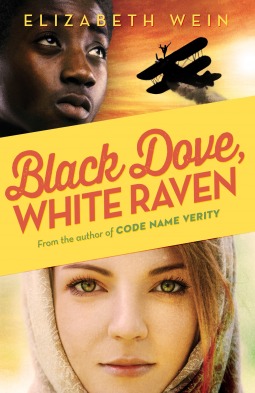
Black Dove White Raven 2

Synopsis:

(via Goodreads)

Rhoda and Delia are American stunt pilots who perform daring aerobatics to appreciative audiences. But while the sight of two girls wingwalking – one white, one black – is a welcome novelty in some parts of the USA, it’s an anathema in others. Rhoda and Delia dream of living in a world where neither gender nor ethnicity determines their life. When Delia is killed in a tragic accident, Rhoda is determined to make that dream come true. She moves to Ethiopia with her daughter, Em, and Delia’s son, Teo.

Em and Teo have adapted to scratching a living in a strange land, and feel at home here; but their parents’ legacy of flight and the ability to pilot a plane places them in an elite circle of people watched carefully by the Ethiopian emperor, Haile Selassie, who dreams of creating an air force for his fledgling nation. As Italy prepares for its invasion of Ethiopia, Em and Teo find themselves inextricably entangled in the crisis — and they are called on to help.

My Thoughts:

Sigh. I was so looking forward to this book, having absolutely loved (and been emotionally wrecked by) Code Name Verity and Rose Under Fire, also by Elizabeth Wein. Sadly, this new book simply does not measure up.

The synopsis is a bit misleading, for starter. Delia’s accident happens quite early in the story, and we get only a few glimpses of Rhoda and Delia’s friendship and flying adventures. Most of the book takes place in Ethiopia, after Rhoda brings Teo and Em there to start a new life. The book is told via Emilia and Teo’s flight logs, as they record their flying lessons plus their impressions of everything going on around them. While there are interesting snippets, in many ways the overall story feels disjointed and choppy. I didn’t feel that Rhoda’s plans were clearly established, and the ups and downs of their life in Ethiopia are conveyed in choppy episodes that don’t add up to a cohesive whole.

As an added distraction, the book seems to presuppose a certain amount of knowledge of the history of Ethiopia in the 1930s — and I’d guess that most of the target audience would have not the slightest clue. (I relied on Wikipedia to get a basic foundation for appreciating the geopolitics of the time, but how many YA readers would take the time to do this?)

There are some very interesting moments in Black Dove, White Raven, along with a series of dramatic and horrifying events toward the end of the book, but mostly it was a long haul that lacked a real sense of rhythm and flow.

_________________________________________

The details:

Title: Black Dove, White Raven
Author: Elizabeth Wein
Publisher: Electric Monkey
Publication date: March 5, 2015
Length: 480 pages
Genre: Historical fiction/young adult fiction
Source: Purchased