Book Review: Happiness for Beginners by Katherine Center

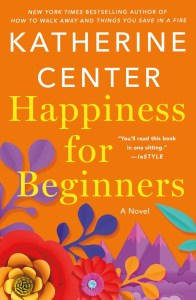
Title: Happiness for Beginners
Author: Katherine Center
Publisher: Griffin
Publication date: March 24, 2015
Length: 352 pages
Genre: Contemporary fiction
Source: Purchased
Rating:

Rating: 4 out of 5.

A year after getting divorced, Helen Carpenter, thirty-two, lets her annoying, ten years younger brother talk her into signing up for a wilderness survival course. It’s supposed to be a chance for her to pull herself together again, but when she discovers that her brother’s even-more-annoying best friend is also coming on the trip, she can’t imagine how it will be anything other than a disaster. Thus begins the strangest adventure of Helen’s well-behaved life: three weeks in the remotest wilderness of a mountain range in Wyoming where she will survive mosquito infestations, a surprise summer blizzard, and a group of sorority girls.

Yet, despite everything, the vast wilderness has a way of making Helen’s own little life seem bigger, too. And, somehow the people who annoy her the most start teaching her the very things she needs to learn. Like how to stand up for herself. And how being scared can make you brave. And how sometimes you just have to get really, really lost before you can even have a hope of being found.

Katherine Center has become a go-to author for me, but I hadn’t gone back and read any of her earlier books. My introduction to this author was the 2018 novel How to Walk Away, and I’ve read all her books published since then. Fortunately, I stumbled across Happiness for Beginners, and I’m so glad that I finally gave it a try.

As the story opens, Helen is a 32-year-old teacher whose life for the past few years has, frankly, sucked. She’s divorced from her alcoholic husband and has been stuck in her own sadness for quite a while now, desperately in need of a change. Despite her rocky relationship with her younger brother Duncan, whom she barely tolerates, she grabs onto his suggestion of a wilderness backpacking course as a way to shake up her life, but then is dismayed to learn that Duncan’s best friend Jake will be participating as well — and what’s more, that Duncan has promised Jake that Helen will drive him to Wyoming for the start of the course.

The wilderness course is a 3-week backcountry hiking adventure that has a reputation for being incredibly difficult and dangerous. Helen could have gone to Paris, but she feels like this is how she’ll find a new outlook on life. She does not need Jake tagging along, although she’s surprised to learn just what a great companion he can be during their road trip. Still, an ill-advised kiss later, she decides that any closeness with Jake is a mistake, and informs him that once the backpacking trip starts, they’re to act like strangers.

As the group sets off into the wilderness, Helen finds herself both the oldest in the group and a total outsider. The others are mostly college-aged jocks and sorority sisters, many participating for the sake of college credits, and most are in much better shape than she is. Helen finds herself stumbling along at the back of the pack, picked on by the trip leader, and excluded from the easy companionship she sees developing between the rest of the group.

Her situation improves over time as she proves herself through determination and picking up wilderness skills (she’s an awesome map-reader!), and she becomes friends with a younger woman on the trip whose academic focus is the study of happiness. With Windy’s coaching, Helen begins to learn to center herself with appreciation and being present in the good moments, and the trip eventually brings the personal transformation she’d so hoped for… although she has to deal with heartache along the way too.

At first, I was annoyed by the plot of Happiness for Beginners. I think I may have been ruined for this sort of fiction by Cheryl Strayed’s Wild (which bugged the hell out of me). Call me old-fashioned, but I have little patience for characters who set off on adventures that they’re totally unprepared for and shrug off warnings about the risks — and even less patience for stories where these unprepared characters end up totally fine and triumphant, making it seem like anyone could… I don’t know… hike the entire Appalachian Trail on a whim.

Putting that aside, though, Helen really grew on me as a character, particularly as we learn more about her childhood and difficult family situation. Having her brother’s best friend as her companion and love interest is an unusual set-up. Beyond their great chemistry, one of the elements I appreciated about Helen and Jake as a couple is how her developing appreciation for Jake helped her begin to see Duncan in a new and better light.

The adventure elements are great, and I really enjoyed vicariously hiking up and down trails, camping under the stars, and seeing the glorious sites. (I was happy it was only a vicarious experience, though, given the descriptions of how gross and smelly they all were by the end of the three weeks). In fact, I got a little miffed that we didn’t get even more of the hike — the narrative skips ahead days at a time in some points, and I get it — seeing them hike trails for twenty-one straight days could get repetitive — but at the same time, I wanted just a few more days of hiking.

The characters are terrific, the love story elements are believable and nicely built, and I loved the setting and the overall premise. For fans who’ve discovered Katherine Center through her more recent novels, I definitely recommend checking out Happiness for Beginners too.

Netflix released a movie version of Happiness for Beginners last month, and even though at first glance the casting and tone seem different from what I’d expect after reading the book, I’m up for giving it a shot sometime soon. Here’s the trailer:

What do you think? Would you watch this movie?

Book/Audiobook Review: Waypoints: My Scottish Journey by Sam Heughan

Title: Waypoints: My Scottish Journey
Authors: Sam Heughan
Narrator:  Sam Heughan
Publisher: Voracious
Publication date: October 25, 2022
Print length: 270 pages
Audio length: 7 hours 47 minutes
Genre: Memoir/travel/adventure
Source: Purchased
Rating:

Rating: 4.5 out of 5.

Journey deep into the Scottish Highlands in the first memoir by #1 New York Times bestselling author and star of Outlander, Sam Heughan—exploring his life and reflecting on the waypoints that define him

“I had to believe, because frankly, I had come so far there could be no turning back.”

In this intimate journey of self-discovery, Sam sets out along Scotland’s rugged ninety-six-mile West Highland Way to map out the moments that shaped his views on dreams and ambition, family, friendship, love, and life. The result is a love letter to the wild landscape that means so much to him, full of charming, funny, wise, and searching insights into the world through his eyes.

Waypoints is a deeply personal journey that reveals as much about Sam to himself as it does to his readers.

Sam Heughan, star of Outlander and portrayer of the iconic Jamie Fraser (aka, the King of Men), takes us on his journey along the West Highland Way, during which he contemplates both the trek itself and the landscapes of Scotland, as well as the path his life has taken to reach this moment in time.

Despite being a die-hard Outlander fan and having very much enjoyed his travel book Clanlands (co-authored with his costar Graham McTavish), I was a bit skeptical at first. I suspected that the book would be heavy on navel-gazing, and was afraid I’d be disappointed. I’m happy to report back that my fears were unfounded — Waypoints is a delight.

The book is framed around a rare week off for Sam, who finds himself back home in Glasgow with an entire week at his disposal. He makes a spur of the moment decision to walk the famous West Highland Way, a trail of almost 100 miles from Glasgow to Fort William in the Scottish Highlands. After an immediate trip to an outdoors outfitting store, where he buys everything the salesclerk tells him to, he sets out the next day with a plan to finish the journey in five days.

After two days of a pounding pace that is physically grueling, he’s about to pack it all in and call it quits, but has a revelation of sorts: It’s about the journey, not the speed. Not exactly shocking, but as he explains, for someone who’s always pushed himself, it’s a strange and unfamiliar approach. From that point on, he slows his pace, literally lightens his load by shedding most of the gear he carries, and begins to enjoy the sights and small moments along the way.

Interspersed with his narration of the trek are memories of his life, from childhood through school years, the initial introduction to theater and his long pursuit of a career as an actor — something he was on the verge of giving up on before landing the role of a lifetime in Outlander.

I listened to the audiobook, which really is the way to go with Waypoints. Sam is a gifted, entertaining narrator — I really did feel like I was listening to him telling friends his stories, rather than reading words from a page. He includes funny little asides that are not in the print version, and an added bonus is that each day’s section of the book concludes with voice recordings that he made on the journey — these add fun as well as appreciation for how hard the hike was. (He’s often out of breath, and we can hear the pounding rain that he’s described during the first day).

The audiobook (via Audible) comes with a PDF that includes the photos from the print book, as well as some illustrations of Scottish wild mushrooms. (Sam develops an ongoing rapport with the mushrooms he encounters while hiking solo — it’s very silly, but very amusing). I had originally bought myself a copy of the hardcover edition before deciding to listen to the audiobook, and I was glad to have it as a reference while listening. (Plus, the photos really are great — some are from his childhood and early theatrical experiences, and some are from the hike).

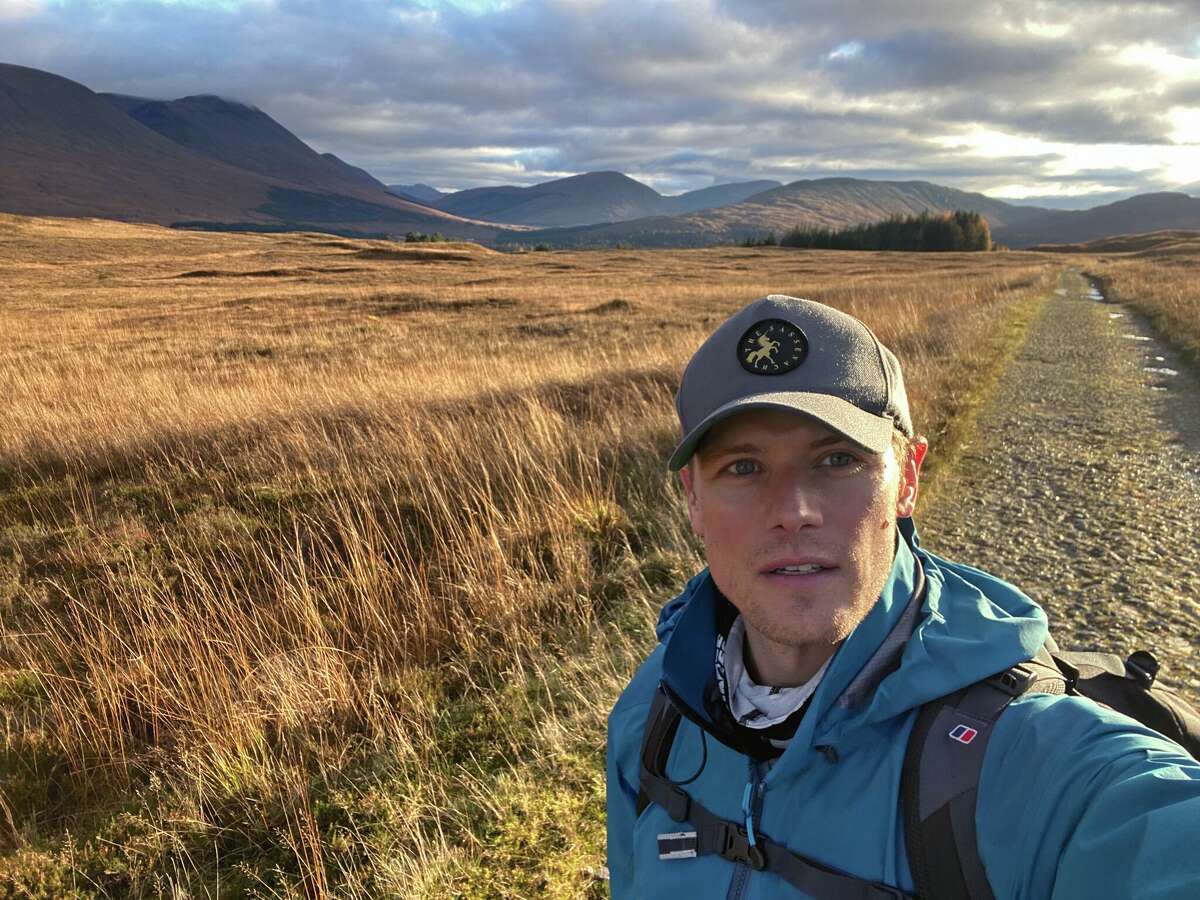
Source: Waypoints by Sam Heughan

Waypoints is entertaining and yet feels very personal — Sam shares openly about his repeated disappointments while trying to break into acting, the dashed hopes, the sense that it might never work, barely making ends meet working odd jobs while continuing the arduous process of showing up for audition after audition that never quite works out. He does it all with humor and appreciation, and it’s clear that he’s very grateful for the opportunities that have come his way. He’s even very kind about the masses of Outlander fans, who are usually polite in their enthusiasm but can sometimes get a little extreme.

I know when the book was released, various entertainment sites took small passages from the book and tried to sensationalize them. For example, there’s a scene where a well-known actor fails to recognize Sam when he’s working as a waiter, despite them having known one another through mutual friends. Sam uses this as an example of what his experiences were while trying to make it as an actor, and presents it without bitterness or hard feelings, yet I’ve seen fluff pieces portraying this as a major snub — and that’s not how it’s conveyed at all. Likewise, he’s always respectful and appreciative when discussing his experiences on the Outlander set, but I’ve read pieces that have tried to turn his comments into major complaints — and again, that’s not how it reads in the context of the book.

In any case, I found Waypoints to be terrific entertainment, and Sam Heughan is an engaging, forthright, and often very funny narrator and author. I enjoyed learning more about his background and his earlier career experiences, and absolutely loved the vicarious thrill of going along for his journey on the West Highland Way.

This is a charming, engaging audiobook, well worth checking out!

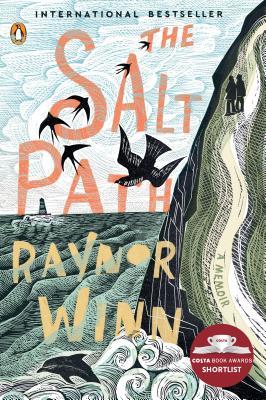
Audiobook Review: The Salt Path by Raynor Winn


SHORTLISTED FOR THE COSTA BOOK AWARD 

The true story of a couple who lost everything and embarked on a transformative journey walking the South West Coast Path in England

Just days after Raynor Winn learns that Moth, her husband of thirty-two years, is terminally ill, their house and farm are taken away, along with their livelihood. With nothing left and little time, they make the brave and impulsive decision to walk the 630 miles of the sea-swept South West Coast Path, from Somerset to Dorset, through Devon and Cornwall.

Carrying only the essentials for survival on their backs, they live wild in the ancient, weathered landscape of cliffs, sea, and sky. Yet through every step, every encounter, and every test along the way, their walk becomes a remarkable and life-affirming journey. Powerfully written and unflinchingly honest, The Salt Path is ultimately a portrayal of home–how it can be lost, rebuilt, and rediscovered in the most unexpected ways.

I feel like I could just make a list of relevant adjectives and leave my review at that:

Powerful.

Beautiful.

Moving.

Inspiring.

Courageous.

Not enough? Okay, here goes, with a bit more commentary.

I remember hearing something about The Salt Path when it was released, but didn’t really know what the book would focus on or whether it was really for me. Having just finished the audiobook, I can emphatically state that yes, this IS a book for me, and I suspect for many others too.

In The Salt Path, author Raynor Winn shares the painful story of how she and her husband Moth lost their family farm after a lengthy legal battle stemming from an investment with a friend. While not all that much detail is given about the case itself, it sounds as though this long-term friend was fairly shady and went after Ray and Moth to cover his expenses when the project tanked. Not able to afford counsel in the drawn-out court case, the couple had no choice but to represent themselves, and ultimately ended up losing everything on what seemed to be a technicality.

Given a week to vacate their home, Ray and Moth are thrown into despair, compounded by a visit that week to a doctor who confirms that Moth suffers from a degenerative neurological disease that will kill him after a painful decline at some point in the near future. If this were fiction, a reader might be tempted to protest the melodrama of having characters lose their homes and livelihood AND get a terminal diagnosis all in the same week, but this is real life, and it really happened this way.

The choices available to the couple are slim. They’re left with public benefts that amount to about $60 a week, and can go on the wait list for public housing — but because Moth’s illness isn’t in end stages just yet, they don’t have priority. They can stay with family and friends temporarily, but are afraid of becoming burdens and outstaying their welcomes. And then a strange whim occurs to them as they’re sorting through the remains of their old life — why not just walk? Now in their 50s, Moth and Ray haven’t done any serious outdoor adventuring in many, many years, but the idea of walking the South West Coast Path grabs hold of them as a way of being somewhere, with a purpose, rather than completely buckling under the weight of their bad luck and inauspicious prospects.

And so, they gather gear, put most of their belongings into storage with friends, and set out to walk the Coast Path. It’s not easy. Moth’s illness is painful, to the point that he can barely get out of bed some days. And yet, they’re determined to walk rather than sit still. As they move forward, they face ongoing shortages of food, scraping by on their meager weekly allowance (and eating lots of noodles), camping wild wherever they can find a spot to pitch the tent, and slowly, mile by mile, falling into a rhythm that has a beauty all its own.

Ray and Moth have a marriage that the rest of us can only envy. Together since their teens, the love between the couple is strong and unbreakable, shining through Ray’s writing on every single page. It’s heart-breaking to hear Ray’s thoughts on how much this man means to her, and what the future might hold for both of them as his disease progresses.

Meanwhile, each chapter brings fresh insights and wonders. Parts of the book read like an ode to the natural beauty of the landscapes and seascapes they see on their journey. It really sounds spectacular. There’s also sorrow and harsh realities — the author includes statistics and background information on homelessness in the UK, and shows how the official numbers are only a small representation of the true homeless population.

Homeless themselves, Ray and Moth again and again face the general dislike and fear that most people seem to feel toward the homeless. They meet many people along the path — fellow hikers, local residents, random strangers. When seen as older backpackers with presumably enough wealth to take weeks away from the world to walk the path, they’re applauded and warmly greeted. But when Moth explains to previously friendly people that they’re homeless, the others shrink away from them and can’t seem to distance themselves fast enough.

The writing is simply beautiful. Ray shares her pain and her sorrows, but also reveals the growing sense of belonging that she finds through the path:

The country towered above me, a blank empty space containing nothing for us. Only one thing was real, more real to me now than the past that we’d lost or the future we didn’t have: if I put one foot in front of the other, the path would move me forward and a strip of dirt, often no more than a foot wide, had become home. It wasn’t just the chill in the air, the lowering of the sun’s horizon, the heaviness of the dew or the lack of urgency in the birds’ calls, but something in me was changing season too. I was no longer striving, fighting to change the unchangeable, not clenching in anxiety at the life we’d been unable to hold on to, or angry at an authoritarian system too bureaucratic to see the truth. A new season had crept into me, a softer season of acceptance. Burned in by the sun, driven in by the storm. I could feel the sky, the earth, the water and revel in being part of the elements without a chasm of pain opening at the thought of the loss of our place within it all. I was a part of the whole. I didn’t need to own a patch of land to make that so. I could stand in the wind and I was the wind, the rain, the sea; it was all me, and I was nothing within it. The core of me wasn’t lost. Translucent, elusive, but there and grown stronger with every headland.

A note on the audiobook: Narrator Anne Reid is lovely, making the story feel alive and vibrant, capturing the emotion of Ray’s first-person narration in a way that makes it feel like a friend telling you a story. Really a treat to listen to.

There’s so much to love about The Salt Path. I found Ray and Moth’s journey and their devotion to one another so inspirational. And, this book really made me want to get out and walk a long path some day!

Don’t miss this book. It’s a beautiful work, and is worth taking the time to savor.

_________________________________________

The details:

Title: The Salt Path
Author: Raynor Winn
Narrated by: Anne Reid
Publisher: Penguin Books
Publication date: March 22, 2018
Length (print): 288 pages
Length (audiobook): 11 hours, 2 minutes
Genre: Memoir
Source: Purchased