Book Review: Trouble by Non Pratt

Book Review: Trouble by Non Pratt
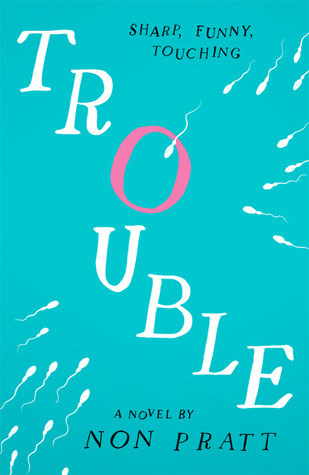
TroubleWhen Hannah finds herself pregnant at age 15, it certainly doesn’t come as a surprise to the reader, although Hannah seems to be pretty stunned herself. By the time Hannah gets around to taking a pregnancy test, we’ve seen her out at the park every Friday night, hooking up with whatever boy she can find, whether or not he’s actually available. With her underdressed, oversexed best friend Katie, Hannah is known for her sexiness and her willingness. So is it only a matter of time until it all catches up with her?

And then there’s Aaron, the new boy at school, son of the the new history teacher, and mysteriously unknowable — cool, but not excessively so; accepted by the in-crowd, but just ever so slightly stand-offish, with people to hang with but no close friends.

Hannah is hiding a big secret, and so is Aaron… and when Hannah’s former bestie blabs about the pregnancy to exactly the wrong person, the news is soon all over Facebook and Hannah’s reputation is trashed — until Aaron steps in and offers to pretend to be the baby’s father. Why? Well, Hannah needs a hero, and Aaron desperately needs to do something heroic. The two march forward together through the rest of the school year, watching Hannah’s bump grow bigger and bigger, and in the process, becoming each other’s rock and best friend.

Of course, nothing is perfect. There’s family drama to deal with, and Katie simply will not stop trying to mess up Hannah’s life even further, no matter who gets hurt. Through it all, we get Hannah’s view of life as a pregnant teen — ugly clothes, getting up to pee at night, and suffering the horrors of overly graphic prenatal classes.

There’s quite a lot to like about Trouble. Told in the first person in alternating voices, we get both Hannah and Aaron’s perspectives on themselves and on each other, and the author does a terrific job of showing how perceptive and at the same time how dense a hormonal teen can be. Both teens are funny, smart, and aware, yet they still manage to make foolish choices and hurt each other in the process. Yet it’s their friendship that sees them through, and as they finally break down their own protective barriers and share their personal truths, we get a picture of just how important a true friend can be.

Hannah is a puzzling character, and the author very cleverly shows us Hannah in a certain light early on, leading us to form certain opinions, and not revealing until much later that the public Hannah is not at all a true picture of who she is inside. She’s quite engaging and a terrific character to get to know, and yet, I never quite understood all of her decisions.

Aaron too is quite likeable, and his seemingly illogical nobility in rescuing Hannah from social purgatory eventually makes more sense, as his past and his secrets come to life.

In addition to Hannah and Aaron, we meet their families — and despite their quirks, it’s actually quite a nice change to see a YA novel with parents who are responsible, caring, supportive, and truly present. Neither of the main characters come from messed-up homes or are disadvantaged. In fact, Trouble makes a good point of showing that accidents and bad decisions can happen to anyone, even kids from good homes and with everything going for them. (Irony of ironies, Hannah’s mom is a sex ed specialist — this is not a girl who doesn’t know about condoms, safe sex, and morning after pills!)

Trouble was first published in the UK, with its US release coming up in June. I think it will translate well across the pond, although I’d imagine American teens may struggle a bit with some of the Brit speak and certain concepts specific to the British school system. Still, this should be no more than a mild inconvenience. The story itself is engaging and addresses certain universal experiences, and I think any teen reader, no matter the country of origin, should be able to relate to Hannah and Aaron’s experiences.

Overall, I’d recommend Trouble for anyone who enjoys contemporary YA without too much much of a sugar-coating. This isn’t a traditional love story, so don’t expect fireworks or declarations at the end. In fact, Trouble is refreshing in that it avoids many of the overused tropes of today’s YA fiction, such as insta-love, redeemed bad boys, or realizing that the boy next door is actually much hotter than the hunky, popular boy after all.  Trouble is the story of a girl with all sorts of issues and a big baby bump, and the unlikely friend who steps in to get both of their lives back on track. Hannah and Aaron are an odd pairing, but they become true friends, and it’s both fun and touching to see how they grow and change — together.

_________________________________________

The details:

Title: Trouble
Author: Non Pratt
Publisher: Walker Books Ltd.
Publication date: March 6, 2014 (to be published in US on June 10, 2014)
Length: 384 pages
Genre: Young adult contemporary fiction
Source: Purchased

Book Review: The Farm by Tom Rob Smith

Book Review: The Farm by Tom Rob Smith

The FarmFamily loyalties, secrets and conspiracies, and questions about mental health lie at the center of the new novel The Farm by author Tom Rob Smith. In this compulsively readable book, the reader is left to wonder just what is true and what is delusion, and unraveling the hints and clues makes for a reading experience that’s hard to walk away from once started.
In The Farm, 20-something Daniel lives in a beautiful apartment in London, supported by his older boyfriend Mark — the boyfriend that he just never seems to find the right time to mention to his parents, especially now that they’ve retired from their gardening business and moved to a farm in Sweden. Although Daniel remembers his childhood as peaceful and happy, he’s drifted away from his parents in recent years, allowing miles and his own secret to create a distance that becomes harder and harder to bridge.

As the story opens, Daniel receives a shocking phone call from his father, telling him that his mother Tilde is in the hospital, having suffered a mental collapse, and is now institutionalized and being treated for a psychotic episode. No sooner does Daniel get off the phone to arrange for a flight to Sweden than he gets another call, this one from his mother, pleading with Daniel not to believe his father’s lies and informing him that she’s on her way to London, where she’ll explain everything.

Tilde’s arrival rocks Daniel to the core. His always cheerful, together mother arrives looking bedraggled and spouting wild comments about conspiracies and crimes. She claims to have proof — a battered leather satchel that she won’t allow out of her grasp. She warns Daniel that they must not allow his father to find them, as he and his partners in crime are determined to lock her away and discredit her as part of their own cover-up.

What’s Daniel to do? His mother’s tales sound too wild to be believed, yet there’s something there that compels him to listen. She’s clearly unstable, and as she displays her evidence and lays out her story, she does sound unhinged — but her tale has enough rationality in it that Daniel can’t dismiss it outright. As Tilde goes further and further into her story, it’s clear that something unexpected happened in Sweden, and that the peaceful country retirement went very wrong, very quickly. But every shred of Tilde’s evidence can be explained away, so who is to be believed? Is Tilde a sick woman, in need of commitment to a mental facility for her own well-being? Or is she a woman who’s been set up to take the fall in order to keep a dark underbelly of depraved acts hidden from view?

Reading The Farm, we’re as torn as Daniel. Much of what Tilde says has a ring of truth, and obviously she believes wholeheartedly in what she’s saying. There are enough errant facts to indicate that something was amiss in the small Swedish community where the couple had hoped to make their home. And yet, Tilde’s wild distractions, her grasping for meaning in small inconsequentialities, leave us to wonder whether Daniel’s father might have been right all along.

I won’t spoil anything by going into an explanation of how it all works out. Daniel’s task is to unravel his mother’s stories before his father shows up to have her committed again, and it’s up to Daniel to figure out where the truth lies. The reader is along for the ride, seeing the bits and pieces as Daniel does, and over the course of the book, trying to fit together the puzzle pieces in order to see the greater whole.

The Farm has a darkness to it, woven in among the domestic details of a seemingly simple life. The empty landscapes of remote Sweden have a sinister overtone, and even the supposed richness of the land and the nearby river betray Tilde, as nothing works out for her as she’d envisioned. The purity of self-sustaining country life that she’d dreamed of is nothing but illusion, and the remoteness of the farm doesn’t shield Tilde and her husband Chris from the pressures and politics of the local farming community and its more influential members. The writing conveys the bleakness and isolation of the farm, the stark beauty of the Swedish countryside adding an element of mythical danger with its deep, dark forests.

There’s a darkness, too, in the depiction of Daniel’s happy family. He remembers a perfect childhood in which his parents never argued or showed signs of the slightest disagreement. He also believed his parents to be completely happy. Sure, some oddities are there — Daniel grew up without siblings or any relatives, his mother being estranged from the parents in Sweden whom she’d left decades earlier. As Daniel uncovers the secrets and lies within his parents’ marriage, he also is forced to confront his own need for secrecy and accept his role in creating the emotional chasms between him and his parents that allowed this crisis to go so far without his knowledge.

The author keeps us on our toes. Like Daniel, we spend much of the book listening to Tilde try to convince us that what she thinks happened is what really happened. The writing here shifts between Daniel’s observations of his mother’s behavior and longer segments in which we hear Tilde’s first person account. This is the unreliable narrator device at its best, serving to keep us off-balance, torn between wanting to believe and knowing something is just… off.

I enjoyed The Farm very much. It’s a quick read, and really impossible to put down once you start. I couldn’t stop thinking about Tilde’s story, knowing that what she says can’t be entirely true, yet knowing too that there must be an answer as to why she believes what she believes — and that even if she is unreliable, there’s enough that’s questionable in her tale to show that something isn’t right at the farm. Perhaps the big, dark secrets and the unraveling of the mysteries weren’t quite as huge as I’d expected; still, the truth that emerges is devastating in its own quiet way. The ending of The Farm is entirely satisfying, true to the characters and adding a sad logic to all of the events we’d heard about.

_________________________________________

The details:

Title: The Farm
Author: Tom Rob Smith
Publisher: Grand Central Publishing
Publication date: June 3, 2014
Length: 368 pages
Genre: Mystery/thriller
Source: Review copy courtesy of Grand Central Publishing via NetGalley

Guest Review: I Shall Be Near To You by Erin Lindsay McCabe

Please join me in welcoming my wonderful friend Mary, who consistently recommends superb books to me. Mary is the one who first encouraged me to read I Shall Be Near To You, and so I thought it only fitting to invite her to write a review.

***Guest Review: I Shall Be Near To You by Erin Lindsay McCabe***

***Reviewed by Mary***

IShallBeNear

“His arms pull me tight against his chest and I bury my face in his shoulder. He shakes and it is dark enough I can still say I ain’t ever seen him cry. My heart goes to cracking wide open, but at least I am alive to feel it. I am a different kind of woman now, a wife who knows what this war really is. At least I am part of this war, part of the things Jeremiah’s done here, things that will always be hiding somewhere in his heart.”

New York, 1862. Rosetta marries her childhood sweetheart just before he leaves to enlist with the Union Army. Jeremiah is naive and optimistic about the war, thinking he’ll be gone a short while and return with money enough for them to buy their own farm. Even so, Rosetta doesn’t want him to go. Without Jeremiah, she has to play the role of wife, cooking, mending, making soap, when she’d rather be outside tending the animals or helping with the harvest. Rosetta is stubborn and spirited, and it isn’t long before she hacks off her braid, dresses in Jeremiah’s old clothes and follows her husband to war.

Rosetta is a force, a fighting wife, a woman brave enough to follow her husband into hell. Their love is both fierce and tender, and their connection to one another endures long stretches of boredom, constant hunger, and short bursts of battle-born terror. Neither of them truly understood what war would be, and the author, with well-placed poetic imagery and necessary grit, conveys the realities of a soldier’s life.


“I aim careful in the dying light and fire two rounds…the first don’t hit a thing, but the second shot makes a space in the line advancing. Something heavy settles in my belly when the stain blooms on that soldier’s chest, the hole in the line, the tear in the fabric of some other family.”


Rosetta’s voice is strong and straightforward; her struggles and fears are authentic and entirely relatable. The supporting characters are well-drawn, compelling, easy to get attached to. There is just the right amount of historic detail to capture the essence of the time period without inundating the reader with “research.” The way the story is told, the structure and pacing, seems effortless (though I am sure it wasn’t), and thankfully, there is no epilogue to stitch up every last detail. In short, this is as close to perfect as it can get. If you love historical fiction – if you love great fiction – read this book. But read it slowly. Savour your time with these unforgettable characters and their heart-wrenching story. 

And…when you read the last page, close the book and still find yourself unable to let go of the story, read these interesting links:

The title of the book was inspired by a real letter from Union soldier Sullivan Ballou to his wife Sarah. Read it here.

The author’s playlist. Music can strike an emotional chord with me, and I love that the author included the songs she listened to while writing. These echo the mood of the book so well. Make sure you listen to “My Father’s Father” when you have finished the book. So, so moving.

An interview with the author. I love hearing about the process of getting this book revised and published. It was obviously a labor of love.

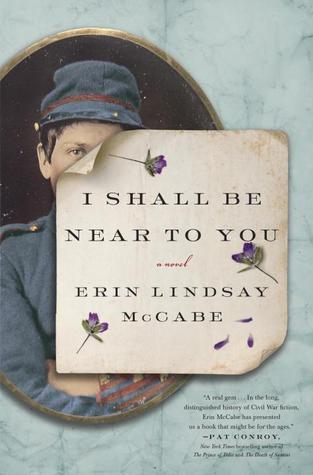
The original photo from the cover.Were you, like me, curious about the soldier pictured on the front of the novel? I wanted to see his (her?) whole face, and I was surprised to discover that the soldier was actually a Confederate.

A Savage Day in American History. A little more information about the Battle of Antietam.


About the reviewer:

MaryMary is a life-long reader and self-professed book-nerd. She carries a book with her wherever she goes, and if she isn’t reading, she’s either sleeping or dead.

Want to read more of Mary’s reviews? You can find her here on Goodreads — just tell her Bookshelf Fantasies sent you!

Stay tuned:

I Shall Be Near To You is my spotlight book this week, and there are more related blog posts to come!

Book Review: The Break-Up Artist by Philip Siegel

Book Review: The Break-Up Artist by Philip Siegel

The Break-Up Artist

Synopsis:

Some sixteen-year-olds babysit for extra cash. Some work at the Gap. Becca Williamson breaks up couples.

After watching her sister get left at the altar, Becca knows the true damage that comes when people utter the dreaded L-word. For just $100 via paypal, she can trick and manipulate any couple into smithereens. With relationship zombies overrunning her school, and treating single girls like second class citizens, business is unfortunately booming. Even her best friend Val has resorted to outright lies to snag a boyfriend.

One night, she receives a mysterious offer to break up the homecoming king and queen, the one zombie couple to rule them all: Steve and Huxley. They are a JFK and Jackie O in training, masters of sweeping faux-mantic gestures, but if Becca can split them up, then school will be safe again for singletons. To succeed, she’ll have to plan her most elaborate scheme to date and wiggle her way back into her former BFF Huxley’s life – not to mention start a few rumors, sabotage some cell phones, break into a car, and fend off the inappropriate feelings she’s having about Val’s new boyfriend. All while avoiding a past victim out to expose her true identity.

No one said being the Break-Up Artist was easy.

This YA novel is refreshingly straight-forward: Becca is a girl on a mission. In a school where (paraphrasing here) “you wouldn’t understand, you’ve never had a boyfriend” is the ultimate put-down, it’s no wonder that girls like Becca suffer mightily. Seemingly unbreakable best-friendships are tossed aside the second one friend gets a boyfriend. It doesn’t seem to matter who he is, so long as there’s someone to walk down the hallway with and make googly eyes at. Wouldn’t it absolutely drive you bonkers if every conversation you were subjected to began with “My boyfriend says…” or “Last night, my boyfriend and I…”?

Becca is especially bitter when it comes to so-called true love. Heck, she even claims that Romeo and Juliet were never truly in love — just a couple of hormonal teens who probably would have gotten tired of each other if they’d spent more than a week together. She’s seen her closest friend from middle school, Huxley, transform herself from a really great friend to the queen of the school, with no time to spare for her former (lesser) friends now that she’s dating a supremely popular boy and has reached the pinnacle of the school social heap. Becca has also seen the suffering her sister has endured ever since getting dumped on her wedding day. What’s more, she looks at her parents and sees two people who just live in the same house with not a shred of romance between them. So what’s so great about relationships?

To top it all off, her best friend Val, after years of wanting a boyfriend, finally has one… even though she had to pretend to share his love of movies in order to get him to notice her. Now they make out in hallways and only have eyes for each other, except for when they take pity on Becca, invite her to come out with them, and then get so caught up in each other that they ignore her completely. Val is ecstatic, Becca is dubious… and Becca is conflicted, because Val’s boyfriend seems to have more in common with Becca, and he has the dreamiest eyes! Ugh, Becca, run away! No boy is worth the pain that will fall down on your head if you — wait! Don’t kiss him! Argh. Bad moves galore.

Here’s the thing: Becca’s judgment is, shall we say, not so sound? She starts her business as the Break-Up Artist to  make a little money, yes, but more so out of a sense of righteous indignation over the fate of the singletons in her school. Operating via email and video chat (in disguise), Becca’s clients are her schoolmates, often the friends left behind for the sake of a relationship with a cute boy. It’s a sad state of affairs, and in Becca’s view, almost none of these relationships are real. The truth she continually discovers is that girls stick with jerky boyfriends because even a jerky boyfriend is better than no boyfriend. It’s truly a disheartening state of affairs.

So Becca meddles, not that ingeniously, in my humble opinion, and when it hits the fan — as it was bound to — Becca faces the loss of every friend at school and complete and utter humiliation. So was it worth it? Well, yes and no. Becca does suffer social disaster, but comes to realize some hard truths as well: Not every relationship, no matter how corny or over the top, is doomed to fail. Some teen couples may actually love each other. Some people really can figure things out on their own, without being pried apart by the Break-Up Artist. And maybe what looks like a lack of romance on the part of her parents is really just Becca’s introduction to what a normal, health, mature relationship might look like, once the initial thrill and hormonal rush give way to true affection and devotion.

So, my big picture thoughts about The Break-Up Artist?

On the plus side, the writing is full of quips and zingers that kept me amused and engaged. Here are a few top choices:

 I reread the email about five more times. The words don’t change, but each time they seep in more. I deal with low profile relationships, ones that don’t case major seismic shifts in the tectonic plates of gossip our school rests upon. Huxley and Steve are the San Andreas Fault of relationships. (Wow, I guess our current unit on geology is more fascinating than I thought.)

♥♥♥♥♥

Everything Ezra says needs cheesy background music and sparkles. I wonder if his mom read him greeting cards as a baby.

♥♥♥♥♥

It’s weird when you find out your suspicions are correct. I knew from a young age that the tooth fairy wasn’t real. But I still felt a pang of disappointment when my dad woke me up cramming a dollar under my pillow. It’s not always fun being right.

On the down side, there were quite a few elements that made shake my head or take a step back. Becca’s voice didn’t feel especially authentic — she seemed more to me like a writer’s idea of how a teen girl might think, as opposed to a real girl, if that makes sense. Some of the word and phrasing choices struck me as odd, like the term “singleton” or even referring to herself and friends as being “single”. Maybe they don’t have boyfriends, but I’m not convinced that they’d define themselves using those words.

The emphasis on having a boyfriend at all costs is overdone. The message here is that this is NOT a good way to live life… but it’s a pretty muddled message, based on Becca’s actions and her interactions with Huxley and Val. It’s not a bad thing to have a boyfriend, so maybe the book might have been more convincing if we saw even one couple in the high school following some sort of middle path, rather than becoming instant, extreme relationship zombies.

The author is careful to keep Becca balanced just on the right side of the line dividing a good person making unwise choices from a bad person doing bad things. Becca does act unwisely, perhaps for what she considers good reasons, but people do get hurt, and she makes foolish choices galore. Yes, her worldview has been skewed by her experiences with her former friends and by sister’s ordeal, but that’s not really a valid excuse for what she does. And, let me just add, Becca’s schemes are a bit lame. She breaks up a couple by planting a fake wedding binder in the boy’s locker so he’ll freak out over his girlfriend’s supposed wedding obsession — but who would believe this, really? All of the break-up moves Becca pulls off seem like plans that could only work in fiction or in the movies. Real people just wouldn’t be fooled.

Bottom line? The Break-Up Artist is a fun, fast read, but with some tonal flaws, a main character who can be hard to get behind, and some plot points that strain plausibility way beyond the breaking point. The quippiness is fun and I enjoyed a lot about the writing, but the plot itself could have used some big tweaks in order to resemble anything like real high school life.

_________________________________________

The details:

Title: The Break-Up Artist
Author: Philip Siegel
Publisher: Harlequin Teen
Publication date: April 29, 2014
Length: 336 pages
Genre: Young adult fiction
Source: Review copy courtesy of Harlequin Teen via NetGalley

At A Glance: She Is Not Invisible by Marcus Sedgwick

Book Review: She Is Not Invisible by Marcus Sedgwick

She Is Not Invisible

Laureth Peak’s father has taught her to look for recurring events, patterns, and numbers–a skill at which she’s remarkably talented. Her secret: She is blind. But when her father goes missing, Laureth and her 7-year-old brother Benjamin are thrust into a mystery that takes them to New York City where surviving will take all her skill at spotting the amazing, shocking, and sometimes dangerous connections in a world full of darkness. She Is Not Invisible is an intricate puzzle of a novel that sheds a light on the delicate ties that bind people to each other.

My thoughts:

This quiet book is a charmer, although it was nothing like what I’d expected. In She Is Not Invisible, Laureth searches for her missing father by taking her 7-year-old brother on a flight from London to New York — without parental permission, I might add — and based on the barest scraps of clues, spends two days scouring the city for hints that might lead to her brilliant but unpredictable father.

Their father seems to have become obsessed with the study of coincidence in the last several years, focusing especially on certain numbers that show up repeatedly in his life in significant and potentially meaningful ways. As Laureth and Benjamin follow the hints, they too begin to look for the special numbers and odd patterns, the things that seem to be inexplicable yet seem to occur often enough that they must have secret meaning. Or do they?

Meanwhile, Laureth herself is an interesting character. Blind since birth, she wears dark glasses, relies on her IPhones voice capabilities, and has worked out a hand-squeeze system with Benjamin that in essence turns him into her seeing eye dog. She’s a person who forces herself to project confidence and presence; otherwise, as she’s learned, people can’t seem to see her as a real person. So who’s really the blind one here?

She Is Not Invisible includes some interesting thoughts about family and relationships, being different, fitting in and sticking out. The ruminations on the nature of coincidences and whether such things actually even exist are interesting, but don’t really go anywhere. The action is rather muted. The children spend their time rushing from clue to clue, and I could help but cringe at the idea of these two on their own in the city with almost no ability to care for themselves, no way to communicate with their mother, and no way to find their father.

Still, the writing is snappy and keeps things interesting, even when the plot seems to stall out as Laureth contemplates her father’s secret notes and what they might mean. The book contains hints and puzzles of its own, as the author has embedded certain patterns and numbers within the writing itself that are rather fun to track down. (Note: Sadly, this was hard to do, as my ARC was badly formatted, missing the chapter breaks and hand-written asides that end up being important to the story).

Do I recommend She Is Not Invisible? Yes, but. If you’re looking for action, danger, and maybe even special powers or abilities, possibly this isn’t the book for you. But if you enjoy a thoughtful approach with some quirky treats, give it a try!

_________________________________________

The details:

Title: She Is Not Invisible
Author: Marcus Sedgwick
Publisher: Macmillan Children’s Publishing Group
Publication date: April 22, 2014
Length: 224 pages
Genre: Young adult fiction
Source: Review copy courtesy of Macmillan via NetGalley

Book Review: The Here And Now by Ann Brashares

Book Review: The Here And Now by Ann Brashares

The Here and NowAnn Brashares, author of the much-loved, bestselling Sisterhood of the Traveling Pants series, takes a leap into new territory with the publication of her science fiction novel The Here And Now.
Main character Prenna James makes a rather spectacular entrance, appearing suddenly alongside a river, naked and shivering, with a strange number written on her arm. And the sole witness, Ethan Jarves, has never forgotten what he saw that day.

Years later, Ethan and Prenna are classmates in high school, and apart from a surface friendliness, Prenna gives no sign of a previous connection to Ethan. But then again, Prenna has a lot on her mind.

Prenna is a new immigrant — from the future. Along with a community of about 1,000 people, she and her mother traveled a time path from the 2090s back to 2010. Now, four years later, the community attempts to hide in plain sight by assimilating into the world of the “time natives” — mingling, but never getting close. And there are rules that must be followed at all cost: No changing history. No trying to alter established events. No seeking medical attention outside the community. And absolutely no intimacy with the natives, emotional or physical. And if anyone steps out of line, the “counselors” will see to it that those people conveniently leave town, have an accident, or otherwise disappear.

Ethan is persistent in trying to befriend Prenna, and when Ethan pushes Prenna to talk to the local crazy homeless man, she’s startled to discover that both may know more than they should… and that perhaps there’s a mission for her here that may be worth risking her security for. Because in the future that Prenna came from, the world was reaching its end. Climate change had already destroyed much of the planet. Nothing grows. Nothing new is made. People go hungry. It’s only a matter of time before the earth itself is no longer able to sustain life — and that’s not even mentioning the worst part of all, a mosquito-born blood plague that wipes out everyone it touches and can’t be stopped or cured.

Prenna’s family came to 2010 to seek refuge from a world without hope — but what if there was hope after all? What if, by changing one event, Prenna could change the entire course of the future, saving lives and saving the planet? It’s completely against the rules, of course — but what if this just happens to be worth some broken rules?

The Here And Now mingles a time travel adventure with a love story, with mixed success. Obviously, Ethan and Prenna will fall for each other, big time. And obviously, there will be obstacles. The rules that Prenna is forced to follow caution that the time travelers will spread sickness to the time natives by getting too close. Is this just manipulation to assure compliance, or is there really something to fear? And clearly, sharing secrets is a huge no-no, but Ethan may be the only person who can help Prenna figure out what needs to be done and how. Prenna is torn — trust Ethan, or shut him out? Love Ethan, or protect him by rejecting him? Fortunately, rather than the all too common insta-love formula, the author is careful to establish their relationship as one that has built over years, so that as they move from casual acquaintance to deep friendship to romance, it feels legitimate and real — not just romance for the sake of the well-worn YA formula for such things.

More problematic is the time travel. There’s a sci-fi “lite” vibe here. The time loops of causation and change are a bit mind-boggling, but the pieces don’t altogether mesh or make sense. It’s intriguing , to be sure, to figure out the various timelines and how they’ve changed, but the reason behind all of this doesn’t hold up to much scrutiny. The climate change factor feels almost too politically correct, with good guys and bad guys lining up in a very predictable way. There’s also the issue of teens playing in an adult world: In a couple of crucial moments, Ethan and Prenna easily convince a highly skilled scientist to take certain actions that seem far-fetched. Certainly, the lack of systems security that allow them to change events, as well as the fake instructions they provide to the scientist, would never pass muster in the real world in an actual high-level research facility.

The Here And Now is fast-paced and absolutely held my attention, but the dangers never feel terribly threatening and the resolution seems a bit oversimplified. Kudos to the author, though, for not wrapping everything up in the neat HEA bow one might expect, instead throwing a last-minute curveball that makes everything much more bittersweet. I appreciated the ending very much, to tell the truth, as it would have been easy to make the endgame all about the love story. Instead, we see a future for Prenna’s community and the world at large that that has hope, but isn’t sugar-coated into perfection.

Do I recommend The Here And Now? Yes. It’s an engrossing story, with well-developed characters, believable relationships, and a plotline that hums with tension and action. If you’re a fan of time travel fiction, enjoy The Here And Now — just don’t examine it too closely or expect the pseudo-science and timelines to make 100% sense.

_________________________________________

The details:

Title: The Here And Now
Author: Ann Brashares
Publisher: Delacorte Press
Publication date: April 8, 2014
Length: 288 pages
Genre: Young adult/science fiction
Source: Review copy courtesy of Delacorte via NetGalley

At A Glance: Burial Rites by Hannah Kent

Book Review: Burial Rites by Hannah Kent

Burial Rites

Synopsis:

In northern Iceland, 1829, Agnes Magnusdottir is condemned to death for her part in the brutal murder of two men.

Agnes is sent to wait out the time leading to her execution on the farm of District Officer Jon Jonsson, his wife and their two daughters. Horrified to have a convicted murderess in their midst, the family avoids speaking with Agnes. Only Toti, the young assistant reverend appointed as Agnes’ spiritual guardian, is compelled to try to understand her, as he attempts to salvage her soul. As the summer months fall away to winter and the hardships of rural life force the household to work side by side, Agnes’ ill-fated tale of longing and betrayal begins to emerge. And as the days to her execution draw closer, the question burns: did she or didn’t she?

Based on a true story, Burial Rites is a deeply moving novel about personal freedom: who we are seen to be versus who we believe ourselves to be, and the ways in which we will risk everything for love. In beautiful, cut-glass prose, Hannah Kent portrays Iceland’s formidable landscape, where every day is a battle for survival, and asks, how can one woman hope to endure when her life depends upon the stories told by others?

My thoughts:

Burial Rites, by debut author Hannah Kent, received heaps of critical praise when it was released in 2013. I finally caught up to this unusual book in time for its paperback release this month, prompted by my commitment to a book group.

Burial Rites is based on real events in Iceland’s history, and provides a fascinating look into a little seen world. The landscape is bleak, harsh, and unforgiving, and the people who live there must deal with the elements and the isolation of their land. Even the families who are well enough off to have servants live in dirt-walled crofts heated by dung fires and peat; the cold is everywhere, and the indoors is consistently portrayed as smoky, dark, and generally unhealthy.

In this world, a woman on her own has no chance to change her life. When we meet Agnes, her death sentence has been declared, and all she can do is wait for it to be carried out. Escape is not an option; there’s no place to run to, and no way to survive in the wild. Agnes is feared and reviled, treated with utter contempt and placed into inhuman living conditions, until she is transferred into the care of a farm family for her last months. With no district jails, the burden and responsibility for housing prisoners falls on the local population, and Agnes moves in with a minor official’s family, where she sleeps in the same room with them and works alongside them. Over time, the family begins to view her as a person rather than as a fearsome murderess, and Agnes in turn opens up and finally reveals the truth about the night of the murders.

I started reading Burial Rites not knowing the outcome of the story, and it wasn’t until I was about 50 pages into it that I finally read the back flap and found out the historical facts of the matter. In a way, I’m sorry that I did; my mood while reading the book changed very much once I knew what would happen — but given that the synopsis above doesn’t give much away, I won’t go into details about it either.

The feel of life in 19th century Iceland really comes through in the writing, and we get a sense of the vastness of the empty landscapes, the far-removed farms, and the struggle to make ends meet that features in all of the characters’ lives. Agnes is an enigma when we first meet her, but as her story unfolds, we receive insights into her wants and fears, and it’s impossible not to feel our hearts break for her by the end of the book. The family dynamic is quite interesting, as a simple, hard-working family with two daughters is forced to live alongside a convicted criminal, and the author does an effective job of showing their feelings change from mistrust and dislike to sympathy and even affection.

I struggled a bit early on to get into the story as it unfolded slowly, and found the place and people names quite difficult to decipher and keep straight at first. Once I got into it, though, the story pulled me along, and I ultimately found Burial Rites to be both very interesting and very moving.

Part true-crime story, part psychological profile, Burial Rites is an intriguing story of a notorious woman trapped in a harsh world. I’d recommend Burial Rites for readers who enjoy historical fiction with everyday characters, unusual settings, and literary, descriptive writing.

_________________________________________

The details:

Title: Burial Rites
Author: Hannah Kent
Publisher: Back Bay Books
Publication date: 2013
Length: 352 pages
Genre: Historical fiction
Source: Purchased

Blog Tour & Book Review: The Serpent of Venice by Christopher Moore

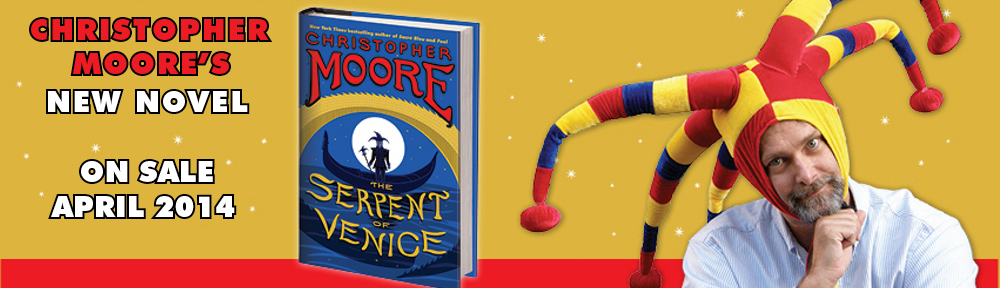
Serpent_Sale_Banner

Book Review: The Serpent of Venice by Christopher Moore

The Serpent of Venice: A NovelI’m thrilled to be participating in the blog tour for the brand-new Christopher Moore novel, The Serpent of Venice.

Christopher Moore writes about demons, sea monster, and vampires. Also about Jesus and Impressionist painters, talking fruitbats and humpback whales. In other words, this is an author who defies categorization, yet one thing is for sure: If you don’t fall on the floor laughing at least a few times reading any of his many novels, well… you’re probably doing it wrong!

Moore’s trademark humor is firmly in place in his newest novel, The Serpent of Venice, a follow-up to his 2009 novel Fool. Fool is a retelling of King Lear, with the king’s fool Pocket serving as main character and very clever (and occasionally obscene) narrator. In The Serpent of Venice, Moore returns to Shakespeare with the further adventures of Pocket, using as his framework not one but two Shakespearean plays, plus a little Edgar Allan Poe for good measure.

Loosely weaving together the plotlines of The Merchant of Venice and Othello (trust me, it works), with a bit of The Cask of Amontillado thrown in as well, The Serpent of Venice follows Pocket the Fool as he maneuvers his way through the devilish machinations of a host of scheming bad guys. He meets up with Shylock and his daughter Jessica, confronts the evil Iago, befriends the great general Othello and his wife Desdemona — and plays all sides against one another, with daring, wit, agility, and plenty of Christopher Moore’s trademark “heinous fuckery most foul”.

Remarkably, Moore weaves the source material into his outrageous new work almost seamlessly, so that for those who enjoy such things, it’s possible to take certain scenes and follow along paragraph by paragraph, and compare back to the same scene in the Shakespearean plays. Combining these works, modernizing the language as needed, adding in raucous humor and heaps of vulgarity — plus Marco Polo, a sea serpent, and a monkey named Jeff — may sound like a crazy mess, but in The Serpent of Venice, there’s a certain beauty to the wackiness, and it really  holds together in a way that’s a wonder to behold.

Fans of the author will be gratified, as always, by his quirky, irreverent approach to language, not afraid to take some of the most honored works in the English canon and stand them on their ears:

“Thou mendacious fuckweasel,” said Emilia, almost spitting it, disgusted now rather than hysterical.

“Methinks the lady doth protest too much,” said Iago.

“Methinks the lady protests just the right amount,” said Emilia. “Methinks the lady is just getting fucking started protesting.”

Even from the book’s very beginning, we get a dose of prime Moore in the introduction “The Stage” that lets us know what we’re in for:

Strangely, although most of the characters are Venetian, everybody speaks English, and with an English accent.

Unless otherwise described, assume conditions to be humid.

For me, one of the most amazing pieces of this book is the author’s afterward. After laughing my way through the book itself, it was fascinating to read about the author’s research, his careful study of the source material, the decisions he made about the setting and time periods, and the historical elements woven into the story. Without being too preachy or teachy, he manages to convey a ton of information in these few short pages, so that I walked away from The Serpent of Venice not just having laughed, but also having learned about Venetian history in the 13th century, racism and anti-Semitism in Shakespeare’s time… and what Christopher Moore really thinks about *ahem* being intimate with dragons.

Either Christopher Moore’s crazy approach to life and writing appeals to you or it doesn’t — and if it does, The Serpent of Venice is a treat. Fans will absolutely want to read The Serpent of Venice, and will not be disappointed. If you’ve never read anything by Christopher Moore — and you like to laugh and you’re not easily offended — I’d say give him a try! For Shakespeare with a twist, start with Fool and then read The Serpent of Venice… and if those appeal to your sense of offbeat humor, you’ll end up wanting to read everything else in the author’s catalog of funny, weird, and wonderful books.

About the Author:

CMooreChristopher Moore is the author of eleven novels, including the international bestsellers, Lamb, A Dirty Job and You Suck. His latest novel is Fool, a retelling of King Lear from the perspective of Pocket, the Fool.

Chris was born in Toledo, Ohio and grew up in Mansfield, Ohio. His father was a highway patrolman and his mother sold major appliances at a department store. He attended Ohio State University and Brooks Institute of Photography in Santa Barbara. He moved to California when he was 19 years old and lived on the Central Coast until 2003, when he moved to Hawaii.

Before publishing his first novel, Practical Demonkeeping in 1992, he worked as a roofer, a grocery clerk, a hotel night auditor, and insurance broker, a waiter, a photographer, and a rock and roll DJ. Chris has drawn on all of these work experiences to create the characters in his books. When he’s not writing, Chris enjoys ocean kayaking, scuba diving, photography, and sumi-e ink painting. He divides his time between Hawaii and San Francisco.

Christopher Moore’s website: http://www.chrismoore.com/

_________________________________________

The details:

Title: The Serpent of Venice
Author: Christopher Moore
Publisher: William Morrow
Publication date: April 22, 2014
Length: 336 pages
Genre: Adult fiction
Source: Review copy courtesy of TLC Book Tours

tlc logoFor further information, visit the author’s website or stop by TLC Book Tours to view other blog tour hosts.

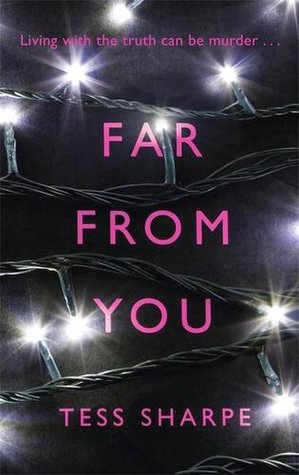
Book Review: Far From You by Tess Sharpe

Book Review: Far From You by Tess Sharpe

Far From You

Nine months. Two weeks. Six days.

That’s how long recovering addict Sophie’s been drug-free. Four months ago her best friend, Mina, died in what everyone believes was a drug deal gone wrong – a deal they think Sophie set up. Only Sophie knows the truth. She and Mina shared a secret, but there was no drug deal. Mina was deliberately murdered.

Forced into rehab for an addiction she’d already beaten, Sophie’s finally out and on the trail of the killer – but can she track them down before they come for her?

You know how you sometimes start a book thinking you know exactly what to expect based on the blurbs and synopses… and then it turns out to be something else entirely? Far From You is one of those — and that’s not a bad thing at all.

Based on the promos I’d read, I was expecting a more or less straightforward teen murder mystery. Nope.

Because, yeah, there’s a murder. And yes, it’s a mystery. But no, that’s not really the point of this book at all.

Far From You starts with a bang — or really, with two bangs. Within the first couple of pages, we learn that Sophie Winters and her best friend were confronted by a masked gunman when they were 17, and while Sophie survived, Mina died at the crime scene, bloody and suffering. We also find out that three years earlier, the two girls were in a car crash while being driven by Mina’s big brother Trevor. Mina and Trev walked away with minor injuries, but Sophie was wrecked — twisted, broken, resuscitated after her heart stopped during surgery, and left with a body full of scars and never-ending pain.

From that powerful beginning, we follow Sophie’s narration as she recounts multiple timelines: her present-day struggles, her memories of the time after the car accident, and her memories of the events surrounding Mina’s murder. At the same time, we learn Sophie’s terrible truth: After the car crash, she became crushingly dependent on pain pills, and was finally forced into rehab at her cool aunt’s house after hitting rock bottom and lying to her family and friends for years. She returned home just weeks before the murder, clean and ready to move forward. But at the crime scene where Mina had been murdered and Sophie had been knocked over the head, the police found a bottle of pills in Sophie’s jacket, and absolutely no one would believe that she hadn’t relapsed.

Instead of mourning for her friend and helping the police investigate the murder, Sophie is shipped off to a rehabilitation center for three months — and the police label the crime a drug deal gone bad, and basically shut down the investigation.

The plot of Far From You really kicks in when Sophie is released from rehab, angry and devastated. Despite being clean for nine months, she’s considered an actively using addict by her parents and friends, and is seen as being to blame for Mina’s murder. Sophie acknowledges that she’s an addict and clings fiercely to her hard-won sobriety, despite the pain that continues to wrack her body — but she’s furious that no one will listen to her, and what’s worse, nothing is being done to catch Mina’s killer.

Sophie has to take matters into her own hands, with help from a small number of trusted friends including Trev, to find out what really happened the night Mina died and find some small measure of peace. But can she do this without endangering herself and everyone left in her life? Are some stones better left unturned?

Okay, that’s the action part of the plot. But where Far From You really excels and moves into unexpected territory is in its exploration of the friendship between Sophie and Mina, what secrets were kept and which questions were never answered, and how a person can survive when the center of her universe is ripped away from her.

Sophie and Mina had been best friends since they met in grade school, and over the years they developed a trust and love that had ups and downs, but never broke or fell apart. There’s much more to their relationship than either girl ever acknowledged, and Sophie only slowly opens up enough to start sharing the true depths of her loss with the people who still matter to her.

Beyond the murder mystery, Far From You is a deeply personal character study, and we come to know Sophie’s deepest fears and most painful emotions. She’s wrecked, truly, both from everything her body has endured and even more so from the trauma of Mina’s loss. She’s hurt by the mistrust of everyone around her, and frustrated at not being heard. She’s angry — oh so angry — that Mina has been taken from her, angry that nothing has been done about it, angry that she couldn’t stop it. And she suffers greatly as she comes to terms with who she is — an addict who doesn’t quite have her life together, who is holding onto being clean with everything she has, and still worries that it won’t be enough.

I feel that it would be a disservice to potential readers to go into more detail about the complicated, intertwined relationships and friendships in Far From You, as these are best discovered through reading the book. I’ll simply say that the emotional connections, the devotion and love between unexpected characters, can be heartbreaking as well as lovely to read.

As for the murder itself, I can’t say that I was surprised when the mystery was resolved. I’d guessed the killer’s identity and a had a vague idea of the motive, but hadn’t managed to put every detail in place — and that’s fine. I was engrossed in the investigation and compiling of clues, breathless as the tension and danger mounted, and intrigued by the unraveling of the murder and the events leading up to it.

Far From You is an intense and unusual young adult novel. If you need a happily ever after and a romance tied up in a pretty ribbon, this may not be the book for you. What I appreciated about the conclusion of Far From You is its refusal to graft a happy ending onto a tragic story. Sophie can and will move forward, but the bottom line is that Mina is gone, forever. It would be fake to leave Sophie with a sunny new beginning. She’s a wonderful character, flawed but powerful, but as we leave her, she still has a long way to go. There’s hope for her future, but she’ll have to work at it every day. And that, to me, is exactly the right kind of ending for this story.

_________________________________________

The details:

Title: Far From You
Author: Tess Sharpe
Publisher: Disney-Hyperion
Publication date: April 8, 2014
Length: 352 pages
Genre: Young adult
Source: Review copy courtesy of Disney-Hyperion via NetGalley


Book Review: Love Letters to the Dead by Ava Dellaira

Book Review: Love Letters to the Dead by Ava Dellaira

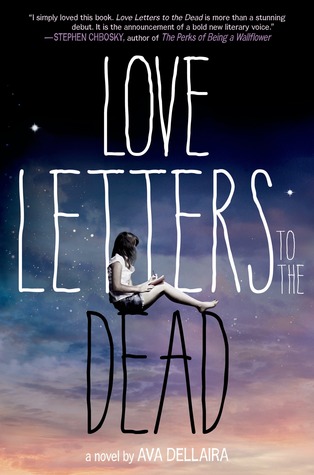
Love Letters to the Dead

In Love Letters to the Dead, main character Laurel starts high school six months after the death of her sister May, and is still deeply grieving her loss. Wanting a fresh start away from sympathetic comments and intrusive stares, Laurel transfers to the school on the other side of town where she knows no one and no one knows her. Friendless and alone, she tries to figure out where, if at all, she fits in, while dealing with her loss and pain as she puzzles through the events leading to May’s death.

At the start of the school year, Laurel’s English teacher gives the class a strange first assignment: Write a letter to someone who’s dead. Laurel doesn’t turn in the assignment, but she does write the letter — to Kurt Cobain — and then, finding it an outlet for her inner turmoil, she keeps writing. Letters follow letters, and Laurel fills up a notebook with letters to dead people: She writes not just to Kurt Cobain, but also to River Phoenix, Judy Garland, Janis Joplin, Amelia Earhart, and more.

Meanwhile, Laurel slowly finds her way, making two good friends, Hannah and Natalie, and attracting the eye of the cute boy she’s noticed. Sky is a junior, cool enough that everyone seems to like him, but not interested in being part of the popular crowd. Sky seems to be wounded in some way as well, and bit by bit the two are drawn together. But Laurel keeps the story of her loss to herself, and by keeping her pain separate, also keeps a big chunk of herself from the people who care about her. Meanwhile, her home life is silent and painful, as her mother has moved away, her father is withdrawn and depressed, and her aunt, with whom she lives part-time, is a lonely religious nut with a Mr. Ed obsession. Laurel blames herself for her family’s disintegration, but through the power of her new-found friendships and her self-expression via her letters to the dead, she finally starts to come to terms with what happened and to realize that in order to move forward, she has to let go of the past.

Love Letters to the Dead is almost unbearably sad. Laurel’s pain blazes off the page, and her self-loathing and blame are awful yet totally believable. As readers, we don’t know at first exactly what happened to May or how she died — but as the pieces come together, we come to realize that there are layers upon layers of contributing factors, and that while each family member blames him or herself in some way, the sad fact remains that May’s death was simply a terrible accident capping off a long period of unfortunate events.

Meanwhile, no one here gets by unscathed. The supporting characters also go through tremendous challenges and pain. Secret love, public shame, an abusive home life, mental health challenges, and simple neglect factor into the characters’ lives. They skip school, they drink, they make poor choices and take dangerous risks — so that the fact that they all emerge at the end of the year in relatively good shape, and better off than they started, is rather remarkable. Bad things happen — a lot — and while the characters are all interesting, well-drawn, and sympathetic, it does start to feel like an overdose of trauma after a while.

Laurel’s voice is interesting, as she wades through the jumbled mess of her thoughts and emotions and tries to make sense of all that has happened. It’s moving and melancholy to see her reflections on her relationship with May and how her worship of her big sister prevents her from facing the truth. Laurel adored her big sister all her life, and always thought of May as magical, with a perfect life, completely happy, enchanting everyone who came into her orbit. Over the course of the year covered in Love Letters to the Dead, Laurel confronts the truth about May’s life and challenges, how May’s actions led to tragic consequences for each of them, and comes to a place where she can remember May with love and regret, but freed from the need to idolize or over-glamorize her poor lost sister.

In many ways, this book succeeds in showing one girl’s transformative year, and the power of self-expression to free oneself from the walls created within. But at the same time, I did feel that the construct of the book is flawed, and takes away from the ring of authenticity for which the author seems to be striving.

Writing letters to famous dead people just doesn’t really work as an overarching concept. The portions of the letters addressed to the individuals don’t ring true,  and are actually a distraction from the character’s journey. Do we need to see her lecturing Kurt Cobain on what his suicide would have meant to his daughter? Or telling River Phoenix why she thinks his life turned out the way it did? For these two and several others, Laurel’s writing sounds presumptuous and like a stretch outside of what the character might do or say. Each time this happened, I felt pulled out of the narrative of Laurel’s story and reminded of the fact that I was reading about a fictional character, rather than continuing to be absorbed by the events and emotions of the book.

So my reaction to this book is truly 50/50: It’s powerful and sad, and conveys a great deal about loss and healing, friendship and honesty, pain and love. At the same time, the tone of the book is uneven, and ultimately a good and moving story is weighed down by the structure used to tell it.

_________________________________________

The details:

Title: Love Letters to the Dead
Author: Ava Dellaira
Publisher: Farrar, Straus and Giroux
Publication date: April 1, 2014
Length: 323 pages
Genre: Young adult
Source: Review copy courtesy of Farrar, Straus and Giroux via NetGalley