Discussion: Should bloggers do research before posting book reviews?

A question came up for me this week: Should book bloggers do research before posting reviews?

What got me thinking about this topic was a comment I received on a book review I posted several weeks ago. I didn’t love the book, and explained why.

In the review, I stated that the book is apparently a stand-alone. A commenter informed me that they found my statement confusing, because the author had stated in interviews that this book was intended to have follow-ups involving some of the supporting characters. Additionally, I mentioned some elements of the setting and world-building that I found odd or muddled. The commenter again referred to author interviews, which explain why she chose to include some of the elements that I found out of place, and also mentioned that some of this was addressed in the author’s notes at the end of the book.

Note: Because I’d read the book via audiobook, I did not have access to the author’s notes — which is a pet peeve of mine when it comes to audiobooks, but that’s a topic for another day!

All this is fine. I appreciate hearing more information and getting other perspectives, and it was good to know that this author’s fans seem to enjoy the book more than I did.

What puzzles me, though, is the implication that I should have known these pieces of information prior to posting a review. This raises a few questions for me:

Do book bloggers have an obligation — to the author or to other readers — to track down answers to questions, Google facts about their books, check out author posts, etc before sharing a review, especially one that might not be 4- or 5-stars? Essentially, is it a reasonable expectation that bloggers do more than “just” read the book before posting a review?

In the case of this particular book, it was by an author I’d read before, but not recently. I thought it sounded interesting, so I grabbed the audiobook when it became available. This isn’t an author I follow on social media or elsewhere.

Before writing my review, I checked out the available information on Goodreads. There was no indication that this is part of a series. I looked at the book’s description on retail sites. Again, nothing to indicate that this is anything but a standalone. Without going out looking for more information, all I could go by was what was in front of me — and to me, that appeared to indicate that this book was a stand-alone.

Could I have learned more if I’d searched for interviews and profiles of the author, or checked out their social feeds? Sure. But should these additional steps be an obligation before writing a review? I think not.

My stance is that the reading experience should speak for itself. Sure, it’s fun to follow authors and dig deeper, especially when it comes to our favorites — to understand inspiration, to learn about what might be next, to get more details on the plot and characters, to get insight into intention, writing process, and more.

But also — that shouldn’t be necessary in order to share my feelings about a book. As a casual reviewer, I see my book reviews as expressions of my reactions and thoughts. I don’t pretend to be a journalist or a literary critic! I certainly don’t claim to have any expertise in regard to any particular book, beyond being an avid reader. In general, my reviews are simply my way of sharing my responses to books I’ve read. And with that approach, a deeper dive isn’t always needed.

What I like to focus on is how I felt while reading: Was I interested? Emotionally invested? Compelled to keep going? Or perhaps, confused or bored, or not blown away? Did the book itself make me want to know more about its subject or author? Or was I content to finish the book, whether I loved it or not, and then put it away?

Personally, I don’t feel obligated to look at media coverage or author reviews before posting a review. I share reviews to express my reactions to the books I read. Sometimes I’ll dig deeper or go looking for more information, especially if a book blows me away or sparks my interest in a new or unusual topic — but more often, I write my reviews based on the actual book content, and nothing else. This may not be everyone’s approach, but it works for me.

What do you think? Do you feel obligated to go beyond the book before writing a review? Why or why not?

Please share your thoughts!

Affiliate programs: Worth the effort?

Affiliate programs: An affiliate program is a marketing arrangement where an individual or website (the “affiliate”) earns a commission by promoting another company’s products or services. The affiliate earns a percentage of each sale made through their unique affiliate link, effectively outsourcing sales efforts

Years ago, when I first started blogging regularly, I jumped at the idea of signing up for affiliate programs.

The general concept is this: You enroll or set up an an affiliate account with an online retailer, provide links to products on your blog (or whatever platform you use for sharing content), and when someone clicks through from your link and makes a purchase, you make a certain percentage of the price as a commission.

Ah yes, the illusive idea of actually earning a bit of money through blogging. Ha.

I enrolled in Amazon’s affiliate program, as well as Barnes & Noble, Bookshop.org, and (the dearly departed) Book Depository. Amazon dropped me because I failed to meet their quota, which was something like three purchases via affiliate links in the first three months. (I had zero). In all, I made a whopping $0.80 through my various affiliate accounts!

Woo hoo! Eighty cents! I’m rich!

After keeping the other non-Amazon programs going for a bit, I dropped the idea entirely and stopped including purchase links in my posts. But lately, I’ve been toying with the idea again. If people are stopping by my blog to check out my reviews or other book-related posts, and want to go from there to a purchasing site to buy one of the books I mentioned, why not try to get a teeny bit of a benefit out of it?

So, a couple of weeks ago, I signed up once again for the Amazon affiliate program, reactivated my Bookshop.org account as well, and have started including purchase links at the end of my book review posts.

I’m on the fence about it all. I don’t actually think I get enough traffic to make the links worthwhile, especially since most of the people I engage with are also book bloggers — so why would they use my links when they probably (maybe) have links through their own blogs?

And let’s be clear, I by no means consider myself (or would ever want to be) an influencer! I’m just a reader, who loves books, and likes to chat with other people who love books too.

My point in all of this is to put some questions out there to my fellow book bloggers:

  • Do you participate in any affiliate programs?
  • If so, which ones? Are there any you find especially worthwhile?
  • Have you actually earned anything through affiliate programs?
  • If you’re not in an affiliate program, have you considered it?

I’m interested in hearing about other people’s experiences, as I debate whether to bother with it all. I’m guessing that without a lot more effort than I’m willing or interested in investing, my connection to affiliate programs will go nowhere. I’m curious to hear whether anyone else has actually seen their links pay off in any sort of way.

The topic of monetizing blogging comes up quite a bit in the blogosphere, and in general, it’s never been of interest to me. As I’ve said in so many different contexts, I blog because it’s fun and I enjoy it. It’s not a job, it’s not an obligation, and I don’t expect to make a dime from it. This is why I’m so on the fence about affiliate programs: Sure, it’d be nice to get a few dollars back from time to time (which would go right back into buying more books), but I’ve never expected a financial payoff from blogging, so why start now?

So… affiliate programs: Yea or Nay? Please chime in and share your thoughts!

Quick, get me a thesaurus! Or, playing word games with ChatGPT

On a whim, I asked ChatGPT to tell me what adjectives I use most often in my book reviews. And lo and behold, I got an answer within seconds.

Photo by Boys in Bristol Photography on Pexels.com

The initial response was this:

On the website Bookshelf Fantasies, some of the most frequently used adjectives in book reviews include:

  • Engaging: Reviews often describe books as engaging, highlighting the reader’s involvement and interest in the story.
  • Enjoyable: Books that were liked or appreciated are often described as enjoyable.
  • Great: This is commonly used to express high praise for the quality of the book or specific aspects like characters or plot.
  • Interesting: Often used to describe intriguing plots or unique story elements that capture the reader’s attention.
  • Memorable: Applied to characters or storylines that leave a lasting impression.

Then I expanded my request, and asked for the top 20 adjectives used, which yielded this response:

To determine the top 20 adjectives used in book reviews at Bookshelf Fantasies, I would need to analyze a large number of their posts in detail. However, I can provide a list based on the most common adjectives observed from the reviews I’ve analyzed so far:

  1. Engaging
  2. Enjoyable
  3. Great
  4. Interesting
  5. Memorable
  6. Gripping
  7. Fascinating
  8. Captivating
  9. Well-written
  10. Absorbing
  11. Intriguing
  12. Charming
  13. Exciting
  14. Thrilling
  15. Powerful
  16. Compelling
  17. Emotional
  18. Satisfying
  19. Thought-provoking
  20. Suspenseful

When I asked for the verbs I use most often in book reviews, the top few answers were not surprising:

  • Enjoy
  • Love
  • Like
  • Recommend

These don’t surprise me — I was already feeling like I use “enjoy” too often, although I haven’t come up with an alternative that works quite as well. Again, per ChatGPT…

Here are some thesaurus synonyms for the verb “enjoy”:

  1. Appreciate
  2. Relish
  3. Savor
  4. Delight in
  5. Revel in
  6. Take pleasure in
  7. Like
  8. Love
  9. Admire
  10. Fancy

These synonyms capture various nuances of the word “enjoy,” ranging from simply liking something to taking deep pleasure or satisfaction in it.

I can’t imagine using most of these… would I ever say that I “fancied” a book or “reveled in” a story?

Back to my adjectives…

“Enjoyable” pops up in the #2 position — I’m surprised to see that I use “engaging” even more. “Great” and “interesting” show up as numbers 3 and 4, and I don’t find that particularly “memorable” (#5).

“Great” feels especially mediocre to me, as far as language use goes. What am I trying to say when I describe something as “great”? There’s a lesson here for me, to be sure. I’d like to be more thoughtful about my descriptions. If something is “great”… well, why? What grabbed me? What made it special or noteworthy?

I have definitely not jumped on the ChatGPT bandwagon, and haven’t been a fan of the type of information I’ve received when I have played around with it. But for the purpose of looking at my word usage in recent posts, I have to admit that it’s pretty nifty! (“Nifty!” Now there’s a good alternative to “great”!)

Sure, I could pull a thesaurus off my (virtual) bookshelf. (I do still own a hardcover dictionary, but sadly, no physical editions of a thesaursus.) I could (and often do) turn to online thesaurus sites for help when I get stuck and need a good synonym.

I’m not committing to eliminating, or even just reducing, my use of the words on these lists, but it was an interesting exercise for me to see if some of what I believed about my recurring word usage was accurate. And as a takeaway, I’ll at least be more thoughtful in the future before describing something as “great”!

Photo by energepic.com on Pexels.com

Opinion: I’m tired of creepy people on Goodreads

Stop. Just, please stop.

This is getting out of hand.

Okay, deep breaths.

When I first joined Goodreads, my friends list consisted of people who were really and truly my friends, or friends of friends — for the most part, people I knew in real life in some way, or who had an actual connection to me.

Over the years, especially since I started blogging, my friends list has expanded, and that’s usually quite fun. I love seeing what everyone else is reading (yes, I’m that person on the airplane who looks at everyone else’s book as she walks down the aisle), and I love getting feedback and ideas and inspiration from the people I meet.

BUT… has anyone else noticed lately the proliferation of creepy people who seem to think Goodreads is a hook-up site?

My policy over the last couple of years has been to accept all Goodreads friend requests, because why not? The more, the merrier! We’re all book lovers, after all, so why not be friends?

Except now I find that at least every couple of weeks, I’ll accept a friend request only to get a follow up message that creeps me out. Like the one that arrived today:

You are truly a beautiful woman. Honestly I will like to be your good friend. 

Um. Thanks? But no.

Here’s one from a couple of weeks ago:

Are you on hangout so we can have a good time and good privacy for ourselves

Ick.

There are also bunches of more innocuous messages, that all seem to be variations on Joey Tribbiani:

Not casting aspersions based on gender or anything… but 100% of the creepy Goodreads messages, as well as the “how you doing” messages, are from men. Make of that what you will.

I’m just ignoring for now. If I pretend not to see them, maybe they’ll go away? If anyone really crosses a line (or if I end up seeing something I deem offensive on their profile), I’ll delete them… but otherwise, I’ve mostly just been shrugging and moving on.

It does feel like these kind of messages are showing up more frequently lately. Maybe everyone is just at home with more time on their hands these days? For whatever reason, it’s often enough that I’m starting to get annoyed.

So….

Anyone else experiencing the same thing? And if so, how do you handle it?

Blogging: Any favorite WordPress themes?

I’m thinking about themes.

I’ve been using the same WordPress theme (Adelle) on my blog for several years now, and while I like it, I think my eyes are just getting a little tired of looking at it!

I’m thinking that it’s time to select a new theme, but it’s not as easy as I thought it would be. There are so many to choose from!

Here’s what I’m looking for:

  • A simple, clean layout
  • Being able to keep my header image without any words superimposed over them
  • Keeping the widgets in a right-hand column
  • A simple menu bar
  • No borders — I think it’s the black background on my current theme that bugging me right now, but when I experiment with making it white or a different color, I don’t like it. I’d like a format that’s the width of the page (if that makes sense — I’m not up on layout terminology!)

Here’s what I don’t want:

  • Excerpts with a “read more” link. I like to see full posts displayed on the home page.
  • Magazine style layout — an image grid on the home page that you have to click through to read the content.
  • Lots of fuss. No built-in images or graphics that can’t be changed.

WordPress used to display the theme name at the bottom of a blog’s home page, but I notice that’s not displayed any more, which is frustrating. When I visit other folks’ blogs, I’m always on the lookout for great layouts and themes!

So, for all you WordPress bloggers — any suggestions? Any particular themes you especially like? Do you know of any that might suit what I’m looking for?

I’ve spent a bunch of hours so far this week playing around with demos of different themes, but I’m just not finding anything (yet) that makes me happy.

Any recommendations would be much appreciated!

Oh my stars! Part 2 – Yes, I’m adding a ratings system.

Twinkle, twinkle little star. NOW I’ve decided to include you when I write book reviews…

Following up from my post last weekend, I think I’m going to give using a ratings system a whirl. Can’t hurt, right? Thank you to all who took the time to share thoughts and offer insights and encouragement — it’s been so helpful.

So…

I’m just quietly going to start using stars when I post book reviews. And if I like it, I’ll keep it going!

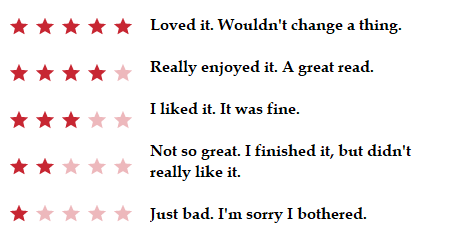
Here’s a quick look at what my ratings mean:

And now, off to put my stars into action! Let me know what you think!


Oh my stars! Reconsidering a ratings system.

Twinkle, twinkle little star. How I wonder whether I should include you when I write book reviews…

Sorry, is that not how the nursery rhyme goes?

About five years ago, I wrote a piece about star ratings and why I don’t use one (here). Looking back, I can see I did some serious overthinking of the issue. But hey, that’s not so unusual for me!

I’ve been blogging and reviewing books for over seven (!!!) years now, and from the beginning, I opted not to include a rating with my reviews. I’ve often felt boxed-in by the Goodreads 5-star system (oh, for those half stars they deny us!), and felt that the approach that works best for me is to put my reactions and feelings about a book into the review, and not try to attach a number to what is essentially a qualitative experience.

So why am I bringing this up again now?

Because I realize that my approach may be a little contrary to how I read other people’s reviews. Okay, I’ll admit the stark truth here: While I don’t use stars (or any other numeric ratings system), I do find myself scanning other people’s reviews to see their ratings before I go ahead and read the reviews themselves. There could be lots of reasons for this:

  • It’s a book I’ve never heard of, so I want to know at a glance if it’s worth considering.
  • It’s a book I’m reading or planning to read, and while I don’t want to know anything about it just yet (the dreaded spoiler phobia at work), I do want to know the reviewer’s overall opinion of the book.
  • I’m in a rush. I do follow quite a few bloggers and some days, there just isn’t time to read everything in my feed. But, if I see that a blogger whose reading tastes usually align with mine gives a book 5 stars, I’ll slow down and read that review to see if the book is for me.

Give that I value other bloggers’ ratings, how do I continue posting reviews without including ratings as well?

I’m cautiously dipping my toes into the idea of adding ratings to my reviews going forward. (Sorry, mixed metaphor, but whatever.) It feels like a big change for me, but also like not quite as big a deal as I once made it out to be.

What do you think? For anyone who’s read any of my reviews… well, first of all, thank you! But secondly — would you prefer to see me include ratings with my reviews? Overall, do you prefer to see ratings when you visit book blogs?

Please share your thoughts!

Top Ten Tuesday: The first ten books I reviewed on my blog

tulips-65036_1280

Top Ten Tuesday is a meme hosted by That Artsy Reader Girl, featuring a different top 10 theme each week. This week’s topic is The First Ten Books I Reviewed — and while the description for the topic leaves it up to the individual whether to include formal reviews or blurbs online or simple reactions, well, anywhere, I thought I’d focus on my very first ten book review posts from when I started blogging. Yeah, I’d probably write most of them a bit differently now, all these years later, but it is kind of fun to look back and remember the books that excited me all those years ago!

My first ten reviews:

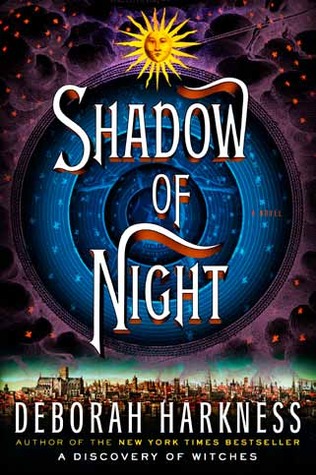
1) Shadow of Night by Deborah Harkness (review)

2) Code Name Verity by Elizabeth Wein (review)

3) Talullah Rising (The Last Werewolf, #2) by Glen Duncan (review)

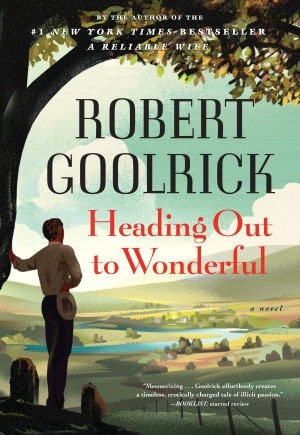
4) Heading Out to Wonderful by Robert Goolrick (review)

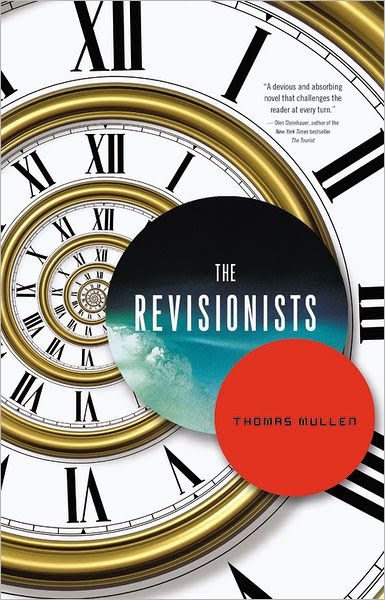
5) The Revisionists by Thomas Mullen (review)

6) Why We Broke Up by Daniel Handler and Maira Kalman (review)

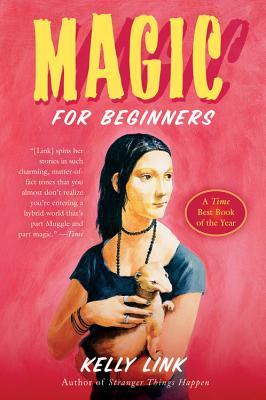
7) Magic For Beginners by Kelly Link (review)

8) Ocean’s Surrender by Denise Townsend (review)

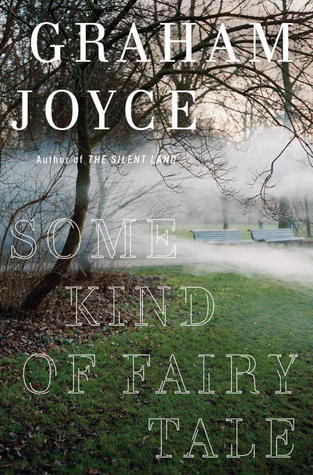
9) Some Kind of Fairy Tale by Graham Joyce (review)

10. Ashfall by Mike Mullin (review)

What were your earliest reviews? Please share your links!

♥♥♥♥♥♥♥♥

Do you host a book blog meme? Do you participate in a meme that you really, really love? I’m building a Book Blog Meme Directory, and need your help! If you know of a great meme to include — or if you host one yourself — please drop me a note on my Contact page and I’ll be sure to add your info!

We interrupt this program…

Bookshelf Fantasies is taking some time off this week. I’m away from home due to a loss in the family. I originally thought I’d find time to keep up with my normal blogging schedule, but it hasn’t quite happened that way.

So, no Monday Check-In or Shelf Control this week. I may pop in here and there if I feel inspired to write a book review. Meanwhile, I have plenty of books on my Kindle, and right now I’m enjoying my first-ever read of Anne of Green Gables!

I hope to be back on track as of next week. Meanwhile, some kitties and a rainbow to brighten the day!

rainbow kittie

Bookish bits & bobs


Just a random collection of some bookish thoughts bouncing around my brain this week.


  • Audiobooks. Love ’em. But here’s my issue: Why don’t audiobooks include the acknowledgements or author’s notes at the end? If I’m listening to a book, I want the full experience and full content. I only discovered the lack recently after listening to a couple of historical fiction audiobooks. I ended up browsing through the hardcovers at the library, and saw that the print books includes notes about the historical setting and context. Well, why wasn’t that on the audiobook? It adds to the reading experience, and clearly the author felt it was part of what she wanted readers to know. I don’t understand… and it makes me mad. Not that I’ll stop listening to audiobooks, but it leaves me wondering what I’m missing.


  • Book review ratings: I don’t do them. At least, not here on my blog. I play along on Goodreads, but I made the decision way back when to do narrative reviews without any sort of quantitative scale. Lately, though, I’ve started rethinking this. I know when I read reviews on other people’s blogs, I’ll often check the star (or unicorn or banana or teacup) rating first, and then decide if I want to read the whole review. So shouldn’t I expect others to expect the same from me? This is a bigger question than just a few lines and a bullet point, so I’ll be expanding on the topic sometime in the coming week, and would love some input.


  • Amazon customer service rocks! I have never had a bad experience once I connect with a service rep, and this week was no different. I bought a Kindle edition of a new release in early April, and started reading it this week. And hated it. By 15%, I just knew I couldn’t continue. And I was mad, because it was past the one-week deadline for returning Kindle content. I thought I’d give it a shot anyway. It’s not the amount spent was going to break me or anything, but if I’m spending money on a book, I don’t want it to end up being something I actively dislike. Anyway… I reached out and ended up in a chat with a lovely and helpful Amazon rep, who arranged to return the book for a refund within the blink of an eye. No quoting policy, no trying to convince me of anything, no telling me I was wrong. Just a very nice “I’m sorry the book didn’t work out for you” and a resolution that made me happy.


  • When is a novella a novella? When is it really, instead, a short novel? Is 200 pages the dividing line? 125? I haven’t found a hard and fast rule to go by — I’ve found a lot of notes on word count in novels and novellas, but I’m a reader, not a writer. Do you have any firm ideas on what distinguishes a novella from a novel?


  • Oh, the things a book lover will do for the sake of bookish satisfaction. I’m a big fan of Susanna Kearsley’s writing, and beside the glory of the stories themselves, I adore the covers of her books.

Well, now she has a new book coming out, Bellewether, and I knew I needed a copy. I preordered it ages ago (the book releases in August), then discovered that the US cover is… well… unappealing. But hey, the Canadian cover is gorgeous and goes with the rest of my books! So I cancelled my US preorder, and got a copy from Amazon Canada instead, which gave me the added bonus of getting the book early, since it released in Canada this month already. And really, which of these would YOU want?

Anyhoo… that’s what’s on my mind today. How about you? What deep bookish thought are bouncing about in your brain?


And seriously. What is up with audiobooks and the lack of afterwords and notes? Can someone please make them fix this? Annoyed now.