Book Review: The God of the Woods by Liz Moore

Title: The God of the Woods
Author: Liz Moore
Publisher: Riverhead Books
Publication date: July 2, 2024
Length: 490 pages
Genre: Mystery/thriller
Source: Library
Rating:

Rating: 5 out of 5.

When a teenager vanishes from her Adirondack summer camp, two worlds collide.

Early morning, August 1975: a camp counselor discovers an empty bunk. Its occupant, Barbara Van Laar, has gone missing. Barbara isn’t just any thirteen-year-old: she’s the daughter of the family that owns the summer camp and employs most of the region’s residents. And this isn’t the first time a Van Laar child has disappeared. Barbara’s older brother similarly vanished fourteen years ago, never to be found.

As a panicked search begins, a thrilling drama unfolds. Chasing down the layered secrets of the Van Laar family and the blue-collar community working in its shadow, Moore’s multi-threaded story invites readers into a rich and gripping dynasty of secrets and second chances. It is Liz Moore’s most ambitious and wide-reaching novel yet.

In The God of the Woods, an intricate timeline and multiple points of view bring to vivid life the story of missing children, a privileged family, and its influence over the working class people who depend upon them for their livelihoods.

The story opens at Camp Emerson, a summer camp located on the grounds of the Van Laar Preserve. The Van Laar family bought this vast property in the Adirondacks from loggers several generations back, and have turned it into their mountain getaway. Their huge house, named Self-Reliance, dominates the hilltop overlooking the lake; down the hill, the staff of the camp tend to the children of wealthy families each summer.

In the summer of 1975, 13-year-old Barbara Van Laar attends camp for the first time. She’s an independent-minded, punk rock-loving teen who’s happy to be out from under her parents’ control for the eight weeks of camp, and she quickly bonds with one of the other new girls in her cabin. But in August, Barbara’s counselor wakes up to discover that Barbara’s bed is empty, and fears the worst.

Fourteen years earlier, the first Van Laar child — named Peter (Peter IV, to be exact) but known as Bear, also went missing from the Van Laar Preserve and was never found, despite a huge search. Now, fears run high that the same fate has befallen Barbara, and news that a notorious serial killer has escaped prison and is on the lam in the Adirondacks only adds to the searchers’ desperation.

But there is so much more to the story than a missing person’s case. As each chapter begins, a different date is highlighted, and the narrative jumps between the 1950s, 1960s, and 1970s, as well as between different points in that fateful summer of 1975. The story is not told chronologically; confusing at first, but ultimately, adding to the depth of the character portrayals and giving readers plenty of clues and red herrings to chew over.

Beyond the dual mysteries surrounding Bear and Barbara, the book also is a portrait of the deep divide between haves and have-nots. The Van Laars are seemingly untouchable. They and their wealthy, powerful friends control the area, providing the only source of employment for the nearest small town since the paper factory shut down years earlier. No one can afford to get on the Van Laars’ bad side, even if it means looking away when bad things happen.

I was hesitant to pick up The God of the Woods, not sure that the genre and writing would appeal to me, based on comments I’d read here and there. I’m so glad I got past my concerns and gave it a try. After some initial struggles with the jumps between timelines, I became more comfortable with the book’s structure and ended up finding the chronology fascinating. As for the writing itself, it’s tense and illuminating, and doesn’t drag a bit — those 500 pages absolutely flew by.

With so many point-of-view characters, it may feel almost overwhelming at first to keep track of them all, but ultimately, having so many perspectives — some accurate, some not — on the events of 1975 as well as the earlier disappearance, only adds to the depth of the story. The depiction of the Van Laars and their guests, lounging about in satin pajamas even when a child goes missing, is a chilling portrait of cold power and indifference. And then there’s the setting itself, the beautiful, dangerous forests of the Adirondacks — where campers are taught to immediately sit down and start yelling if they realize they’re lost. The Van Laar home may seem luxurious and civilized, but it’s surrounded by wilderness, which ultimately holds more power than the people who come there.

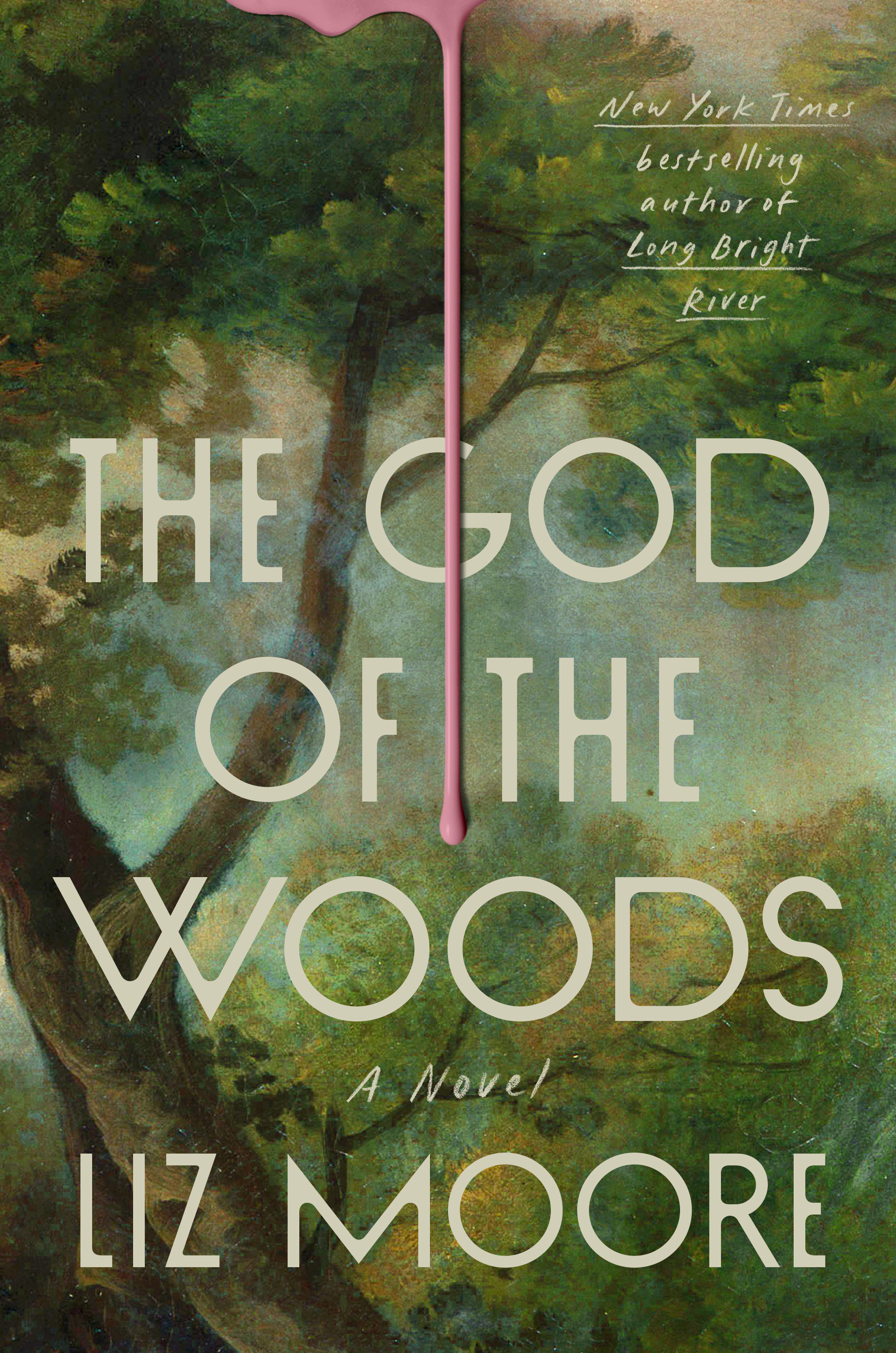
My only quibble with this book is that the title seems like an odd choice to me. Yes, it’s somewhat clearer by the end, but generally speaking, it seems pretty disconnected from the overall story. On the other hand, the cover is brilliant. It’ll make more sense once you read the book!

I can’t say enough good things about The God of the Woods. By the time I passed the halfway mark, I couldn’t put it down and wanted nothing more than uninterrupted time to read straight through to the end. Don’t miss this well-written, thought-provoking, surprising, twisty book!

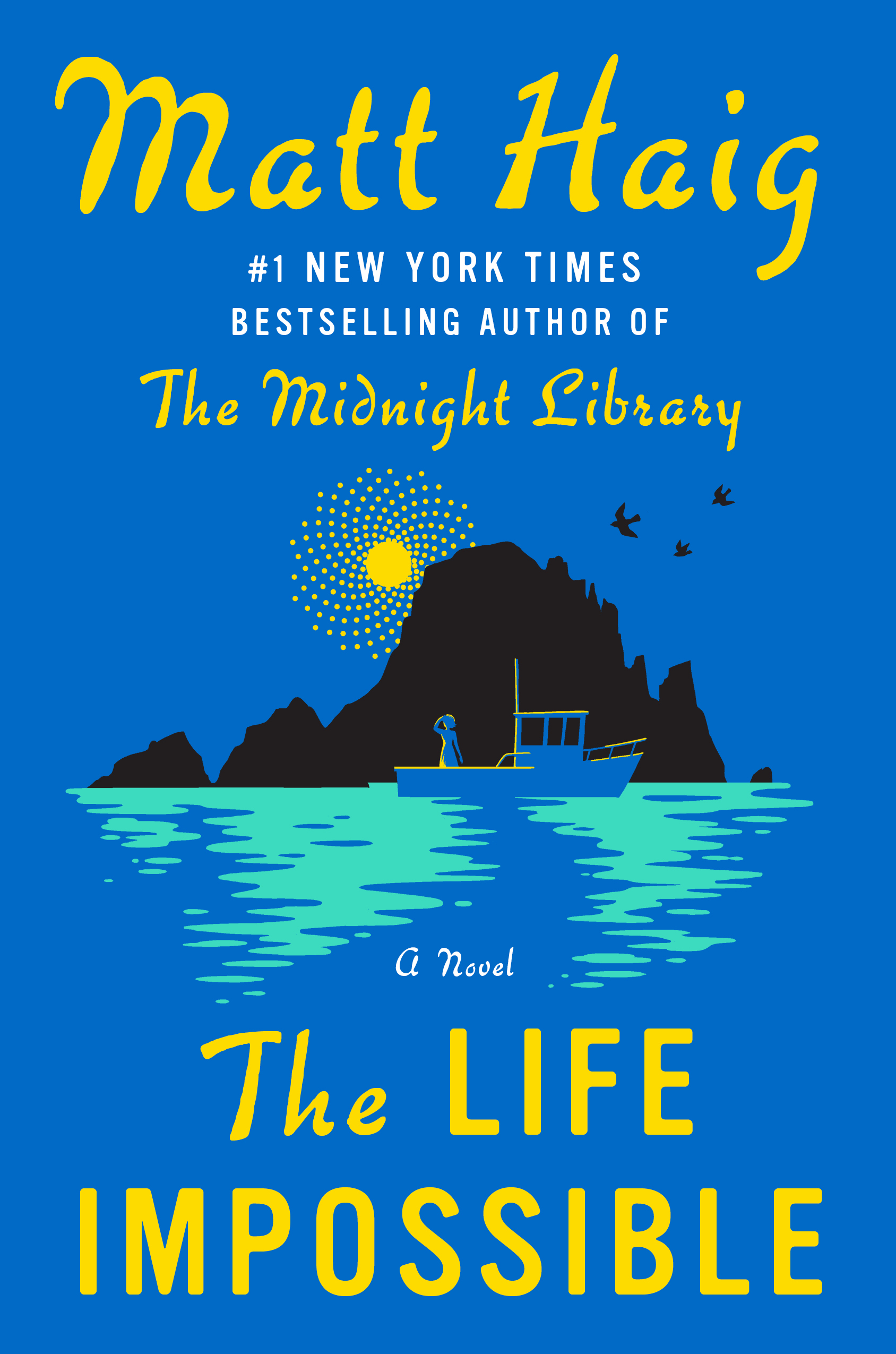
Book Review: The Life Impossible by Matt Haig

Title: The Life Impossible
Author: Matt Haig
Publisher: Viking
Publication date: September 3, 2024
Length: 324 pages
Genre: Contemporary fiction
Source: Purchased
Rating:

Rating: 3.5 out of 5.

The remarkable next novel from Matt Haig, the author of #1 New York Times bestseller The Midnight Library, with more than nine million copies sold worldwide

“What looks like magic is simply a part of life we don’t understand yet…”

When retired math teacher Grace Winters is left a run-down house on a Mediterranean island by a long-lost friend, curiosity gets the better of her. She arrives in Ibiza with a one-way ticket, no guidebook and no plan.

Among the rugged hills and golden beaches of the island, Grace searches for answers about her friend’s life, and how it ended. What she uncovers is stranger than she could have dreamed. But to dive into this impossible truth, Grace must first come to terms with her past.

Filled with wonder and wild adventure, this is a story of hope and the life-changing power of a new beginning.

The Life Impossible was my book group’s selection this month, which suited me just fine — since I bought a copy when it first came out and hadn’t quite gotten around to reading it yet! I’ve loved several of Matt Haig’s books, especially The Midnight Library and How to Stop Time, so I felt perfectly primed to love this one too.

However, I can’t quite say that The Life Impossible worked for me as well as the author’s other books, and it’s a bit hard to say just why.

The Life Impossible is the story of Grace Winters, a 72-year-old widow who lives a quiet, isolated life in her small bungalow in England, still grieving and guilt-stricken over the death of her young son forty years earlier. Her story unfolds in response to a letter from a former student who remembers her kindness, and in a dark phase of his life, reaches out to connect with someone who’d once seemed to care. In response, she writes back to him and sends him a manuscript — her tale of what happened to her at a time when she thought life had nothing left to offer her.

The point of life is life. All life. We need to look after each other. And when it feels like we are truly, deeply alone, that is the moment when we most need to do something in order to remember how we connect.

Grace’s life changes when she’s notified that a former colleague has left her a house in Ibiza. Grace is shocked. She remembers Christina well — a teacher whom she invited home for Christmas many years earlier and offered support to when she most needed it — but after Christina moved away, they hadn’t kept in touch. And yet, apparently Grace’s kindness stuck with Christina. Grace hasn’t been able to truly feel happiness — or really, anything at all — for many years, but lacking a reason not to go to Ibiza, decides to see if maybe a change of scenery might be a good idea.

Once there, the mystery of why Christina chose to leave the house to Grace deepens. The house itself is shabby and run down. Upon arrival, Grace learns that Christina’s death is considered suspicious by local authorities, that Christina was very involved in protesting a major hotel development that would destroy natural resources, and that she often set up a stall in the hippie market telling people’s fortunes. Grace is skeptical, especially after finding a book on Christina’s shelves about ESP, but she’s curious enough to follow Christina’s clues and seek out a strange man named Alberto who promises that she’ll soon have the answers she needs.

You see, if you want to visit a new world, you don’t need a spacecraft. All you need to do is change your mind.

What follows is a tale of wonder, as Grace encounters something from beyond this world that opens her mind in new and unexpected ways. In contrast to her old life, where she felt nothing, she begins to feel everything, finding joy in the simplest of experiences and finding connection with everyone she meets. Grace realizes that she’s been given these gifts not just for her own sake, but to continue Christina’s mission, and sets out to finish the dangerous task of protecting Ibiza from the greedy, uncaring people who’d destroy it for their own gain.

The writing in The Life Impossible is often dreamy, as Grace gives voice to the strange and unexpected sensations and visions she experiences, and ruminates on the meaning of her own life, human life in general, loss and grief, and what being connected really means. What she conveys is odd, but the writing brings us into Grace’s world and lets us see through her eyes. We’re with Grace as things beyond her belief happen, and we see how her perception of the world is dramatically shifted in ways she could never have anticipated.

People say that love is rare. I am not so sure. What is rare is something even more desirable. Understanding. There is no point in being loved if you are not understood. They are simply loving an idea of you they have in their mind. They are in love with love. They are in love with their loving. To be understood. And not only that, but to be understood and appreciated once understood. That is what matters.

Grace herself is a lovely character, as are the various people she encounters on Ibiza. It’s inspiring to read about a woman of her age and stage of life finding new hope and engagement, after so many years believing that her life was essentially over and she was just waiting for the end.

And yet… I felt oddly unaffected through major sections of the books that should have been touching. Perhaps it’s the meandering storytelling style. This is a thoughtful, reflective book, and while there are scenes and incidents that have hints of excitement or action, much of the book is devoted to exploring Grace’s inner life. It’s often interesting, but still, there are more than a few interludes where the narrative bogs down in philosophizing and the entire forward momentum of the novel grinds to a halt.

By the end, I was ready to be done — hence my not-quite-stellar 3.5 star rating. Yes, I enjoyed this book as a whole, but didn’t fall in love with it… and despite it being a relatively short book, it still felt like more than what was needed to tell this particular story. If you enjoy Matt Haig’s writing, do check out The Life Impossible! There are enough lovely elements to make it a worthwhile reading experience.

End note: There are many wonderful passages about books and reading, and I simply can’t end this review without sharing a few:

I always think that the quickest way to understand someone is to look at what’s on their bookshelves.

I suppose that is one of the purposes of all reading. It helps you live lives beyond the one you are inside. It turns our single-room mental shack into a mansion.

All reading, in short, is telepathy and all reading is time travel. It connects us to everyone and everywhere and every time and every imagined dream.

Purchase linksAmazon – Bookshop.org
This post contains affiliate links. If you click and buy, we may earn a small commission at no extra cost to you.

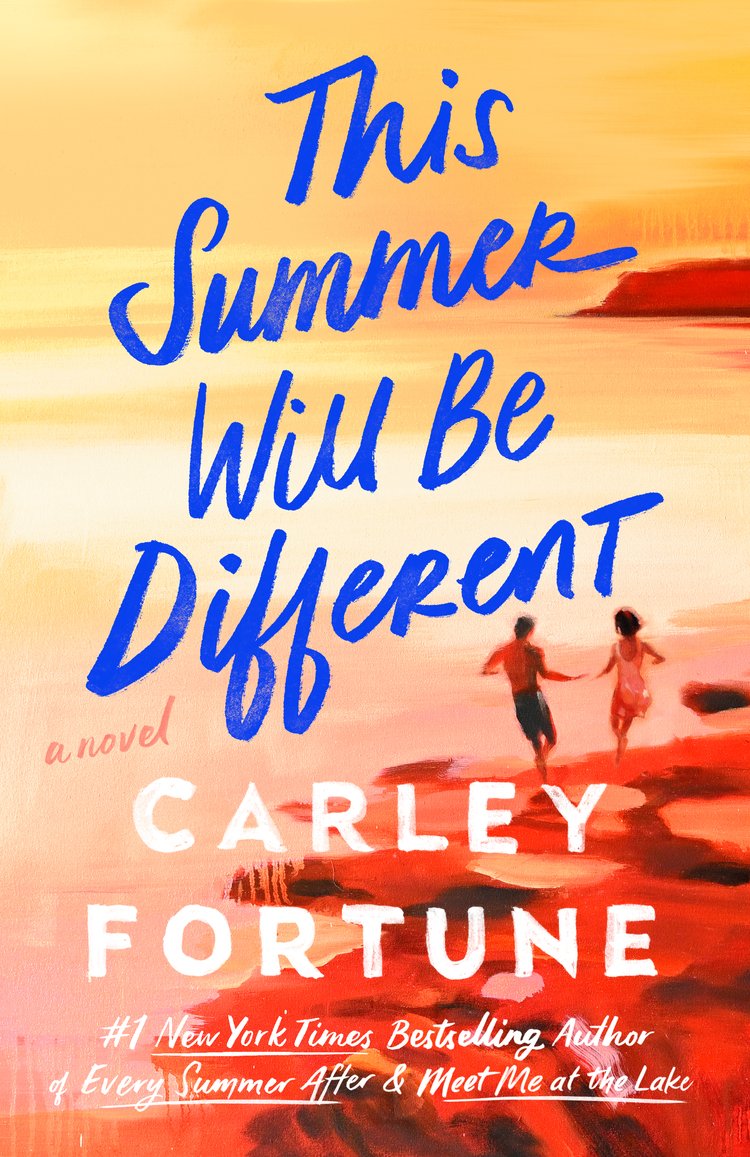
Audiobook Review: This Summer Will Be Different by Carley Fortune

Title: This Summer Will Be Different
Author: Carley Fortune
Narrators: AJ Bridel
Publisher: Berkley
Publication date: May 7, 2024
Print length: 368 pages
Audio length: 10 hours 31 minutes
Genre: Contemporary romance
Source: Library
Rating:

Rating: 4 out of 5.

This summer they’ll keep their promise. This summer they won’t give into temptation. This summer will be different.

Lucy is the tourist vacationing at a beach house on Prince Edward Island. Felix is the local who shows her a very good time. The only problem: Lucy doesn’t know he’s her best friend’s younger brother. Lucy and Felix’s chemistry is unreal, but the list of reasons why they need to stay away from each other is long, and they vow to never repeat that electric night again.

It’s easier said than done.

Each year, Lucy escapes to PEI for a big breath of coastal air, fresh oysters and crisp vinho verde with her best friend, Bridget. Every visit begins with a long walk on the beach, beneath soaring red cliffs and a golden sun. And every visit, Lucy promises herself she won’t wind up in Felix’s bed. Again.

If Lucy can’t help being drawn to Felix, at least she’s always kept her heart out of it.

When Bridget suddenly flees Toronto a week before her wedding, Lucy drops everything to follow her to the island. Her mission is to help Bridget through her crisis and resist the one man she’s never been able to. But Felix’s sparkling eyes and flirty quips have been replaced with something new, and Lucy’s beginning to wonder just how safe her heart truly is.

Aaahhhhh. Carley Fortune’s books are summer and fresh air and sunshine and joy. I’m hooked! And now that I’ve read This Summer Will Be Different, I’m caught up!

In this 2024 release, the setting is slightly different from her previous books, set in small lakeside towns in rural Canada. In This Summer Will Be Different, the setting is Prince Edward Island — and be still, my heart! My Anne of Green Gables inner child squealed with delight when I realized I’d be spending this reading time on PEI.

So, the story: Lucy is a city dweller, running a flower shop in Toronto that formerly belonged to her beloved late aunt. Lucy’s best friend Bridget is a PEI native, and Lucy loves nothing more than their summer trips to the island and Bridget’s family’s lovely seaside home there. But five years earlier, on Lucy’s first trip, she met a magnetic, sexy man upon arrival and spent an intense, amazing night with him… only to discover the next morning that he was Bridget’s younger brother. Oops. Especially since one of Bridget’s cardinal rules for Lucy was not to fall in love with that very same brother.

Lucy never tells Bridget about her hookup with Felix, and they stay apart for the rest of her visit — but each year, as Lucy returns to the island, she and Felix reconnect, and discover that their bond keeps getting stronger and stronger.

In the “now” portions of the book (the chapters alternate between the past and present), Bridget’s wedding is only weeks ago when she suddenly bolts, running back to PEI and summoning Lucy to her side. And although Lucy is super stressed with work, as well as with prep for Bridget’s wedding, she drops everything to be there with her. Of course, Felix is there too, and Lucy is forced to recognize that it’s becoming impossible to deny her attraction to him… and the very real feelings that neither has quite admitted yet.

I love pretty much everything about This Summer Will Be Different. The setting is amazing, the storytelling, with its two timelines, works seamlessly, and the romance is believable, sweet, and sexy. Beyond the romance, though, the friendship between Lucy and Bridget really makes this book sing. Their connection, devotion, support, and love is beautifully portrayed, and the author captures so many of the small moments and nuances that show the depth of a real friendship.

On the light side, there are plenty of fun moments touring the island, visiting amazing landmarks (including the Green Gables heritage center), and even attending an oyster-shucking contest (complete with all sorts of amazing shucking puns…). There are plenty of sadder, more serious moments too, as the characters navigate grief, disappointments, and impossible choices. But overall, despite the emotionally difficult sections, the tone is upbeat and full of summer joy.

As with Carley Fortune’s previous two novels, the audiobook narration for This Summer Will Be Different is terrific. The narrator does wonderful voices for the characters, captures the spirit of Lucy and Bridget’s banter and more heartfelt moments, and gives Felix a lovely delivery of his best romantic lines.

Carley Fortune was a new-to-me author in 2024, and will be a must-read author for me from this point onward. Her next novel will be released this spring, and I can’t wait!

Coming soon! (release date May 6, 2025)

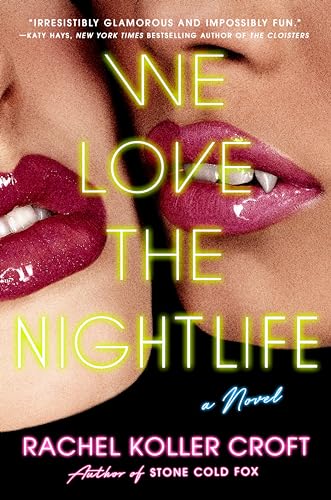
Book Review: We Love the Nightlife by Rachel Koller Croft

Title: We Love the Nightlife
Author: Rachel Koller Croft
Publisher: Berkley
Publication date: August 20, 2024
Length: 378 pages
Genre: Horror/fantasy
Source: Library
Rating:

Rating: 5 out of 5.

Locked in a toxic female friendship, two vampires careen toward catastrophe in this dark and dazzling page-turner, set amidst London’s glittering disco scene.

London 1979. Two women with a deep love for disco meet one fateful night on the dance floor, changing the course of both their lives forever. Nicola, a beautiful and brooding vampire for nearly two centuries, can’t resist fun-loving and feisty Amber from America, ultimately offering an eternity together where the glamour of nightlife always takes center stage.

But not all is what it seems.

Nearly fifty years later, after an unexpected betrayal, Amber wants out from under Nicola’s thumb, but it won’t be so simple to break up this festering friendship when she learns others have done the same—and wound up dead. 

Sensing Amber’s restlessness and in one last play to keep her close, Nicola proposes they open a nightclub of their very own, hearkening back to their best days as dancing queens. Amber agrees but she’s secretly hatching a dangerous escape plan. And if she fails…the party is over for good.

Did I know I needed a book about disco-loving vampires? Well, no. But clearly, I did… because I totally fell for this book.

I should have known the party was over when she casually suggested killing my husband back in 1981.

Amber is the life of the party in London, 1979, living it up on the dance floors of the most exclusive discos — gorgeous, young, magnetic. She’s certainly caught Nicola’s attention. Nicola is lonely, loves disco, and needs a new companion, and Amber would be perfect… so long as the idea of fangs and drinking blood doesn’t scare her away.

God, was there anything more irresistible than a brand-new gal pal?

At first, Nicola and Amber’s life together is blissful. Nightly parties, dancing perfectly in sync, never too far from the glitter and the spotlight.

[…] we used to be the stars of each other’s shows. She was obsessed with me; I was obsessed with her. And we lived for the nightlife. For disco. For the sweetness of my fresh youth that she stole from me, when I didn’t yet understand the entirety of what she’d taken.

Eventually, though, the thrill wears off, especially once Amber starts to realize just how much and how often Nicola has betrayed her trust, as she isolates her, keeps her dependent, and keeps her distracted with shiny clothes, dance music, and endless luxuries.

Written with chapters alternating between now (told from Amber’s perspective) and the duo’s past (told from Nicola’s perspective), we see their tangled lives move from a fun-loving, live-in-the-moment ethos to a more desperate dynamic, still amazing on the surface, but brimming with scheming and manipulation behind every move.

Tonally, there are plenty of moments of silliness and pop culture fangirling, from the Donna Summers-inspired catchphrases Amber and Nicola use to show affection (“toot toot”, “beep beep”) to the Spice Girls soundtrack playing in the background of a memorable turning. And while Amber eventually gets serious and gets down to some deadly plotting of her own, she still manages to show her inner party girl:

When she smiles at me, I see her fangs have sprouted for the first time. They’re adorable!

I honestly loved this book from start to finish. This isn’t particularly deep or literary fiction… but it absolutely captured my attention and never let go. An unexpected twist toward the end simply stopped me in my tracks. Perhaps other, more astute readers might have seen it coming, but I was gobsmacked. And delighted — I’ve read enough books with twists that I think I’ve become a bit jaded and hard to surprise in some ways, but We Love the Nightlife nails it.

Besides being a terrific vampire story (with disco!! can’t stress the disco element enough!), you can also see We Love the Nightlife as a cautionary tale about codependent friends. Vampire element aside, the ways in which Nicola and Amber manipulate and subtly undermine one another while also holding tight and eliminating outside distractions, all in the name of being BFFs, could be true of non-supernatural friendships as well. The blood and fangs set them apart, but the ways they hurt one another are not to vampires.

The writing in We Love the Nightlife is delicious, dark when it needs to be dark, but also full of humor and lusciously described scenes of dancing and music and the 70s-era scene. It’s utterly engaging, and also bleak and scary when the tension ramps up and the big, explosive ending gets closer.

I enjoyed every bit of We Love the Nightlife, and now want to check out the author’s previous novel, Stone Cold Fox. Highly recommended, so long as you don’t mind blood splatters on your glittery disco ball.

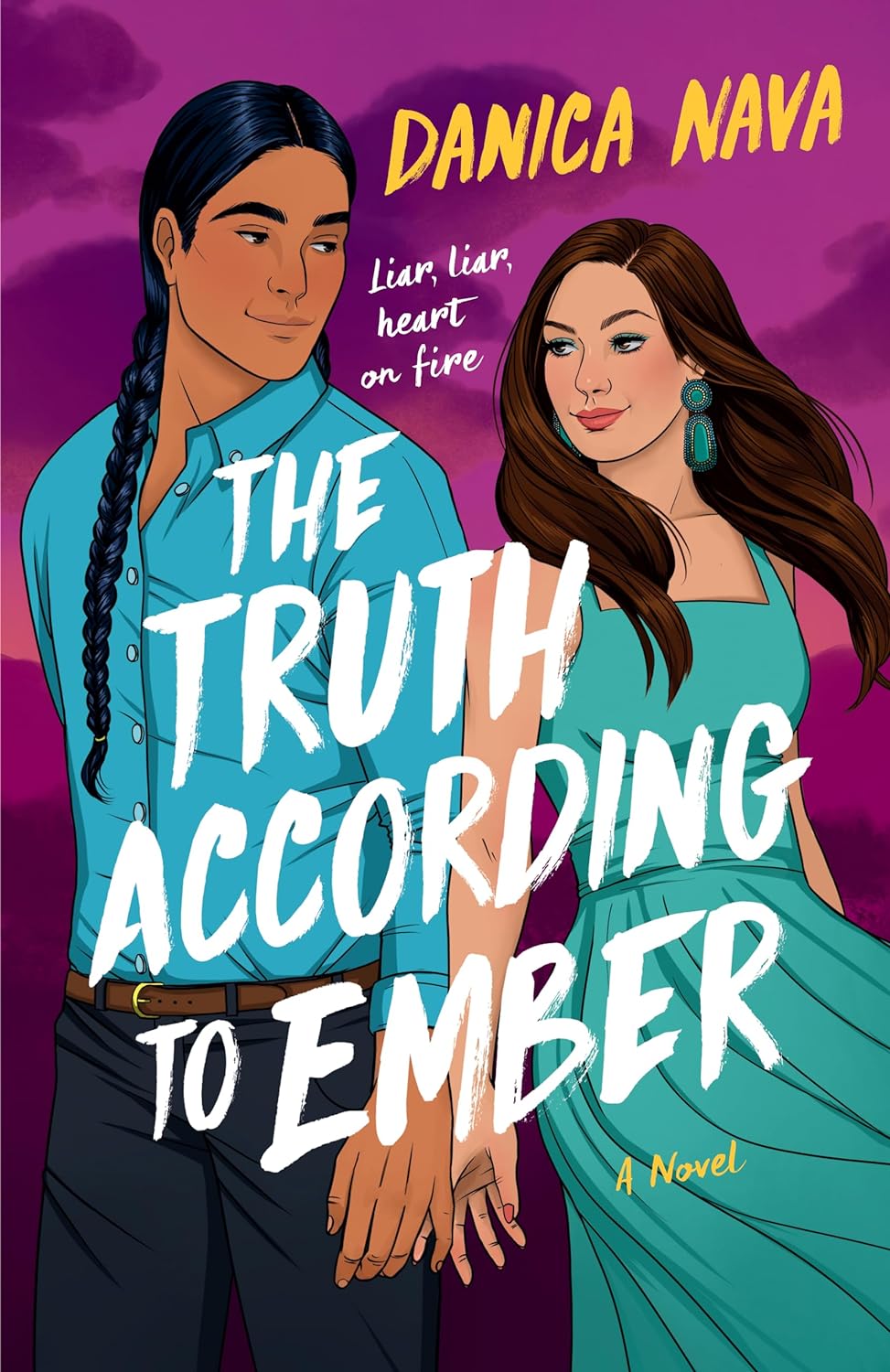
Audiobook Review: The Truth According to Ember by Danica Nava

Title: The Truth According to Ember
Author: Danica Nava
Narrators: Siena East
Publisher: Berkley
Publication date: August 6, 2024
Print length: 343 pages
Audio length: 9 hours 8 minutes
Genre: Contemporary romance
Source: Library
Rating:

Rating: 3 out of 5.

A Chickasaw woman who can’t catch a break serves up a little white lie that snowballs into much more in this witty and irresistible rom-com by debut author Danica Nava.

Ember Lee Cardinal has not always been a liar—well, not for anything that counted at least. But her job search is not going well and when her resumé is rejected for the thirty-seventh time, she takes matters into her own hands. She gets “creative” listing her qualifications and answers the ethnicity question on applications with a lie—a half-lie, technically. No one wanted Native American Ember, but white Ember has just landed her dream accounting job on Park Avenue (Oklahoma City, that is).

Accountant Ember thrives in corporate life—and her love life seems to be looking up too: Danuwoa Colson, the IT guy and fellow Native who caught her eye on her first day, seems to actually be interested in her too. Despite her unease over the no-dating policy at work, they start to see each other secretly, which somehow makes it even hotter? But when they’re caught in a compromising position on a work trip, a scheming colleague blackmails Ember, threatening to expose their relationship. As the manipulation continues to grow, so do Ember’s lies. She must make the hard decision to either stay silent or finally tell the truth, which could cost her everything.

The Truth According to Ember generated a lot of buzz in 2024, notably for being one of the lone examples of a rom-com written by a Native American author and with indigenous characters in the lead roles, rather than being relegated to secondary/supporting character status.

This story of a woman resorting lies to change her life has a lot of charm and a nice flow, but very questionable choices and actions drag it down and make it hard to truly root for the main character.

Ember works a dead end job at a bowling alley, lost the money she’d been saving toward her education when her brother skipped out on bail, and keeps getting rejected from every job she applies to. She’s taken accounting classes at the community college and dreams of becoming an accountant, but can’t seem to get her foot in the door. Fed up, she pads her resume with a degree she hasn’t earned and work experience that she doesn’t actually have, and ends up getting not just an interview, but a job.

Hired as an accounting assistant for a tech company, Ember is elated about finally breaking into the corporate world. Once she starts getting her paychecks, she fully intends to continue taking classes and getting the degree she claims to have. Meanwhile, she’s a quick learner — she doesn’t actually know how to do most of the work her job entails, but after quickly googling how to use QuickBooks, she’s on her way.

Complicating things at the office is the super hot IT guy — a gorgeous man named Danuwoa (who allows himself to be called Dan in the office, since no one seems capable of learning his actual name). Ember is smitten, and and the feeling seems to be mutual, but since the company has a strict no dating policy, he’s off-limits… or is he?

As Ember and Donuwoa begin secretly seeing each other and Ember gets a surprise promotion into an interim role as executive assistant to the CEO, the lies she’s told are a ticking timebomb. If the truth comes out, she’ll imperil not only her own job, but Donuwoa’s as well.

I should pause here to stay that because of my “day job” — I work in HR — this book made my brain hurt in so many ways. When she lies on her resume and lies about her job skills, I wanted to scream. But also, during her interview, the HR rep not only asks non-work questions but also basically comments on how hot Donuwoa is when he walks by. Just, no. No, no, no.

So clearly, I am not the best person to assess this book. There is quite a bit to enjoy, especially the observations on racism and sexism in the workplace, even when the worst offenders believe themselves (and declare themselves) to be “woke”. The vibe between Ember and Donuwoa is flirty and sexy, and they have great chemistry. Donuwoa is almost too perfect, kind, caring, understanding, and an amazing big brother to his sister Walela, who herself is all kinds of awesome.

I appreciated Ember finally coming to certain realizations about looking to community for support and not having to do everything on her own. Obviously, she also learns some major lessons about honesty, in her work life and in her relationships, once her lies catch up with her and blow up in her face.

Still, the workplace lies and poor judgement (like hooking up in a supply closet) made it hard for me to enjoy the book as a whole, and when Ember’s lies spread to not being up front with Donuwoa about what’s happening, I lost most of my sympathy for Ember.

I’m glad I gave The Truth According to Ember a try, and did appreciate many aspects of the setting, the challenges faced by the characters, and the dynamics between Ember and her friends and family, as well as her connection with Donuwoa. However, the problematic issues repeatedly took me out of the story and prevented me from fully feeling immersed.

[Note to self: Maybe HR professionals just shouldn’t read books about workplace romances… ]

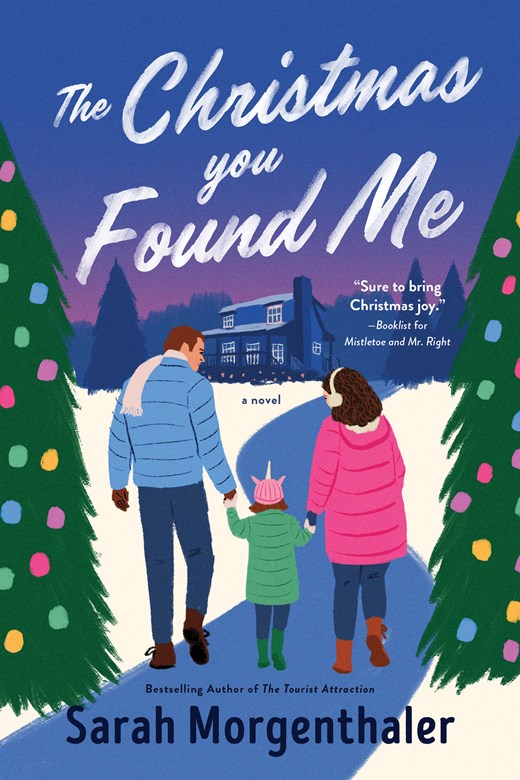
Book Review: The Christmas You Found Me by Sarah Morgenthaler

Title: The Christmas You Found Me
Author: Sarah Morgenthaler
Publisher: Sourcebooks Casablanca
Publication date: September 24, 2024
Length: 304 pages
Genre: Contemporary romance
Source: Library
Rating:

Rating: 3.5 out of 5.

Sarah Morgenthaler is back with a heart-mending contemporary romance featuring a single dad you’ll fall for; a satisfying slow burn love affair; found family you’ll root for; small town holiday magic; and all the quirky animals and snowy rustic scenes your heart desires.

Sienna Naples’s family has taken care of their wild Idaho land for generations and Sienna can’t imagine any other life. But at Christmastime, with her parents gone and her painful marriage finally over, it’s full of memories…and incredibly lonely. Until a tall, handsome stranger and a little girl walk into her life and suddenly the holidays are alive again.

When single father Guy Maple shows up as the result of an ad meant to be a joke, the handsome Montana construction worker isn’t joking. Money is tight this Christmas, and Guy’s four-year-old daughter Emma has stage-five chronic kidney disease. She needs a kidney transplant, but if Guy can’t prove that he can afford Emma’s anti-rejection medications, his daughter isn’t going to stay on the transplant list. Guy’s willing to do anything, including marrying a stranger, to keep her safe. It’s an impulsive marriage of convenience, and Sienna knows this isn’t real, no matter how much she adores Emma, how well Guy fits in to the ranching life—or how much light and laughter is coming into their lives as a result. But the more time she spends with her new family, the more she fears losing the fragile, feisty little girl and the kind, devoted, hard-working, incredibly attractive man who is her husband—but is it only in name?

When you pick up a holiday romance, certain things are for certain: Christmas spirit, lots of cookies and twinkling lights, and a happy ending. The Christmas You Found Me provides all of these ingredients… but adds in moments of near-tragedy and oodles of tears too. (But no fear! It’s not a spoiler — just look at that cover! — to promise that all will be well in the end.)

On the day Sienna’s divorce is final, her best friend Jess publishes an add in the local paper:

Wanted: Husband for Hire

Temp to full-time position, based on satisfactory job performance.

Eligibility requirements: Ability to lift, push, or pull 50 pounds. Willingness to perform ranch work in extreme weather without whining. Experience with livestock a plus. Broad shoulders preferred.

Benefits include medical, dental, 401(k) matching. Salary negotiable.

Current husbands need not apply. (Previous husbands of Sienna Naples are ineligible for the position.)

And sure, Jess means it to be a cute joke to lift Sienna’s spirits and get the entire (tiny) Idaho town to laugh along with Sienna… but the ad leads to a few random propositions, and one sincere applicant.

When Sienna reluctantly agrees to meet Guy Maple, she already feels bad. She’s not actually looking to hire a husband, after all. But then she gets a good look at Guy — a hot, attractive, polite, but apparently underfed man with a desperate air to him. He’s embarrassed but determined: if there’s any chance this job is a real thing, he wants it. Guy is a single dad with an adorable 4-year-old daughter who’s in end-stage kidney failure. Dialysis multiple times a week isn’t enough any more; she needs a new kidney, or she won’t survive.

Health insurance isn’t the problem, but money is. Because of their ongoing medical crisis, Guy is only able to work short-term gigs, and has no family to fall back on for assistance. Emma absolutely qualifies for a kidney donation based on her medical condition, but to stay on the transplant list, Guy has to be able to demonstrate the financial means to afford the ongoing anti-rejection medication that will be required… and he can’t.

Sienna’s heart breaks hearing him talk about his daughter, but she really isn’t looking to hire a husband. Except later that night, thinking about Guy and Emma, she realizes she really could help. Sure, she’s cash-poor at the moment, having lost most liquid assets in the divorce, but she’s kept her beautiful family ranch and some livestock. The value of the property would more than meet the financial requirements for Emma… so not quite believing what she’s doing, Sienna calls Guy and offers to marry him the next day.

What Sienna doesn’t count on is how lovable Emma is and how much of a sweetheart Guy turns out to be. When she realizes they’re living out of a seedy motel while he looks for local work, she insists they move in with her at the ranch. Et voila! Insta-family… and before long, insta-love as well.

Super cute scenes of family time at the ranch, Emma bonding with Sienna’s dog and mule, and Guy doing his workouts in the kitchen ensue. It’s all quite adorable, but Emma’s dire health looms large. When a medical crisis arrives right on Christmas Eve, well… even a curmudgeon like me had to fight to remain dry-eyed. (I lost that battle…)

The Christmas You Found Me is a sweet, romantic story — but extreme suspension of disbelief is required if you want to enjoy it. I was more than willing to go along with it all and let the love and holiday spirit float me along, but seriously, some story elements are a bit hard to swallow:

  • If an unattractive man had approached Sienna with the exact same circumstances, would she have considered marrying him?
  • It’s lucky for Sienna that the husband-for-hire turned out to be the sweetest, most respectful, most supportive man on the planet.
  • Absolutely no stepmother/stepdaughter adjustment phase — the insta-love aspect applies 100% to Sienna and Emma’s relationship.
  • As they enter the courthouse to get married, Sienna agrees to change her last name! Which she never did during her first (real) marriage! Because her family has a longstanding history in the region and the Naples name means something! But okay, she’ll change it for the guy she met less than 24 hours earlier.

Things work out much too perfectly… but that was okay with me, for the most part. Reading The Christmas You Found Me is like partaking in a Hallmark Christmas movie in book form. You can predict the plot beats all the way through, and you know more or less what some of the important elements will be — but it still feels like a nice holiday treat to sit back and enjoy.

I’d read Sarah Morgenthaler’s previous trilogy of books (the Moose Springs series, set in small-town Alaska). This author does a great job presenting heartwarming rural, rustic life, capturing the quirky traditions, hard-working locals, and a sense of a community that’s really there for one another. Reading her books makes me yearn for a cabin of my own, with cozy flannel, a warm fireplace, and fluffy socks.

Overall, I enjoyed The Christmas You Found Me. Realistic? Nope. A bit predictable? Yup. But also, romantic and sentimental and satisfying in a very cozy, wintery sort of way. I’d happily read more about these characters and their Idaho ranch.

Note: Goodreads lists The Christmas You Found Me as book #1 in the Heart of the Wilderness series. I’m curious to see where the series might go — more about Sienna’s friends and neighbors? Or unconnected wilderness-based Christmas romances? I guess we’ll have to wait and find out!

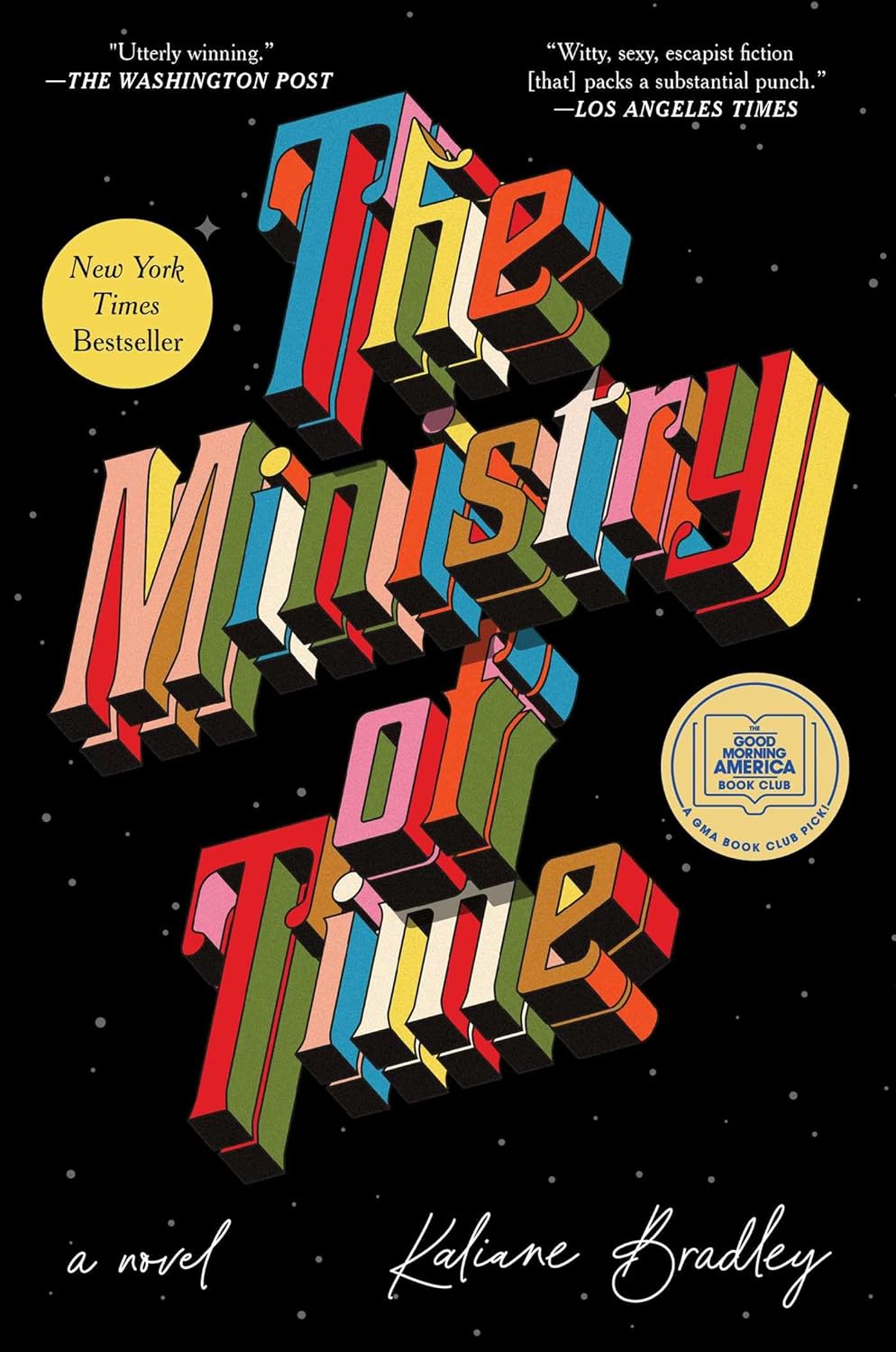
Book Review: The Ministry of Time by Kaliane Bradley

Title: The Ministry of Time
Author: Kaliane Bradley
Publisher: Simon & Schuster
Publication date: May 7, 2024
Length: 352 pages
Genre: Science fiction
Source: Purchased
Rating:

Rating: 3 out of 5.

A time travel romance, a spy thriller, a workplace comedy, and an ingenious exploration of the nature of power and the potential for love to change it all:

In the near future, a civil servant is offered the salary of her dreams and is, shortly afterward, told what project she’ll be working on. A recently established government ministry is gathering “expats” from across history to establish whether time travel is feasible—for the body, but also for the fabric of space-time.

She is tasked with working as a “bridge”: living with, assisting, and monitoring the expat known as “1847” or Commander Graham Gore. As far as history is concerned, Commander Gore died on Sir John Franklin’s doomed 1845 expedition to the Arctic, so he’s a little disoriented to be living with an unmarried woman who regularly shows her calves, surrounded by outlandish concepts such as “washing machines,” “Spotify,” and “the collapse of the British Empire.” But with an appetite for discovery, a seven-a-day cigarette habit, and the support of a charming and chaotic cast of fellow expats, he soon adjusts.

Over the next year, what the bridge initially thought would be, at best, a horrifically uncomfortable roommate dynamic, evolves into something much deeper. By the time the true shape of the Ministry’s project comes to light, the bridge has fallen haphazardly, fervently in love, with consequences she never could have imagined. Forced to confront the choices that brought them together, the bridge must finally reckon with how—and whether she believes—what she does next can change the future.

In The Ministry of Time, five people are yanked out of their lives in past centuries and pulled into 21st century England, to live as “expats” — term the Ministry deems most acceptable for describing these people forced to live in a time not their own.

The 21st century world is similar to our present day, but perhaps a few more decades farther down the road, if the cataclysmic weather events and political strife are indicators. The expats — from the 15th, 18th, 19th, and 20th centuries — are each assigned “bridges”: Ministry agents who live with their assigned expat and help them assimilate into their new worlds.

There’s much at stake: Those who fail to adjust and somehow get a grip on “hereness” — belonging where they are — are likely to get rejected by the current time, almost like an infection being rejected by a body’s antibodies. For the unnamed main character, a woman who jumps at the job offer mainly because of the large salary that goes with it, the task is frustrating and daunting. Her assignment is Graham Gore, a member of the doomed Franklin expedition of the mid-1800s, who’s pulled from the Arctic through a time door, leaving behind the men under his command. Gore is disoriented and belligerent, but with the help of his bridge, begins to learn more about the maddening world he now inhabits.

The Ministry of Time covers interesting ground, with an approach I haven’t seen before in time travel fiction. The book isn’t particularly concerned with the technology of it all. There’s a time door and a device that enables the time travel, but don’t look for explanations — this isn’t that sort of book.

Despite the science fiction trappings, this is instead a work of literary fiction exploring the implications of moving through time, changing the past and the future, and the experiences of belonging, being a refugee, and looking for a home.

As someone who doesn’t normally gravitate toward literary fiction, I must admit that I often found the writing style annoyingly opaque.

Quentin treated me with an impatient familiarity, as if we were both sticky and were leaving streaks on each other.

Throughout the book, I’d come across phrases and passages that made me stop and wonder — is it me, or does this not make any sense? There are words put together in interesting ways, yet I could not find meaning in them.

He blushed with his face on mute.

While sections of the the book felt like a slog, at times I became more invested, particularly in the latter half of the book, when both danger and emotions are heightened and the overall stakes are much more intense. And yet, I couldn’t entirely grasp the implications of the ending, and large chunks of the plot felt a bit half-baked to me. Perhaps this is the non-sci-fi factor: As a fan of science fiction, I expect a certain level of detail — the sci-fi elements need to have enough grounding to feel possible or at least make sense in the context of the world being described. In The Ministry of Time, the time travel is just a fact, the central device that drives the story, and the lack of specificity annoyed me.

By and large, though, it comes back to the writing, which generally did not work for me:

She looked like her organs had been removed and placed in cold storage; worse, like it had happened when she was on her way to what she thought was a birthday party.

There are examples upon examples of descriptions that probably are meant to be clever, but which feel meaningless to me. I read the sentence above multiple times — I still have no idea what the person being described might actually look like in this instance.

The Ministry of Time was one of my more eagerly anticipated reads for winter. Now that I’ve read it, I can’t help feeling let down. I expected something very different than what I got. Overall, while I enjoyed certain elements of the story and was very interested in some of the characters, the storytelling style kept me from truly engaging.

I know this book generated a lot of buzz when it came out and has oodles of fans. I don’t regret reading it, but it won’t be on any of my “best of” lists for 2024.

Book Review: Love You a Latke by Amanda Elliot

Title: Love You a Latke
Author: Amanda Elliot
Publisher: Berkley
Publication date: October 8, 2024
Length: 368 pages
Genre: Contemporary romance
Source: Library
Rating:

Rating: 4.5 out of 5.

Snow is falling, holiday lights are twinkling, and Abby Cohen is pissed. For one thing, her most annoying customer, Seth, has been coming into her café every morning with his sunshiny attitude, determined to break down her carefully constructed emotional walls. And, as the only Jew on the tourism board of her Vermont town, Abby’s been charged with planning their fledgling Hanukkah festival. Unfortunately, the local vendors don’t understand that the story of Hanukkah cannot be told with light-up plastic figures from the Nativity scene, even if the Three Wise Men wear yarmulkes.

Desperate for support, Abby puts out a call for help online and discovers she was wrong about being the only Jew within a hundred miles. There’s one other: Seth.

As it turns out, Seth’s parents have been badgering him to bring a Nice Jewish Girlfriend home to New York City for Hanukkah, and if Abby can survive his incessant, irritatingly handsome smiles, he’ll introduce her to all the vendors she needs to make the festival a success. But over latkes, doughnuts, and winter adventures in Manhattan, Abby begins to realize that her fake boyfriend and his family might just be igniting a flame in her own guarded heart.

Let’s hear it for a Hanukkah romance with heart! Love You a Latke by Amanda Elliot combines holiday cheer with the fake dating trope, then adds in deeper emotion and meaningful moments related to community, identity, and assimilation. Does that sound too serious? Never fear, Love You a Latke is fun and has an overall upbeat tone… and plenty of Hanukkah joy.

Abby runs a coffee shop in a small Vermont town, but worries that the tourist trade has fallen off, which may imperil her business’s future. When the head of the local merchant association basically ropes Abby into planning a Hanukkah festival as a tourist draw (after all, any town might have a Christmas festival — but nowhere in Vermont is there a Hanukkah festival!), Abby reluctantly agrees, but quickly realizes she’ll need help to pull it off. Unfortunately, the only other Jew Abby can find in her area is Seth, the annoyingly cheerful customer who comes into her shop every day.

With no other options, Abby asks Seth for help — and he agrees, but with one condition: He’ll help her connect with all the great food and event vendors he knows in New York, who’ll be sure to be perfect for the festival, and in exchange, she’ll come spend Hanukkah with him and his parents. A fake girlfriend is just what he needs to get his mother to ease up on the matchmaking pressure. Desperate for Seth’s help with the festival, Abby agrees to the fake-dating scheme. How hard could it be?

Over the eight days of Hanukkah, Abby warms to Seth and his parents, and rekindles her connection to her Jewish roots. Due to an incredibly toxic relationship with her parents, Abby fled not only them, but the entire Jewish community with which they seem so inextricably linked. Through her time with Seth, as well as by experiencing myriad Jewish and Hanukkah settings and events in New York, Abby begins to realize that she can reclaim an important element of her past — her Judaism — without falling prey to the harshness and negativity of her upbringing.

Of course, there are also romantic sparks being kindled as Abby and Seth light the menorah each night. Their chemistry is lovely, and while Abby struggles to avoid entanglement for way longer than I’d wished, her resistance is understandable given the pain of her past. When Abby and Seth finally do connect, it makes the waiting absolutely worth it.

A subplot throughout the book is Abby’s involvement in the Hanukkah festival. Even though she is nominally in charge, it’s clear that the woman who assigns the job to Abby really wants to retain control — and her idea of a Hanukkah festival is essentially a Christmas festival, but maybe add in a game of dreydel. Part of Abby’s evolution over the course of Love You a Latke is learning to take a stand, claim her own heritage, and refuse to be marginalized or forced to assimilate. It’s all quite awesome.

I just didn’t want Christmas in my Hanukkah, the same way I didn’t want to dip a grilled cheese in my cinnamon roll latte. Both were delicious, but I didn’t want them together

Love You a Latke deals with serious themes about emotional abuse and the lasting damage it can inflict, but the book is not a downer in any way. As Abby starts coming to terms with her life, her past, and her hopes for the future, and recognizing that her life feels richer once she reconnects with the Jewish community she thought she’d left for good, she blossoms and is able to start creating meaningful friendships and romantic connections. She and Seth are great together, but it’s also wonderful to see her connecting with new friends and feeling open to a more positive way of living her life.

The Jewish elements in Love You a Latke are handled very, very well. I loved seeing the community and the holiday represented in non-typical yet very positive ways. Too often, I’ve seen Jewish characters included in romance novel in a tokenized or stereotypical way, but I feel that’s been changing more recently. Love You a Latke brings the Jewish without ever resorting to tired old cliches, and even shows how a new generation of young adults find ways to connect to their heritage and community in all sorts of modern, fresh ways.

Love You a Latke is just the book I needed in this week leading up to Hanukkah! As I light the menorah for the first night of Hanukkah tonight, I’ll be thinking of Abby and Seth and their celebrations too!

For anyone looking for a sweet holiday romance that has something to say, do check out Love You a Latke! Highly recommended.

Book Review: A Letter to the Luminous Deep by Sylvie Cathrall

Title: A Letter to the Luminous Deep
Author: Sylvie Cathrall
Publisher: Orbit
Publication date: April 25, 2024
Length: 432 pages
Genre: Fantasy
Source: Purchased
Rating:

Rating: 3 out of 5.

A charming fantasy set in an underwater world with magical academia and a heartwarming penpal romance, perfect for fans of A Marvellous Light and Emily Wilde’s Encylopaedia of Faeries.

A beautiful discovery outside the window of her underwater home prompts the reclusive E. to begin a correspondence with renowned scholar Henerey Clel. The letters they share are filled with passion, at first for their mutual interests, and then, inevitably, for each other.

Together, they uncover a mystery from the unknown depths, destined to transform the underwater world they both equally fear and love. But by no mere coincidence, a seaquake destroys E.’s home, and she and Henerey vanish.

A year later, E.’s sister Sophy, and Henerey’s brother Vyerin, are left to solve the mystery, piecing together the letters, sketches and field notes left behind—and learn what their siblings’ disappearance might mean for life as they know it.

Inspired, immersive, and full of heart, this charming epistolary tale is an adventure into the depths of a magical sea and the limits of the imagination from a marvelous debut voice.

In the world of A Letter to the Luminous Deep, human life is lived on ships and floating anchorages, on a planet with only one small land mass. Legend has it that one thousand years earlier, a cataclysmic event known as the Dive occurred: Before the Dive, people lived in the sky (on spaceships? orbiting stations?), but the entire civilization suddenly plummeted into the seas below. Relics of the pre-Dive world are still occasionally found, but humanity now lives on the water’s surface — or occasionally, below it.

As the book opens, we’re introduced to E. Cidnosin, a young woman who resides alone in Deep House, the underwater compound built by her late mother. E. prefers the solitude, as it keeps her brain calm and allows her a peaceful life. When she spots an unusual sea creature outside her window, she writes to a renowned scholar, Henerey Clel, to ask for help in identifying it. From that initial contact, the two develop an ongoing correspondence, through which they reveal more and more of themselves and grow to truly connect and care for one another.

Sadly, what we learn early on is that E. and Henerey were presumed dead after an explosion at Deep House. Now, a year later, E.’s sister and Henerey’s brother are trying to piece together what happened by sharing their siblings’ notes, letters, and journals. As they correspond, they form a friendship of their own, and become deeply involved in solving the mystery of E. and Henerey’s fate — and trying to determine if another mystery with worldwide implications might be at play.

I wanted to love A Letter to the Luminous Deep, but realized almost immediately that it wouldn’t work out that way. Epistolary novels are tricky: There are plenty I’ve enjoyed, but they only work if the letters are informative enough to give readers a bigger view of the letter writers’ worlds. That was not the case here. Perhaps the author’s intention was to keep an air of mystery throughout the book, but for me, the result was a lack of information that kept me from engaging with the story.

We get a sense of the world through the letters, but details are dripped out so sparingly that I felt frustrated rather than intrigued. Meanwhile, the characters themselves are hard to connect to. I couldn’t imagine much about E. or Henerey beyond their words on the page, and the lack of definition of elements of their world makes it hard to get a fuller picture of their daily lives and experiences.

With the epistolary format, all content is provided through letters and documents, and the writing style of the characters is highly stylized. Without any other narrative to provide more straightforward language or descriptions, that writing style gets tiresome very quickly.

I will say that the story picks up in the final third, and by the end, there’s a payoff for sticking with it. Still, too much of the book feels like a slog, and at over 400 pages, that makes for a less than satisfying read.

A Letter to the Luminous Deep is apparently the first book in a duology, with book #2, A Letter from the Lonesome Shore, due out in spring 2025. As of now, I can’t seem myself continuing with the story.

Book Review: Diavola by Jennifer Thorne

Title: Diavola
Author: Jennifer Thorne
Publisher: Tor Nightfire
Publication date: March 26, 2024
Length: 296 pages
Genre: Horror
Source: Purchased
Rating:

Rating: 4 out of 5.

Jennifer Thorne skewers all-too-familiar family dynamics in this sly, wickedly funny vacation-Gothic. Beautifully unhinged and deeply satisfying, Diavola is a sharp twist on the classic haunted house story, exploring loneliness, belonging, and the seemingly inescapable bonds of family mythology.

Anna has two rules for the annual Pace family destination vacations: Tread lightly and survive.

It isn’t easy when she’s the only one in the family who doesn’t quite fit in. Her twin brother, Benny, goes with the flow so much he’s practically dissolved, and her older sister, Nicole, is so used to everyone—including her blandly docile husband and two kids—falling in line that Anna often ends up in trouble for simply asking a question. Mom seizes every opportunity to question her life choices, and Dad, when not reminding everyone who paid for this vacation, just wants some peace and quiet.

The gorgeous, remote villa in tiny Monteperso seems like a perfect place to endure so much family togetherness, until things start going off the rails—the strange noises at night, the unsettling warnings from the local villagers, and the dark, violent past of the villa itself.

(Warning: May invoke feelings of irritation, dread, and despair that come with large family gatherings.)

Talk about a family vacation from hell!

The air felt murky when she joined everybody at the table, but it was the usual Pace family murk, bad moods combining to form a full low-pressure weather pattern.

In this creepy, atmostpheric horror novel by Jennifer Thorne (author of the brilliant Lute), a family stay in a Tuscan villa turns nightmarish… and not just because of the forced proximity of a dysfunctional family.

Main character Anna Pace is a constant disappointment to her family. Blamed for everything from the death of her middle school classroom’s pet guinea pig to fooling around with her sister’s prom date (she didn’t, actually) to every other sort of wrong-doing imaginable, Anna is constantly on alert. The idea of spending a week with her family is so stressful that she secretly arrives in Italy two days early to squeeze in some alone time before she has to face the rest of the group.

The family’s idyllic Tuscan luxury rental seems off right from the start. There’s a dead zone around the building where nothing grows. A tower is kept tightly locked, and while Anna thought she saw a window in it, it’s actually totally bricked over. Why is there a goat kept tethered at the end of the lane? And why does Anna spot locals sneaking around with flashlights at night?

Little incidents pile up — slamming doors, spoiled food, onslaughts of mosquitoes — and then escalate into rearranged furniture and injuries caused by unseen hands. The family seems to be in the worst sort of denial. Anna’s father insists that there’s nothing wrong, because he paid for this vacation, dammit!, and they WILL enjoy it. Everyone else falls back on blaming Anna for causing problems.

“I don’t know why you’re trying to stir things up, Anna,” she spat. “I gave up trying to figure that out a long time ago, goodness knows, a long time! There is absolutely nothing wrong with where we’re staying.”

Anna knows deep down that what’s happening at the villa isn’t normal, especially given the side-eye the family gets whenever they venture into the nearby village. She can fell it in the air whenever they go back into the villa, a sense of wrongness and bad intent — and the longer they stay, the worse it gets, especially with the terrible dreams of a menacing woman that begin to haunt Anna’s every moment… even when she’s not asleep.

Oh, this book gets creepier and creepier as it goes along, and the family’s insistence on acting as if everything is okay becomes enough to make you want to pull your hair out. I would have been running away as fast as my legs could carry me as of the second day — and Anna does consider leaving, but it’s the same old family dynamic that keeps her from going:

Everybody would worry about her if she left and it would poison the rest of their vacation and she wouldn’t want to hear about it, but by God, she would. She’d hear about it at every single gathering forevermore.

The toxicity of the family is a huge factor in the horror elements. Yes, there are gruesome, gory incidents, and plenty of disturbing scenes, but the way Anna’s family treats her is one of the most upsetting aspects of this book. She’s the family scapegoat, for no very good reason except that that’s what they’re all used to. No wonder she dreads these family vacations.

Not to downplay the actual horror — the haunting storyline is scary and insidious, and there’s a moment where we readers might think that Anna has finally broken free… but then we see that there’s still quite a bit of the story left, and get a creeping suspicion that the terror isn’t even close to being finished with Anna.

Diavola is a relatively short novel, and if possible, should be read in one or two long reading sessions. Due to limited reading time this past week, I read the first half or so in little fits and starts, and found myself rather disengaged — but I’m convinced the fault was in my approach, not the book itself. Once I sat down for more extended reading over the weekend, I couldn’t put the book down and flew through the second half.

As a story of haunting and possession, Diavola is sinister and frightening. As a tale of awful family dynamics, it’s both relatable and bleak. Black humor lightens some of the worst moments, and yet the overall vibe is menacing all the way through.

There are some gross-out scenes, so be warned if you’re on the squeamish side. Recommended for horror fans who appreciate a gothic vibe in their stories of terrible family vacations.

PS – If nothing else, Diavola should be a lesson to us all to look beyond AirBnb reviews and do a good Google search when staying in ancient villas!