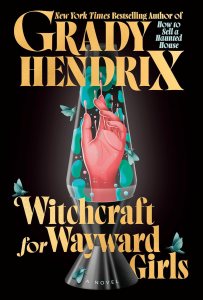
Book Review: Witchcraft for Wayward Girls by Grady Hendrix

Title: Witchcraft for Wayward Girls
Author: Grady Hendrix
Publisher: Berkley
Publication date: January 14, 2025
Length: 482 pages
Genre: Horror
Source: Purchased
Rating:

Rating: 5 out of 5.

There’s power in a book…

They call them wayward girls. Loose girls. Girls who grew up too fast. And they’re sent to the Wellwood Home in St. Augustine, Florida, where unwed mothers are hidden by their families to have their babies in secret, give them up for adoption, and most important of all, to forget any of it ever happened.

Fifteen-year-old Fern arrives at the home in the sweltering summer of 1970, pregnant, terrified and alone. Under the watchful eye of the stern Miss Wellwood, she meets a dozen other girls in the same predicament. There’s Rose, a hippie who insists she’s going to find a way to keep her baby and escape to a commune. And Zinnia, a budding musician who knows she’s going to go home and marry her baby’s father. And Holly, a wisp of a girl, barely fourteen, mute and pregnant by no-one-knows-who.

Everything the girls eat, every moment of their waking day, and everything they’re allowed to talk about is strictly controlled by adults who claim they know what’s best for them. Then Fern meets a librarian who gives her an occult book about witchcraft, and power is in the hands of the girls for the first time in their lives. But power can destroy as easily as it creates, and it’s never given freely. There’s always a price to be paid…and it’s usually paid in blood.

Grady Hendrix writes marvelously inventive horror novels, with psychological and physical terrors around every corner. Here in Witchcraft for Wayward Girls, the greatest horror is not in the supernatural elements, but in the treatment of the pregnant teens sent in disgrace to the Wellwood Home.

“You are here because you acted like a barnyard animal,” Miss Wellwood said. “You took the glory of your womanhood and threw it in the mud.”

The girls at the home are young, and at the complete mercy of their families, the staff of the home, and the doctors. They are never allowed to forget just how awful they are, how little they matter, and how little control they have over anything that happens to their bodies. They are all utterly ignorant as well — they know what they did to get pregnant, but have no idea what childbirth actually entails.

“You all don’t need to worry yourselves about what’s going to happen when you go to the hospital,” he said. “Because it’s none of your business. You just do what the doctors say and you’ll be fine.”

Fern is distraught when her father angrily bustles her off the home and leaves her there without even a good-bye. “Fern” isn’t even her name — all girls are given new names upon arrival, to preserve anonymity and to make the entire experience as separate from their real lives as possible. All Fern wants is to go home, to forget this ever happened, and to get back to her school, her friends, and the senior play.

But the harsh realities of pregnancy are impossible to ignore, especially once Fern witnesses another girl go into early labor in the bathroom and has to face the awful truth of what lies ahead for her. When the biweekly book mobile shows up, Fern asks the librarian for a book on what really happens during childbirth — which would be considered contraband at the home, where pleasant middle grade books seem to be the only allowed reading material.

The book the librarian passes along is anything but benign children’s fiction. Instead, she hands Fern is a hidden copy of a book titled How to Be a Groovy Witch (how awesome is that?!?!). The book’s contents are mostly incomprehensible, but Fern, Rose, Zinnia, and Holly are able to figure out a spell to cure Zinnia’s unrelenting morning sickness… by transferring it to someone else, with shockingly effective results.

The girls are drawn in by the lure of witchcraft and the power it promises, not seeing until it’s too late that nothing is given for free.

In this world there is one truth: everything has a price, and every price must be paid. Perhaps you will not pay it today, maybe you can put it off until tomorrow, but one day there will be a knock at your door in the middle of the night, a voice in the darkness beside your bed, a letter laid upon the table when you believe yourself to be alone, and it will contain a bill that must be paid, and you will pay it in blood.

Witchcraft for Wayward Girls is an absolutely compelling read. It’s a little on the longer side, but it flies by. The girls’ terror and helplessness feel palpable, and the book is a stark reminder of how far we’ve come in so many ways… and how awful it would be to move backward.

There are several gross-out scenes resulting from the girls’ spells, as well as scenes of supernatural power and strange, other-worldly phenomena. Some parts can be truly scary. And yet, the most horrifying scene is a hospital delivery. Nothing goes wrong medically, but it’s a detailed, horrible depiction of what labor and delivery in the 1970s entailed for so many women. That, to me, is the truly disturbing part of this book. Well, that, plus the girls’ utter lack of agency, the casual cruelty of the adults controlling them, and the soul-crushing sense of shame forced on them from every direction.

They said she could go back to her old life. They said it wouldn’t hurt. They said she’d never have to think about it again. They lied.

I loved the girls’ character development, and how each of them struggles to find strength to face their own particular hell. The girls’ power truly lies in their connection and support of one another, even more so than in the gifts they discover through the book and the librarian’s coven. Despite their individual suffering, they still find joy and friendship, as they band together to take back control and figure out how to survive.

Witchcraft for Wayward Girls is a moving, powerful, absorbing read. The depiction of the historical time and place feels spot-on. 1970s slang and attitudes provide some needed moments of fun and entertainment, despite the overall seriousness of the subject matter. (It’s shocking to see the pregnant girls constantly smoking cigarettes… but hey, it’s 1970!)

Grady Hendrix writes terrific horror, always with unique, clever twists and set-ups. I believe I have one more of his books yet to read (and I’m looking forward to it!); meanwhile, I’m thrilled that I finally got my hands on Witchcraft for Wayward Girls. Highly recommended.

For more by this author:
Horrorstör
My Best Friend’s Exorcism
Paperbacks from Hell: The Twisted History of ’70s and ’80s Horror Fiction
We Sold Our Souls
The Final Girl Support Group
The Southern Book Club’s Guide to Slaying Vampires

Purchase linksAmazon – Audible audiobook – Bookshop.org – Libro.fm
Disclaimer: When you make a purchase through one of these affiliate links, I may earn a small commission, at no additional cost to you.
Book Review: The God of the Woods by Liz Moore

Title: The God of the Woods
Author: Liz Moore
Publisher: Riverhead Books
Publication date: July 2, 2024
Length: 490 pages
Genre: Mystery/thriller
Source: Library
Rating:

Rating: 5 out of 5.

When a teenager vanishes from her Adirondack summer camp, two worlds collide.

Early morning, August 1975: a camp counselor discovers an empty bunk. Its occupant, Barbara Van Laar, has gone missing. Barbara isn’t just any thirteen-year-old: she’s the daughter of the family that owns the summer camp and employs most of the region’s residents. And this isn’t the first time a Van Laar child has disappeared. Barbara’s older brother similarly vanished fourteen years ago, never to be found.

As a panicked search begins, a thrilling drama unfolds. Chasing down the layered secrets of the Van Laar family and the blue-collar community working in its shadow, Moore’s multi-threaded story invites readers into a rich and gripping dynasty of secrets and second chances. It is Liz Moore’s most ambitious and wide-reaching novel yet.

In The God of the Woods, an intricate timeline and multiple points of view bring to vivid life the story of missing children, a privileged family, and its influence over the working class people who depend upon them for their livelihoods.

The story opens at Camp Emerson, a summer camp located on the grounds of the Van Laar Preserve. The Van Laar family bought this vast property in the Adirondacks from loggers several generations back, and have turned it into their mountain getaway. Their huge house, named Self-Reliance, dominates the hilltop overlooking the lake; down the hill, the staff of the camp tend to the children of wealthy families each summer.

In the summer of 1975, 13-year-old Barbara Van Laar attends camp for the first time. She’s an independent-minded, punk rock-loving teen who’s happy to be out from under her parents’ control for the eight weeks of camp, and she quickly bonds with one of the other new girls in her cabin. But in August, Barbara’s counselor wakes up to discover that Barbara’s bed is empty, and fears the worst.

Fourteen years earlier, the first Van Laar child — named Peter (Peter IV, to be exact) but known as Bear, also went missing from the Van Laar Preserve and was never found, despite a huge search. Now, fears run high that the same fate has befallen Barbara, and news that a notorious serial killer has escaped prison and is on the lam in the Adirondacks only adds to the searchers’ desperation.

But there is so much more to the story than a missing person’s case. As each chapter begins, a different date is highlighted, and the narrative jumps between the 1950s, 1960s, and 1970s, as well as between different points in that fateful summer of 1975. The story is not told chronologically; confusing at first, but ultimately, adding to the depth of the character portrayals and giving readers plenty of clues and red herrings to chew over.

Beyond the dual mysteries surrounding Bear and Barbara, the book also is a portrait of the deep divide between haves and have-nots. The Van Laars are seemingly untouchable. They and their wealthy, powerful friends control the area, providing the only source of employment for the nearest small town since the paper factory shut down years earlier. No one can afford to get on the Van Laars’ bad side, even if it means looking away when bad things happen.

I was hesitant to pick up The God of the Woods, not sure that the genre and writing would appeal to me, based on comments I’d read here and there. I’m so glad I got past my concerns and gave it a try. After some initial struggles with the jumps between timelines, I became more comfortable with the book’s structure and ended up finding the chronology fascinating. As for the writing itself, it’s tense and illuminating, and doesn’t drag a bit — those 500 pages absolutely flew by.

With so many point-of-view characters, it may feel almost overwhelming at first to keep track of them all, but ultimately, having so many perspectives — some accurate, some not — on the events of 1975 as well as the earlier disappearance, only adds to the depth of the story. The depiction of the Van Laars and their guests, lounging about in satin pajamas even when a child goes missing, is a chilling portrait of cold power and indifference. And then there’s the setting itself, the beautiful, dangerous forests of the Adirondacks — where campers are taught to immediately sit down and start yelling if they realize they’re lost. The Van Laar home may seem luxurious and civilized, but it’s surrounded by wilderness, which ultimately holds more power than the people who come there.

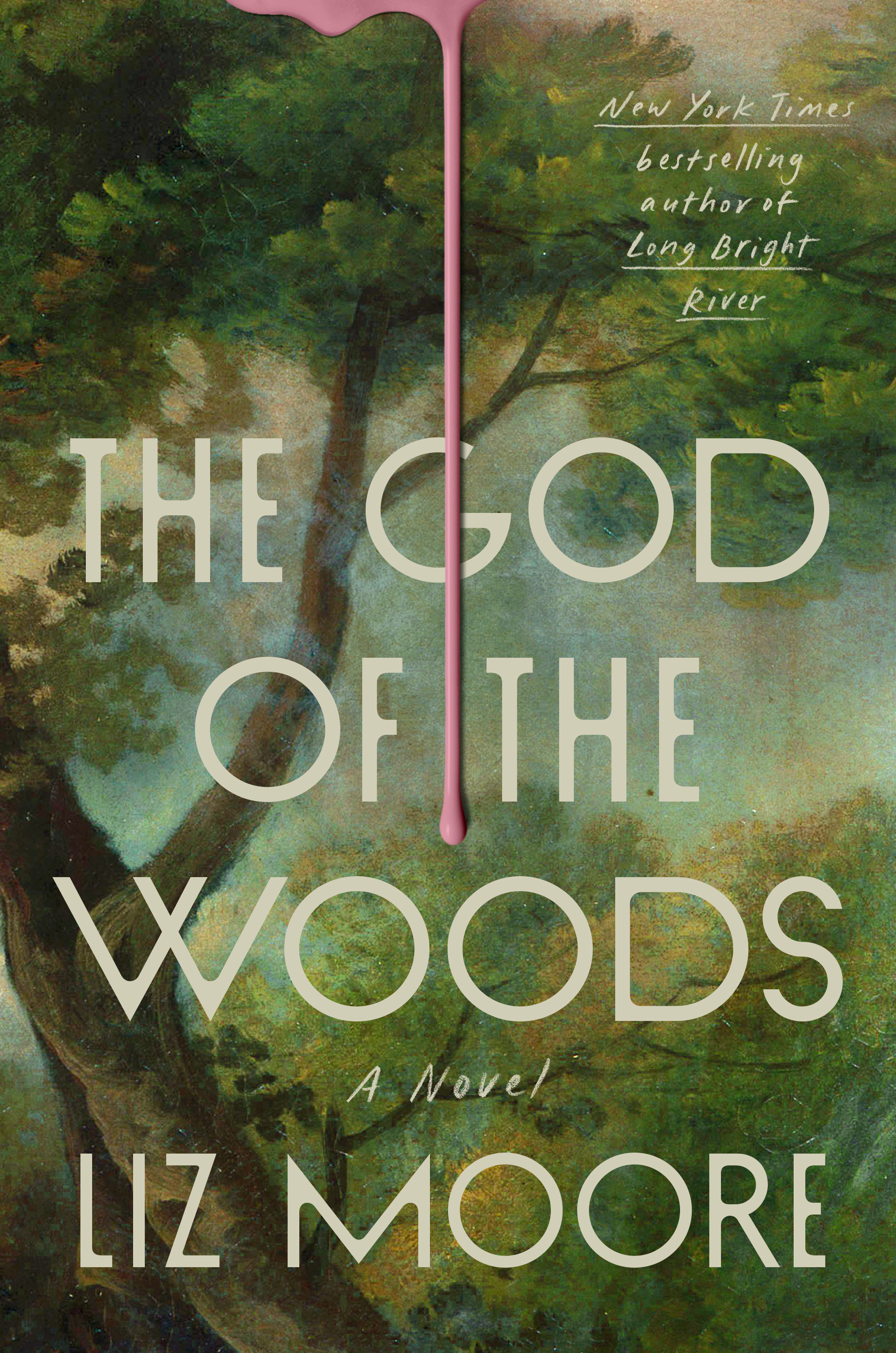
My only quibble with this book is that the title seems like an odd choice to me. Yes, it’s somewhat clearer by the end, but generally speaking, it seems pretty disconnected from the overall story. On the other hand, the cover is brilliant. It’ll make more sense once you read the book!

I can’t say enough good things about The God of the Woods. By the time I passed the halfway mark, I couldn’t put it down and wanted nothing more than uninterrupted time to read straight through to the end. Don’t miss this well-written, thought-provoking, surprising, twisty book!

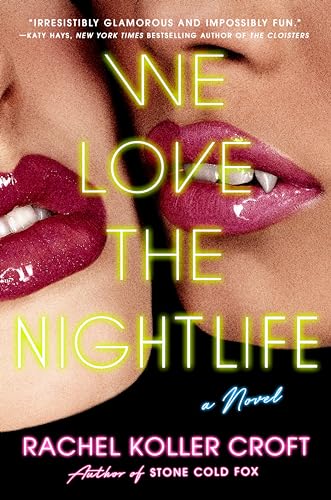
Book Review: We Love the Nightlife by Rachel Koller Croft

Title: We Love the Nightlife
Author: Rachel Koller Croft
Publisher: Berkley
Publication date: August 20, 2024
Length: 378 pages
Genre: Horror/fantasy
Source: Library
Rating:

Rating: 5 out of 5.

Locked in a toxic female friendship, two vampires careen toward catastrophe in this dark and dazzling page-turner, set amidst London’s glittering disco scene.

London 1979. Two women with a deep love for disco meet one fateful night on the dance floor, changing the course of both their lives forever. Nicola, a beautiful and brooding vampire for nearly two centuries, can’t resist fun-loving and feisty Amber from America, ultimately offering an eternity together where the glamour of nightlife always takes center stage.

But not all is what it seems.

Nearly fifty years later, after an unexpected betrayal, Amber wants out from under Nicola’s thumb, but it won’t be so simple to break up this festering friendship when she learns others have done the same—and wound up dead. 

Sensing Amber’s restlessness and in one last play to keep her close, Nicola proposes they open a nightclub of their very own, hearkening back to their best days as dancing queens. Amber agrees but she’s secretly hatching a dangerous escape plan. And if she fails…the party is over for good.

Did I know I needed a book about disco-loving vampires? Well, no. But clearly, I did… because I totally fell for this book.

I should have known the party was over when she casually suggested killing my husband back in 1981.

Amber is the life of the party in London, 1979, living it up on the dance floors of the most exclusive discos — gorgeous, young, magnetic. She’s certainly caught Nicola’s attention. Nicola is lonely, loves disco, and needs a new companion, and Amber would be perfect… so long as the idea of fangs and drinking blood doesn’t scare her away.

God, was there anything more irresistible than a brand-new gal pal?

At first, Nicola and Amber’s life together is blissful. Nightly parties, dancing perfectly in sync, never too far from the glitter and the spotlight.

[…] we used to be the stars of each other’s shows. She was obsessed with me; I was obsessed with her. And we lived for the nightlife. For disco. For the sweetness of my fresh youth that she stole from me, when I didn’t yet understand the entirety of what she’d taken.

Eventually, though, the thrill wears off, especially once Amber starts to realize just how much and how often Nicola has betrayed her trust, as she isolates her, keeps her dependent, and keeps her distracted with shiny clothes, dance music, and endless luxuries.

Written with chapters alternating between now (told from Amber’s perspective) and the duo’s past (told from Nicola’s perspective), we see their tangled lives move from a fun-loving, live-in-the-moment ethos to a more desperate dynamic, still amazing on the surface, but brimming with scheming and manipulation behind every move.

Tonally, there are plenty of moments of silliness and pop culture fangirling, from the Donna Summers-inspired catchphrases Amber and Nicola use to show affection (“toot toot”, “beep beep”) to the Spice Girls soundtrack playing in the background of a memorable turning. And while Amber eventually gets serious and gets down to some deadly plotting of her own, she still manages to show her inner party girl:

When she smiles at me, I see her fangs have sprouted for the first time. They’re adorable!

I honestly loved this book from start to finish. This isn’t particularly deep or literary fiction… but it absolutely captured my attention and never let go. An unexpected twist toward the end simply stopped me in my tracks. Perhaps other, more astute readers might have seen it coming, but I was gobsmacked. And delighted — I’ve read enough books with twists that I think I’ve become a bit jaded and hard to surprise in some ways, but We Love the Nightlife nails it.

Besides being a terrific vampire story (with disco!! can’t stress the disco element enough!), you can also see We Love the Nightlife as a cautionary tale about codependent friends. Vampire element aside, the ways in which Nicola and Amber manipulate and subtly undermine one another while also holding tight and eliminating outside distractions, all in the name of being BFFs, could be true of non-supernatural friendships as well. The blood and fangs set them apart, but the ways they hurt one another are not to vampires.

The writing in We Love the Nightlife is delicious, dark when it needs to be dark, but also full of humor and lusciously described scenes of dancing and music and the 70s-era scene. It’s utterly engaging, and also bleak and scary when the tension ramps up and the big, explosive ending gets closer.

I enjoyed every bit of We Love the Nightlife, and now want to check out the author’s previous novel, Stone Cold Fox. Highly recommended, so long as you don’t mind blood splatters on your glittery disco ball.

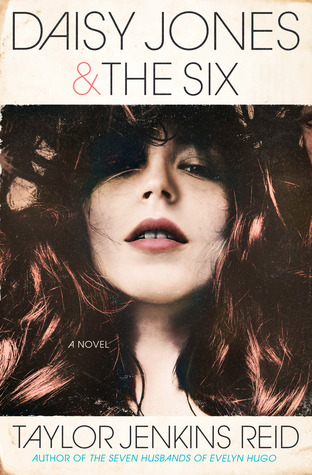
Book Review: Daisy Jones & The Six by Taylor Jenkins Reid

Everyone knows Daisy Jones & The Six, but nobody knows the reason behind their split at the absolute height of their popularity . . . until now.

Daisy is a girl coming of age in L.A. in the late sixties, sneaking into clubs on the Sunset Strip, sleeping with rock stars, and dreaming of singing at the Whisky a Go Go. The sex and drugs are thrilling, but it’s the rock and roll she loves most. By the time she’s twenty, her voice is getting noticed, and she has the kind of heedless beauty that makes people do crazy things.

Also getting noticed is The Six, a band led by the brooding Billy Dunne. On the eve of their first tour, his girlfriend Camila finds out she’s pregnant, and with the pressure of impending fatherhood and fame, Billy goes a little wild on the road.

Daisy and Billy cross paths when a producer realizes that the key to supercharged success is to put the two together. What happens next will become the stuff of legend.

The making of that legend is chronicled in this riveting and unforgettable novel, written as an oral history of one of the biggest bands of the seventies. Taylor Jenkins Reid is a talented writer who takes her work to a new level with Daisy Jones & The Six, brilliantly capturing a place and time in an utterly distinctive voice.

Where to start with how much I loved Daisy Jones & The Six? It’s a glorious evocation of the drug-fueled rock scene of the 1970s, and at the same time, it’s a deeply personal look inside the hearts and minds of rock gods, revealing them as ordinary people in an extraordinary time and place.

The book is presented as an oral history of the band, tracing it from early days to the huge flame-out at the peak of their success. The various band members, plus assorted producers, managers, rock critics, friends, and family, tell their version of the events. The accounts don’t necessarily line up. There are secrets that some know and others don’t; one person’s fond memory of a particular performance is another’s memory of bitter rivalry and slights.

The voices of Daisy and the others really come through. They’re unique personalities, despite there being so many of them. Through all these people, we really travel with the band on its climb to wild glory. Daisy is a rich-kid teen when we meet her, full of fire and energy and utter dissatisfaction. Her parents barely notice her, so she goes to the Sunset Strip to find a place for herself, first as a groupie, then eventually getting noticed for her raw talent and gorgeous voice as well.

Meanwhile, The Six — who started out as a pair of brothers with a talent for guitar — start to get gigs and develop a following. The band is full of talented musicians, but it’s lead singer Billy Dunne who’s the true rock star of the group, succumbing in the early days of the first tour to the lures of sex and drugs and non-stop partying. Billy’s wife Camila steps in to get him sober, and from then on, he’s pulled between his soul-deep commitment to his wife and daughters and the always present temptation of the out of control rock and roll life.

When Daisy records a duet with Billy (“Honeycomb”), the song is a huge hit, and eventually the idea is floated: Maybe Daisy should join The Six? Their voices and musical styles mesh perfectly. Daisy Jones on her own and The Six on their own were getting attention, but together, they’re superstars. In a mad frenzy of creativity, Billy and Daisy write the breakthrough album Aurora together, and the band seems destined to become the greatest rock and roll band of all time.

Daisy Jones & The Six gives us all the heartbreak of devastating love, both the requited and unrequited varieties, as well as the jealousies and competition and resentments that simmer below the surface of a group that wants to have equality, but sees two of their own becoming breakaway stars with all the power. We also see the expected ravages of the constant drug use, but here, it’s happening to the people telling us their story, so it’s particularly powerful and heartbreaking, even when we can see what terrible decisions they’re making.

I really don’t want to give too much away. This is a book that should be experienced. I love that the book includes all the song lyrics from the Aurora album at the back — and I also love all the fan club materials available here. How cool is that to see pieces of the album cover and the liner notes, as well as the band bios? Also, check out the trailer video:

Doesn’t that just make you wish you were there at one of their concerts? I know while reading the book, no matter how much I enjoyed reading the song lyrics, part of me was dying inside because I wanted to hear Billy and Daisy actually singing those songs! Did author Taylor Jenkins Reid have music to go with the lyrics? Inquiring minds want to know!

In terms of my reaction to the book, for Daisy, I got kind of a 70s Carly Simon vibe (in terms of looks, not voice or temperament). This isn’t necessarily because of her physical description in the book, but just the sense I formed in my own head. Something like these: (note: images scavenged from Pinterest)

And when Billy invites Daisy up to sing with The Six for the first time, I got this kind of feel in terms of the moment and their chemistry:

(Sorry, it’s been a while since I’ve watched me some Shallow… couldn’t resist.)

Back to Daisy Jones & The Six: I loved it. It’s rock and roll, it’s the 1970s, it’s deeply personal, and it’s one heck of a powerful read.

I’m a fan of Taylor Jenkins Reid (although I’m hanging my head in shame over not having read The Seven Husbands of Evelyn Hugo yet). She’s such a talented writer, and this book is simply a treat. Don’t miss it!

Interested in this author? Check out my reviews of:
After I Do
Forever, Interrupted
Maybe in Another Life
One True Loves

_________________________________________

The details:

Title: Daisy Jones & The Six
Author: Taylor Jenkins Reid
Publisher: Ballantine Books
Publication date: March 5, 2019
Length: 368 pages
Genre: Contemporary fiction
Source: Review copy courtesy of the publisher via NetGalley

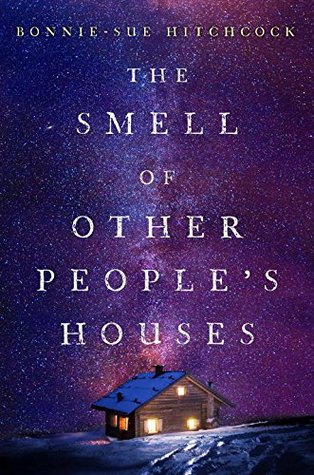
Book Review: The Smell of Other People’s Houses by Bonnie-Sue Hitchcock

smell-of-other-peoples-houses

Alaska: Growing up here isn’t like growing up anywhere else.

Ruth has a secret that she can’t hide forever. Dora wonders if she can ever truly escape where she comes from, even when good luck suddenly comes her way. Alyce is trying to reconcile her desire to dance with the life she’s always known on her family’s fishing boat. Hank and his brothers decide it’s safer to run away than to stay home—until one of them ends up in terrible danger.

Four very different lives are about to become entangled. This is a book about people who try to save each other—and how sometimes, when they least expect it, they succeed.

This is a beautiful piece of writing, showcasing the lives of a handful of young people as they navigate their way through their triumphs and sorrows in 1970s Alaska. The novel is told through interlocking stories, giving us windows into the various characters’ lives, while offering constantly shifting perspectives on other characters as we see how they see one another. Some of the characters are best friends; others just know each other in a friend-of-a-friend or even more remote sort of way.

Along the way, they deal with missing or abusive parents, misunderstandings, birth families and found families, and the quiet support that can come from the most unexpected of sources.

The backdrop of life in Alaska lends the stories a unique flavor. What’s most important is the human relationships, but the scenes of life in a poor neighborhood in Fairbanks or on a fishing boat or along a remote highway give the plot developments a grounding in real life that’s gritty and evocative.

The language in this book is really lovely, and I thought the way the characters’ stories weave together was remarkably well done, with many surprises along the way.

The Smell of Other People’s Houses is a relatively thin book, but it’s got plenty to enjoy and savor. If you enjoy great, emotionally powerful writing, check it out. I believe this book has been marketed as young adult, but there’s no reason that adult readers wouldn’t love it.

Reading tip: I made the mistake of reading this book during a very busy, hectic week, so I was only able to read it in bits and pieces, and I think I lost a bit of the flow along the way. If you can, I’d suggest setting aside a cozy couple of hours and reading this one straight through.

_________________________________________

The details:

Title: The Smell of Other People’s Houses
Author: Bonnie-Sue Hitchcock
Publisher: Wendy Lamb Books
Publication date: February 23, 2016
Length: 240 pages
Genre: Young adult fiction
Source: Purchased

Save

Save

Save

Save

Save

Top Ten Tuesday: Top Ten 1970s Horror Novels

fireworks2

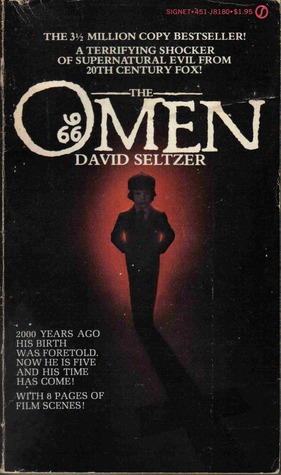
Top Ten Tuesday is a meme hosted by The Broke and the Bookish, featuring a different top 10 theme each week. For this week’s top 10, the topic is Top Ten All Time Favorite Books in X Genre — pick a genre, and write about whatever books you love. I was drawing a blank until a friend and I ended up discussing The Omen (yes, it just happened to come up in conversation), and that’s when I decided to make my list about all those amazing 1970s horror books with awesome covers:

1) The Omen by David Seltzer

7851887

2) The Exorcist by William Peter Blatty

The Exorcist

3) Harvest Home by Thomas Tryon

Harvest Home

4) Audrey Rose by Frank De Felitta

455764

5) ‘Salem’s Lot by Stephen King

stephen king salem's lot signet 1976 pb

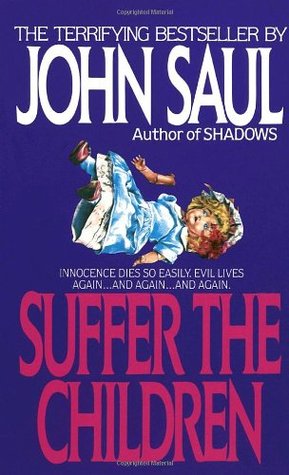
6) Suffer the Children by John Saul

Suffer the Children

7) The Amityville Horror by Jay Anson

The Amityville Horror

And three more books that — while not truly horror — certainly are horrifying in their own way, and are iconic works of the 1970s:

8) Jaws by Peter Benchley

941283

9) The Stepford Wives by Ira Levin

The Stepford Wives

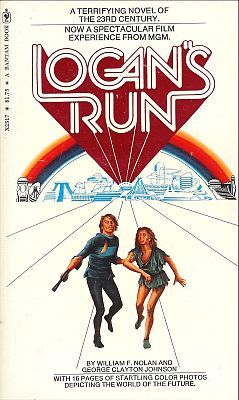
10) Logan’s Run by William F. Nolan

Logan's Run (Logan, #1)

What genre did you pick this week? Share your links, and I’ll come check out your top 10!

If you enjoyed this post, please consider following Bookshelf Fantasies! And don’t forget to check out our regular weekly features, Thursday Quotables and Flashback Friday. Happy reading!

♥♥♥♥♥♥♥♥

Do you host a book blog meme? Do you participate in a meme that you really, really love? I’m building a Book Blog Meme Directory, and need your help! If you know of a great meme to include — or if you host one yourself — please drop me a note on my Contact page and I’ll be sure to add your info!


Book Review: If If Ever Get Out Of Here by Eric Gansworth

Book Review: If If Ever Get Out Of Here by Eric Gansworth

If I Ever Get Out of HereIn If I Ever Get Out Of Here, main character Lewis Blake faces yet another lonely year as the only Native American kid in the all-white smart kids’ class at the local junior high school. As a rez kid in 1975 Buffalo, New York, Lewis knows that 7th grade will probably bring more of the same for him — sitting alone, talking to no one all day until he rides the school bus back to the Tuscarora reservation with the kids he grew up with. Much to his surprise, though, one of the new kids from the town military base doesn’t seem to care that they’re from different worlds, and the two boys soon strike up a friendship over their love of the Beatles and Paul McCartney.

But friendship only extends so far. George and his family welcome Lewis into their home and their lives, but Lewis just can’t quite bring himself to return the favor. Lewis lives with his mother and uncle on the reservation in a house that’s literally falling apart around them, and he’s sure that George would drop him in an instant if he ever got a real sense of just how poverty-stricken Lewis really is.

If I Ever Get Out Of Here is both a coming-of-age story and a portrait of Native American life. In it, the author vividly describes the challenges faced by the children of the reservation, who may attend the white schools but know that they’ll never really leave the rez. In this pre-PC world, outright racism is common in the local community, and when Lewis is targeted by a much-feared bully who’s known for his hatred of “Indians”, none of the adults are willing to intervene. It’s up to Lewis to take a stand, and his bravery leads to both triumph and betrayals as the repercussions are felt throughout the school and the town.

Above everything, If I Ever Get Out Of Here celebrates two universal forces for good: Sincere, unwavering friendship, and the power of rock and roll. George and Lewis are good kids with their heads on (mostly) straight, who understand the importance of family, and who’ve grown up in one form of isolation or another. They bond and connect with a sense of trust that moves beyond the barriers of race and economic class. What truly brings them together, however, is the music, and this book is saturated with the delight of discovering something new and true through the grooves of a vinyl album.

George and his father manage to find tickets to a Paul McCartney and Wings concert in Toronto (although Lewis has to endure the comment from a friend’s dad, “Hope you didn’t get scalped,” complete with hand gestures illustrating just what a scalping would look like). Yet once the concert starts, all the stresses of being the lone Indian among a sea of white people fade away, as Lewis observes the awesome glory of being in a crowd at the perfect rock concert:

The guy next to me grabbed me by the armpit and insisted that I stand on my seat. I was short enough that doing this didn’t make me much taller than anyone else, but I still crouched a little to even the view for the guy directly behind me. A minute or so later, that guy tapped me on the shoulder and yelled that I was fine standing. He was tall enough to see… The strangers around me made me one of them. It was almost like being home on the reservation, and I let myself enjoy the surging excitement.

The Beatles, Wings, Queen, Bowie — these form the soundtrack of the boys’ lives during their junior high school years (and provide the chapter titles in If I Ever Get Out Of Here), and the author thoughtfully provides us with a detailed, lovingly compiled playlist at the back of the book.

This young adult novel strikes me as appropriate perhaps for older middle-grade readers as well, although they may be less familiar with the historical elements that come to life here. In all the different facets of life facing Lewis, the settings ring true. The casual racism and cruelty experienced by Lewis may be shocking to young readers raised in today’s more aware society, but the fear and pain caused by bullying are certainly something that kids of any era would be able to relate to.

Written as a first-person narrative using straight-forward language, If I Ever Get Out Of Here lets us inside Lewis’s head and Lewis’s world, and both are fascinating places to be. As a visit back in time and to a world that most white Americans either can’t or don’t want to see, this book engages the reader’s heart and mind. Lewis is a terrific main character — not a perfect boy by any means, but an overall really good kid who is proud of his people but doesn’t want to be confined by old rules. If I Ever Get Out Of Here vividly captures the dichotomy experienced by the Native American youth who feel a deep sense of belonging within their communities on the reservation — but whose opportunities for better lives lie elsewhere.

I recommend this book for teens and adults alike. The people feel real, the dialogue and events capture the essence of the 1970s, and the music just makes it all come to life. Most of all, it’s a tribute to true friendship — the kind that’s loyal, steadfast, and lifelong — and the difference it can make in a lonely boy’s life.

Review copy courtesy of Scholastic via NetGalley. I received a copy of this book in exchange for my honest review.

Flashback Friday: The Far Pavilions

Flashback Friday is my own little weekly tradition, in which I pick a book from my reading past to highlight — and you’re invited to join in!

Here are the Flashback Friday book selection guidelines:

  1. Has to be something you’ve read yourself
  2. Has to still be available, preferably still in print
  3. Must have been originally published 5 or more years ago

Other than that, the sky’s the limit! Join me, please, and let us all know: what are the books you’ve read that you always rave about? What books from your past do you wish EVERYONE would read? Pick something from five years ago, or go all the way back to the Canterbury Tales if you want. It’s Flashback Friday time!

My pick for this week’s Flashback Friday:

The Far Pavilions

The Far Pavilions by M. M. Kaye

(first published 1978)

From Goodreads:

After the death of his parents, young Ashton Pelham-Martyn is brought up as a Hindu in a remote corner of British India. As an adult soldier he returns to India, where his love for a princess and his dual heritage make for an epic story of adventure and romance.

This is a huge book, somewhere around 1,000 pages depending on which version you pick up, so in terms of bookshelf space and usefulness as a doorstop, right up there with the Game of Thrones books (yes, I know that’s not what they’re called, but it’s quicker to type) and my beloved Outlander series.

I remember absolutely loving The Far Pavilions when I read it so many years ago. It really is a perfect blend of historical fiction — depicting life and society in India under the British Empire — with a stirring, romantic tale of forbidden love. Ash is a wonderful character, a British boy raised by his Indian nurse after his own parents’ death, with conflicting loyalties and a confused identity. We see him through his youth, his return to British society, and his military service, and his reunion with a long-lost childhood love and his desperate attempt to save her from a cruel fate. The love story of Ash and Anjuli belongs among the ranks of the best tortured, tragic, against-all-odds lovers in fiction.

The Far Pavilions was published during a decade in which big, sweeping historical sagas were dominating the bestseller lists. In a time in which Shogun by James Clavell, The Thorn Birds by Colleen McCullough, and War and Remembrance by Herman Wouk were all hugely popular, it makes sense that so many were drawn to The Far Pavilions as well.

Note from your friendly Bookshelf Fantasies host: To join the Flashback Friday fun, write a blog post about a book you love (please mention Bookshelf Fantasies as the Flashback Friday host!) and share your link below. Don’t have a blog post to share? Then share your favorite oldie-but-goodie in the comments section. Jump in!