Flashback Friday: My Year of Meats by Ruth Ozeki

It’s time, once again, for Flashback Friday…

Flashback Friday is a chance to dig deep in the darkest nooks of our bookshelves and pull out the good stuff from way back. As a reader, a blogger, and a consumer, I tend to focus on new, new, new… but what about the old favorites, the hidden gems? On Flashback Fridays, I want to hit the pause button for a moment and concentrate on older books that are deserving of attention.

My rules — since I’m making this up:

  1. Has to be something I’ve (you’ve) read myself (yourself) — oh, you know what I mean!
  2. Has to still be available, preferably still in print
  3. Must have been originally published 5 or more years ago

Other than that, the sky’s the limit! Join me, please, and let us all know: what are the books you’ve read that you always rave about? What books from your past do you wish EVERYONE would read? Pick something from five years ago, or go all the way back to the Canterbury Tales if you want. It’s Flashback Friday time!

My pick for this week’s Flashback Friday:

My Year of Meats by Ruth Ozeki

(published 1998)

From Amazon:

The perfect fiction companion to The Omnivore’s Dilemma and In Defense of Food

Now that Michael Pollan’s New York Times bestsellers have opened up a national dialogue about where food really comes from, conscientious readers everywhere will want to devour My Year of Meats. When documentarian Jane Takagi-Little finally lands a job producing a Japanese television show that just happens to be sponsored by the American meat-exporting industry, she begins to uncover some unsavory truths about love, fertility, and a very dangerous hormone called DES. A modern-day take on Upton Sinclair’s The Jungle, veteran filmmaker Ruth Ozeki’s novel has been hailed as “rare and provocative” (USA Today) and “up-to-the-minute” (Chicago Tribune).

You know how being a part of a book group is supposed to widen your reading horizons by exposing you to great works that you might not otherwise have picked up? My Year of Meats is a perfect example of that for me. I’m not a foodie, I hadn’t heard about this book, and I would probably not be drawn to a book with a cow on the cover under normal circumstances. But hey, I’m a cooperative book group member, so when my group selected My Year of Meats as our next book, I obediently picked up a copy. And I’m so glad that I did.

Ruth Ozeki’s first novel packs a powerful punch. At times humorous and tongue-in-cheek, My Year of Meats, in telling the story of a woman learning some hidden truths about a troublesome industry, offers its own exposé of the business of growing, manufacturing, tinkering with, and selling meat. At the same time, this is a work of fiction with engaging lead and secondary characters, a propulsive plot, and terrific writing.

I’ve recommended My Year of Meats to many people over the years, with great success. Be warned: once you read this, you may never look at the steak on your plate in quite the same way again.

So, what’s your favorite blast from the past? Leave a tip for your fellow booklovers, and share the wealth. It’s time to dust off our old favorites and get them back into circulation! 

Note from your friendly Bookshelf Fantasies host: This is my baby-steps attempt at a blog hop! Join in, post a Friday Flashback on your blog, and share your link below. Don’t have a blog post to share? Then share your favorite oldie-but-goodie in the comments section. Let’s get this party started!


The joys of a great author event

Last night, I had the pleasure of attending an author event featuring Chris Cleave, author of Incendiary, Little Bee, and most recently, Gold. I drove home afterward in an outstanding mood, because start to finish, the event was delightful.

The author was warm, charming, funny, and intelligent. He read a passage from Gold that takes place relatively early in the narrative, and brought it to life with verve and humor. He talked through his writing process, how he settled on Gold’s subject matter, how he researched it (including subjecting himself to a rigorous bicycle training regimen – a very funny part of his talk), and what he viewed as the central questions of the novel. The author spoke with great insight on the subjects of competition, ambition, and friendship, the drive to be the best at something where in order to success, everyone else has to fail, and the “hidden world” of high-level athletes.

It was simply fascinating. I gained some fresh insights into a book that I’d already read and enjoyed. Questions were welcomed. I asked – rather inarticulately, I’m afraid – about the “win at all costs” mentality that he’d been discussing versus the message so prevalent today that everyone’s a winner, we’re all special! He gave a great answer, both from his perspective as a writer on the subject and as a parent of young children as well.

Simply a great event. So why am I writing about it? Because I came away from it thinking about how, no matter how much we as readers may glean from a book, there’s always more to learn. The best author events, in my opinion, are the ones that go beyond book signings or readings. Hearing an author speak about his or her writing process and motivation, elaborate on the big questions he/she was trying to explore in the book, or how a particular character was conceived, adds exponentially to my enjoyment of the book itself. Just when I think I’ve gotten a book all figured out, I have a new angle to consider!

What author appearances have you attended and enjoyed? Have you ever reconsidered your opinion of a book after hearing the author speak? Does the quality of your interactions with an author affect your views of the book itself? Share your experiences and thoughts, please!

Wishlist Wednesday

And now, for this week’s Wishlist Wednesday…

The concept is to post about one book from our wish lists that we can’t wait to read. Want to play? Here’s how:

  • Follow Pen to Paper as host of the meme.
  • Please consider adding the blog hop button to your blog somewhere, so others can find it easily and join in too! Help spread the word! The code will be at the bottom of the post under the linky.
  • Pick a book from your wishlist that you are dying to get to put on your shelves.
  • Do a post telling your readers about the book and why it’s on your wishlist.
  • Add your blog to the linky at the bottom of the post at Pen to Paper.
  • Put a link back to pen to paper (http://vogue-pentopaper.blogspot.com) somewhere in your post.
  • Visit the other blogs and enjoy!

My Wishlist Wednesday book is:

Tome of the Undergates by Sam Sykes

From Goodreads:

Lenk can barely keep control of his mismatched adventurer band at the best of times (Gariath the dragon man sees humans as little more than prey, Kataria the Shict despises most humans, and the humans in the band are little better). When they’re not insulting each other’s religions they’re arguing about pay and conditions. So when the ship they are travelling on is attacked by pirates things don’t go very well.

They go a whole lot worse when an invincible demon joins the fray. The demon steals the Tome of the Undergates – a manuscript that contains all you need to open the undergates. And whichever god you believe in you don’t want the undergates open. On the other side are countless more invincible demons, the manifestation of all the evil of the gods, and they want out.

Full of razor-sharp wit, characters who leap off the page (and into trouble) and plunging the reader into a vivid world of adventure this is a fantasy that kicks off a series that could dominate the second decade of the century.

Why do I want to read this?

At first blush, this seems like an unusual choice for me. I like fantasy just fine (quite a bit, in fact), but this one seems a bit bloodier and rougher than the books I normally enjoy best. Still, it sounds intriguing, plus I was able to score copies of all three books in the series at a used book sale recently. Now I just have to find time to read them!

Big confession time! I was not drawn to this book (and the rest of the trilogy) initially based on the description or from reading press releases, reader reviews, or anything else of the sort. No, what first got me interested was discovering that the author, Sam Sykes, is the 20-something-year-old son of one of my all-time favorite authors. Is that a silly fan-girl reason for choosing a book or what?

Despite that true confession, I will say that I wouldn’t read Tome of the Undergate if the plot itself didn’t appeal to me. Hopefully, when I do read it, I’ll find it exciting and engaging… while keeping my reading “in the family”, so to speak.

Quick note to Wishlist Wednesday bloggers: Come on back to Bookshelf Fantasies for Flashback Friday! Join me in celebrating the older gems hidden away on our bookshelves. See the introductory post for more details, and come back this Friday to add your flashback favorites!

Book Review: The Dog Stars by Peter Heller

Book Review: The Dog Stars by Peter Heller

When is the last time you were so mesmerized by lovely writing that you had a hard time finishing the book, simply because you wanted the reading experience to last just a little longer? That’s how I felt as I neared the end of The Dog Stars. I almost wanted to put the book down for a while just to avoid having to say I was done… Of course, I didn’t do that, because I really, really wanted to see how it would all work out.

Where to begin? The Dog Stars is a vision of a post-apocalyptic world at once horrifying and beautiful. Nine years before the start of the events in the book, a virulent flu pandemic wiped out 99% of the human population of earth. Those who survived were further decimated by an HIV-like blood disease that doomed many to a slow, lingering, miserable death. And yet, the land remains, canyons, woods, creeks, and plains, mostly empty of people now, and nature is busily trying to reassert itself even in the face of climate change and species die-offs.

Hig is one who survived unscathed, at least physically, having lost his beloved wife to the flu. As the story opens, Hig lives in relative safety at an isolated airstrip in rural Colorado, with his dog Jasper and his gruff survivalist neighbor Bangley as his only companions. And Hig has the Beast — an older Cessna airplane that he lovingly maintains, and which gives Hig and Bangley the power to protect their home turf. Hig flies the perimeter, scouting for intruders and surveying the stark and empty land. Bangley is a weapons expert, ready to shoot anything that moves. Between the two of them, they protect their home from the bands of dangerous invaders who seem to find them every few months.

Hig lives, but he’s only partially alive. He experiences joy when he flies, with Jasper in his accustomed place in the copilot’s seat, or when he tends his garden and has a moment where he just is:

I could almost imagine that it was before, that Jasper and I were off somewhere on an extended sojourn and would come back one day soon, that all would come back to me, that we were not living in the wake of disaster. Had not lost everything but our lives. Same as yesterday standing in the garden. It caught me sometimes: that this was okay. Just this. That simple beauty was still bearable barely, and that if I lived moment to moment, garden to stove to the simple act of flying, I could have peace.

But Hig remembers, too, and suffers mightily over his losses: his wife, their future together, and the world that they inhabited. Although not entirely spelled out, it’s clear that some other global environmental catastrophes have crept up on the world. Early on, we hear a list of animals that no longer exist — elephants, apes, even trout. Throughout the book, we learn of changing weather patterns and shorter rainy seasons, with drought always threatening. It’s clear that global warming is upon us, and its effects are not kind. Hig is a man who loved to fish, who appreciates nature and its cycles, and the loss of the animals, trees, and rivers hit him as hard as some of his more human losses.

When Hig suffers one more devastating bereavement, it frees something in him to the point that he decides to venture out of the safe perimeter that he and Bangley have so carefully maintained and fly off in search of a phantom voice heard years earlier over his airplane radio. What happens to Hig from that point forward is better left to the reader to discover, and so I won’t go into any more detail about plot points.

The writing in The Dog Stars is spare and lovely, reminding me of the beautiful, airy language in Plainsong by Kent Haruf. In The Dog Stars, each paragraph stands alone, with gaps in between lines and phrases. There’s space there, and you can almost feel Hig thinking in between anything he decides to say. Sentences may be half-formed, phrases are uttered but not finished. It truly feels like we are living inside a man’s head, experiencing his viewpoint and his pain through his use of language.

I could pick almost any passage to illustrate the unique writing. One example that stands out:

You hear bullets make the sound they always do in Westerns and war stories and guess what? They do. They make a phhhht like someone opening a poisonous can of soda. The Soda of Death. Like a vacuum following itself at the speed of a diving duck. Followed almost simultaneously by a little hum, a musical exclamation point.

Peter Heller is a journalist and has written several non-fiction books. The Dog Stars is his first novel, and I hope there will be many more to come. You don’t often hear a post-apocalyptic book described as beautiful, but The Dog Stars truly is. I highly recommend this literary, lovely, moving book.

The Monday agenda

Not a lofty, ambitious to-be-read list consisting of 100+ book titles. Just a simple plan for the upcoming week — what I’m reading now, what I plan to read next, and what I’m hoping to squeeze in among the nooks and crannies.

Monday, Monday… another week, another stack of books to plow through.

From last week:

The Casual Vacancy by J. K. Rowling: Done! My review is here.

The Dog Stars by Peter Heller: About 40 pages to go. Lovely writing. I’ll share my thoughts in the next day or so.

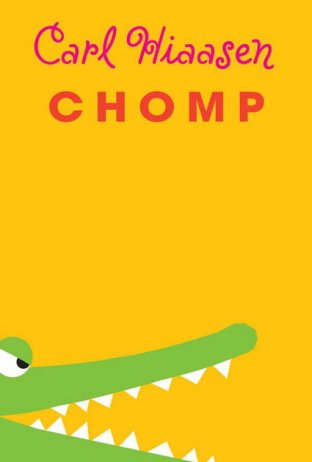
In the world of children’s books, my son and I finished Chomp by Carl Hiaasen, which was fun and funny. My review is here. We’ve started a new book called Merits of Mischief, which I’m mostly finding odd and a bit disturbing, but the kid is enjoying it, so onward we go.

Drums of Autumn by Diana Gabaldon (group re-read): Loving it.

And this week’s new agenda:

My stack of library books keeps growing, as all of my long-term requests seem to have arrived at the same time. Unfortunately, I doubt I’ll get through them all before they’re due back.

Once I finish The Dog Stars, I have quite a bit to choose from. For my next book, I plan to read The Revised Fundamentals of Caregiving by Jonathan Evison. Despite the title, this is not a how-to guide for nannies, but a novel that sounded quite good from the early descriptions I’ve seen so far.

After that, it will be either The Forgetting Tree by Tatjana Soli (unless I have to return it before I get a chance to read it) or possibly The Red House by Mark Haddon. We’ll see how the mood strikes me when the time comes.

Meanwhile, my library pile still includes a couple of YA novels I’ve been wanting to read (The Diviners by Libba Bray and Seraphina by Rachel Hartman), and — miracle of miracles — I’ve just received notice that a copy of Gone Girl by Gillian Flynn is now available for pick-up (and I started at #682 on the waiting list for this one).

As always, I’ll be looking forward to this week’s chapters in my group re-read of  Drums of Autumn by Diana Gabaldon: Chapters 54 and 55 on deck for this week. Lots of danger. Lives are at risk. It’s hard to stop at just two chapters.

So many book, so little time…

That’s my agenda. What’s yours? Add your comments to share your bookish agenda for the week.

The final read-aloud, part deux

Last week, I published a blog post called “The Final Read-Aloud” about my experiences reading with my 10-year-old son and dreading the day that he decides he’s too old to be read to. My beautiful, talented, and apparently neglected-feeling daughter, age 22, pointed out that my experiences with her were quite different. In the interest of family peace, as well as presenting another view of the end of reading aloud, I thought I’d add an overview of my daughter’s evolution as a reader as well.

Let me start by saying that my husband makes fun of me whenever I bemoan the difficulty of parenting a rowdy, active boy — because he thinks that I expected this one to turn out to be another perfect little angel like his sister, and as it turns out, that wasn’t the case. Don’t get me wrong, I love ALL my children. But you know the children’s book I Love You The Purplest? That really sums up a parent’s life in a nutshell.

My daughter  was easy from day one. I could and did take her anywhere with me and she got along just fine, whether it was lunch with girlfriends, shopping expeditions, or museum outings. We hit the theaters and movies, did crafts, enjoyed dancing around the house, or just sitting and watching “The Little Mermaid” for the thousandth time. And, like me, my little angel was a reader from the get-go.

We read together every night before bed, sometimes piles of books, and she never got tired of it. When she started elementary school, she took to early phonics and reading exercises like a champ. By second grade, although we were still reading together every night, she discovered the joys of reading on her own. Her first chapter books were the junior versions of Ann M. Martin’s Babysitters Club series — The Babysitters’ Little Sister books. These were perfect for her — not too difficult, and centered around a 2nd-grade girl and her friends. After she got tired of that bunch, she graduated into the bigger kid stories in The Babysitters Club, and then on into the big, wide world of reading, no mom filters required.

BUT, we hung in there and continued reading together as well. Our read-alouds gave us the opportunity to explore books together, and gave her the chance to enjoy books that she probably would have found too difficult on her own at that point, such as The Golden Compass (those first chapters are so dense, they’re practically impenetrable). So why did we stop reading aloud together? I blame Harry Potter.

We read the first three Harry Potter books together. She’s of the lucky generation that grew up with Harry Potter, always about the same age as Harry as he grew up from book to book. On book 3, I pretty much lost my voice by the end, as we’d gotten to the really good parts and she simply would not allow me to stop reading. What could I do? I was as hooked as she was, so we pressed on.

In the year 2000, when Harry Potter and the Goblet of Fire was published, my lovely girl was 10 years old. We brought the book home, read a single chapter together, and boom! That’s when it happened. She decided that it was just too slow, all this reading aloud business, took the book off on her own, and plowed right through it. See ya, mom! Of course, she loved it, and I loved the book too. We just loved it separately, that’s all.

Goblet of Fire wasn’t necessarily a cold-turkey stop to reading aloud together, but it certainly marked the beginning of the end. That experience showed her, beyond a doubt, that she was a full-fledged independent reader who could handle longer, more complex stories on her own.

It didn’t feel like a sad ending of a chapter with her, probably because she has remained a devoted, avid reader all her life. Like me, she gets overly involved in her books, falls in love with the fictional worlds she visits, becomes highly invested in the characters, and likes to be surrounded by the books she loves wherever she goes. We’ve spent our whole lives together talking about books, trading books, and recommending books, and I don’t think we’ll ever stop.

Which brings me back to my son (sorry, daughter sweetie, I know this was supposed to be all about you…). I think the reason that I dread the end of our reading-aloud times is that I don’t feel confident that he’ll end up a reader. Left to his own devices so far, books are the things that he picks up when he’s forced to. I can count on one, maybe two hands, the times he’s voluntarily chosen to spend time reading. I’m afraid that once he no longer wants to be read to, he’ll fall into a book-less void.

I’m not giving up. I know I still have a job to do to get him to the point where reading is fun and exciting, and not just a chore. We’re not there yet. But we’ll get there, I hope. Onward!

Book Review: Chomp by Carl Hiaasen

Book Review: Chomp by Carl Hiassen

Chomp is a total romp! And that concludes the rhyming portion of this book review.

Novelist, columnist, and all-around funny guy Carl Hiaasen has now written four books for kids, Chomp being the most recent. Hiaasen brings his sense of humor and his devotion to the preservation of natural habitats and native species to his writing for younger readers, and the result is pure fun.

Chomp tells the story of Wahoo Cray, an ordinary kid… who happens to live with gators, howler monkeys, and pythons, among other critters. Wahoo’s dad Mickey is an animal wrangler, expert at handling all sorts of wild creatures and making them look good on camera. Unfortunately, Mickey is a bit out of commission after sustaining a concussion thanks to a frozen iguana falling on his head (don’t ask). The family’s finances are in dire straits until they’re hired by reality TV star Derek Badger to wrangle animals for an upcoming Everglades episode of the hugely popular series, Expedition Survival! (That exclamation mark is part of the show’s name, not an expression of my enthusiasm.)

Problems? You bet. Derek is, to put it politely, a big fake. Overweight and sporting an artificial tan, Derek relies on stunt doubles and fancy camera angles, until he gets it into his head to make the Everglades episode “real”. Wahoo and Mickey find themselves deep in the Glades, dealing with snakes, bats, and other biting critters, while trying to earn their keep by making the star look good. Let’s just say that it doesn’t go according to plan. Out-of-control airboats, a runaway science-loving girl, her gun-toting crazy father, thunderstorms and grounded helicopters all come together for a riotous, dangerous, and ultimately hilarious dramatic high point.

Wahoo is a terrific lead character — devoted to his father and their animals, brave when he needs to be, willing to put himself on the line for family and friends, but with a low tolerance for fools — which may not be the best quality in someone trying to work with a conceited Hollywood star. Supporting characters, like his friend Tuna and Derek’s assistant Raven, are memorable, well-defined, and full of spunk and sparkle.

My 10-year-old and I picked this one out as our latest read-before-bed book, and it was a great choice. We were hooked and had a hard time stopping for the night after just one chapter, and the kiddo’s giggles and snorts (quoth he, “Derek is a jerk!” and “Derek is so stupid!) were entertaining interruptions throughout. (I did try to get the kiddo to do a Q&A with me for this one, but apparently watching TV with his dad is, at the moment, a lot more fun). He obviously enjoyed Chomp a great deal, and I really did too. There are times when I find my mind wandering while I read aloud, but not with this one — I think I had as much fun as my son did.

A final note: My son enjoyed Chomp as a read-aloud, but I don’t think he’d have managed it on his own. I would say that most elementary grade readers would find it a challenge, but would enjoy it with an adult reading partner. For independent reading, I’d recommend Chomp for middle school aged kids. Reading aloud or reading on their own, kids who enjoy adventure stories will definitely get a kick out of Chomp.

Flashback Friday: Nine Princes in Amber by Roger Zelazny

It’s time, once again, for Flashback Friday…

Flashback Fridays is a chance to dig deep in the darkest nooks of our bookshelves and pull out the good stuff from way back. As a reader, a blogger, and a consumer, I tend to focus on new, new, new… but what about the old favorites, the hidden gems? On Flashback Fridays, I want to hit the pause button for a moment and concentrate on older books that are deserving of attention.

My rules — since I’m making this up:

  1. Has to be something I’ve (you’ve) read myself (yourself) — oh, you know what I mean!
  2. Has to still be available, preferably still in print
  3. Must have been originally published 5 or more years ago

Other than that, the sky’s the limit! Join me, please, and let us all know: what are the books you’ve read that you always rave about? What books from your past do you wish EVERYONE would read? Pick something from five years ago, or go all the way back to the Canterbury Tales if you want. It’s Flashback Friday time!

My pick for this week’s Flashback Friday:

Nine Princes In Amber by Roger Zelazny

(published 1970)

Roger Zelazny’s Amber Chronicles simply astounded me when I first encountered them quite a while back (no, I will not disclose just how many decades ago that was or how old I was — suffice it to say that I was vibrant and youthful and wore clothes that my children would mock). These books were among my early forays into the world of science fiction and fantasy, an area of my reading history that was sorely lacking during my childhood and youth. I admit it now: I’d never read Narnia, had read The Hobbit but no other Tolkien (horrors! I’m ashamed of my younger self!), and had only recently been introduced to Dune. And then I met Amber, and it rocked my world.

From Goodreads:

Amber, the one real world, wherein all others, including our own Earth, are but Shadows. Amber burns in Corwin’s blood. Exiled on Shadow Earth for centuries, the prince is about to return to Amber to make a mad and desperate rush upon the throne. From Arden to the blood-slippery Stairway into the Sea, the air is electrified with the powers of Eric, Random, Bleys, Caine, and all the princes of Amber whom Corwin must overcome. Yet, his savage path is blocked and guarded by eerie structures beyond imaging impossible realities forged by demonic assassins and staggering horrors to challenge the might of Corwin’s superhuman fury.

I barely remember the details, but I do know that I loved this book and the ones that followed. The Amber Chronicles consist of ten books in all, although I believe I only made it through 6 or 7 of them. (Hey, it was the 80s — I was busy!). Still, I know I fell in love with the concept of the shadow worlds, the battle for the throne, and the labyrinth-like Pattern that the royal family members must walk in order to gain access to other worlds. It was epic and dramatic high fantasy, and I’d never encountered anything quite like it before.

Last year at a book sale, I picked up an all-in-one volume of the entire Amber Chronicles, and it’s been sitting on my shelf ever since. Maybe it’s time to dust it off and give it a whirl. It’s entirely possible that it will feel incredibly dated at this point — but somehow, I have a feeling that I’ll be drawn into Corwin’s story once again and won’t be able to let go until I reach the end.

If you’re a fan of today’s bestselling fantasy series, such as George R. R. Martin’s A Song of Ice and Fire or Patrick Rothfuss’s The Kingkiller Chronicle, why not go back in time and give Amber a try?

So, what’s your favorite blast from the past? Leave a tip for your fellow booklovers, and share the wealth. It’s time to dust off our old favorites and get them back into circulation! 

Note from your friendly Bookshelf Fantasies host: This is my baby-steps attempt at a blog hop! Join in, post a Friday Flashback on your blog, and share your link below. Don’t have a blog post to share? Then share your favorite oldie-but-goodie in the comments section. Let’s get this party started!


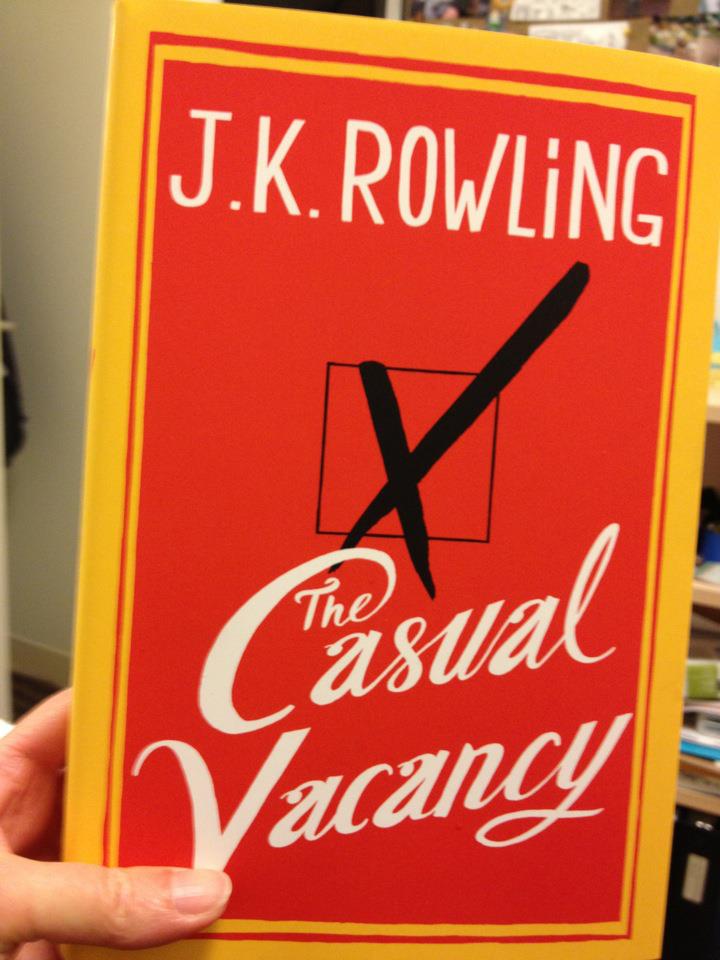
Book Review: The Casual Vacancy by J. K. Rowling
Book Review: The Casual Vacancy by J.  K. Rowling

My very own copy of The Casual Vacancy. Yup, that’s my thumb.

When I first read Amazon’s description of The Casual Vacancy, I can’t say I was immediately bowled over:

When Barry Fairweather dies unexpectedly in his early forties, the little town of Pagford is left in shock. Pagford is, seemingly, an English idyll, with a cobbled market square and an ancient abbey, but what lies behind the pretty façade is a town at war. Rich at war with poor, teenagers at war with their parents, wives at war with their husbands, teachers at war with their pupils…. Pagford is not what it first seems. And the empty seat left by Barry on the town’s council soon becomes the catalyst for the biggest war the town has yet seen. Who will triumph in an election fraught with passion, duplicity and unexpected revelations?

But, of course, this is J. K. Rowling’s first post-Harry Potter publication, and her first adult novel, so does it really matter what it’s about? As of today, one week after its release, The Casual Vacancy is #3 in Amazon’s sales rankings. Let’s be honest: If a debut author was releasing a book with that very same description, would people be lining up to read it?

(By the way, Amazon has it wrong — the recently deceased character is named Barry Fairbrother, not Fairweather.)

Beyond the hype, how is the book itself? Does The Casual Vacancy work as a novel? Has J. K. Rowling successfully transitioned into the world of adult fiction?

Hard questions to answer. First, let’s start with the basics: The book blurb, above and on the dust jackets, does not really do justice to the richness of the world created by Rowling, nor does it convey the awfulness — not of the writing — but of the characters’ lives. This is not a happy book. You might expect — again, based on the blurb — a charming story of a quaint English town filled with interesting and eccentric characters squabbling over petty (but still quaint) politics. You would be quite mistaken.

Pagford may be a small, idyllic town, but its troubles are by no means picturesque. Old, respectable Pagford sits right next to the more urban Yarvil, which decades earlier expanded onto land sold by Pagford aristocrats and put up council housing there. This housing area, known as the Fields, is home to every imaginable form of low-life — petty thieves, drug dealers, addicts, prostitutes, all part of a generally hopeless and beaten-down populace. By the miracle of zoning, however, Fields children are able to attend the more desirable Pagford schools rather than the Yarvil institutes of education. A fight has been brewing for years between those in Pagford who want to retain the Fields within town limits and accept Fields denizens into their community versus the Pagford old-timers who want to maintain the quality of their little village by redrawing the boundaries and handing the Fields off to Yarvil.

Barry Fairbrother’s death triggers the events of the novel, as his vacancy on the parish council presents an opportunity for those on both sides of the Fields conflict to try to seize control and push through their own agenda. As the election to replace Barry nears, the Pagford citizens’ worst natures and deepest secrets are slowly revealed as the desperation of those involved intensifies.

Rowling’s cast of characters is simply huge, enough so that it might be helpful early on to take notes. Major characters include:

  • The sixteen-year-old daughter of a hopeless drug addict, struggling to keep her three-year-old brother out of foster care while maintaining her tough facade at school and on the streets
  • The self-deluded wife of the lead council member, who prides herself on being a medical professional due to her hospital volunteer work
  • The social worker who makes a difference in clients’ lives while cluelessly messing up her own in pursuit of a doomed-to-fail romance with a completely passive boyfriend
  • The abusive father, who doesn’t realize how his son works to undermine him
  • The bored housewife, more interested in fantasies of a boy band singer than in her stable but unexciting husband
  • The Sikh doctor who is passionately involved in town politics but can’t see the problems within her own household

A tangled web connects the various players, linking parents and children, social workers and clients, doctors and lawyers, politicians and thieves, restless housewives and rebellious teenagers. There is no one main character; the points of view shift constantly, and the domestic dramas move from household to household rapidly. It’s a lot to keep track of, but for the most part, it works.

What doesn’t work so well is the incessant head-hopping that Rowling engages in throughout the novel. Within a chapter, and often on the same page, we shift from one character’s mind to another’s with no warning. The transitions can be jarring, and while perhaps the ever-changing perspective is an intentional literary device, I found it distracting and occasionally hard to follow.

Other quibbles: As an American reader, I had to rely on Wikipedia and Google to provide explanations of parish councils, housing estates, and the British healthcare system. I certainly welcome the opportunity to learn about other cultures and societies, but The Casual Vacancy‘s settings and politics are presented without background or explanation, and were therefore a little difficult to navigate without doing some research.

Additionally — and this may be a fault of the marketing rather than necessarily a flaw of the book — the election is set up as the pivotal catalyst of the plot… yet it was strangely underplayed and anticlimactic when it finally took place. There really was no suspense about the election outcome, as only one candidate was presented as viable in any real way. So yes, the vacancy on the council is what sets events into motion, but the actual machinations and developments within the town political system were oddly unimportant in the end, and we never get more than a passing glimpse of the council in action.

It’s hard, if not impossible, to evaluate The Casual Vacancy on its own merits and disregard the fact that THIS IS J. K. ROWLING WRITING! Consequently, especially early on, it’s a bit disconcerting to read the oh-so-very adult language and content matter. In the second chapter, a particularly unsavory character exclaims, in regard to his teen-aged son smoking:

I’m not going to fund the little f*cker’s filthy habit! F*cking cheek of him, puffing away in my f*cking shed!

The asterisks are mine; the language — here and throughout — is rough and unvarnished. Early on, I had to pause for breath a few times, thinking to myself, “J. K. Rowling is using the f-word! J. K. Rowling is writing about sex!” And then, of course, remind myself that we are not at Hogwarts, there is no magic here, and this is not a book intended for children.

At 500 pages, The Casual Vacancy is not a quick read, nor is it easy. J. K. Rowling is not kind to her characters. This is, after all, the woman who (SPOILER ALERT) killed off Sirius Black and Albus Dumbledore. Very bad things happen to her characters. No one gets off easy, no one gets a free pass, and while future happiness may be foreseeable for some characters, most will not be so lucky.

Would I have read this book if it were not written by J. K. Rowling? Probably not. And yet, I’m glad that I did. The Casual Vacancy‘s complex plotting and tragic trajectories were quite compelling, and while it often felt a bit unfocused, the overall story held my attention start to finish. It will be interesting to see where the author goes from here… but whatever she writes next, I’m sure I’ll be one of the millions lining up to read it.
Wishlist Wednesday

And now, for this week’s Wishlist Wednesday…

The concept is to post about one book from our wish lists that we can’t wait to read. Want to play? Here’s how:

  • Follow Pen to Paper as host of the meme.
  • Please consider adding the blog hop button to your blog somewhere, so others can find it easily and join in too! Help spread the word! The code will be at the bottom of the post under the linky.
  • Pick a book from your wishlist that you are dying to get to put on your shelves.
  • Do a post telling your readers about the book and why it’s on your wishlist.
  • Add your blog to the linky at the bottom of the post at Pen to Paper.
  • Put a link back to pen to paper (http://vogue-pentopaper.blogspot.com) somewhere in your post.
  • Visit the other blogs and enjoy!

My Wishlist Wednesday book is:

The Cranes Dance by Meg Howrey

From Amazon:

I threw my neck out in the middle of Swan Lake last night.

So begins the tale of Kate Crane, a soloist in a celebrated New York City ballet company who is struggling to keep her place in a very demanding world. At every turn she is haunted by her close relationship with her younger sister, Gwen, a fellow company dancer whose career quickly surpassed Kate’s, but who has recently suffered a breakdown and returned home.

Alone for the first time in her life, Kate is anxious and full of guilt about the role she may have played in her sister’s collapse.  As we follow her on an insider tour of rehearsals, performances, and partners onstage and off, she confronts the tangle of love, jealousy, pride, and obsession that are beginning to fracture her own sanity. Funny, dark, intimate, and unflinchingly honest, The Cranes Dance is a book that pulls back the curtains to reveal the private lives of dancers and explores the complicated bond between sisters.

Why do I want to read this?

I’ve always loved a peek behind the scenes, and this look at the highly competitive world of professional ballet dancers sounds fascinating. There have been a lot of great ballet movies over the years — Center Stage, The Turning Point (an oldie with a very young Barishnikov – wow!), Black Swan, and even the new Bunheads series on TV — but I haven’t come across that many ballet novels that I’ve loved.

This one sounds intriguing, and I like that the story focuses on the relationship between two sisters as well. I hope to read The Cranes Dance as soon as my library branch gets a copy.

Quick note to Wishlist Wednesday bloggers: Come on back to Bookshelf Fantasies for Flashback Friday! Join me in celebrating the older gems hidden away on our bookshelves. See the introductory post for more details, and come back this Friday to add your flashback favorites!