Reaction: Go Set a Watchman by Harper Lee

Go Set A WatchmanThis isn’t a review, exactly. There’s certainly no shortage of reviews out there, for those who want to find them. I thought I’d just go ahead and share a few impressions, having finished the book today — if for no other reason than to get my thoughts straight.

So, background: I think everyone knows by now about the hoopla surrounding the discovery of this “lost” manuscript by Harper Lee. The debate continues to swirl around the question of whether the author truly wanted this book published, whether she’s in a position to be able to give full consent, and whether this book should have seen the light of day. Nevertheless, here it is.

To further recap the history, Go Set a Watchman was written before Harper Lee wrote her masterpiece, To Kill A Mockingbird. The story goes that Ms. Lee’s editor read Go Set a Watchman and then sent the author back to rewrite it, placing the emphasis on Jean Louise’s childhood and thus changing the setting from the 1950s to the 1930s… and the rewritten novel was To Kill a Mockingbird.

So really, Go Set A Watchman is neither a prequel nor a sequel — it’s a first draft.

In Go Set a Watchman, we see Mockingbird‘s Scout as a young woman in her mid-20s. Jean Louise is bright and independent (as you’d expect from knowing Scout), lives in New York, and at the outset of the story travels back to Maycomb, Alabama for her annual visit home.

Her beloved father Atticus is an old man with arthritis, still practicing law, but barely able to use his hands. His sister Alexandra has come to live with him and take care of his daily needs, and his brother Jack is around for company and conversation too. Atticus has taken on a younger lawyer to nurture in the early stages of his career, and this young lawyer, Henry Clinton, is Jean Louise’s devoted boyfriend. The housekeeper Calpurnia, who raised Scout and her brother Jem, has retired and moved back with her own family. And, sadly, Jem himself is dead, having died of a heart attack in his early twenties.

The action, such as there is, shifts between Jean Louise’s experiences during her visit and her vivid memories of her childhood, which are the sharpest and most enjoyable parts of the book. It’s easy to see why an astute editor wanted the author to expand the stories of Scout, Jem, and Atticus. In Go Set a Watchman, we get some new scenes of childhood, with an especially painful segment on Scout’s puberty and the terrible consequences of her misunderstanding how babies are made.

Atticus comes off as the offbeat, wise father we know and love in many of the scenes between him and Jean-Louise, and her Uncle Jack is really stellar as a slightly batty old man who loves to quote the classics, has a passion for Victorian literature, and somehow manages to sneak usable pearls of wisdom into his ramblings, quotations, and allusions.

So, onward to the controversy. I was actually on vacation the week that this book was released. I turned on the TV that morning, and every single morning talk show was busy proclaiming, more or less: UPROAR! ATTICUS FINCH IS A RACIST! ATTICUS FINCH WENT TO A KKK MEETING! And yeah, okay, that’s true, but I do feel as though many in the media were overly eager to swoop in on the sensationalistic aspects without context or clarity.

Yes, Atticus is a racist in Go Set A Watchman. He doesn’t hate African Americans, exactly – but in the wake of the Supreme Court’s 1950s-era decisions on desegregation, he is upset, to say the least. He sees African Americans as lesser, as children, not educated or developed enough to be able to handle the rights that states are now being forced to grant.

“Jean Louise,” he said. “have you ever considered that you can’t have a set of backward people living among people advanced in one kind of civilization and have a social Arcadia?”

After further explaining why they aren’t capable of fully participating in society with equal rights, he points out the practical and political drawbacks

“Honey… Use your head. When they vote, they vote in blocs.”

And still more:

“Honey, you do not seem to understand that the Negroes down here are still in their childhood as a people. You should know it, you’ve seen it all your life. They’ve made terrific progress in adapting themselves to white ways, but they’re far from it yet…

Jean Louise is furious and broken-hearted to discover the truth about Atticus’s beliefs. She feels that he pulled the wool over her eyes all her life, making her believe that he believed in one thing when the truth was something else.

“Jean Louise, I’m only trying to tell you some plain truths. You must see things as they are, as well as they should be.”

“Then why didn’t you show me things as they are when I sat on your lap? Why didn’t you show me, why weren’t you careful when you read me history and the things that I thought meant something to you that there was a fence around everything marked ‘White Only’?”

It’s Uncle Jack who prevents Jean Louise from fleeing Maycomb in anger, resolved never to return and never to see Atticus again. And this is the piece that I found the most affecting — Uncle Jack (after hitting Jean Louise across the face so hard that she almost loses consciousness, which was weird and disturbing), gets her to stop for a moment and to listen. He explains to her how, in essence, one of the hardest parts about becoming an adult is realizing that the perfect people from our childhoods are flawed humans like everyone else:

“… now you, Miss, born with your own conscience, somewhere along the line fastened it like a barnacle onto your father’s. As you grew up, when you were grown, totally unknown to yourself, you confused your father with God. You never saw him as a man with a man’s heart, and a man’s failings — I’ll grant you it may have been hard to see, he makes so few mistakes, but he makes ’em like all of us. You were an emotional cripple, leaning on him, getting the answers from him, assuming that your answers would always be his answers.”

In To Kill a Mockingbird, we see Scout’s coming of age tale, but Go Set a Watchman in its own way is Jean Louise’s coming of age. As Uncle Jack points out, she’s finally emerged into her own person, rather than the girl who confuses her father with God. And in recognizing this, she can find a way to keep Atticus and Maycomb in her heart and in her life, even if she sees actions and ideas that she hates. As Uncle Jack explains:

“… the time your friends need you is when they’re wrong, Jean Louise. They don’t need you when they’re right.”

There are some interesting ideas and points to be made, and some bear more thought, and I’m sure will be discussed for some time to come. The shattering of childhood idols is a major milestone, and Jean Louise faces the universal task of finding a way to love a flawed parent, despite how very strong those flaws are.

(I realize that I’m not really addressing Atticus’s views on race and segregation, and that’s because I don’t really think it’s necessary. If this book had been published in the 1950s, as originally intended by Harper Lee, I think the content would have been truly provocative. Here and now, it’s a window into a world that’s so clearly passed that I don’t really feel the need to spend time on Watchman‘s Atticus, why he feels the way he does, etc.)

I think, if this book existed in a universe that didn’t also contain Mockingbird, the message might be a more acceptable one about growing up, recognizing the imperfections of people we used to think perfect, and trying to find a way to move forward and fight for what’s right without having to completely disown the less savory parts of our family, our home, our past.

But the idea that it’s Atticus who’s shown to be so imperfect is certainly a hard one to swallow, given how for decades Atticus Finch has been pretty much everyone’s ideal of a perfect father as well as a noble and decent man. How do we reconcile the two?

For me, I decided to read Watchman, as much as I could, as a separate and distinct entity. As a story of a Southern-born girl coming home and facing hard truths, it’s interesting. The reminiscences of Southern childhood are as charming as they should be, and Jean Louise has that ornery, contrary streak that we’d expect of a girl who behaved so rambunctiously as a child.

I’m not a Mockingbird expert by a long shot, and I’d guess that those who are will have a lot more to say about Watchman than I do. I read Mockingbird once in high school (many years ago!) and once again earlier this year. And I love that book… and Go Set a Watchman doesn’t change that.

Go Set a Watchman is interesting as a glimpse into an author’s process, as well as providing a view of what Harper Lee’s intentions were when she first began writing a novel. Also of note, of course, is the fact that Go Set a Watchman has been published as is, unedited, and it shows. Especially in the first half of the book, the writing itself is inconsistent and there are rough patches which clearly would have been polished and refined if this book had been intended for publication. The action and pacing are also inconsistent, and the pieces set in modern-day Maycomb involving Jean Louise’s dates with Henry and her aunt’s social Coffee held in Jean Louise’s honor tend to drag a bit. There were definitely times where I felt as though I were reading a draft of a novel, rather than a novel itself.

The question of whether Go Set a Watchman is a good novel in and of itself is one that’s hard to answer. It simply can’t be read in a vacuum. It exists because Mockingbird exists, and we read it to see what it is in light of what we know about Harper Lee, to see how the characters we love from Mockingbird were treated in her first go-round.

So, no, for someone with no attachment to To Kill a Mockingbird or for someone who’s never read it, I wouldn’t say they should rush right out and read Watchman. There really isn’t a reason to, except to compare and contrast with Mockingbird.

Bottom line: There were parts of Watchman that I enjoyed, especially the memories of Scout’s childhood and adolescence. I found the conflict around Atticus’s racism and Jean Louise’s reaction to this discovery to be quite interesting, and some of the arguments and speeches made at the climax were really well-written and insightful. My best advice? Read this book to see what it is, see if you find any good food for thought in it, and see how you respond to the fuss being made over Atticus’s character. But hold onto everything you cherish about Mockingbird — there’s no need for that to be tarnished.

It’s almost like reading fan fiction or a sequel written by another author (kind of like how Scarlett by Alexandra Ripley is to Margaret Mitchell’s Gone With the Wind). You can read it to be informed about the pop culture happening of the moment, or as a piece of literary entertainment, or as a “what if” scenario. For me, I choose to see it as a “I suppose this is one way it could go” situation. I read this story of Atticus and Jean Louise, and found some interesting points, but in my mind, these are not the same Atticus and Jean Louise/Scout whom I already know. The Atticus and Scout from Mockingbird remain, for me, the “real” versions of themselves.

And that’s how I choose to think about it.

Thursday Quotables: Ross Poldark

quotation-marks4

Welcome back to Thursday Quotables! This weekly feature is the place to highlight a great quote, line, or passage discovered during your reading each week.  Whether it’s something funny, startling, gut-wrenching, or just really beautifully written, Thursday Quotables is where my favorite lines of the week will be, and you’re invited to join in!

NEW! Thursday Quotables is now using a Linky tool! Be sure to add your link if you have a Thursday Quotables post to share.

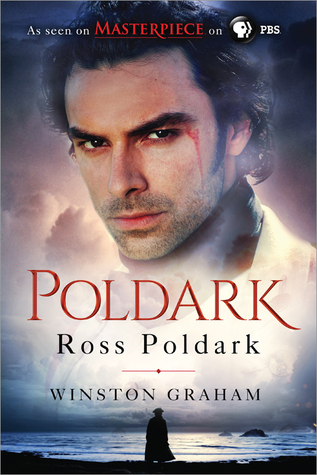
Ross Poldark

Ross Poldark by Winston Graham
(published 1945 )

I was originally going to go with a more action-oriented passage or quote, but this little paragraph caught my attention instead. I love how visual the description is:

The formal dance went on. The soft yellow candle light trembled over the colours of the dresses, the gold and cream, the salmon and the mulberry. It made the graceful and the beautiful more charming, the graceless and the ungainly tolerable; it smoothed over the tawdry and cast soft creamy-grey shadows becoming to all.

I really like the mood created, painting a picture of an enchanted evening. The rest of the paragraph is as follows:

The band scraped away, the figures pirouetted, moving and bowing and stepping, turning on heels, holding hands, pointing toes; the shadows intermingled and changed, forming and reforming intricate designs of light and shade, like some gracious depictment of the warp and woof of life, sun and shadow, birth and death, a slow interweaving of the eternal pattern.

Anyone else watching Poldark on TV? The landscape alone can make me sigh…

What lines made you laugh, cry, or gasp this week? Do tell!

If you’d like to participate in Thursday Quotables, it’s really simple:

  • Write a Thursday Quotables post on your blog. Try to pick something from whatever you’re reading now. And please be sure to include a link back to Bookshelf Fantasies in your post (http://www.bookshelffantasies.com), if you’d be so kind!
  • Click on the linky button (look for the cute froggie face) below to add your link.
  • After you link up, I’d love it if you’d leave a comment about my quote for this week.
  • Be sure to visit other linked blogs to view their Thursday Quotables, and have fun!

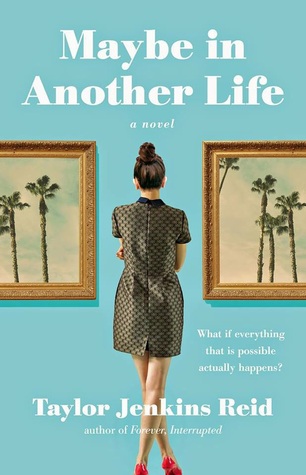
Book Review: Maybe in Another Life by Taylor Jenkins Reid

Maybe in Another LifeAre our lives determined by fate? Or is it all just a matter of chance?

Is there just one person in all the world that we’re meant to be with? Or is life more of a multiple-choice quiz, where different answers may be correct in different circumstances?

In Maybe in Another Life, the characters say one thing, but their lives and actions give a very different message.

Hannah Martin, age 29, has lived anywhere and everywhere, but has no idea where she truly belongs. After a go-nowhere disastrous affair in New York ends, Hannah moves back “home” to Los Angeles, to reunite with her best friend Gabby, pick up the pieces, and start from scratch.

And maybe, just maybe, rekindle an old flame with her high school sweetheart Ethan.

On their first night out on the town, Hannah faces a moment of truth: Should she go home with Ethan and see what happens… or call it a night, head back to Gabby’s place, and spend the night alone? At the moment of decision, the narrative of Maybe in Another Life splits.

From this moment on, we follow two separate narrative threads in alternating chapters. In one, Hannah does go home with Ethan, their dormant feelings are rekindled, and they begin to work through what an adult relationship might look like. In the other, Hannah turns Ethan down, continues on the way home with Gabby, and is struck by a hit-and-run driver, resulting in serious injuries and a lengthy hospital stay.

In both versions of Hannah’s life, she’s confronted with choices. What does her future hold? How do you know if you’re meant to be with someone? How do you recognize a soulmate? What do you give up for a relationship, and what are the deal-breakers?

Likewise, in both versions, Hannah tries to puzzle out the question of destiny and predetermination:

“You think things are meant to be?” I ask her. For some reason, I think I’ll feel better if things are meant to be. It gets me off the hook, doesn’t it? If things are meant to be, it means I don’t have to worry so much about consequences and mistakes. I can take my hands off the wheel. Believing in fate is like living on cruise control.

Hannah has been so busy searching for the perfect life and what she’s “meant” to do, who she’s “meant” to love, that she’s never fully engaged with her options anywhere she’s been.

“Doesn’t it scare you?” I ask her. “To think that you might have gone in the wrong direction? And missed the life you were destined for?”

Hannah’s life is so messy that she has to believe there are other forces at play:

“I mean, I think I have to believe that life will work out the way it needs to. If everything that happens in the world is just a result of chance and there’s no rhyme or reason to any of it, that’s just too chaotic for me to handle. I’d have to go around questioning every decision I’ve ever made, every decision I will ever make. If our fate is determined with every step we take… it’s too exhausting. I’d prefer to believe that things happen as they are meant to happen.

Ironically, the split narrative demonstrated that it is all random, and that every decision changes the course of events. Towards the end of the book, a party guest talks about the multiverse theory, in which every decision leads to multiple universes in which all possible outcomes exist. From the moment Hannah decides to go home with Ethan — or not to go home with Ethan — she has two different parallel lives. In both lives, she confronts pain and difficult choices, finds a soulmate, faces hard truths, and finally sets off on the path toward professional fulfillment as well as a life filled with love.

The lovely thing about Maybe in Another Life is that both halves of the story feel right! Neither of Hannah’s two lives is 100% easy, but both feel real and both seem like valid outcomes. In both, Hannah begins to grow, take chances, and own up to the decisions she’s made that lead her to this point. Both feel like the absolutely right thing for her, and she wouldn’t have it any other way.

I really enjoyed the writing in Maybe in Another Life, which maintains a light touch even in heavy situations. Hannah herself is a person with a lot of room to grow, but she’s self-knowing enough to own up to her mistakes and want to make better choices. And through it all, she’s got a great sense of humor, is a devoted friend, and knows that she needs to finally do something with her life.

The author gives Hannah certain quirks and habits that are both charming and make her feel like an individual, rather than a stock character. In particular, Hannah’s need to always have her hair in a high bun and her constant craving for cinnamon rolls are recurring motifs, and to my surprise, the repetition is actually pretty charming (rather than annoying, as it so easily could have been).

I liked the double narrative, although occasionally I lost track of which event happened in which version of Hannah’s life. No matter, though: Both halves of the story contain ups and downs, loves lost and found, and the true and deep friendship between Hannah and Gabby, which is a key element of the entire story. It’s not often that contemporary novels emphasize the huge difference a good friendship between women can make, while also dealing with romantic entanglements and all sorts of other drama. But here, it’s crystal clear that the bond between Hannah and Gabby is the most important element for both women, grounding them in such a way that they’re able to make their life decisions from a position of strength and support.

Maybe in Another Life is a very quick read. It’s light, but heartfelt. Not sugary, not glossing over the hard stuff, Maybe in Another Life shows a young woman dealing with real life… and the way every decision has consequences. This book is quite fun to read, and yet manages to be emotionally real even amidst all the jokes about cinnamon rolls.

_________________________________________

The details:

Title: Maybe in Another Life
Author: Taylor Jenkins Reid
Publisher: Washington Square Press
Publication date: July 7, 2015
Length: 352 pages
Genre: Adult contemporary fiction
Source: Review copy courtesy of the publisher via NetGalley

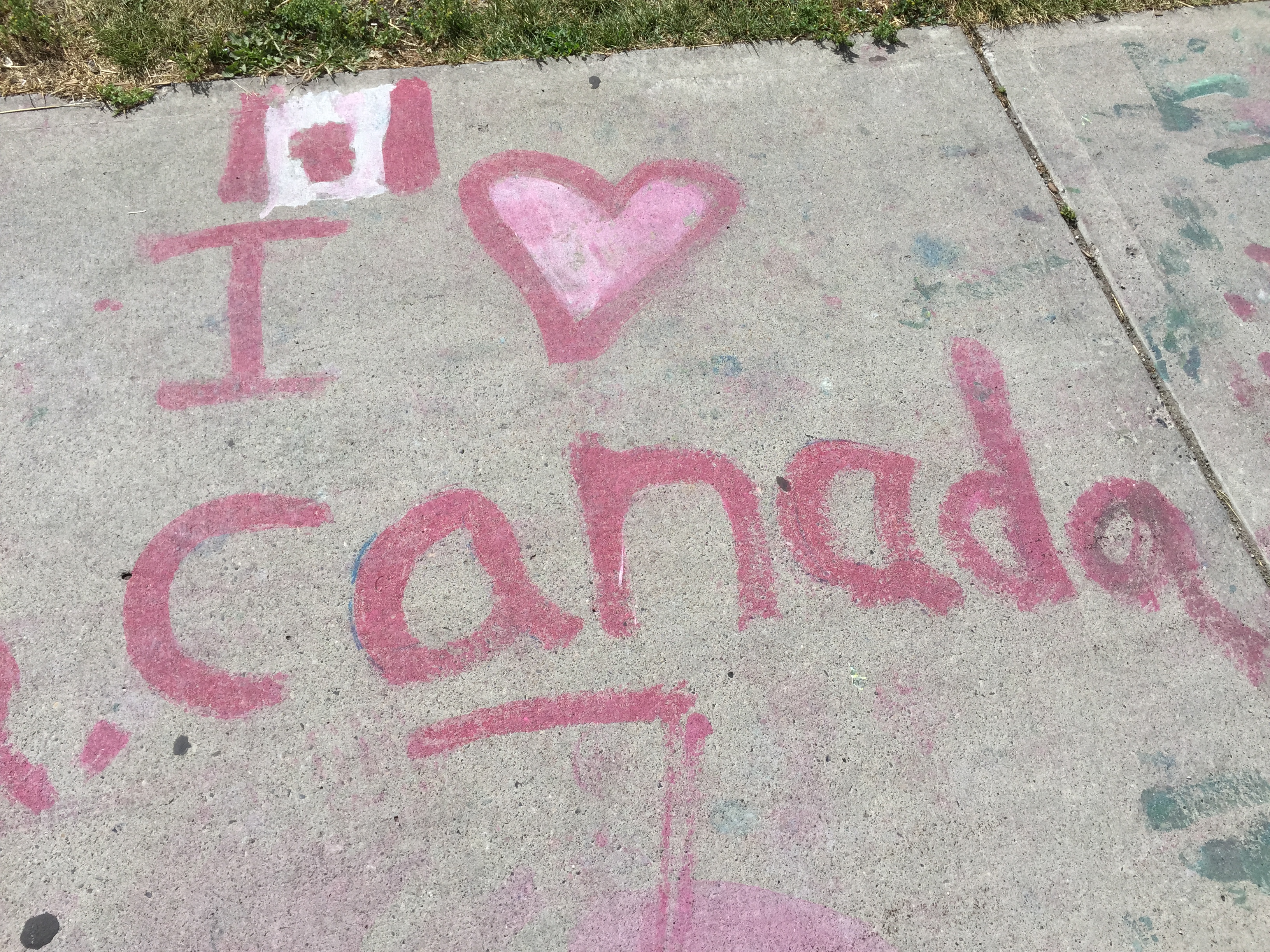
Oh Canada!

Canada 284

I’ve just returned from a 10-day vacation in the Canadian Rockies… and let me just say, it was glorious!

When it comes to vacations, I’m more of a mountain/lake/trail kind of traveler than a city/shopping/museum person… and even though I swear that I’d love to just go sit on a tropical beach for a week, chances are that after one day, I’d be lacing up my hiking boots and looking for a bit more action.

(Don’t get me wrong. I walk on forest trails. I don’t use ropes, hang by my hands or toes, or do anything at all scary or adventurous. I just like the great outdoors, okay? Blame all those summers spent at camp as a child.)

So… Canada. I love my son, but he definitely has limits when it comes to hiking, sightseeing, and in general, the stuff that his parents seem to find fun. Darling boy is off at three weeks of summer camp at the moment (camp is in the blood, I guess), so my hubby and I took advantage of this brief child-free moment in time to do what we wanted to do. And I’ve been dreaming of a vacation in the Rockies for years now. With the help of some good guidebooks, a Canadian coworker who gives great advice, and lots of gorgeous Pinterest photos as inspiration, we were off!

I learned a few things in Canada too:

1) I’m delicious… to mosquitoes. Our punishment for taking the wrong turn on a trail was being attacked by ravenous, blood-thirsty mosquitoes who I SWEAR were on a mission specifically to eat us.

2) Credit cards are great for avoiding the dreaded tourist fumble… in which you stand around trying to pay for something but not knowing which coin is worth a dollar and which is only 25 cents.

3) Stupid American, comment #1: There’s such a thing as Canadian cuisine! Did you know that? I most assuredly did not. It seems to consist of lots of meat, especially elk, bison, and caribou. My carnivore husband was impressed. (Me, I stuck to salads.)

4) Stupid American, comment #2: There’s such a thing as Canadian football! I had no idea, but apparently it’s a big deal. No, I don’t mean soccer. Good old football, with helmets and all. We happened to be in a pub with Thursday Night Football blaring on the TV all through our dinner. Good times!

5) I discovered that driving a big Jeep makes me feel rugged and outdoorsy. Rawr! I rule the road.

Canada 100

6) Best, best, best thing in the world? This:

Canada 130

Berry cider. 7% alcohol. Sweet and delicious, goes down like fizzy Kool-Aid, and then it kicks you in the head. Mmmmm. And pretty too.

Okay, long story short, we had a great time. I won’t bore you with further narrative… but I do want to share some photo highlights of the simply gorgeous places we went! As my husband started chanting as of about the 3rd day of our trip: Lakes! Mountains! Lakes! Mountains! You get the idea.

To view slide-show fashion, click on any image. Enjoy!

Sigh. Photos alone can’t do justice to the absolute beauty of the Canadian Rockies. If you’re considering going, hit me up for some “best of” tips! And if you’ve already been, please tell me what/where you loved the most!

And now… off to dream of my next vacation, wherever that might be!

The Monday Check-In ~ 7/20/2015

cooltext1850356879 My Monday tradition, including a look back and a look ahead — what I read last week, what new books came my way, and what books are keeping me busy right now. Plus a smattering of other stuff too.

What did I read last week?

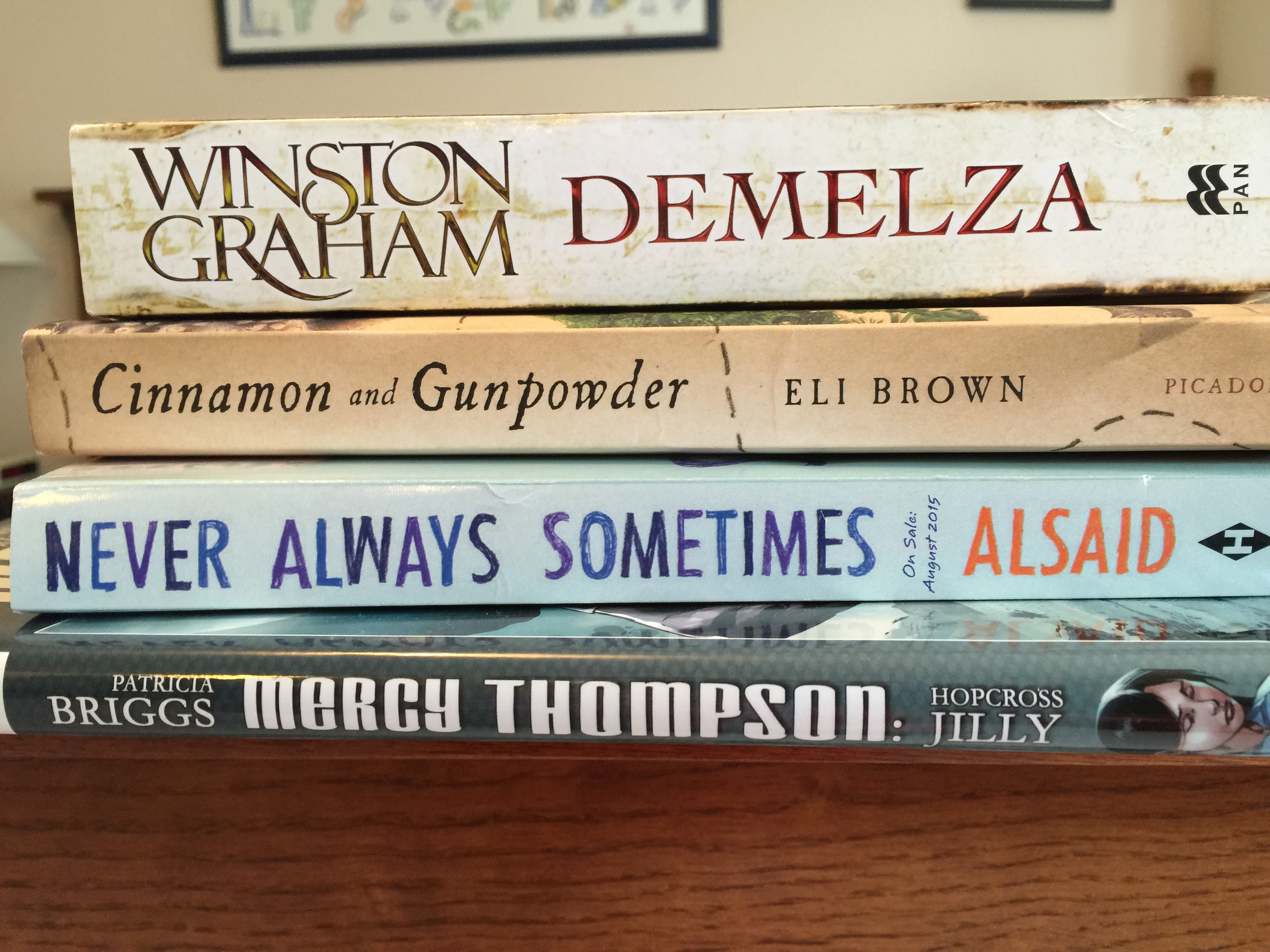
Sweetheart DealAll the LightRoss Poldark

The Sweetheart Deal by Polly Dugan: Done! My review is here.

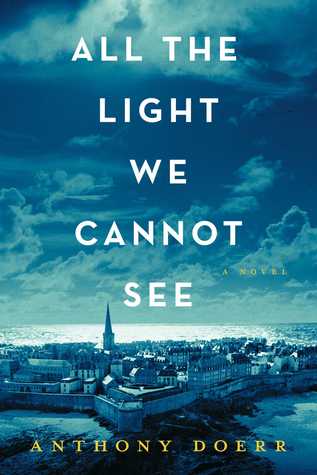
All the Light We Cannot See by Anthony Doerr: Done, just in time for my book group discussion later this week. Some brief thoughts on this lovely book are here.

Ross Poldark by Winston Graham: Done! Okay, I’ll admit that Aidan Turner was a big part of what drew me to the PBS airing of Poldark, but I ended up really loving the story itself, so I had to give the book a try… and really liked it! It’s my understanding that the 1st season of the TV show covers the first two books in the series, so clearly, I need to keep going! C’mere, book #2!

Off-line:

I just got back from a glorious 10-day trip to the Canadian Rockies. Mountains! Lakes! Incredible natural beauty! I’ll be sharing some highlights and photos in the next few days. Man, it’s hard to return to real life!

Fresh Catch:

A few new books came my way right before I left town:

Canada 433

And… I came home from my trip to find a library notice, saying that my request for Go Set A Watchman is ready for pick-up!

What will I be reading during the coming week?

Currently in my hands:
Maybe in Another LifeGo Set A Watchman

I’m just finishing up Maybe in Another Life by Taylor Jenkins Reid, and will post some thoughts in the next few days.

With some trepidation, I’m about to start Go Set A Watchman by Harper Lee. I’m almost tempted to pass it by, but I feel like I need to read it for myself to see what all the uproar is about.

Now playing via audiobook:

Northanger AbbeySense and Sensibility 2

My year of Austen audiobooks continues! I finished Northanger Abbey while on vacation, and have just started Sense and Sensibility. I read all these books so many years ago; getting a refresher via audio is delightful.

Ongoing reads:

EldestABOSAAN&S

One with the kiddo, two with Outlander Book Club. All three should last a good long while.

So many book, so little time…

boy1


My Year of Austen

janeaustenQuite unintentionally, 2015 has turned into the year of Jane Austen for me… and that’s a very, very good thing!

How did it happen? Two major causes, really:

1) I happened to stumble across a promo for Alexander McCall Smith’s retelling of Emma several months ago, soon after reading (finally!) The No. 1 Ladies’ Detective Agency. I’d been planning on checking out more of AMS’s books, and thought this sounded like great fun.

2) I’ve gotten hooked on audiobooks in the last year or so. I listen to them during my daily commute, and I’ve become really addicted to doing my weekend walks with a bookish soundtrack.

So, I thought I’d like to read the new Emma, but realized that I should probably re-read the original first, since it’s been many a year since I first read it. Audiobook to the rescue! I listened to Emma as narrated by Juliet Stevenson, and thought it was simply brilliant! Juliet Stevenson is a remarkable audiobook reader, giving such personality to all the characters. And the story itself! It just cracked me up. I hadn’t remembered Emma as being quite so funny, but trust me on this one — given the times I started laughing in public while plugged into my IPod listening to this book (and the number of bizarre looks I got), it’s definitely got some hilarious moments.

Moving on, I decided that I needed to know more about The Austen Project, which was conceived several years ago as a major publishing to-do. The concept? Invite contemporary fiction writers to re-write Jane Austen’s classic novels, setting them in modern times and giving them a new spin while remaining faithful to the original. I suppose the point is to show the timelessness of Austen’s works.

To date, there have been three books published as part of The Austen Project:

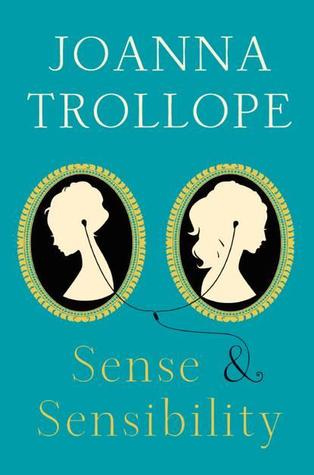
  • Sense and Sensibility by Joanna Trollope
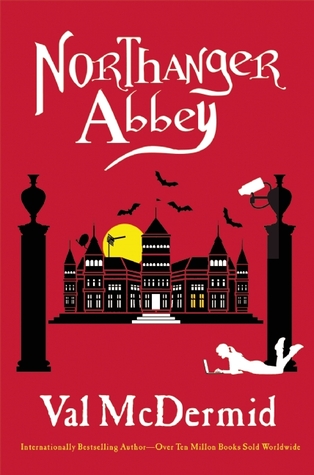
  • Northanger Abbey by Val McDermid
  • Emma by Alexander McCall Smith

Sense & Sensibility_TAPNorthanger Abbey 2Adobe Photoshop PDF

Supposedly, the next book to be issued as part of the project is Pride and Prejudice, written by Curtis Sittenfeld, although I haven’t found a firm release date yet. Apparently, Persuasion and Mansfield Park have yet to be assigned.

(And also, apparently, The Austen Project has not been all that enthusiastically received, so perhaps the remaining books are being “shelved”, so to speak? I haven’t found anything to indicate future plans, one way or another.)

For me and my year of Austen, I haven’t quite made it to any of the re-tellings yet, although I now have the three books ready and waiting — and once I read them, I’ll be sure to share my thoughts. Meanwhile, having the modern versions on hand has definitely piqued my interest in re-reads. Hence, the audiobooks.

So far, I’ve listened to Emma and Northanger Abbey, and am now in the early chapters of Sense and Sensibility. The audiobooks are awesome, yo. I’m so completely enraptured by Juliet Stevenson’s ability to give voice to each character in a way that’s fresh and easy to identify, plus the way she infuses the lines with such snark and humor is just amazing.

Once I finish with the Austen Project books, I do believe I’ll keep going with my Austen mania. I’ve been wanting to revisit Persuasion for quite some time now. And to be honest, while I’m almost completely sure that I’ve read all of Jane Austen’s books, some niggling doubt is telling me that maybe I only think I’ve read Mansfield Park. I do have a battered old paperback on my shelf, and it certainly looks read. But then again, I know that I’ve seen the movie… no, no, I’m really 99% sure that I’ve read the book… I think.

In any case, I’ll be continuing on with Austen audiobooks all year. And meanwhile, I haven’t even scratched the surface of my Austen movie collection! First up, I think, will be Emma and then Clueless for contrast. (And – PS – it’s the 20th anniversary of the release of Clueless! Feeling old yet?)

Then onward… so many options!

And after all, there’s really never a bad time to re-watch Bride and Prejudice.

Take A Peek Book Review: All the Light We Cannot See by Anthony Doerr

“Take a Peek” book reviews are short and (possibly) sweet, keeping the commentary brief and providing a little peek at what the book’s about and what I thought.

All the Light


Synopsis:

(via Goodreads)

Marie-Laure lives with her father in Paris near the Museum of Natural History, where he works as the master of its thousands of locks. When she is six, Marie-Laure goes blind and her father builds a perfect miniature of their neighborhood so she can memorize it by touch and navigate her way home. When Marie-Laure is twelve, the Nazis occupy Paris, and father and daughter flee to the walled citadel of Saint-Malo, where Marie-Laure’s reclusive great-uncle lives in a tall house by the sea. With them they carry what might be the museum’s most valuable and dangerous jewel.

In a mining town in Germany, the orphan Werner grows up with his younger sister, enchanted by a crude radio they find. Werner becomes an expert at building and fixing these crucial new instruments, a talent that wins him a place at a brutal academy for Hitler Youth, then a special assignment to track the resistance. More and more aware of the human cost of his intelligence, Werner travels through the heart of the war and, finally, into Saint-Malo, where his story and Marie-Laure’s converge.

My Thoughts:

I’m not sure I have anything new to add to the oodles of gushing reviews already written about this book. The writing is thoughtful and lovely, with surprising imagery and carefully crafted descriptions of the world inhabited by the characters. Despite the horrors of war, the book itself is beautiful, even when depicting horrific acts and circumstances.

It did take me a good third of the book to truly get into the back and forth approach to the narrative, with shifts in perspective, character focus, and timelines. That being said, I ended up completely enthralled by this book, and despite its length, felt that I would have wanted even more. The two main characters themselves, Marie-Laure and Werner, are both so well-developed that I came to care deeply about them and felt that I really understood them. Even Werner, who tacitly condones terrible acts by doing nothing to prevent them, has an inner life that makes him a very flawed but understandable character, and his life is tragic in its own way every bit as much as some of the more obviously heroic characters’ lives.

The setting and the supporting characters are all lovingly drawn, and the writing simply glows. This book is hard to describe, other than to call it a must-read.

_________________________________________

The details:

Title: All the Light We Cannot See
Author: Anthony Doerr
Publisher: Scribner
Publication date: May 6, 2014
Length: 531 pages
Genre: Historical fiction
Source: Purchased


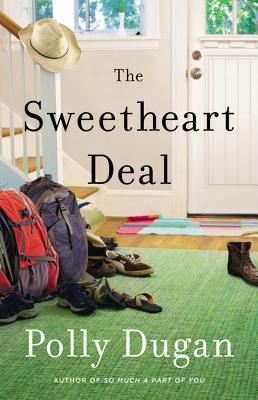
Book Review: The Sweetheart Deal by Polly Dugan

Sweetheart Deal

Synopsis:

(via Goodreads)

The poignant story of what happens when a woman who thinks she’s lost everything has the chance to love again.

Leo has long joked that, in the event of his death, he wants his best friend Garrett, a lifelong bachelor, to marry his wife, Audrey. One drunken night, he goes so far as to make Garrett promise to do so. Then, twelve years later, Leo, a veteran firefighter, dies in a skiing accident.

As Audrey navigates her new role as widow and single parent, Garrett quits his job in Boston and buys a one-way ticket out west. Before long, Audrey’s feelings for Garrett become more than platonic, and Garrett finds himself falling for Audrey, her boys, and their life together in Portland. When Audrey finds out about the drunken pact from years ago, though, the harmless promise that brought Garrett into her world becomes the obstacle to his remaining in it.
My Thoughts:

I feel like I’ve read at least 4 or 5 contemporary novels about young widows in the last fews years, and while The Sweetheart Deal is the latest, it’s certainly not the least.

When Audrey’s firefighter husband Leo dies in a tragic ski accident, she’s left alone with three boys to raise. But not entirely alone: Years early, celebrating the Y2K New Year with quite a lot of booze, Leo made his best friend Garrett sign an agreement saying he’d marry Audrey if anything ever happened to Leo.
Audrey never knew about the deal, but Garrett has never forgotten. So when Leo dies, Garret drops everything in his own life to support Audrey and the boys, moving into their guest room and committing to finishing the addition to the house that Leo left half-built.

Needless to say, eventually Audrey emerges from her devastating grief to find comfort and the hint of new love in Garrett’s arms. But will the drunken promise from all those years ago come between them? Dunh, dunh, dunh….

The Sweetheart Deal is actually quite engaging, and I felt that the author did a very good job of portraying how the different family members deal with such a shocking loss. Different characters narrate different chapters, so we see events from the perspective of Audrey and Garrett, as well as each of the boys. It’s interesting to see how the kids come into the story, how their feelings complicate matters, and how Garrett very selflessly immerses himself in doing whatever he can for Leo’s family.

While Audrey has a best friend as well, it’s the friendship between Leo and Garrett that really drives the story. Friends since boyhood, they’re bonded in a way that we don’t often see in female-centric contemporary love stories, where the main friend relationship is usually between women. Garrett’s feelings here are intense and conflicted: He loved Leo truly and faithfully, would do anything for him, and sincerely wants to protect and assist Leo’s family. His feelings for Audrey grow out of his grief and devotion, and he deals with heaping helpings of guilt as well.

Audrey’s initial bereavement is realistic and heartbreaking, and she is really to be admired for her strength in caring for her boys even as she falls apart inside. There’s no suggestion at all that she wasn’t madly in love with her husband. Instead, we see a woman who suffers a great loss trying to figure out if she’s entitled to any future happiness, and trying to understand if what she wants is wrong for herself, for her children, and for the memory of her husband.

The characters are all Catholic and their faith does come into play, but not in a way that feels heavy-handed. Audrey’s religion guides her actions, and she gains strength and insight through the counsel she receives from her priest – but I never felt alienated by the religious aspects or that they took away from the story.

Ultimately, the romance with the husband’s best friend feels deserved and well-developed, given the odd backstory and the guilt everyone feels.

The Sweetheart Deal is a sweet, moving, sad, and finally uplifting love story that deals with challenges that feel all too real. The plot is not complicated, but by focusing on an everyday family and its crisis, the book remains grounded and is quite accessible.

I think, if I hadn’t recently read other books about widows in their 20s or 30s finding their way back to love, I might have been more moved by The Sweetheart Deal, so perhaps it’s not really fair to even mention the other books. I did like this book a lot, and readers who haven’t read other books with similar set-ups should find it fresh and engaging.

The Sweetheart Deal is a quick read, but it hits the sentiment right on the nose and strikes a good balance between grief and hope. Recommended for readers who enjoy contemporary fiction focusing on family and marriage.

_________________________________________

The details:

Title: The Sweetheart Deal
Author: Polly Dugan
Publisher: Little, Brown and Company
Publication date: May 19, 2015
Length: 320 pages
Genre: Adult contemporary fiction
Source: Review copy courtesy of the publisher via NetGalley

Thursday Quotables: All the Light We Cannot See

quotation-marks4

Welcome back to Thursday Quotables! This weekly feature is the place to highlight a great quote, line, or passage discovered during your reading each week.  Whether it’s something funny, startling, gut-wrenching, or just really beautifully written, Thursday Quotables is where my favorite lines of the week will be, and you’re invited to join in!

NEW! Thursday Quotables is now using a Linky tool! Be sure to add your link if you have a Thursday Quotables post to share.

All the Light

All the Light We Cannot See by Anthony Doerr
(published 2014 )


It strikes Werner just then as wondrously futile to build splendid buildings, to make music, to sing songs, to print huge books full of colorful birds in the face of the seismic, engulfing indifference of the world – what pretensions humans have! Why bother to make music when the silence and wind are so much larger? Why light lamps when the darkness will inevitably snuff them?

Slightly gloomy, I know, but so fitting for the mood of this wonderful and beautiful book. Here’s another I really like:

Open your eyes and see what you can with them before they close forever.

What lines made you laugh, cry, or gasp this week? Do tell!

If you’d like to participate in Thursday Quotables, it’s really simple:

  • Write a Thursday Quotables post on your blog. Try to pick something from whatever you’re reading now. And please be sure to include a link back to Bookshelf Fantasies in your post (http://www.bookshelffantasies.com), if you’d be so kind!
  • Click on the linky button (look for the cute froggie face) below to add your link.
  • After you link up, I’d love it if you’d leave a comment about my quote for this week.
  • Be sure to visit other linked blogs to view their Thursday Quotables, and have fun!

Thursday Quotables: In honor of the 4th of July

quotation-marks4

Welcome back to Thursday Quotables! This weekly feature is the place to highlight a great quote, line, or passage discovered during your reading each week.  Whether it’s something funny, startling, gut-wrenching, or just really beautifully written, Thursday Quotables is where my favorite lines of the week will be, and you’re invited to join in!

NEW! Thursday Quotables is now using a Linky tool! Be sure to add your link if you have a Thursday Quotables post to share.

ABOSAA quote

A Breath of Snow and Ashes by Diana Gabaldon
(published 2006 )

I’ve highlighted this quote before, but the timing couldn’t be better for a repeat!

I’m re-reading A Breath of Snow and Ashes with my book group, and we just happened to arrive at this particular chapter this week, set in May 1775, as the events leading up to the Declaration of Independence are getting more and more intense.

Perfect for this 4th of July holiday week!

What lines made you laugh, cry, or gasp this week? Do tell!

If you’d like to participate in Thursday Quotables, it’s really simple:

  • Write a Thursday Quotables post on your blog. Try to pick something from whatever you’re reading now. And please be sure to include a link back to Bookshelf Fantasies in your post (http://www.bookshelffantasies.com), if you’d be so kind!
  • Click on the linky button (look for the cute froggie face) below to add your link.
  • After you link up, I’d love it if you’d leave a comment about my quote for this week.
  • Be sure to visit other linked blogs to view their Thursday Quotables, and have fun!