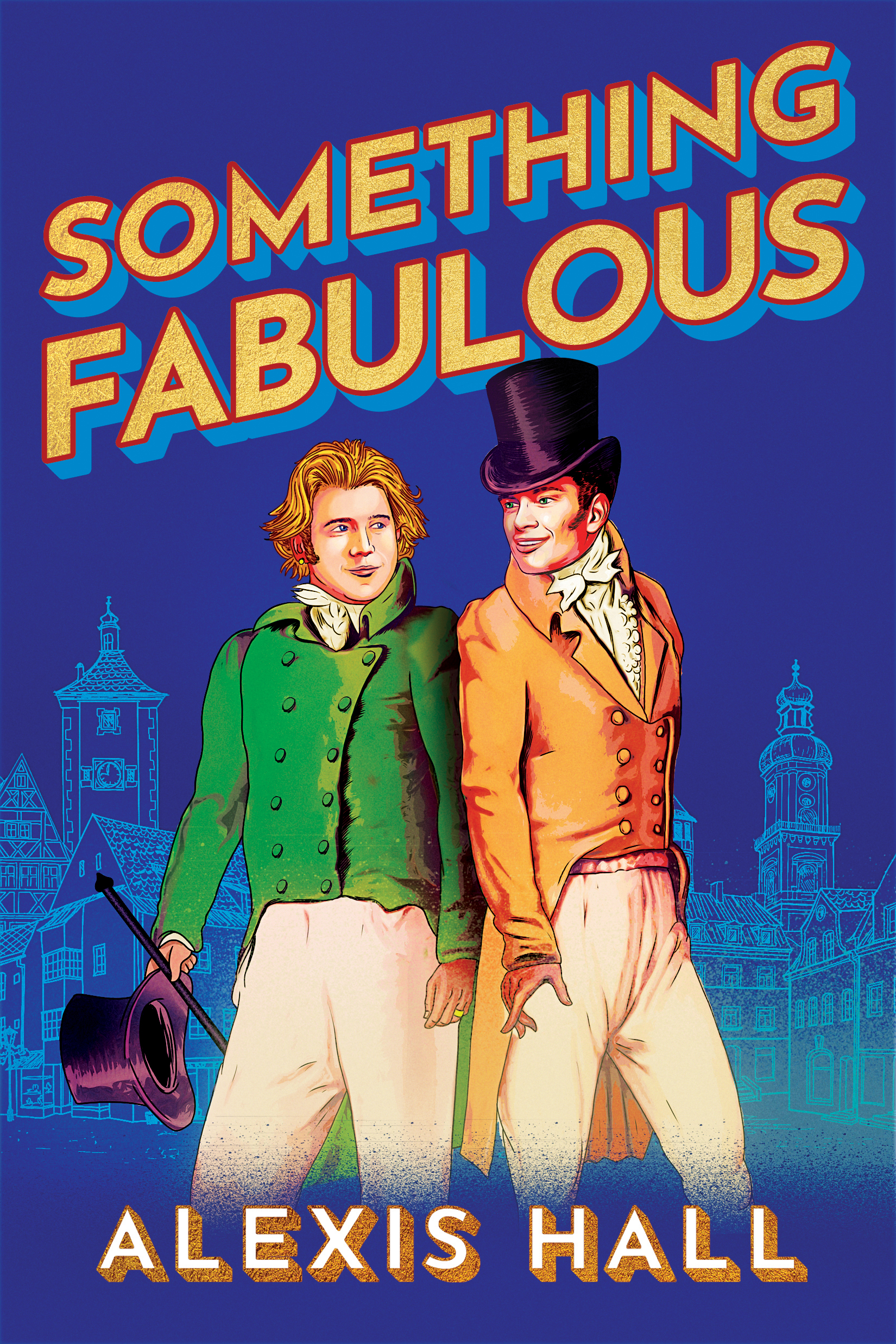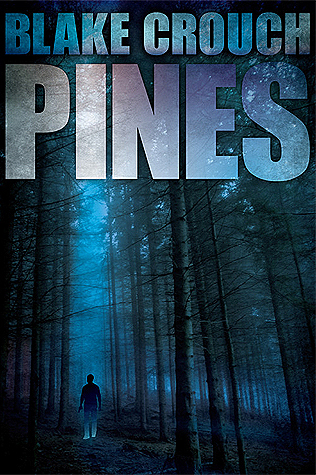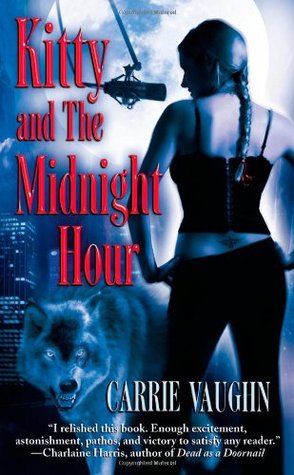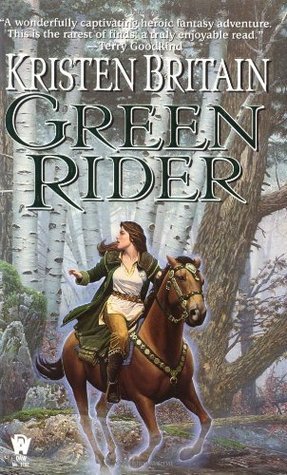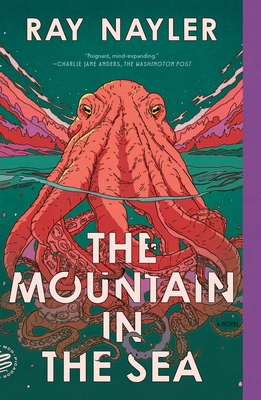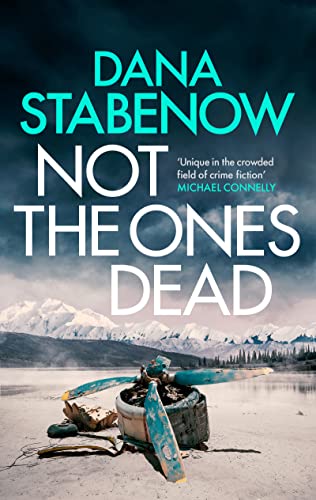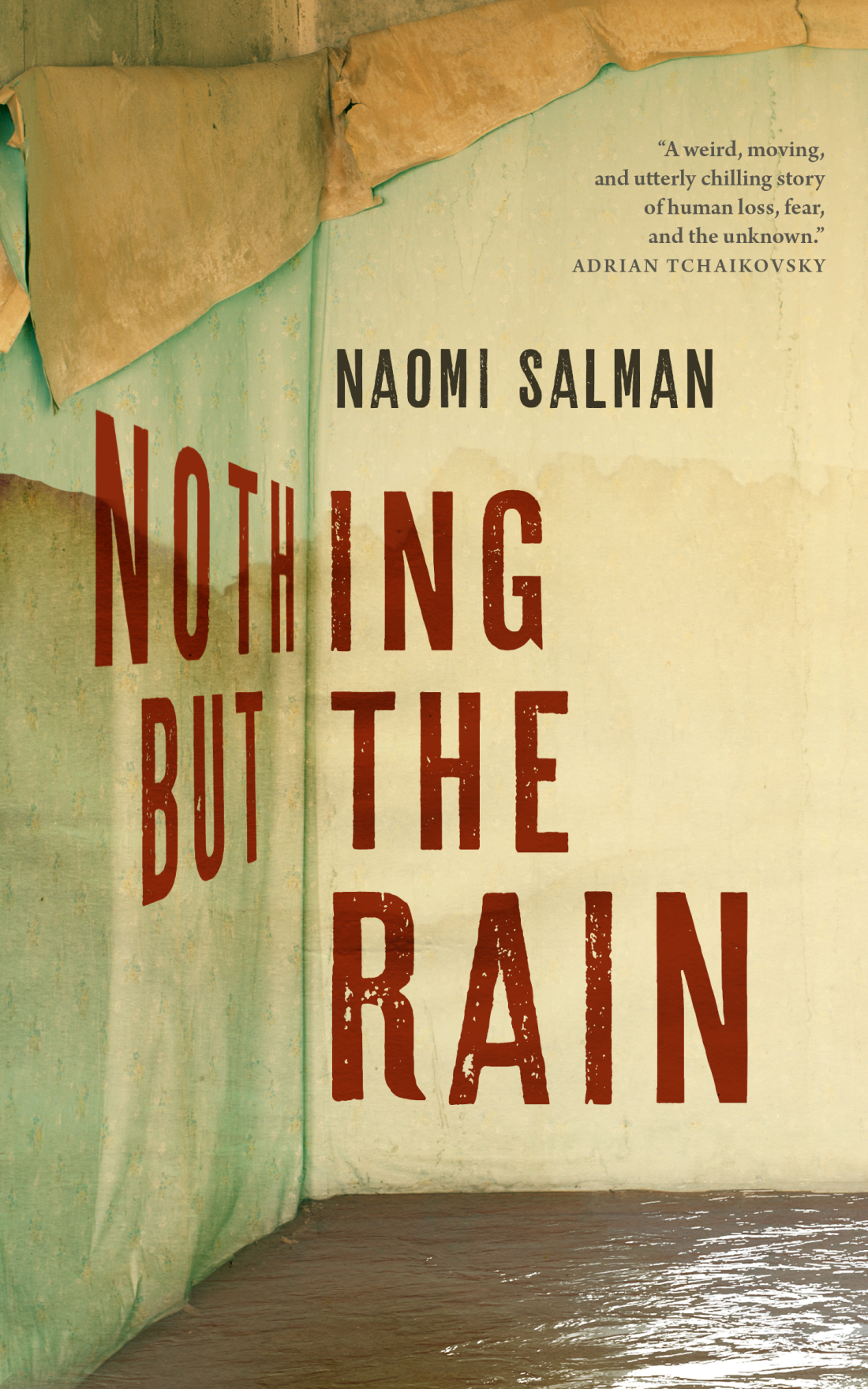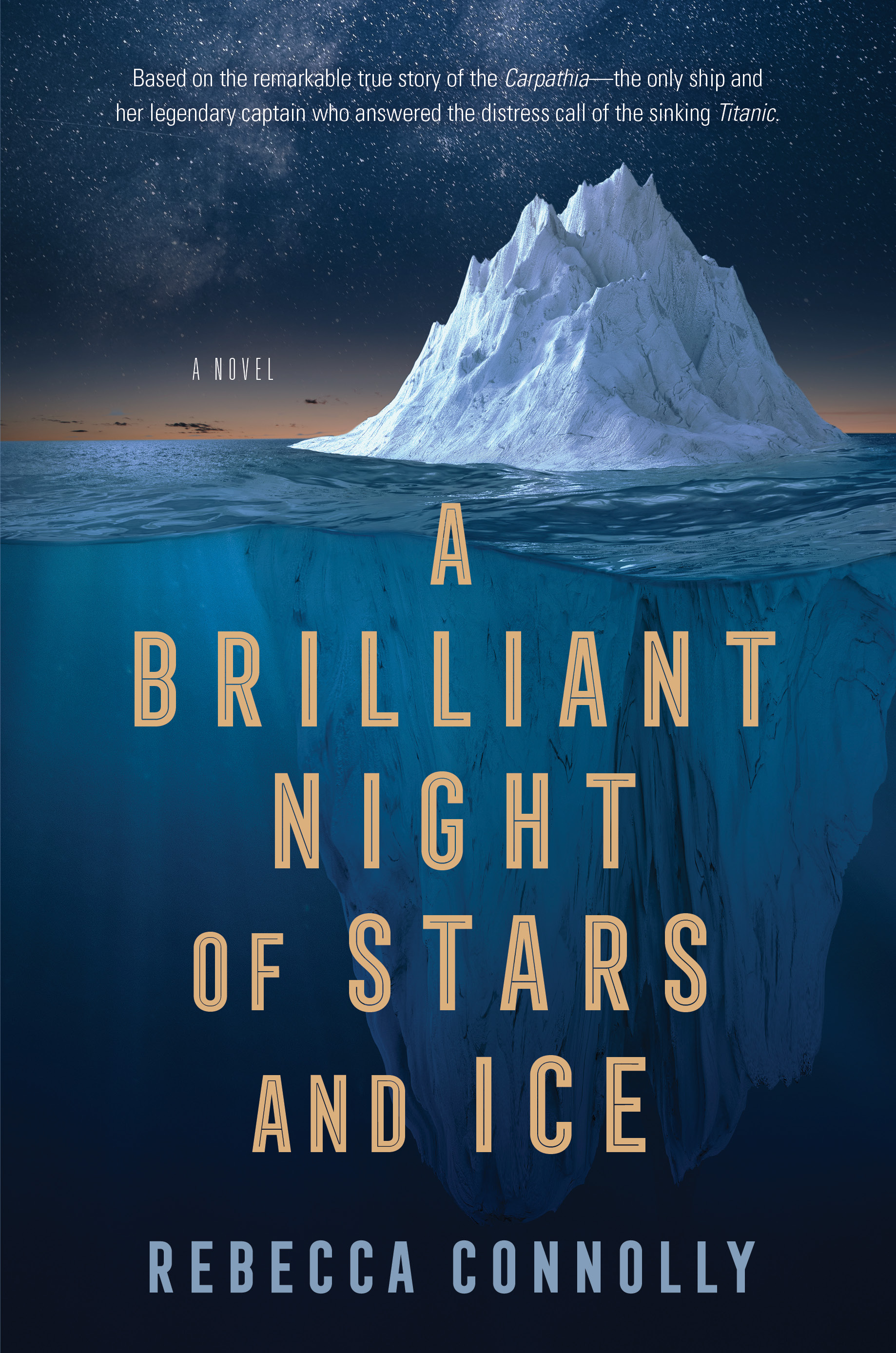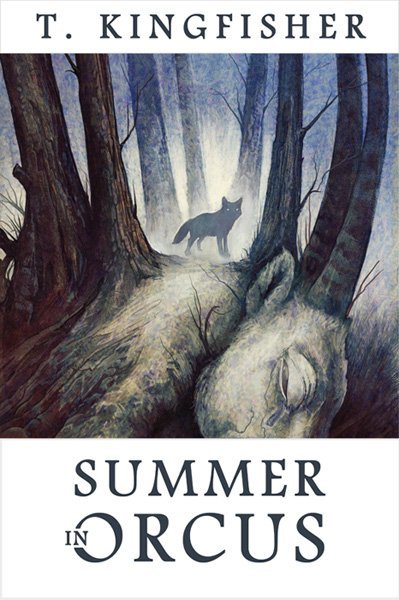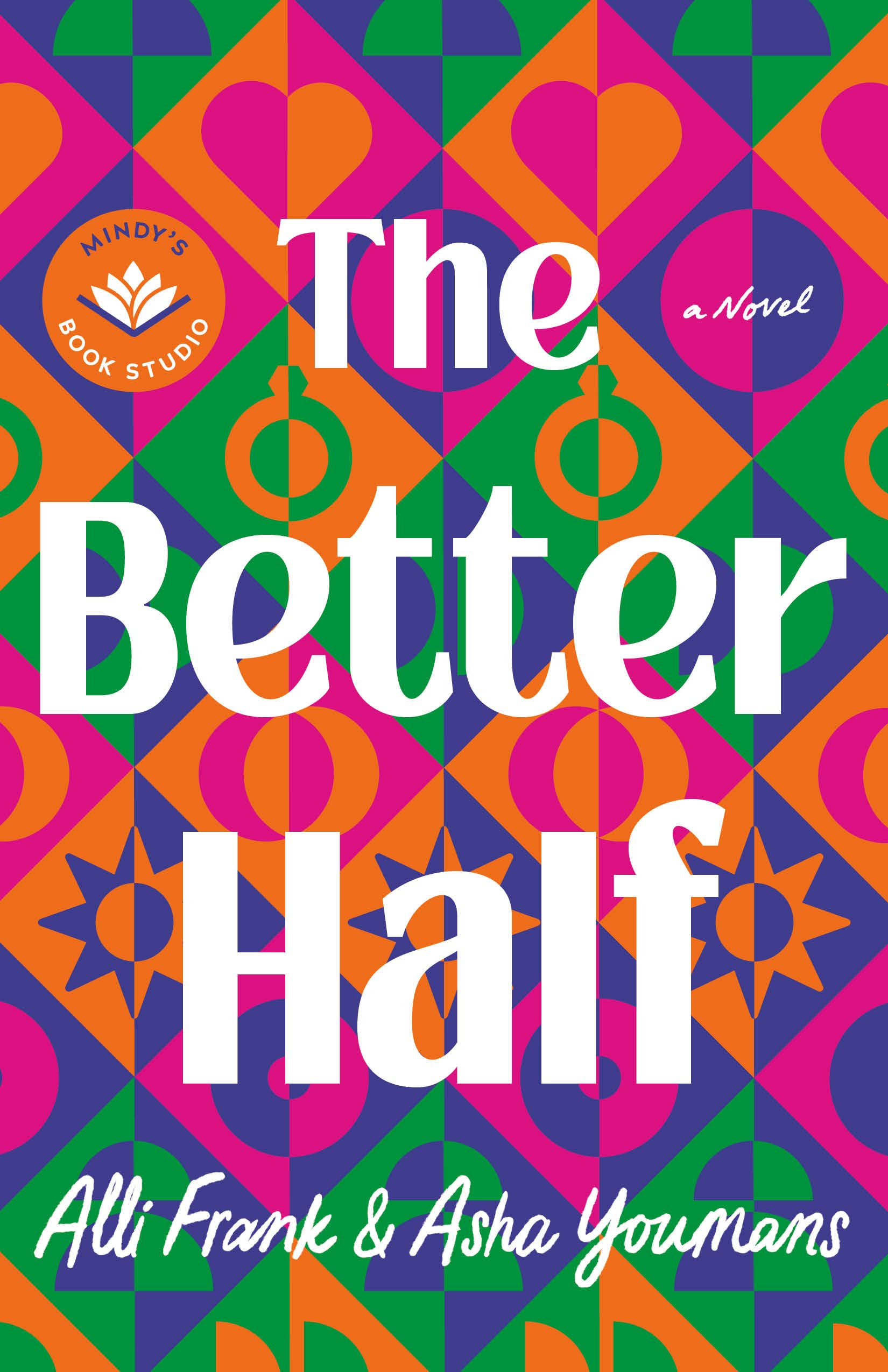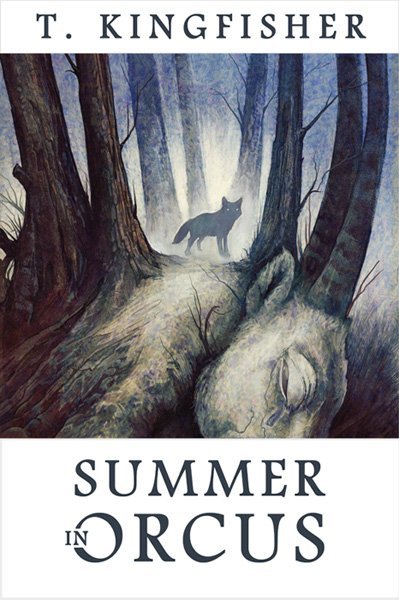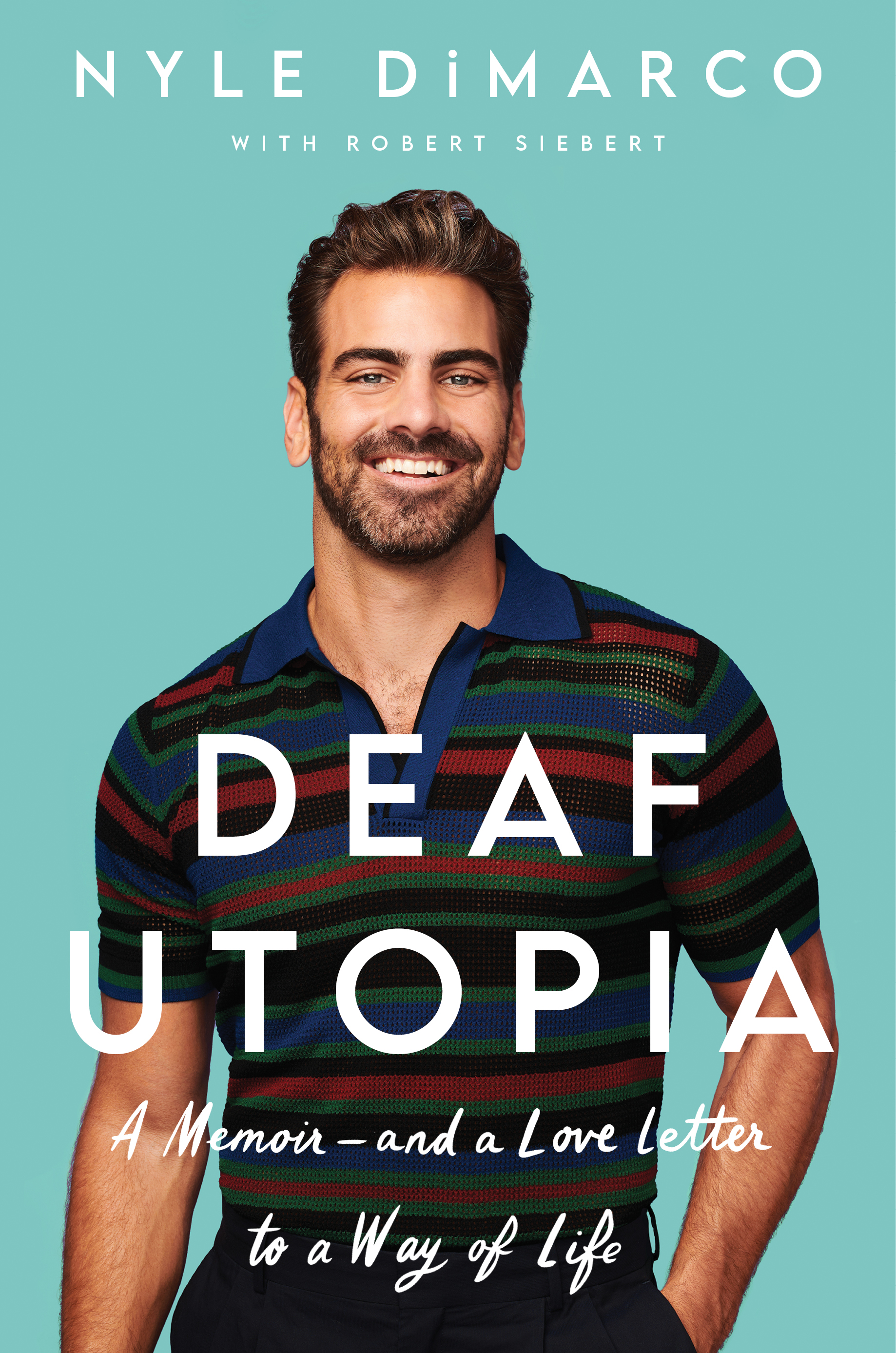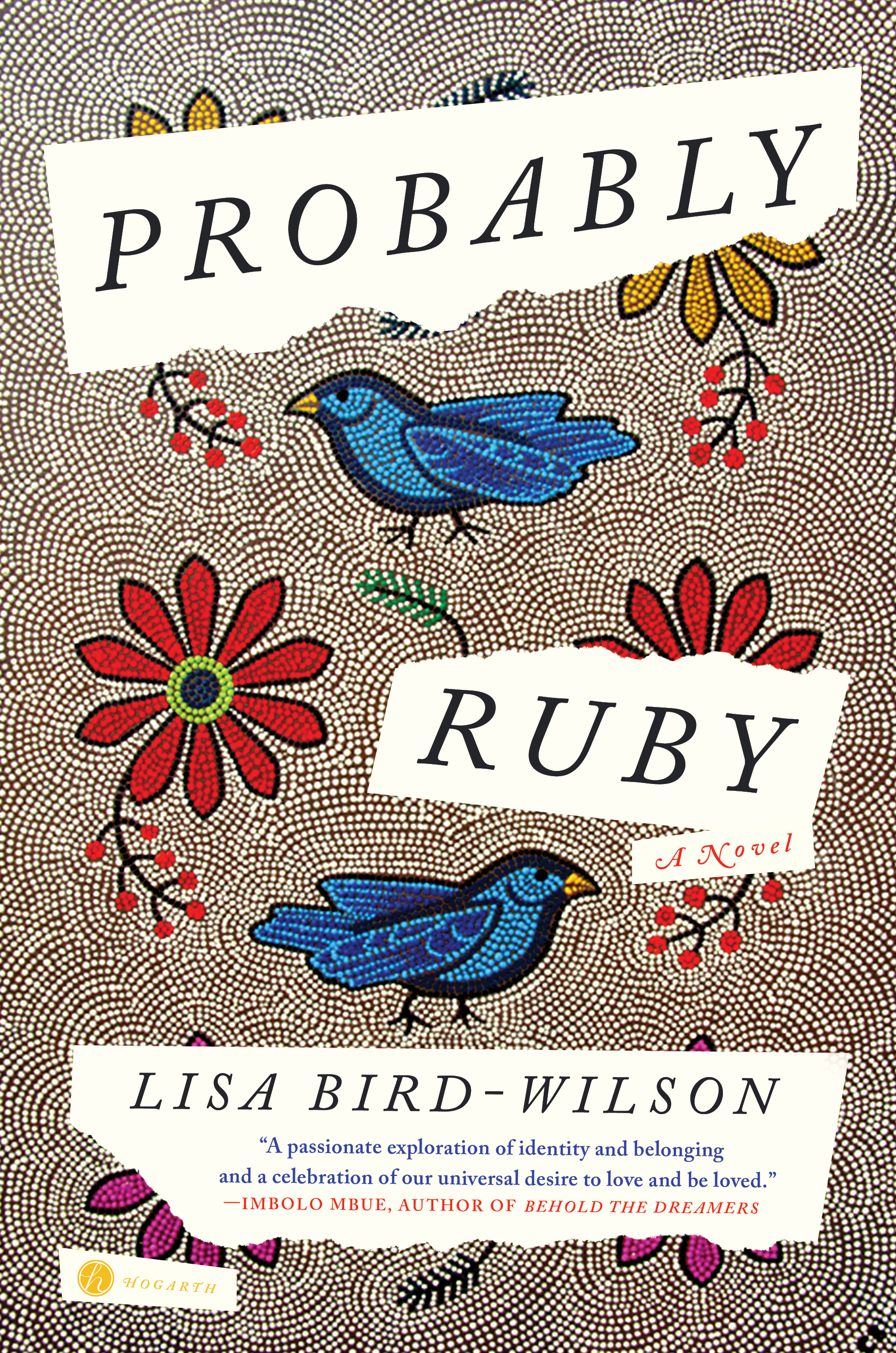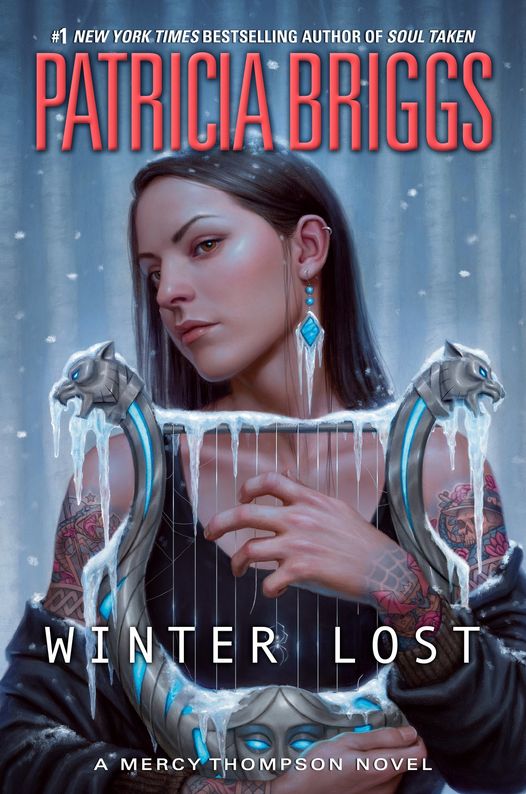
Just shared today! It’s the cover reveal for the next Mercy Thompson book by Patricia Briggs! Winter Lost will be released in June 2024. Here’s the new (gorgeous) cover:
The last Mercy book was released in 2022, so it’s thrilling to see a cover and confirmed date.
Here’s the blurb for the plot:
Mercy Thompson, car mechanic and shapeshifter, must stop a disaster of world-shattering proportions in this exhilarating entry in the #1 New York Times bestselling series.
In the supernatural realms, there are creatures who belong to winter. I am not one of them. But like the coyote I can become at will, I am adaptable.
My name is Mercy Thompson Hauptman, and my mate, Adam, is the werewolf who leads the Columbia Basin Pack, the pack charged with keeping the people who live and work in the Tri-Cities of Washington State safe. It’s a hard job, and it doesn’t leave much room for side quests. Which is why when I needed to travel to Montana to help my brother, I intended to go by myself.
But I’m not alone anymore.
Together, Adam and I find ourselves trapped with strangers in a lodge in the heart of the wilderness, in the teeth of a storm of legendary power, only to discover my brother’s issues are a tiny part of a problem much bigger than we could have imagined. Arcane and ancient magics are at work that could, unless we are very careful, bring about the end of the world. . . .
Last week, I shared a post with my list of books for the newest Classics Club Spin challenge (see it here), and a few days ago, this spin’s number was announced. (For those keeping track, it’s CC Spin #35, and for me personally, #7!)
Hosted by The Classics Club blog, the Classics Club Spin is a reading adventure where participants come up with a list of classics they’d like to read, number them 1 to 20, and then read the book that corresponds to the “spin” number that comes up.
For CCSpin #35, the lucky number is:
And that means I’ll be reading:
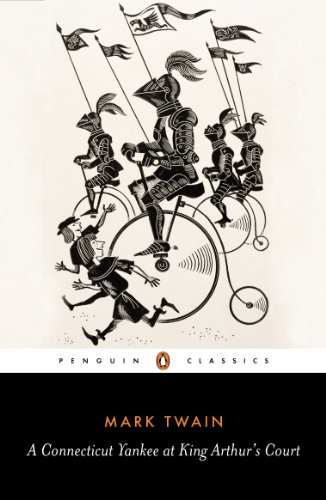
Cranford by Elizabeth Gaskell (published 1853)
Synopsis:
The women of an English country village star in this Victorian classic that inspired a BBC series, from the author of North and South.
Welcome to Cranford, where everyone knows one another and a cow wears pajamas. It’s a community built on friendship and kindness, where women hold court and most of the houses—and men—are rarely seen. Two colorful spinster sisters at the heart of Cranford, Miss Matty and Miss Deborah Jenkyns, are daughters of the former rector, and when they’re not playing cards or drinking tea, they’re feeding an endless appetite for scandal and weathering commotions to their peaceful lives, from financial troubles to thieves to an unexpected face from the past.
First published in installments in Household Words, a magazine edited by Charles Dickens, Cranford was a hit of its time and today offers modern readers a glimpse into a small English town during the mid-nineteenth century.
In case you’re wondering — yes, I’m happy with this spin! I’d been holding my breath thinking that I’d end up with a really long book this time around, and I’m perfectly content not to feel that kind of pressure. At 145 pages, Cranford should be very doable… and we have until December 3rd to finish our spin books this time around.
What do you think of my newest spin result?
Here’s my list of 20 titles for Classics Club Spin #35:
Frenchman’s Creek by Daphne DuMaurier
Cranford by Elizabeth Gaskell
An Old-Fashioned Girl by Louisa May Alcott
Dracula by Bram Stoker
Peony by Pearl Buck
David Copperfield by Charles Dickens
The Tenant of Wildfell Hall by Anne Bronte
Howards End by E. M. Forster
The Mysterious Affair at Styles by Agatha Christie
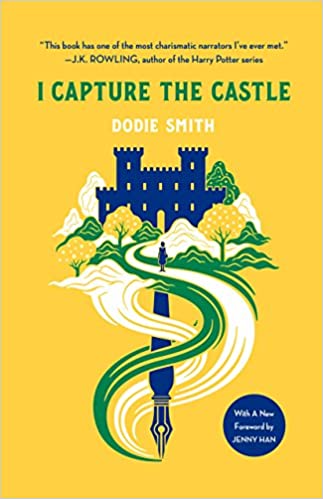
I Capture the Castle by Dodie Smith
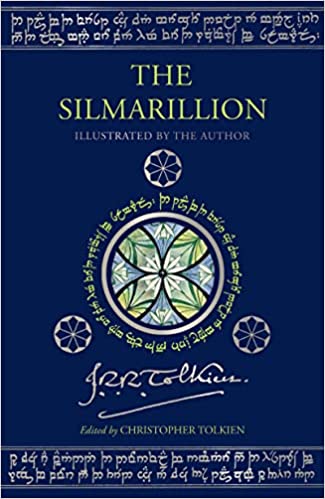
The Silmarillion by J. R. R. Tolkien
In Cold Blood by Truman Capote
Tevye the Dairyman and Motl the Cantor’s Son by Sholom Aleichem
Hosted by The Classics Club blog, the Classics Club Spin is a reading adventure where participants come up with a list of classics they’d like to read, number them 1 to 20, and then read the book that corresponds to the “spin” number that comes up. This will be my 7th time participating — although for the Classics Club, it’s spin #35!
Here are the dates and guidelines from the host blog:
On Sunday 15th, October, we’ll post a number from 1 through 20. The challenge is to read whatever book falls under that number on your Spin List by the 3rd December, 2023.
We’ll check in here on Sunday the 3rd December to see who made it the whole way and finished their spin book!
What’s Next?
Go to your blog.
Pick twenty books that you’ve got left to read from your Classics Club List.
Post that list, numbered 1-20, on your blog before Sunday, 15th October.
We’ll announce a number from 1-20.
Read that book by 3rd December.
I’m a little nervous this time around, because my reading schedule already feels overstuffed with a couple of big books related to group reads. I’m tempted to drop the longer books from my list… and yet, with a month and a half to get it done, even something on the lengthier side might be possible. Maybe. Fingers crossed.
Okay, sticking with the list I already had going, and just adding in the replacements for books I’ve already read…
Here’s my list of 20 classics for the next Classics Club Spin:
Frenchman’s Creek by Daphne DuMaurier
Cranford by Elizabeth Gaskell
An Old-Fashioned Girl by Louisa May Alcott
Dracula by Bram Stoker
Peony by Pearl Buck
David Copperfield by Charles Dickens
The Tenant of Wildfell Hall by Anne Bronte
Howards End by E. M. Forster
The Mysterious Affair at Styles by Agatha Christie
I Capture the Castle by Dodie Smith
The Silmarillion by J. R. R. Tolkien
In Cold Blood by Truman Capote
Tevye the Dairyman and Motl the Cantor’s Son by Sholom Aleichem
The Painted Veil by W. Somerset Maugham
Frankenstein by Mary Shelley
The Grapes of Wrath by John Steinbeck
The Sound of Waves by Yukio Mishima
The Mayor of Casterbridge by Thomas Hardy
The Left Hand of Darkness by Ursula K. Le Guin
A Night to Remember by Walter Lord
Wish me luck! I’ll be away on October 15th and for the week following, but I’ll share my spin result once I’m back online.
We all have our pet peeves when it comes to books, and I’ve certainly shared a bunch over the years. Most recently, I’ve been noticing two plot points that keep cropping up in fiction, and I say:
I mean, really…
Ready? My two most recent plot peeves are:
1) Killing the old people: Can we please have a book with a heartwarming intergenerational connection where the older person doesn’t end up dead? It’s gotten to the point that it’s utterly predictable: Introduce a wise / sassy / artistic / ahead-of-their-time / crotchety-but-secretly-nice / awe-inspiring older person — usually with a phenomenal sense of style and/or glamorous past — and I can pretty much guarantee that we’ll be attending their funeral by the end of the book. I can think of at least three or four instances where I’ve come across this plot within the past year, and more beyond that. STOP! Let them live!!
2) Interview surprises: Okay, I’m now up to three cases of the interview surprise — you know this one already, I’m sure: The main character has (select one) a random hookup, an embarrassing drunken escapade, an uncomfortable-yet-sexy tension with an inappropriate person… and wouldn’t you know, the very next day the main character shows up for a VERY important interview and… voila!… there’s that hookup (or whatever) right there at the interview. Ugh. Awkward! My current read started with a weird encounter with a date’s relative in the first chapter, a thought about the next day’s super important, life-changing interview at the end of that chapter… and guess who’s on the crucial interview selection panel the next night? Nooooooo!!
Please, please, please…
Whew. End of rant. Thanks for listening!
What about you? What plot points are you SO over right now?
I finished a book I absolutely loved this week… and I think I’ll probably hold off for another four to six weeks or so before I share a review.
Why?
Because it’s a new release scheduled for publication in early September. And while, I’d normally want to share my rave review immediately (because who doesn’t love shouting about how amazing a book is?), it also got me thinking about the timing of reviews and what might be the best approach.
The general rule of thumb for sharing reviews based on ARCs seems to be to hold reviews until close to the release date. Based on NetGalley confirmation emails, most publishers seem to request not posting far in advance, and some state that reviews should be posted no more than two weeks (or at most, a month) before the publication date.
And yet, when I go on Goodreads, I see reviews posted months in advance of publication (which Goodreads allows, although retail sites like Amazon do not).
There’s something to be said for pre-release buzz, and authors I’ve followed have explained more than once that all preorders add to their release weeks stats. The higher the sales that week, the more likely it is that they’ll continue to be promoted, or even that a sequel might be greenlit. Given that, it would seem like early reviews (especially super positive ones) can only help a book. On the other hand, if someone is hyping a book three months before anyone can even get it, will that actually make an impact on sales? Sure, other bloggers/reviewiers may go request the book on NetGalley as a result — but while that boosts exposure, it doesn’t necessarily translate into people making purchases.
From the blogger/reviewer perspective, I get wanting to share thoughts while they’re fresh, and I suppose some readers/reviewers like the idea of being first, even if that means reviewing a book that the general reader audience won’t be able to access for many months.
For me, my target review window is right on time, occasionally a little early (a week or maybe two in advance), and (accepting that life is not perfect) late when it can’t be helped.
In general, I try to time my reviews right around the week a book is released, or possibly a week ahead of time. It mostly comes down to simple logistics for me — no matter how hard I try to keep my ARC commitments within reasonable limits, I still always find myself with a pretty hefty schedule to keep up with, and it usually just isn’t possible for me to get out ahead of the publication dates — even if I wanted to.
Another reason I prefer “just on time” reviews is wanting to be able to talk about a book. Read too far in advance and share a review, and no one will be available to discuss it with. Sure, it’s nice to get reactions along the lines of “sounds great!” or “hey, I’ll check it out”, but it’s even better to find other readers’ reviews, share ideas, and bounce reactions back and forth.
Beyond that, I suppose I just see it as courteous to follow publisher guidelines whenever possible. Receiving access to ARCs is a privilege, after all, so I think it’s reasonable to be expected to stick to the publishers’ preferences when posting reviews.
As for late reviews… well, I try, but life gets in the way! With ARCs, I always aim to post by the week that a book comes out, but sometimes it just doesn’t work. A late review is better than no review! I’m much more forgiving of myself than I was when I first starting blogging and reviewing. Bottom line, I read for myself and my own enjoyment first and foremost. ARCs can be wonderful to have, but they’re not the only books I read, and if I need to delay reading or reviewing a book because I’m busy with other things or other books I want to read… that’s okay too.
I found myself in the unusual situation this summer of not having a ton of ARCs in June, so I got through a few of my July books early, and even read one of my August books. For the August book, I was so happy to have read it that I lost sight of the release date and went ahead and posted a review right away. Only after it was posted did I stop and realize how early it was, but at that point, there were already comments posted, so I decided to leave it as is.
Which brings me back to the book I just finished — the 17th book in the October Daye series by Seanan McGuire… which just happens to be my very favorite fantasy series. I would absolutely love to share some thoughts, but it’s just too soon — the book will be released in early September. I know if I hadn’t read it already and stumbled across someone’s review of it, I’d be pretty peeved at this point.
Friends, the book is SO good! And what’s more, there’s another installment coming in October — a first in this series, to have two new books released just one month apart. Will I read #18 right away? You betcha.
But as for the reviews, I think I’m going to hold off. I mean, I’ll go ahead and draft the reviews while my thoughts and feelings are fresh… but I’ll wait to post until the release date is much, much closer.
How do you approach early reviews? Do you time reviews to release dates, or post reviews whenever you finish a book, regardless of dates? Do you have some other approach entirely?
I’d love to know what other people do when it comes to the timing of ARC reviews — especially when you love a book and you’re dying to talk about it.
Earlier this week, I asked the bookish community to help me identify a book I only kinda, sorta remembered from my college days.
Lo and behold, the answer came not from another book blogger, but from my sister, who only occasionally checks out what I post about, but happened to see this particular post this week!
What can I say? Sisters rock.
Thank you to everyone who offered either suggestions or resources for further digging. I appreciate the input!
And now, for the big reveal…
The original query was for a book or story with the following elements:
It’s sci-fi / speculative fiction
No idea if it’s a short story or if we read an excerpt from a full-length book
The plot revolves around a society consisting only of women
I think (maybe) men are allowed to live somewhere nearby, and there’s contact between the groups for reproductive purposes (note: I was wrong about the reproduction part — must have been thinking of something else!)
The women have telepathic/empathic abilities
There’s something about a woman sitting up in a tree, using her telepathy to expand her consciouness outward in order to stand watch over the community
Someone who uses her telepathy to invade another person’s thoughts is punished — maybe exiled?
This would have been written no later than the early 1980s.
Based on my sister’s input, which I’m pretty certain is the right answer, the book I’ve been thinking of is:
The Wanderground by Sally Miller Gearhart Originally published 1978
Synopsis (Goodreads):
In a world where girls can no longer wear pants, only skirts and hose; women’s Sunday softball is discontinued; shorter rest periods on the job exist so that women can’t socialize; and a ten o’clock curfew is created for increasing the protection for women – an exodus begins. This monumental move separates men and women, such that many women flee to the hills for freedom, while men remain in the cities.
Leading us through the women’s shared stories of survival, remembrance, and self-discovery, Wanderground brings us years later to a future, present with spiritual awakening. Here, the hill women have gained telepathic abilities, unique flying and healing techniques, and go on tours of duty to assist women in the cities still struggling for enlightenment.
According to Wikipedia, The Wanderground “is Gearhart’s first and most famous novel, and continues to be used in women’s studies classes as a characteristic example of the separatist feminism movement from the 1970s.” Bingo! Based on the Wikipedia details, I feel 99% sure that this is the book I was thinking of, although I still don’t know if I read the whole thing way back when or (more likely) an excerpt as part of a class syllabus.
This is so exciting! Trying to figure out this half-remembered book has been like an itch in my brain for a long time now. My library has a single copy available to request, and I’m looking forward to checking it out!
Thanks, once again, to the people who offered ideas, and a big THANK YOU (todah rabah!) to my sister!
Calling on all you wonderful book lovers and avid readers!
I’ve had a memory of a story in my mind for a while now, and it’s driving me bonkers. I need your help figuring out what this could be!
I read a story for women’s studies class back in college, and here’s all I can piece together about it:
It’s sci-fi / speculative fiction
No idea if it’s a short story or if we read an excerpt from a full-length book
The plot revolves around a society consisting only of women
I think (maybe) men are allowed to live somewhere nearby, and there’s contact between the groups for reproductive purposes
The women have telepathic/empathic abilities
There’s something about a woman sitting up in a tree, using her telepathy to expand her consciouness outward in order to stand watch over the community
Someone who uses her telepathy to invade another person’s thoughts is punished — maybe exiled?
This would have been written no later than the early 1980s.
(I wondered if what I remembered might be connected to Herland by Charlotte Perkins Gilman, but now that I’ve read Herland, I know it’s not.)
Earlier this week, I shared a post with my list of books for the newest Classics Club Spin challenge (see it here), and today, this spin’s number was announced. (For those keeping track, it’s CC Spin #34, and for me personally, #6!)
Hosted by The Classics Club blog, the Classics Club Spin is a reading adventure where participants come up with a list of classics they’d like to read, number them 1 to 20, and then read the book that corresponds to the “spin” number that comes up.
For CCSpin #34, the lucky number is:
And that means I’ll be reading:
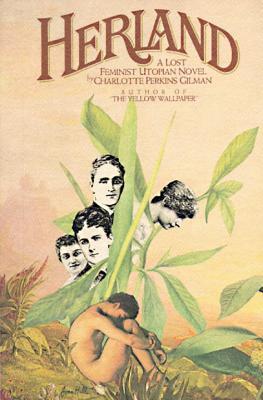
Herland by Charlotte Perkins Gilman (published 1915)
Synopsis:
A prominent turn-of-the-century social critic and lecturer, Charlotte Perkins Gilman is perhaps best known for her short story “The Yellow Wallpaper,” a chilling study of a woman’s descent into insanity, and Women and Economics, a classic of feminist theory that analyzes the destructive effects of women’s economic reliance on men.
In Herland, a vision of a feminist utopia, Gilman employs humor to engaging effect in a story about three male explorers who stumble upon an all-female society isolated somewhere in South America. Noting the advanced state of the civilization they’ve encountered, the visitors set out to find some males, assuming that since the country is so civilized, “there must be men.” A delightful fantasy, the story enables Gilman to articulate her then-unconventional views of male-female roles and capabilities, motherhood, individuality, privacy, the sense of community, sexuality, and many other topics.
Decades ahead of her time in evolving a humanistic, feminist perspective, Gilman has been rediscovered and warmly embraced by contemporary feminists. An articulate voice for both women and men oppressed by the social order of the day, she adeptly made her points with a wittiness often missing from polemical writings.
This wasn’t necessarily the book I was most hoping for this time around, but I’m happy with the spin results regardless! I do think I may have read an excerpt from Herland for a women’s studies class way back in my college years — but I’m not 100% sure, so this will be a good chance to find out. This is a relatively short book (under 150 pages, in the edition I checked out from the library), and I look forward to diving in!
What do you think of my newest spin book?
Here’s my list of 20 titles for Classics Club Spin #34:
Frenchman’s Creek by Daphne DuMaurier
Cranford by Elizabeth Gaskell
An Old-Fashioned Girl by Louisa May Alcott
Dracula by Bram Stoker
Peony by Pearl Buck
David Copperfield by Charles Dickens
The Tenant of Wildfell Hall by Anne Bronte
Howards End by E. M. Forster
The Mysterious Affair at Styles by Agatha Christie
Hosted by The Classics Club blog, the Classics Club Spin is a reading adventure where participants come up with a list of classics they’d like to read, number them 1 to 20, and then read the book that corresponds to the “spin” number that comes up. This will be my 6th time participating — although for the Classics Club, it’s spin #34!
Here are the dates and guidelines from the host blog:
On Sunday 18th, June, we’ll post a number from 1 through 20. The challenge is to read whatever book falls under that number on your Spin List by the 6th August, 2023.
We’ll check in here on Sunday the 6th August to see who made it the whole way and finished their spin book!
What’s Next?
Go to your blog.
Pick twenty books that you’ve got left to read from your Classics Club List.
Post that list, numbered 1-20, on your blog before Sunday, 18th June.
We’ll announce a number from 1-20.
Read that book by 6th August.
I love doing these spins! I rarely do reading challenges, but I’m happy to make an exception for the Classics Club Spin. It’s such a great way to get me to read classics that I’ve always meant to get to, and the randomness of it all makes it feel extra fun. Once again, I’m mostly sticking with the same list as before, minus the books I’ve already read, but also swapping out a couple I’m less interested in for other classics on my master list.
And now for the good stuff…
Here’s my list of 20 classics for the next Classics Club Spin:
Frenchman’s Creek by Daphne DuMaurier
Cranford by Elizabeth Gaskell
An Old-Fashioned Girl by Louisa May Alcott
Dracula by Bram Stoker
Peony by Pearl Buck
David Copperfield by Charles Dickens
The Tenant of Wildfell Hall by Anne Bronte
Howards End by E. M. Forster
The Mysterious Affair at Styles by Agatha Christie
I Capture the Castle by Dodie Smith
The Silmarillion by J. R. R. Tolkien
In Cold Blood by Truman Capote
Herland by Charlotte Perkins Gilman
The Painted Veil by W. Somerset Maugham
Passing by Nella Larsen
The Grapes of Wrath by John Steinbeck
The Sound of Waves by Yukio Mishima
The Mayor of Casterbridge by Thomas Hardy
The Left Hand of Darkness by Ursula K. Le Guin
A Night to Remember by Walter Lord
Wish me luck! I’ll post again on Sunday once the spin results are announced!
Earlier this week, I shared a post with my list of books for the newest Classics Club Spin challenge (see it here), and today, this spin’s number was announced. (For those keeping track, it’s CC Spin #33, and for me personally, #5!)
Hosted by The Classics Club blog, the Classics Club Spin is a reading adventure where participants come up with a list of classics they’d like to read, number them 1 to 20, and then read the book that corresponds to the “spin” number that comes up.
For CCSpin #33, the lucky number is:
And that means I’ll be reading:
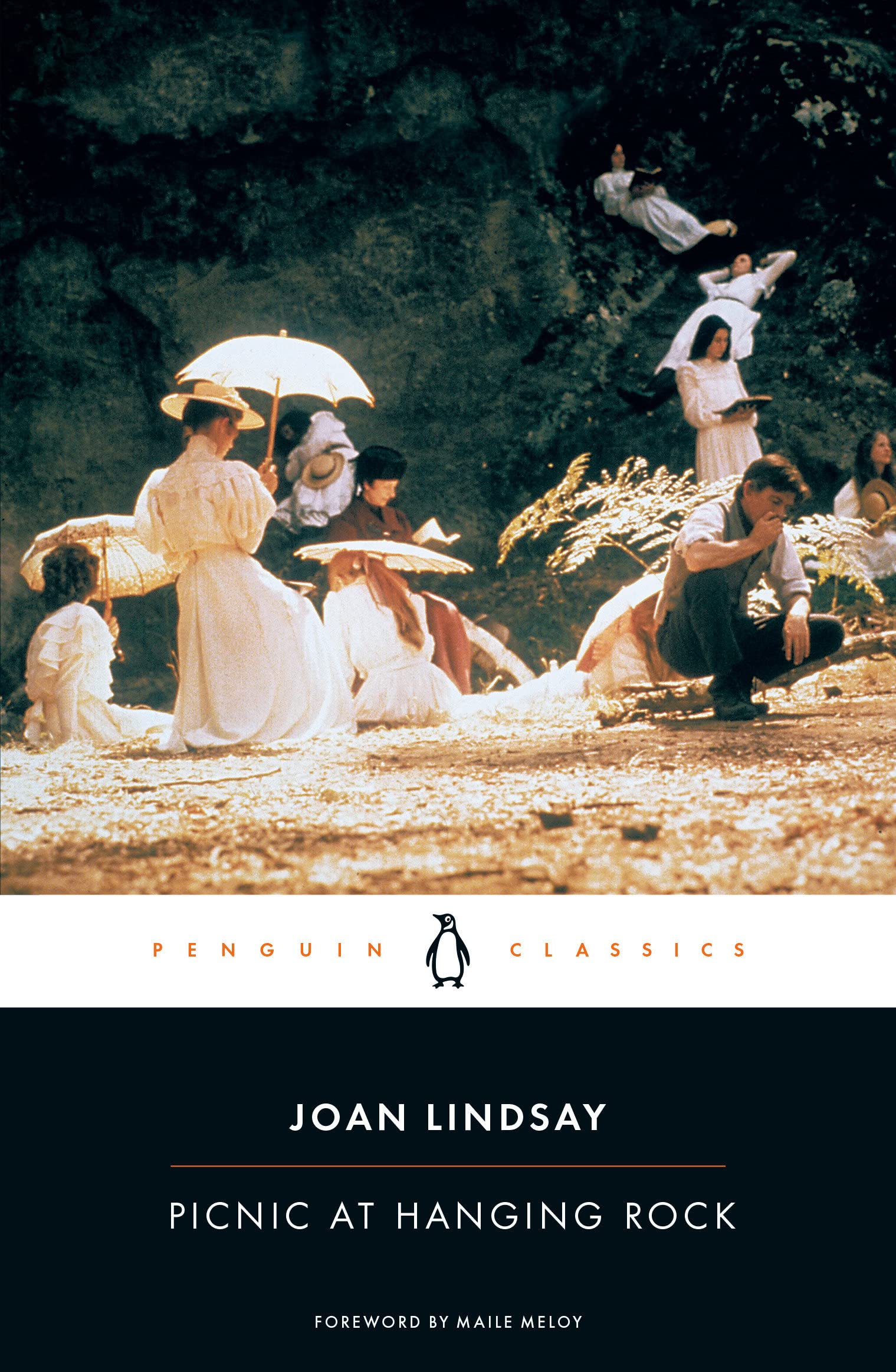
Picnic at Hanging Rock by Joan Lindsay (published 1967)
Synopsis:
It was a cloudless summer day in the year 1900. Everyone at Appleyard College for Young Ladies agreed it was just right for a picnic at Hanging Rock. After lunch, a group of three girls climbed into the blaze of the afternoon sun, pressing on through the scrub into the shadows of the secluded volcanic outcropping. Farther, higher, until at last they disappeared. They never returned. . . .
Mysterious and subtly erotic, Picnic at Hanging Rock inspired the iconic 1975 film of the same name by Peter Weir. A beguiling landmark of Australian literature, it stands with Shirley Jackson’s We Have Always Lived in the Castle, Daphne du Maurier’s Rebecca, and Jeffrey Eugenides’ The Virgin Suicides as a masterpiece of intrigue.
I’m so happy with this spin result! I haven’t read many Australian classics, and this is one that I’ve heard so much about over the years. And on a practical note, I was afraid that we’d land on one of my longer options this time — but this book is 204 pages (according to the edition in my Kindle library), and feels really doable!
What do you think of my newest spin book?
Here’s my list of 20 titles for Classics Club Spin #33:
Frenchman’s Creek by Daphne DuMaurier
Cranford by Elizabeth Gaskell
An Old-Fashioned Girl by Louisa May Alcott
Dracula by Bram Stoker
Peony by Pearl Buck
The Tenant of Wildfell Hall by Anne Bronte
Pygmalion by George Bernard Shaw
Howards End by E. M. Forster
The Mysterious Affair at Styles by Agatha Christie