Flashback Friday: A Hanukkah Favorite!

Flashback Friday is my own little weekly tradition, in which I pick a book from my reading past to highlight — and you’re invited to join in!

Here are the Flashback Friday book selection guidelines:

  1. Has to be something you’ve read yourself
  2. Has to still be available, preferably still in print
  3. Must have been originally published 5 or more years ago

Other than that, the sky’s the limit! Join me, please, and let us all know: what are the books you’ve read that you always rave about? What books from your past do you wish EVERYONE would read? Pick something from five years ago, or go all the way back to the Canterbury Tales if you want. It’s Flashback Friday time!

Happy Hanukkah! Your turkey may be nothing but leftovers by now, but you’ve still got six more days to chow down on latkes! In honor of the (very early!) festival of lights, I thought I’d highlight a family favorite for this week’s Flashback Friday post:

Hershel and the Hanukkah Goblins

Hershel and the Hanukkah Goblins
by Eric Kimmel
Illustrated by Trina Schart Hyman
(published 1994)

Synopsis (Amazon):

What are the poor villagers to do? The holiday-hating, hill-dwelling hobgoblins are bound and determined to ruin yet another Hanukkah for them. Every year the beasties snuff out the menorah candles, destroy the dreidels, and pitch the potato latkes on the floor. But these wicked wet blankets never counted on someone as clever as Hershel of Ostropol showing up. Using his wits and a few props–pickles, eggs, and a dreidel (a square-shaped top with Hebrew letters on each side)–Hershel manages to outwit all the creepy critters and break the spell. This fabulously creative adaptation of the ancient Hanukkah story in which the Syrians forbade the Jews to worship as they wanted, keeps the spirit of the original while adding a spine-tingling twist. Warmth and humor prevail, even in the midst of hopeless-looking circumstances. Award-winning illustrator Trina Schart Hyman creates lively and witty pictures that pair perfectly with Eric Kimmel’s words to create this Caldecott Honor Book. (Ages 4 to 8)

I have never seen a more rapt group of 6-year-olds than on the day that my son’s teacher asked me to read a Hanukkah story to the class. Once I began the story of Hershel and the icky, creepy, mean creatures who were trying to destroy Hanukkah, they were hooked. Even today, my 11-year-old pulls this one off the shelf for a Hanukkah read-along (although he’d probably be thoroughly embarrassed that I said so). Hershel and the Hanukkah Goblins has it all — scary creatures, an ordinary guy who outsmarts the baddies, and really funny (and a little bit frightening) illustrations as well.

Sure, there are plenty of Hanukkah books to choose from, but how many have goblins? We’ve always loved this book at my house, and I’m glad none of us are too old to enjoy it once again this year!

Happy Friday! I hope you’re enjoying the company of a terrific book… and avoiding the shopping madness!

♥♥♥♥♥♥♥♥

Do you host a book blog meme? Do you participate in a meme that you really, really love? I’m building a Book Blog Meme Directory, and need your help! If you know of a great meme to include — or if you host one yourself — please drop me a note on my Contact page and I’ll be sure to add your info!

Bookish gratitude for Thanksgiving 2013

I posted an initial version of this piece on Thanksgiving in 2012 — and since most of it is still relevant, I thought I’d repost it again today, with a few updates for 2013.

In another hour, I’ll head to the kitchen to start working on my contributions to the holiday meal. Meanwhile, my family and I are relaxing around the house. My son is playing video games, still in his pajamas. My husband and I just got home from a walk at the beach, where we enjoyed fresh breezes and blue skies. Before long, we’ll have to start the hustle and bustle of getting dressed and hitting the road for our Thanksgiving celebration with friends. But meanwhile, it feels a bit like I’ve managed to hit the pause button of life for just a few minutes.

In this brief lull on my Thanksgiving Day, I want to take a moment to reflect on all the small joys of life as a reader and take stock of what’s made me happy and grateful this year.

I AM THANKFUL that my family, despite their teasing and occasional complaints, understands that books matter to me and respect my need to carve out some quiet reading time every day.

I AM THANKFUL to all the wonderful people who have stopped by my blog since its birth a year and a half ago. The blogging community is amazing and dynamic and inspiring and so much fun. Your comments, support, and encouragement continue to mean so much to me! THANK YOU!

I AM THANKFUL to the members of my online book circles for turning me on to reading choices I might not have encountered on my own. Thank you, Goodreads friends, Outlander Book Club, fellow book bloggers, meme hosts and participants, and more!

I AM THANKFUL to the authors of my favorite books published in 2013, including Stephen King, Rainbow Rowell, David Levithan, Joe Hill, and Nicole Peeler. Thank you for all the thrills, chills, laughs, and tears.

I AM THANKFUL to the authors who take the time to respond to questions and interact with their readers. It can’t be easy, but your graciousness is so appreciated! Thank you for being not just terrific writers but also good people.

I AM THANKFUL to the local bookstores who’ve hosted some marvelous author events this year, and thankful to the authors who graciously sign SO MANY BOOKS. A special thank you to Bee Ridgway, who was absolutely delightful when I came to her bookstore appearance — and who (by the way) wrote one of the very best books I read in 2013!

I AM THANKFUL to Diana Gabaldon — this year and always — for her incomparable Outlander series and all of its associated offshoots, and for teasing her readers with her Daily Lines on Facebook.

I AM THANKFUL to the San Francisco Public Library — and really, public libraries everywhere! — for long hours, fantastic resources, and outstanding service to the community. Thank you for letting me take out limitless books, request whatever I want, and for having so many good selections for my child!

I AM THANKFUL for all the organizations working so hard to bring education, books, and literacy programs to the people and communities who need these resources so desperately. Goodreads has a terrific list of non-profits working in these areas, and I urge everyone who cares about these causes to check it out and find a way to pitch in.

A personal favorite: The National Library Initiative of JWI (Jewish Women’s Initiative), whose good works include establishing children’s libraries in homeless shelters and shelters for victims of domestic violence and abuse. You can find more information here.

I AM THANKFUL to have so many choices when it comes to reading. I love being able to find excellent works of fiction, not only on the bestseller lists, but also in children’s books, young adult novels, and graphic novels.

I AM THANKFUL to have the ability to walk away from books that aren’t working for me. It took me years to master the guilt of leaving a book unfinished! But I’ve gotten wiser, and now fully embrace the mantra that “life’s too short to read bad books”.

I AM THANKFUL that my daughter loves to talk books with me, and that my son — while still the most reluctant of readers — does love to listen to a good story.

I AM THANKFUL for my almost stuffed bookshelves and the books, old and new, that fill them up.

I AM THANKFUL to all the writers, everywhere, who work so hard to share their creativity with all of us avid readers!

With an endless amount of books to read, I will never be bored, I will continue to learn, I will explore lands and times beyond my physical reach. And for all this and more, I am thankful.

Happy Thanksgiving!

Thursday Quotables: The Lover’s Dictionary

quotation-marks4

Welcome back to Thursday Quotables! This weekly feature is the place to highlight a great quote, line, or passage discovered during your reading each week.  Whether it’s something funny, startling, gut-wrenching, or just really beautifully written, Thursday Quotables is where my favorite lines of the week will be, and you’re invited to join in!

thanksgiving

Posting early, before the Thanksgiving madness begins! I just couldn’t let a Thursday go by without a Thursday Quotables post — even though there’s pumpkin pie to be made! Happy early Thursday! Here’s this week’s Quotable:

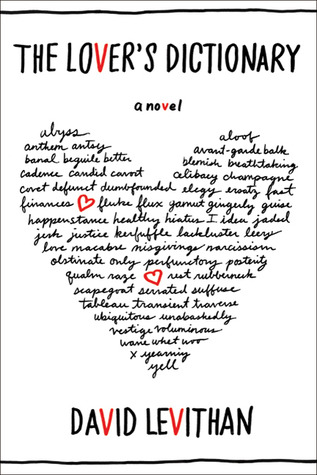
buffoonery, n.

You were drunk, and I made the mistake of mentioning Showgirls in a near-empty subway car. The pole had no idea what it was about to endure.

The Lover's Dictionary

Source: The Lover’s Dictionary
Author: David Levithan
Farrar, Straus and Giroux, 2011

I almost went with one of the many heart-breaking definitions from this remarkable book, but in the spirit of Thanksgiving, thought I’d go with one that made me laugh instead!

If you want to know more about The Lover’s Dictionary, you can read my review here.

What lines made you laugh, cry, or gasp this week? Do tell!

If you’d like to participate in Thursday Quotables, it’s really simple:

  • Write a Thursday Quotables post on your blog. Try to pick something from whatever you’re reading now. And please be sure to include a link back to Bookshelf Fantasies in your post (http://www.bookshelffantasies.com), if you’d be so kind!
  • Click below (next to the cute froggy face) to link up your post! And be sure to visit other linked blogs to view their Thursday Quotables too.
  • Have a quote to share but not a blog post? Leave your quote in the comments.
  • Have fun!

Wishing & Waiting on Wednesday

There’s nothing like a Wednesday for thinking about the books we want to read! My Wishing & Waiting on Wednesday post is linking up with two fabulous book memes, Wishlist Wednesday (hosted by Pen to Paper) and Waiting on Wednesday (hosted by Breaking the Spine).

This week’s pick:

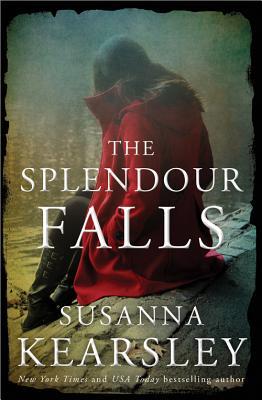
The Splendour Falls

The Splendour Falls by Susanna Kearsley
(to be released January 2014)

Synopsis via Amazon:

An Ancient Castle, a Tragic Love, and a Web of Secrets Begins to Unravel…

Emily Braden has stopped believing in fairy tales and happy endings. When her fascinating but unreliable cousin Harry invites her on a holiday to explore the legendary town of Chinon, and promptly disappears—well, that’s Harry for you.

As Emily makes the acquaintance of Chinon and its people, she begins to uncover dark secrets beneath the charm. Legend has it that during a thirteenth-century siege of the castle that looms over the city, Queen Isabelle, child bride of King John, hid a “treasure of great price.” And in the last days of the German occupation during World War II, another Isabelle lived in Chinon, a girl whose love for an enemy soldier went tragically awry.

As the dangers of the past become disastrously real, Emily is drawn ever more deeply into a labyrinth of mystery as twisted as the streets and tunnels of the ancient town itself.

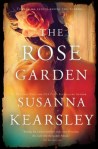
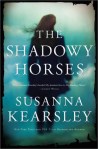
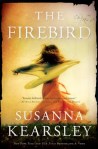
The Splendour Falls is actually an older book by Susanna Kearsley, first published in 1995, which is getting a spiffy new cover and relaunch this coming January. Sourcebooks has been reissuing the author’s earlier works over the past several years, mixed in with some newer ones, and just looking at covers, the results are phenomenal. I mean, they’re all so pretty, I just have to have them on my shelf!

But hey, it’s about more than just looks! I’ve read all of the above (except for The Firebird, which I hope to get to in the next few weeks), and have reviews posted for Mariana and The Shadowy Horses. Susanna Kearsley is a lovely writer, with lush and romantic settings and descriptions, a fine touch when it comes to tugging at the heartstrings, and a keen ability to weave historical threads into contemporary stories. At this point, she’s really one of my auto-buy authors, so naturally I’ll be reading The Splendour Falls once it’s reissued in January!

What are you wishing for this Wednesday?

Looking for some bookish fun on Thursdays and Fridays? Come join me for my regular weekly features, Thursday Quotables and Flashback Friday! You can find out more here — come share the book love!

♥♥♥♥♥♥♥♥

Do you host a book blog meme? Do you participate in a meme that you really, really love? I’m building a Book Blog Meme Directory, and need your help! If you know of a great meme to include — or if you host one yourself — please drop me a note on my Contact page and I’ll be sure to add your info!

Book Review: The Lover’s Dictionary by David Levithan

Book Review: The Lover’s Dictionary by David Levithan

The Lover's DictionaryI’m so glad that I finally picked up a copy of this remarkable book — one of the few remaining books by David Levithan that I had yet to read.

David Levithan is the supremely talented author of incredibly fine works of young adult fiction, as well as an editorial director at Scholastic. But in The Lover’s Dictionary, David Levithan does something completely different: He writes for grown-ups.

To be clear: The Lover’s Dictionary isn’t a YA book that adults will also love. It is a mature look at adult love, and it is astounding.

Am I gushing yet? Because I feel like I’m gushing.

This is a novel, but the title doesn’t lie: It is a novel written in dictionary format. Each page contains an entry — at the least a few lines, at the most a page or two — going from A to Z, offering a word and its part of speech, followed by simply sensational definitions.

From aberrant to zenith, The Lover’s Dictionary tells the story of a relationship, not in chronological order, but in alphabetical order.

The two main characters remained unnamed. All we know is that this man and this woman meet online, begin dating, fall in love, live together, and then deal with what living together and loving together really means.

It’s beautiful and it’s unpredictable. It’s also disturbing and even heartbreaking.

Because the book is written alphabetically, there’s a strange sense of dislocation and confusion throughout. Wait, she cheated? When, exactly? Oh, they had a beautiful day in the park. But was that before or after? When they talk about having hope, are they in the early days, or the days that might possibly be too late?

But isn’t real life full of dislocation and confusion? Real relationships don’t evolve along a timeline, nicely following an outline like the tidy plot of a movie. There are ups and downs, reversals and collapses, leaps forward, near misses. It doesn’t have to go in order to make sense.

What we the readers are left with is a story of two people who seem to love each other intensely, but who also occasionally irritate each other and hurt each other and wish the other person would change, either a lot or a little.

Little snippets of the relationship just feel so real:

belittle, v.

No, I don’t listen to the weather in the morning. No, I don’t keep track of what I spend. No, it hadn’t occurred to me that the Q train would have been much faster. But every time you give me that look, it doesn’t make me want to live up to your standards.

Who hasn’t had these types of highs and lows, even in the same day, in a long-term relationship:

commonplace, adj.

It swings both ways, really.

I’ll see your hat on the table and I’ll feel such longing for you, even if you’re only in the other room. If I know you aren’t looking, I’ll hold the green wool up to my face, inhale that echo of your shampoo and the cold air from outside.

But then I’ll walk into the bathroom and find you’ve forgotten to put the cap back on the toothpaste again, and it will be this splinter that I just keep stepping on.

David Levithan knows words. I’ve admired his use of language in his YA novels as well, and here his verbal flourishes are on full display. He delves into the inner lives of words, twists them apart and finds their hidden selves, finds connections in the most unlikely of places. It’s beautiful to behold, even apart from the story itself, how the author turns the use of everyday language into an elevated art form.

Meanwhile, the story itself is gritty and often sad, yet has moments of real romance, humor and beauty. Interestingly, it’s The Lover’s Dictionary, not The Lovers’ Dictionary. That apostrophe placement makes a big difference. The male narrator is a writer, and this is his record of the relationship. Is he building a case? Is he writing a love letter? Is this a memory or a real-time journal? We don’t know. We don’t see both sides of the story. We just see him, with his devotion and his exasperation, addressing his thoughts to her, with hope and with love.

It’s one of the most unusual books I’ve ever read, but it truly works.

And now I really am gushing.

Clearly, I love this book. It’s not long (211 pages in the hardcover edition), but it’s no more than a reading session of an hour or two, given the white spaces and breathing room around each dictionary entry. Don’t rush, though. Because it’s not chronological, much is open to interpretation. Was this referring to that? Or maybe to that one there? So savor, enjoy the language, puzzle out the connections in time, and then maybe flip back through one more time to see if you still think the same events occurred in the same order, for the same reasons and with the same outcomes. I know I changed my mind a few times along the way.

A final note: If you haven’t had the pleasure, don’t miss out on David Levithan’s young adult novels. His gift for language and his commitment to getting to the essence of communications shine through in everything he writes. If you’re interested, check out my reviews of some of his other books:

Nick & Norah’s Infinite Playlist
(co-authored with Rachel Cohn)
Every Day
Two Boys Kissing

_________________________________________

The details:

Title: The Lover’s Dictionary
Author: David Levithan
Publisher: Farrar, Straus and Giroux
Publication date: 2011
Genre: Adult fiction
Source: Library

Fangirling with the Doctor

I couldn’t sleep last night, and maybe it’s because my head was filled with visions of multiple Doctors, each with his own shiny or banged up but totally lovable TARDIS.

(If you’re not a fan of Doctor Who, go ahead and click on something else. Really, I don’t mind. Excuse me my moment of fangirlishness!)

Last night was the theatrical screening of The Day of the Doctor, and it just could not have been more delightful.

The show itself was better than I’d even hoped. Seeing Ten and Eleven together was brilliant, and John Hurt was perfect. And Billie Piper! I’d heard she would be in it, but I was expecting Rose Tyler… and instead she was not Rose, and she was still wonderful.

Listen, I have nothing super meaningful to say about how this episode changes everything, what it means for the overall mythology, and where it goes from here. There are plenty of folks writing oodles upon oodles of essays, reviews, and critiques who really do know the Who-verse better than I do, and I gladly tip my fez to all of them.

All I want to say is: Last night was a perfect example of why I love being connected to a fandom.

tardis

I wore my Van Gogh TARDIS. Subtle, yet elegant, wouldn’t you say?

On a random Monday evening, to spend the night at a movie theater surrounded by people who love what I love — that’s bliss.

We could exchange knowing nods over clever wordplay while waiting in the popcorn line. Gaze admiringly at the committed souls decked out in full-on steampunk gear. Admire the clever T-shirts. Say “awwwww” over the 10-year-old boy in a tweed jacket and bowtie. Giggle over all the people with sonic screwdriver ringtones.

It was one of those events where you just know you’re surrounded by your people. And it felt great.

Except for the woman sitting behind me who wouldn’t STFU. See, that doesn’t happen in my living room. Other than that, however… it was kind of perfect.

We cheered when each new/old Doctor appeared on screen. A glimpse of Twelve’s eyes! All of the earlier Doctors on screen! Silly sight gags with sonic screwdrivers! I’ve rarely sat with a happier crowd. All the feels, truly.

I’ll admit that I like, but I don’t love, the Eleventh Doctor. Much more of a Nine or Ten fan, really. And yes, I’d occasionally zone out during some of the more convoluted recent plotlines. But Doctor Who doesn’t have to make sense. It’s going strong at 50, and I can’t wait to see what happens next. Bring on the Twelfth Doctor!

Geronimo!

Allons-y!

Goodreads Is Damaging My Calm Today

I’m not anti-Goodreads. In fact, I usually love the site. I’ve managed to sidestep all the upset about the policy changes in recent months, especially the uproar over deleted shelves and reviews. I participate in Goodreads because I love tracking my own reading, keeping up with friends’ reading lists and reviews, and staying on top of new releases that I might otherwise miss. No drama for me, please! I have enough in my real life, thanks.

So what’s bothering me today?

It may seem like a minor point, but my issue today is with… (drumroll, please!) … SORT ORDER.

Huh? You may well ask…

On any book’s page, we get a synopsis and some details. Scrolling down, we see My Review, Friend Reviews, Lists with This Book, and then Community Reviews. And it’s in the Community Reviews section that I start getting annoyed. I supppose that it’s my own damn fault that until today, I never noticed that there’s a sort option for how Community Reviews are displayed. The choices are newest, oldest, and default. So what’s “default”? Goodreads describes its default sort option thusly:

The default sorting algorithm on Goodreads uses a variety of factors to determine the most interesting reviews. The recipe for our special sauce is a closely guarded trade secret, but the ingredients are: length of the review, number of people who liked it, recency of the review, popularity of the reviewer (i.e., number of people who have liked reviews by that person across all books).

So what’s my problem with this? The problem, for me, is that the review(s) that get the most prominence in the default sort order tend to be by reviewers who write the type of reviews that I personally try to avoid like the plague.**

**Hey, let’s be clear: To each his/her own! It takes all types, and I respect everyone’s right to write whatever they want, however they want! But I have preferences, and I know what I don’t like to read, and that’s all I’m saying here.

Again, just personal preference, but I can’t stand ranty reviews, the “look at me, I’m so clever” reviews — and I know some people love ’em, but I just don’t like looking at reviews with graphics/GIFs.

But beyond all that, I see no value in tearing down a book, and by extension, its author, for the sake of showmanship or attention-grabbing. But for whatever reason, it’s exactly these type of reviews on Goodreads that seem to get tons of “likes” — and therefore, those are the reviews that show up at the top of the sort order.

For a lot of books that are well-received overall or have a huge number of reviews, perhaps that doesn’t matter so much. But for a book by a new author that hasn’t “traveled” much yet, having a harshly negative (but highly “liked”) review pop up first in the default sort can only be damaging to its success. Let’s be honest: How far down do you scroll once you get to Community Reviews? Probably not that far, right? So if the first couple of reviews that show up are intensely negative, how likely are you to keep reading?

Don’t throw things at me when I state that I like Amazon’s lay-out better, where we see a graph of the reviews (how many per star category) prominently displayed above the individual reviews. Did you know you can read Goodreads reviews that way too? I didn’t, before today. Because it’s not obvious, and I just never thought to look. But yes, underneath the Community Reviews header, there’s an option for Rating Details, which displays all reviews sorted by stars.

Lo and behold! The picture really changes if you look at a review via Rating Details. In the case of the book that first set me off today, here’s what happened:

Under Community Reviews, by default sort, the first review is a one-star rant that, among other things, compares reading the book to “eating a rectum”. (There’s a lot more to the metaphor, but I’ll spare you.) Unbelievably, this review received 55 likes and 43 comments (many by the reviewer herself). Again, just to be clear, I respect the reviewer’s right to review the book as she sees fit. But is it fair to potential readers to have this review appear on top by default, unless they specifically change their sort order?

Looking at the very same book, if I click on the Rating Details menu choice, suddenly the book appears in a whole new light! 59% of reviewers gave the book either a 4 or 5 star rating, and only 4% of the reviews were 1 star. Wow, a lot of people liked this book! But you wouldn’t know that based on the default sort.

And when I open the page for other books I’ve read recently, the pattern seems to hold. For whatever reason, the ranty, negative reviews seem to get a lot of likes, which by the Goodreads “special sauce” formula means they rise to the top of the sort.

I don’t know why this particularly set me off today. Well, yeah, I do. I just felt bad, that’s all. I felt bad for the author who poured her heart into a first novel, and whose book’s page consistently shows this awful rant at the top of the Community Review section. How disheartening!

Like I said, I respect every reader’s right to give out one-star ratings as well as five-star ratings. And if you enjoy reading ranty reviews, by all means, have fun! But this super secret algorithm of Goodread’s seems a bit unfair in the long-run, as the picture that ends up being painted isn’t necessarily backed up by the totality of reviews given.

So, what do I want? I guess I’d like Goodreads to change their page lay-out, actually, although I suppose that’s wishing for the stars. Still, I think there must be a way to display data initially that doesn’t skew one way or the other, and that lets readers decide what type of reviews they want to focus on. I’m all for the fair and open exchange of ideas, but sometimes it’s the presentation that ends up mattering the most.

And when it comes down to deciding whether to give a new book a try, particularly when it’s by an author we’ve never read before, are we going to try the book that seems to have received very good reviews from most of its readers? Or are we going to read the book compared to eating very unsavory body parts? Yeah, that’s what I thought.

This is mostly a reminder to myself to dig deeper, I suppose, and not be unduly influenced by the first review I see, no matter how many “likes” it has. But for those of you — like me — who never paid enough attention to know that you have a choice, I have just two magical, important, life-changing words for you:

Sort order.

_________________________________

A note after the fact: When I posted this earlier today, I had a momentary brain lapse resulting in not quite getting the post title to say what I’d meant it to say. In other words, I screwed up my pop culture reference! Couldn’t rest until I fixed it. Aaah. All better now.

The Monday Agenda 11/25/2013

MondayAgendaNot a lofty, ambitious to-be-read list consisting of 100+ book titles. Just a simple plan for the upcoming week — what I’m reading now, what I plan to read next, and what I’m hoping to squeeze in among the nooks and crannies.

After spending two days in bed with a fever and chills (woe is me!), I’m getting back in the swing of things. I’d like to say that it was refreshing to be off-line for a couple of days — but really, it was mostly just frustrating and left me with a back-ache. On the plus side, I did get a lot of reading done! Without two days in bed, I probably wouldn’t have finished anything this week… so, yay?

How did I do with last week’s agenda?

ShadowsThe Thinking Woman's Guide to Real Magic

Shadows by Robin McKinley: DNF. I stuck with Shadows through 150 pages, but ultimately had to face the fact that it just wasn’t working for me. Unfortunately, I never felt involved with the characters and found the world-building in this book confusing and slow to develop. I’m generally a big fan of Robin McKinley and have really loved many of her books, but — sad to say — Shadows just isn’t for me, and I won’t be finishing it.

The Thinking Woman’s Guide to Real Magic by Emily Croy Barker. Done! My review is here.

Hoot by Carl Hiaasen: Well, we should have been done with Hoot this week… but I was too out-of-commission to finish the last couple of chapters this weekend. My kiddo and I are both really hooked on the story — it’s totally fun, with lots of laughs and some good heart-felt content too.

Fresh Catch:

Nada! I didn’t go the library, and I didn’t buy any books. What’s the world coming to?

What’s on my reading agenda for the coming week?

The Lover's DictionaryRose Under FireThe Universe Versus Alex Woods

I’m planning to start with The Lover’s Dictionary by David Levithan.

Next — FINALLY — I’ll be reading Rose Under Fire by Elizabeth Wein. I loved Code Name Verity so much, and have been really looking forward to this one for months.

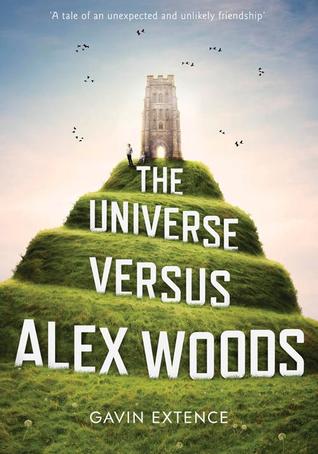
And if there’s time, I’ll read The Universe Versus Alex Woods by Gavin Extence, which has been sitting on my Kindle for far too long now.

So many book, so little time…

That’s my agenda. What’s yours? Add your comments to share your bookish agenda for the week.

boy1

Book Review: The Thinking Woman’s Guide To Real Magic Emily Croy Barker

Book Review: The Thinking Woman’s Guide To Real Magic by Emily Croy Barker

16158565I’ll admit right off that I was predisposed to like this book. I mean, is that an awesome title or what?

So what’s it all about? In The Thinking Woman’s Guide to Real Magic, we meet main character Nora, who is a stuck-in-a-rut grad student at the start of the book. Her dissertation is not going well, she’s been dumped by her boyfriend, and to top it all off, he has the nerve to show up at the weekend wedding she’s attending up in the mountains. Peeved and fed up, Nora sets off on an early-morning walk and gets lost. Really lost.

She doesn’t realize it for quite some time, but Nora has wandered into another world. Here, at the beginning at least, everything is beautiful and serene. Nora finds herself within the walls of a glamorous estate owned by the elegant, enigmatic Ilissa, who takes an immediate shine to Nora and convinces her to stay just a bit longer. Everything in Ilissa’s world is beautiful. The people are gorgeous and fashionable, there is a party every night, and Nora is, much to her own surprise, the belle of the ball. Everyone wants to know her, to dance with her, to talk to her. It’s all just too perfect to believe — and yet Nora does believes it all. But before long, an uglier side comes to light, and eventually Nora grasps at the help offered her by a stranger in order to be rescued from Ilissa’s clutches.

Once rescued, Nora finds herself in the castle belonging to Aruendiel, a famed and mysterious magician, who removes layers of enchantments from Nora and heals her physical wounds as well. As it turns out, Nora had been in the clutches of the Faitoren, a powerfully magical people who are imprisoned in their own lands by magical treaties and wards, and whose queen, Ilissa, wants desperately to break free. Nora finds shelter with Aruendiel, and eventually convinces him to begin teaching her magic — real magic, involving working complex spells in harmony with the elements, as opposed to lower-level wizardry, which relies upon calling upon spirits and demons, and carries much less status and power.

From there, we see Nora progress in her magic lessons, accompany Aruendil to court and socialize with the upper crust, and get involved in a daring rescue and a land battle, among other escapades. Along the way, Nora’s relationship with the prickly Aruendil develops beyond pupil/master to something more complex, involving respect, honesty, and perhaps even… love?

Enough with the summary! Let’s get down to business. Here’s what worked especially well for me:

Nora herself is a nice, refreshing main character: a smart woman with a mind of her own, who wants to feel purposeful and respected, and demands to be treated with consideration. It’s disconcerting to see how far from herself Nora ends up while under enchantment; even before she realizes that something is wrong, we can tell simply by how mindless she seems, reflecting only on the sparkly clothes and jewels and adornments of Ilissa’s world, never seeing beyond the surface of the endless fun.

I liked the magic lessons very much, which make it clear that in this world, magic is a science. There are scholarly papers and research to be studied — it’s as much an intellectual pursuit as a question of mysterious powers or tricks.

The author makes nice use of literary references, sprinkling quotes and passages throughout Nora’s thoughts — as is appropriate for an English literature Ph.D. candidate! As Nora works on translating a copy of Pride and Prejudice into the language of her new world, it’s a nice to way to set up the not-too-obvious parallels between P&P and Nora’s own current situation, coming close but not quite crossing the line into heavy-handedness.

A few things worked less well for me:

For one, this is a long book — much longer than necessary, in my opinion. At 563 pages, the book has a lot of what felt like filler to me, particularly the sections focusing on Nora’s daily chores, life in the village, etc. There’s a lot of detail, and a lot happens, but as a whole, it probably should have been leaner and tighter.

Nora stumbles into this new and strange world — but it’s really not so strange for anyone who’s read any other works of fantasy. The world in which Nora finds herself seems like a pretty standard medieval setting. There are lords and manors, negotiated marriages in order to form alliances and control estates, court gossip and shenanigans, knights and battles. It’s entertaining to read about, but there was nothing that felt particularly new. It wasn’t hard to predict the rumors that would surround Nora’s sheltering with Aruendiel, the breaches of protocol that would ensue when Nora felt the need to be entrepreneurial, or the social niceties that must be observed at all times.

Finally — shoot me now! — there was no ending! There was nothing to indicate that this book is the first in a series, but the ending was so entirely open-ended that I can only imagine that a sequel, or several sequels, must be in the works. As I’ve complained many a time, I really can’t stand reading a book that’s to be continued without knowing up front that that’s what I’m getting involved in. This book ends with the closing of a chapter in Nora’s story, but makes it clear that there’s more to come, and much to be revealed and resolved. And honestly, I felt a bit cheated to have read such a big book and then not get closure at the end.

Still, all that being said, I enjoyed The Thinking Woman’s Guide to Real Magic very much. There’s some lovely writing here, with moments of insight as well as humor. A few choice examples:

In all the stories in literature and mythology about women being offered as tribute to beasts or monsters, no one ever spelled out exactly what that meant, or what it might be like for the woman afterward.

Or on a lighter note:

“I worked as a cook, a couple of years ago,” Nora said. “Before I was, um, a fairy princess.”

“Ah,” said Mrs. Toristel, as though this were a well-established career progression.

And finally:

There was her low-grade obsession with Aruendiel. Nora had given up calling it a crush; it had lost some of its urgency, and it seemed indecorous now that he was officially her teacher. (Even across the worlds, she felt the invisible constraints of the sexual harassment policy of the Graduate College of Arts and Sciences.)

Despite my quibbles, I do recommend this book. It’s a treat to read about fantasy worlds from the perspective of a very smart, very strong woman. I very much enjoyed Nora’s fight to find a place for herself and her refusal to accept the subservient role that seems to be all that’s available to her in this new and strange world. Assuming there really is a sequel in the works, I look forward to seeing what happens next, knowing that Nora’s adventures have only just begun.

_________________________________________

The details:

Title: The Thinking Woman’s Guide To Real Magic
Author: Emily Croy Barker
Publisher: Pamela Dorman Books
Publication date: 2013
Genre: Adult/Fantasy
Source: Review copy courtesy of the publisher via NetGalley

Flashback Friday: The Color of Water

Flashback Friday is my own little weekly tradition, in which I pick a book from my reading past to highlight — and you’re invited to join in!

Here are the Flashback Friday book selection guidelines:

  1. Has to be something you’ve read yourself
  2. Has to still be available, preferably still in print
  3. Must have been originally published 5 or more years ago

Other than that, the sky’s the limit! Join me, please, and let us all know: what are the books you’ve read that you always rave about? What books from your past do you wish EVERYONE would read? Pick something from five years ago, or go all the way back to the Canterbury Tales if you want. It’s Flashback Friday time!

Yesterday it was announced that James McBride was awarded the National Book Award for his most recent novel, The Good Lord Bird. In honor of his award, I thought I’d flash back to the author’s first best-seller: his non-fiction tribute to his mother, which was published more than 15 years ago:

The Color of Water: A Black Man's Tribute to His White Mother

The Color of Water: A Black Man’s Tribute to His White Mother
by James McBride
(published 1996)

Synopsis (Amazon):

Who is Ruth McBride Jordan? A self-declared “light-skinned” woman evasive about her ethnicity, yet steadfast in her love for her twelve black children. James McBride, journalist, musician, and son, explores his mother’s past, as well as his own upbringing and heritage, in a poignant and powerful debut, The Color Of Water: A Black Man’s Tribute to His White Mother.The son of a black minister and a woman who would not admit she was white, James McBride grew up in “orchestrated chaos” with his eleven siblings in the poor, all-black projects of Red Hook, Brooklyn. “Mommy,” a fiercely protective woman with “dark eyes full of pep and fire,” herded her brood to Manhattan’s free cultural events, sent them off on buses to the best (and mainly Jewish) schools, demanded good grades, and commanded respect. As a young man, McBride saw his mother as a source of embarrassment, worry, and confusion—and reached thirty before he began to discover the truth about her early life and long-buried pain.

In The Color of Water, McBride retraces his mother’s footsteps and, through her searing and spirited voice, recreates her remarkable story. The daughter of a failed itinerant Orthodox rabbi, she was born Rachel Shilsky (actually Ruchel Dwara Zylska) in Poland on April 1, 1921. Fleeing pogroms, her family emigrated to America and ultimately settled in Suffolk, Virginia, a small town where anti-Semitism and racial tensions ran high. With candor and immediacy, Ruth describes her parents’ loveless marriage; her fragile, handicapped mother; her cruel, sexually-abusive father; and the rest of the family and life she abandoned.

At seventeen, after fleeing Virginia and settling in New York City, Ruth married a black minister and founded the all- black New Brown Memorial Baptist Church in her Red Hook living room. “God is the color of water,” Ruth McBride taught her children, firmly convinced that life’s blessings and life’s values transcend race. Twice widowed, and continually confronting overwhelming adversity and racism, Ruth’s determination, drive and discipline saw her dozen children through college—and most through graduate school. At age 65, she herself received a degree in social work from Temple University.

Interspersed throughout his mother’s compelling narrative, McBride shares candid recollections of his own experiences as a mixed-race child of poverty, his flirtations with drugs and violence, and his eventual self- realization and professional success. The Color of Water touches readers of all colors as a vivid portrait of growing up, a haunting meditation on race and identity, and a lyrical valentine to a mother from her son.

I think the synopsis speaks for itself! I read The Color of Water with a book group about ten years ago, and we were all just blown away by the writer’s honesty, his absolute love and respect for his mother, the insights on what life was like for a boy growing up in such a unique family — and most of all, just really inspired and impressed by Ruth’s courage, love, and determination.

I’m not a big non-fiction reader in general, but every once in a while I’m happy to make an exception. The Color of Water is a memoir that’s as compelling as fiction, with fascinating characters and their incredible journeys. It really is too good to be missed.

Happy Friday, and enjoy your flashbacks!

♥♥♥♥♥♥♥♥

Do you host a book blog meme? Do you participate in a meme that you really, really love? I’m building a Book Blog Meme Directory, and need your help! If you know of a great meme to include — or if you host one yourself — please drop me a note on my Contact page and I’ll be sure to add your info!