
Take A Peek Book Review: At the Edge of Summer by Jessica Brockmole

“Take a Peek” book reviews are short and (possibly) sweet, keeping the commentary brief and providing a little peek at what the book’s about and what I thought.

At the Edge of Summer

Synopsis:

(via Goodreads)

Luc Crépet is accustomed to his mother’s bringing wounded creatures to their idyllic château in the French countryside, where healing comes naturally amid the lush wildflowers and crumbling stone walls. Yet his maman’s newest project is the most surprising: a fifteen-year-old Scottish girl grieving over her parents’ fate. A curious child with an artistic soul, Clare Ross finds solace in her connection to Luc, and she in turn inspires him in ways he never thought possible. Then, just as suddenly as Clare arrives, she is gone, whisked away by her grandfather to the farthest reaches of the globe. Devastated by her departure, Luc begins to write letters to Clare—and, even as she moves from Portugal to Africa and beyond, the memory of the summer they shared keeps her grounded.

Years later, in the wake of World War I, Clare, now an artist, returns to France to help create facial prostheses for wounded soldiers. One of the wary veterans who comes to the studio seems familiar, and as his mask takes shape beneath her fingers, she recognizes Luc. But is this soldier, made bitter by battle and betrayal, the same boy who once wrote her wistful letters from Paris? After war and so many years apart, can Clare and Luc recapture how they felt at the edge of that long-ago summer?

Bringing to life two unforgettable characters and the rich historical period they inhabit, Jessica Brockmole shows how love and forgiveness can redeem us.


My Thoughts:

The synopsis pretty much covers it all. At the Edge of Summer is a book about two people who meet one summer, a 15-year-old orphaned girl and a 19-year-old college student. They form a strong bond and help each other discover crucial aspects of themselves, then spend years apart, separated first by geography and then by war.

The story should have been much more moving than I found it. I simply didn’t connect with the characters in the first section of the book, during their early summer together, so I never really invested in their connection or their relationship. Clare’s artistic aspirations didn’t resonate with me, and I couldn’t envision her as a real person.

Luc is much more sympathetic, and the portions of the story about his wartime experiences are quite sad to read. Still, something about this book just left me cold.

I was interested to see the depiction of the real-life studio in Paris that specialized in masks for men disfigured during the war. I’ve encountered versions of this story before, most recently in a short story in the Fall of Poppies collection (to which Jessica Brockmole contributed a terrific story, by the way). The studio really existed, and its real-life founder, Anna Coleman Ladd, is included in this novel as well.

Stories of the First World War and the horrific experiences of the soldiers, on the battlefields, in the trenches, and upon their return to society, are always moving and startling to read about. Somehow, though, At the Edge of Summer failed to fully engage my emotions. I consider it a decent novel, but wouldn’t go farther than saying that it was a fine read and I don’t regret the time spent on it.

_________________________________________

The details:

Title: At The Edge of Summer
Author: Jessica Brockmole
Publisher: Ballantine
Publication date: May 17, 2016
Length: 336 pages
Genre: Historical fiction
Source: Review copy courtesy of the publisher via NetGalley
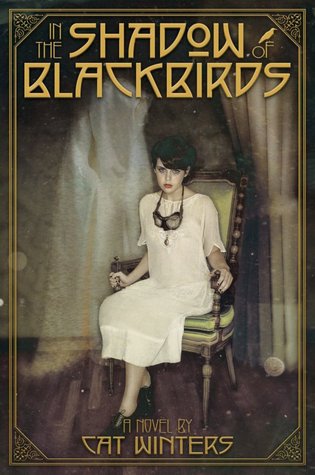
Take A Peek Book Review: In the Shadow of Blackbirds by Cat Winters

“Take a Peek” book reviews are short and (possibly) sweet, keeping the commentary brief and providing a little peek at what the book’s about and what I thought.

In the Shadow of Blackbirds


Synopsis:

(via Goodreads)

In 1918, the world seems on the verge of apocalypse. Americans roam the streets in gauze masks to ward off the deadly Spanish influenza, and the government ships young men to the front lines of a brutal war, creating an atmosphere of fear and confusion. Sixteen-year-old Mary Shelley Black watches as desperate mourners flock to séances and spirit photographers for comfort, but she herself has never believed in ghosts. During her bleakest moment, however, she’s forced to rethink her entire way of looking at life and death, for her first love—a boy who died in battle—returns in spirit form. But what does he want from her?

Featuring haunting archival early-twentieth-century photographs, this is a tense, romantic story set in a past that is eerily like our own time.


My Thoughts:

Bravo to Cat Winters for creating a chilling yet realistic world in her debut novel! In the Shadow of Blackbirds is set in a time of absolute horror in the United States, as the awful combination of a brutal war and a deadly flu pandemic makes death feel like a constant presence. The author does a masterful job of creating the feel of the time period, with paranoia and terror rampant in the cities and streets, and with no safe place to hide.

Surely, though, I must have stolen into the future and landed in an H. G. Wells-style world — a horrific, fantastical society in which people’s faces contained only eyes, millions of healthy young adults and children dropped dead from the flu, boys got transported out of the country to be blown to bits, and the government arrested citizens for speaking the wrong words. Such a place couldn’t be real. And it couldn’t be the United States of America, “the land of the free and the home of the brave.”

But it was.

I was on a train in my own country, in a year the devil designed.

1918.

Mary Shelley is a smart, courageous young woman who sees her whole world turned upside down as her father is imprisoned for treason after daring to speak out against war. As she flees Portland to take shelter with her aunt in San Diego, she seeks word of the boy she loves, only to be told that he’s died a hero’s death in the war. But as Stephen visits her in her dreams and then in waking moments, she realizes that her skepticism about spiritualism may be challenged by a voice trying to reach her from the other side.

This book conveys so much without ever feeling like a history lesson. Through Mary Shelley’s experiences, we see the impact of the war on the homefront, the sickeningly high death toll of the influenza epidemic and the futility of the home remedies used to ward off disease (garlic-flavored chewing gum, bathing in onion water — ugh), the horrible condition of the injured, maimed soldiers home from the battlefields, and the desperation of the bereaved that makes them easy prey for charlatans claiming to be able to channel their dead loved ones.

The plot is tautly woven and fast-paced, but never at the expense of character development. We learn so much about Mary Shelley’s character and her relationship with Stephen through their letters sprinkled throughout the book, as well as by seeing Mary Shelley’s determination to figure out the secrets surrounding Stephen’s messages and help him find peace.

I highly recommend In the Shadow of Blackbirds for anyone who enjoys historical fiction — as well as for anyone who enjoys a good, suspenseful tale, grounded in reality but with a hint of the supernatural. Cat Winters is an extremely talented author, and I can’t wait to read more of her work!

_________________________________________

The details:

Title: In the Shadow of Blackbirds
Author: Cat Winters
Publisher: Amulet Books
Publication date: April 2, 2013
Length: 387 pages
Genre: Young adult/historical fiction
Source: Library

Audiobook Review: Maisie Dobbs by Jacqueline Winspear

Maisie DobbsWhen we first meet Maisie Dobbs, it is 1929, and she is opening up her London office for the very first time. Maisie, a young woman of about 30, is going into business as a private investigator, thanks to the tutelage of her mentor, Maurice Blanche, and the sponsorship of her patroness, Lady Rowan.

Maisie is an extremely intelligent woman, reserved by nature, strikingly attractive — and it’s immediately apparent that this is a person who has been hurt deeply in her lifetime. That doesn’t stop Maisie, though. She is more than ready when her first client walks through her door, hiring her to investigate his wife’s long afternoons away from home and to determine if she’s being unfaithful.

What Maisie discovers is not infidelity, but yet another lost soul still bearing the wounds of the Great War that ended ten years earlier. As Maisie pursues the trail of clues, her memories of her own wartime experiences come flooding back, demanding to be faced after all this time.

Maisie Dobbs is constructed around a mystery — who is the man whose grave the client’s wife cries over, and why does his gravestone list only his first name? The solution to this case leads Maisie back into the world of wounded soldiers and the terrible sacrifices and pain suffered by those who made it back home.

At the heart of the book lies Maisie’s own story. As her investigation begins to relate to the war, the center third of the book shifts scene and time and takes us back to Maisie’s teen years, when she works as a housemaid in Lady Rowan’s home. Maisie’s eagerness to learn leads her to an education sponsored by Lady Rowan, eventually entering college at Cambridge before the harsh reality of war causes her to change path.

Maisie abandons her college studies and enrolls in nursing school, ultimately training as a battlefield nurse and getting sent to a field hospital on the frontlines in France. I won’t go into too much detail, other than to say that Maisie’s experiences there lead to a tragic loss that has haunted her ever since. And in investigating the case of the soldier’s grave, Maisie is finally forced into confronting her sad, painful history.

I picked up this book not knowing what to expect. I had heard of the Maisie Dobbs series, and thought this first book would be a more or less straightforward detective story. What really impressed me about Maisie Dobbs is how deep and layered the story is. While Maisie is indeed an investigator, the setting and the time period are gateways into an examination of the horrors and tragedies of the terrible losses suffered during World War I — and the ongoing pain and suffering experienced by those who came home to face a lifetime of disfigurement and isolation.

Through Maisie’s thoughts, we come to feel the terrible depth of the tragedy as experienced on a very personal level, and yet there’s also hope. While Maisie carries emotional wounds that will always be with her, she’s also creating a new life in a new era, using her brains and her inner strength to face life on her own terms.

The audiobook narrator, Rita Barrington, does a lovely job of capturing Maisie’s inner dialogue, as well as voicing the people in her life. She does an excellent older, aristocratic voice for Lady Rowan, and a cheeky, working class voice for Maisie’s assistant Billy. Even while narrating conversations between multiple characters, it wasn’t hard to follow or to figure out who was talking at any given time. I liked the clarity and sweetness of Maisie’s voice, and the gentleness with which she speaks to all, especially to wounded soldiers and others in need of her care.

According to Goodreads, there are 11 Maisie Dobbs novels currently in print, with a 12th scheduled for release in 2016. I don’t really know where the series will go from here: Will it be a more traditional mystery series, with a new case forming the focal point of each book? Will Maisie’s connections to the war continue to inform the storylines? I suppose I could read the synopses of the next few books in the series, but really, I’d rather just wait and find out for myself.

I’m quite sure that I’ll continue with this series, which has such a well-written start in this first book. The emotional depths of this novel make it an affecting and throught-provoking read. There’s something about WWI fiction that is utterly compelling and tragic, and I found myself very much enthralled by the character of Maisie Dobbs and her fascinating life. Hearing the voices of Maisie and the other characters, as portrayed in the audiobook, made the experience even richer, and I look forward to listening to the 2nd book as soon as possible.

_________________________________________

The details:

Title: Maisie Dobbs
Author: Jacqueline Winspear
Narrator: Rita Barrington
Publisher: Penguin
Publication date: January 1, 2003
Audiobook length: 10 hours, 1 minute
Printed book length: 309 pages
Genre: Historical fiction; crime/mystery series
Source: Audible

Book Review: The Girl You Left Behind by Jojo Moyes

Book Review: The Girl You Left Behind by Jojo Moyes

The Girl You Left BehindQuick: When you think of looted art and reparations, what do you think of? Nazi Germany? So do most of the bystanders in this novel, which mixes a modern courtroom drama and love story with a devastating glimpse back at a wartime tragedy, with a missing (perhaps stolen) painting serving as the focal point. The twist in The Girl You Left Behind is that the painting in question went missing during the German occupation of northern France during the first World War — but that doesn’t stop popular opinion from tarnishing the main character’s reputation by accusing her of exploiting Nazi theft for her own personal gain. To say it’s complicated is putting it mildly.


In The Girl You Left Behind, we follow two timelines. In 1916, we meet Sophie Lefevre, devoted wife of up-and-coming artist Edouard, who is serving on the front lines with the French forces battling the invading German army. Sophie has been left behind in her home village, helping her sister manage the family inn and struggling to survive with ever-dwindling rations and a hostile German battalion occupying the town. Beautiful young Sophie catches the eye of the German Kommandant, and he is mesmerized as well by Edouard’s portrait of Sophie, which hangs in a back hallway of the inn. Ultimately, Sophie is forced into a decision that pits her own life and honor against the survival of her family and her husband.

Meanwhile, in modern day London, young widow Liv Halston lives alone in a beautiful glass house built by her late husband David, a remarkable and renowned architect who died suddenly four years previously. On their honeymoon, David had bought a beautiful portrait of an enigmatic young woman as a gift for Liv, and this portrait is literally the only spot of color in Liv’s bleak world. Liv meets handsome, gallant Paul and finally feels a spark of life returning — but Paul is an ex-cop now specializing in tracking and returning works of art stolen during wartime. When he is hired by the Lefevre family to find their missing painting and realizes it’s in Liv’s possession, legal drama threatens their blossoming love — as well as David’s legacy and Liv’s reputation.

The Girl You Left Behind tells both parts of the story quite effectively. The first several chapters are devoted to Sophie, and it was somewhat wrenching to have to leave her once the narrative switched to the modern era. Likewise, Liv’s story is affecting and engrossing, and I soon wanted to know much more about this lonely woman and the husband she’d lost. Sophie and Liv are both strong women dealt a series of painful blows in horrible circumstances, and in both streams of the story we see how their personal strength informs their decisions and actions.

The moral dilemma posed is an interesting one. It would appear that the Lefevre descendants are seeking the painting for its monetary value alone, whereas Liv truly loves the painting and feels a connection and fondness for Sophie herself, despite knowing nothing about her story until the legal case gets underway. So who is right in this situation? Are the artist’s descendants entitled to the painting based on their assertion that it was stolen during wartime? Or, barring convincing evidence, is Liv entitled to keep this artwork that she cherishes, even knowing that it may have made its way to her through questionable circumstances?

The story is compelling and well thought-out, and the alternating timelines prolong the suspense and the mystery. We know that something terrible happened to Sophie; we know that the painting disappeared; but the how and why of these occurences is not revealed until close to the end of the book. Author Jojo Moyes gives just enough detail to keep us guessing (although I’ll admit that I’d made an assumption about a key revelation that turned out to be correct), and both pieces of the story wrap up in a way that feels both right and satisfying.

My only quibble with this book is that I wanted to know a bit more about the relatives who started the legal proceedings. They’re referred to as descendants of the Lefevre family, but the exact relationship to the artist isn’t revealed, and we never actually meet them other than seeing them on the other side of the courtroom. I would have liked to have seen their role in the story fleshed out. While it’s implied that they’re only in it for the money (and I suppose their motivation is immaterial if the painting is in fact rightfully theirs), it would have helped me view their side of the proceedings more sympathetically if I’d gotten to know them in any way.

That issue aside, I found The Girl You Left Behind to be quite moving and well thought out. It reveals a piece of history that doesn’t get much attention, while hammering home a universal truth about the horror of war and the irreparable damage done to so many lives. In the contemporary pieces of the story, The Girl You Left Behind is also emotionally involving and very interesting as well — as a legal drama, as a love story, and as a portrait of a woman who has to figure out how to live again.

I’ve been hearing a lot about Jojo Moyes this year, especially since the publication of her highly praised novel Me Before You. The Girl You Left  Behind is the first book I’ve read by this author, but it certainly won’t be the last. Jojo Moyes is a skilled storyteller with a great eye for capturing the small details that make a character feel real, and I look forward to exploring more of her work.

__________________________________________

The details:

Title: The Girl You Left Behind
Author: Jojo Moyes
Publisher: Penguin Group/Viking
Publication date: 2013
Genre: Historical/contemporary fiction
Source: Review copy courtesy of Penguin/Viking via NetGalley

Flashback Friday: The Crimson Portait

Flashback Friday is my own little weekly tradition, in which I pick a book from my reading past to highlight — and you’re invited to join in!

Here are the Flashback Friday book selection guidelines:

  1. Has to be something you’ve read yourself
  2. Has to still be available, preferably still in print
  3. Must have been originally published 5 or more years ago

Other than that, the sky’s the limit! Join me, please, and let us all know: what are the books you’ve read that you always rave about? What books from your past do you wish EVERYONE would read? Pick something from five years ago, or go all the way back to the Canterbury Tales if you want. It’s Flashback Friday time!

My pick for this week’s Flashback Friday:

9102

The Crimson Portrait by Jody Shields

(published 2006)

From Goodreads:

Spring 1915. On a sprawling country estate not far from London a young woman mourns her husband, fallen on the battlefields of what has been declared the first World War… But the isolated and eerie stillness in which she grieves is shattered when her home is transformed into a bustling military hospital to serve the war’s most irreparably injured. Disturbed by the intrusion of the suffering men and their caretakers, the young widow finds unexpected solace in the company of a wounded soldier whose face, concealed by bandages, she cannot see. Their affair takes an unexpected turn when fate presents her with an opportunity: to remake her lover with the unwitting help of a visionary surgeon and an American woman artist — in the image of her lost husband. Inspired by the little-known but extraordinary collaboration between artists and surgeons in the treatment of wounded men in the First World War, The Crimson Portrait peels back layers of suspense and intrigue to illuminate the abiding mysteries of identity and desire.

The Crimson Portrait is an atmospheric novel, creating the feeling of life during the Great War. I read this several years ago in the days before Downton Abbey, but now I can’t help but picture this book in a Downton-like setting, with stretchers full of hideously wounded young men filling the elegant rooms of the manor. In The Crimson Portrait, the wounded at this particular estate all suffer from facial injuries, from mild to complete disfigurement. We witness the early stages of facial reconstructive techniques, as doctors and artists work together to alleviate suffering and give these poor young soldiers a chance at something resembling a normal life. Meanwhile, the young widow of the estate sets in motion a plan to alleviate her heartbreak; it’s twisted and unhealthy, sure, but it’s also terribly sad and I couldn’t help but feel compassion for this young woman and her struggle to make sense of her loss.

I always find that WWI-era novels like this one, taking place in the most genteel of settings, pack a huge emotional punch, as they convey the utter horror of war and the mindless tragedy of the losses suffered — all in stark contrast to the lovely greenery of the English countryside. In The Crimson Portrait, we see the waste and ruin of a generation of young men, and the terrible, unending ache left to their survivors. It’s a beautifully written story, fascinating and sorrowful, and I recommend it for anyone interested in reading about that particular time in history.

♥♥♥♥♥♥♥♥

Do you host a book blog meme? Do you participate in a meme that you really, really love? I’m building a Book Blog Meme Directory, and need your help! If you know of a great meme to include — or if you host one yourself — please drop me a note on my Contact page and I’ll be sure to add your info!