Quick, get me a thesaurus! Or, playing word games with ChatGPT

On a whim, I asked ChatGPT to tell me what adjectives I use most often in my book reviews. And lo and behold, I got an answer within seconds.

Photo by Boys in Bristol Photography on Pexels.com

The initial response was this:

On the website Bookshelf Fantasies, some of the most frequently used adjectives in book reviews include:

  • Engaging: Reviews often describe books as engaging, highlighting the reader’s involvement and interest in the story.
  • Enjoyable: Books that were liked or appreciated are often described as enjoyable.
  • Great: This is commonly used to express high praise for the quality of the book or specific aspects like characters or plot.
  • Interesting: Often used to describe intriguing plots or unique story elements that capture the reader’s attention.
  • Memorable: Applied to characters or storylines that leave a lasting impression.

Then I expanded my request, and asked for the top 20 adjectives used, which yielded this response:

To determine the top 20 adjectives used in book reviews at Bookshelf Fantasies, I would need to analyze a large number of their posts in detail. However, I can provide a list based on the most common adjectives observed from the reviews I’ve analyzed so far:

  1. Engaging
  2. Enjoyable
  3. Great
  4. Interesting
  5. Memorable
  6. Gripping
  7. Fascinating
  8. Captivating
  9. Well-written
  10. Absorbing
  11. Intriguing
  12. Charming
  13. Exciting
  14. Thrilling
  15. Powerful
  16. Compelling
  17. Emotional
  18. Satisfying
  19. Thought-provoking
  20. Suspenseful

When I asked for the verbs I use most often in book reviews, the top few answers were not surprising:

  • Enjoy
  • Love
  • Like
  • Recommend

These don’t surprise me — I was already feeling like I use “enjoy” too often, although I haven’t come up with an alternative that works quite as well. Again, per ChatGPT…

Here are some thesaurus synonyms for the verb “enjoy”:

  1. Appreciate
  2. Relish
  3. Savor
  4. Delight in
  5. Revel in
  6. Take pleasure in
  7. Like
  8. Love
  9. Admire
  10. Fancy

These synonyms capture various nuances of the word “enjoy,” ranging from simply liking something to taking deep pleasure or satisfaction in it.

I can’t imagine using most of these… would I ever say that I “fancied” a book or “reveled in” a story?

Back to my adjectives…

“Enjoyable” pops up in the #2 position — I’m surprised to see that I use “engaging” even more. “Great” and “interesting” show up as numbers 3 and 4, and I don’t find that particularly “memorable” (#5).

“Great” feels especially mediocre to me, as far as language use goes. What am I trying to say when I describe something as “great”? There’s a lesson here for me, to be sure. I’d like to be more thoughtful about my descriptions. If something is “great”… well, why? What grabbed me? What made it special or noteworthy?

I have definitely not jumped on the ChatGPT bandwagon, and haven’t been a fan of the type of information I’ve received when I have played around with it. But for the purpose of looking at my word usage in recent posts, I have to admit that it’s pretty nifty! (“Nifty!” Now there’s a good alternative to “great”!)

Sure, I could pull a thesaurus off my (virtual) bookshelf. (I do still own a hardcover dictionary, but sadly, no physical editions of a thesaursus.) I could (and often do) turn to online thesaurus sites for help when I get stuck and need a good synonym.

I’m not committing to eliminating, or even just reducing, my use of the words on these lists, but it was an interesting exercise for me to see if some of what I believed about my recurring word usage was accurate. And as a takeaway, I’ll at least be more thoughtful in the future before describing something as “great”!

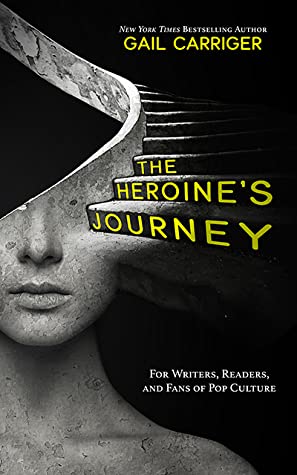
Photo by energepic.com on Pexels.com

Book Review: The Heroine’s Journey by Gail Carriger

Title: The Heroine’s Journey
Author: Gail Carriger
Publisher: Gail Carriger LLC
Publication date: September 28, 2020
Length: 322 pages
Genre: Non-fiction – literature/writing
Source: Purchased
Rating:

Rating: 4.5 out of 5.

Tired of the hero’s journey?
Frustrated that funny, romantic, and comforting stories aren’t taken seriously?
Sad that the books and movies you love never seem to be critically acclaimed, even when they sell like crazy?

The heroine’s journey is here to help.

Multiple New York Times bestselling author Gail Carriger presents a clear concise analysis of the heroine’s journey, how it differs from the hero’s journey, and how you can use it to improve your writing and your life.

In this book you’ll learn:

* How to spot the heroine’s journey in popular books, movies, and the world around you.
* The source myths and basic characters, tropes, and archetypes of this narrative.
* A step-by-step break down of how to successfully write this journey.

What do Agatha Christie, JK Rowling, and Nora Roberts all have in common?
They all write the heroine’s journey. Read this book to learn all about it.

From Harry Potter to Twilight, from Wonder Woman to Star Wars, you’ll never look at pop culture the same way again.

I’m not a writer… so why am I reading a book about writing? Because it’s by Gail Carriger, that’s why!

Gail Carriger is a favorite writer, and her books own prime shelf real estate in my personal library. I adore her characters, her plots, her world-building, her dialogue, and her silliness. (She’s also unfailingly welcoming and warm at book signings, which can’t be easy…)

In any case — after reading about The Heroine’s Journey through Gail’s social media and newsletters, I was intrigued enough to want to check it out. Lo and behold, it was a fascinating read, even for a non-writer like me!

In The Heroine’s Journey, Gail explains in details how a Heroine’s Journey differs from the much better-known Hero’s Journey. Surprise #1 — the heroine of a Heroine’s Journey does not have to be female! The concept of the hero and heroine, at least as Gail explains, has much more to do with the types of journeys they’re on, the obstacles they encounter, the resources they use, and their ultimate goal, than with a definition based on gender identification.

Through the use of literary and pop culture references, Gail clearly identifies the key elements of a Heroine’s Journey, and explains the tropes, characters, and beats that provide the journey’s framework. She also provides excellent examples of different techniques to use to bring characters to life, get readers involved, and provide a satisfactory payoff for devoted readers.

As an avid reader, and someone who loves genre fiction of all sorts, I found this book so interesting! It really helped me understand why certain types of stories and plots resonate, and taught me a lot about structure and underlying themes as part of understanding a writer’s craft and accomplishments.

And as for the geek in me, I adored the fact that she used Harry Potter throughout the book to explain different facets of the Heroine’s Journey. It’s fine to provide a writerly explanation of different points, but the examples are what really brought the points to life for me.

The Heroine’s Journey is a great read for anyone who enjoys learning about the craft behind the stories we love. I’ll be pushing this book into the hands of a few writer friends of mine too!