Book vs movie: Two very different face-offs… which will win?

I’m back with two more book-to-screen comparisons… and I have to say, it’s very weird to combine these two extremely different books/movies into one post! But I’m lazy… so here goes.

Which was better — the book or the movie? Read on to find out!

Face-off #1:

The Cabin at the End of the World
Book by Paul Tremblay, published 2018
Knock at the Cabin movie, released February 2023

Thoughts: After reading the book several weeks ago (check out my review, here), I’d been curious about the movie adaptation. The book tells a terrifying story of a family terrorized by strangers who show up at their remote vacation cabin and inform them that they’ve been chosen for a terrible mission: They must willingly chose to sacrifice one of their family members, or the world will end. Are these people crazy? Are they doomsday cultists? Can anything they say be true? The book is scary and claustrophic, and in many ways, the movie captures the feeling of dread and the way a happy interlude can change to absolute terror within mere moments. The movie’s casting is terrific, especially David Bautista as Leonard, the leader of the intruders — a huge, powerful man with a quiet voice and a sad, kind demeanor, whose gentleness makes his instructions all the more awful. The movie is well done and — based on my family’s reactions — very powerful for those who haven’t read the book.

However… the movie changes the ending in significant ways, and that was a bit of a dealbreaker for me. The book’s impact is enhance by its ambiguity — we’re left to wonder whether any of what the intruders said was real, and whether there really was any connection between the events inside the cabin and the fate of the world. I actually loved that about the book — we’re left to consider for ourselves whether mass delusions and coincidences were at play. The movie removes the ambiguity, as well as changing the family members’ fates, and I thought both changes cheapened the overall impact. I’m glad I watched the movie, but it just doesn’t live up to the book.

Verdict: The book for the win!

Face-off #2:
Wonder
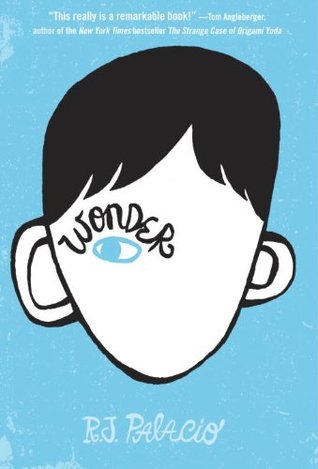
Book by R. J. Palacio, published 2012
Movie released 2017

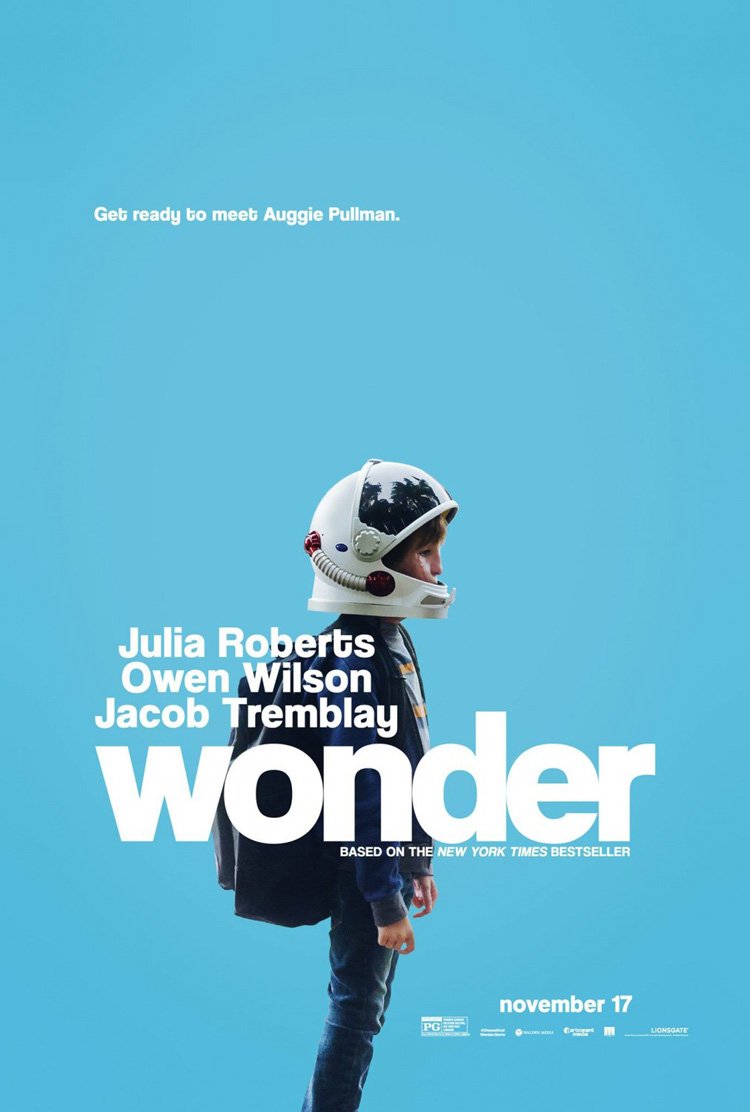
Thoughts: After reading White Bird by R. J. Palacio a couple of weeks ago, I was inspired to finally read Wonder, a book which has become a phenomenon in the 10+ years since it was first published. This middle-grade book is sweet and thoughtful, with an emphasis on kindness, inclusion of multiple points-of-view and experiences, a remarkable main character, and even plenty of humor. I was a little hesitant about watching the movie, worried that it would lean too heavily on the sweet to the point of becoming saccharine, but actually, I found it very, very good. Given that the parents are played by Julia Roberts and Owen Wilson, their roles are a little more prominent than in the book, but not distractingly so. The focus remains on Auggie and his experiences going to school for the first time, and the young cast is quite impressive. The movie captures most of the book’s plot beats, although by necessity, some elements end up left out or diluted. Still, it’s a very well-made adaptation, and well worth checking out.

Verdict: The book for the deeper looks into characters’ experiences… but the movie is great too!
Have you read any of these books or seen the movies? Do you have an opinion on my face-offs? Please share your thoughts!
Book Review: White Bird by R. J. Palacio

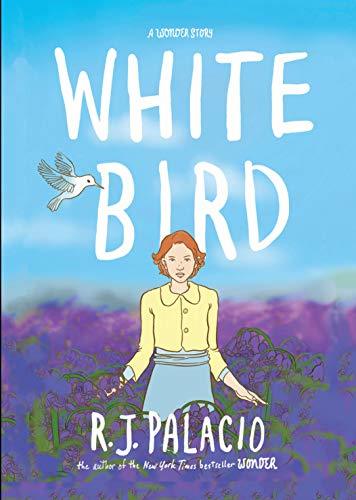
Title: White Bird
Author: R. J. Palacio
Publisher: Knopf Books for Young Readers
Publication date: 2019
Length: 224 pages
Genre: Middle grade
Source: Library
Rating:

Rating: 4.5 out of 5.

Soon to be a major motion picture, starring Helen Mirren and Gillian Anderson!

Inspired by her blockbuster phenomenon Wonder, R. J. Palacio makes her graphic novel debut with an unforgettable, Sydney Taylor Book Award-winning story of the power of kindness and unrelenting courage in a time of war.

In R. J. Palacio’s bestselling collection of stories Auggie & Me, which expands on characters in Wonder, readers were introduced to Julian’s grandmother, Grandmère. Here, Palacio makes her graphic novel debut with Grandmère’s heartrending story: how she, a young Jewish girl, was hidden by a family in a Nazi-occupied French village during World War II; how the boy she and her classmates once shunned became her savior and best friend.

Sara’s harrowing experience movingly demonstrates the power of kindness to change hearts, build bridges, and even save lives. As Grandmère tells Julian, It always takes courage to be kind, but in those days, such kindness could cost you everything. With poignant symbolism and gorgeous artwork that brings Sara’s story out of the past and cements it firmly in this moment in history, White Bird is sure to captivate anyone who was moved by the book Wonder or the blockbuster movie adaptation and its message.

I’ve never read Wonder (am I the only person left who hasn’t?), and hadn’t heard of White Bird before either, until I went to a movie theater over the weekend and saw a trailer for the film adaptation of White Bird… and just had to know more about it. Luckily, my library had a copy available to borrow immediately, and I read the whole book over the course of a day.

White Bird is a middle-grade graphic novel, with the bulk of the story set in occupied France during the Holocaust. The framing device is a contemporary story about a boy named Julian (who apparently is a character from Wonder). Julian’s grandmother speaks to him about kindness and helping others, and shares her own story with him for the first time.

In the tale within a tale, Sara is a young girl living a charmed life with her parents in a small town in France, where she attends a lovely school, has good friends, and is very happy. The family is Jewish, but doesn’t fear for their own safety at first, even as the Nazis invade France. They live in the free zone, and feel secure knowing that they are French citizens. Even as Jews are restricted in their movements and forced to wear yellow stars, Sara’s parents don’t feel a need to escape, until suddenly it is too late.

At school, Sara sits in her assigned seat beside a boy called by the nickname Torteau in all her classes. Having survived polio, the boy is mocked and treated cruelly by their classmates due to his twisted legs and reliance on crutches. While not actively mean to Torteau, Sara isn’t friendly either — she mostly ignores him, until one day she drops her sketchbook and the boy returns it to her.

When Nazis arrive at school one day and order all the Jewish children to come with them, Sara hides instead, and it’s only a matter of time until she’s discovered — but Torteau finds her first, shows her a secret tunnel out of the school, and brings her to hide in his family’s barn. The boy’s name is actually Julien, and he and his parents become Sara’s protectors for years to come, keeping her hidden, safe, and cared for while the world falls apart around them.

I won’t say more about the plot, but it’s powerful, heartbreaking, and lovely. The graphic novel’s art style is simple but affecting, and mixes in Sara’s sketches and dreams with her day-to-day experiences in a way that lends a magical feel to key scenes.

The author includes a great deal of historical notes at the end that are informative and yet easy to digest, and this section seems like it would be very accessible and helpful for younger readers who are new to reading about the Holocaust.

Themes of love, loyalty, friendship, taking a stand when witnessing wrong-doing, and helping those in need are strongly depicted without being preachy or heavy-handed.

White Bird is a powerful, moving reading experience that actually brought me to tears at certain points — not something I typically expect when I pick up a graphic novel.

I highly recommend this book, and plan to check out the movie version when it’s released. Meanwhile, having finally tasted this author’s storytelling, I hope to read Wonder in the near future as well.