In the midst of the last-minute, pre-holiday gift buying frenzy, I’d like to take a moment to recognize a few non-profits whose work supports reading, access to books, libraries, literacy programs, and more. If you’re looking to make donations to worthy causes before the end of the year, why not consider something near and dear to the hearts of booklovers?
I thought I’d share information on bookish nonprofits I’ve supported at various times over the past several years.
First Book is dedicated to ensuring that all children, regardless of their background or zip code, can succeed, by removing barriers to equitable education. We reach 6.5 million kids each year in low-income communities across North America, providing books and resources through a powerful network of more than 600,000 individual educators, professionals and volunteers specifically serving children in need. This is the largest online community of its kind. By infusing high-quality resources into classrooms and programs nationwide, we level the playing field so that kids are ready to learn — because education transforms lives.
Little Free Library: Little Free Library is a nonprofit organization based in St. Paul, Minnesota. Our mission is to be a catalyst for building community, inspiring readers, and expanding book access for all through a global network of volunteer-led Little Free Library book-exchange boxes.
Our vision is a Little Free Library in every community and a book for every reader. We believe all people are empowered when the opportunity to discover a personally relevant book to read is not limited by time, space, or privilege.
And digging a little deeper:
How do we achieve our mission and vision?
Providing 24/7 book access. Little Free Library book-sharing boxes are open seven days a week, 24 hours a day and are freely accessible to all, removing barriers to book access.
Fostering new Little Free Libraries. Little Free Library (LFL) equips, educates, and guides volunteer stewards to establish Little Free Libraries in their communities.
Granting Little Free Libraries to high-need areas. Through our programs, LFL grants no-cost Little Free Libraries full of books to underserved urban, suburban, rural, and Indigenous communities.
Championing diverse books. Through our Read in Color program, LFL makes books available representing BIPOC, LGBTQ+, and other diverse voices to promote understanding, empathy, and inclusion.
Working with key community partners. LFL collaborates with schools, public libraries, civic organizations, businesses, and other groups to bring Little Free Libraries to their communities.
JWI does all sorts of valuable community work, but in the context of book-related nonprofits, I want to highlight JWI’s National Library Initiative:
For a woman fleeing an abusive relationship, the immediacy of danger often means leaving home with only her children and the clothes on their backs.
JWI helps ease this traumatic upheaval by creating children’s libraries in domestic violence shelters – transforming basic spaces into comforting havens with colorful furniture and rugs, computers and toys, and hundreds of new books that represent the diversity of the women and children served.
For kids whose lives have been upended by violence, JWI libraries provide a safe place to relax, escape into a book, and keep up with homework when they’re most at risk of falling behind.
Our goal is to complete 100 fully-furnished new libraries in shelters across the country, and restock the shelves as each child leaves the shelter with a favorite book in hand, ready to start a new life.
In 2022, JWI launched two new spaces for teens and women living in shelters to find respite and comfort.
The new spaces are peaceful oases where survivors and their teen children can access laptops to find employment and do schoolwork, quietly read, and heal together.
The next two are nonprofits I’ve come across because of particular authors I follow:
Overlooking Cook Inlet and the heart-stopping grandeur of the Aleutian Mountain Range, Storyknife Writers Retreat, a literary nonprofit located in Homer, Alaska, hosts residencies for women from Alaska, across the United States, and internationally. Our mission is to give women writers the time and space to explore their craft without distraction. Storyknife provides women with a community to support their efforts, lifting their voices.
Founded in 2014 by author Dana Stabenow, Storyknife is now open for residencies.
Scottish Book Trust: Supporting reading and literacy projects throughout Scotland.
Scottish Book Trust works to tackle inequality and break the poverty cycle through access to books and reading. Since 2020, Scottish Book Trust has distributed over 300,000 books to children and families in need through food banks, community hubs and other charities across Scotland.
And this is one that I haven’t personally contributed to (yet), but it was recently mentioned to me by a friend connected to a military family, and I thought it sounded amazing!
United Through Reading: Supports both reading and emotional connection for military families.
Deployments and frequent separations are a reality for military families. In fact, every year, more than 100,000 military parents deploy leaving nearly 250,000 children at home. That’s millions of bedtime stories missed each year by military children.
United Through Reading knows that hearing a parent’s voice and seeing their face is a truly unique experience that cannot be replaced. That’s why our storytime video recordings are able to be watched on-demand with their own copy of the book, whenever the child misses their service member. Being read to by a parent helps military children feel like their parents are closer to home, reducing stress and anxiety levels and making it easier to cope while their parents are away.
Our storytime video recordings also have many developmental benefits for military children. The shared read aloud experience expands their literacy, vocabulary, and imagination. Also, according to a National Academies of Sciences study, reading stories aloud is associated with positive child outcomes in emotional, behavioral, cognitive, and social competence.
United Through Reading provides benefits for all military family members, not just children. Through these storytime video recordings, servicemembers are also able to maintain close emotional bonds with their families at home, reducing feelings of separation or loneliness and helping them reintegrate to home life when they return.
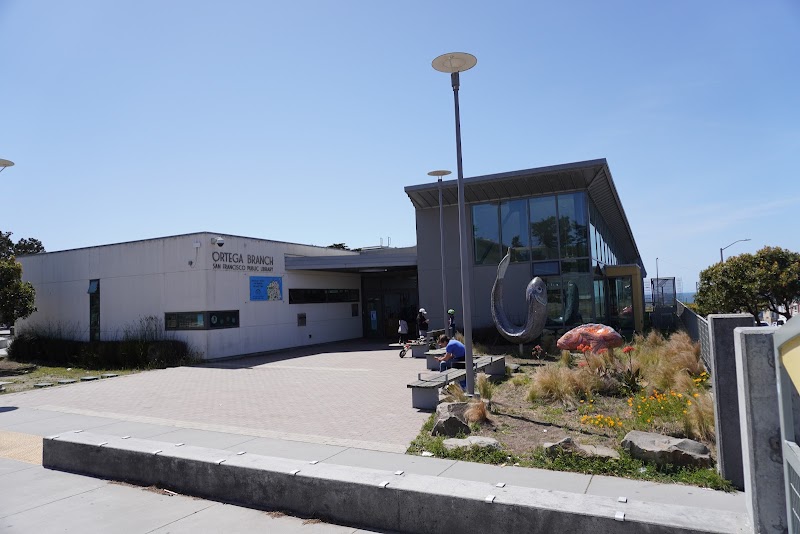
Support your local library! Our libraries do so much for us as individuals, as readers, and as community members. Why not show them a little love in return?
Of course, there are many more worthy organization supporting reading and literacy efforts across the US and around the world. Here are just a few that I’ve come across:
Do you have any favorite nonprofits that support reading, literacy, libraries, writing, or other book-related causes? Please feel free to share links in the comments!
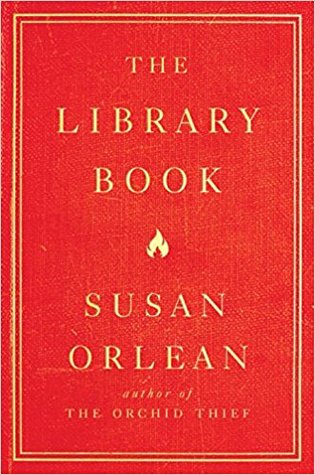
On the morning of April 28, 1986, a fire alarm sounded in the Los Angeles Public Library. As the moments passed, the patrons and staff who had been cleared out of the building realized this was not the usual fire alarm. As one fireman recounted, “Once that first stack got going, it was ‘Goodbye, Charlie.’” The fire was disastrous: it reached 2000 degrees and burned for more than seven hours. By the time it was extinguished, it had consumed four hundred thousand books and damaged seven hundred thousand more. Investigators descended on the scene, but more than thirty years later, the mystery remains: Did someone purposefully set fire to the library—and if so, who?
Weaving her lifelong love of books and reading into an investigation of the fire, award-winning New Yorker reporter and New York Times bestselling author Susan Orlean delivers a mesmerizing and uniquely compelling book that manages to tell the broader story of libraries and librarians in a way that has never been done before.
In The Library Book, Orlean chronicles the LAPL fire and its aftermath to showcase the larger, crucial role that libraries play in our lives; delves into the evolution of libraries across the country and around the world, from their humble beginnings as a metropolitan charitable initiative to their current status as a cornerstone of national identity; brings each department of the library to vivid life through on-the-ground reporting; studies arson and attempts to burn a copy of a book herself; reflects on her own experiences in libraries; and reexamines the case of Harry Peak, the blond-haired actor long suspected of setting fire to the LAPL more than thirty years ago.
Along the way, Orlean introduces us to an unforgettable cast of characters from libraries past and present—from Mary Foy, who in 1880 at eighteen years old was named the head of the Los Angeles Public Library at a time when men still dominated the role, to Dr. C.J.K. Jones, a pastor, citrus farmer, and polymath known as “The Human Encyclopedia” who roamed the library dispensing information; from Charles Lummis, a wildly eccentric journalist and adventurer who was determined to make the L.A. library one of the best in the world, to the current staff, who do heroic work every day to ensure that their institution remains a vital part of the city it serves.
Brimming with her signature wit, insight, compassion, and talent for deep research, The Library Book is Susan Orlean’s thrilling journey through the stacks that reveals how these beloved institutions provide much more than just books—and why they remain an essential part of the heart, mind, and soul of our country. It is also a master journalist’s reminder that, perhaps especially in the digital era, they are more necessary than ever.
After that lengthy synopsis, I’m not sure what else there is to say, other than to talk about my experience reading this book.
The short version is — I loved it.
Susan Orlean is a brilliant writer, new to me, although I’ve been hearing about The Orchid Thief for years and always meant to get to it (and after finishing The Library Book, finally bought myself a copy). The story here is fascinating and multi-layered. The framing device of the book is the 1986 Los Angeles library fire, which is devastating and horrifying to read about, as the author takes us practically minute by minute through the fire’s path and shows us the awful damage done during those terrible hours.
Interspersed with the story of the fire is a history of the role of libraries in society, focusing mainly (but not exclusively) on the history of the library in Los Angeles, showing the library as a reflection of the society it serves, its challenges and its triumphs. We see how public libraries have evolved over time, and how those who work in libraries are devoted both to serving the public and to keeping public libraries vital and vibrant, even as society and technology constantly change and provide fresh challenges to the concept of what a library actually is.
We also meet amazing people, past and present, who played a part in the Los Angeles library, from head librarians to architects to security guards. It’s amazing to see the incredible talent and intelligence and humor of the people who helped build the library system and who continue to keep it relevant and important.
The story of Harry Peak is the most puzzling piece of the book — an unsuccessful actor who was suspected of the arson, but whose constantly shifting stories and alibis made any sort of case against him questionable at best. He’s an odd person, and so much is uncertain — but it’s interesting to see how his strange life intersected with such a major civic disaster.
Susan Orlean’s writing is gorgeous. Like the best non-fiction, it flows and captivates, and I never for a moment felt bored or like I was reading a dusty, dry history book.
On visiting a boarded-up, abandoned branch library:
This building made the permanence of libraries feel forsaken. This was a shrine to being forgotten; to memories sprinkled like salt; ideas vaporized as if they never had been formed; stories evaporated as if they had no substance and no weight keeping them bound to the earth and to each of us, and most of all, to the yet-unfolded future.
Other memorable (or just entertaining) lines and passages:
In times of trouble, libraries are sanctuaries.
In the year leading up to Prohibition, when the ban on alcohol seemed inevitable, every book about how to make liquor at home was checked out, and most were never returned.
[Althea] Warren was probably the most avid reader who ever ran the library. She believed librarians’ single greatest responsibility was to read voraciously. Perhaps she advocated this in order to be sure librarians knew their books, but for Warren, this directive was based in emotion and philosophy: She wanted librarians to simply adore the act of reading for its own sake, and perhaps, as a collateral benefit, they could inspire their patrons to read with a similarly insatiable appetite. As she said in a speech to a library association in 1935, librarians should “read as a drunkard drinks or as a bird sings or a cat sleeps or a dog responds to an invitation to go walking, not from conscience or training, but because they’d rather do it than anything else in the world.”
The library is a whispering post. You don’t need to take a book off a shelf to know there is a voice inside that is waiting to speak to you, and behind that was someone who truly believed that if he or she spoke, someone would listen.
The Library Book is simply a delicious read, perfect for anyone who appreciates finely detailed research, expressive writing, and a passion for books and libraries. I loved this book, and can’t wait to give copies to a whole bunch of book-obsessed friends.
_________________________________________
The details:
Title: The Library Book
Author: Susan Orlean
Publisher: Simon & Schuster
Publication date: October 16, 2018
Length: 317 pages
Genre: Non-fiction
Source: Gift (yay!)










 Bookshelf Fantasies