Book Review: Guts: The Anatomy of the Walking Dead by Paul Vigna

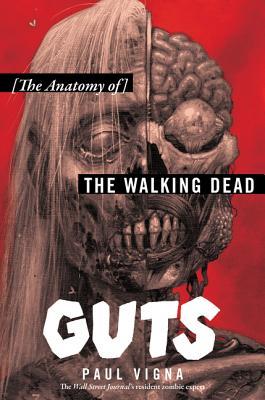
In this first and only guide to AMC’s exceptional hit series The Walking Dead, the Wall Street Journal’s Walking Dead columnist celebrates the show, its storylines, characters, and development, and examines its popularity and cultural resonance.

From its first episode, The Walking Dead took fans in the United States and across the world by storm, becoming the highest-rated series in the history of cable television. After each episode airs, Paul Vigna writes a widely read column in which he breaks down the stories and considers what works and what doesn’t, and tries to discern the small details that will become larger plot points.

So how did a basic cable television show based on Robert Kirkman’s graphic comic series, set in an apocalyptic dog-eat-dog world filled with flesh-eating zombies and even scarier human beings, become a ratings juggernaut and cultural phenomenon? Why is the show such a massive hit? In this playful yet comprehensive guide, Vigna dissect every aspect of The Walking Dead to assess its extraordinary success.

In the vein of Seinfeldia,Vigna digs into the show’s guts, exploring its roots, storyline, relevance for fans and the wider popular culture, and more. He explores how the changing nature of television and media have contributed to the show’s success, and goes deep into the zombie genre, delineating why it’s different from vampires, werewolves, and other monsters. He considers why people have found in zombies a mirror for their own fears, and explains how this connection is important to the show’s popularity. He interviews the cast and crew, who share behind-the-scenes tales, and introduces a cross-section of its diverse and rabid viewership, from fantasy nerds to NFL stars. Guts is a must have for every Walking Dead fan.


I’ve only recently become a convert to the cult of The Walking Dead. After years of turning up my nose, I finally broke down and gave it a try this past spring, and immediately became completely hooked. I binge-watched the entire series to date within about 2 months (not bad for 99 episodes!), and read all of the graphic novels as well. So naturally, when I heard about Guts, I had to read it, and the timing couldn’t be better, as season 8 of The Walking Dead starts TOMORROW. *jumping up and down and hyperventilating with anticipation*

Guts is a truly fascinating book about the show, examining it from all angles and giving thoughtful consideration to its popularity and relevance in today’s world. The author includes recaps of the major events of each season so far, and covers the show’s history, the background of Robert Kirkman, who created the comic series and is an executive producer of the TV series, some anecdotes from behind the scenes, and the ups and downs of production, including the still-ongoing lawsuit by the first showrunner, Frank Darabont, against AMC.

The book also includes interactions with fans, including some observations from a day at Walker Stalker Con, a fan event at which fans interact with cast and crew. The description of the vibe at Walker Stalker shows the deep impact of The Walking Dead on its devoted fan base.

Most interestingly, author Paul Vigna goes deeper than the pop culture tidbits (such as fan favorites, iconic weaponry, and best episodes) to show the philosophical underpinnings of The Walking Dead, connecting the show’s impact to sociopolitical and economic climate of the era. He examines the religious themes that find their way into the show, as well as the political constructs of the various societies and the ways in which both Maslow’s hierarchy and Hobbesian views on the natural state of man can be discussed in relation to themes of community and family as shown in TWD.

Some random and various pieces from the book:

Hobbes argues that the natural state of man, as in a state without the collar of a central government, is one where every man is at war with every other man. There is no industry or security, no artistic pursuits, just the “continual fear and danger of violent death, and the life of man, solitary, poor, nasty, brutish, and short,” Hobbes writes… In Hobbes’s argument, people enter a social contract and surrender some of their personal freedoms in exchange for the kind of security and permanence that will release them from the terror of that brutish life in the wild.

Like giving up their endless wandering to join the community of Alexandria, right?

On political structures in TWD:

What seems to matter most is that a leader in the post-zombie apocalypse is decisive… Negan and the Governor are homicidal and suicidal, but they are also decisive. Negan may be as liable to throw you into an oven as feed you a spaghetti dinner, but in his decisiveness, he can bring some sense of comfort — so long as you don’t cross him.

Acknowledging that “Rick has made enough mistakes to fill a book,”, the author comments:

Now, I don’t have a problem with Rick making mistakes. It wouldn’t be realistic for him to make the right choice every single time. Rick’s greatest quality, apart from an uncanny survival instinct, is the ability to simply choose. In a world where life is measured in hours and days rather than decades, that is an essential quality to have.

Further thoughts:

The biggest key to survival, really, is how quickly you can shed your old morality and discover a new one.

And finally, a quote from the season 7 finale, spoken by Maggie, that sums up the essence of TWD. This is who the main characters are and what they do — and what makes us love them:

To sacrifice for each other, to suffer, to stand, to grieve, to give, to love, to live, to fight for each other.

This is what Rick, Maggie, and all the other characters in Alexandria, the Hilltop, and the Kingdom represent, and why we keep tuning in, season after season.

If you’re a fan of The Walking Dead and happen to be inclined to dig in and go beyond the blood and gore, definitely pick up a copy of Guts. It’s a quick, interesting read, with just the right mix of plot points and food for thought.

_________________________________________

The details:

Title: Guts: The Anatomy of the Walking Dead
Author: Paul Vigna
Publisher: Dey Street Books
Publication date: October 3, 2017
Length: 336 pages
Genre: Non-fiction/entertainment/pop culture
Source: Library
Save

Save

Save

Save

Save

Save

Save

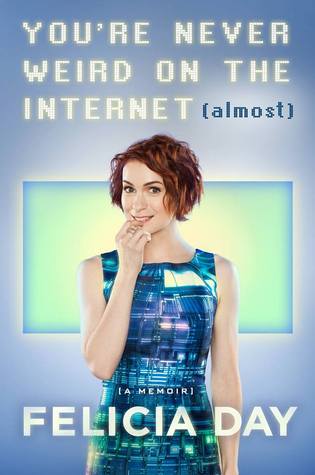
Book Review: You’re Never Weird on the Internet (Almost) by Felicia Day

You're Never WeirdBuffy fan? How about The Guild? Dr. Horrible? Eureka?

No?

Are you a fan of funny, smart writing? Women who are high-achieving but down-to-earth? Famous people who act like real people and seem to genuinely care?

Surely something above rings a bell. And in that case…

I feel perfectly confident that you’ll find something to love about Felicia Day’s memoir, You’re Never Weird on the Internet (almost).

Felicia Day doesn’t shy away from calling herself weird, and credits her weird upbringing for making her who she is today. Moving around from one southern town to another, Felicia never really had to fit in, because after a brief stint in school, she ended up being homeschooled throughout her childhood and teens — although, as she describes:

In retrospect — and not to be mean to anyone who parented me — it doesn’t seem like there was a clear plan going into the whole homeschooling thing.

But Felicia was into it anyway:

Also, homeschooling seemed like something an orphan would do, and I really wanted to be an orphan. Because let’s be real: they have it so good in kids’ literature! They’re sad but special, people love them against all odds, and they’re always guaranteed a destiny of greatness. The Secret Garden, The Wizard of Oz, Harry Potter? Orphanhood was a bucket list item for me!

In funny and honest detail, she describes her college career (double-majoring in music and math, on a violin scholarship!) and her subsequent move to LA to pursue an acting career, as well as an all-consuming obsession with World of Warcraft, generalized unhappiness and anxiety, and her creative breakthrough in writing and starring in the geek-magnet web series The Guild.

Felicia writes beautifully about the power of discovering the internet for the first time, and the awesome experience, especially for a loner, homeschooled girl, of discovering people to truly connect with in a fundamental way through the world of online gaming.

I know the story of my Dragon-hood may sound a little sad and weird and super geeky, but […] for a girl who was lonely and desperate for friends, that group of people was the most important social thing to happen to me growing up. I can’t imagine being as confident about my passion for geeky things today without that opportunity to connect with OTHER people who were saying, “Wow, I love those geeky things, too!”

She shares her self-doubts and her moments of mortification along with her successes and victories, and maintains such an appreciation for people’s investment and connection in her work that you just know she means it all. For example, explaining why she keeps all the fan art and creations that people have given her over the years:

Whether it was by someone volunteering to be an extra in our show, or part of the crew, or someone buying a DVD at a convention, or a superfan who tattooed our characters’ faces on her calf, my career has been built fan by fan. I wouldn’t trade that relationship, or collection of dolls of myself, for all the money and fame in the world.

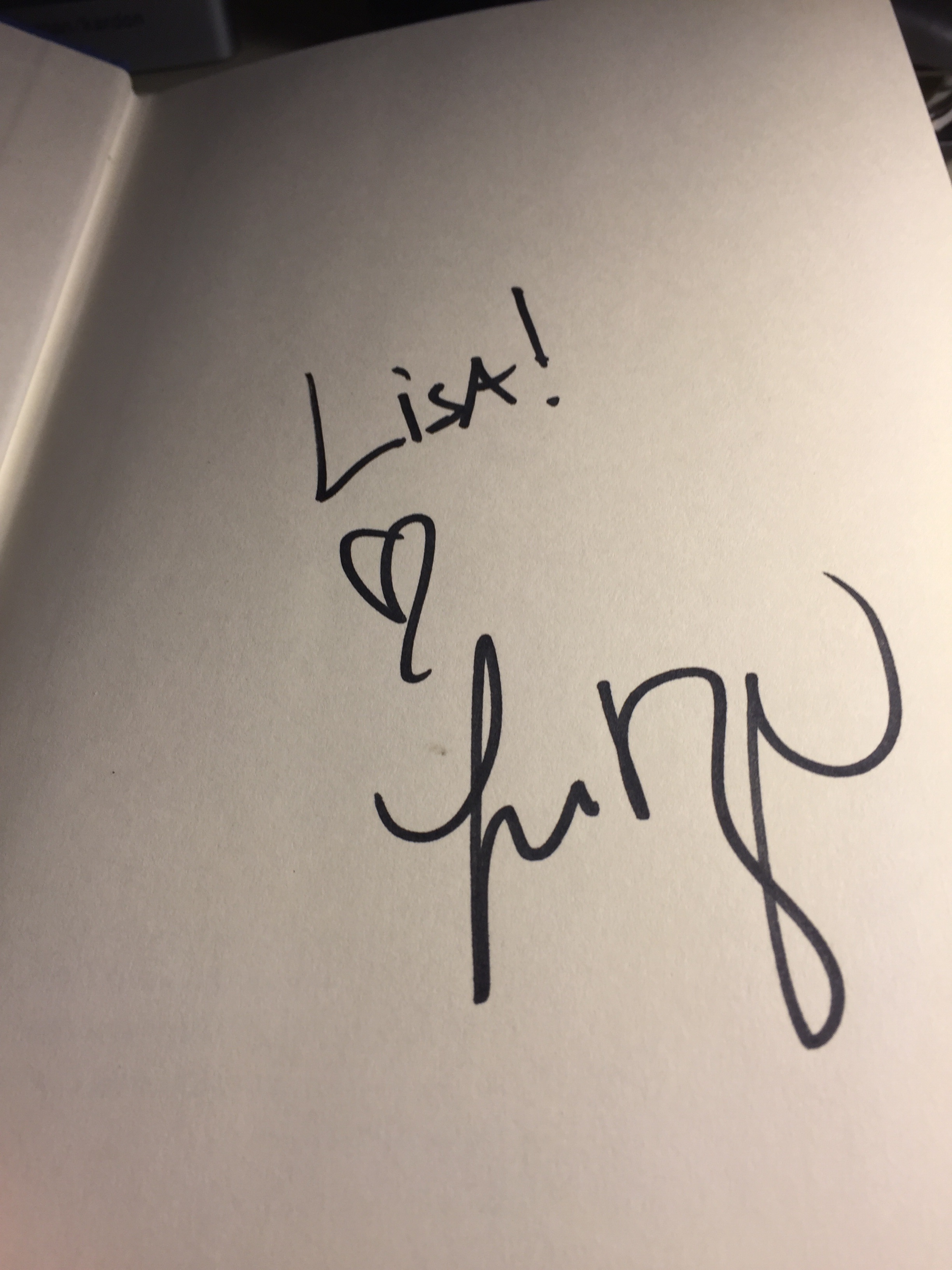
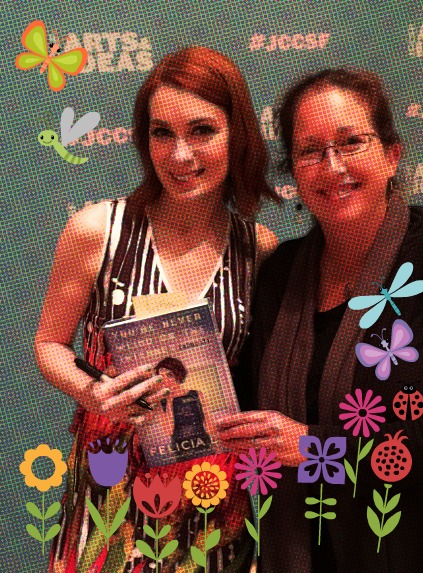
I was lucky enough to see Felicia speak back in August and got a signed book and everything!

Felicia is adorable, but I didn't like the way I looked in this pic... so I decided to decorate.

Felicia is adorable, but I didn’t like the way I looked in this pic… so I decided to decorate.

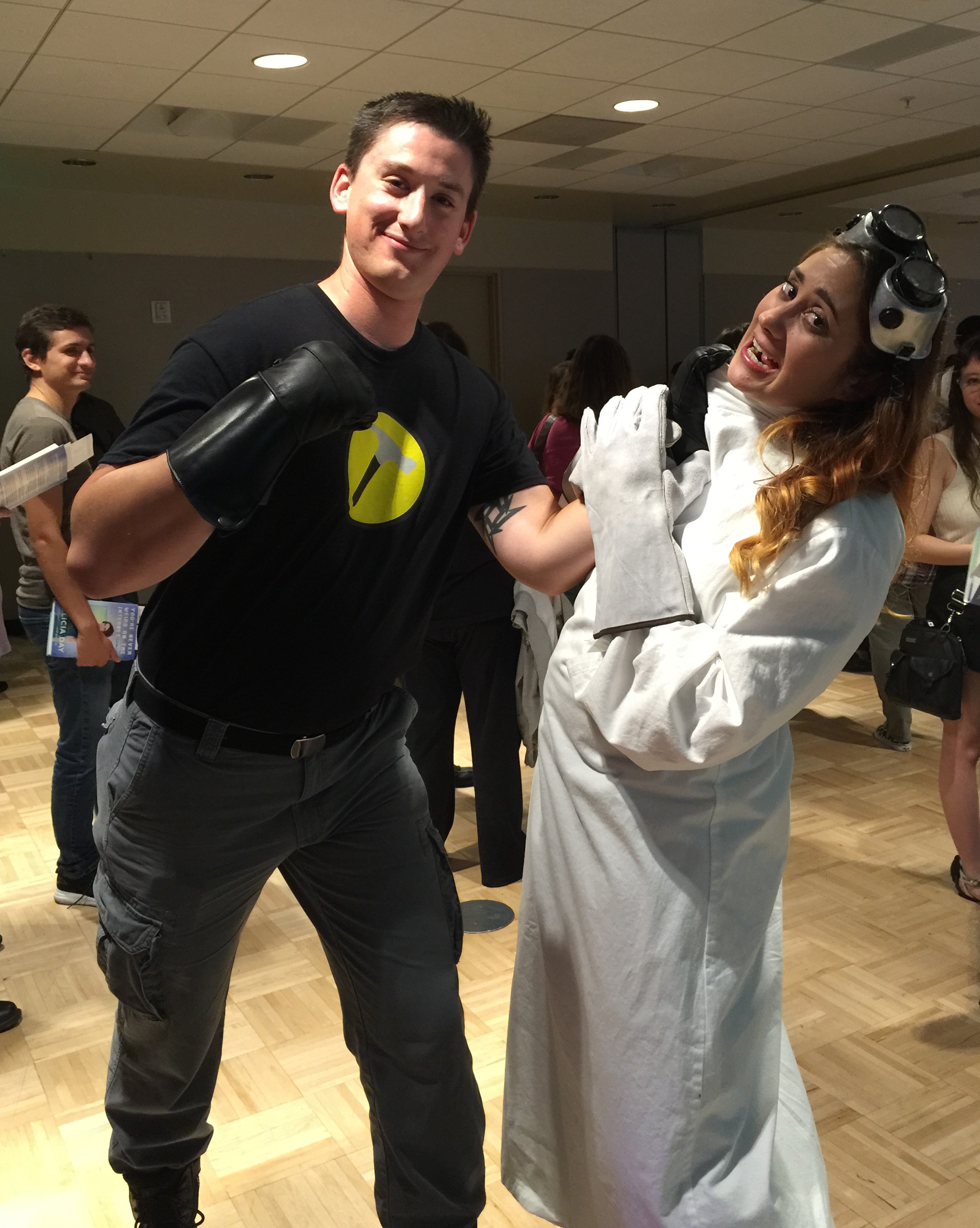
It was an amazing event, in a sold-out venue, filled with people of all sorts who all just happen to be big geeky fans. While most came in their street duds or at most, a Supernatural or Guild t-shirt, a few went all out, which was super delightful to see:

I love me some Dr. Horrible cosplay!

Felicia spent an hour on stage in front of an adoring crowd, and she was just as cute and smart and hilarious as you’d expect. (If you’re a fan, treat yourself by watching the video of her appearance!):

Getting back to the book itself, this isn’t a Hollywood tell-all. There’s no gossip here, no name-dropping, no parties/cocktails/living-the-good-life anecdotes. When Felicia does name names, it’s to thank and acknowledge the people who inspired or helped her.

Besides being a great read about an odd-ball girl making good on her own terms, You’re Never Weird is a message book. Felicia shares her own story not to say “look at me! I’m so great!”, but to share the idea that we’re all different, and we should pursue what excites us and makes us happy, no matter how odd or weird or dorky it might seem. And hey, whoever you are and whatever you’re into, there’s sure to be someone else out there who’s into it too:

It might be extremely dorky to point out, but who you are is singular. It’s science. No one else in existence has your point of view or exact genome (identical twins and clones, look for inspiration elsewhere, please). That is why we need people to share and help us understand one another better. And on a bigger level than just taking a selfie. (Not hating on selfies, but a few is enough. You look good from that angle; we get it.) We need the world to hear more opinions, give glimpses into more diverse subcultures. Are you REALLY into dressing your cat in handcrafted, historically authentic outfits? No problem, there are people out there who want to see that! Probably in excruciating details!

One of the things that makes You’re Never Weird on the Internet (Almost) so great to read is that first and foremost, you feel like you’re reading about a person.  A talented, awesome person, for sure, but still, someone recognizably human. Felicia Day’s writing style is chatty and full of good-natured humor, and she succeeds, I think, by making us all feel as though she’s someone we could hang out with, maybe play some video games or watch movies together. You just know that she’d be chill and awkward and non-judgmental, in all the best ways.

image

She signed my book! She signed my book!

If you consider yourself a geek, if you’ve ever felt lost in a crowd, if you had weird/unique hobbies, if you’ve ever felt a passion for something completely out there… well, I’m pretty sure you’ll find something in You’re Never Weird that will inspire you, or at the very least, make you smile or even chuckle for a while.

‘Scuse me, but I gotta go binge-watch The Guild right now.

_________________________________________

The details:

Title: You’re Never Weird on the Internet (Almost)
Author: Felicia Day
Publisher: Touchstone
Publication date: August 11, 2015
Length: 262 pages
Genre: Memoir
Source: Purchased