
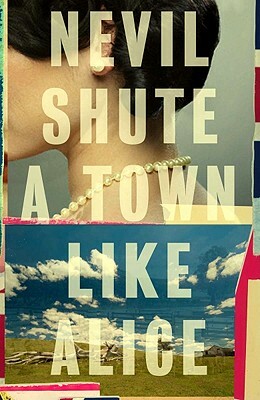
Title: A Town Like Alice
Author: Nevil Shute
Publisher: Hodder & Stoughton
Publication date: 1950
Length: 262 pages
Genre: Historical fiction
Source: Purchased
Rating:
Jean Paget, a young Englishwoman living in Malaya, is captured by the invading Japanese and forced on a brutal seven-month death march with dozens of other women and children. A few years after the war, Jean is back in England, the nightmare behind her. However, an unexpected inheritance inspires her to return to Malaya to give something back to the villagers who saved her life. But it turns out that they have a gift for her as well: the news that the young Australian soldier, Joe Harman, who had risked his life to help the women, had miraculously survived. Jean’s search for Joe leads her to a desolate Australian outpost called Willstown, where she finds a challenge that will draw on all the resourcefulness and spirit that carried her through her war-time ordeals.
I first encountered A Town Like Alice at some point in the 1980s. The mini-series was a hit, people were swooning over the love story, and naturally, I had to know more, so I picked up the book. All these years later, I still remembered some of the basics, and was glad to have an excuse to revisit the story when my book group selected it for our February book.
One of author Nevil Shute’s best-known books, A Town Like Alice in some ways is two stories in one — or even three, if you count the framing device. An aging British lawyer, Noel Strahan, becomes the trustee of one of his clients, and in the years soon after the end of World War Two, learns that the main benefactors of his client’s will have both died. The inheritance now goes to the remaining heir, a young woman named Jean Paget, for whom the estate will remain in trust until she inherits fully at age 35.
When Noel tracks down Jean, he finds her working in London as a shorthand typist for a leather goods company. At age 26, she’s eligible to receive a yearly stipend from the trust — enough to allow her to quit her job and enjoy herself, within reason. What Jean most wants to do is to build a well in a small village in Malaya.
As Noel gets to know Jean, he learns the extraordinary story of her wartime experiences. Jean had been living in Malaya at the time, and as she and other women and children were about to be evacuated, they were captured by the Japanese army instead. Lacking a prison camp for women, the Japanese officers in charge sent them onward to a different destination, and then another, resulting in months of endless marching in horrible conditions. Jean witnessed more than half of her fellow prisoners dying along their brutal march. At one of the lowest points, she encountered an Australian prisoner named Joe Harman, whose remarkable courage led to a moment of horror that left Jean scarred and grief-stricken.
Jean narrates her experiences to Noel in what is the book’s most powerful and moving set of chapters, evoking the terror and torment of what she’d lived through, while also making clear why she feels the need to return to Malaya.
From there, the second half of the book takes on a very different focus. In Malaya, Jean learns that Joe did not die, as she’d believed, but survived and eventually returned home to Australia. Jean can’t rest without seeing Joe again, and thus begins a complicated set of travel itineraries during which Jean and Joe keep missing each other.
Eventually reunited, a love story blooms… and Jean also discovers herself drawn to the rather dismal outback town near Joe’s cattle station. It’s a dull, run-down place with little to attract anyone who doesn’t need to be there. But Jean is inspired, and devotes herself to bringing the little town to life, creating opportunities for young women to work and thrive there, and before long, making it a place where people actually want to be.
The book can be seen as portraying two very different stories — a horrific war story, and a hopeful story about building a community based on sheer determination — and yet, it’s an interesting mirror to the structure of Jean’s life, which definitely also has a before and an after. Jean’s life story in some ways seems to end with the end of the war. She’s safe, she’s working a steady if not especially exciting job, and she doesn’t seem to have anything particular ahead of her. And then, suddenly, there’s the after: She returns to Malaya, she travels to Australia, and finds both love and a meaningful future when she never truly expected either one.
Joe and Jean’s love story is quite special. They crossed paths for only a few days during the war, but left an indelible mark on one another. Their reunion years later is sweet and tentative. They believe they’ll want to be together, but they don’t actually have any real-world shared experiences upon which to build a life, apart from those intense few days. And yet, there is something real pulling them together, both attraction and connection, so that they’re able to quickly establish that they do belong in each others’ lives.
I found A Town Like Alice to be a beautiful, inspiring read. Joe and Jean both exhibit extraordinary bravery. Jean’s spirit is full of hope and charm once she has a vision of what their dull little town could be, and I admired her dedication and commitment to making a life with Joe work.
The book isn’t perfect, of course. Published in the 1950s, the attitude toward Australia’s indigenous population can be very off-putting. References about “Abos” and “boongs” abound, and when asked how many people work at a particular station, the answer often is separated out into the number of men (meaning white) and the number of “Abos”. Reading this book today, the racism and derogatory language is disturbing. Still, as a representation of the social climate in that place and time, I’m guessing it’s pretty accurate.
Overall, I’m very happy to have had my book group as motivation to pick up A Town Like Alice again after so many years. I found myself completely absorbed, and really loved reading it.
The only other Nevil Shute book I’ve read is On the Beach, but I’m eager to read more. As of now, I have Pastoral, The Breaking Wave, and The Far Country on my list of possibilities. Recommendations are welcome!

Did you know?
A Town Like Alice has been adapted twice:
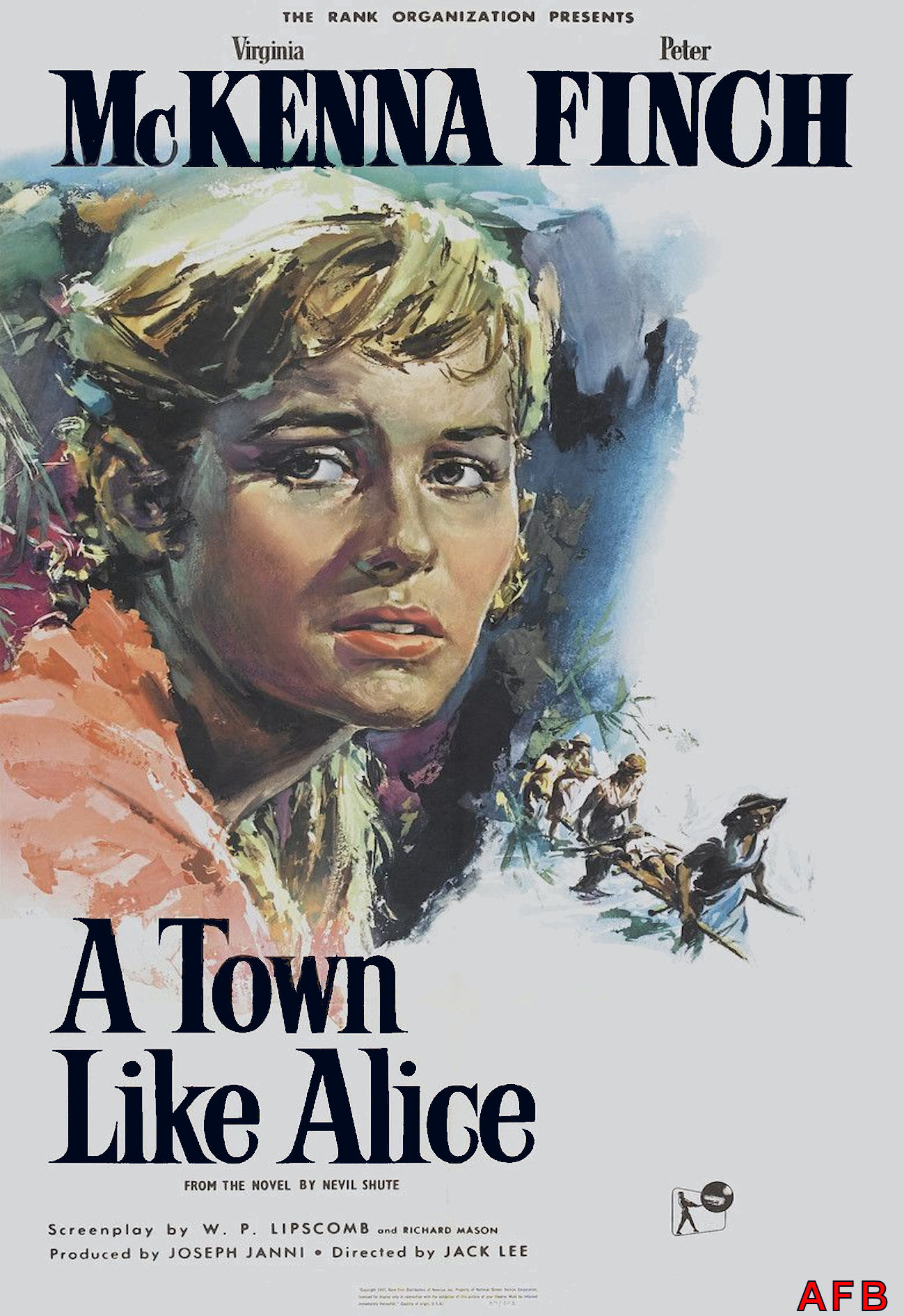
Movie, 1956 — available via Prime Video
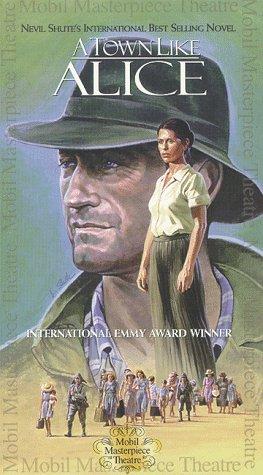
Mini-series, 1981 — does not appear to be streaming anywhere at the moment, although I did find a few uploads via YouTube that I may check out.
Purchase links: Amazon – Audible audiobook – Bookshop.org – Libro.fm
Disclaimer: When you make a purchase through one of these affiliate links, I may earn a small commission, at no additional cost to you.



 Bookshelf Fantasies