
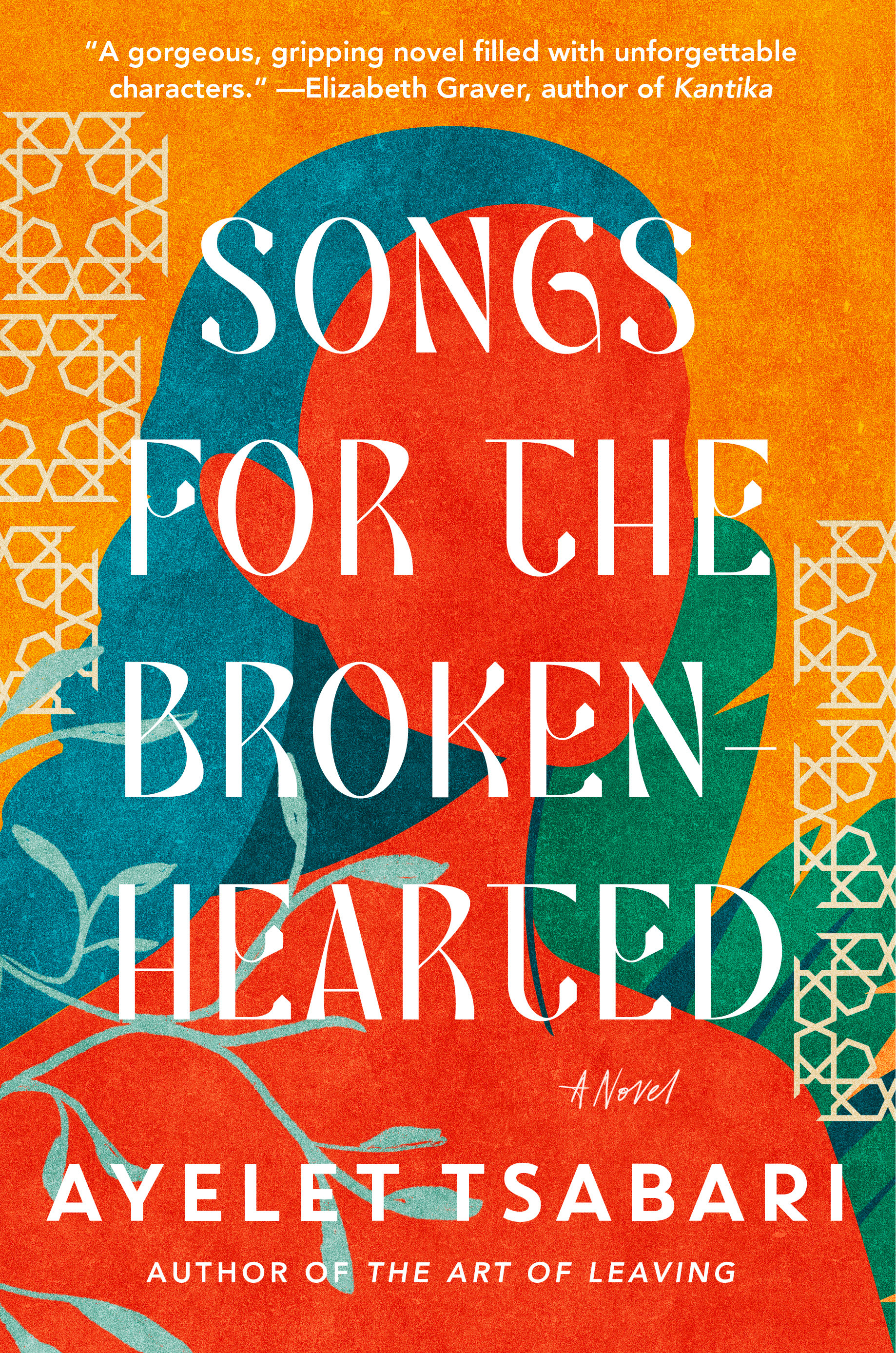
Title: Songs for the Broken-Hearted
Author: Ayelet Tsabari
Publisher: Random House
Publication date: September 10, 2024
Length: 352 pages
Genre: Historical fiction
Source: Review copy courtesy of the publisher via NetGalley
Rating:
A young Yemeni Israeli woman learns of her mother’s secret romance in a dramatic journey through lost family stories, revealing the unbreakable bond between a mother and a daughter—the debut novel of an award-winning literary voice.
“A gorgeous, gripping novel filled with unforgettable characters.”—Elizabeth Graver, author of Kantika1950. Thousands of Yemeni Jews have immigrated to the newly founded Israel in search of a better life. In an overcrowded immigrant camp in Rosh Ha’ayin, Yaqub, a shy young man, happens upon Saida, a beautiful girl singing by the river. In the midst of chaos and uncertainty, they fall in love. But they weren’t supposed to; Saida is married and has a child, and a married woman has no place befriending another man.
1995. Thirty-something Zohara, Saida’s daughter, has been living in New York City—a city that feels much less complicated than Israel, where she grew up wishing that her skin was lighter, that her illiterate mother’s Yemeni music was quieter, and that the father who always favored her was alive. She hasn’t looked back since leaving home, rarely in touch with her mother or sister, Lizzie, and missing out on her nephew Yoni’s childhood. But when Lizzie calls to tell her their mother has died, she gets on a plane to Israel with no return ticket.
Soon Zohara finds herself on an unexpected path that leads to shocking truths about her family—including dangers that lurk for impressionable young men and secrets that force her to question everything she thought she knew about her parents, her heritage, and her own future.
Songs for the Broken-Hearted is a beautiful look into women’s lives, intergenerational misunderstandings and traumas, and the hidden histories of women’s communities and their art. Above all, it’s the story of a woman processing grief over the loss of a mother she never fully knew, learning more about herself through learning about her mother’s life.
It’s 1995, and Zohara is on a break from her doctoral program in New York, vacationing in Thailand, when she’s summoned back home to Israel with the news that her mother Saida has died. The youngest daughter in this Yemeni Israeli family, Zohara has felt disconnected from her homeland and her family, and has never really known her mother in a deep way.
Upon her return, Zohara is confronted by just how much she may have missed, as she begins to learn more about Saida’s role within the family and community, and discovers tapes of her beautiful singing. As Zohara eventually learns, Saida wrote her own songs — and within the world of Yemeni Jewish women, singing is the art form that allows expression, creativity, and emotion, especially important for the immigrant generation who arrived in Israel with limited or no knowledge of Hebrew and were illiterate, as learning was the domain of men.
Through Zohara, we learn more about the history of the Yemeni community within Israel, and as we meet others in her family, we also see the extreme political upheaval of the time. The Oslo accords had only recently been signed, and while Yitzhak Rabin is seen as a hero by some, there’s an increasingly strident and violent opposition building, deeply opposed to the planned concessions of the peace process.
Meanwhile, interspersed with Zohara’s experiences, we have chapters sets in 1950, told from the perspective of Yakub, a young man who meets Saida in the immigrant camp to which they’re assigned upon arrival in Israel from Yemen. Amidst the squalor and deprivations of the camp and the discrimination experienced by the new immigrants, Yakub and Saida find an unexpected connection, as he hears her singing by the river, and they bond over their love of words.
Through Yakub and Saida’s story, as well as the dominant storyline focused on Zohara, we get an inside view of the experience of Yemeni immigrants to Israel, including the horrifying (and real) events surrounding the disappearance of Yemeni children and other children of Jewish immigrants from Arab countries. And yet, there’s also the uplifting elements as we see more of the Yemeni culture, from food to music to family traditions, language, observances, and more.
Songs for the Broken-Hearted is truly a beautiful book, telling a powerful story about family connections and secrets, and showing how grief in its many forms can change the course of individual lives and carry down through generations.
Zohara’s story is affecting, and while it can be frustrating as a reader to see this smart woman make unwise choices, we can easily understand how her loss turns her life upside down and leads her down unexpected paths. Grief also leads to renewed hope, as only through her loss does Zohara come to discover and then immerse herself in the world of women’s songs that was so important to Saida. Through these songs and the community of women who keep them alive, Zohara finds new meaning, learns deeper truths about her mother, and even manages to reignite the passion missing from her academic life.
As Zohara reimmerses herself in family, she also reengages with Israel itself, and is there to witness the upheaval and divisions that culminate in Rabin’s assassination. It’s very heavy, and for readers familiar with that chapter of history, the inevitability of the coming violence can be very painful to experience alongside the characters.
What I loved most about Songs for the Broken-Hearted is the tangible, evocative way the author shares the Yemeni culture. References to specific foods and spices, particular singers and pieces of music — all bring this world to life in a way that feels immersive and immediate.
Songs for the Broken-Hearted is powerful on so many levels, and is an absorbing work of fiction that pulls the reader in right from the start. I loved the cultural aspects as well as the exploration of family bonds, the relationships between mothers and children, and the process of grief and healing.
Highly recommended.

Songs for the Broken-Hearted is author Ayelet Tsabari’s debut novel. She’s previously published a collection of stories (The Best Place on Earth), and a memoir, The Art of Leaving, which I’d especially like to read.
For a taste of Yemeni women’s music, check out the samples below (or search for Yemenite music by Ofra Haza or Gila Beshari, as a starting place — there’s much more available with a bit of looking):
 Bookshelf Fantasies