
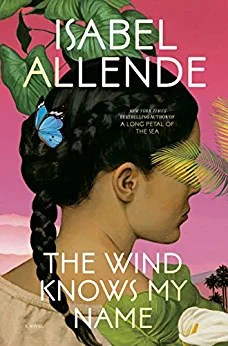
Book Review: The Wind Knows My Name by Isabel Allende

Title: The Wind Knows My Name
Author: Isabel Allende
Publisher: Ballantine Books
Publication date: June 6, 2023
Length: 253 pages
Genre: Historical/contemporary fiction
Source: Purchased
Rating:

Rating: 4 out of 5.

This powerful and moving novel from the New York Times bestselling author of A Long Petal of the Sea weaves together past and present, tracing the ripple effects of war and immigration on one child in Europe in 1938 and another in the United States in 2019.

Vienna, 1938. Samuel Adler was six years old when his father disappeared during Kristallnacht—the night their family lost everything. Samuel’s mother secured a spot for him on the last Kindertransport train out of Nazi-occupied Austria to the United Kingdom, which he boarded alone, carrying nothing but a change of clothes and his violin.

Arizona, 2019. Eight decades later, Anita Diaz, a blind seven-year-old girl, and her mother board another train, fleeing looming danger in El Salvador and seeking refuge in the United States. However, their arrival coincides with the new family separation policy, and Anita finds herself alone at a camp in Nogales. She escapes through her trips to Azabahar, a magical world of the imagination she created with her sister back home.

Anita’s case is assigned to Selena Duran, a young social worker who enlists the help of a promising lawyer from one of San Francisco’s top law firms. Together they discover that Anita has another family member in the United States: Leticia Cordero, who is employed at the home of now eighty-six-year-old Samuel Adler, linking these two lives.

Spanning time and place, The Wind Knows My Name is both a testament to the sacrifices that parents make and a love letter to the children who survive the most unfathomable dangers—and never stop dreaming.

The Wind Knows My Name is a compact but powerful story about lost children, sorrow, and resilience. It’s also quite political, which I didn’t have a problem with, but some may readers may wish to know that the author is very up front in her thoughts on a certain former President and the current, ongoing immigration crisis.

But beyond the politics and the highly charged topics, The Wind Knows My Name is deeply affecting because of the individual characters, their painful childhood experiences, and the way unexpected connections help them forge new paths forward.

The book opens in Vienna, 1938, as the horrors of Kristallnacht unfold. For young Samuel Adler, it’s the night his whole world falls apart. Eventually, to save his life, Samuel’s mother sends him off to England on a train filled with other Jewish children — and while Samuel does go on to live a long and fulfilling life, the early trauma never leaves him.

Later, we meet Leticia, a Salvadoran girl whose father crosses the border into the US with her after their entire family is murdered in the massacre of their small village.

And still later, closer to the present day, we meet Anita — also from El Salvador, cruelly separated from her mother at the border as they seek asylum from extreme danger back home.

As these three people come together, with assistance from Selena, a social worker, and Frank, the ambitious lawyer who finds his true calling in pro bono work helping undocumented children, their complicated pasts offer reflections of commons experiences, even while each has suffered in their own unique and unforgettable way.

At less than 300 pages, The Wind Knows My Name is a fast read, especially as it’s so compelling that it’s difficult to pause and come up for air once you start. Each character’s story is absorbing and tragic, and yet, there are rays of hope in each of their stories as well — even more so as they come together in an unusual but lovely found family.

My main quibble with this book has to do with the storytelling itself. Isabel Allende is a masterful writer and has a beautiful way with words, and she’s highly gifted when it comes to evoking her characters’ inner lives, dreams, and nightmares. However, the writing in this book relies too often on telling rather than showing. Especially in the later chapters, new interludes open with a recitation of what the characters have been doing. We don’t see these events unfold; we hear about them after the fact.

The story itself and what the characters experience is never uninteresting, but there’s a distance because of this narrative approach that left me feeling the emotional impact a little less than I’d expected.

I also felt disappointed that Samuel’s adult life is largely skipped and told in summary after the fact, when we meet up with him again in his 80s. I couldn’t help but feel that there was so much more to see and understand. Given the length of the book, perhaps there wasn’t room to go deeper into the characters’ lives, except in terms of how they all connect, but I wished for more, for Samuel and the others. The Wind Knows My Name might have been more satisfying if it had expanded further on all of the characters and let us go deeper into their worlds.

Overall, however, the events and experiences contained within The Wind Knows My Name are deeply moving, and I came to care deeply about all of its people and the relationships they create and nurture.

Highly recommended.
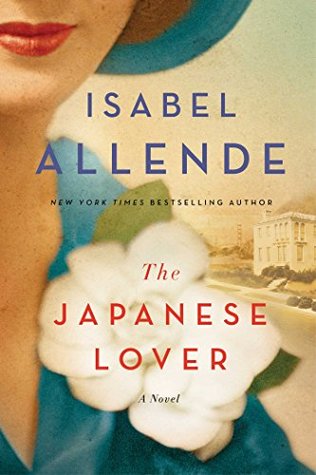
Take A Peek Book Review: The Japanese Lover by Isabel Allende

“Take a Peek” book reviews are short and (possibly) sweet, keeping the commentary brief and providing a little peek at what the book’s about and what I thought.

japanese lover2

Synopsis:

(via Goodreads)

In 1939, as Poland falls under the shadow of the Nazis, young Alma Belasco’s parents send her away to live in safety with an aunt and uncle in their opulent mansion in San Francisco. There, as the rest of the world goes to war, she encounters Ichimei Fukuda, the quiet and gentle son of the family’s Japanese gardener. Unnoticed by those around them, a tender love affair begins to blossom. Following the Japanese attack on Pearl Harbor, the two are cruelly pulled apart as Ichimei and his family, like thousands of other Japanese Americans are declared enemies and forcibly relocated to internment camps run by the United States government. Throughout their lifetimes, Alma and Ichimei reunite again and again, but theirs is a love that they are forever forced to hide from the world.

Decades later, Alma is nearing the end of her long and eventful life. Irina Bazili, a care worker struggling to come to terms with her own troubled past, meets the elderly woman and her grandson, Seth, at San Francisco’s charmingly eccentric Lark House nursing home. As Irina and Seth forge a friendship, they become intrigued by a series of mysterious gifts and letters sent to Alma, eventually learning about Ichimei and this extraordinary secret passion that has endured for nearly seventy years.


My Thoughts:

While The Japanese Lover tells what should be fascinating stories of suffering and survival, the key problem I had with it was the telling. As in, show — don’t tell. Somehow, most of the narrative of this novel felt like a third party summarizing events, rather than allowing me to witness events for myself. There are a lot of shared stories and memories, but they mostly lack immediacy or a sense of real texture.

Additionally, the overall storyline felt a bit kitchen-sinky to me. Alma is sent off to American by her parents who stay behind in Poland and perish in the Holocaust. Irina’s mother was a victim of sex trafficking and ultimately causes horrible abuse to Irina herself. Ichimei and his family are forced into an internment camp during World War II. Alma’s husband leads a closeted life and dies of AIDS. Horrible things happen, but somehow I barely felt any of them.

The Japanese Lover is a fast read, and parts were quite interesting, but I simply couldn’t engage emotionally with much of it due to the style of the storytelling. This was actually pretty surprising to me, as I’ve read and loved many books by this author in the past. The individual stories all should have been compelling, but the mashing up of them all into one novel just doesn’t work. Add to this the fact that Alma and Ichimei’s love story felt flat and unexciting, and I have to say that The Japanese Lover just isn’t the best example of an Isabel Allende novel.

_________________________________________

The details:

Title: The Japanese Lover
Author: Isabel Allende
Publisher: Atria
Publication date: November 3, 2015
Length: 322 pages
Genre: Historical fiction
Source: Purchased

Save

Save

Flashback Friday: The House of the Spirits

Flashback Friday is my own little weekly tradition, in which I pick a book from my reading past to highlight. If you’d like to join in, here are the Flashback Friday book selection guidelines:

  1. Has to be something you’ve read yourself
  2. Has to still be available, preferably still in print
  3. Must have been originally published 5 or more years ago

Other than that, the sky’s the limit! Join me, please, and let us all know: what are the books you’ve read that you always rave about? What books from your past do you wish EVERYONE would read? Pick something from five years ago, or go all the way back to the Canterbury Tales if you want. It’s Flashback Friday time!

My pick for this week’s Flashback Friday:


The House of the Spirits by Isabel Allende

(published 1982)

From Goodreads:

In one of the most important and beloved Latin American works of the twentieth century, Isabel Allende weaves a luminous tapestry of three generations of the Trueba family, revealing both triumphs and tragedies. Here is patriarch Esteban, whose wild desires and political machinations are tempered only by his love for his ethereal wife, Clara, a woman touched by an otherworldly hand. Their daughter, Blanca, whose forbidden love for a man Esteban has deemed unworthy infuriates her father, yet will produce his greatest joy: his granddaughter Alba, a beautiful, ambitious girl who will lead the family and their country into a revolutionary future.

The House of the Spirits is an enthralling saga that spans decades and lives, twining the personal and the political into an epic novel of love, magic, and fate.

It’s hard to believe that The House of the Spirits is Isabel Allende’s first novel. Beautifully written and structured, this generation-spanning book is both a detailed look at the life of a family and its eccentric members and a look at the political upheaval that forms such a critical piece of Chile’s history. I’ve read and enjoyed many of Isabel Allende’s novels since, but The House of the Spirits is truly unforgettable.

… and yet another example of a wonderful book that was only a so-so movie. Skip the DVD — read the book instead.

So, what’s your favorite blast from the past? Leave a tip for your fellow booklovers!

Note from your friendly Bookshelf Fantasies host: To join the Flashback Friday fun, write a blog post about a book you love and share your link below. Don’t have a blog post to share? Then share your favorite oldie-but-goodie in the comments section. Jump in!
