Book Review: Sprig Muslin by Georgette Heyer

Title: Sprig Muslin
Author: Georgette Heyer
Publisher: Sourcebooks Casablanca
Publication date: 1956
Length: 298 pages
Genre: Historical fiction/romance
Source: Purchased
Rating:

Rating: 4.5 out of 5.

A dashing man of honor…

En route to propose to his sensible acquaintance Lady Hester, Sir Gareth Ludlow finds young, pretty Amanda wandering unattended and knows it is his duty to bring her back to her family. This turns out to be a challenge as Amanda seems to possess an imagination as intriguing as it is dangerous.

A shocking refusal…

Lady Hester stuns both him and her family when she refuses him. At her age, no one would expect her to turn down such an eligible suitor. But Lady Hester has met the indomitable Amanda. How can the quiet, intelligent Hester hope to compete with such a lively young lady?

After finishing Georgette Heyer’s Cotillion, I felt like my appetite for her books was reignited, and turned to Sprig Muslin, a paperback I’d picked up a few years ago. I’m so happy I did! Sprig Muslin is silly, sweet-natured, fun — and a refreshing contrast to some of Heyer’s more dramatic books about rakes and rogues and dashing men with terrible reputations.

In Sprig Muslin, the two anchors of the story are good-natured, respectable adults who nonetheless find themselves caught up in a whirlwind of shenanigans. Sir Gareth Ludlow, at age 35, is fashionable, well-off, and after losing his fiancée in a tragic accident many years earlier, still single. It’s time for him to take a wife and start producing heirs.

Sir Gareth decides to propose to Lady Hester Theale, a kind, intelligent woman he’s been friends with all his life. Lady Hester, at age 29, is on the shelf and seemingly content with her lot, although she does seem to get bossed around by her overbearing brother and sister-in-law quite a bit. Hester is appalled to learn that Sir Gareth has declared his intentions to her father and is en route to propose to her; although she won’t give a reason, she definitely does not want this proposal.

Sir Gareth’s plans are interrupted when he stops for refreshment along the way and discovers a young girl on the verge of trouble. Amanda, not quite 17, has apparently run away and is determined to remain at large. Clearly belonging to an upper class family, she states that she intends to marry an up-and-coming soldier, and by running away, she intends to force her grandfather to give his consent. Amanda is headstrong and passionate, and Gareth realizes that his duty is to see her safely returned to her family rather than leaving her to make her way unchaperoned and without an actual plan.

There’s a hitch, however: Amanda refuses to name her family, where they live, or even who her soldier fiancé is. She spins story upon story, and while initially thankful that Gareth seems willing to help her, she soon realizes that he’s going to keep her from her schemes, and attempts to get away from him too.

Thus begins a madcap series of escapades, as Amanda creates one fabulous story after another to explain her situation, drawing in Gareth and then others met along the way. Each tale leads to further complications, and before too long even Hester is drawn into Amanda’s web of stories and fake identities.

Sprig Muslin is utterly delightful. As Amanda’s stories get more and more inventive, various bystanders take on roles, and her tales result in all sorts of rescue attempts, misguided escapes, and even a daring kidnap attempt that goes disastrously wrong. It’s all quite ludicrous, and so very, very enjoyable.

As with all Georgette Heyer books, the unusual words and expressions make the reading experience extra entertaining — here are a few from Sprig Muslin that I highlighted:

  • nodcock (fool or idiot)
  • marplot (one who ruins a plan through meddling)
  • bosky (drunk)
  • daffish (stupid, silly)
  • spinney (small area of trees and bushes)
  • gammon (trick)
  • nonesuch (a person or thing unrivaled or unequaled)
  • gaby (a foolish person)
  • elbow-crooker (drinker)
  • bobbery (a squabble, a noisy disturbance)
  • humdudgeon (loud complaint or noise)
  • flat (as in, “A flat, my child, is one who is easily duped”)

And as for phrases, can’t beat:

  • a fashionable fribble
  • a real top-of-the-trees, slap up to the echo (top-of-the-trees = someone of high esteem)
  • chuffy thing to do
  • in the petticoat line (associating with women of “easy virtue)

While I always enjoy Georgette Heyer’s books, Sprig Muslin may have just become my new favorite. It’s so good-natured, and the sense of fondness for Kitty’s exploits makes this a sweet read. I came away from it really appreciating all the main characters, and had plenty of giggles along the way. If you’re looking for a GH book but aren’t crazy about rakish men being cast as heroes, Sprig Muslin is a great choice!
Book Review: Cotillion by Georgette Heyer

Title: Cotillion
Author: Georgette Heyer
Publisher: Sourcebooks Casablanca
Publication date: 1953
Length: 355 pages
Genre: Historical fiction/romance
Source: Purchased
Rating:

Rating: 4 out of 5.

Almost an heiress
Country-bred, spirited Kitty Charings is on the brink of inheriting a fortune from her eccentric guardian — provided that she marries one of his grand-nephews. Kitty has spent her secluded life pining for the handsome, rakish Jack, who is well aware of her attachment.

A plan of her own
But when Jack fails to respond to his great-uncle’s ultimatum, Kitty hatches a strategy of her own — a counterfeit betrothal to mild-mannered Freddy Standen (who neither needs nor wants the money).

A most unlikely hero
And when Kitty’s generous heart leads to all sorts of unintended troubles, there is only one man who can rescue her from more than one dreadful fix, pick up the pieces of her plotting and in the process, win her heart…

Cotillion is a light-hearted addition to Georgette Heyer’s huge collection of Regency romances, and it’s a silly read that still manages to surprise.

Main character Kitty is the ward of a grumpy, gouty, rich old man who has named her his heiress — but only if she marries one of her many eligible cousins-by-adoption. Great-uncle Matthew summons the lot of them to his gloomy estate, but not all show up: Jack, the dashing rake whom Kitty has loved since girlhood, has declined the invitation.

Several others do arrive as ordered — Lord Biddenden, the oldest cousin — already married and there to keep an eye on things; Lord Dolphinton, the sweet but slow-witted Earl of an Irish estate (and apparently Irish nobility isn’t considered nearly as impressive as English nobility); Hugh, a rector who’s entirely too upright and stodgy to suit Kitty… and then there’s Freddy, a “Pink” of the ton, a nice guy who likes Kitty well enough but has no interest in Great-uncle Matthew’s schemes (and as an eldest son, doesn’t need the money that comes with marrying Kitty).

Kitty is stuck — she’ll get nothing if she doesn’t marry one of the cousins, and she’s more than a little heart-broken that Jack hasn’t come to her rescue. She’s been raised in this boring home with no opportunity for society, and is desperate for at least a taste of what’s she’s missing before resigning herself to a life working as a governess or a chambermaid. What Kitty wants above all else is the chance to spend time in London — even just a month would be a treat! And so she comes up with a scheme — she asks Freddy to “offer” for her and enter into a fake betrothal. If they were betrothed, it would be proper for him to take her to London to stay with his family and introduce her to society. If they don’t publicly announce the betrothal, there will be no harm in calling it off after a month. Kitty feels quite sure that after that small taste of fun and freedom, she’ll be ready to face the rest of her life.

Freddy is a friendly, affable sort and agrees to the plan, which soon gets even more complicated. Freddy’s mother is unavailable to chaperone, so he installs her with his married sister, who’s quite a lot of fun, and soon Kitty is enjoying fashion, parties and outings. She also can’t refrain from befriending unusual people and wanting to help them, and before long, she’s caught up in the affairs of two different couples who seem to have all the odds stacked against them — but Kitty is determined to sort out their challenges and get them all a happy ending.

A note on the title: According to an essay on Tor.com:

A cotillion is a Regency dance where you change partners, and Georgette Heyer’s Cotillion is a Regency Romance where everybody twirls and faces their partners and ends up in a happy set of not-entirely predictable couples. 

What’s more, a cotillion is a dance for four couples, and that’s pretty apt for this book.

Cotillion is quite a fun read. Sure, I could quibble with the terribly sexist attitudes portrayed here, but they’re a product of their time — so I can despise the seemingly admirable rake who’s known for his string of mistresses without despising the book itself.

Reading Georgette Heyer’s Regency books is a lesson in idioms, slang, and speech patterns. Freddy in particular speaks without including subjects in his sentences:

“Thing is,” said Freddy, recognizing his cue, “never thought my uncle would permit it. Thought it was useless to approach him. As soon as I read his letter — bespoke a chaise and came at once! Trust you’ll allow me to speak to him in the morning.”

And here are just a few of the words or phrases I had to stop, highlight, and look up:

  • objurgations (harsh reprimands or criticisms)
  • retroussé (a nose that turns up at the tip)
  • wear the willow (to grieve a death)
  • fustian (pompous or pretentious speech)
  • out-and-outer (possessing a particular quality to an extreme degree)
  • bamming (hoaxing, tricking, cheating)
  • percipience (perceptiveness)
  • gudgeon (a credulous or easily fooled person)
  • Joliffe-shallow (type of hat)
  • cognomen (nickname)
  • cicisbeo (the professed gallant or lover of a woman)
  • havey-cavey (dubious, shady)

And as for dialogue, here are a few choice selections:

“Dashed bacon-brained notion to take into your to your cockloft!”

Jack’s too downy to play cards with a leg. But he ain’t a flat either.

When I go into wedded shackles in will be in my own time, and in my own fashion.

Kitty’s adventures are not to be taken terribly seriously. Having read a bunch of GH’s Regency romances already, I was sure from the start that I knew where the story was going, but — surprise!! — about midway through I realized that my expectations were way off base, and the way it all worked out really charmed me. (I’ve seen a few Goodreads reviews say that the surprise is most effective if you’ve read at least a few other Heyer romances first — and that makes sense to me!)

I can’t say that Cotillion is my favorite of Georgette Heyer’s books, but I’m certainly glad to have read it, and found it really entertaining the whole way through.

Any Georgette Heyer fans out there? Which of her books do you recommend? This is #8 for me, and I’ll happily read more (although I think about 1 or 2 per year is probably the most I can handle).

My Classics Club Spin book for summer 2022 will be…

Earlier this week, I shared a post with my list of books for the Classics Club Spin challenge (see it here), and today, this spin’s number was announced. (For those keeping track, it’s CC Spin #30, and for me personally, #2!)

Hosted by The Classics Club blog, the Classics Club Spin is a reading adventure where participants come up with a list of classics they’d like to read, number them 1 to 20, and then read the book that correponds to the “spin” number that comes up.

For CCSpin #30, the lucky number is:

And that means I’ll be reading:

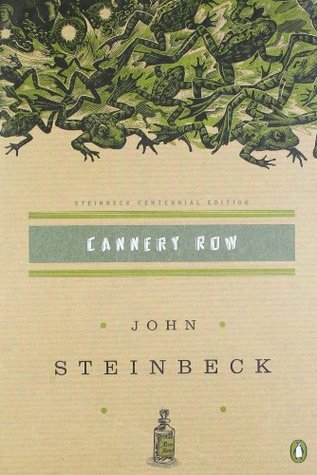
Cannery Row by John Steinbeck, published in 1945, 181 pages.

Synopsis for the edition above:

Cannery Row is a book without much of a plot. Rather, it is an attempt to capture the feeling and people of a place, the cannery district of Monterey, California, which is populated by a mix of those down on their luck and those who choose for other reasons not to live “up the hill” in the more respectable area of town. The flow of the main plot is frequently interrupted by short vignettes that introduce us to various denizens of the Row, most of whom are not directly connected with the central story. These vignettes are often characterized by direct or indirect reference to extreme violence: suicides, corpses, and the cruelty of the natural world.

The “story” of Cannery Row follows the adventures of Mack and the boys, a group of unemployed yet resourceful men who inhabit a converted fish-meal shack on the edge of a vacant lot down on the Row.

And a synopsis for a different edition:

Unburdened by the material necessities of the more fortunate, the denizens of Cannery Row discover rewards unknown in more traditional society. Henry the painter sorts through junk lots for pieces of wood to incorporate into the boat he is building, while the girls from Dora Flood’s bordello venture out now and then to enjoy a bit of sunshine. Lee Chong stocks his grocery with almost anything a man could want, and Doc, a young marine biologist who ministers to sick puppies and unhappy souls, unexpectedly finds true love. Cannery Row is just a few blocks long, but the story it harbors is suffused with warmth, understanding, and a great fund of human values.

First published in 1945, Cannery Row focuses on the acceptance of life as it is—both the exuberance of community and the loneliness of the individual. John Steinbeck draws on his memories of the real inhabitants of Monterey, California, and interweaves their stories in this world where only the fittest survive—creating what is at once one of his most humorous and poignant works. In Cannery Row, John Steinbeck returns to the setting of Tortilla Flat to create another evocative portrait of life as it is lived by those who unabashedly put the highest value on the intangibles—human warmth, camaraderie, and love.

I have to say, I’m not especially excited that this is the book that came up this time around — I have been intending to read Cannery Row for years, but there are other books on my list that were more strongly calling to me.

Cannery Row was published ten years after Tortilla Flat, which I read with my book group a couple of years ago. Having spent lots of time in Monterey, I’m familiar with the area as it exists now, and I do think it’ll be interesting to finally read this Steinbeck classic.

And fortunately for me, I actually own a copy! I have the edition pictured above, and since it’s under 200 pages, I don’t think I’ll have any problem finishing before the August 7th deadline.

I’m a little bummed that I’m feeling so hesitant about this book… but I’m sure once it’ll all work out. Wish me luck!

Here’s my list of 20 titles for Classics Club Spin #30:

  1. Frenchman’s Creek by Daphne DuMaurier
  2. A Connecticut Yankee in King Arthur’s Court by Mark Twain
  3. An Old-Fashioned Girl by Louisa May Alcott
  4. Dracula by Bram Stoker
  5. Cannery Row by John Steinbeck
  6. O Pioneers! by Willa Cather
  7. Pygmalion by George Bernard Shaw
  8. Howards End by E. M. Forster
  9. The Mysterious Affair at Styles by Agatha Christie
  10. I Capture the Castle by Dodie Smith
  11. Foundation by Isaac Asimov
  12. In Cold Blood by Truman Capote
  13. Herland by Charlotte Perkins Gilman
  14. The Painted Veil by W. Somerset Maugham
  15. Passing by Nella Larsen
  16. The Awakening by Kate Chopin
  17. The Sound of Waves by Yukio Mishima
  18. Picnic at Hanging Rock by Joan Lindsay
  19. The Left Hand of Darkness by Ursula K. Le Guin
  20. Pale Horse, Pale Rider by Katherine Porter

My previous Classics Club Spin book:

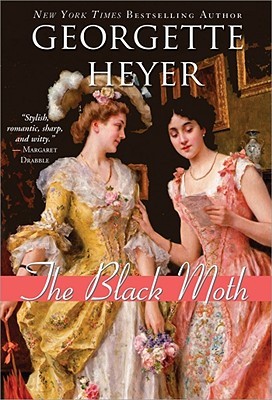
The Black Moth (read 4/2022)

Are you participating in this Classics Club Spin? If so, what book will you be reading?

Book Review: The Black Moth by Georgette Heyer

Title: The Black Moth
Author: Georgette Heyer
Publisher: Sourcebooks Casablanca
Publication date: 1921
Length: 355 pages
Genre: Historical fiction/romance
Source: Purchased
Rating:

Rating: 4 out of 5.

A disgraced lord, a notorious highwayman

Jack Carstares, the disgraced Earl of Wyndam, left England seven long years ago, sacrificing his honor for that of his brother when he was accused of cheating at cards. Now Jack is back, roaming his beloved South Country in the disguise of a highwayman.

And the beauty who would steal his heart

Not long after Jack’s return, he encounters his old adversary, the libertine Duke of Andover, attempting the abduction of the beautiful Diana Beauleigh. At the point of Jack’s sword, the duke is vanquished, but foiled once, the “Black Moth” has no intention of failing again.

This is Georgette Heyer’s first novel, a favorite of readers and a stirring tale to be enjoyed again and again.

The Black Moth was Georgette Heyer’s first novel, published when she was just 19 years old. The author went on to publish over 60 novels and became known as the queen of Regency romances. Apparently (according to Wikipedia and other online articles), she wrote The Black Moth in serial installments as a way to entertain her ailing, bedridden younger brother, and her father thought the story was so good that he encouraged her to publish it. And the rest, as they say, is history!

The Black Moth is quite the adventurous, swash-buckling tale, full of men behaving badly and women steeling their spines and standing up for themselves (with a little swooning thrown in too). Set during the Georgian era, the plot revolves around aristocratic men bound by family loyalty and what would now be considered out-of-proportion concern for honor and reputation.

Jack Castares, the elder son of the Earl of Wyncham, has been living in exiled disgrace for years as of the opening of the book, ever since he was caught cheating at cards — a fatal blow to a gentleman’s reputation. He spends his days as a highwayman, raiding carriages and terrorizing travelers — although he’s actually a highwayman with a heart of gold, more often than not helping the helpless or “donating” his ill-gotten gains to those in need.

But Jack’s younger brother Richard knows the truth. Richard was, in fact, the one who’d been cheating, but Jack took the blame rather than see his brother shamed and disgraced, which would have resulted in him losing the woman he loved.

Richard’s wife Lavinia’s oldest brother, Tracy Belmanoir, the Duke of Andover, was the one who “caught” the cheating. A man nicknamed “Devil”, the Duke is cold, decadent, and deadly when provoked. When he attempts to abduct a young woman who’s caught his eye, Jack intervenes, at risk to his own life. Family secrets, love, and honor become intertwined, until a final showdown involving yet another abduction, a duel, and (naturally) a happy ending.

The Black Moth is highly entertaining, but clearly a product of its time. I had to leave my feminist sensibilities firmly tucked away on a shelf while reading this book, or the paternalism and disrespect toward women would have driven me crazy — although to be fair, there are two lead women characters who are strong-willed, determined, and capable, and I love their portrayals.

On the negative side, however, is the plot climax that includes threat of a forced marriage — or, if the woman will not consent, the implied threat of a rape and marriage anyway. These fates are avoided by the hero’s arrival and success in a duel, but the fact remains that the evildoer goes unpunished and the incident is largely resolved through a gentlemen’s agreement that everyone will be better off keeping this a private affair.

Daring adventure and danger is the name of the game in The Black Moth, and the scenes that include either action sequences or social manners and maneuvers are the most enjoyable. I was less enthralled by the gambling and settling of debts and manly men being manly in their men’s clubs… but there was enough good stuff in the mix to outweigh these bits.

I ended up reading The Black Moth for the Classics Club Spin challenge, and I’m so glad I did! This book has been on my shelf for several years, and I’m happy that I finally had an incentive to pick it up and read it. I started The Black Moth via the Serial Reader app, thinking I’d read it over the course of a month in daily installments, but this approach ended up not working for me. The small bites didn’t give me enough immersion in the story and made it hard to keep the characters straight — I was much happier once I picked up my paperback edition and read straight through to the end.

This is, I believe, my 7th Georgette Heyer book, and I have a stack of unread books by her still sitting on my bookshelf. Overall, The Black Moth was a great pick for a light and easy classic read, and I’m glad to have gone back to this author. And now that I have, I’m feeling motivated to squeeze in at least one or two more this year!

If you’ve read any Georgette Heyer books, please let me know — which are your favorites? I’d appreciate any and all recommendations!

My Classics Club Spin book will be…

Yesterday, I shared a post with my list of books for the Classics Club Spin challenge (see it here), and today, this spin’s number was announced.

Hosted by The Classics Club blog, the Classics Club Spin is a reading adventure where participants come up with a list of classics they’d like to read, number them 1 to 20, and then read the book that correponds to the “spin” number that comes up.

For CCSpin # 29, the lucky number is:

And that means I’ll be reading:

The Black Moth by Georgette Heyer, published in 1921, 355 pages.

Synopsis:

A disgraced lord, a notorious highwayman

Jack Carstares, the disgraced Earl of Wyndam, left England seven long years ago, sacrificing his honor for that of his brother when he was accused of cheating at cards. Now Jack is back, roaming his beloved South Country in the disguise of a highwayman.

And the beauty who would steal his heart

Not long after Jack’s return, he encounters his old adversary, the libertine Duke of Andover, attempting the abduction of the beautiful Diana Beauleigh. At the point of Jack’s sword, the duke is vanquished, but foiled once, the “Black Moth” has no intention of failing again?

This is Georgette Heyer’s first novel – a favorite of readers and a stirring tale to be enjoyed again and again.

I’ve read several of Georgette Heyer’s books already, but not this one, and since it’s her first published novel, I’m really eager to give it a try.

I’m also really happy that this spin landed me with a book that’s available through Serial Reader. The Black Moth is on Serial Reader in 33 installments, so if I start this week, I’ll definitely finish before the April 30th target date.

Wish me luck! I’m excited to get started. And who knows? If this works out for me, I’ll be back for future spins!

Here’s my list of 20 titles for Classics Club Spin #29:

  1. Frenchman’s Creek by Daphne DuMaurier
  2. A Little Princess by Frances Hodgson Burnett
  3. An Old-Fashioned Girl by Louisa May Alcott
  4. Dracula by Bram Stoker
  5. Cannery Row by John Steinbeck
  6. O Pioneers! by Willa Cather
  7. Queen Lucia by E. F. Benson
  8. Howards End by E. M. Forster
  9. The Mysterious Affair at Styles by Agatha Christie
  10. I Capture the Castle by Dodie Smith
  11. The Black Moth by Georgette Heyer
  12. Foundation by Isaac Asimov
  13. In Cold Blood by Truman Capote
  14. Herland by Charlotte Perkins Gilman
  15. The Painted Veil by W. Somerset Maugham
  16. Passing by Nella Larsen
  17. The Awakening by Kate Chopin
  18. The Sound of Waves by Yukio Mishima
  19. The Hobbit by J. R. R. Tolkien
  20. Picnic at Hanging Rock by Joan Lindsay

Did you participate in this Classics Club Spin? If so, what book will you be reading?

Shelf Control #185: Cotillion by Georgette Heyer

Shelves final

Welcome to Shelf Control — an original feature created and hosted by Bookshelf Fantasies.

Shelf Control is a weekly celebration of the unread books on our shelves. Pick a book you own but haven’t read, write a post about it (suggestions: include what it’s about, why you want to read it, and when you got it), and link up! For more info on what Shelf Control is all about, check out my introductory post, here.

Want to join in? Shelf Control posts go up every Wednesday. See the guidelines at the bottom of the post, and jump on board!

cropped-flourish-31609_1280-e1421474289435.pngTitle: Cotillion
Author: Georgette Heyer
Published: 1953
Length: 355 pages

What it’s about (synopsis via Goodreads):

The three great-nephews of irascible Mr. Matthew Penicuik know better than to ignore his summons, especially when it concerns the bestowal of his fortune. The wily old gentleman has hatched a freakish plan for his Country-bred stepdaughter’s future: his fortune will be lovely Catherine Charing’s dowry if she married one of his great-nephews. To spirited Kitty, the conditions of her guardian’s will before she could inherit a tuppence were intolerable.

In spite of the unwelcome attentions of greedy suitors, who are scrambling for her hand, Kitty is not wholly averse, but only if the right cousin proposes. Unfortunately, Kitty during her secluded life pining, has set her heart on handsome and virile Jack Westruther, a confirmed rake. Jack, who is well aware of her attachment, however, made it quite clear that he would marry her only when he had sown his last wild oat and seems to have no inclination to marry her anytime soon. But Kitty has other ideas… and anxious to hasten matters she devises a plan. Kitty convinces modest and carefree cousin Frederick Standen to pose as her fiance, hoping thereby to make Jack jealous and to see a little more of the world than her isolated life on her great-uncle’s estate has afforded her.

Her plan takes her to visit Freddy’s family in London, where her kith and kin embroil her in their romantic troubles, sprinkling witty banter with Parisian phrases. Cousin Lord Foster Dolphinton has fallen for a merchant’s daughter in conflict with his mother. Meanwhile, her French cousin, Camille, a professional gambler, try to win the heart of beautiful Olivia Broughty, in turn the object of cousin Jack’s dishonorable intentions. Resourceful cousin Freddie turned out to be more of a man than Kitty anticipated. And when Kitty’s generous heart leads to all sorts of unintended troubles, there is only one man who can rescue her from more than one dreadful fix and pick up the pieces of her plotting. Now, Kitty herself wonders who is really right for her….

How and when I got it:

I went on a bit of a Heyer buying binge in 2017.

Why I want to read it:

Georgette Heyer is one of those authors that I heard people talk about for years before actually reading anything by her. When my book group read one of her books back in 2017, I could see what all the fuss what about. Her books are sweet and light and romantic, full of period detail and tons of escapades involving marriage and courtship, rakes and ladies, scandals and scheming. Cotillion is one of the ones that I bought in a buying binge after I’d read a few more of her books. I think I read 5 or 6 that first year, and haven’t gone back yet for more… but I do intend to, especially since I have another 10 or so on my shelf.

What do you think? Would you read this book?

Or do you have other Georgette Heyer books to recommend?

Please share your thoughts!

__________________________________

Want to participate in Shelf Control? Here’s how:

  • Write a blog post about a book that you own that you haven’t read yet.
  • Add your link in the comments!
  • If you’d be so kind, I’d appreciate a link back from your own post.
  • Check out other posts, and…

Have fun!

Top Ten Tuesday: Ten books (or series) I can count on to lift my spirits

TTT summer

Top Ten Tuesday is a meme hosted by That Artsy Reader Girl, featuring a different top 10 theme each week. This week’s topic is Books to Pull You Out of a Reading Slump. I’m not sure I actually have reading slumps — I mean, I can ALWAYS find something that gives me a reading energy boost! So, twisting the theme just a bit, here are ten books that make me happy (even though their stories are not only rainbows and kitties.)

1) The Outlander series by Diana Gabaldon: Sure, terrible things happen to the characters throughout the series, but there’s just something so wonderful about spending time with them all, no matter how dire the circumstances.

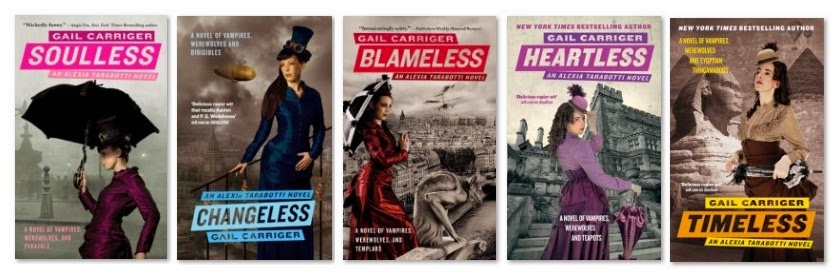
2) The Parasol Protectorate books by Gail Carriger: Supernatural shenanigans plus Victorian manners — definitely a winning combination.

3) Alpha & Omega by Patricia Briggs: I love the Mercy Thompson series as well as the Alpha & Omega series by Patricia Briggs. This novella in particular is one that I love reading and re-reading. It’s short and sharp and just so perfect.

4) Harry Potter by J. K. Rowling — need I say more?

5) Pretty much anything by Jane Austen: I love them all, and they always make me smile. The audiobooks are sheer delight!

6) And also, anything by Georgette Heyer! I’ve read 6 or 7 of her books so far, but plan to read lots more! Just happy, fun reading experiences.

7) The Blue Sword by Robin McKinley: It’s been a while since I last read this one, but I know it always makes me happy.

8) Fables by Bill Willingham: Such an amazing graphic novel series. I’m definitely looking forward to starting again from the beginning one of these days.

9) The Hitchhiker’s Guide to the Galaxy by Douglas Adams: Such silly fun.

10) Anna and the French Kiss by Stephanie Perkins: Not necessarily this book specifically, but sweet YA romances in general are sometimes the perfect solution to a gray and cloudy mood.


What books made your list this week? Please share your TTT link!

Save

Save

Save

Save

Save

Save

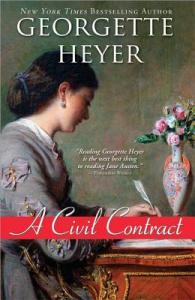
Book Review: A Civil Contract by Georgette Heyer


Can the wrong bride become the perfect wife?

Adam Deveril, the new Viscount Lynton, is madly in love with the beautiful Julia Oversley. But he has returned from the Peninsular War to find his family on the brink of ruin and his ancestral home mortgaged to the hilt. He has little choice when he is introduced to Mr. Jonathan Chawleigh, a City man of apparently unlimited wealth and no social ambitions for himself-but with his eyes firmly fixed on a suitable match for his only daughter, the quiet and decidedly plain Jenny Chawleigh.

Another great addition to my Georgette Heyer library! Considering that I only read this amazing author for the first time last year, I’ve quickly become a fan.

A Civil Contract is quite fun. Poor Adam, whose father the Fifth Viscount was a gambler and a flagrant spender, is left to deal with overpowering debts upon his father’s death. The family faces financial ruin, including the lost of their beloved country home. What’s more, there is no possible way for Adam to marry his beloved Julia, as he has no means to support her, and even if she claims to be ready to live with Adam in poverty, would never be allowed by her parents to do so.

For a titled gentleman with money problems, there’s really just one acceptable solution: He must marry an heiress. Jenny Chawleigh is the respectable daughter of a very rich merchant whose only aim in life is to see his beloved girl elevated into the upper crust of society. Mr. Chawleigh is able to settle the Lynton debts, and Adam is able to provide Jenny with a title. They’re a mismatched pair, but Jenny’s sweetness and calm competence pave the way for the two of them to begin their married life together.

Of course, Adam never quite gets over his passion for Julia, but Jenny is clever enough to be able to take the drama out of the foiled romance, and she and Adam settle into a pleasant and companionable relationship. It takes the course of the novel for Adam and Jenny to truly develop into a strong couple, but it’s oodles of fun to see them getting there.

The novel contrasts the drama of young, ardent love with the steadiness and support of more mature married affection, and comes down decidedly on the side of the latter. While it irked me that Adam never actually contradicts Jenny when she says she’s not pretty, he treats her with respect, with appreciation, and with affection. Over time, it’s their shared interests, their little jokes, and their alignment in the important things that show that they’re actually well suited after all.

There are plenty of funny moments, especially all the scenes of Adam and Mr. Chawleigh butting heads. Jenny’s father is crass and blunt, but he’s mad about his daughter, and shows his love by buying her the best of everything, even when the best is gaudy, over the top, and simply not what truly elegant people would do. Adam is dignified, born and bred to the upper crust, and it’s constantly amusing to see his reactions to Mr. Chawleigh’s effusiveness. (The bathtub he installs for Jenny is hilarious — I won’t say more than that, but you really need to read about it to appreciate it.)

I love Heyer’s Regency romances, with their depictions of the social classes and the minutiae involved in playing the games of the nobility and gentry. The only downside for me in A Civil Contract were the overlong descriptions of the war against Napoleon — yes, the war is very much on Adam’s mind and has an impact on his fortunes, but I had a hard time keeping my mind from wandering whenever we strayed back into politics and war news.

Of course, if you’ve read and enjoyed other books by Georgette Heyer, this is another excellent one to pick up. It’s sweet and entertaining, and I found it refreshing to read a Heyer book with such a simple and unpretentious heroine.

_________________________________________

The details:

Title: A Civil Contract
Author: Georgette Heyer
Publisher: Sourcebooks Casablanca
Publication date: 1961
Length: 422 pages
Genre: Historical fiction
Source: Purchased

**Save

Save

Save

Save

Save

Save

Save

Take A Peek Book Review: The Convenient Marriage by Georgette Heyer

“Take a Peek” book reviews are short and (possibly) sweet, keeping the commentary brief and providing a little peek at what the book’s about and what I thought.

Synopsis:

(via Goodreads)

When the most eligible Earl of Rule offers for the hand of the Beauty of the Winwood Family, he has no notion of the distress he causes his intended. Miss Lizzie Winwood is promised to the impoverished Edward Heron but the Earl of Rule wants her as his wife. Lizzie’s sister Horatia conceives a dazzling plan to avert a nuptial disaster, and offers herself instead.

When Horatia married the powerful Earl of Rule, she was only saving her sister from a loveless match, rescuing her family fortune, and providing herself with a life of ease. Hers was a marriage made not in heaven but in the coolly logical mind of a very self-possessed young lady. Everyone knows she’s no beauty, but she’ll do her best to keep out of the Earl’s way and make him a good wife.

Not until Horatia was deep in dangerous intrigue with her husband’s vengeful rival, the dashing and arrogant Lord Lethbridge, did she suddenly find — to her own tremulous surprise — she had fallen deeply in love with the man she had married for money. But was it too late, now that she was but a heartbeat away from betraying both him and herself? And then, Sir Robert, sets out to ruin her reputation…

The Earl of Rule has found just the wife he wants, unbeknownst to Horatia, the Earl is enchanted by her. There’s simply no way he’s going to let her get into trouble. Overcoming some misguided help from Horatia’s harebrained brother and a hired highwayman, the Earl routs his old enemy, and wins over his young wife, gifting her with a love that she never thought she could expect.

My Thoughts:

Georgette Heyer’s books may be something of an acquired taste. I know a bunch of readers and bloggers who are absolutely devoted to her works. As for me, I tried her books for the first time just last year, and found them awfully fun, if a bit overly obsessed with fashion, hair styles, and all things upper class.

The Convenient Marriage is an intensely silly book, in which the headstrong 17-year-old Horatia decides to pursue a marriage of convenience with the much older Earl of Rule, sparing her older sister the obligation of marrying someone she doesn’t love in order to rescue her respectable family from their brother’s gambling debts. Rule appears initially amused by Horatia’s boldness, and basically takes a “why not?” approach to trading sisters. Horatia vows to keep out of Rule’s way, enabling the handsome, desirable rake to continue carrying on with his mistress.

Things become complicated when Horatia becomes the talk of the town, and even more complicated when the Earl’s old enemy decides to take revenge on him by ruining his wife. Of course, nothing goes according to plan. The most entertaining portions of the story have to do with Horatia’s brother’s madcap schemes to save her reputation and punish the wrong-doers — his antics are silly, drunken escapades that are totally ridiculous yet also terrifically funny.

The Convenient Marriage doesn’t offer much in the way of character depth — both Horatia and Rule’s inner lives and motivations remain murky throughout — but it’s a lot of fun, and worth reading for the social manipulations and games (as well as the descriptions of the truly outrageous hairstyles and diamond-encrusted shoes).

_________________________________________

The details:

Title: The Convenient Marriage
Author: Georgette Heyer
Publisher: Sourcebooks Casablance
Publication date: 2009 (originally published 1934)
Length: 322 pages
Genre: Historical romance
Source: Purchased

**Save

Save

Save

Save

Save

Save

Save

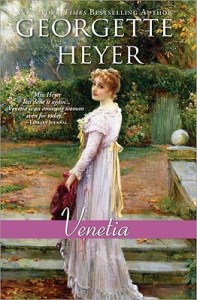
Audiobook Review: Venetia by Georgette Heyer


A young lady of beauty and intelligence facing an unbearable choice…

Venetia Lanyon is one of Georgette Heyer’s most memorable heroines. Beautiful, capable, and independent minded, her life on the family’s estate in the countryside is somewhat circumscribed. Then a chance encounter with her rakish neighbor opens up a whole new world for Venetia. Lord Damerel has built his life on his dangerous reputation, and when he meets Venetia, he has nothing to offer and everything to regret. As Venetia’s well-meaning family steps in to protect her from potential ruin, Venetia must find the wherewithal to take charge of her own destiny, or lose her one chance at happiness…

That’s it. It’s official. I’m a Georgette Heyer fangirl.

Venetia may well be my favorite Georgette Heyer book yet. It’s sweet, funny, clever, light, and adorable — in short, fluff, but super enjoyable fluff that’s perfectly entertaining without being cloying.

Venetia herself is a marvelous main character. She’s a bit unusual for a Regency romance heroine. At age 25 and unmarried, she’s perilously close to being “on the shelf”, but doesn’t seem particularly bothered by this. Venetia has lived all her life on her father’s country estate, more or less isolated from anything approaching society. Her father was a recluse, and her mother died when she was young. Ever since her father’s death some years earlier, Venetia lives at Undershaw with her younger brother Aubrey, running the estate until her other brother Conway returns from his military service and takes up the reins as heir.

Venetia and Aubrey are comfortable and happy. Aubrey is a budding scholar with his nose constantly in a book or ten, and at age 17, is soon to be off to Cambridge. While Venetia has two devoted suitors, she’s not in love with either, and is perfectly content to think of a future in which she sets up a household for herself and Aubrey and keeps things running for him while he’s busy with his studies.

This all changes, however, when the absentee lord of the neighboring estate returns home. Lord Damerel has a horrible reputation as a rake who once seduced and ran off with a married woman — and even though this happened nearly 20 years ago, he’s still not considered fit for decent society. He seems to enjoy his bad-boy status and his wild social life, though, and doesn’t exhibit any indication of wishing to reform

But then he meets Venetia! After a brief and sexually charged chance meeting, Venetia can’t shake thoughts of the devilish man next door, but doesn’t expect to see him again, as he never spends much time at his estate. Fate (or something) intervenes — Aubrey, who has a weak leg from a congenital hip problem, is thrown from his horse and injured, and is brought to Damerel’s estate, the closest shelter, for treatment. It’s clear that Aubrey needs to remain still and undisturbed in order to recuperate, and Damerel is a surprisingly generous and gracious host, insisting on caring for Aubrey for as long as needed.

Despite the disapproval of Venetia’s friends and would-be beaux, she becomes a daily visitor to Damerel’s estate, keeping company with Aubrey — but also becoming fast friends with Damerel. The friendship is a surprise and a delight for both of them. They discover that they can talk honestly and openly with one another in a way that they can’t with anyone else. They sit and talk for hours, and find themselves kindred spirits.

The complication, once they start to realize that what they feel goes beyond friendship, is that Damerel’s past has left him with a truly scandalous reputation. Venetia, on the other hand, is a virtuous girl who’s never been anywhere or done anything. Her aunt and uncle hope to arrange a suitable match for her with a respectable gentleman, but Venetia has other plans. Unfortunately for her, Damerel is so in love with her that he doesn’t want to ruin her, and decides to give her up rather than tarnish her in the eyes of society.

Oh, what fun! This business about reputations and scandal and — good gracious — what will everyone think? is just all so quaint and charming. Making a good match is really all that matters for a girl at that time, but Venetia is just rebel enough to not particularly care. She has money from her father’s bequest, enough to live comfortably without needing a wealthy husband to provide for her. She’s learned about life from books and is confident about her own abilities. She’s a devoted sister and a protector for Aubrey, has a good head for business as demonstrated by her management of Undershaw for many years, and feels that she’d be much happier living as a spinster than being trapped in a marriage that bores her to tears.

It’s refreshing to see a Regency heroine who knows her own mind so clearly. Venetia is never rude, not even when provoked, but she’s also no doormat. She’s honest with herself, understands what she truly desires, and is quite capable of scheming to get things to go her way. I was incredibly amused by her solution to her problems with Damerel, and her charming approach to manipulating those around her so that her plan is sure to be successful is just brilliant.

Once again, I simply loved the audiobook version of a Georgette Heyer novel. Phyllida Nash is a wonderful narrator, perfectly capturing the different tones and voices of the various characters. Not every female audiobook narrator can pull off a man’s voice with conviction, but Phyllida Nash is terrific, making Damerel growly and insinuating and absolutely rakish, while Venetia comes across as both innocent and clever.  Such fun!

I will say that the language in Georgette Heyer books can be a challenge at times, as she uses a lot of expressions and terms that are no longer used or not used in the same way, and it can be a bit of a puzzle trying to figure out the context. I do love how Venetia uses the term “idiotish” quite often (Damerel finds this amusing as well), and she and Aubry call each other “stoopid” with a certain degree of affection. I was thrown, though, early on in the book when Venetia is thinking about what she knows of Damerel’s reputation, and recalls how he was last in the country when he hosted an orgy at his estate a year or so prior to the current time in the book. An orgy??? I’m assuming the author is using the word in its older meaning, a drunken party with sexual excesses, rather than as what today’s pop culture would consider an orgy. Still, it’s rather startling toward the end of the book (spoiler ahead!) when Venetia tells Damerel that she doesn’t expect him to give up his orgies, and he asks her if she’d like to preside over them. Oh my.

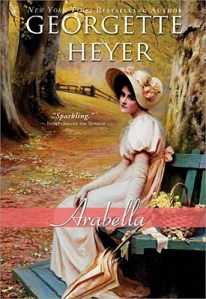
I only “met” Georgette Heyer this year, but Venetia is now the 4th of her books that I’ve read, and it’s splendid. Like Arabella (review), Venetia would be a good starting point for anyone who hasn’t read Georgette Heyer before. It’s full of the style and wit and sheer silliness that makes her books so delightful.

_________________________________________

The details:

Title: Venetia
Author: Georgette Heyer
Narrator: Phyllida Nash
Publisher: Sourcebooks Casablanca
Publication date: Originally published 1949
Length (print): 375 pages
Length (audiobook): 12 hours, 36 minutes
Genre: Regency romance
Source: Purchased

Save

Save

Save

Save

Save

Save

Save

Save

Save

Save

Save