This week marks the end of my For All Mankind binge. Overall, this is a fascinating, absorbing (but sometimes maddening) show. With one season still to come (possibly in 2027), I’m glad that I took the time to dive in and watch seasons 1 – 5. Here’s my season by season breakdown of the show and my reactions to each.
Warning: Spoilers ahead! I won’t divulge specifics about plots twists, character fates, etc — but talking about the general premise for the show and each season is unavoidably spoilery. In fact, I had no idea what I was getting into when I started season 1, and loved the major twist… but I’d guess that anyone who’s aware of this show and has seen any of the trailers has at least some basic knowledge of what to expect.
Let’s jump right in.
SEASON 1
Setting: Earth and the Moon, 1970s
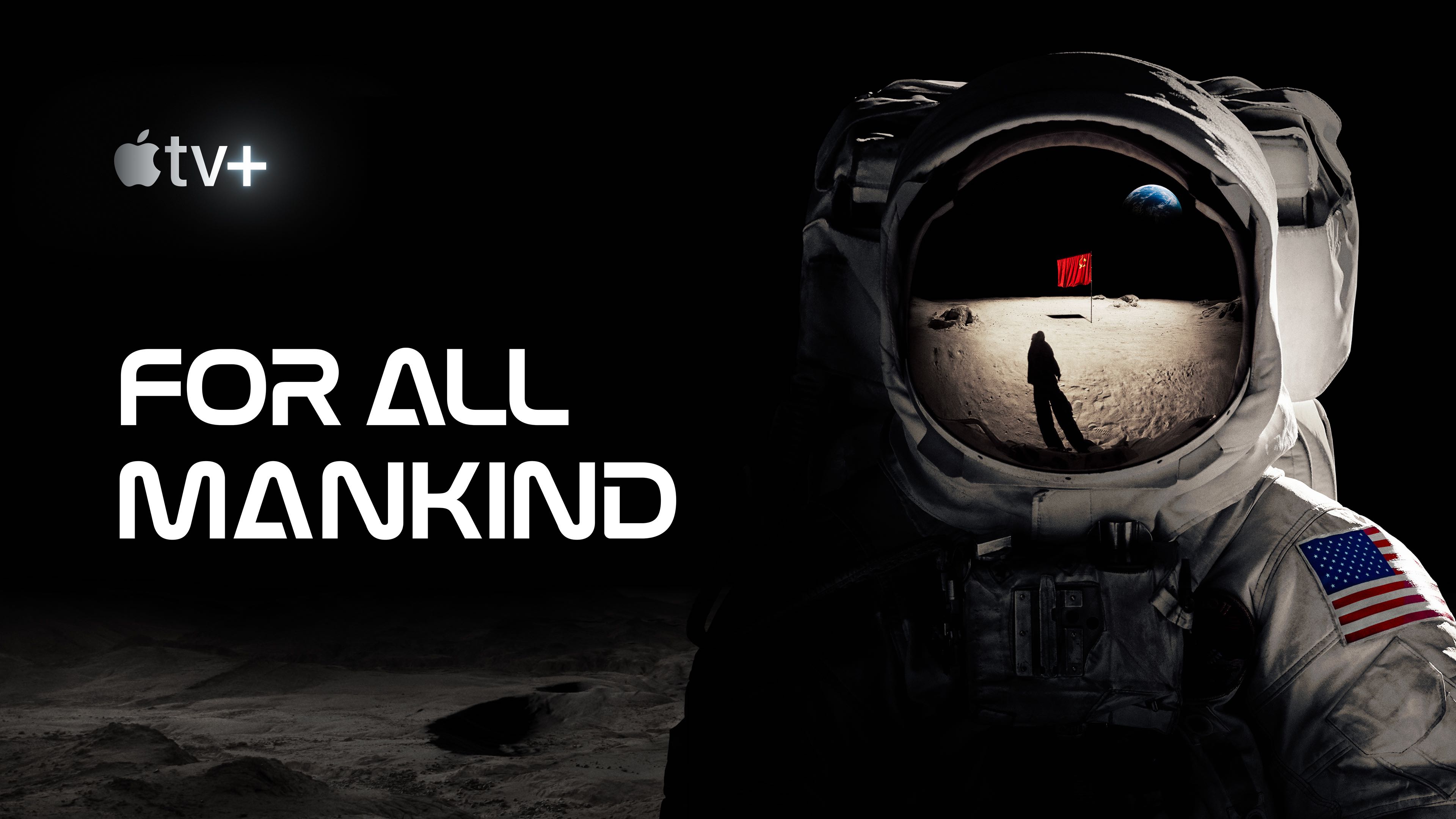
Here’s where I got my biggest and best surprise: Before starting this show, all I knew was that it was a series about the space race. Period. So imagine my surprise and delight to learn at the end of the very first episode that this is alternate history. It’s 1969, the world is watching the moon landing… and instead of hearing Neal Armstrong’s famous words while taking his first steps on the moon, we hear… Russian.
That’s right, in the world of For All Mankind, the Soviet Union gets to the moon first, a huge embarrassment for NASA, but also just the kick in the pants that the US needs to invest much more heavily in its own space program.
The season focuses on NASA’s moon program, ultimately landing astronauts on the moon and setting up the beginnings of a moon colony adjacent to a crater where ice has been discovered. To accelerate the program and keep up with the Russians, the astronaut corps accepts women, which is where the mix of characters becomes fascinating. We have the type of tough-guy fighter pilot astronauts we’d expect, but also daring women who’ve fought for the opportunity to fly and now go to space.
Season 1 does an excellent job of immersing us in the lives of the astronauts, their families on Earth, the scientists and dreamers of NASA, and an immigrant family who becomes involved with the space program as well. The personal elements add emotional weight to everything that happens. Absolutely fabulous characters.
The alternate history is fascinating. This is our world, but different. What does it mean for the greater society and political environment that the US lost the space race? We get news coverage and snapshots that show the impact, from an earlier end to the Vietnam War to the passing of the Equal Rights Amendment to Teddy Kennedy winning the 1972 presidential election.
Still, it’s the emotional beats (plus space adventures!) that make this season so incredibly powerful.
SEASON 2
Setting: Earth and the Moon, 1980s
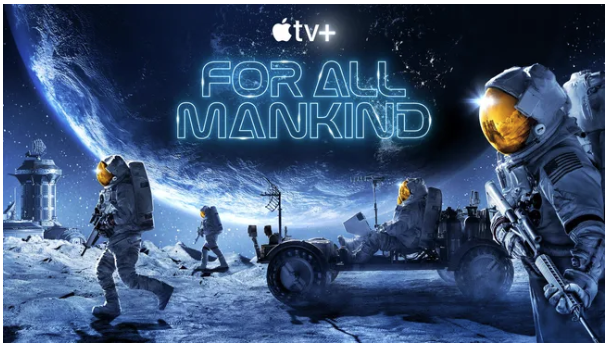
As we’ll come to expect each season, we open with a time jump to the next decade. The Jamestown Colony on the moon is well established and has expanded from the tiny, claustrophobic unit of season 1. Astronauts rotate in and out of Jamestown as Apollo missions continue. The discovery of key minerals on the moon has changed life on Earth, and advances in technology bring private corporations into the business of space exploration. Meanwhile, the Cold War makes its mark on the moon, as territory is divided between the US and USSR, and a competition for resources leads to each country sending armed troops to the moon to protect their own interests.
The main characters from season 1 are back, older and some in positions of greater authority, with new family configurations and personal life complications. We’re so invested in these people by now that anything that goes wrong (and plenty does) feels personal.
Honestly, I was on the edge of my seat throughout this season, and the finale left me more emotionally wrung out than anything else I remember watching in recent years. No spoilers about what happens… but it’s intense, to say the very least.
SEASON 3
Setting: Earth and Mars, 1990s
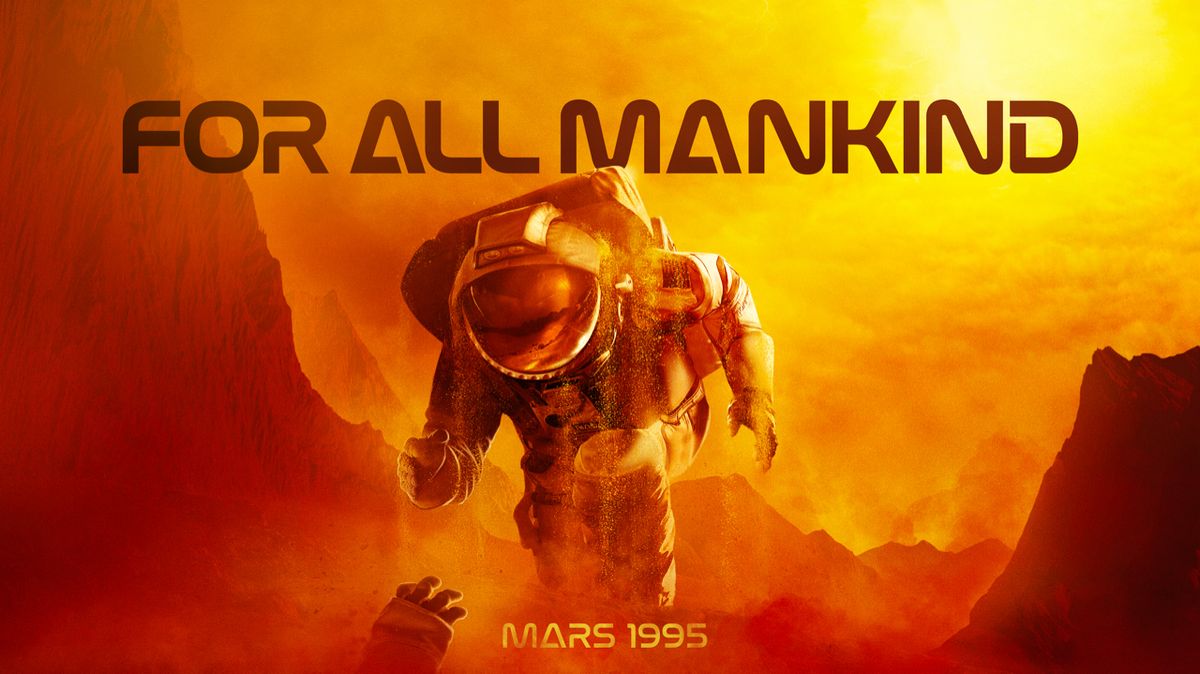
Another ten years have passed, and the US, the USSR, and private company Helios are in a three-way race to be the first to Mars. Some intense space scenes open the season, which feels like tradition at this point. We also open with the expected montage of news clippings, showing us in super-fast speed what’s happened since we last checked in. Politically, Gary Hart is President, following the presidency of Ronald Reagan; culturally, one piece I loved is learning that John Lennon survived an assassination attempt. Space exploration and the technological advances that it has provided have led to demonstrations on Earth, as coal and other former industries have become obsolete, leading to mass unemployment. While there’s excitement about reaching Mars, a growing segment of the population demands that Earth’s needs come first, and the protests threaten to turn violent.
On Mars, there’s an initial settlement of astronauts and cosmonauts as the US and USSR are forced to share resources in order to survive. The interpersonal dynamics are outstanding, and the drama ratchets higher and higher as significant dangers loom. Again, can’t get too specific without spoilers, but the season ends with shocking events, some joyous and some tragic.
SEASON 4
Setting: Mars (mostly), 2000s
Here’s where the show starts to lose me a bit. Yes, we get the opening new montage, learning that Al Gore is President, Bill Clinton is a political has-been (having never made it to the presidency in the wake of scandals), and gay marriage is the law of the land. But the show’s focus on space exploration has given way, perhaps inevitably, to storylines about living on Mars. It’s less alternate history, and much more standard sci-fi fare — shades of both Battlestar Galactica and The Expanse, in terms of showing off-planet human society and living conditions.
While some of the original characters are still around, 30 years have passed since the first season, and much of the focus has shifted to new characters, including family members of some of the originals. For at least one of the O.G. characters, there’s a personality change that seems unsupported by everything we formerly knew about this person, and I didn’t like it.
Mostly, though, the problem with season 4 is that the focus is mainly on labor unrest and social stratification, and not the challenges of continued space exploration. The workers want rights, better wages, and living conditions. The powers that be want to exploit every resource Mars has to offer for the benefit of Earth, even if it means that the Mars colony becomes irrelevant. Add to that the introduction of someone intended to become a new lead who I found unappealing (and whose storyline, mainly about smuggling, did not show him in a particularly good light), and we end up with a season with not enough space drama and too much emphasis on class and economic struggles.
SEASON 5
Setting: Mars (mostly) and Titan, 2010s
Another 10 year time jump! And now we see how much has changed on Mars. The news from Earth is not that interesting — what matters is that Mars is mining iridium, incredibly valuable on Earth, and that the combined Earth powers (known as the M-6) want to exploit it even further, even if it means that the “Marsies” (the hundreds of workers who live on Mars, along with their families) may see their way of life destroyed.
The last of the O.G. characters fade away, and the next generations and newer characters are firmly in the lead. Armed conflict between the M-6 and the Marsies becomes inevitable, and we see the terrible devastation when things come to a head.
Season 5 is better than season 4… but overall, I think the show has lost the power of its first three seasons, which played up the awe of seeing the space programs develop and the incredible dedication of the people involved. By seasons 4 and 5, the show is just too similar in feel to other sci-fi franchises — yes, with differences, but essentially, it’s become a show about human life on other planets. It’s moved so far beyond our reality that it’s lost the element of surprise and delight that come from seeing alternate versions of our own history. Yes, it’s entertaining, but somehow less special. (And it doesn’t help that one of the lead characters is a total dud, but maybe I’m in the minority on that issue).
Looking ahead: Season 6
Setting: Presumably, Mars and Titan, 2020s… ??
Not much is known yet about season 6, other than that it will be the final season for the series — which makes sense, as it brings the timeline more or less into alignment with ours. Despite the letdown of the last two seasons, I will absolutely want to see how it all wraps up!
Do I recommend For All Mankind?
Overall, yes. The first few seasons are (excuse the pun) stellar. I loved the presentation, the storytelling, and the characters, was on the edge of my seat for so many of the episodes, and felt totally invested every step of the way. The same was not true while watching seasons 4 and 5 — but even so, I was interested enough to see how the various conflicts played out, and still want to know what’s next.
The show has a terrific, talented cast and many, many breathtaking space sequences and moments of exhilaration and terror. The alternate history (particularly during seasons 1 – 3) make for a fascinating speculative look at all the “what ifs” of our own world and how small alterations might have huge impacts.