
Book Review: Before the Coffee Gets Cold by Toshikazu Kawaguchi


Title: Before the Coffee Gets Cold
Author: Toshikazu Kawaguchi
Publisher: Picador
Publication date: September 19, 2019
Length: 213 pages
Genre: Contemporary fiction
Source: Purchased
Rating:

Rating: 4.5 out of 5.

What would you change if you could go back in time?

In a small back alley in Tokyo, there is a café which has been serving carefully brewed coffee for more than one hundred years. But this coffee shop offers its customers a unique experience: the chance to travel back in time.

In Before the Coffee Gets Cold, we meet four visitors, each of whom is hoping to make use of the café’s time-travelling offer, in order to: confront the man who left them, receive a letter from their husband whose memory has been taken by early onset Alzheimer’s, to see their sister one last time, and to meet the daughter they never got the chance to know.

But the journey into the past does not come without risks: customers must sit in a particular seat, they cannot leave the café, and finally, they must return to the present before the coffee gets cold . . .

Toshikazu Kawaguchi’s beautiful, moving story explores the age-old question: what would you change if you could travel back in time? More importantly, who would you want to meet, maybe for one last time?

I’ve been hearing about Before the Coffee Gets Cold for years now, and finally made the time to sit and enjoy this cozy, sweet tale.

The setup is simple: A tiny basement cafe in Tokyo has only three tables plus a counter, has three clocks on the wall that show different times (although no one knows why), and is the focus of an urban legend that just happens to be true:

If you sit in a particular chair and focus on a time you want to visit, you can travel to the past — but you can’t leave that chair, nothing you do actually changes the future, and you have to finish your coffee before it gets cold, at which point you return to the present.

For many people, the rules are deal-breakers. What’s the point of going back in time if you can’t actually change anything? But as we see through the four chapters of this slim book, each of which highlights a different person’s reason for time traveling, there’s much to be gained with an open heart and open mind.

At just over 200 pages, Before the Coffee Gets Cold is a fast read, and it felt easy and natural to read it pretty much straight through. The storyline is very calm — there’s little action here; rather, it’s a book about connections, emotions, and getting the chance to say the things we wish we’d said in the first place.

Without going into details about the characters and their particular stories, I’ll just say that the cafe staff and its regular visitors have simple yet strong connections, and as their stories unfold, the emotional impact builds as well.

Before the Coffee Gets Cold is a lovely, sweet reading experience — a warm hug of a book that I recommend enjoying on a day when you especially need something bright and uplifting.

Since Before the Coffee Gets Cold was published, four more books have been added to the series. Before the Coffee Gets Cold feels very complete on its own, so while I’d like to eventually read more of these books — assuming the rest will be as lovely as the first! — I feel like I can take my time and pick up the next book on a whim, on a day when I need it.

Book Review: The Night Guest by Hildur Knútsdóttir 

Title: The Night Guest
Author: Hildur Knútsdóttir 
Translated by: Mary Robinette Kowal
Publisher: Tor Nightfire
Publication date: September 3, 2024
Length: 208 pages
Genre: Horror
Source: Review copy courtesy of the publisher via NetGalley
Rating:

Rating: 4 out of 5.

Hildur Knutsdottir’s The Night Guest is an eerie and ensnaring story set in contemporary Reykjavík that’s sure to keep you awake at night.

Iðunn is in yet another doctor’s office. She knows her constant fatigue is a sign that something’s not right, but practitioners dismiss her symptoms and blood tests haven’t revealed any cause.

When she talks to friends and family about it, the refrain is the same ― have you tried eating better? exercising more? establishing a nighttime routine? She tries to follow their advice, buying everything from vitamins to sleeping pills to a step-counting watch. Nothing helps.

Until one night Iðunn falls asleep with the watch on, and wakes up to find she’s walked over 40,000 steps in the night . . .

What is happening when she’s asleep? Why is she waking up with increasingly disturbing injuries? And why won’t anyone believe her?

This Icelandic horror novel first came to my attention through Mary Robinette Kowal, who apparently met the author, read the book (in Icelandic!), and then asked to translate it once she learned that it wasn’t available yet in English. Thanks to MRK’s involvement, The Night Guest is being published by Tor Nightfire in September — and it’s sure to be a hit with anyone who loves creepy, ambiguous horror stories.

The main character, Iðunn, wakes up exhausted every day. Not just the kind of exhausted that comes from a rough night’s sleep, but with aching muscles and body pains. Everything hurts. But doctor after doctor find nothing wrong with her. She suspect ALS or other frightening diseases, but when her blood work all comes back fine, it’s not a relief. Something is wrong… and no one can tell her what.

Socially, Iðunn is a little awkward, always feeling like an outsider. We learn much more about her background and why her family and social life are the way they are — but I appreciated the way the information unfolds and offers an unexpected twist, so I won’t reveal it here.

Eventually, Iðunn takes even more drastic measures to figure out what’s going on at night and to make it stop. Her efforts to stop it fail in rather spectacular, dramatic ways, and she progresses from waking up sore to waking up bloody and injured — still without knowing why.

Without revealing too much else about the plot, I’ll just say that the tension builds in a way that get more and more disturbing, and as the clues to Iðunn’s nightly experiences pile up, we find ourselves increasingly at a loss to explain it all. Is it psychosis, as one doctor believes? Is it something otherworldly acting upon her? I wasn’t quite sure where I landed on these questions at the end of the book — I like clean answers, and the book doesn’t provide a simple solution. We’re left to sort out what we ourselves think might have happened — which is disturbing, yet very effective.

The storytelling is terrific. What seems straightforward at the start becomes more complicated as we go along. The horror elements creep in when least expected, until it all becomes more explicitly horrifying by the end.

Iðunn is a great example of an unreliable narrator, and we’re left to wonder right alongside her just what the hell is going on. It’s a unique story, and the short length of the book (just over 200 pages) keeps it tight and fast-moving.

The Night Guest becomes more gory and violent by the end; earlier, it leans more toward psychological horror. I’m so glad I got to experience this unusual gem, and recommend for anyone who enjoys questionable lead characters and weird, terrifying premises. If you’re a horror fan, don’t miss this one!

Final note: As an added bonus, the use of technology (especially the fitness tracker) is awesome! Also, I don’t believe I’ve ever read an Icelandic book before, and I loved the setting, the names, and the overall vibe.

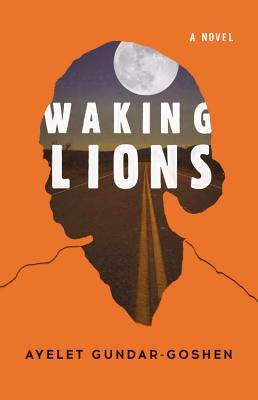
Take A Peek Book Review: Waking Lions by Ayelet Gundar-Goshen

“Take a Peek” book reviews are short and (possibly) sweet, keeping the commentary brief and providing a little peek at what the book’s about and what I thought.

Synopsis:

(via Goodreads)

After one night’s deadly mistake, a man will go to any lengths to save his family and his reputation.

Neurosurgeon Eitan Green has the perfect life–married to a beautiful police officer and father of two young boys. Then, speeding along a deserted moonlit road after an exhausting hospital shift, he hits someone. Seeing that the man, an African migrant, is beyond help, he flees the scene.

When the victim’s widow knocks at Eitan’s door the next day, holding his wallet and divulging that she knows what happened, Eitan discovers that her price for silence is not money. It is something else entirely, something that will shatter Eitan’s safe existence and take him into a world of secrets and lies he could never have anticipated.

WAKING LIONS is a gripping, suspenseful, and morally devastating drama of guilt and survival, shame and desire from a remarkable young author on the rise.


My Thoughts:

Waking Lions is an Israeli novel translated into English, and having or getting a grasp of Israeli social dynamics is key to understanding the conflicts and pressures involved in this story. Eitan is a respected, talented neurosurgeon who was forced into leaving his prestigious position at a Tel Aviv hospital after threatening — unsuccessfully — to expose his mentor’s corruption. Now living in the desert town of Beersheva, he’s frustrated and out of sorts, despite having a wonderful marriage and two small boys whom he loves. When he runs down the Eritrean immigrant with his SUV in the middle of the night, Eitan makes a snap decision that will haunt him and threaten all he holds dear.

The wife of the hit-and-run victim blackmails Eitan — not for money, but for medical treatment for a seemingly endless crowd of illegal immigrants, all refugees who risked their lives to cross the border into Israel. The Eritrean refugees work menial jobs for bare subsistence, and are too scared to go to a real clinic or hospital for help, fearing deportation or detention.

Waking Lions outlines the serious problems facing refugees, the ongoing criminal activity in areas such as Beersheva, and the ethnic tensions between African migrants, Bedouins, and Israelis. Moreover, Waking Lions is the exploration of personal ethics — how does a “good” man like Eitan justify the choices he makes? On top of this, as we view events from multiple points of view, it becomes clear that the cultural divides here are so vast that it’s simply impossible for any one person to  understand the thoughts and desires of any other.

While Waking Lions was a compelling read and offered plenty of food for thought and discussion, it was at times frustrating as well. The language often feels over-written, with long passages about inner thought processes that seem to meander and engage a bit too much in navel-gazing. (I have to wonder whether some parts of this book worked better in the original Hebrew.) Eitan in particular, as well as other characters, makes choices that seem utterly senseless, and I often felt that a desire for a dramatic plot was pushing the author to have characters act in unbelievable ways or to makes decisions that defy logic.

On a reading note, I’ll add that my husband and I ended up reading this book at the same time, and had many long discussions about the characters and their actions along the way. In some ways, our discussions were the best part of reading this book, so it could make for a terrific book group choice!

I enjoyed Waking Lions, but did feel that the lengthier moments of introspection weakened the storytelling, and couldn’t help shaking my head over some of the more ridiculous developments. Still, the book provides an eye-opening view into a little-covered element of life in Israel, and posed some interesting dilemmas about right and wrong — and whether right and wrong are absolutes or subject to social interpretation.

_________________________________________

The details:

Title: Waking Lions
Author: Ayelet Gundar-Goshen
Publisher: Little Brown & Company
Publication date: February 28, 2017
Note: Original Hebrew edition published 2014
Length: 352 pages
Genre: Contemporary fiction
Source: Published

Save

Save

Save

Save