Book Review: Cue the Sun! The Invention of Reality TV by Emily Nussbaum

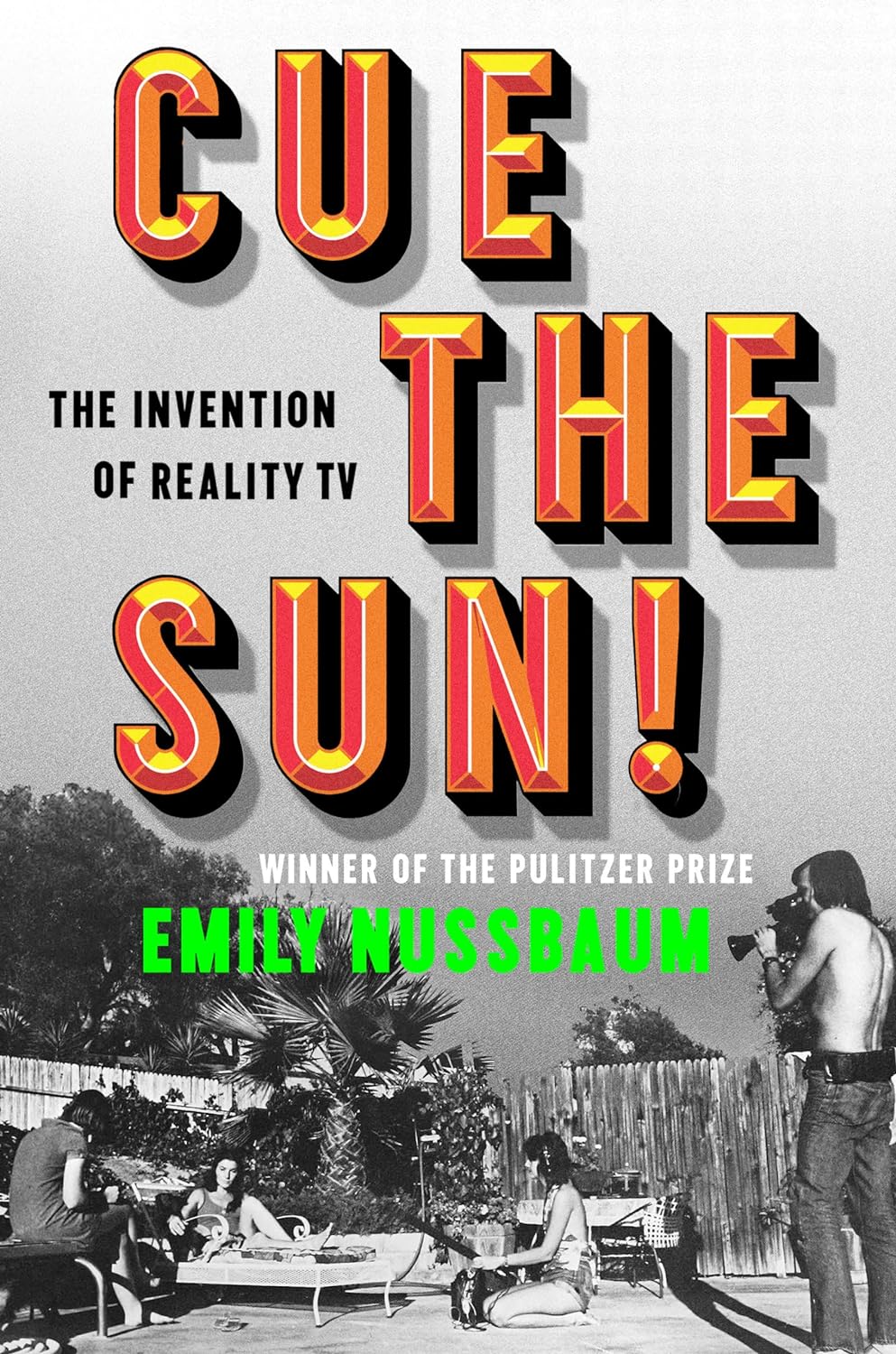
Title: Cue the Sun! The Invention of Reality TV
Author: Emily Nussbaum
Publisher: Random House
Publication date: June 25, 2024
Length: 464 pages
Genre: Non-fiction – pop culture/entertainment
Source: Library
Rating:

Rating: 4 out of 5.

Who invented reality TV, the world’s most dangerous pop-culture genre, and why can’t we look away from it? In this revelatory, deeply reported account of the rise of “dirty documentary,” Emily Nussbaum unearths the surprising origin story of the genre that ate the world, as told through the lively voices of the people who created it. At once gimlet-eyed and empathetic, Cue The Sun! explores the morally charged, funny, and sometimes tragic consequences of the hunt for something real inside something fake.

Nussbaum traces four paths of reality innovation—game shows, prank shows, soap operas, and clip shows—that united in the Survivor format, sparking a tumultuous Hollywood gold-rush. Along the way, we meet tricksters and innovators—from the icy Allen Funt to the shambolic Chuck Barris; Cops auteur John Langley; Bachelor mastermind Mike Fleiss; and Jon Murray, the visionary behind The Real World—along with dozens of crew members and ordinary people whose lives became fodder for the reality revolution. We learn about the tools of the trade—like Candid Camera’s brilliant “reveal” and the notorious Frankenbite, a deceptive editor’s best friend—and the moral outrage that reality shows provoked. But Cue The Sun! also celebrates what made the genre so powerful: a jolt of authentic emotion.

Through broad-ranging reporting, Nussbaum examines seven tumultuous decades, exploring the celebreality boom, reality TV as a strike-breaker, the queer roots of Bravo, and the dark truth behind The Apprentice. A shrewd observer who cares about television, she is the ideal voice for the first substantive cultural history of the genre that has, for better or worse, made America what it is today.

When I first heard about Cue the Sun! (which references a line from The Truman Show, in case you’re wondering), I figured I’d pick it up and just read the chapter about Survivor. But lo and behold, once I had this book in my hands, I couldn’t resist starting at the beginning and reading straight through to the end.

Author Emily Nussbaum masterfully traces the history of reality TV, from its early days catching ordinary people on camera — making real people points of fascination, but also, often mockery or scorn. We may think of shows like Candid Camera as some sweet piece of nostalgic fluff, but what I learned from this book is how subversive — and frequently nasty — these hidden camera pranks could be. Today, we accept that cameras are everywhere, but just imagine how shocking the idea was at the time!

Cue the Sun! covers reality TV history through all its various permutations, from clips shows (like America’s Funniest Home Videos) to game shows (The Newlywed Game), real-life crime (Cops), and talent competitions (The Gong Show).

Survivor was the true game-changer, when reality competitions blew up seemingly overnight. It’s fascinating to read about the creation of Survivor and the evolution of the first season. Now, everyone who plays Survivor knows how to play Survivor… but then, the contestants were largely making it up as they went along.

After Survivor, reality was huger than ever, with mega-hits such as the Bachelor franchise, Real Housewives and Kardashians, American Idol and countless other competitions dominating the airwaves. Cue the Sun! lays out how one phase led to another, and shows the wheeling and dealing, the seediness and invasiveness, as well as the creativity and innovation behind the scenes of it all.

The book also makes plain what anyone who watches reality TV knows — the cameras may catch people in the moment, but the producers manipulate what viewers see, both via editing after the fact and through questions, prompts, coaching and instruction as the action unfolds during filming. Even though it’s obvious that this is how these shows get made, the intensity and pervasiveness of the manipulation, as shown in Cue the Sun!, can feel very unsettling to read about. As the book points out, over and over again, we’re not watching actual reality — what we see is a curated, filtered, carefully assembled product that mimics some form of reality.

The final chapter of Cue the Sun! gets pretty dark, as it focuses on The Apprentice. It’s fascinating and disturbing to read about the creation and development of the show, and how the show is largely responsible for the public platform that led all the way to the Presidential race of 2016 and beyond.

That was the taboo truth about The Apprentice, in the end—the quality that made it more impressive, not less. Anyone could rebrand a mediocre businessman, some small-timer in need of a glow-up. But taking a failed tycoon who was a heavily in hock and too risky for almost any bank to lend to, a crude, impulsive, bigoted, multiply-bankrupt ignoramus, a sexual predator so reckless he openly harassed women on his show, then finding a way to make him look attractive enough to elect as the president of the United States? That was a coup, even if no one could brag about it.

Throughout the book, it’s interesting to see how the participants and players on reality shows have changed. At the genre’s beginning, it spotlighted real people’s lives as captured on camera. As the genre evolved into game play, constant surveillance, confessionals, and more, real people eagerly auditioned for reality TV, knowing that reality TV celebrity is now a career path. The author includes interviews from many reality contestants — some went back to “real” (ordinary, non-Hollywood lives) after their moments in the spotlight, but many pursued either further on-camera reality options, worked behind the scenes on other shows, or spent time on the fan circuit.

Cue the Sun! is a fascinating read. I don’t watch an enormous amount of reality TV (I’ve never watched The Bachelor or any of the “celebreality” shows currently on the air), but as a fan of Survivor and The Amazing Race, I found it so eye-opening to see where this TV trend began and how it’s developed over time.

Reading note: Don’t be put off by the page count! There’s about 50 pages or so of notes, bibliography, and an index at the end. I found Cue the Sun! a fast, absorbing read.

Want to know more? Check out these reviews:
Book Review: Guts: The Anatomy of the Walking Dead by Paul Vigna

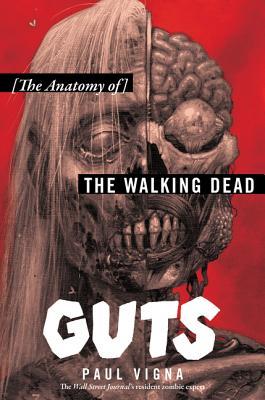
In this first and only guide to AMC’s exceptional hit series The Walking Dead, the Wall Street Journal’s Walking Dead columnist celebrates the show, its storylines, characters, and development, and examines its popularity and cultural resonance.

From its first episode, The Walking Dead took fans in the United States and across the world by storm, becoming the highest-rated series in the history of cable television. After each episode airs, Paul Vigna writes a widely read column in which he breaks down the stories and considers what works and what doesn’t, and tries to discern the small details that will become larger plot points.

So how did a basic cable television show based on Robert Kirkman’s graphic comic series, set in an apocalyptic dog-eat-dog world filled with flesh-eating zombies and even scarier human beings, become a ratings juggernaut and cultural phenomenon? Why is the show such a massive hit? In this playful yet comprehensive guide, Vigna dissect every aspect of The Walking Dead to assess its extraordinary success.

In the vein of Seinfeldia,Vigna digs into the show’s guts, exploring its roots, storyline, relevance for fans and the wider popular culture, and more. He explores how the changing nature of television and media have contributed to the show’s success, and goes deep into the zombie genre, delineating why it’s different from vampires, werewolves, and other monsters. He considers why people have found in zombies a mirror for their own fears, and explains how this connection is important to the show’s popularity. He interviews the cast and crew, who share behind-the-scenes tales, and introduces a cross-section of its diverse and rabid viewership, from fantasy nerds to NFL stars. Guts is a must have for every Walking Dead fan.


I’ve only recently become a convert to the cult of The Walking Dead. After years of turning up my nose, I finally broke down and gave it a try this past spring, and immediately became completely hooked. I binge-watched the entire series to date within about 2 months (not bad for 99 episodes!), and read all of the graphic novels as well. So naturally, when I heard about Guts, I had to read it, and the timing couldn’t be better, as season 8 of The Walking Dead starts TOMORROW. *jumping up and down and hyperventilating with anticipation*

Guts is a truly fascinating book about the show, examining it from all angles and giving thoughtful consideration to its popularity and relevance in today’s world. The author includes recaps of the major events of each season so far, and covers the show’s history, the background of Robert Kirkman, who created the comic series and is an executive producer of the TV series, some anecdotes from behind the scenes, and the ups and downs of production, including the still-ongoing lawsuit by the first showrunner, Frank Darabont, against AMC.

The book also includes interactions with fans, including some observations from a day at Walker Stalker Con, a fan event at which fans interact with cast and crew. The description of the vibe at Walker Stalker shows the deep impact of The Walking Dead on its devoted fan base.

Most interestingly, author Paul Vigna goes deeper than the pop culture tidbits (such as fan favorites, iconic weaponry, and best episodes) to show the philosophical underpinnings of The Walking Dead, connecting the show’s impact to sociopolitical and economic climate of the era. He examines the religious themes that find their way into the show, as well as the political constructs of the various societies and the ways in which both Maslow’s hierarchy and Hobbesian views on the natural state of man can be discussed in relation to themes of community and family as shown in TWD.

Some random and various pieces from the book:

Hobbes argues that the natural state of man, as in a state without the collar of a central government, is one where every man is at war with every other man. There is no industry or security, no artistic pursuits, just the “continual fear and danger of violent death, and the life of man, solitary, poor, nasty, brutish, and short,” Hobbes writes… In Hobbes’s argument, people enter a social contract and surrender some of their personal freedoms in exchange for the kind of security and permanence that will release them from the terror of that brutish life in the wild.

Like giving up their endless wandering to join the community of Alexandria, right?

On political structures in TWD:

What seems to matter most is that a leader in the post-zombie apocalypse is decisive… Negan and the Governor are homicidal and suicidal, but they are also decisive. Negan may be as liable to throw you into an oven as feed you a spaghetti dinner, but in his decisiveness, he can bring some sense of comfort — so long as you don’t cross him.

Acknowledging that “Rick has made enough mistakes to fill a book,”, the author comments:

Now, I don’t have a problem with Rick making mistakes. It wouldn’t be realistic for him to make the right choice every single time. Rick’s greatest quality, apart from an uncanny survival instinct, is the ability to simply choose. In a world where life is measured in hours and days rather than decades, that is an essential quality to have.

Further thoughts:

The biggest key to survival, really, is how quickly you can shed your old morality and discover a new one.

And finally, a quote from the season 7 finale, spoken by Maggie, that sums up the essence of TWD. This is who the main characters are and what they do — and what makes us love them:

To sacrifice for each other, to suffer, to stand, to grieve, to give, to love, to live, to fight for each other.

This is what Rick, Maggie, and all the other characters in Alexandria, the Hilltop, and the Kingdom represent, and why we keep tuning in, season after season.

If you’re a fan of The Walking Dead and happen to be inclined to dig in and go beyond the blood and gore, definitely pick up a copy of Guts. It’s a quick, interesting read, with just the right mix of plot points and food for thought.

_________________________________________

The details:

Title: Guts: The Anatomy of the Walking Dead
Author: Paul Vigna
Publisher: Dey Street Books
Publication date: October 3, 2017
Length: 336 pages
Genre: Non-fiction/entertainment/pop culture
Source: Library

Save

Save

Save

Save

Save

Save

Save