
Book Review: Then and Always by Dani Atkins

Book Review: Then and Always by Dani Atkins
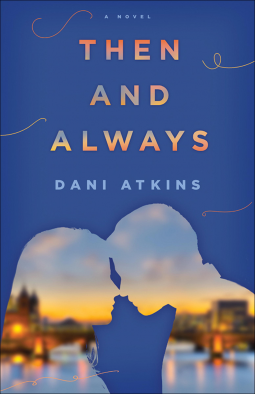
 Before I launch into my review of Then and Always, I need to make a small disclaimer: I am not usually a sobber. I don’t get weepy. I’m a pretty hard-eyed cynic, as a matter of fact. So why was I a drippy mess — in my workplace, no less — after reading this book? Read on…

In Then and Always, we meet 23-year-old Rachel Wiltshire, whose life has been filled with loss and grief since the freak accident that took the life of her best friend Jimmy five years earlier. But when Rachel returns to her hometown for a friend’s wedding and passes out suddenly, she wakes to a very different sort of life.

Suddenly, Rachel’s life is not the one she knows. She wakes up in the hospital to see her concerned friends huddled nearby… including a very much alive Jimmy. Not only that, her scars are gone, she’s engaged to her gorgeous boyfriend from high school, and she has the job she’s always wanted working as a magazine writer. The problem is, Rachel doesn’t remember any of the events from the past five years, and she’s convinced that she had some other life.

Does she have amnesia? Is she mentally ill? How can what she remembers be real, when everyone around her insists she’s been here with them in this “new” life all along? And really, why would she even want to go back, when the new version of her life is so much better?

It’s an intriguing set-up, and for the most part, it’s quite absorbing. The fast-paced narrative moves us forward through Rachel’s first days in her new life and allows us to experience the confusion of a world that’s familiar yet completely foreign right alongside Rachel. Her joy at finding Jimmy by her side is lovely, and it’s understandable that she’d feel hesitant toward her loving fiancé Matt, since she doesn’t remember their relationship or even the fact of their engagement.

We’re left to wonder along with Rachel just what’s going on. She did suffer a head trauma, so the amnesia theory is pretty persuasive. At one point, Rachel floats the idea of parallel worlds to Jimmy — and he simply laughs at her. This is not, after all, a science fiction novel, and as Jimmy makes clear, there will be no mysterious wormholes behind these strange events, but rather, a real-world answer that may (or may not) explain Rachel’s confusion.

Still, there are some stray clues that seem to contradict the amnesia theory. Rachel catches fleeting smells that are out of place and hears sounds that aren’t really there. A breakdown of some sort, perhaps? The author introduces these small moments as no more than hints, but ultimately, they are worth paying attention to.

Within the last chapter or so of the book, I found myself getting angry when it seemed that no real answer was in sight. Rachel’s dilemmas in terms of her life path were coming to a resolution, but no explanation of her split worlds had been provided. Just as I was getting to ready to rant about the weak finish… it all made sense. Ultimately, there’s an ending that’s fitting and powerful — and while I can’t say it made me happy (see above re: tears), it worked.

Had I not glanced back at the book description online and seen it listed as “women’s fiction” (whatever that means…), I might have gone off in a few wild directions with my speculations and suppositions. Sinister conspiracy theories, quantum physics, maybe a TARDIS? In the end, Then and Always sticks to a set-up and conclusion that work within their context — and so while I always love a thrilling game of cat-and-mouse or a good gaslighting, this is not that kind of book.

The book blurb for Then and Always reads:

For fans of One Day, What Alice Forgot, and the hit film Sliding Doors, comes an absorbing and surprising debut novel about a young woman who, after an accident, gets a second chance at life . . . just not in one she remembers.

Take that with a grain of salt, and you’ll do fine. I think I went into reading this book with slightly warped expectations because of the blurb — but once I got into the flow of the book, I left my expectations behind and just enjoyed the story. There’s just enough romance, some sweet moments focused on family, and the kind of friendships that last from childhood into adulthood. Nicely written, sentimental without being mawkish, Then and Always is sure to please readers who enjoy a story that has happy moments but still manages to wring the tears out of you by the end.

 As for me, the hard-eyed cynic: I finished reading Then and Always while sitting in my office with a cup of coffee, enjoying a momentary lull. Big mistake. That ending! It snuck up on me and smacked me over the head. There may have been a bit of blubbering going on… So word to the wise: Maybe read Then and Always in the privacy of your own home, where you won’t have to explain away your tear-streaked face and puffy eyes.

_________________________________________

The details:

Title: Then and Always
Author: Dani Atkins
Publisher: Ballantine Books
Publication date: May 20, 2014
Length: 320 pages
Genre: Adult contemporary fiction
Source: Review copy courtesy of Ballantine Books via NetGalley

Book Review: The Swiss Affair by Emylia Hall

Book Review: The Swiss Affair by Emylia Hall

The Swiss AffairHadley Dunn has lived a mostly ordinary life in her small English town, and has been mostly happy. But when she stumbles into an opportunity to spend her second year of university in Lausanne, Switzerland, she envisions a whole new chapter opening up for her. From her first moments in Lausanne, Hadley is enchanted and inspired. The beautiful scenery, the sophisticated people, the sense of wonder and elegance every where she looks — Hadley is ready for magic and for love, and for a time, it seems that she’s found both.
Living in the university residence hall, Hadley meets the beautiful and vivacious Kristina and the two become instant best friends. Together, they ramble the hills and lakefront, explore bars and nightclubs, soak in the beauty and all that Lausanne has to offer. The only dark cloud is a secret Kristina keeps about an illicit love affair, one that she can’t quite explain to Hadley. Still, the year is beautiful and perfect — until a terrible accident destroys it all.

Devastated, Hadley turns for comfort to her enigmatic, handsome American Literature professor, who has seemed smitten with Hadley since day one, and to a kind, old-world elderly gentleman who sees something in Hadley that she doesn’t quite understand. Between these two men, Hadley uncovers secrets and truths, gains insight into her own wants and needs, and bit by bit pieces together both the events of the past and the keys to her present.

In The Swiss Affair, the city of Lausanne is practically a character in its own right. The author lovingly describes its nooks and crannies, the feel of the air, the view of the mountains across the lake, the way the light changes over the course of a year. The people, the cafes and bars, the hilly streets — all are described in vivid detail, so alive that you can just about feel the city as you read.

Hadley herself is an engaging and intelligent young woman, experiencing her first moments of independence and adulthood outside the confines of her home town and her family’s house. Her experiences as she enters the world of a chic Swiss town and a foreign university are so recognizable — anyone who has ventured far from home as a college student will remember the sensations so aptly described here, the wonder and freedom of it all.

In finding Kristina, Hadley finds a kindred spirit and an inspiration as well, the perfect college best friend who both “gets” you and pushes you into unknown territory. In too many novels, the shy or plain main character lives in the orbit of a more exotic, shimmering best friend. I initially thought that’s what we’d get in The Swiss Affair — but I was glad to realize that I was mistaken. Kristina is original and enchanting — but so is Hadley. Hadley is smart, eager, ready for the world, and open to adventures. Her loyalty to her friend, even after tragedy strikes, is what propels her forward and ultimately, what gives her strength for everything that she must face later on.

The love story also seems, at first, to be following in the well-trod footsteps of dozens of other stories — young college girl falling under the spell of the handsome, aloof, charismatic professor, entering into a world of scandal. Well, in The Swiss Affair, this is true, but it’s not the whole picture. Joel Wilson is handsome and charismatic, but his relationship with Hadley takes unexpected turns, and it’s often hard to know what to make of him, yet easy to see how Hadley has become so infatuated so quickly.

The plot twists and turns, and deftly throws some major curves our way. Just when I was patting myself on the back for figuring everything out, the author abruptly pulled the rug out from under me — more than once! I was kept guessing throughout the story, and that kept me reading obsessively way past my bedtime.

My only quibble, and it’s minor, is that it was hard at first to place this novel in time. I started out unsure whether this was a contemporary novel or perhaps set at some point several decades earlier. There are very few clues in the story. For a story set among college students, there were only a few references to mobile phones or the internet, and it wasn’t until these technologies were mentioned that I figured out the “when” of The Swiss Affair. To be honest, while a minor point, this did take a small bit of reality away from the story, as it was a bit hard to believe that these characters wouldn’t be constantly carrying phones, doing research online, etc. In fact, without the rare mentions of mobiles and the internet, this story could just as easily have been set in the 1950s without further alteration.

That issue aside, I found The Swiss Affair to be interesting, moving, and hard to put down. I cared about the characters, and loved the descriptions of Lausanne. The author makes us feel as though we’re walking through the pure air of this Swiss city while reading the book, and I felt it to be an immersive and engaging read. Highly recommended as a coming-of-age story, a glimpse of life in a lovely setting, a love story, and a mystery — The Swiss Affair has something for everyone.

_________________________________________

The details:

Title: The Swiss Affair
Author: Emylia Hall
Publisher: Harlequin MIRA
Publication date: January 28, 2014
Length: 384 pages
Genre: Adult contemporary
Source: Review copy courtesy of Harlequin MIRA via NetGalley

Book Review: Perfect by Rachel Joyce

Book Review: Perfect by Rachel Joyce

PerfectSynopsis (Goodreads):

On a foggy spring morning in 1972, twelve-year-old Byron Hemming and his mother are driving to school in the English countryside. On the way, in a life-changing two seconds, an accident occurs. Or does it? Byron is sure it happened, but his mother, sitting right next to him in the car, has no reaction to it. Over the course of the days and weeks that follow, Byron embarks on a journey to discover what really happened-or didn’t-that fateful morning when everything changed. It is a journey that will take him — a loveable and cloistered twelve-year-old boy with a loveable and cloistered twelve-year-old boy’s perspective on life — into the murkier, more difficult realities of the adult world, where adults lie, fathers and mothers fight without words, and even unwilling boys must become men. By the end, Byron will finally reconcile the dueling realities of that summer, a testament to the perseverance of the human spirit and the power of compassion.

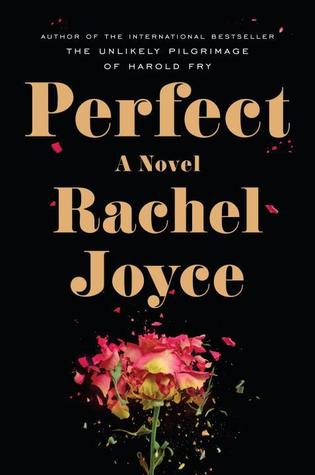
Having read the author’s previous novel, The Unlikely Pilgrimage of Harold Fry, I expected to enjoy Perfect. Sadly, this wasn’t the case.

Perfect is written in the third-person, with alternating chapters focusing on Byron during that fateful summer of 1972 and a middle-aged adult named Jim struggling through his present-day menial job and serious OCD and emotional problems. As the story unfolds, Byron watches his mother disintegrate as her perfect facade begins to show cracks, and we also see Jim start to find a connection to an unusual woman who makes a dramatic entrance into his life.

In Byron’s part of the story, Byron and his best friend become fixated on a news story about the world clock being adjusted by two seconds in order to realign with the earth’s rotation. These two seconds take on a major significance for the boys, so that when the accident occurs, Byron is convinced that it’s because of the two extra seconds. It just doesn’t work. I was never convinced that these boys (or any boys) would fixate on this issue to the degree that they do, and it’s an odd element that adds nothing to the story.

Both Byron and the adult Jim are less than reliable observers, and so in both parts of the narrative, we view the action from very shaky ground. Unfortunately, this also has the effect of distancing the reader from the story. I always felt that I was getting a report on events, rather than witnessing them myself, and thus felt no immediacy or sense of connection as Byron’s family life spirals out of control.

Byron’s mother Diana is the central figure in the confusing and tragic events of the summer of 1972, but she remains an enigma. We know that she had a somewhat disreputable past; we see that her husband controls her every move; we learn that she has reinvented herself since being married and strives to always be a perfect wife and mother. Once Diana’s perfection is marred by the accident that may or may not have occurred, she slowly slips away from herself and her family, as without that illusion, she is left with nothing.

The portrait of Jim is interesting, as we learn bit by bit what happened to leave him in such a state, unable to function without his all-consuming rituals, constantly afraid of disaster. However,the love story that leads him to redemption is not credible in the least. How many books have we read featuring a flamboyantly eccentric, loud woman who comes into a meeker character’s life and shows him that love is possible? I don’t know about you, but I feel like I’ve seen this story a hundred times before. It’s not fresh, and it doesn’t work in this novel.

As in The Unlikely Pilgrimage of Harold Fry, the big reveal at the end of the book is meant to be a shocking twist. It is not. By mid-way through the book, it was plain to me what was really going on, and I didn’t feel that there was any true pay-off in what is intended to be a big, emotionally charged scene.

Not to say, however, that Perfect lacks interesting or redeeming qualities. There’s a twisted relationship that develops in the aftermath of the accident, and it is fascinating to see how Diana’s doubts and guilt lead her to become the victim of an opportunistic stranger, with Byron’s attempts to help only exacerbating and hastening Diana’s downfall. The changing landscape of the moors and villages in Perfect serve to reflect the social dynamics of the time, and as the economy worsens over the decades, we see that reflected in the surrounding housing communities and countryside as well. The tension between the wealthy private school families and the lower-class townies comes into play in the main storyline, and adds an interesting dimension to the unfolding drama and the tragic events that occur.

Despite being a quick read, Perfect simply doesn’t satisfy. The quirky characters and cause-and-effect plot devices never feel real or believable, and as a result, I was unmoved by the confrontations and resolutions that should have been emotionally rich. Lacking any connection to the characters and just not buying some of the major events and their catalysts, I would have to consider Perfect a disappointment.

_________________________________________

The details:

Title: Perfect
Author: Robin Joyce
Publisher: Random House
Publication date: January 14, 2014
Genre: Adult contemporary fiction
Source: Review copy courtesy of Random House via NetGalley

Book Review: Dear Mr. Knightley by Katherine Reay

Book Review: Dear Mr. Knightley by Katherine Reay

Dear Mr. KnightleyThis debut novel combines the wit of Austen with the gritty pluck of Bronte, but with a modern-day setting that adds several unexpected twists and a deeper level of truth and examination than I’d expected.


In Dear Mr. Knightley, main character Samantha (who goes by Sam) is a college grad on the verge of aging out of the support systems available to former foster kids. With the prodding of her mentor, Father John, who runs the group home in which she lives, Sam applies for a grant from an anonymous foundation. This grant will enable her to enroll in graduate school, and will cover all expenses while she pursues her degree. The only catch is that Sam must write a series of letters to her benefactor, who uses the pseudonym George Knightley, knowing it will appeal to Sam’s inner Austen-phile and keep his true identity a secret.

Sam’s life has not been easy, and she is plagued by self-doubt. She’s spent all her life feeling unloved and unwanted, and has hidden herself away in the pages of her beloved books. When anxious or faced with a need to connect with people, she hides behind her characters, quoting Lizzy Bennet or Emma or even Edmond Dantes — which lets her keep her walls intact, and ensures that anyone who tries to reach out to her will run in the opposite direction.

But once Sam receives her grant and starts her graduate program in journalism, she realizes that her walls are crumbling — and that she needs to let them. She can’t succeed as a writer if she keeps her heart hidden away; she can’t connect as a friend if she refuses to let anyone know her. As Sam narrates her tale via letters to Mr. Knightley, we witness her fears, her doubts, her pain, and her glimmers of joy. We delight with her when she sees new possibilities, but we can’t help but want to cry every time poor wounded Sam seems to be making another counter-productive decision based on insecurity and lack of confidence.

I enjoyed the writing style here very much. The entire book is told via Sam’s letters to Mr. Knightley, so it’s all first-person and very immediate. She writes from her heart to her anonymous correspondent, allowing herself the freedom in her letters to reveal herself in all the ways she’d never do with a real person. While occasionally seeming more naive than seems reasonable for a 23-year-old, I could suspend my disbelief based on the facts of Sam’s life. If she seems to have odd ideas about friendship, connection, and relationships, it’s understandable, given that she bounced from foster family to foster family, experienced disastrous encounters with her real parents, and finally ended up at the group home for the remainder of her teen and early adult years.

If you happened to read my blog yesterday (here), then you may have seen my mini-freak-out about finding out that a book I was reading was listed on Amazon as “Christian fiction”. This is the book that triggered all of that. And it’s puzzling to me. Had I not come across that designation on Amazon, I don’t think it would have occurred to me to think of this book as anything other than contemporary fiction. Yes, there were passages, especially toward the end, where Sam is encouraged toward “surrender” and finding joy in faith. But it’s not heavy-handed, I didn’t feel like the book itself was proselytizing in any way, and the references to characters’ faith and beliefs felt organic and reasonable within the context of the story. What I had feared might be a problem for me really wasn’t. So, after much ado about nothing, all’s well that ends well! (Sorry… )

The book is a quick read, but it’s not fluffy. It does seem that things always work out for Sam in a big way. Too sugar-coated, perhaps? Yes, it can seem like a fairy tale at points, the way the grants, the internships, the supportive people always come through just when needed. But that is balanced, for the most part, by a refusal to gloss over the harder parts of Sam’s life, so truly, even if it seems unlikely that things could work out so well in real life, there’s no doubt that Sam has earned all that comes her way by the end.

I mentioned earlier that I liked the writing style — and I really did, except for a certain phrasing oddity that kept jumping out at me: Whenever characters use the work “couple”, it’s phrased as “a couple papers”, “a couple internships”, “a couple days ago”. What happened to the “of”??? Is this a regional quirk, perhaps? I have no idea, but it really bugged me. This is a minor quibble, though; for the most part, I enjoyed Sam’s voice very much. Some epistolary novels seem forced, using the letter format as a gimmick that doesn’t always allow for fully fleshed-out storytelling. This is not the case in Dear Mr. Knightley: Through Sam’s letters, we get insight into her heart and mind in a way that might not have worked otherwise, and because we know that Sam herself is a skilled writer, it makes sense that her letters are so articulate and thoughtful.

If you’ve read the 1912 novel Daddy-Long-Legs by Jean Webster, then the secrets and resolution of Dear Mr. Knightley won’t be a surprise. But even knowing how it would work out, I still enjoyed the author’s skill in weaving the backbone of the older book into this fresh novel, finding a way to take a set of circumstances that might seem old-fashioned and apply them to a modern setting in a way that’s believable.

I’m glad that I didn’t let the genre issue keep me from exploring and enjoying this touching, delightful book. Skillfully weaving together threads of classic literature into a modern-day setting that rings true, Dear Mr. Knightley is a lovely look at the journey of a special young woman. I’m happy to have read it, and I’m happy to recommend it.

_________________________________________

The details:

Title: Dear Mr. Knightley
Author: Katherine Reay
Publisher: Thomas Nelson
Publication date: 2013
Genre: Contemporary fiction
Source: Review copy courtesy of Thomas Nelson via NetGalley

Book Review: Racing Savannah by Miranda Kenneally

Book Review: Racing Savannah by Miranda Kenneally

Racing Savannah

If you’re looking for a light, upbeat, contemporary young adult novel, Racing Savannah definitely fits the bill.

Two days before the start of her senior year of high school, Savannah moves to a new town with her father and his pregnant girlfriend in order for him to start a promising new job as a groom for a very successful (a.k.a., super wealthy) horse racing farm. Savannah has grown up around horses and is eager to get work as well as one of the exercise “boys” — riders who take the racehorses out for their daily warm-ups and practice runs. But it’s not just her love of horses that drives her: The family has been deeply in debt for years, paying off the medical bills related to Savannah’s mother’s illness and death, and there’s barely enough money to scrape by, much less support a new baby.

Rule number one at Cedar Hill Farms: The staff does not mix with the owners, the Goodwin family. Easier said than done, especially since the owner’s son is also a senior in the same high school, super hot, and — incredibly — attracted to Savannah as well. Jack has a reputation for sleeping around, and Savannah is very conscious of her status as the hired help. Yet the more they work together, the more obvious the attraction is. And it’s not only physical: Jack respects Savannah, believes in her, and wants to give her a chance to break into the male-dominated world of horse racing jockeys.

Racing Savannah is, overall, a feel-good story about love overcoming obstacles. It’s not really a spoiler to say that there’s a happy ending; it’s perfectly obvious that things will work out. The two lead characters are clearly good people — so it’s only a question of how they’ll work past their differences, not if.

Savannah’s economic problems are not sugar-coated. She thinks long and hard about everything she spends money on. She shops at thrift stores, if at all. She uses the same threadbare comforter she’s had since she was a little girl. She knows that if she wants something, she has to work for it. At the same time, she loves her father tremendously, and even though she resents his girlfriend Cindy, Savannah is also concerned enough to cover Cindy’s maid shifts in the manor house when morning sickness gets to be too much, and even makes a secret deal with Jack’s father to cover Cindy’s missed wages out of her own earnings.

The writing is mostly light and breezy, entertaining even when dealing with serious matters. I enjoyed the author’s sense of humor, which is quirky enough to catch me by surprise throughout the book:

One time a horseman told me I have a way with horses. Dad told me not to listen when men say things like that, because they’re just trying to get into my pants. But I do have a way with horses. Dad, however, does not have a way with words.

Much later, getting ready for once of her first races as an apprentice jockey:

“You look good in the Goodwin colors,” he says, scanning my black and green riding silks.

“I look like a damned Slytherin.”

I liked the girl power in Racing Savannah, which is assertive without beating the reader over the head. It’s a given that Savannah is strong and talented; the only question is whether she can get the men who control the racing business, from the owner on down to the stable hands, to recognize her talent and give her a chance to prove herself. Likewise, the message around economic status is quite positive: Financial status doesn’t make Savannah inferior to anyone — she just has to work that much harder to get what she wants. The more determined she becomes, the more she realizes that the doors she believed to be shut for her, such as a college education, just need a few strong nudges to start to swing open. It’s not to say that everything is easily solved, but simply that Savannah is able to chart her own destiny by controlling her fear, respecting herself, and going after her goals.

Another aspect I really enjoyed was the portrayal of the teen friendships in Racing Savannah. Savannah is completely new in town, but she connects with people who are warm and welcoming. She doesn’t immediately become popular, but she finds a place and finds people with whom she can connect. I liked how the author avoids teen cliches such as the mean girl, the nerdy boy, the school princess, etc. There are characters who seem as though they’ll fit these neat compartmentalizations — but they don’t follow the rules of their types, and it’s fun and refreshing to see young people just being themselves and having a good time.

The sexual encounters in this book are a bit more explicit than most I’ve encountered recently in contemporary YA novels — but they’re used sparingly, and if I had to guess, I’d say that they probably ring pretty true for readers in the target demographic. It’s not a problem, but just something to be aware of, for readers who prefer hints rather than a play-by-play description. At the same time, Savannah is thoughtful about her sexuality, and is very clear about needing to be able to respect herself for her decisions, as well as demanding Jack’s respect.

I have not read the author’s previous books, which include several others set in the same town and high school as Racing Savannah.  Characters from the earlier novels show up in background or supporting roles here, which will probably delight those who’ve read Miranda Kenneally’s other books.

All in all, I’m glad to have been introduced to a new-to-me author who takes such a clear-eyed view of life as a teen-aged girl. Miranda Kenneally creates strong, memorable female characters, without skimping on the fun and romance of being young and discovering life.

_________________________________________

The details:

Title: Racing Savannah
Author: Miranda Kenneally
Publisher: Sourcebooks Fire
Publication date: 2013
Genre: Young adult/contemporary
Source: Review copy courtesy of Sourcebooks Fire via NetGalley

Thursday Quotables: The Book of Secrets

cooltext1045178755

Welcome back to Thursday Quotables! This weekly feature is the place to highlight a great quote, line, or passage discovered during your reading each week.  Whether it’s something funny, startling, gut-wrenching, or just really beautifully written, Thursday Quotables is where my favorite lines of the week will be, and you’re invited to join in!

If you’d like to participate, it’s really simple:

  • Follow Bookshelf Fantasies, if you please!
  • Write a Thursday Quotables post on your blog. Try to pick something from whatever you’re reading now.
  • Link up via the linky below (look for the cute froggy face).
  • Make sure to include a link back to Bookshelf Fantasies in your post (http://www.bookshelffantasies.com).
  • Have fun!

This week’s Thursday Quotable:

“Right, okay, but that’s not the point. Don’t you ever want to, you know, escape? Like Holden tried to do, just pick up and leave without telling anybody where you’re going? We could go and never come back if we wanted. Imagine us living in a little town in Tuscany, a two-room cottage with a flagstone path and flowers in all the windows; we’d spend all day writing novels, and then in the afternoon we’d take walks and go out to cheese shops for gorgonzola.”

I wouldn’t have been at all surprised if the dream of leaving had been brewing in Nate ever since I first met him. “You’re turning us into a chapter of A Room with a View,” I said, but when I thought of all the times I’d imagined visiting Hemingway’s Spain or Austen’s English countryside, Lewis’s Narnia or Tolkien’s Middle Earth, I could see the drive to leave for somewhere better had always been inside me too. All the best stories in the world were of escape.

Source:  The Book of Secrets
Author: Elizabeth Joy Arnold
Bantam Books, 2013

What lines made you laugh, cry, or gasp this week? Do tell!

Link up, or share your quote of the week in the comments.

Book Review: The Book of Secrets by Elizabeth Joy Arnold

Book Review: The Book of Secrets by Elizabeth Joy Arnold

The Book of SecretsChildhood secrets, the ugliness behind a serene family facade, imagination unleashed by the beauty of good books — all are key elements of the exquisite new novel The Book of Secrets written by Elizabeth Joy Arnold.

Chloe’s life changed forever on her eighth birthday when she met the mysterious, wonderful Sinclair children. Scrubbed and wholesome in a hopelessly old-fashioned way, living in a secluded country home in California redwood territory, home-schooled by a kind and creative mother, siblings Grace, Nate, and Cecilia welcomed Chloe into their hearts, and from that moment on, they became the center of Chloe’s life.

As the book opens, Chloe is in her mid-forties, struggling with the tensions of her 25-year marriage to Nate. Chloe and Nate have loved each other since childhood, but a tragedy in their early days together has created a permanent hole that neither knows how to fill. When Chloe finds a note from Nate saying that he’s suddenly gone back to his childhood home to deal with a family matter, she is shocked and dismayed. That home was the site of their nightmare, and she can’t imagine why he’d consent to return. Unsure what to believe, Chloe searches for clues, and finally finds a secret notebook, filled with a coded sort of language written by Nate, tucked inside a hollowed-out copy of The Lion, The Witch, and The Wardrobe. Chloe struggles to decipher Nate’s writing, sure that it will help her understand his sudden departure — but unsure whether she truly wants to unearth secrets from their awful past.

As Chloe cracks the code through the use of favorite childhood books, the narrative shifts back and forth between Chloe’s present-day struggle to understand the secrets that have undermined her marriage and the past, full of hidden family drama and dysfunction, as well as the delights of first love and devoted friendship.

The Book of Secrets explores themes of family, faith, and imagination, and peers into the heart of a marriage — what holds it together, what makes it fall apart. The secrets revealed in The Book of Secrets are huge and devastating, and it amazes me that Chloe and Nate survived as a couple at all.

The writing in this book is quite lovely, full of descriptions that vividly convey the wonders of childhood, full of play (digging a hole to London to try to go visit C. S. Lewis), journeys to the fantasy worlds of books, puzzles, and hidden codes, and the pure certainty of love that flows between Chloe and the three Sinclair children. The book is also a charming tribute to the power of good books, amply illustrating how books can inspire and transform, provide escape and solutions.

Ultimately, there is a mystery at the heart of The Book of Secrets — what happened 25 years ago, and what has Nate been hiding from Chloe all these years? (I’m being deliberately vague, I know. This is yet another book that I think is best read with as little knowledge beforehand as possible.) The tension builds and builds, and as Chloe finds herself reexamining long-held beliefs based on new information that she uncovers, we as readers have to readjust our understanding of events as well.

The ending is tension-filled, dramatic, and just as it should be. I did more or less figure out the general shape that the ending would take well ahead of time, but that didn’t matter in the slightest. Even though I was right on the money about the “what”, the “how” and “why” were surprising, shocking, and yet made total sense in the context of the story.

This is a perfect book for book lovers. Not only is the story of Nate and Chloe and their family secrets compelling and well-written, but the obvious adoration that the author feels for reading and its magic shines through on every page.

Review copy courtesy of Bantam Books via NetGalley.