Thursday Quotables: Harmony

quotation-marks4

Welcome back to Thursday Quotables! This weekly feature is the place to highlight a great quote, line, or passage discovered during your reading each week.  Whether it’s something funny, startling, gut-wrenching, or just really beautifully written, Thursday Quotables is where my favorite lines of the week will be, and you’re invited to join in!

NEW! Thursday Quotables is now using a Linky tool! Be sure to add your link if you have a Thursday Quotables post to share.

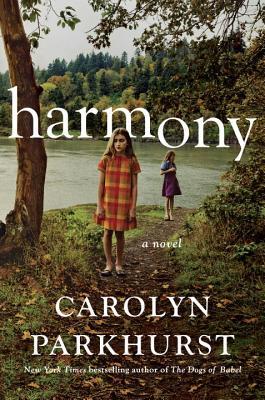
harmony

Harmony by Carolyn Parkhurst
(published 2016)

I loved this short but powerful novel about family, trust, hope, and love. My review is here… and here are two small samples that show some of the book’s terrific writing:

Happiness, as it exists in the wild — as opposed to those artificially constructed moments like weddings and birthday parties, where it’s gathered into careful piles — is not smooth. Happiness in the real world is mostly just resilience and a willingness to arch oneself toward optimism. To believe that people are more good than bad. To believe that the waves carrying you are neither friendly nor malicious, and to know that you’re less likely to drown if you stop struggling against them.

I liked this reflection on our digital lives:

Look at your Google history, and there it is, your mind, all its secret curves rolled out flat, like a map. Preoccupations and idle curiosities, mottled hopes and scribbled-out fantasies beating wildly on the screen. Everything you were, are, could be.

What lines made you laugh, cry, or gasp this week? Do tell!

If you’d like to participate in Thursday Quotables, it’s really simple:

  • Write a Thursday Quotables post on your blog. Try to pick something from whatever you’re reading now. And please be sure to include a link back to Bookshelf Fantasies in your post (http://www.bookshelffantasies.com), if you’d be so kind!
  • Click on the linky button (look for the cute froggie face) below to add your link.
  • After you link up, I’d love it if you’d leave a comment about my quote for this week.
  • Be sure to visit other linked blogs to view their Thursday Quotables, and have fun!

Book Review: Harmony by Carolyn Parkhurst

harmony

From the New York Times bestselling author of The Dogs of Babel, a taut, emotionally wrenching story of how a seemingly “normal” family could become desperate enough to leave everything behind and move to a “family camp” in New Hampshire–a life-changing experience that alters them forever.

How far will a mother go to save her family? The Hammond family is living in DC, where everything seems to be going just fine, until it becomes clear that the oldest daughter, Tilly, is developing abnormally–a mix of off-the-charts genius and social incompetence. Once Tilly–whose condition is deemed undiagnosable–is kicked out of the last school in the area, her mother Alexandra is out of ideas. The family turns to Camp Harmony and the wisdom of child behavior guru Scott Bean for a solution. But what they discover in the woods of New Hampshire will push them to the very limit. Told from the alternating perspectives of both Alexandra and her younger daughter Iris (the book’s Nick Carraway), this is a unputdownable story about the strength of love, the bonds of family, and how you survive the unthinkable.

You don’t have to be a parent to moved by this gripping story of a loving family trying to do its best for its unusual child — but I think any parent who reads Harmony will be both nodding in recognition and cringing at the pain suffered by the well-meaning parents and their two children.

Alexandra and Josh Hammond are happily married and the parents of two beautiful daughters. But as we first meet the family, daughters Tilly, age 13, and Iris, age 11, are in the back seat of the car as the family makes its way to New Hampshire, having given up their old lives in a last grasp towards normalcy at Camp Harmony.

Camp Harmony is the brainchild of Scott Bean, a charismatic family counselor who seems to have all the answers. And Alexandra is desperate. Tilly is incredibly smart, but she’s wild and impulsive, full of tics and odd habits and obsessions, and lately has become a danger to herself. Even the last resort, super expensive private school for special needs children has finally said that they can no longer care for Tilly appropriately. When Scott Bean’s “Harmonious Parenting” crosses Alexandra’s radar, she becomes more and more convinced that Scott holds all the answers for her family. Ultimately, the family sells everything to invest, along with two other families, in Camp Harmony. The camp will provide a back-to-nature, holistic living experience, where the core families create a nurturing environment for all their children, then host paying families who come on week-long retreats in order to soak up the positive experience and bring it home with them.

Scott Bean is clearly slick and polished, but he’s full of charm when he wants to be and it’s easy to understand how a family with no other options might see him as a light in the darkness. And at first, he seems to have a magic touch with the kids, despite the families’ hesitations over some of the camp rules, such as no electronics, no individual storing of car keys, no alcohol, and all sorts of work assignments and consequences for behavioral infractions.

We see the family’s journey both through Iris’s eyes, as she narrates events starting from the Hammonds’ arrival at camp, and through Alexandra’s, as she describes the bumpy history of her and Josh’s child-rearing and Tilly’s escalating veering off the rails. It’s heartbreaking, truly, to see these good and decent parents doing the best they can, and still having no answers and feeling like they’re losing the ability to even keep their child safe, much less nurtured and encouraged.

There’s yet a third perspective sprinkled occasionally throughout the book — Tilly narrates a few chapters, here and there, which describe an imaginary museum dedicated to Hammond family history. She takes an almost anthropological look at the society and culture of the time:

Either way, though, it was an intriguing period of history; the quaint euphemisms (“special needs,” for example, and “on the spectrum”), the fearmongering and misinformation, the chaos caused by the lack of an agreed-upon medical and therapeutic protocol. The elders lingered on the era’s rudimentary understanding of neuroscience, the dissent within the medical community itself as to nomenclature, classification, and diagnostic criteria. Celebrities giving advice based on superstition, rather than medical fact. The worry that a child’s natural inclinations and tendencies might become more destructive if left untreated. Parents seemed to be afraid of their own children’s brains.

Wow. That last sentence hurts my heart.

Author Carolyn Parkhurst has a way with words that is powerful and descriptive. She makes the reader care about these people. For the story to work, we have to sympathize; we have to understand how a normal, sane set of parents could end up sucked into a situation that revolves around a charismatic leader with increasingly bizarre rules and tests for loyalty. Sounds cultish? Yup, it does. But the wonder of Harmony is that we can see it happen, and even as we tell ourselves that they should have seen it coming and we would never allow ourselves to get sucked in like that… well, how do we know? For people at the end of their rope, desperate measures may not seem so crazy after all.

Importantly, for this story to really work, I think it’s important that we care about Iris and Tilly as individuals, and the book gives them powerful, wonderful voices. The girls are clearly bright and full of passion. Tilly is amazing. Yes, she would drive you crazy if she was your big sister, and I can’t imagine having to deal with some of her more extreme behavior, such as her non-stop sexual comments or her unpredictable meltdowns. But at the same time, she’s powered by an inner curiosity and light, and we’re left hoping that her life may improve, that she’ll find a way to transition from her difficult adolescence into someone who can function in a demanding world.

As I mentioned, the writing in Harmony is just beautiful. The descriptions of the land, the family dynamics, the fears and hopes of new parents, and the blossoming and maturing of love within a marriage are all so lovely. Here’s a small moment at a wedding, as the DJ has all married couples start a romantic dance, then calls off the years until only the longest-married couples remain:

You’re still safe; it’s fifteen years since you stood where that girl in the white dress is standing. Here’s what you have in common with the couples still moving around you: you know, all of you, what these newlyweds are in for, these starry-eyed fledglings who think this is the moment where everything good begins. You’re dancing alongside veterans of wars and miscarriages and a thousand day-today disappointments. You cling to your husband, happy in his arms until it’s time to move to the side, to make way for couples who have lived through even more.

Harmony is an unusual, lovely, disturbing, emotionally wrenching book about families and love. Check it out.

Save

_________________________________________

The details:

Title: Harmony
Author: Carolyn Parkhurst
Publisher: Pamela Dorman Books
Publication date: August 2, 2016
Length: 288 pages
Genre: Contemporary fiction
Source: Library

Save

Save

Save

Save

Save

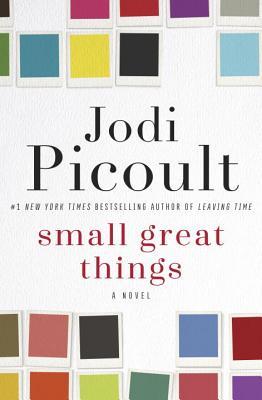
Book Review: Small Great Things by Jodi Picoult

small great things

Ruth Jefferson is a labor and delivery nurse at a Connecticut hospital with more than twenty years’ experience. During her shift, Ruth begins a routine checkup on a newborn, only to be told a few minutes later that she’s been reassigned to another patient. The parents are white supremacists and don’t want Ruth, who is African American, to touch their child. The hospital complies with their request, but the next day, the baby goes into cardiac distress while Ruth is alone in the nursery. Does she obey orders or does she intervene?

Ruth hesitates before performing CPR and, as a result, is charged with a serious crime. Kennedy McQuarrie, a white public defender, takes her case but gives unexpected advice: Kennedy insists that mentioning race in the courtroom is not a winning strategy. Conflicted by Kennedy’s counsel, Ruth tries to keep life as normal as possible for her family—especially her teenage son—as the case becomes a media sensation. As the trial moves forward, Ruth and Kennedy must gain each other’s trust, and come to see that what they’ve been taught their whole lives about others—and themselves—might be wrong.

With incredible empathy, intelligence, and candor, Jodi Picoult tackles race, privilege, prejudice, justice, and compassion—and doesn’t offer easy answers. Small Great Things is a remarkable achievement from a writer at the top of her game.


This is another example of a book that I tore through and couldn’t put down… but with time passing after finishing the book, I find my reaction to it shifting the more I think about it.

The story itself is completely absorbing. We have three point-of-view characters: Ruth, the African-American nurse; Turk, the White Supremacist father; and Kennedy, the white public defender who describes herself early on as someone who doesn’t see color (race) at all.

It’s an interesting approach. We often see the same sets of interactions through more than one person’s eyes, so that when Kennedy makes a point about how supportive she is and how she’s devoted herself to defending people of color, Ruth perceives these statements as coming from a woman of privilege who does not even recognize how her privilege pervades her own life. This leads to interactions throughout the book in which Kennedy is caught short, forced to recognize the unacknowledged racism that informs her life, despite considering herself a force for good and a champion of social justice.

Picoult makes many good and important points in this novel about the way privilege and racism go hand in hand, and how people with privilege seem not to recognize that for one person to succeed because of their skin color and economic status, someone else must not. Where I think Picoult is on somewhat shaky ground is in her chapters using Ruth’s POV. While any author should be able to write convincingly through the voice of his/her characters, whether or not they have anything in common personally with those characters, the use of Ruth’s voice here occasionally made me uncomfortable.

Should a white author be able to write as a black character? Yes, of course. And yet, so much of Ruth’s POV is focused on her experiences as a black woman, explaining how her life has been shaped by boxes society assigns her and the implicit racism in her daily encounters. At some points, it started to feel like appropriation to me. Picoult is essentially explaining blackness to her readers — presumably, a mostly white audience — and it can feel disingenuous.

At the same time, I understand from a few blog mentions I’ve seen that the publisher made early copies of the novel available without the author being disclosed (the concept was #ReadWithoutPrejudice), and I wonder about that experience. Might I have felt differently about Ruth’s voice if I didn’t know the identity of the author? It’s possible.

On the other hand, I didn’t have a problem with her portrayal of Turk, the white supremacist who is also a grieving father and devoted, loving husband. Understanding from within his mind how his life has led him to this point and how he became such a strong believer and advocate for hate is fascinating and informative, and also scary as hell.

Kennedy feels like a pretty typical Picoult lawyer. She’s a working mother, a dedicated professional looking for her opportunity to take on a case she feels passionately about, and thinks she knows about justice in America by virtue of her work as a public defender. Ruth forces her to confront her own assumptions and biases and tear down a bit of the wall that keeps her from seeing just how her white privilege has enabled her to be the person she is now.

In terms of the plot, it’s a doozy of a set-up. At the parents’ request, a note is added to the baby’s medical file saying that no African American personnel are to touch the baby. But Ruth is the only African American staff member in the labor and delivery ward, so this is clearly an order targeted specifically at Ruth, and only Ruth. I wish the book had explored the legalities of this a bit more. Hospitals honor patients’ requests, when reasonable — but this seems so blatantly unreasonable that it never should have stood as an order to begin with.

I had a hard time accepting that the criminal case could or would go forward as described. There was no evidence against Ruth to begin with, and the rush to judgment against her seems simply unrealistic. I just wasn’t convinced at all by the set-up of the legal case.

Further, Kennedy tells Ruth repeatedly that race is never brought into the courtroom — that it’s a sure-fire way to alienate the jury, and that it JUST ISN’T DONE. That may be, but I wish Picoult had fleshed this out a bit more with examples or explanations. This becomes a turning point in the trial, and only knowing that it’s not done because Kennedy says so doesn’t really drive home the real-life situation. I wanted to know — is this a plot device, or is this really borne out in real-life courtrooms? As it was written, I wasn’t really convinced, and like Ruth, didn’t buy that there wouldn’t be merit in telling the story as it played out in terms of the race relations of the people involved.

Finally, there’s a plot twist at the very end. I haven’t read every single Jodi Picoult novel, but I’ve read enough to know that a huge twist is pretty standard for her books. I won’t get into what the twist is in Small Great Things, but I will say that I thought it was rather unbelievable and unnecessary. The story didn’t need it, and the timing and delivery were just odd.

Overall, I’d say that Small Great Things is a fast and compelling read, but that it left me feeling like I’d been lectured to in a way that detracts a bit from the power of the story. The story itself is complicated and twisty, although there are so many side elements thrown in (the charismatic TV personality, the darker skinned sister who chooses to refuse the path that Ruth has taken, the wealthy white family that Ruth’s mother worked for as a maid for 50 years) that by the end, the courtroom scenes, which should be the dramatic climax of the book, feel a little rushed and curtailed.

From reading the author’s notes at the end of the book, it’s clear that Picoult poured her heart and soul into her research for this book, and has embarked on her own personal journey to recognize the inherent racism that’s a part of white privilege. I don’t doubt her sincerity at all, but all this earnestness doesn’t necessarily translate into great fiction. When the storyline takes a back seat to the message, it can start feeling overly preachy. I was fascinated by the unfolding story and become involved in Ruth’s struggles and her quest for true justice, but the use of POVs and the shoe-horning in of everything Picoult has learned about race in America weaken the power of the legal drama at the center of the narrative.

Still, I’d say that Picoult’s fanbase will of course love Small Great Things, and I’d recommend it to others as well. Jodi Picoult’s books are always thought-provoking, and she’s a master when it comes to taking even abhorrent characters and showing their humanity. She lets us see Turk and his wife as bereaved parents, and their pain is no less real and heartfelt than anyone else’s, despite the fact that they’re absolutely revolting in every other way. This, I think, is a great example of the power of Picoult’s writing: She takes us inside lives and minds we might otherwise never see, and always manages to show us the sparks of humanity to be found in the most unexpected places.

Save

_________________________________________

The details:

Title: Small Great Things
Author: Jodi Picoult
Publisher: Ballantine Books
Publication date: October 11, 2016
Length: 480 pages
Genre: Contemporary fiction
Source: Review copy courtesy of the publisher via NetGalley

Save

Save

Save

Save

Thursday Quotables: Small Great Things

quotation-marks4

Welcome back to Thursday Quotables! This weekly feature is the place to highlight a great quote, line, or passage discovered during your reading each week.  Whether it’s something funny, startling, gut-wrenching, or just really beautifully written, Thursday Quotables is where my favorite lines of the week will be, and you’re invited to join in!

NEW! Thursday Quotables is now using a Linky tool! Be sure to add your link if you have a Thursday Quotables post to share.

small great things

Small Great Things by Jodi Picoult
(published 2016)

I’ve only read 10% of Jodi Picoult’s newest novel, but I can tell already that this book will be both disturbing and thought-provoking. I really like this passage from an early chapter, from the point of view of a labor and delivery nurse:

A mother has nine months to get used to sharing the space where her heart is; for a father it come on sudden, like a storm that changes the landscape forever.

What lines made you laugh, cry, or gasp this week? Do tell!

If you’d like to participate in Thursday Quotables, it’s really simple:

  • Write a Thursday Quotables post on your blog. Try to pick something from whatever you’re reading now. And please be sure to include a link back to Bookshelf Fantasies in your post (http://www.bookshelffantasies.com), if you’d be so kind!
  • Click on the linky button (look for the cute froggie face) below to add your link.
  • After you link up, I’d love it if you’d leave a comment about my quote for this week.
  • Be sure to visit other linked blogs to view their Thursday Quotables, and have fun!

Shelf Control #51: The Post-Birthday World

Shelves final

Welcome to the newest weekly feature here at Bookshelf Fantasies… Shelf Control!

Shelf Control is all about the books we want to read — and already own! Consider this a variation of a Wishing & Waiting post… but looking at books already available, and in most cases, sitting right there on our shelves and e-readers.

Want to join in? See the guidelines and linky at the bottom of the post, and jump on board! Let’s take control of our shelves!

cropped-flourish-31609_1280-e1421474289435.png

My Shelf Control pick this week is:

Post Birthday WorldTitle: The Post-Birthday World
Author: Lionel Shriver
Published: 2007
Length: 528 pages

What it’s about (synopsis via Goodreads):

In this eagerly awaited new novel, Lionel Shriver, the Orange Prize-winning author of the international bestseller We Need to Talk About Kevin, delivers an imaginative and entertaining look at the implications, large and small, of whom we choose to love. Using a playful parallel-universe structure, The Post-Birthday World follows one woman’s future as it unfolds under the influence of two drastically different men.

Children’s book illustrator Irina McGovern enjoys a quiet and settled life in London with her partner, fellow American expatriate Lawrence Trainer, a smart, loyal, disciplined intellectual at a prestigious think tank. To their small circle of friends, their relationship is rock solid. Until the night Irina unaccountably finds herself dying to kiss another man: their old friend from South London, the stylish, extravagant, passionate top-ranking snooker player Ramsey Acton. The decision to give in to temptation will have consequences for her career, her relationships with family and friends, and perhaps most importantly the texture of her daily life.

Hinging on a single kiss, this enchanting work of fiction depicts Irina’s alternating futures with two men temperamentally worlds apart yet equally honorable. With which true love Irina is better off is neither obvious nor easy to determine, but Shriver’s exploration of the two destinies is memorable and gripping. Poignant and deeply honest, written with the subtlety and wit that are the hallmarks of Shriver’s work, The Post-Birthday World appeals to the what-if in us all.

How I got it:

I bought it.

When I got it:

Way back in 2007, when the book was first released.

Why I want to read it:

This big, huge hardcover has been sitting on my shelf for far too many years by now! It may be time to finally either read it or say good-bye. I was drawn to this book by the “sliding doors” nature of the story — two possible outcomes, two possible futures, hinging on one small moment. I tend to love this sort of thing, but that’s part of the problem. By now, there are lots and lots of novels with similar set-ups, and I’ve read a bunch, and I’m not sure I need to read more. Plus, let’s face it, this is a big doorstopper of a book, and every time I reach up to take it off the shelf, something about it makes me turn away and say, “Nah. Maybe some other time.”

So if I never actually feel like reading it, why am I holding onto it? If you’ve read The Post-Birthday World, please let me know your opinion! I think I need a little nudge, one way or the other, and then I’ll finally take action.

__________________________________

Want to participate in Shelf Control? Here’s how:

  • Write a blog post about a book that you own that you haven’t read yet.
  • Add your link below!
  • And if you’d be so kind, I’d appreciate a link back from your own post.
  • Check out other posts, and have fun!

For more on why I’ve started Shelf Control, check out my introductory post here, or read all about my out-of-control book inventory, here.

And if you’d like to post a Shelf Control button on your own blog, here’s an image to download (with my gratitude, of course!):

Shelf Control

Save

Save

Save

Save

Save

Book Review: Leave Me by Gayle Forman

Leave Me

For every woman who has ever fantasized about driving past her exit on the highway instead of going home to make dinner, for every woman who has ever dreamed of boarding a train to a place where no one needs constant attention–meet Maribeth Klein. A harried working mother who’s so busy taking care of her husband and twins, she doesn’t even realize she’s had a heart attack.

Afterward, surprised to discover that her recuperation seems to be an imposition on those who rely on her, Maribeth does the unthinkable: She packs a bag and leaves. But, as is so often the case, once we get to where we’re going, we see our lives from a different perspective. Far from the demands of family and career and with the help of liberating new friendships, Maribeth is finally able to own up to secrets she has been keeping from those she loves and from herself.

With big-hearted characters who stumble and trip, grow and forgive, Leave Me is about facing our fears. Gayle Forman, a dazzling observer of human nature, has written an irresistible novel that confronts the ambivalence of modern motherhood head-on.

This is going to be a tough one to review. On the one hand, I love Gayle Forman’s writing. You should see my Kindle — section after section of highlighting all my favorite little paragraphs and fabulous wording. On the other hand… I pretty much didn’t buy the premise for a second.

Maribeth is in her early forties, raising twins, a busy New York career woman. Her best friend Elizabeth is also her boss, and lately Maribeth feels like their friendship has been lost to their working relationship. Life is busy, busy, busy — and even as she’s in the hospital getting checked out after her initial chest pains, it’s still on Maribeth’s shoulders to plan dinner and arrange the family’s social obligations.

After emergency open-heart surgery, Maribeth is back home with her family — but it’s still all too much. She’s the planner, the organizer, the worrier, the arranger. She’s the key breadwinner. Her husband is pretty laid back, and does his work out of passion, not in pursuit of a dollar. Even in convalescence, the pressure on Maribeth never ends, and it seems like everyone is just waiting for her to snap back into her normal role.

And so, three week after surgery, Maribeth leaves a note and disappears, resurfacing in Pittsburgh one train ride later, with wads of cash in her pocket and a brand new clean slate. She rents an apartment — in cash — under an altered version of her name, finds a new cardiologist — who accepts cash — and sets about living a simple, unencumbered, no responsibilities kind of life.

There’s a darker, more secret reason for Maribeth’s flight as well. She’s adopted, but has never known anything about her birth mother. Now, as she deals with her health issues and worries about what sort of mother she is, she’s consumed by the need to find out more about her own origins. She knows that she was born in Pittsburgh, so this is where she’ll start her search.

That’s the basic idea. Along the way, Maribeth befriends the young roommates who live in her building, as well as an older women who helps people find their birth parents and even her new cardiologist, a man with his own secret and painful past. For the first time in a long time, Maribeth makes friends who have no strings attached — no PTA or twins groups or work colleagues — just people she enjoys spending time with. She relaxes. She starts to exercise and eat better. She is unplugged — just a burner cell phone, no email, no laptop, no internet. It’s great — and yet, she misses her family, and starts a collection of unsent letters to her children.

So, what did I enjoy about this book? Well, Gayle Forman can write, that’s for sure. The characters are well-defined and quirky, clearly individuals rather than standard cookie cutter types. While there’s emotion and sorrow in Leave Me, there are also plenty of light, funny moments. Maribeth’s stress and fears are instantly relateable, and it’s no surprise that her crazy, high-pressure life leaves her in such dire straits, health-wise.

I tore through Leave Me in about two days. It’s eminently readable, super fast and engaging, and held my interest even when my body was telling me to put down my Kindle and just go to sleep.

But as I said, it’s not all a positive for me. As entertained as I was by much of the story, I just couldn’t buy it. Why would Maribeth see leaving her children as her best and only option? How could she leave and never even call? And how on earth was her husband so understanding and supportive when they finally did start emailing and speaking a month later? I’m sorry, but I think 99.9% of spouses left in that kind of situation would be absolutely furious, not conciliatory and reminiscing about the early days when they fell in love.

I mean, for goddess’s sake (just kidding, I’m not religious or pagan or anything other than a geek), she completely dropped out of communication less than a month after having open-heart surgery! For all her family knew, she could be dead in a ditch somewhere.

I just kept thinking — not cool, lady. Not cool. At least let someone know you’re alive.

A smaller quibble is just how easily her life worked in Pittsburgh. She came armed with loads of cash (ah, privilege!), but basically showed up empty-handed in a strange town — and found neighbors who took to her immediately and wanted to help her, a doctor who wanted to treat her when no one else would look past her unwillingness to share any information about her identity (or even health insurance), and a new friend who’s able to unlock all of the secrets about her birth mother (and teach her to swim). She didn’t encounter hostility, or mean people, or really, even indifference. It’s a nice little fairy tale, I suppose, to think that you can show up in a new city like that and find a life, but real? No.

On top of which, by the time she goes home months later, nothing has actually changed in terms of their stressful life. I mean yes, supposedly her husband and friend/boss are ready to be more supportive and are full of warm fuzzies, but she’s still going back to a super stressful Manhattan life that they can’t really afford, where she may or may not still have a job, and where they’re constantly under pressure. So even though she’s come to some big realizations about herself, what will actually be different when she gets back?

So yeah, despite loving the writing and feeling very amused and engaged by the book, some little part of my brain was sitting to the side judging and doubting, and that kept me just distant enough to feel like the plot doesn’t really hold up to scrutiny.

Should you read the book? Well, if you enjoy contemporary adult fiction, modern urban characters, and don’t mind pieces that could (or should) never happen in real life, then yes! You won’t be bored.

Meanwhile, I’ll just add that I’ve read four young adult books by Gayle Forman, and thought they were all great. (I especially loved Just One Day and Just One Year). So I was really excited to hear that the author would be releasing her first book for adults, Leave Me. And even though I don’t consider Leave Me a complete success, I did enjoy reading it and hope that she continues writing for adults. I’d love to see what she comes up with next!

I’ll leave you with a selection of some of my favorite passages from Leave Me:

She looked at the label on her yogurt. Was it full-fat yogurt? Had she been eating full-fat yogurt all this time? She scanned the package for the words, full fat, or whole milk, some kind of ominous cigarette-label warning that the contents might cause death. But she found nothing like that. The label only said it was French.

cropped-flourish-31609_1280-e1421474289435.png

Her birth mother had always been a shadowy, abstract figure. Maybe she was out there, maybe she wasn’t, but there was no way of knowing so why bother obsessing about it. It was not unlike how Maribeth felt about God. She supposed this made her birth-mother agnostic.

cropped-flourish-31609_1280-e1421474289435.png

Sometimes she really did think her heart no longer functioned. Sure, the muscle beat fine, but the feeling part of it was completely damaged.

cropped-flourish-31609_1280-e1421474289435.png

But it was the swimming pool in the basement that called to her. She wasn’t sure why but it felt like this, more than an elliptical machine or a vinyasa class, would ease the itchiness that was growing inside of her. Swimming felt new. Or maybe it was because she was sinking and wanted to see whether, if forced to, she might swim.

_________________________________________

The details:

Title: Leave Me
Author: Gayle Forman
Publisher: Algonquin Books
Publication date: September 6, 2016
Length: 352 pages
Genre: Adult contemporary fiction
Source: Review copy courtesy of the publisher via NetGalley

Save

Save

Save

Save

Thursday Quotables: Leave Me

quotation-marks4

Welcome back to Thursday Quotables! This weekly feature is the place to highlight a great quote, line, or passage discovered during your reading each week.  Whether it’s something funny, startling, gut-wrenching, or just really beautifully written, Thursday Quotables is where my favorite lines of the week will be, and you’re invited to join in!

NEW! Thursday Quotables is now using a Linky tool! Be sure to add your link if you have a Thursday Quotables post to share.Leave Me

Leave Me by Gayle Forman
(to be released September 6, 2016)

I just read Gayle Forman’s upcoming new release this week — her first book for adults! My review will be along shortly. Meanwhile, here’s a little exchange that made me smile for all the right reasons — an exchange between a pair of roommates who just love to bicker:

“Todd’s all pissy because I went out with Fritz.”

“On a date,” Todd added, as if that sealed the indictment.

“Yes, fine.” Sunita threw up her hands. “On a date.”

“That you didn’t tell me about.”

“That I didn’t tell you about.”

“When it was our night to watch Outlander.”

“We can DVR it. I don’t see see what the big deal is.”

They had me at Outlander.

What lines made you laugh, cry, or gasp this week? Do tell!

If you’d like to participate in Thursday Quotables, it’s really simple:

  • Write a Thursday Quotables post on your blog. Try to pick something from whatever you’re reading now. And please be sure to include a link back to Bookshelf Fantasies in your post (http://www.bookshelffantasies.com), if you’d be so kind!
  • Click on the linky button (look for the cute froggie face) below to add your link.
  • After you link up, I’d love it if you’d leave a comment about my quote for this week.
  • Be sure to visit other linked blogs to view their Thursday Quotables, and have fun!

Shelf Control #42: Alison Wonderland

Shelves final

Welcome to the newest weekly feature here at Bookshelf Fantasies… Shelf Control!

Shelf Control is all about the books we want to read — and already own! Consider this a variation of a Wishing & Waiting post… but looking at books already available, and in most cases, sitting right there on our shelves and e-readers.

Want to join in? See the guidelines and linky at the bottom of the post, and jump on board! Let’s take control of our shelves!

cropped-flourish-31609_1280-e1421474289435.png

My Shelf Control pick this week is:

Alison WonderlandTitle: Alison Wonderland
Author: Helen Smith
Published: 2012
Length: 189 pages

What it’s about (synopsis via Goodreads):

After Alison Temple discovers that her husband is cheating on her, she does what any jilted woman would do — she spray-paints a nasty message for him on her wedding dress and takes a job with the detective firm that found him out. Being a researcher at the all-female Fitzgerald’s Bureau of Investigation in London is certainly a change of pace from her previous life, especially considering the characters Alison meets in the line of duty. There is her boss, the estimable Mrs. Fitzgerald; Taron, Alison’s eccentric best friend, who claims her mother is a witch; Jeff, her love-struck, poetry-writing neighbor; and last but not least, her psychic postman.

Clever, quirky, and infused with just a hint of magic, Alison Wonderland is a literary novel about a memorable heroine coping with the every-day complexities of modern life.

How I got it:

I bought it — a total impulse buy. I was waiting to pick my son up from a party and happened across a charity bookshop where all paperbacks were $1! How could I resist?

When I got it:

Two years ago.

Why I want to read it:

I’d never heard of this book before, but I thought the title was adorable, and the description (and size) make it seem like a fun and fast read.

__________________________________

Want to participate in Shelf Control? Here’s how:

  • Write a blog post about a book that you own that you haven’t read yet.
  • Add your link below!
  • And if you’d be so kind, I’d appreciate a link back from your own post.
  • Check out other posts, and have fun!


For more on why I’ve started Shelf Control, check out my introductory post here, or read all about my out-of-control book inventory, here.

And if you’d like to post a Shelf Control button on your own blog, here’s an image to download (with my gratitude, of course!):

Shelf Control

Save

Book Review: A Spool of Blue Thread by Anne Tyler

Spool of Blue ThreadSynopsis:

(via Goodreads)

A freshly observed, joyful and wrenching, funny and true new novel from Anne Tyler

“It was a beautiful, breezy, yellow-and-green afternoon.” This is how Abby Whitshank always begins the story of how she fell in love with Red that day in July 1959. The Whitshanks are one of those families that radiate togetherness: an indefinable, enviable kind of specialness. But they are also like all families, in that the stories they tell themselves reveal only part of the picture. Abby and Red and their four grown children have accumulated not only tender moments, laughter, and celebrations, but also jealousies, disappointments, and carefully guarded secrets. from Red’s father and mother, newly-arrived in Baltimore in the 1920s, to Abby and Red’s grandchildren carrying the family legacy boisterously into the twenty-first century, here are four generations of Whitshanks, their lives unfolding in and around the sprawling, lovingly worn Baltimore house that has always been their anchor.

Brimming with all the insight, humour, and generosity of spirit that are the hallmarks of Anne Tyler’s work, A Spool of Blue Thread tells a poignant yet unsentimental story in praise of family in all its emotional complexity. It is a novel to cherish.

My thoughts:

It’s been years since I’ve last read an Anne Tyler novel — and picking up A Spool of Blue Thread is like cozying up with a comfy old blanket and curling up in a favorite chair. It’s homey and warm and familiar, but the familiarity doesn’t take away at all from the sheer pleasure of spending time with it.

In A Spool of Blue Thread, we meet the Whitshanks, a big, sprawling family whose lives seem centered around their beautiful family home with the big front porch, the home that’s been in the family for three generations and was in fact built by the first of the Whitshanks to live in it. The first characters introduced are Abby and Red, a married couple in their seventies who’ve raised four children, have a good, well-worn marriage, and seem to enjoy their lives.

Their children and grandchildren are a source of non-stop discussion and worry, particularly Denny, the black sheep of the family who can always be depended upon to be undependable. Denny disappears for months or years at a time, only to show up or call with an odd or worrying or unexpected announcement that throws the family into a tizzy.

As Abby and Red age, their children become increasingly worried about their ability to live on their own in their big house, and so various children and their children move in to provide care, manage things, and try to sort out the little rivalries and resentments that have built up over the years.

As the story unfolds, early hints about family history are unpacked for the reader. The family may never know much about Junior and Linnie Mae, the original Whitshanks to live in the family home, but late in the book, we finally get their story, and it’s not what it seemed. Likewise, when we finally hear Abby’s version of how she and Red met, it’s surprising and touching all at once.

A Spool of Blue Thread is a quintessential character-driven book. There’s not much plot to speak of — no big drama or mystery or climax. Instead, it’s a study of family and individuals, their desires and frustrations and misunderstandings and dynamics. It’s lovely to see a family unfold to reveal its heart and soul. The Whitshanks have had their share of disappointments and tensions, but they’re still there, together, figuring things out. Beyond a profile of a family, it’s also a moving depiction of the worries of aging parents, from both the parents’ viewpoint as well as the adult children who have to balance their own lives with the complications required by figuring out how to help parents who may or may not be able to function on their own any longer.

As I mentioned, it’s been quite a while since I’ve read anything by this author, although there was a time when I read all of her new books as soon as they came out. I think I’d reached my saturation point somewhere along the line, and I might not have picked up A Spool of Blue Thread if it hadn’t been my book club’s pick for April.

So, yet another reason to proclaim that I love my book club! A Spool of Blue Thread is a perfect domestic novel that’s touching, funny, and beautifully written. I’m so glad to have read it — and it makes me want to go figure out what other Anne Tyler books I’ve missed over the years.

_________________________________________

The details:

Title: A Spool of Blue Thread
Author: Anne Tyler
Publisher: Bond Street Books
Publication date: February 20, 2015
Length: 358 pages
Genre: Adult fiction
Source: Library

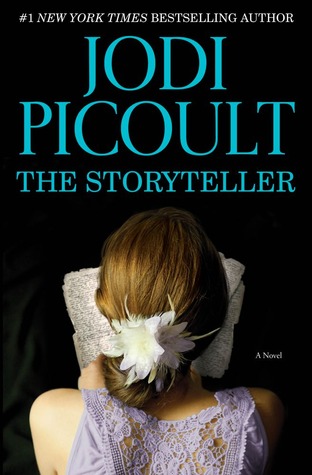
Book Review: The Storyteller by Jodi Picoult

The Storyteller

(Goodreads): Sage Singer befriends an old man who’s particularly beloved in her community. Josef Weber is everyone’s favorite retired teacher and Little League coach. They strike up a friendship at the bakery where Sage works. One day he asks Sage for a favor: to kill him. Shocked, Sage refuses… and then he confesses his darkest secret—he deserves to die, because he was a Nazi SS guard. Complicating the matter? Sage’s grandmother is a Holocaust survivor.

What do you do when evil lives next door? Can someone who’s committed a truly heinous act ever atone for it with subsequent good behavior? Should you offer forgiveness to someone if you aren’t the party who was wronged? And most of all—if Sage even considers his request—is it murder, or justice?

How do I even begin to describe a book as powerful and devastating as The Storyteller? While I knew the basic premise, I had no idea what I was in for when I first started reading it.

At the outset, we meet Sage, a reclusive young woman bearing scars of a tragic accident that cost her her parents. Sage lives alone in a small town in New Hampshire, where she works nights — again, alone — baking a miraculous, marvelous assortment of breads for the small bakery that employs her. Baking is both Sage’s passion and an escape, providing her with distraction and a focus, as well as a good excuse to avoid almost everyone.

It’s silly to anthropomorphize bread, but I love the fact that it needs to sit quietly, to retreat from touch and noise and drama, in order to evolve.

I have to admit, I often feel that way myself.

Sage is forced out of her comfort zone only when she attends a grief support group, where she meets and befriends a newer member, Josef, a sweet old man in his 90s who seems to be just as lonely as Sage. Gradually, the two connect and begin to share bits and pieces of their lives, but Sage’s pleasure in the friendship grinds to a crashing halt when Josef confesses his Nazi past to Sage and asks her to help him die.

Sage is aware that her beloved grandmother Minka is a Holocaust survivor, and remembers catching a brief glimpse of the tattoo on her arm. But Minka has never said a word about her experiences and refuses to answer questions. Sage doesn’t know where to turn. Josef is a well-respected member of the community, a man known as an excellent teacher, kind to all, a man who always did his best to help the town. How can he be a Nazi? In desperation and disgust, Sage tries to connect with law enforcement, and is finally directed to the Federal agency which investigates alleged war criminals, where an agent named Leo Stein takes Sage’s call. Leo encourages Sage to get more information. It’s not enough to know that Josef has claimed to be a former SS agent. In order to take any action, they’ll need to be able to tie him to the historical records through facts, witness reports, or other details that can’t be fabricated.

Why is this book called The Storyteller? Within the novel, we get story upon story. The book opens with a scene that seems like something out of a different world — a tale with a folkloric flavor set in a small Polish village, in which the main character is the baker’s daughter, who feels a growing attraction to a strange young man who’s just arrived in the town, which is also beset by strange animal attacks. It’s not obvious, at first, how this tale, which weaves in between chapters of the contemporary story, actually fits into the main narrative, but it does, and is worth paying attention to.

After the initial section of the book sets up the story of Sage and Josef, we move into the heart of the book, which consists of two more sets of stories. First, we hear from Josef, who tells Sage that he is not Josef Weber after all, but Reiner Hartmann, an SS officer whom Leo is able to find in the historical record. Josef relates the story of his life to Sage, from his childhood in a typical German family to his growing success in Hitler Youth, to enrolling in the SS and becoming a part of the death machine that rolled through Poland. His story includes unflinching looks at the horrors in which he participated, slaughtering men, women, and children in village after village, and finally becoming a lead officer at Auschwitz, overseeing all female prisoners.

Josef’s confession to Sage isn’t enough, though. In order for Leo to take legal action and start the long process that could lead to extradition, deportation, and facing trial for his crimes, they need to be able to tie Josef’s story to something contained in the secret files on Reiner Hartmann, something that couldn’t have been gleaned from the public record. And at this point, Sage takes Leo to meet Minka — and Minka breaks her decades of silence by relating the terrible story of her girlhood, the fate of her family, and her own experiences in Auschwitz.

Minka’s story is the true center of the book, and Minka herself most aptly fits the role of the title, The Storyteller. Minka’s tale is lengthy, detailed, heartbreaking, and horrific. This is the longest section of the book, and is simply devastating to read. I won’t go into detail here; on the one hand, anyone who’s read the stories of Holocaust survivors will recognize some of the common elements here, yet on the other hand, Minka’s narrative is so personal and closely-observed that each loss and each degree of suffering feels like it happened to people we know. Within Minka’s narrative of what she lived through are more bits and pieces of the village tale that’s sprinkled throughout The Storyteller, and we finally discover the link between the book’s characters and the events of the tale.

The central question in The Storyteller is one of forgiveness and atonement. Can someone truly be forgiven for past crimes? Whose job, and whose right, is it to forgive? Can someone who’s committed evil acts ever make up for them? Do 50 years of helping others erase a heinous past? Does it make sense to prosecute a 95-year-old man for the crimes he committed almost seventy years earlier?

I don’t know what this person did you you, and I am not sure I want to. But forgiving isn’t something you do for someone else. It’s something you do for yourself. It’s saying, You’re not important enough to have a stranglehold on me. It’s saying, You don’t get to trap me in the past. I am worthy of a future.

There are no easy answers here. Sage does what she feels to be the right thing by bringing in Leo and cooperating in the investigation, yet she feels a moral obligation toward Josef too. When she looks at him, she sees the horrors he committed, but at the same time she see a lonely, frail old man who loves his dog and mourns his wife of fifty years. Can she feel sorry for him even while feeling repulsed by all she knows? And how does hearing her grandmother’s story affect her ability to listen to the request Josef continues to make of her?

While painting a vivid portrait of a period of history that must not be forgotten, the author is also making an important statement about the power of stories:

Fiction comes in all shapes and sizes. Secrets, lies, stories. We all tell them. Sometimes, because we hope to entertain. Sometimes, because we need to distract.

And sometimes, because we have to.

Jodi Picoult’s fiction tends not to come with easy answers. Of the four or five of her books which I’ve read, all include moral quandaries — people put in difficult or almost impossible positions, where the path forward is murky and ethical questions abound. The same is true of The Storyteller. There’s much food for thought here, and no matter what you think of Josef himself, his request, and Sage’s actions, you’ll definitely find yourself replaying scenes in your mind over and over. I’d imagine that the ending will be controversial for many, and there are certainly plenty of arguments to be made as to why it is or isn’t the right ending, or what the characters should or should not have done.

Ultimately, The Storyteller is a tale of pain and loss, but at the same time, it inspires hope simply by allowing the reader to bear witness to the courage and sacrifice that accompany all the horrors which Minka shares through her story. The Storyteller is not a light or easy read, but it’s an important one, and I applaud the author for creating a work of fiction that explores such a horrible piece of history with grace and honesty.

_________________________________________

The details:

Title: The Storyteller
Author: Jodi Picoult
Publisher: Atria
Publication date: February 26, 2013
Length: 460 pages
Genre: Contemporary fiction
Source: Purchased