Book Review: Disappearance of a Scribe (Eye of Isis, #2) by Dana Stabenow

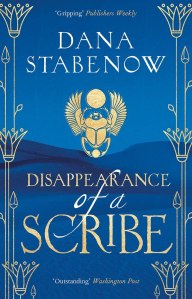
Title: Disappearance of a Scribe
Series: Eye of Isis, #2
Author: Dana Stabenow
Publisher: Head of Zeus
Publication date: January 18, 2022
Length: 272 pages
Genre: Historical fiction
Source: Purchased
Rating:

Rating: 4 out of 5.

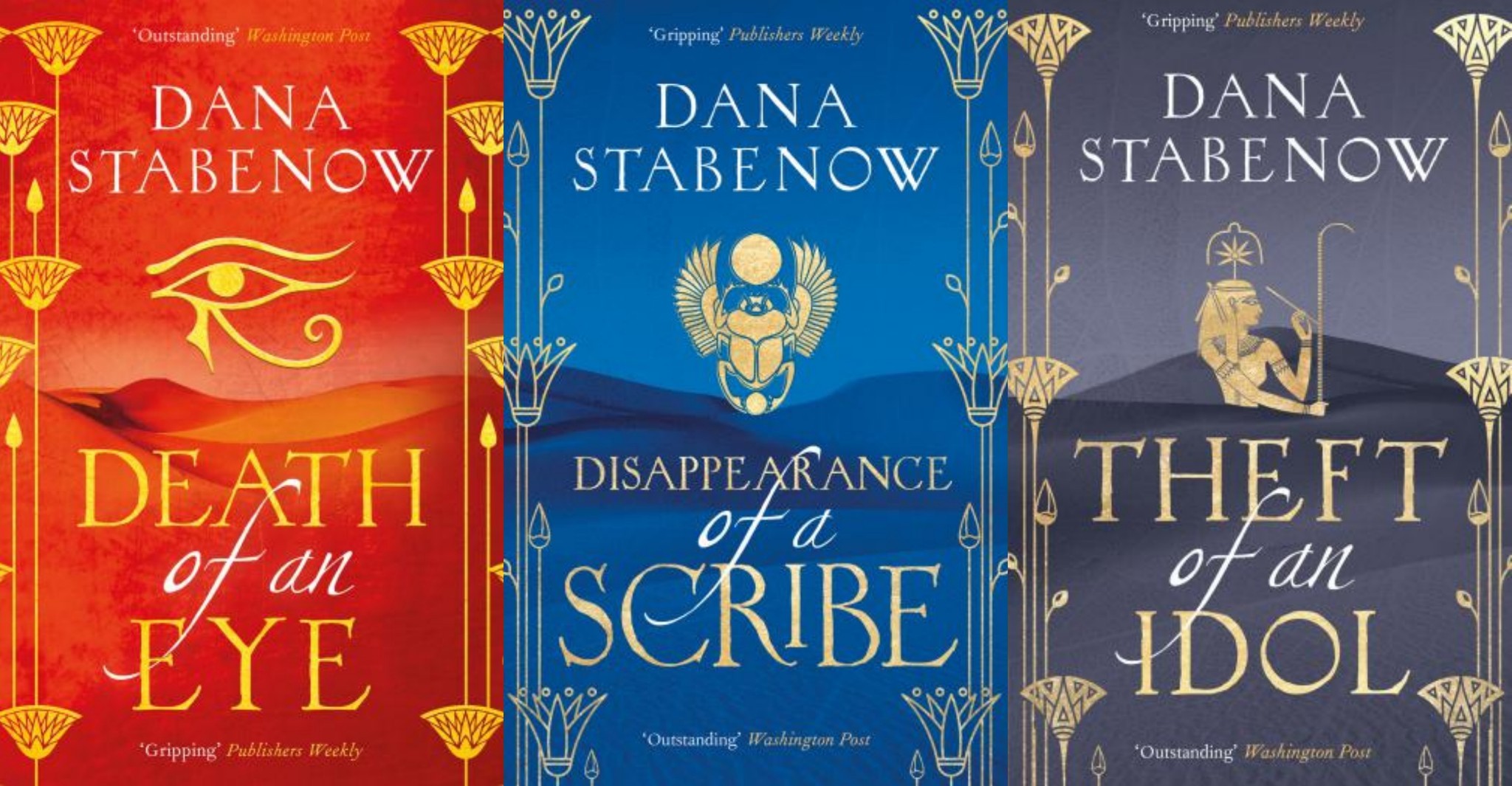
The second in the trilogy of Ancient Egyptian crime novels that began with 2018’s Death of an Eye.

Two Alexandrian fishermen come across a horrifying sight – the body of a skeleton floating upright at the bottom of the sea, anchored in place by a cement weight around his feet. In Alexandria’s rough-and-tumble construction trade they call that ‘being fitted with a pair of Rhakotis sandals’ and what’s worse, he’s the second such victim in two years.

Queen Cleopatra is busy rebuilding her city after the Alexandrian War and these murders are not to be allowed to interfere with this primary task, so she charges Tetisheri, her new Eye of Isis, with the task of finding out who these men were, when they were murdered, and, above all, why.

Dana Stabenow’s fascinating Eye of Isis historical mystery series continues with Disappearance of a Scribe… and it’s just as intriguing as the first book!

Main character Tetisheri, whom we met in book #1, is the Queen’s Eye, the secret investigator who reports directly to Cleopatra and acts on her behalf. She’s also a member of Alexandria’s upper class, partnering with her uncle in a lucrative import business, and as such, is well connected throughout the tangled layers of Alexandrian society.

The mystery in Disappearance of a Scribe circles around two bodies found at sea, anchored by what we’d consider “cement shoes”. Who these people are, who killed them, and why, are Tetisheri’s focus, and as she digs into this shocking crime, she uncovers corruption among the city’s influential builders and ends up in danger herself.

The mystery is unraveled piece by piece, and it’s quite exciting to see Tetisheri chase down leads in a time and place where modern forensics and detective techniques are unknown. If you’d told me ahead of time that a major piece of the story centers on construction materials, I probably would have responded with a very rude yawn… but actually, the story is very interesting, and I appreciated seeing how differently the priorities and rules of this society work in contrast to our own.

I would have liked to see a little bit more happening on Tetisheri’s home front — I do enjoy the brief glimpses we get of her personal life — as well as more with Cleopatra herself directly involved. Still, the scenes we do get with Cleopatra are wonderful, and I love how her power and charisma shine through with every sentence she utters.

In some ways, I was able to enjoy Disappearance of a Scribe even more than I did Death of an Eye, since this time around, I was already familiar with many of the names and places in the story, and felt more comfortable with the basic structure of the politics and alliances of Alexandria at that time.

Tetisheri is a terrific character, and I can’t wait to see what’s next for her. I shouldn’t be the least bit surprised that I enjoy these books — the author’s Kate Shugak series is an absolute favorite, and I read these Egyptian mysteries secure in the knowledge that as a reader, I’m in very good hands.

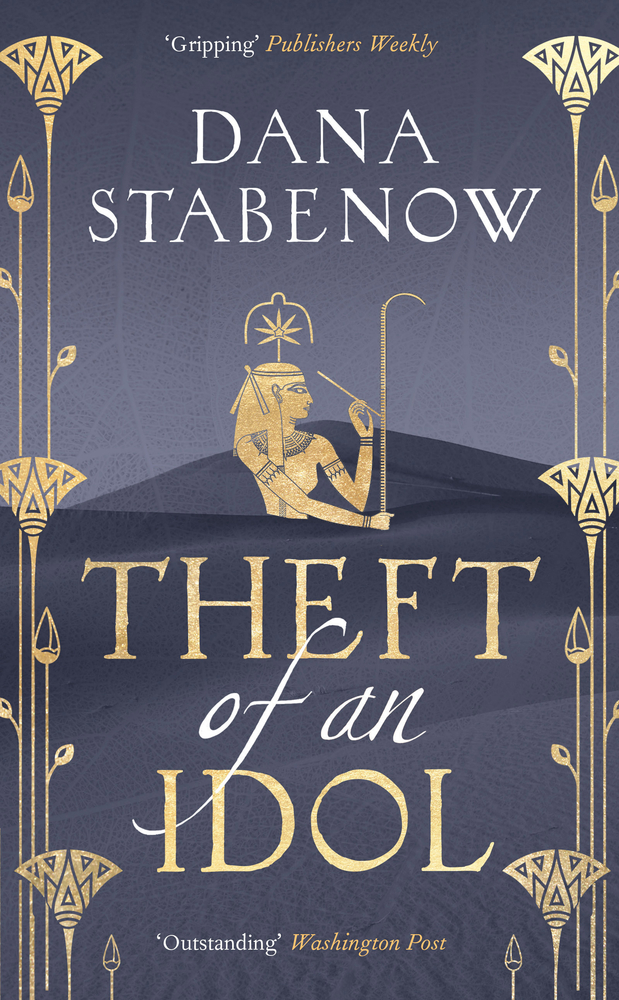
Next up: Book #3, Theft of an Idol:
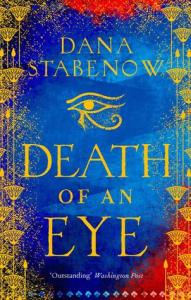
Book Review: Death of an Eye (Eye of Isis, #1) by Dana Stabenow

Title: Death of an Eye
Series: Eye of Isis, #1
Author: Dana Stabenow
Publisher: Head of Zeus
Publication date: December 6, 2018
Length: 254 pages
Genre: Historical fiction
Source: Purchased
Rating:

Rating: 4 out of 5.

ALEXANDRIA, 47 BC. For three centuries, the House of Ptolemy has governed the Kingdom of Egypt. Cleopatra – seventh of her name – rules from Alexandria, that beacon of commerce and learning that stands between the burning sands of the desert and the dark waters of the Middle Sea. But her realm is beset by ethnic rivalries, aristocratic feuds and courtly intrigues . Not only that, she must contend with the insatiable appetite of Julius Caesar who needs Egyptian grain and Egyptian gold to further his ambitions. The world is watching the young Queen, waiting for a misstep …

And now her most trusted servant – her Eye – has been murdered and a vast shipment of newly minted coin stolen. Cleopatra cannot afford for the coins to go unrecovered or the murderers unpunished, so she asks childhood friend, Tetisheri Nebenteru, to retrace the dead Eye’s footsteps. Tetisheri will find herself plunged into the shadowy heart of Alexandria . As she sifts her way through a tangle of lies and deceit, she will discover that nothing can be taken at face value, that she can’t trust anyone – not even the Queen herself .

As a devoted fan of Dana Stabenow’s Kate Shugak series, I was curious to see what her non-Kate/non-Alaska books were like. Fortunately, my book group selected Death of an Eye as our February read, which was the perfect opportunity for me to finally read a book I’ve had my eye on for quite a while.

In this historical novel, the main character is a young woman named Tetisheri, the niece and business partner of a successful merchant in Alexandria at the time of Cleopatra’s reign. Tetisheri was close to Cleopatra as a child, and when the queen finds herself in need of a trusted ally, she calls on Tetisheri.

Cleopatra’s “eye” — a person unknown to any but the queen herself, authorized by her to carry out investigations on her behalf — has been murdered while investigating a crime that could spell disaster for Cleopatra. The queen asks Tetisheri to take on the role of Eye and track down both the murderer and the solution to the earlier crime. As she does so, Tetisheri is herself subject to danger, and must also contend with the slippery politics of Alexandrian and Roman nobility.

Once I began wrapping my head around the people, places, and culture, I was quickly immersed in both the historical setting and the crime story. I really know next to nothing about this time period or the society of Alexandria, apart from film and TV depictions and classic dramas (yes, I’ve read both Caesar and Cleopatra and Antony and Cleopatra, but both were a very long time ago).

The Cleopatra we meet in Death of an Eye is not the Elizabeth Taylor version. Here, she’s a young, strong-willed, and incredibly intelligent ruler, struggling to maintain her throne despite the machinations of her co-ruler and brother Ptolemy XIV and his minions, while also pregnant with Julius Caesar’s child and making every effort to stay in his favor. Cleopatra is interested in science and logic, and cares for her people, but has very few whom she can actually trust.

Tetisheri is not a historical figure; rather, she’s a citizen of Alexandria who, as a monetarily secure merchant, has access to many levels of society, but doesn’t personally wield much power. Having survived a cruel marriage, she makes it her mission to rescue enslaved women and give them the means to start new lives. Tetisheri is smart and dedicated, and while she’s not entirely happy about her assignment from Cleopatra, she’s loyal to the queen and determined to see the investigation through.

I really enjoyed Death of an Eye. As I mentioned, it’s not a setting or period that I’m very familiar with, so there was a pretty steep learning curve at the beginning, and all the way through I found myself confusing people and place names. (Helpfully, there’s both a map and a cast of characters list at the front of the book — and I used both quite a lot). The plot is intricate but not hard to follow, and I found myself more and more interested in the mystery as the various pieces came together toward the end of the book.

While the central mystery of Death of an Eye is solved by the end, Tetisheri’s involvement with Cleopatra is by no means concluded, and her personal life — including a love interest — is left very much open-ended. Fortunately, there are two more books in the Eye of Isis series currently available, with a 4th book planned for 2025.

Books 1 – 3; currently available

Shelf Control #177: Death of an Eye by Dana Stabenow

Shelves final

Welcome to Shelf Control — an original feature created and hosted by Bookshelf Fantasies.

Shelf Control is a weekly celebration of the unread books on our shelves. Pick a book you own but haven’t read, write a post about it (suggestions: include what it’s about, why you want to read it, and when you got it), and link up! For more info on what Shelf Control is all about, check out my introductory post, here.

Want to join in? Shelf Control posts go up every Wednesday. See the guidelines at the bottom of the post, and jump on board!

cropped-flourish-31609_1280-e1421474289435.png

Title: Death of an Eye
Author: Dana Stabenow
Published: 2018
Length: 254 pages

What it’s about (synopsis via Goodreads):

For three centuries, the House of Ptolemy has governed the Kingdom of Egypt. Cleopatra – seventh of her name – rules from Alexandria, that beacon of commerce and learning that stands between the burning sands of the desert and the dark waters of the Middle Sea.

But her realm is beset by ethnic rivalries, aristocratic feuds and courtly intrigues. Not only that, she must contend with the insatiable appetite of Julius Caesar who needs Egyptian grain and Egyptian gold to further his ambitions. The world is watching the young Queen, waiting for a misstep…

And now her most trusted servant – her Eye – has been murdered and a vast shipment of newly minted coin stolen. Cleopatra cannot afford for the coins to go unrecovered or the murderers unpunished, so she asks childhood friend, Tetisheri Nebenteru, to retrace the dead Eye’s footsteps.

Tetisheri will find herself plunged into the shadowy heart of Alexandria. As she sifts her way through a tangle of lies and deceit, she will discover that nothing can be taken at face value, that she can’t trust anyone – perhaps even the Queen herself.

How and when I got it:

I bought this book when it was released this past December.

Why I want to read it:

First things first — I bought this book specifically because of the author, Dana Stabenow, who is the author of the magnificent, captivating Kate Shugak series (which I’ve raved about endlessly on this blog; here, for example).

Of course, the Kate books are set in modern-day Alaska and Death of an Eye is set in Cleopatra’s Egypt, so yeah, pretty different. Still, I absolutely trust this author to tell a great story, and I have always been fascinated by Cleopatra. The plot itself sounds like lots of fun, and certainly isn’t your run-of-the-mill historical fiction subject. I’m excited to finally read this (soon, I swear!)… and for anyone interested, the paperback edition is coming out this fall. And PS, as of the moment I’m writing this, the Kindle version is on sale for $0.99! Here’s the link, just to make it easy.

What do you think? Would you read this book?

Please share your thoughts!

__________________________________

Want to participate in Shelf Control? Here’s how:

  • Write a blog post about a book that you own that you haven’t read yet.
  • Add your link in the comments!
  • If you’d be so kind, I’d appreciate a link back from your own post.
  • Check out other posts, and…

Have fun!

Book Review: Beautiful Ruins by Jess Walter

Book Review: Beautiful Ruins by Jess Walter

If not for all the rave reviews out there, I might never have picked up Beautiful Ruins on my own. And that would have been a shame.

Based on the dustjacket flap, this didn’t really sound like a book for me. Hollywood producers. Scandal on the set of Cleopatra in the 1960s. Richard Burton and Elizabeth Taylor, for God’s sake. Do I care about any of this?

As it turns out, the answer is yes. Beautiful Ruins is a vast book, in terms of subject matter if not actual page length. (For the record, the book is 337 pages long). What sounded to me like a relatively simple story of worlds colliding is in actuality a tale that spans decades and continents, with a cast of characters so large that it shouldn’t work — but it does.

Beautiful Ruins starts in 1962 in a small Italian fishing village — so small that neighboring villages look down at it, so isolated that arrival by boat is the only access, a place so not of note that no one arrives here by accident, ever. Into this village comes Dee Moray, a young beautiful wannabe starlet, believing herself to be dying and awaiting a final assignation with her lover. Dee is sent to stay at the one hotel in the village, run by Pasquale, son of the recently deceased innkeeper, come home to fulfill his father’s unrealistic dream of turning the family inn into a tourist attraction.

Dee has been sent packing to Porto Vergogna from the set of the Burton/Taylor movie fiasco, Cleopatra. The reasons for her exile unfold throughout the story, and all is not as it seems. Pasquale is smitten and finds a new purpose in championing Dee’s tragic cause.

Meanwhile, in modern-day Hollywood, a young assistant on the verge of walking away from her job with a legendary producer and giving up on the business once and for all is roped back in by the sudden appearance of an old man seeking a woman once encountered, briefly but intensely, fifty years earlier.

Adding to all this, we see bits of screenplays and manuscripts, a stage play and a movie pitch, and meet people across the years, from 1960s to present, with stops in Seattle, Idaho, Edinburgh, Rome, and Florence. Bit players come and go; some have a huge impact on the unfolding drama, some appear only long enough to spin events off into a new direction.

Amazingly, it works. What I’d initially thought would be a story following two main plot threads evolved into a story with seemingly endless characters and lives, all taking different trajectories, separate but connected by coincidences and happenstance. The characters’ intersections are fascinating, and I couldn’t help wondering at the dexterity with which the author keeps all of the plot points moving forward and continuing to matter.

My quibbles, if any, are that there are a few minor characters whom I would have like to learn more about and seen fleshed out to a greater degree, such as the shiftless musician we encounter midway through the book, and others whose role is so minor that fewer pages devoted to them might have been better, such as the self-deluding young screenwriter who ends up functioning as translator throughout the book. Likewise, a subplot concerning the Donner party (of all things!) was a bit overplayed and seemed unnecessary.

Still, Beautiful Ruins was both absorbing and moving, and I found myself completely engrossed in the characters’ lives. Ultimately, for many of the characters, a choice (or several choices) had to be made. Pasquale reflects, late in the book, on a childhood memory concerning a decision he once had to make, and remembers his mother’s advice:

“Sometimes,” she said, “what we want to do and what we must do are not the same.” She put a hand on his shoulder. “Pasqo, the smaller the space between your desire and what is right, the happier you will be.”

For the characters in Beautiful Ruins, navigating this space is what forms the core of the choices they must make, and the decisions they make and the actions they take set the course for their chances of happiness. Seeing these choices play out is what makes this book so fascinating.