
Take A Peek Book Review: The Sleepwalker by Chris Bohjalian

“Take a Peek” book reviews are short and (possibly) sweet, keeping the commentary brief and providing a little peek at what the book’s about and what I thought.
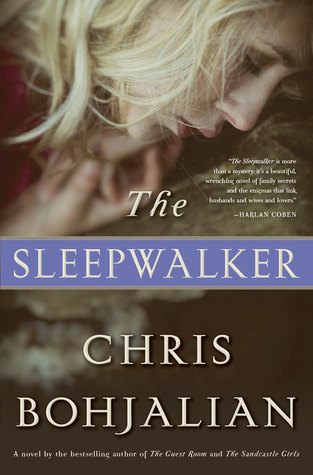
sleepwalker


Synopsis:

(via Goodreads)

When Annalee Ahlberg goes missing, her children fear the worst. Annalee is a sleepwalker whose affliction manifests in ways both bizarre and devastating. Once, she merely destroyed the hydrangeas in front of her Vermont home. More terrifying was the night her older daughter, Lianna, pulled her back from the precipice of the Gale River bridge.

The morning of Annalee’s disappearance, a search party combs the nearby woods. Annalee’s husband, Warren, flies home from a business trip. Lianna is questioned by a young, hazel-eyed detective. And her little sister, Paige, takes to swimming the Gale to look for clues. When the police discover a small swatch of fabric, a nightshirt, ripped and hanging from a tree branch, it seems certain Annalee is dead, but Gavin Rikert, the hazel-eyed detective, continues to call, continues to stop by the Ahlbergs’ Victorian home.

As Lianna peels back the layers of mystery surrounding Annalee’s disappearance, she finds herself drawn to Gavin, but she must ask herself: Why does the detective know so much about her mother? Why did Annalee leave her bed only when her father was away? And if she really died while sleepwalking, where was the body?

Conjuring the strange and mysterious world of parasomnia, a place somewhere between dreaming and wakefulness, The Sleepwalker is a masterful novel from one of our most treasured storytellers.”

My Thoughts:

Chris Bohjalian is one of my favorite authors, and The Sleepwalker doesn’t disappoint. He can always be relied upon to deliver a read that’s compelling, hard to put down, and with the most unusual of premises. Here, it’s a mystery with a little-known and extreme form of sleepwalking at its core. Told through the character Lianna, Annalee’s 21-year-old daughter, The Sleepwalker takes us inside a seemingly ordinary and happy family to reveal the pain and conflicts wrought by Annalee’s affliction.

Lianna is an interesting point-of-view character, still on the cusp of adulthood in some ways, leaving behind her stoner approach to life when her father and sister need her most. She’s both her mother’s daughter and her own person, challenging the facts and the investigation to uncover the truth behind Annalee’s disappearance, even when she realizes that the truth may be much more painful than she’s prepared to handle.

The Sleepwalker is a domestic story with a narrower focus than some of the author’s more recent books. It doesn’t have the weightiness and overwhelming horror of last year’s The Guest Room, with its focus on sex trafficking, or the historical sweep of earlier novels such as The Sandcastle Girls or The Light in the Ruins. Still, this story of a family’s suffering is absorbing and tightly constructed, and while I tried to figure out its riddles, I found myself barking up the completely wrong tree. I won’t say more, but wow — what an ending!

Bohjalian’s books always leave a mark. The emotional impact just doesn’t let up. You really can’t go wrong with any of his books (no, I haven’t read them all, but I’m working on it!), and if you enjoy contemporary mysteries and family dramas, definitely check out The Sleepwalker.

Note: A prequel story, The Premonition, is available as an e-book download. The Premotion recounts events from four years prior to The Sleepwalker. I recommend reading The Premonition first. It doesn’t spoil anything in the main novel and gives a good introduction to the characters and setting. If you prefer not to , though, you’re fine. The Sleepwalker stands perfectly well on its own.

_________________________________________

The details:

Title: The Sleepwalker
Author: Chris Bohjalian
Publisher: Doubleday Books
Publication date: January 10, 2017
Length: 304 pages
Genre: Contemporary fiction
Source: I received a review copy courtesy of the publisher via NetGalley… and then I won a hard copy of the book in a giveaway from Reading With Robin!
Save

Save

Save

Save

Save

Save

Save

Book Review: The Guest Room by Chris Bohjalian

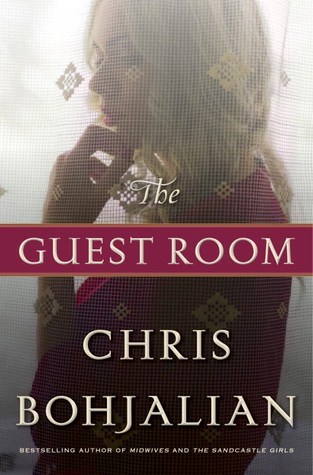
Guest RoomThe Guest Room by Chris Bohjalian is a dark, disturbing look into the world of sex trafficking, as well as a meditation on love, marriage, and the tests a relationship can withstand.

Richard Chapman — 40 years old, a well-off investment banker with a beautiful Westchester home, a lovely wife, and terrific 9-year-old daughter — has the best of intentions when he agrees to host a bachelor party for his younger brother at his home. His brother is a careless, selfish sort with a bunch of equally immature friends, but Richard figures having the party at his house is better than ending up in a strip club. And sure, everyone espects that there will be a stripper showing up — but what they don’t expect is two beautiful, young strippers who seem willing, for a price, to do much more than strip. And they definitely don’t expect the two intimidating guys who seem to be the girls’ handlers, bodyguards… or something even shadier.

Things get out of control, and quickly. And before the night is through, one of the strippers has stabbed one of the guards in the throat, the other guard has been shot, and the girls have run off, leaving behind a group of shocked and terrified men, a house that’s a bloody mess, and at least one husband with a lot of explaining to do.

Richard’s world is immediately turned upside down. He has to explain to his wife that while he was tempted by the offer of sex (and in fact, went upstairs with one of the girls), he did not actually have sex with her. He has to face the fact that the girls involved may have been minors. He has to deal with the immediate tabloid headlines about orgies in the suburbs and the subsequent damage to his reputation. And on top of all this, he can’t get the girl named Alexandra out of his mind. He went upstairs with her, even took off his clothes, but was somehow so touched by her youth and vulnerability that all he wanted to do was protect her.

At the same time, each chapter ends with a segment told from Alexandra’s point of view. Alexandra is not her real name, but it’s the name she’s used for the past five years, ever since she was lured away at age 14 from her small town in Armenia by the promise of ballet lessons in Moscow. What she got in Moscow was not ballet, but rape, imprisonment, and forced sexual slavery. Deprived of all access the to outside world, Alexandra was brutalized and forced into a life as (as she puts it) a “courtesan” and a “sex toy”. She and other girls her age are kept locked up, kept pretty, and trained to please the endless stream of wealthy and powerful men whom they service. There’s no other word for it — it’s horrifying.

The intersection of Richard’s world and Alexandra’s world blows both of their lives apart. Richard’s marriage is in crisis, his daughter is disgusted, his home feels violated, and he’s been placed on leave by his banking firm, which wishes to distance themselves from the lurid, sordid details that the press is delighting in sharing. Richard’s brother’s friends are being shady, and while Richard is not in legal trouble, he has plenty of reason to worry about his future.

Meanwhile, Alexandra and the other girl, Sonja, are on the run, but without resources — no place to turn for help, no ID or credit cards, nothing but the clothes on their backs, the cash in their pockets, and the guns they’ve taken from the dead guards. They know that they can’t stay in New York, with the Russian gangsters who own them wanting them dead, but they have no experience being free or making their own way, and have no one they can trust.

To say that this book is upsetting is an understatement. I couldn’t put it down or look away, but it left me feeling so bleak and full of despair. The fact that Alexandra’s story is fictional doesn’t mean that these sorts of things aren’t taking place in the real world. The Guest Room provides a peek into the world of sexual slavery, and it’s grim and dirty and depressing as hell.

Which is not to say that The Guest Room is not a good read. It’s actually completely engrossing, and once I started, I couldn’t stop reading. The main characters are all so well-developed that we get to really understand them as complex people, not cookie-cutter characters. Richard screws up, but he’s still a good person. He loves his wife and child, and wants to do the right thing, and still, inadvertently, brings all sorts of horror and chaos into their previously perfect lives. Richard’s wife Kristin is humiliated and hurt, but she also loves her husband and values their life together. She doesn’t always do what’s expected, and the author avoids the more clichéd roads with Kristin by showing the deeply thought-out choices that she makes.

Alexandra is a tragic, fascinating character. Seeing the world through her eyes in the parts she narrates, we get to understand what hopelessness truly is. Her voice is distinct and feels very real, and it’s incredibly disturbing to enter into Alexandra’s intensely awful existence and understand why she thinks and behaves as she does.

The Guest Room is powerful, upsetting, and impossible to put down. Chris Bohjalian is a masterful writer who seems to be at home in any genre. This book is a crime thriller, but it’s also a character study and even, in an odd way, a story about what makes a good marriage. I can’t say that it’s a pleasant read, but it’s certainly a great one.

_________________________________________

The details:

Title: The Guest Room
Author: Chris Bohjalian
Publisher: Doubleday
Publication date: January 5, 2016
Length: 336 pages
Genre: Contemporary fiction/thriller
Source: Review copy courtesy of the publisher via NetGalley

Book Review: The Light in the Ruins by Chris Bohjalian

lightHave I mentioned lately how much I love the Outlander Book Club? Without the OBC’s Book of the Month discussions, I might have procrastinated about reading this book for a while longer… but instead, I read The Light in the Ruins by Chris Bohjalian for our February BOTM pick, and loved it!

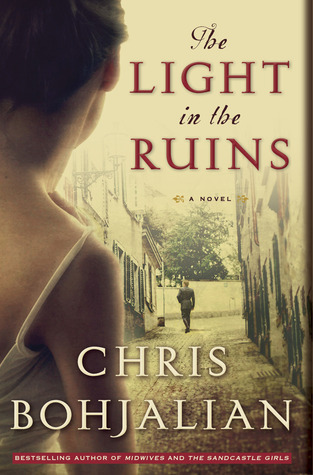
The Light in the Ruins is historical fiction set in Italy, with two alternating timelines: 1943-1944, when we meet the Rosati family and learn of their experiences during World War II, and 1955, when the surviving members of the family are being hunted down and brutally murdered by a serial killer with a vendetta.

The Rosatis own a beautiful, luxurious estate, Villa Chimera, in the Tuscan hills, where they live in upper class splendor, enjoying their vineyards, horses, swimming pool, and sweeping vistas. They are linked to museums in both the local town nearby and in Florence by the discovery of Etruscan tombs on their property. The tombs attract the attention of the Nazi officials whose job it is to steal rare and valuable Italian artwork for the benefit of the Reich (or, as they put it, to “protect” the artwork from the war by sending it all back to Berlin for safekeeping).

One Rosati son, Vittore, is a museum curator, and the Germans he works with begin to visit the villa more regularly, at first just to view the tombs, but then as a place to take visitors and enjoy some pampering. The Rosatis are viewed with suspicion and more by the neighboring villagers and gain a reputation as collaborators. Were they forced and intimidated into entertaining the Nazis, or are they enjoying the extra rations and other benefits of staying on the Nazi officers’ good sides?

Meanwhile, youngest daughter Cristina enters into an ill-advised love affair with a young German officer, and daughter-in-law Francesca, known for her sharp tongue and abrasive ways, waits anxiously with her two small children for news of her husband Marco, fighting on the front lines against the Allied invasion.

Cut to 1955, and the Rosatis are being gruesomely murdered, one by one. I won’t go into detail about which family members have survived the war and which are the murder victims. You’ll find all this out in short order if you read the book, and it’s all quite devastating. The investigating police detective is a woman named Serafina, who fought as a partisan during the war and whose wartime experiences and awful injuries intersect with the fate of so many members of the Rosati family.

Meanwhile, in between the 1943 and 1955 chapters, we get snippets of first-person narration told by the killer in a chilling, detached voice, explaining just how he or she butchered his first victim and what he or she has in store for the rest.

The Light in the Ruins has a grim, inevitable feel to its escalating tragedy. The war story is the more compelling of the two storylines, and it becomes increasingly difficult to read as we progress through the books. From the 1955 chapters, we know fairly early on which family members died during the war, and we spend the rest of the book building up to the awful events resulting in their deaths. The writing is all the more powerful because of the dread in each scene; we know something very bad is coming, and can even guess some of it, but it’s still shocking and horrible to read when it arrives.

That said, The Light in the Ruins is an incredibly well-written and smartly paced book. The plot is constantly moving forward, despite the time shifts, and the clues and revelations pile up in a way that feels organic and well-ordered. Interestingly, I didn’t particularly like many of the characters, even the ones we theoretically should feel more sympathetic toward, but that in no way meant that I didn’t feel horror at their fate and their suffering.

Perhaps the only story thread that I didn’t particularly care for was the love story involving Cristina and the German officer, but it’s only one of many pieces of the whole. Otherwise, I found the connections and relationships among the many characters fascinating. If anything, I’d have liked to know a bit more about Serafina, and would be curious to know what her future holds.

The author does not shy away from describing the terrible events that occur in either timeline, and I suppose some readers will feel that the descriptions might be too graphic. I didn’t feel that way — I felt that it was important to know and understand exactly what happened in order to experience the terror of the characters and get a full sense of the tragedy. Still, for readers who are more squeamish or prefer not to see every last detail, this might be good to keep in mind.

As I was reading The Light in the Ruins, I was often reminded of the wonderful book A Thread of Grace by Mary Doria Russell — and was delighted to see Chris Bohjalian’s praise of that book in his acknowledgements. For more reading on Italy during WWII, I highly recommend A Thread of Grace.

Summing it all up: Is there anything Chris Bohjalian can’t write? I’ve now read, written by him, a legal/medial drama (Midwives), a post -disaster first-person story with a teen girl narrator (Close Your Eyes, Hold Hands), one of the spookiest ghost stories I’ve ever read (The Night Strangers), and with The Light in the Ruins, outstanding historical fiction. Clearly, I need to read much more of his work and see what other worlds and genres are contained within his books!

Meanwhile, for an excellent but heart-wrenching slice of historical fiction, I absolutely recommend The Light in the Ruins.

_________________________________________

The details:

Title: The Light in the Ruins
Author: Chris Bohjalian
Publisher: Doubleday
Publication date: July 9, 2013
Length: 309 pages
Genre: Historical fiction
Source: Found at a book swap!

Book Review: Close Your Eyes, Hold Hands by Chris Bohjalian

Book Review: Close Your Eyes, Hold Hands by Chris Bohjalian

Close Your Eyes, Hold HandsBestselling author Chris Bohjalian channels a 16-year-old girl in his newest novel, Close Your Eyes, Hold Hands. Narrated by Emily Shephard, the book is set in post-disaster Vermont. A nuclear power plant has exploded in the northeast sector of the state, leaving thousands homeless, a big swath of land (the Exclusion Zone) contaminated and uninhabitable, and resulting in 19 deaths — including the deaths of Emily’s parents. Even worse, Emily’s father was an engineer at the plant, and the common belief is that he was drunk on the day of the disaster. Not only is Emily left on her own, but she’s constantly barraged by the scathing comments of strangers about how Bill Shephard is to blame for it all, so Emily runs away and seeks anonymity in the closest city, Burlington.

There, Emily drifts from teen shelter to the streets, landing for a while in the miserable apartment of Poacher, who supplies her with painkillers and pimps her out to earn her keep, when he’s not sending her out with other members of the posse to steal various and sundry items. Emily operates under an assumed name, spends her time mostly high, cuts herself in secret, and picks up truckers by the interstate for a quick buck, until she meets 9-year-old Cameron, a runaway from a string of bad foster homes, and decides to protect Cameron at all costs.

Emily narrates her tale from some time after the events, and her narration jumps around quite a bit in time. We get snapshots of her pre-disaster life, living with unstable parents who drink too much, running a bit wild, constantly underachieving in school. Emily describes herself as having poor decision-making skills and impulse-control, and really, even before the explosion, her life was heading downhill. Emily’s one true passion is writing. She keeps journals and is an aspiring poet, and admires no one more than Emily Dickinson. If the plant hadn’t melted down, would Emily have gotten her act together? Possibly… but we’ll never know.

Instead, Emily sheds her innocence quickly in the six weeks from nuclear meltdown to her loss of virginity in her first paid sexual encounter. Emily is on her own, on the streets, with no one to look out for her — and because of her fear of admitting who she really is, she’s cut off from any possible aid from official relief agencies.

The narration of Close Your Eyes, Hold Hands is one long spiral downward. The time jumps become jumbled, and while the intended effect might have been a stream-of-conciousness flow, it’s often more like listening to someone ramble. Emily’s inner turmoil and dire straits are immediately apparent, and the impact of the disaster is clear and awful.

Yet somehow, I never truly felt an emotional connection to Emily. Her storytelling style is distant — she’s recounting events from after the fact, and we don’t really find out why or what’s going on in this “after” until quite late in the story. Everything feels abrupt: We hear about an incident at Poacher’s, and only later get more information about how she ended up there. We hear about taking care of Cameron, but don’t get the full picture of why or how this came about until further into the book. The jumbled events leave little to become involved with, as the loose narrative structure never really allows momentum or suspense to build.

My other issue with this book is that Emily’s voice fades in and out quite a bit. I could never quite put out of my mind that this is a grown man’s version of what a teenage girl might sound like, and to my ears, anyway, the language was just a tiny bit off somehow, the slang and expressions lacking the ring of authenticity to convince me that this was really a 16-year-old speaking to me.

On the other hand, there is quite a bit here that packs a punch. The bare bones of the disaster itself are disturbing, and the post-disaster landscape and the suffering of the survivors is bleak indeed.

Close Your Eyes, Hold Hands is harsh and sad and frightening. This isn’t some far-distant post-apocalyptic American nightmare: this is today, here, now. It’s a scenario that’s scarily possible — a what-if imagining that’s not at all difficult to envision. Emily is a mess, and rightly so. She makes some terrible decisions, but this isn’t a situation that anyone could possibly be prepared for.

While the writing style and organization of the book didn’t always work for me, I still couldn’t look away or stop reading. Whether or not I easily bought into Emily as a person, I had no problem picturing the nightmare of a nuclear disaster happening in an oblivious America. Don’t read this book expecting sunshine and happy endings; the sadness and despair will stick with you long after you close the covers.

_________________________________________

The details:

Title: Close Your Eyes, Hold Hands
Author: Chris Bohjalian
Publisher: Doubleday
Publication date: July 8, 2014
Length: 288 pages
Genre: Contemporary fiction
Source: Review copy courtesy of Doubleday via NetGalley


Thursday Quotables: Close Your Eyes, Hold Hands

quotation-marks4

Welcome back to Thursday Quotables! This weekly feature is the place to highlight a great quote, line, or passage discovered during your reading each week.  Whether it’s something funny, startling, gut-wrenching, or just really beautifully written, Thursday Quotables is where my favorite lines of the week will be, and you’re invited to join in!

Close Your Eyes, Hold Hands

Close Your Eyes, Hold Hands by Chris Bohjalian
(published July 8, 2014)

Maybe not the most profound passage from this bleak and disturbing book, but I think I can honestly say that it will change my life forever:

This is not the most important thing I am going to tell you, but it may be the most interesting: Did you know that a lot of Emily Dickinson’s poems can be sung to the theme from Gilligan’s Island? Not kidding, this is totally legit.

The narrator goes on to say, “So, try it” and gives this one to work with:

Because I could not stop for Death,
He kindly stopped for me;
The carriage held but just ourselves
And Immortality.

We slowly drove, he knew no haste,
And I had put away
My labor, and my leisure too,
For his civility.

You just sang that, didn’t you? Holy moly. It really works. And I tried it with other Dickinson poems, too. Yup, it totally fits.

Curse you, Chris Bohjalian! I’ll never be able to not sing Dickinson/Gilligan again!

(One more by Emily Dickinson, chosen at random… )

Look back on time with kindly eyes,
He doubtless did his best;
How softly sinks his trembling sun
In human nature’s west!

Aaaaaaugh.

Updated to add:

I’d be remiss not to provide a chance to hear the Gilligan theme, so here it is!


What lines made you laugh, cry, or gasp this week? Do tell!

If you’d like to participate in Thursday Quotables, it’s really simple:

  • Write a Thursday Quotables post on your blog. Try to pick something from whatever you’re reading now. And please be sure to include a link back to Bookshelf Fantasies in your post (http://www.bookshelffantasies.com), if you’d be so kind!
  • Leave your link in the comments — or, if you have a quote to share but not a blog post, you can leave your quote in the comments too!
  • Visit other linked blogs to view their Thursday Quotables, and have fun!