Book Review: Deadlocked (Sookie Stackhouse, #12)

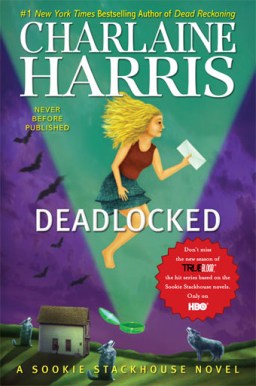
Book Review: Deadlocked by Charlaine Harris

Oh, Sookie. I think it’s time to say good-bye. Twelve books in, the Southern Vampire series has run its course and then some.

Things I know after reading Deadlocked:

– where Sookie shops for groceries
– how she likes to dry her hair
– whether or not she shaves her legs each day
– how much thought she puts into what she wears
– how she makes sweet potato pie
– that she applies make-up more heavily on days when she’s feeling down…

I could go on and on… which is what Charlaine Harris does in this book. Endless, endless detail about the minutiae of Sookie’s life. If only we were spared even a few of her countless showers, this book would have been a lot shorter.

Not to say that there aren’t plot developments — but not really enough of them, or ones weighty enough to sustain an entire novel. Clearly, the author is trying to spin out the story until we get the final book in 2013. However, I do feel that Deadlocked, with a bit of pruning and editing, could have encompassed a good wrap-up and spared us the year of waiting we’ll now have until the next book comes out.

So what do we get? A mystery that’s not very mysterious, a bunch of werewolf drama, fae intrigue and plotting, a random phone call from an ex-lover, and some very slow-moving changes in Sookie and Eric’s relationship. That’s about it. If I understand the end correctly (and I think I do), then the stage is set for what I’ve believed for some time will be the series finale and Sookie’s happily ever after. I won’t go into detail, because that would be a bit spoilerific. I guess I’ll have to wait a year to find out if I’m right.

Sookie, it’s been a fun ride, but I won’t be sorry to see your story brought to a conclusion, at long last. It’s really time.

Book Review: Ocean’s Surrender by Denise Townsend

Book Review: Ocean’s Surrender by Denise Townsend

Is it hot in here?

Or could it be the hot and heavy Ocean’s Surrender that’s generating enough steam to curl my hair?

Following up on her first selkie/human erotic love story, Ocean’s Touch, Denise Townsend gives us another story of love, sexual awakening, female empowerment… and plenty of selkie sexy times.

In Ocean’s Surrender, main character River is damaged, hurting, and afraid to open her heart. After suffering horrific abuse at the hands of a former boyfriend, River shuts herself off from the possibility of loving again, focusing all her energy on caring for her sweet, developmentally disabled brother Jason. Fen is a selkie – a magical creature of the sea who can assume human form (gorgeous human form, I might add) — whose empathic powers hear the call of River’s suffering and draw him toward her. Fen’s mission is to open River’s heart again by helping her past the pain, guilt, and self-blame that have been tormenting her.

With Fen’s guidance, River comes to realize that she’s not at fault for the terrible events in her past, and learns to trust herself enough to start trusting others, including the very hot and sexy paramedic who has been in love with her for the past year.

Denise Townsend, in Ocean’s Surrender and its predecessor, has created a story that is compelling and well-told, with pathos and humor. At the same time, she includes very graphic sex scenes that not only make sense in terms of the overall plot, but are in fact key to crucial elements of the plot development.

It’s through River’s sexual experiences with Fen that she begins to heal, and from that healing arrives at a place where she can reclaim her own sexuality and ability to love. Those encounters and the resulting changes in River are what allow her, finally, to reach out to the man who loves her and to start rebuilding a full and complete life again.

And those sex scenes! You know how in old Hollywood movies, whenever the romance would start getting a little hot, the camera would pan away to a candle, a curtain, or some other inanimate object? That definitely doesn’t happen here. No pans, no slow-fades. The sex scenes are honest and raw, body parts are named (“c-words” galore!), and the action is explicit without ever being gross. There’s a joy here in the characters’ sexual discovery and exploration; yes, it’s steamy, but it’s also quite lovely.

Overall, I’d describe Ocean’s Surrender as a beautifully written erotic love story, with just the right mix of a meaningful storyline, magical fantasy elements, and really terrific erotic scenes. Creative, sexy, and fun, this one is a winner.

Note: With grateful appreciation to the author for providing me with an ARC to review.

Book Review: Magic for Beginners by Kelly Link

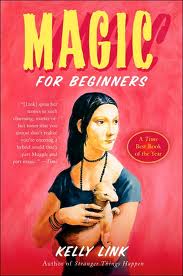
Book Review: Magic For Beginners by Kelly Link

After finally putting down the borrowed copy of Magic for Beginners which I’d been reading on and off for the past week, I can make two definitive statements:

1)      Kelly Link is a very gifted writer.

2)      I suck at short stories.

I really gave it my all, but I couldn’t quite bring myself to read all eight stories in this collection. I managed to get through six (although for two, my reading might better be described as skimming). If you read my blog post from a few days ago (see it here), you’ll know that I pick up short story collections rarely and reluctantly, but in this case, I’d heard enough high praise for Kelly Link to decide to give it a go.

I absolutely loved the first story in the collection, “The Fairy Handbag”, narrated by a teen girl whose recently deceased, oddball grandmother has appointed her the guardian of a magical handbag. According to Grandmother Zofia, the people in her little village of Baldesziwurlekistan all picked up and moved into the handbag hundreds of years ago in order to escape a terrible invasion, and have lived there happily ever since. “The Fairy Handbag” is weird and wonderful, and I was thoroughly enchanted.

Also very good was “The Stone Animals”, about a family who leaves Manhattan and moves into a country home upstate, only to discover that, slowly but surely, all of their possessions have become haunted. I’m not sure what any of it actually meant, but I love some of the imagery used, especially this brief glimpse of the pregnant wife who can’t stop painting and repainting the rooms in the house:

He found Catherine standing on a ladder in the kitchen, one foot resting on the sink. She was wearing her gas mask, a black cotton sports bra, and a pair of black sweatpants rolled down so he could see she wasn’t wearing any underwear. Her stomach stuck out so far, she had to hold her arms at a funny angle to run the roller up and down the wall in front of her.

The story entitled “Magic for Beginners”, equally weird and oddly touching, is the tale of a fifteen-year-old boy and his friends who are obsessed with a mysterious TV show called The Library. Or is this story about characters on a TV show called The Library who are obsessed with a TV show called The Library? At one point, main character Jeremy wonders “about what kind of television shows the characters in television shows watch.” Kind of made my head spin.

Kelly Link’s writing is lyrical and full of unconventional images and similes. Just two of the many that made me smile:

He feels like a tennis ball in a game where the tennis players love him very, very much, even while they lob and smash and send him back and forth, back and forth.

And…

The disco ball spins and spins. It makes Jeremy feel kind of carsick and also as if he has sparkly, disco leprosy.

Kelly Link has great talent, and I truly enjoyed the stories I read. The fact that I couldn’t get through all of them certainly has more to do with me as a reader rather than with the quality of the book. If you enjoy short stories, and get a kick out of worlds weird and twisted, I’d definitely suggest giving this collection a whirl.

Book Review: Why We Broke Up by Daniel Handler & Maira Kalman

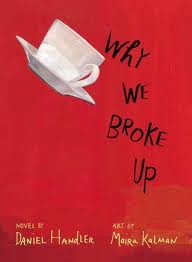
Book Review: Why We Broke Up by Daniel Handler; illustrated by Maira Kalman

Min Green and Ed Slaterton were young and in love… and then they broke up. Why We Broke Up, written by Daniel Handler and gorgeously illustrated by Maira Kalman, is Min’s letter to Ed, hastily and tearily written by Min on her way to dump on Ed’s doorstep all of the accumulated mementos from their brief but intense relationship.

The writing is supercharged with teen-aged emotion and humor. Min is part of the “arty” crowd, an avid film buff who relates everything in life to old movies. When she falls unexpectedly for golden boy Ed, co-captain of the basketball team and center of all that’s popular in their high school, you’d think it was the Montagues and Capulets all over again. Neither Min’s nor Ed’s friends approve, but these two are in orbit around each other.

The point of view is quite interesting. We’re meant to sympathize with Min, yet I can’t help but feel that her perspective is not always reliable. Ed points out to Min repeatedly that he likes her because she’s different — meaning different from him and his friends — but Min never seems to work her way around to being able to reciprocate. Instead, it’s Ed’s popularity and the seeming ease with which he breezes through life which Min consistently adds to the list of reasons of why they broke up. She seems to try to mold Ed into her idea of an acceptable boyfriend, but can’t bring herself to enjoy any of the pursuits that make Ed who he is. Min fails to do more than acknowledge in passing that Ed is largely being cared for by his older sister while his mother is ill — yet as readers, we can infer that his mother is terminal, and thus Ed’s actions may be understandable in a different light, one which Min ignores completely.

Still, these two sparkle together, and their love and lust take them to some touching and surprising places before they’re through with one another. Min speaks with the voice of a girl experiencing first love, and her heartbreak when it falls apart is piercingly true. Min’s internal collapse when she realizes that it’s all over is particularly well-written — a three-page venting that anyone who’s been a teen-aged girl can relate to, in which she lists all the ways in which she’s not special, not different, not anyone of note. It’s dismaying, yet so true a first reaction to rejection that I had to stop and marvel that a male author could capture a girl’s inner voice so accurately.

The writing sparkles, the pictures are lovely, and the story is just a delight. Don’t let the young adult classification fool you — this is good literature, enjoyable for anyone who appreciates witty characters, heartfelt emotions, and a story well-told. Don’t miss it.

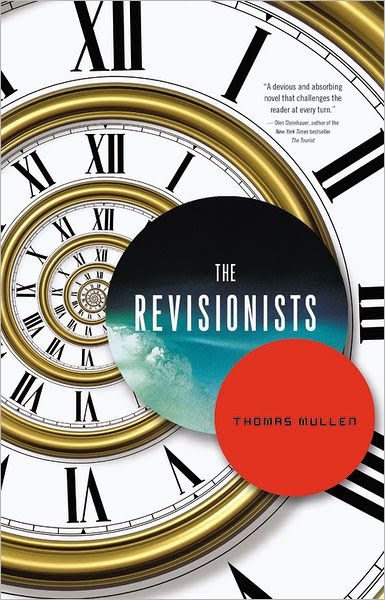
Book Review: The Revisionists by Thomas Mullen

Book Review: The Revisionists by Thomas Mullen

(Hardcover edition published September 2011; paperback due out in October 2012)

Maybe you could drive yourself crazy trying to chart backward all the causes and effects, all the ends and means, tracing everything to some original sin that may or may not have actually occurred but that people accepted as true, or true enough. Maybe staring into the eyes of all that history was a dangerous thing to do, as her mother had calmly warned her. Maybe you were supposed to move forward armed with just enough history to help you figure out the present without obsessing over the past. But how much was enough? Where was the gray area between ignorance and obsession?

The Revisionists was not at all what I’d expected, yet I couldn’t put it down.

I have a soft spot for all things time-travel, and the basic synopses I’d read of this book seemed to put it squarely into that genre: Main character Zed works for a post-disaster society at some point in time several centuries from now. In the “Perfect Present”, there is no war, no racial tension, no hate. Zed’s government agency works to keep the perfect present perfect, by sending agents into the past to thwart “hags” — historical agitators — whose mission is to stop disasters (think 9/11, concentration camps, etc) before they can happen, on the assumption that all these calamities were a necessary step in history in order for the perfect present to come to be.

Confusing? You bet.

And strangely, that’s not at all what this book is really about. Much more than anything else, I’d describe The Revisionists as an espionage-thriller set in DC, filled with intrigue, shadowy quasi-governmental intelligence outfits working against one another, multiple layers of pawns and spymasters, and a reality that slips and shifts from chapter to chapter.

This is not a sci-fi book, when you get right down to it. Zed’s mission is the driving narrative, yet we get no information whatsoever about the mechanics of his time travel and only the barest of descriptions of some futuristic technology. Without saying anything that might inadvertently be a spoiler, I will say that the entire time travel premise is not necessarily what it appears to be, depending on how you choose to interpret certain events and passages.

I was fascinated by this book, and it will probably take me some time to mull over all the twists and turns and come to terms with what may or may not have happened. I do recommend The Revisionists, although I worry that its perfect target audience — people who enjoy a good spy thriller — won’t ever discover it if it continues to be described as a time-travel novel.

Q&A with the kiddo: A kid’s-eye view of Henry Huggins

Book Review: Henry Huggins by Beverly Cleary

Why should I be the only book reviewer in the family? I thought it might be fun to get my almost-10-year-old’s opinion once in a while. Proudly introducing: Q&A with the kiddo!

Getting my son to read is a struggle, to put it mildly. And when I have the mental energy, I’m sure I’ll be back to document all the ups and downs… but that’s a topic for another day.

Meanwhile, I was truly delighted this week when my son willingly sat down to read a chapter or two a night, without arguments and with only a minimal amount of fidgeting. Getting him to write something about what he reads would feel too much like homework (oh, the horror!), so an interview-style book review seemed like a win-win approach.

Without further ado — Q&A with the kiddo:

Q: What book did you read this week?

A: Henry Huggins

Q: What was it about?

A: This boy named Henry in 3rd grade, he found a dog and didn’t know its name. He gave the dog ice cream from his ice cream cone and then he called the dog Ribsy because he could see his ribs. Then he called his mom and asked if he could keep him. At the end, the owner came and said, “I miss that dog.” They decided to let the dog choose. It took a while, but he picked Henry.

Q: Did you like the book?

A: Yes.

Q: Who was your favorite character?

A: I don’t know. (Blogger’s aside: I think I was starting to annoy the kiddo at this point; he wanted to get back to his video game…)

Q: Can you give me a general description of what the book was like?

A: Exciting and it had some drama in it.

Q: Would you want to read more about Henry and Ribsy?

A: Yes.

Q: Was this a good reading level for you?

A: Yes.

Q: Who do you think should read this book?

A: Basically anybody. Most kids in 3rd and 4th grade would like it.

So there you have it. We’ll be back with more book opinions from my kiddo, assuming I can get him to sit down and read again any time soon!

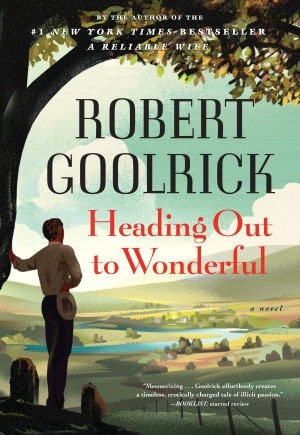
Book Review: Heading Out To Wonderful by Robert Goolrick

Book Review: Heading Out To Wonderful by Robert Goolrick


I’m struggling to figure out just what I want to say about Heading Out To Wonderful. The writing is lovely, and I became involved enough in the plot that I stayed up way past my bedtime to finish the book. On the other hand, I’m not sure that the whole is greater than the sum of its parts.

Heading Out To Wonderful is set in the sleepy rural town of Brownsburg, Virginia in 1948, post-war years when life in America was on the cusp of change. The author lovingly describes the quality of life in Brownsburg:

Brownsburg, Virginia, 1948, the kind of town that existed in the years right after the war, where the terrible American wanting hadn’t touched yet, where most people lived a simple life without yearning for things they couldn’t have…

And also:

A particular town, then, Brownsburg, in a particular time and place. The notion of being happy didn’t occur to most people, it just wasn’t something they thought about, and life treated them pretty well… the notion of being unhappy didn’t occur much either.

Into this small town arrives Charlie Beale, an attractive and pleasant man who appears in his truck one day, bringing nothing but two suitcases, one filled with butcher knives and one filled with cash. Charlie seeks out work with the local butcher, buys a plot of land out by the river, and settles in.

Charlie remains something of an enigma throughout the book. He is 39 years old, athletic and graceful, skilled with his hands and his knives. He served in Europe in the war, but doing what exactly, we never find out. The only clue we get about his wartime experiences is that his butcher knives are German; we can only speculate as to where or how he acquired them.

Charlie doesn’t speak about his childhood or background except in vague generalities. Where did all that cash come from? We don’t know. Charlie is full of yearning, for a place, for land, for connections, and for goodness. Somehow along the way, Charlie lost his sense of hope, and so he set out traveling, looking for “something wonderful”. His new friend and employer Will tries to reset Charlie’s expectations:

Let me tell you something, son. When you’re young, and you head out to wonderful, everything is fresh and bright as a brand-new penny, but before you get to wonderful you’re going to have to pass through all right. And when you get to all right, stop and take a good, long look, because that may be as far as you’re ever going to go. Brownsburg ain’t heaven, by any means. But it’s perfectly fine. It’s all right.

Charlie seems to have found “all right” in Brownsburg. He earns the friendship of the townspeople, and is the adored companion of Will’s young son Sam. Charlie might even have been content at last, until he meets Sylvan Glass, a 17-year-old “hillbilly” girl, bought and paid for by the richest man in town, now a trophy wife who dreams of glamour and Hollywood. What follows is a year-long affair which consumes Charlie and disrupts the lives of everyone in town. Reading about Charlie and Sylvan, we know that something disastrous has been set in motion; I could only wait to see what shape the disaster would ultimately take.

A sense of foreboding hangs over the story from the outset. It’s clear that nothing good can come out of the affair. By the time I reached the half-way mark in the book, it became very difficult to put down, and I had to keep reading to see which way it would go. To avoid spoilers, I won’t say anything about the book’s climax, other than to say that events unfold that are at the same time tragic yet not unexpected.

At the conclusion, I was disturbed by the lack of overall coherence. Many plot elements that are compelling are introduced, but I didn’t see the follow-through. The black and white communities live completely separate lives in Brownsburg. Both Charlie and Sylvan develop relationships that reach out across the color lines, yet I didn’t feel that this part of the story particularly went anywhere. Concepts of sin and salvation are introduced as Charlie struggles to fit into the spiritual life of the community, but again, I didn’t feel the points were carried through as the plot unfolded.

Ultimately, dramatic as the story is, Heading Out To Wonderful left me a bit puzzled at the end, wondering about the point of it all. Robert Goolrick is a terrific and thoughtful writer – I loved his previous novel, A Reliable Wife, with its dark secrets and twisty-turny plot developments. Unfortunately, despite the lovely prose, Heading Out To Wonderful doesn’t quite deliver.

Book Review: Talulla Rising by Glen Duncan

Book Review: Talulla Rising by Glen Duncan

I can’t talk about Talulla Rising without talking about its predecessor, The Last Werewolf and what happened in it, especially some major twists toward the end. So consider this your obligatory spoiler alert. SPOILERS AHEAD! Caveat lector — let the reader beware.

Now that that’s out of the way…

The Last Werewolf was one of my favorite books of 2011. Simply put, I was blown away by the language as well as the plot. Glen Duncan’s writing is extraordinary, and the voice he created for lead character Jake Marlowe was remarkable. In a nutshell, The Last Werewolf is a first-person narrative told from the perspective of the titular character Jake, who is, in fact, the very last werewolf in existence. After a lifespan of 200 years, WOCOP (the World Organisation for the Control of Occult Phenomena) has finally succeeded in wiping out the rest of his species and has let it be known that Jake is next. Jake is world-weary, bone-weary, and overall rather sick of it all, so he decides to let WOCOP hunt him down and put an end to it, once and for all.

AND THEN… (and this is where the serious spoilers arise, so — last chance — avert your eyes now!)… Jake meets Talulla, and discovers that he’s not the last after all. Talulla is a recently turned werewolf, who quickly becomes his lover, his soulmate, and his partner in monstrosity. The pair go on the road, a lupine Bonnie and Clyde, but their joy in finding true love is not fated to last. Suffice it to say, The Last Werewolf does not end with a happily-ever-after.

Talulla Rising opens several months after the conclusion of The Last Werewolf. Jake is gone, and Talulla is alone in the world, pregnant, and full of despair. Her pain over the loss of Jake is intense; her fears of impending motherhood are enormous. Can a monster be a mother? What will her child be, and how can she make sure it survives? When her newborn werewolf son, born during Talulla’s full-moon transformation, is brutally ripped from her arms by a familiar team of enemies, events are set in motion that lead to ongoing violence, desperate acts, and unlikely alliances.

Along the way, despite Talulla’s efforts to harden her heart and not let herself love, she becomes a fierce mother/protector, whose only motivation is to save her young, no matter the expense.

Talulla Rising is not for the easily disturbed. If scenes of bodily mayhem make you queasy, this will not be your cup of tea. The violence is brutal, explicit, and quite often disgusting — although, frankly, it is a team of scientists rather than any supernatural beings who carry out the worst of the atrocities committed in the course of this book.

As in the first book, Glen Duncan’s writing is magnificent. His use of words continues to astound, as he twists and turns the English language to his will. I found Talulla’s voice a little too similar to Jake’s at times, but that’s a minor complaint.

While the first book had plenty of action, it focused to a great degree on Jake’s internal dialogue. Talulla Rising is much more plot-driven, with events and disasters piling up at a tremendous clip.

When I finished The Last Werewolf, the story felt complete, and I had no idea that a sequel was planned. Likewise, after finishing Talulla Rising, I read this Q&A with Glen Duncan and was surprised to learn that this is, in fact, a trilogy, and that a third and final book is forthcoming. While some plot threads are left dangling at the end, Talulla Rising ends on a satisfying note and is complete on its own, so that it was not immediately evident to me that the author planned a follow-up. That said, I’ve truly enjoyed these two werewolf novels by Glen Duncan, and will certainly gobble up the third as soon as it’s available.

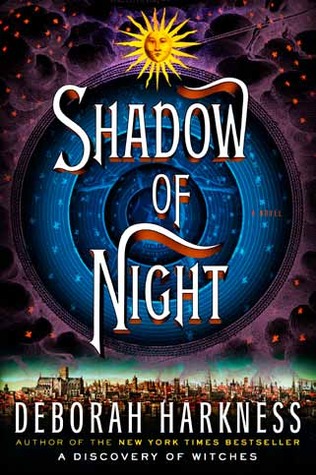
Book Review: Shadow of Night by Deborah Harkness

Shadow of NightShadow of Night is book #2 in Deborah Harkness’s All Soul’s Trilogy, which kicked off last year with bestseller A Discovery of Witches. At the time ADOW was published, I remember scads of reviews referring to it as “Twilight for grown-ups”, which is and isn’t a fair comparison.

True, ADOW has as its focal point a forbidden romance between a witch and a vampire… and we all know that LOVE + VAMPIRE = TWILIGHT, right? Calm down, I’m just kidding. ADOW is much more than a romance, and the intelligence and emotional truth at its core elevate it far above the standard, popular, seemingly endless supply of vampire fiction.

I loved the heck out of ADOW for its combination of smarts (Oxford professors! Secret manuscripts! Alchemy! Mitochondrial DNA!), supernatural beings (the aforementioned witch and vampire, plus their various and assorted family members, clans, secret societies, etc. Oh, and did I mention daemons?), and yes – be still my heart – passionate, forbidden love. Also, yoga, running, and rowing, for those who get hot and bothered by reading about exercise freaks.

ADOW ended with a plot point that left us hanging off the proverbial cliff, and Shadow of Night picks up the narrative mere moments after the conclusion of the first book. Witchy Diana Bishop and gorgeous vampire Matthew Clairmont have just timewalked back to Elizabethan England in the year 1590. Their goal is two-fold: to find a remedial witchcraft teacher for Diana, who never learned to use her talents, and to find the mysterious manuscript before the rest of the supernatural world gets to it.

First, bigger challenges await. Diana must learn to dress in awkward clothing, write with a quill, and speak with an accent that doesn’t scream “hello, I’m a time-traveler!” in order to fit in with the locals. And such locals! 1500-year-old Matthew has always been an important guy, and in the 1590s, he is a spy for Queen Elizabeth, a member of the powerful supernatural ruling body, the Congregation, and a member of the School of Night, a group of influential men which includes Sir Walter Raleigh, playwright Christopher Marlowe, and various other scholars and scientists of the time. A bit of a problem for me: I didn’t know who all of these historical figures actually were, so I had to sidetrack a bit in order to figure it out. Thank you, Wikipedia!

The plot moves from Oxford to London, France, and Prague. There are a ton of new characters introduced, some of whom matter more than others. How thoughtful of the publisher to give us a list of characters at the end – seriously, after a while I really needed it.

This is a dense, long book. At nearly 600 pages, there’s a lot to keep track of. I found it a bit slow-going for the first 75 – 100 pages, with too much time spent on Diana adjusting to life in 1590, and not enough emphasis on her relationship with Matthew. In addition, during the early sections, Diana and Matthew are surrounded by an entirely new cast of characters, and I thought the mood and urgency of the book suffered from the lack of the other people we’d come to care about in book one.

The pace definitely picks up once the couple travels to Sept-Tours in France, where Matthew reconnects with his family and he and Diana take the final steps toward formalizing and cementing their bonds. I was surprised by how moving I found this section. I won’t go into spoilers, but suffice it to say that Matthew’s reunion and reconciliation with one particular family member brought tears to my eyes.

Quibbles (there are always quibbles): Besides the enormous cast and the seemingly endless amount of period detail, there are two main items that bothered me about SON, and they’re significant plot points.

One, I still don’t fully buy the author’s concept of time travel. In these books, when Diana and Matthew step into the past, the 21st century version of Matthew essentially takes the place of the 16th century Matthew… so when they get to 1590, the Matthew who’d been there disappears (much to the consternation of his associates) and the new Matthew steps in, picking up his social life, his work connections, his obligations and his loyalties. When they leave, the old Matthew will presumably reappear and pick up where he left off, but can’t know what the new Matthew did during that time for fear of changing the future. Huh? Yeah, it all works, more or less, but I never really got on board with this presto-change-o business.

Secondly, the whole point of the timewalking was to find a teacher for Diana. They spend about two-thirds of the book searching for a witch to teach Diana how to be a witch (at a time when witch hunts are rampant, so this doesn’t necessarily sound like a smart plan, IMHO). When they finally find a witch mentor, however, I felt a bit short-changed; the story actually spends very little time on her lessons, so it felt to me that Diana made big leaps in her mastery of her powers without us seeing it happen.

Perhaps this makes it sound as though I didn’t care for the book, and that’s simply not the case. Let me make it clear: I loved Shadow of Night! I really couldn’t put it down, stayed up too late at night to read it, and even skipped TV nights so I could finish. (Now that’s devotion!). The author does a marvelous job with the love story, and I found Matthew and Diana’s trajectory through SON both captivating and electrifying. There are so many beautiful moments throughout the book, as well as moments of fear, tragedy, betrayal, and adventure. Ms. Harkness’s love of history shines through, and she clearly had a ball recreating life in Elizabeth’s England, from the clothing to the coins to the “latest” in scientific developments.

SON ends at a key turning point, and once I realized it was approaching, I found myself slowing down as I got nearer to the end of the book, not wanting to face the fact that this installment was done. I eagerly await the third and final book in the trilogy, and just hate not knowing THIS INSTANT how it all turns out. If you loved ADOW, then you simply have to read SON. And if you didn’t read ADOW, what are you waiting for? Read these books now!