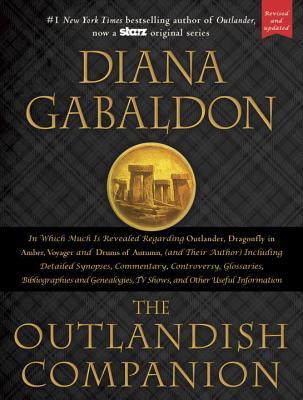
Revised edition of OCI, 2015
Last week, I posted a reading and listening guide for The Outlandish Companion, Volume II — and working my way backward, I’m now doing the same for Volume I of this essential reference book for Outlander fans.
First, a note on editions. The Outlandish Companion was originally published in 1999, providing all sorts of reference information on the first four books in the Outlander series (Outlander, Dragonfly in Amber, Voyager, and Drums of Autumn). This book has been a go-to resource for book fans ever since, who have (pretty much non-stop since 1999) never stopped asking for a volume two.
In 2015, fans finally got their wish, and more. Not only was The Outlandish Companion, Volume II published in October 2015, but earlier in the year, Diana Gabaldon also released a newly revised and updated edition of the Companion, Volume I.
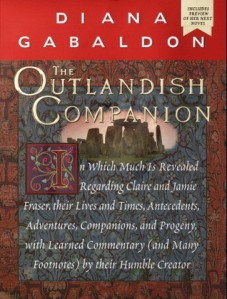
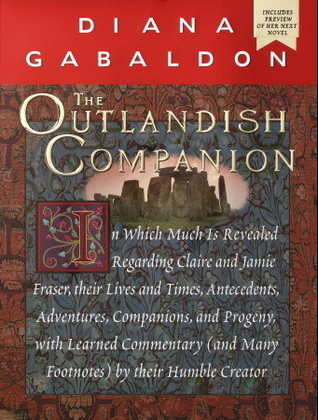
The 1999 edition
The new edition of The Outlandish Companion, Volume I includes most of the original, plus some additional essays on writing and being a writer, as well as a section on the Starz TV series. Although I already owned a copy of the original edition, I simply had to treat myself to the revised edition as well… and then immediately put it on my shelf once it arrived, figuring I’d page through it eventually.
But now, having listened to the OCII audiobook, I thought it would be only fair to give the OCI audiobook a listen as well. And, as a public service for anyone who’s interested, I’m here to share with you a guide to what’s inside the OCI revised edition, plus what’s on the audiobook and what’s not.
As I mentioned in my OCII review: What you get in the audiobook, which you don’t get in the hard copy, is the voice of Herself, our beloved author Diana Gabaldon. I actually can’t stress this enough: Most of the audiobook is narrated by Diana, and I’ll explain a bit further on why this really matters… and really, why this alone is worth the price of the audiobook, even if you already own the physical book.
[Note: Except where indicated, all sections of OCI are read by Diana Gabaldon on the audiobook.]
Without further ado, what follows is an overview of what’s in the book, what I especially enjoyed, and a few tips and comments for anyone thinking about listening to the audiobook, either instead of or in addition to getting a copy of the physical book.
What’s inside:
Prologue:
Well, it was all an accident, is what it was. I wasn’t trying to be published; I wasn’t even going to show it to anyone. I just wanted to write a book — any kind of book.
And with this opening, we’re off! Diana takes us through her background, explaining how Outlander was just supposed to be what she was writing “for practice” to learn how to write a novel, and how it grew from there. It’s funny and personal and a must-read, particularly if you haven’t yet had the pleasure of hearing Diana tell her own writing story.
Part One: Synopses:
This is a major chunk of the book, and well worth the investment for true fans. The synopses included — Outlander, Dragonfly in Amber, Voyager, and Drums of Autumn — are lengthy and incredibly detailed. The books’ plots are thoroughly summarized, start to finish, with plenty of passages directly from the original texts.
Lengths of synopses (hardcover edition):
Outlander: 10 pages
Dragonfly in Amber: 30 pages
Voyager: 34 pages
Drums of Autumn: 42 pages
Reading tip: If you find yourself picking up the series after a break and need a refresher on what’s already happened, these synopses are detailed enough to give you everything you need to keep going, if you just can’t spare the time for a complete re-read of the books themselves.
Listening note: On the audiobook, the synopses are read by the incomparable Davina Porter, who narrates all of the Outlander series audiobooks. Just listening to her read the synopses and the quoted passages is a total treat.
Part Two: Characters
This section starts with a lengthy essay entitled “Where Characters Come From: Mushrooms, Onions, and Hard Nuts”. Diana explains her approach to creating characters, how they talk to her, and where their names come from, as well as how she incorporates historical characters, and even which characters in her books have connections to people in her life.
The second section of Part Two is a Cast of Characters, which is an alphabetical index of all characters in the first four books, with a brief explanation for each, a notation of which book they appear in, and a marker for any who are historical figures. Beyond that, there is a list of various minor characters, named or not, who in general are part of a group but don’t particularly have roles of their own, including Dougal’s men, Monks at the Abbey of Ste. Anne de Beaupré, Lallybroch tenants, and more.
Additional sections of Part Two are:
- “I Get Letters” – in which Diana describes some of the various and sundry gifts and items she receives from readers. This part includes a rather lengthy section on astrology, including astrological charts for Jamie and Claire, sent to Diana by a reader named Kathy Pigou. The full charts and explanations are included here, along with diagrams and a basic introduction to astrological methodology.
- “Magic, Medicine, and White Ladies” – an overview of women’s roles as healers, the concept of white women, Claire’s medical background, and why WWII makes sense as a starting point for Claire’s medical experience.
Listening note: The essays in this part are included in full on the audiobook. The Cast of Characters is not included, being more or less a dictionary, which would make is not very useful to listen to. The astrology-related pieces are narrated by a woman whose name I didn’t catch — not Davina Porter, not Diana Gabaldon. As I have no interest in astrology, I ended up fast-forwarding this piece once I realized how long it was going to be.
Part Three: Family Trees
Includes background, family trees, and coats of arms for the Beauchamp, Randall, Fraser, and MacKenzie families.
“A Genealogical Note” is a section concerning the genealogy of Roger MacKenzie Wakefield, in which Diana breaks down the detailed explanation of just where Roger came from and addresses certain points that always seem to confuse readers. Includes Roger’s family tree.
Listening note: The section about Roger is on the audiobook. The rest of this part is not.
Part Four: Comprehensive Glossary and Pronunciation Guide
For those with an interest in linguistics, you’ll love this part. After a brief introduction in which Diana addresses the difficulty of including so many languages (especially languages she herself doesn’t speak!) in her books, she includes some very helpful reference pieces, including:
- A Very Brief Guide To Gaelic Grammar by Iain MacKinnon Taylor — this includes the Gaidhlic alphabet, a pronunciation guide, grammar overview, and spelling notes.
- Comprehensive Glossary of Foreign Terms (including British slang) — a mish-mosh of all sorts of phrases and words from the books, from Scots, Gaelic, English, Latin, French, Spanish, and more — even Kahnyen’kehaka (Mohawk).
Listening note: Unfortunately, not on the audiobook at all. While no one would want to hear a list of words and definitions, it might have been fun to get at least a bit of the Scottish pronunciations of some of the phrases used most frequently in the Outlander series.
Part Five: Research
This section is sure to be fascinating to readers, and I can’t help imagining that writers and aspiring writers will find it incredibly helpful and inspiring as well. Diana talks about methods of doing research for historical novels and what works for her, and then talks about resources and basic skills, such as using a library, working with a card catalog, reading for information, and locating sources.
As I mentioned for a similar section in OCII, Diana is incredibly generous with her insights and personal revelations here. She goes into quite a lot of detail on how she organizes her research, what she finds most effective and why, and offers such practical advice that if I were even thinking of writing historical fiction (I’m not), I’d both want to follow in her footsteps and to give her a hug, for making it all sound so doable.
She’s also just funny — for example, one section of this part is called “I’ve Done My Research, and Now You’re Going to Pay”, in which she cautions against falling into the trap of cramming in so much detail that the story itself gets lost.
Don’t forget that the purpose of research is to support the story; not the other way around.
A further section of Part Five is entitled “Botanical Medicine: Don’t Try This At Home” Here, Diana explains some of the plants and natural substances which are used in the Outlander books as medicines, how she researched these and some of the sources used, and the properties of certain herbs and their healing effects. She also includes a word of caution:
Well… I really hope no one would use antiquated medical treatments described in a time-travel novel (I mean, it does say FICTION on the spine, after all …. ) but what with the increasing interest in herbal therapies and alternative medicine in general, I do get frequent questions regarding my sources, or requests for recommendations. People want to know how I know all this stuff — am I an herbal practitioner myself? Am I a professional botanist?
Definitely not.
This section concludes with “Penicillin Online: A Writer’s Thread”, in which Diana shares a conversation generated by her query to one of her online communities about a passage concerning penicillin which she was writing for The Fiery Cross (book #5). It’s a lengthy conversation (20 pages), but very interesting for the back-and-forth sharing of information, insights, and ideas.
Listening note: All of Part Five is included on the audiobook with the exception of the final section (“Penicillin Online”).
Part Six: Where Titles Come From (And Other Matters of General Interest)
Lots of terrific information on the crafting and shaping of the novels, with sections including:
- Outlander vs. Cross Stitch — Discussing the main differences between the US and UK versions of the first book in the series, and some notes on foreign editions as well.
- The Cannibal’s Art: Writing and Real Life — Diana talks about her writing life, and how she balances family, writing, and having a life. Amazing.
- Book Touring for Beginners — Did you ever want to know what it’s like to experience a book tour. This very funny section gives us a pretty good idea.
- A side bar section entitled “A Brief Disquisition on the Existence of Butt Cooties” — basically, Diana’s thoughts on the state of public restrooms, based on her extensive exposure to such as part of her book touring travels.
- The Shape of Things — Quite a lovely piece on how thoughts turn into words on a page. I’ve heard a version of this before as part of a talk by Diana that I attended, but it’s really so amazing to read. She also explains how each of her books has a “shape”, and how that affects the overall tone and structure of the book.
- The Gabaldon Theory of Time Travel — Exactly what it sounds like, and a must-read for devoted series readers, all of whom usually have theories of their own as to just how it all works.
Listening note: All of Part Six is included on the audiobook.
Part Seven: The View From Lallybroch: Objects of Vertue, Objects of Use
This section consists of passages from the various books that describe certain things (Claire’s pearls, her wedding bands, Jamie’s sword) and places (the stone circle, Lallybroch), interspersed with drawing and photos related to the objects described. It’s lovely to read and hear the descriptive passages and to admire how Diana paints a picture of these items and locations through her use of words.
Listening note: All of the text in included in the audiobook, but without the hardcopy book on hand, I did feel that I was missing something in this section. It definitely adds a great deal to have the physical book as a reference in order to see the illustrations that accompany the various quoted sections.
Part Eight: Frequently Asked Questions
Fascinating, of course. This section includes all sorts of questions related to the books, the characters, Diana’s personal experiences, and more, as well as some more esoteric questions such as why Jamie can’t blink and what ever happened to Claire’s pearls in Dragonfly in Amber. The answers are all thoughtful, amusing, and truly informative… and often quite tongue-in-cheek.
Listening note: This entire section is included on the audiobook.
Part Nine: Controversy
Diana discusses some of the topics about which she gets the most communication from readers, and shares with us some of her answers as well. Main topics include sex scenes, language (profanity/blasphemy/vulgarity), homosexuality, abortion, wife-beating (specific to the famous/infamous “strapping” scene in book 1), and other issues. The answers are all quite thought-provoking, and often funny too. (She’s a very funny woman, that Diana Gabaldon).
Also included in this section is the essay “Jamie and the Rule of Three”, which is also available via Diana’s website (or was, anyway, last time I looked for it). It’s a marvelous piece that explains why Outlander was constructed as it was, and why the terrible things that happen to Jamie had to happen for the sake of the story.
Listening note: This entire section is included on the audiobook.
Part Ten: From Book to Screen
A very interesting section on the making on the TV show, which explains how books in general get made (or not) into movies or other types of productions, and then goes into the background of the Starz TV series, from concept to production, including notes on the cast, the filming process, and Diana’s role as a consultant. Also included here are two blog entries she’d written on “My Brief Career As a TV Actor”, very funny pieces describing her days on-set filming a cameo appearance for one of the episodes.
Listening note: This entire section is included on the audiobook — and this is where the audiobook ends.
What’s left in the book? Well, the hard copy in my hands continues for another 125+ pages beyond this point! The remainder of the book is:
Annotated Bibliography
A lengthy listing of Diana’s sources and all sorts of reading material related to everything under the sun in her books.
Appendix I: Errata
As Diana says in the introductory paragraph to this section: “Well, look — nobody’s perfect.” This section includes all of the corrections to dates, language, and other minor facts (such as whether certain fruits would really be in season at the time they’re eaten in the books).
I won’t go into the contents of all of the rest of the appendices, as there are a whole bunch more — but they are:
Appendix II: Gaelic (Gaidhlig) Resources: A Writer’s Short Guide to Scottish Speech Patterns
Appendix III: Poems and Quotations
Appendix IV: Roots: A Brief Primer on Genealogical Research
Appendix V: A Brief Discography of Celtic Music
Appendix VI: Foreign Editions, Audiotapes, and Strange, Strange Covers
Appendix VII: The Methadone List (Diana’s recommended reading list — what she likes to read for fun and feels good about recommending!)
End papers: Several pages of photos from the Starz TV series.
What else do you need to know?
My wrap-up points and overall tips regarding the Outlandish Companion, Volume I are exactly the same as for OCII, so I’ll just re-post the main bits of my conclusion from that review:
Thanks to the audiobook, I spent much more time on [this book] than I might have if I’d only stuck to the physical copy. The hardcover edition is a beautiful physical specimen, but I don’t think it would have occurred to me to treat it as something to read from start to finish. By listening to the audiobook, I had the opportunity to slow down, pay attention, and really absorb all of the wonderful information contained in the book.
Highlights: What ended up really making this an extraordinary listen for me was the the narration by Diana Gabaldon herself. And I’ll tell you, I was skeptical at the start. Diana is not a professional audiobook narrator. For one thing, she is FAST. (Big tip: Use .75 speed if you can to listen to Diana’s sections — listening at regular speed is the equivalent of listening to any other audiobook at 1.5x!). It was an adjustment to get used to her speed and speech patterns, but once I got into the groove, I loved it! She shares so much of herself here, and hearing her deliver the content makes it an especially personal experience. Plus, in case you’ve never heard Diana Gabaldon give a talk before — she’s really funny. Listening to Diana narrate her own book lets us hear her emphases and inflections, and it becomes clear just what she finds funny about her content and where she’s being ironic or tongue-in-cheek.
Key advice:
The audiobook is a brilliant way to get a rich experience from [this book] — but it’s incomplete without the physical book at hand. My strongest advice for fans: Get them both.
If you’re a true fan of the Outlander series, then both volumes of the Outlandish Companion are essential books to have on your shelves. I know I’ll be using mine, over and over again, every time a pesky question arises — such as “where have I seen that character before” or “how the heck is that even pronounced?” These books are about the same price as a standard hardcover novel, and I consider them really valuable investments for Outlander fans.
Interested in The Outlandish Companion, Volume II? See my reading and listening guide, here.
_________________________________________
The details:
Title: The Outlandish Companion, Volume I (revised edition)
Author: Diana Gabaldon
Publisher: Delacorte Press
Publication date: March 31, 2015
Printed book length: 577 pages
Audiobook length: 13 hours, 48 minutes
Genre: Reference
Source: Purchased
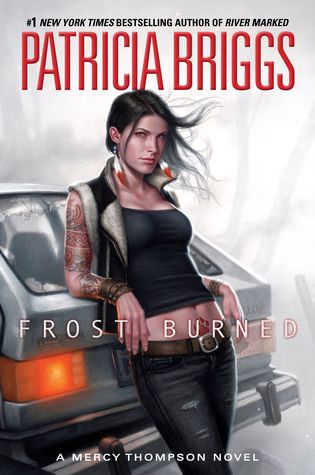 Mercy Thompson, the heroine of Patricia Briggs’s popular urban fantasy series, is a VW mechanic living in the Tri-Cities area of the state of Washington. Mercy is a coyote shapeshifter who seems to always find herself at the center of trouble. Over the course of nine novels so far, Mercy has become more and more involved with the local werewolf pack, first as a neighbor and a nuisance, but eventually as the Alpha’s mate and wife. Along the way, Mercy has taken on a whole host of bad guys, from demonic vampires to volcano gods, and has lived to tell the tale, sometimes only by the skin of her teeth.
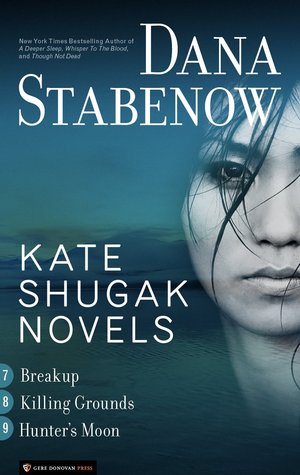 And Kate Shugak? Kate is the heroine of a mystery series by Dana Stabenow. Kate is a former investigator for the Anchorage DA’s office who lives on a homestead in the wilds of Alaska and would love to be left alone — except she keeps getting called back into the life of investigating crime and corruption. The bad guys here aren’t supernatural. So far, I’ve read six of the Kate books (out of 20 currently published), and I’ve seen Kate take on oilmen, drug dealers, sleazy businessmen looking to worm their way into exploiting natural resources, and smugglers of native artifacts.














 Bookshelf Fantasies