Check out the cover of Silence Fallen by Patricia Briggs!

I was so excited to see this on Facebook while I was away on vacation! As a big fan of the Mercy Thompson series by Patricia Briggs, it makes me soooo happy to ponder the glories of this cover:

silence_fallen_layout.indd


Silence Fallen is book #10 in the series. The expected publication date is March 7, 2017… which can’t possibly get here soon enough!

Synopsis:

In the #1 New York Times bestselling Mercy Thompson novels, the coyote shapeshifter has found her voice in the werewolf pack. But when Mercy’s bond with the pack—and her mate—is broken, she’ll learn what it truly means to be alone…

Attacked and abducted in her home territory, Mercy finds herself in the clutches of the most powerful vampire in the world, taken as a weapon to use against alpha werewolf Adam and the ruler of the Tri-Cities vampires. In coyote form, Mercy escapes—only to find herself without money, without clothing, and alone in the heart of Europe…

Unable to contact Adam and the rest of the pack, Mercy has allies to find and enemies to fight, and she needs to figure out which is which. Ancient powers stir, and Mercy must be her agile best to avoid causing a war between vampires and werewolves, and between werewolves and werewolves. And in the heart of the ancient city of Prague, old ghosts rise…

Did you get chills? I got chills. I’m so scared for Mercy! This sounds amazing. Can’t wait!

Find Silence Fallen at:

Goodreads
Amazon
Barnes & Noble

And PS – If you haven’t read any of the Mercy books, start with Moon Called and then keep going! Such an amazing series.

When is local too local?

San Francisco. As in, I left my heart…

San Francisco, CA, USA

I’m a transplant, as are a good chunk of the people I meet here in SF. I grew up on the East Coast, but San Francisco has been home for 20+ years now. And obviously, I must love it, since I’ve stayed and put down roots.

It always amuses me when I read books or see movies or TV shows set in my fair city. Sometimes I love it, and sometimes I really don’t. Which brings me to the question:

When is local too local?

Is there such a thing as having too much local content in fiction? When does it enhance, and when does it distract?

SF cableI’ve read plenty of books by now that are set in San Francisco. Because, let’s face it, San Francisco is one of those places that get instant recognition. Golden Gate Bridge, Victorian houses, Alcatraz… they’re all so picturesque, while also being worldwide tourist magnets. So sometimes, key scenes in books will take place with the bridge or the skyline in the backdrop, and that’s about it. But sometimes, the city itself is a part of the story, and that can be a wonderful thing.

Some of my favorites take place in San Francisco. Take for example the Tales of the City series by Armistead Maupin, which is pure and simple an ode to the history and soul and flavor of the city. On a different note, there are the works of Christopher Moore, who sets remarkably weird and wacky supernatural tales in the City by the Bay — and it totally works. I mean, vampire parrots of Telegraph Hill? The Marina Safeway as a key plot location? A heroic Golden Gate Bridge painter? Moore’s books are hilarious, and the way he uses the city’s oddities and quirks (and notable personae, especially the Emperor) are just delightful.

I’ve also read a few great books where the city is just a subtle presence, but one that adds flavor without hitting the big tourist attractions. A recent example is the delightful YA novel Up To This Pointe, which delights in the quieter parts of SF that only residents really know and love — West Portal, the Outer Sunset, and Ocean Beach (my side of town!). The places here aren’t the point of the story, but they do add a sense of home and connection that give the main character roots and a point of origin.

SF grpahic 2Still, sometimes, the local flavor can feel like it’s inserted in order to check items off a list. Maybe it’s when the details are overdone — in one book, every time the characters take public transportation, the specific bus route is named — and I’d find myself veering out of the story and into an internal dialogue about how the N doesn’t actually stop there or no, that’s not the best way to get from the avenues to downtown. In a recent urban fantasy book (which I didn’t enjoy as a whole, and which shall remain nameless), whenever the main character would rush off to save the day, I felt like the story was being narrated by GPS: She took a left on Van Ness, then turned right on Sutter and continued onward for a mile and a half. Not only was it not engaging writing, but again, it completely took me out of the story and into recontructing street maps in my head.

My most recent foray into San Francisco fiction is the new novel All Stories Are Love Stories by Elizabeth Percer (reviewed here). In this book, catastrophic earthquakes that ravish the city serve as a backdrop for a study of characters and their loves and losses. The relationships are interesting enough, but once the quakes hit, all I wanted was to know more. The book does a great job of describing the reasons why huge quakes in SF would be devastating — the crowded design, the unstable ground, the drought, the understaffing of local emergency response, and the reliance on bridges for 2/3 of the entry points to the city. I was interested in the characters, but I couldn’t maintain my focus on them once the local landmarks started coming down and the fires started destroying Chinatown and North Beach. At that point, the SF resident in me just wanted to know more — what was still standing? Did they get the fires out? What happened to the bridges? … and my interest in the main storyline, the characters and their fates, dwindled in the face of the destruction of the place I call home. (I had a quibble with the end of the book as well, which jumps forward a few months and shows the city bouncing back — which is nice, but doesn’t tell me how they got there, and left me feeling that it was a little too rosy to be realistic.)

Don’t even get me started on San Francisco in film. Have you noticed how much movie folks love to destroy San Francisco? Quick, need a scene to show horrific destruction due to aliens/melting of the earth’s core/rampaging apes? Cut to the Golden Gate Bridge! Seriously, it’s kind of ridiculous how often movies use the bridge as shorthand for letting us know that life as we know it is now at serious risk. Can’t they destroy something else once in a while?

street

For me, the local setting in fiction is a mixed bag. When well done, it can absolutely enhance my enjoyment of a good story. I love when the essence, sights and sounds and smells, of a particular neighborhood are used to give texture or groundedness to a story. Rooting the characters in a real place and time can make them seem more alive, and can make the story feel like it could be happening just around the corner. But when the place overrides the story elements, or when the background events seem more attention-worthy than the actual plot, that’s when I start to have trouble with it all.

How about you? How do you feel about reading fiction that’s set in your real-world location, or a place that you know and love? Does it add to your enjoyment, or does it distract you from the plot and characters?

Please share your thoughts!

A note on images: I’d love to give credit where credit is due! All images were found on Pinterest, but original sources were unclear.

A book and a movie: Still Alice

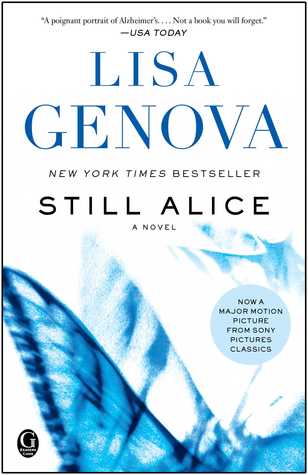
In the past four days, I’ve read the book Still Alice by Lisa Genova and then watched the movie version as well. Talk about intense!

Still AliceStill Alice (the book) is the profoundly moving story of Dr. Alice Howland, a world-renowned Harvard professor specializing in cognitive psychology. In her early fifties, Alice notices a few lapses, moments where a word she uses in her daily life is suddenly gone and beyond her reach. After getting lost while running a route she’s followed for years, Alice considers what might be wrong, at first associating memory issues with menopausal side effects.

Finally, a neurologist delivers the awful news: Alice has early-onset Alzheimer’s disease. The progression can be delayed, perhaps, with medication, but cannot be prevented. Through Alice’s eyes, we feel the heartbreak as this incredibly talented, intellectual woman slowly loses bit and pieces of herself — losing the ability to teach, to work, to read, and even to recognize her own children.

It’s astounding to get Alice’s perspective, because while she recognizes that she’s losing more and more, she often doesn’t know in the moment that anything is wrong or just how bad it’s become. And yet, she’s a remarkable woman who sees the beauty in life as well. Early on, she contemplates suicide, but realizes she still has a list of things she wants to do. She may no longer lecture or publish, but she can look forward to holding her first grandchild and seeing her children find their own paths to happiness.

In the 2014 movie version, Julianne Moore plays Alice, and absolutely deserves her Best Actress Academy Award for this role. She capture Alice’s changes with such emotion and nuance — the disbelief, the helplessness, the striving to connect even as she faces a growing chasm between herself and the people around her. It’s beautifully acted, and beautifully told.

Still AliceI don’t always love movie adaptations of books I’ve read, and often find myself too busy being nit-picky to really just sit back and experience the movie. That didn’t happen here, even though only a day had gone by in between. The movie is faithful to the book, with only minor changes such as relocating from Boston to New York — nothing that substantially changes the main idea or tone of the story. The supporting cast is terrific as well, especially Alec Baldwin as Alice’s husband — loving, angry, hurt — and Kristen Stewart as the youngest daughter, Lydia. The relationship between Lydia and Alice is very well done in the movie. They start with conflict between them: Alice wants Lydia to go to college, and Lydia wants to pursue her acting career. Neither can help hurting the other, but as Alice’s disease progresses, she loses her intense focus on her plans for Lydia and becomes more open to appreciating her in the now, and Lydia finds a patience and devotion for her mother that let her get past the earlier tension and mistrust. It’s actually quite lovely to watch this pair — I totally believed them as mother and daughter.

No movie can capture everything from a book, and by necessity, the movie presents us with an external view of Alice’s ordeal, rather than allowing us to experience it alongside her as we do in the book. Even so, the movie is beautiful and moving, and I recommend it highly.

Lisa Genova is a fiction writer with a Ph.D. in Neuroscience. I’ve now read three of her four novels, and these three each show, in different ways, the human, emotional impact of a severe, life-altering medical condition. She manages to combine absolutely fascinating science with family dramas that feel true to life.

Still Alice is a tough book to read, in terms of emotional impact, but well worth it… and I feel the same about the movie.

Beyond this book, I also recommend Left Neglected, about a woman with an incredible, intriguing brain injury that changes her whole life, and Inside the O’Briens (review), one of my top picks for 2015, about a family dealing with Huntington’s disease.

Catching up with Kate: A view from the halfway mark of the Kate Shugak series

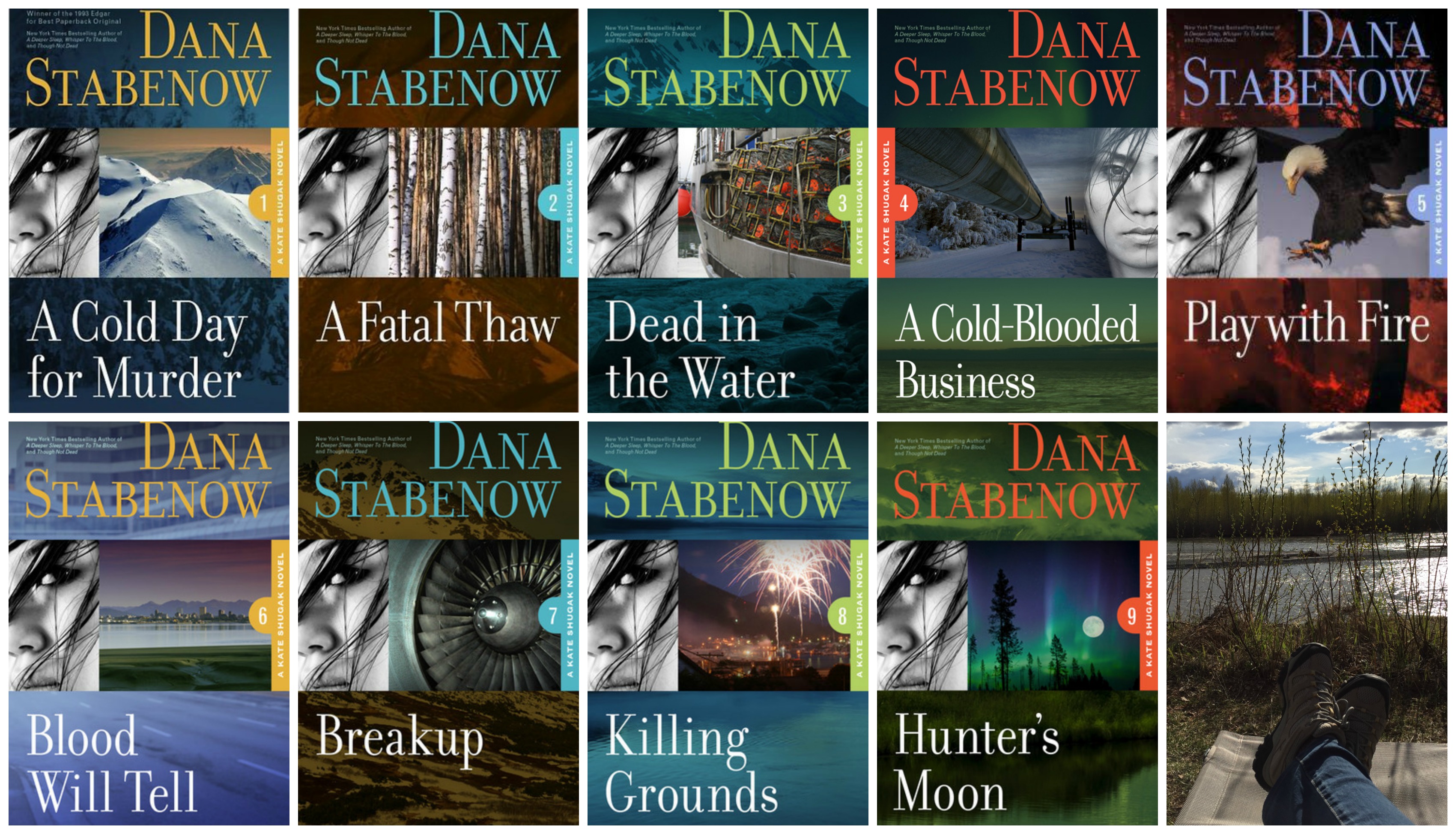
for_white_backgroundsIf you read my blog from time to time, you may have noticed how often I seem to be reading a Kate Shugak novel. Kate Shugak, for those who don’t know, is the main character in an ongoing mystery series by Dana Stabenow. The series is currently 20 books strong, and the author is supposedly working on #21.

How did I get started with the Kate books? I honestly don’t know.

Perhaps I picked up the first one due to my obsession with Alaska.

Or maybe I picked up book #1 after seeing the series mentioned by Diana Gabaldon in her Methadone List.

Either way, something just clicked for me — and here I am a little over a year later, just wrapping up my read of book #10, Midnight Come Again.

I started the Kate Shugak series via audiobook, and enjoyed the first several volumes that way until I decided that I really wanted to gobble up the stories at a faster pace than the audiobooks allowed. Fortunately, my local library has kept the hard copies coming, so I was able to get the next book pretty much as soon as I put down the last.

The first book in the series, A Cold Day For Murder, was published in 1992. I listened to it in March 2015, and here’s what I had to say about it at the time, according to my Goodreads review:

I just finished the audio version of this book, and truly enjoyed it. A murder mystery set in the Alaska Bush, A Cold Day for Murder includes offbeat characters, gorgeous settings, politics, greed, snowmobiles, mines, shotguns, roadhouses, and so much more. The audiobook narrator does a great job of giving the various characters distinct voices, and the whole story moves along at a fast pace with never a dull moment. Main character Kate Shugak is a tough-as-nails crime investigator with local roots, family and clan loyalties, and an unerring sense of justice and the ability to sniff out clues.

Highly recommended for mystery fans, as well as for anyone wanting a little taste of Alaska.

I continued onward, and grew to love Kate herself as well as the sprawling cast of supporting characters more and more with each book I read. Kate is a smart, tough loner, a damaged soul, and a woman committed to justice and truth. She lives alone on a homestead miles from anyone, within the borders of a fictitious national park in the Wrangell area of Alaska. After a brief career in the district attorney’s office in Anchorage investigating horrible crimes, Kate seeks solitude and quiet, with just her enormous companion Mutt — half wolf, half husky — at her side throughout the Alaskan winters.

Kate is also a member of a large Aleut family, and her relationship with her grandmother, the domineering and well-respected tribal leader, forms a major theme throughout the books. Kate continually gets pulled back into the world of crime investigation, and each book has Kate at the center of one crime or another, not always willingly.

Through Kate’s experiences, we travel the state, from the Park to the Aleutian Islands and Bering Sea, to the oil fields of Prudhoe Bay and the fishing harbors of Prince William Sound. Besides providing an up-close view of the natural wonders and man-made curiosities of Alaska, the books also weave into the story the ongoing corruption, political maneuvering, and favor trading that goes on behind the scenes. We get a crash course in Alaska politics and hot-button issues, like the exploitation of resources, the battle to keep tribal rights to subsistence fishing, the tourist and fishing industries’ impact on local economies, and so much more.

You can tell that my enthusiasm for Kate’s adventures stayed strong by reading my comments on book #4, A Cold-Blooded Business:

Another excellent addition to the Kate Shugak mystery series! Kate herself is a magnificent main character, tough as nails, ultra smart, and with a fierce love for her people and her land. In this book, Kate is hired to investigate drug dealing at the Prudhoe Bay oil facility, which means we get to see Kate outside of her comfort zone, in an entirely new setting, but still doing what she does best. It’s a surprisingly nuanced look at the impact of the oil industry in Alaska, as well as a terrific, dangerous adventure. Highly recommended!

What’s funny is that I’m not usually a mystery reader. In fact, while I generally enjoy the crime story in each of the Kate books, what truly draws me back over and over again is the people angle. I’ve just really fallen for Kate and the gang — Chopper Jim, Bobby Clark, and the rest of the folks living in and around Niniltna and hanging out at Bernie’s Roadhouse. And, as I mentioned, I’ve got this thing about Alaska. I’ve been for a few visits now, and can’t wait to go back… and meanwhile, the next best thing to being there is traveling there in a book!

Okay, but then I got to the 9th book, Hunter’s Moon, and I almost threw the damn thing across the room:

Damn you, Dana Stabenow! How could you do that? My heart is broken into a million teeny pieces right now. I love this series, but this one is just devastating. NOOOOO.

Ahem. That said, bring on the next book!

Not to be spoilery or anything, but man, that book just killed me. I won’t say why. Read it yourself and find out!

I couldn’t stop there, of course, so I continued on with #10, Midnight Come Again, which I finished (much) earlier today:

Appropriately, I finished Midnight Come Again just past midnight. It’s one of those books that is best read straight through, even if it means giving up a little sleep.

Midnight Come Again is an installment of the Kate Shugak series that’s hard to put down — less for the mystery than for the character development of Kate. The mystery is kind of “meh” in this book — Russian mafia, money laundering, involvement of FBI and state troopers. The personal side, though, is terrific.

Kate is dealing (not well) with the aftermath of the events from the previous book, Hunter’s Moon — and no, I won’t be forgiving Dana Stabenow for that any time soon! She’s a mess who’s shut down emotionally, living under a false name in the tiny town of Bering. When Jim Chopin — Chopper Jim — gets assigned undercover work in Bering, he’s instrumental in cracking Kate’s shell and helping her start her slow crawl back to life.

Kate is an amazing character, and she’s been through hell. I can’t wait for the next book, and plan to keep reading the Kate Shugak series until I’m all caught up!

Of course, I’m going to continue onward with #11 just as soon as my library hold request comes in. Meanwhile, I’m thrilled to have reached the halfway mark… and also, to have finally made it out of the 1990s! I have ten more books to go before I’ll be all caught up (#20, Bad Blood, was published in 2013). I’m not binge-reading or anything. I think of the Kate Shugak books as my reading comfort food (although the last two were about as far from comfort as I could imagine). I like to pick up a volume or two in between other things, both for the sake of getting a long-distance taste of Alaska and for the opportunity to check in with Kate.

Kate is one hell of a terrific character, and I’m invested in her life! I want that woman to be happy. Are you listening, Dana Stabenow? Ha, just kidding, don’t worry about me. A happy Kate probably wouldn’t have nearly as much drama in her life.

For those of you who’ve read further in the series — don’t tell me anything! For those who haven’t given the books a try yet, consider this my recommendation, yet again. The Kate Shugak books have heart, humor, drama, adventure, an amazing setting, and truly quirky and wonderful characters. Not to mention the odd grizzly bear.

Bundle up, light a fire, pour some hot cocoa, and curl up over at Kate’s homestead!

kate 2


On Mercy Thompson and Kate Shugak

I’m having the somewhat mind-warping experience of reading two amazing books about two of my favorite characters right at the same time — and it struck me that despite seemingly huge differences, Mercy Thompson and Kate Shugak have a lot in common.

First, a bit about both.

Frost BurnedMercy Thompson, the heroine of Patricia Briggs’s popular urban fantasy series, is a VW mechanic living in the Tri-Cities area of the state of Washington. Mercy is a coyote shapeshifter who seems to always find herself at the center of trouble. Over the course of nine novels so far, Mercy has become more and more involved with the local werewolf pack, first as a neighbor and a nuisance, but eventually as the Alpha’s mate and wife. Along the way, Mercy has taken on a whole host of bad guys, from demonic vampires to volcano gods, and has lived to tell the tale, sometimes only by the skin of her teeth.

15998421And Kate Shugak? Kate is the heroine of a mystery series by Dana Stabenow. Kate is a former investigator for the Anchorage DA’s office who lives on a homestead in the wilds of Alaska and would love to be left alone — except she keeps getting called back into the life of investigating crime and corruption. The bad guys here aren’t supernatural. So far, I’ve read six of the Kate books (out of 20 currently published), and I’ve seen Kate take on oilmen, drug dealers, sleazy businessmen looking to worm their way into exploiting natural resources, and smugglers of native artifacts.

So why do I equate the two? Let’s see:

Kate and Mercy are both outsiders. Kate grew up surrounded by family and tribe, but has spent most of her life wanting to distance herself from her grandmother’s manipulations and native politics. Mercy spent most of her life believing herself to be the only coyote shapeshifter in existence, never quite fitting in among the werewolves who’ve always been around her. Additionally, Kate and Mercy both were raised by foster parents, and seem to both carry scars from the absence of their own parents in their lives.

Kate is an Aleut. Mercy is of Native American heritage. Both have to deal with the blatant and implicit biases and injustices that come their way as women of color.

Kate is a kick-butt investigator who isn’t afraid to fight, is amazing with firearms, and can defend herself and anyone around her when things get dangerous. Mercy is a highly trained martial arts expert, who throws herself into a fight when needed, and will always do whatever she can to protect anyone who needs her.

Kate and Mercy have relationships that matter to them, but they’re also strong women who would never take orders or be less than 100% themselves just because of a man.

Kate and Mercy are survivors. They’ve been through hell. They’re scarred. They’ve risked themselves time and time again to do the right thing and protect those weaker than themselves.

Kate never goes anywhere without her huge dog Mutt, half-Husky, half-wolf. And Mercy seems to always be surrounded by her very own pack of wolves, most especially her beloved Alpha wolf Adam.

Kate and Mercy are both highly self-sufficient. Kate lives alone (with Mutt) at her homestead, miles from the nearest town, where she single-handedly hunts, chops wood, fetches what she needs, repairs building and vehicles, and keeps herself alive throughout Alaskan winters. Mercy is a talented mechanic who can fix anything with a motor, skilled with her hands and making a go of being a woman in a man’s world, defying gender roles on a daily basis.

Above all, they’re both smart, strong women who love deeply, cherish their independence, champion those who can’t stand up for themselves, fight for justice, and take no bull from anyone.

So despite the vast differences in their worlds — one full of the supernatural, the other a mundane world full of complicated people and politics — both Mercy and Kate are stand-out heroines who deal with tough surroundings and dangerous threats, but always remain true to themselves.

See, this is what I get for reading the new Mercy novel while in the middle of a Kate audiobook! I find the two running together in my mind, and can’t help thinking that it’s too bad that they belong to different worlds. They’d make an awesome team.

In any case, I absolutely love the world of Mercy Thompson, and I’m falling more and more under the spell of Kate Shugak. I hope to have many more books about both in my future!


Following up: Reviews, news, and some HP too!

I’ve come across bits and pieces of information related to two different books I’ve read recently, and thought I’d take a moment to share some links of interest. Plus, a smidge of Harry Potter, because Harry Potter is always worth talking about!

______________________________________________________

Immortal LifeFirst, some follow-up regarding The Immortal Life of Henrietta Lacks by Rebecca Skloot:

When I wrote about the audiobook of The Immortal Life of Henrietta Lacks earlier this month (review), I focused just on the book content — what I enjoyed and what I didn’t, my overall impressions, etc. What I didn’t do at that point was to look for information about what has happened since with the family of Henrietta Lacks, the HeLa cell lines and their use in research, and the author of the book, Rebecca Skloot.

One of my questions while listening to the book had to do with the Lacks family. While the book discusses the sad situation of many of the family members, their financial struggles, and their inability to afford health coverage, it was not clear to me whether any of the book’s profits would be benefiting the family. A commenter on my blog was kind enough to mention that the author had started a foundation in honor of Henrietta Lacks, and that made me realize that I should share some of the information I came across here as a follow-up to my review.

First of all, Rebecca Skloot has established the Henrietta Lacks Foundation, to benefit the family of Henrietta Lacks as well as others in need. Ms. Skloot is the president of the foundation’s board of directors, and contributes a portion of her royalties and speaking fees to the foundation as well.

There have also been additional developments in the scientific community in regard to the HeLa genome, the family’s privacy rights in regard to their genetic data, and the ongoing use of HeLa in research.

Some reading links:

Henrietta Lacks Foundation: http://henriettalacksfoundation.org/

New York Times article about the foundation: http://nyti.ms/1BOaypD

The Lacks Family website: http://www.lacksfamily.net/
(includes information on speaking engagements, pictures and videos, and a link for making donations)

Rebecca Skloot’s FAQ page: http://rebeccaskloot.com/faq/
(includes detailed answers to questions about HeLa research, new developments since the book’s publication, the impact on the story, her writing process, and more)

New York Times op-ed piece by Rebecca Skloot (“The Immortal Life of Henrietta Lacks, the Sequel”): http://nyti.ms/17TSE93

There’s a lot more information out there and tons of articles that come up with a simple Google search for “Henrietta Lacks” or “HeLa”. I’m glad that I followed up and learned more, and I hope these links are helpful for those of you who are interested!

______________________________________________________

The StorytellerNext, regarding The Storyteller by Jodi Picoult:

The Storyteller (review) is a work of fiction, but its depiction of Holocaust survivors and the narration of one particular survivor’s experiences seem all too real. The book raises a question about guilt and regret; whether evil acts can be outweighed — or at least, counterbalanced — by a life dedicated to helping others. In The Storyteller, a 95-year-old man confesses to a young friend that he was once an SS officer who oversaw the treatment of prisoners at Auschwitz. The friend seeks help from a prosecutor who works to hunt down Nazi war criminals and bring them to justice. In the book, the characters discuss the difficulty of bringing elderly suspects to trial, especially as there are fewer and fewer witnesses still living with each passing year.

I was reminded all over again of the relevance of the issues raised in The Storyteller when I saw an article in the newspaper this week about the trial just getting under way in Germany. The defendent is a 94-year-old man who was a guard at Auschwitz, and is being accused of being an accessory to the murders of 170,000 people.

You can read more about the trial here: http://www.theguardian.com/world/2016/feb/11/auschwitz-guard-trial-concentration-camp-germany-reinhold-hanning

It will be interesting to follow the course of the trial and see the outcome, particularly as there are several similar cases still pending in Germany. I was particularly struck by this fact included in the article: “Of 6,500 SS members who are known to have served at Auschwitz, only 29 were ever brought to trial in Germany. ”

If you haven’t had a chance to read The Storyteller yet, by all means do!

______________________________________________________

A final note:

After two serious subjects, I thought I’d end with something completely unrelated and totally upbeat: By now, I’m sure everyone has heard, but just in case…

HP8

Harry Potter and the Cursed Child is being released in book form! *happy dance*

This is NOT another Harry Potter novel, but rather the script from the London stage production. The book will be released on Harry’s birthday (July 31st, for the Muggles out there), and is available for preorder now!

Some news pieces about the book:

From the BBC: http://www.bbc.com/news/entertainment-arts-35539552

From EW — a clarification from J. K. Rowling about what the book is and isn’t: http://www.ew.com/article/2016/02/11/jk-rowling-cursed-child-book

And the Pottermore announcement: https://www.pottermore.com/news/ww-publishing-cursed-child-script-book-announcement

I’d still prefer a trip to the theater in London, of course — but since that’s not going to happen any time soon, I’m tickled pink about the book! Who else is counting the days until July 31st?

Discussion: Is it ever unfair to write a review?


discuss

Is there ever a time when it’s just not fair to review something?

Here’s what I mean:

Let’s say you’re reading a book in a particular genre. And it’s a genre you typically never read. What’s more, it’s a genre that you don’t particularly like. For whatever reason, you read the book anyway… and — big surprise — you don’t like it.

Do you write a negative review talking about how much you disliked the book? Or do you just put it down, accept that it was never meant to be, and move on?

Of course, you may be wondering, why even start the book in the first place?

Well, there could be plenty of reasons. Maybe a friend has urged you to read a favorite book… or you stumble across something at the library that catches your eye… or you see the author on a TV talk show and think she sounds interesting.

For me, I’m having this dilemma at the moment thanks to my beloved book group. (Hi guys!) Our monthly book picks cover a lot of different topics, although we do tend to veer toward historical fiction on a regular basis. That’s not all, though — we’ve also done historical non-fiction, thrillers, and contemporary drama, to name but a few.

Our current book — recommended by one of our members — is a romance/chick lit kind of book, which really, really isn’t my thing. Still, everyone else was enthusiastic, so I figured I’d give it a try. Five chapters in, I’m just not digging it, but I don’t want to sit out the discussion, so I guess I’ll do my best to finish it. And who knows, I may end up liking it.

(Doubtful, but why pre-judge?)

Okay, assuming I finish the book and still feel unimpressed, should I review it? On the one hand, it seems fair for me to say, basically:

This book did not appeal to me, and here’s why.

On the other hand, it doesn’t seem fair for me to say:

This is a terrible book, and no one should read it.

(Granted, that’s not something I’d typically say in a review, but let’s go with it for now.)

If I don’t like the plot or the characters, but the writing is decent and it seems to be successful within the usual “rules” of the genre, then who am I to say it’s not a good book? All I think I can truly say is that I read a book that didn’t work for me. And perhaps a romance fan might really and truly love it.

(Likewise, if you read a really gory scary horror book even though you almost never read horror and end up hating it, is it fair to say it’s a bad book? Or is it more fair to say that the book scared the bejeezus out of you and was icky and unpleasant, and hey, I hate reading horror, so I didn’t enjoy it at all?)

What do you do when you read a book that, objectively, you can recognize as pretty good for its type, but subjectively, you really don’t enjoy reading?

I’d love to hear some thoughts on this!


The Outlandish Companion, Volume I (revised edition): A Reading & Listening Guide

Revised edition of OCI, 2015

Revised edition of OCI, 2015

Last week, I posted a reading and listening guide for The Outlandish Companion, Volume II — and working my way backward, I’m now doing the same for Volume I of this essential reference book for Outlander fans.

First, a note on editions. The Outlandish Companion was originally published in 1999, providing all sorts of reference information on the first four books in the Outlander series (Outlander, Dragonfly in Amber, Voyager, and Drums of Autumn). This book has been a go-to resource for book fans ever since, who have (pretty much non-stop since 1999) never stopped asking for a volume two.

In 2015, fans finally got their wish, and more. Not only was The Outlandish Companion, Volume II published in October 2015, but earlier in the year, Diana Gabaldon also released a newly revised and updated edition of the Companion, Volume I.

OC

The 1999 edition

The new edition of The Outlandish Companion, Volume I includes most of the original, plus some additional essays on writing and being a writer, as well as a section on the Starz TV series. Although I already owned a copy of the original edition, I simply had to treat myself to the revised edition as well… and then immediately put it on my shelf once it arrived, figuring I’d page through it eventually.

But now, having listened to the OCII audiobook, I thought it would be only fair to give the OCI audiobook a listen as well. And, as a public service for anyone who’s interested, I’m here to share with you a guide to what’s inside the OCI revised edition, plus what’s on the audiobook and what’s not.

As I mentioned in my OCII review: What you get in the audiobook, which you don’t get in the hard copy, is the voice of Herself, our beloved author Diana Gabaldon. I actually can’t stress this enough: Most of the audiobook is narrated by Diana, and I’ll explain a bit further on why this really matters… and really, why this alone is worth the price of the audiobook, even if you already own the physical book.

[Note: Except where indicated, all sections of OCI are read by Diana Gabaldon on the audiobook.]

Without further ado, what follows is an overview of what’s in the book, what I especially enjoyed, and a few tips and comments for anyone thinking about listening to the audiobook, either instead of or in addition to getting a copy of the physical book.


What’s inside:

Prologue:

Well, it was all an accident, is what it was. I wasn’t trying to be published; I wasn’t even going to show it to anyone. I just wanted to write a book — any kind of book.

And with this opening, we’re off! Diana takes us through her background, explaining how Outlander was just supposed to be what she was writing “for practice” to learn how to write a novel, and how it grew from there. It’s funny and personal and a must-read, particularly if you haven’t yet had the pleasure of hearing Diana tell her own writing story.

Part One: Synopses:

This is a major chunk of the book, and well worth the investment for true fans. The synopses included — Outlander, Dragonfly in Amber, Voyager, and Drums of Autumn  — are lengthy and incredibly detailed. The books’ plots are thoroughly summarized, start to finish, with plenty of passages directly from the original texts.

Lengths of synopses (hardcover edition):

Outlander: 10 pages
Dragonfly in Amber: 30 pages
Voyager: 34 pages
Drums of Autumn: 42 pages

Reading tip: If you find yourself picking up the series after a break and need a refresher on what’s already happened, these synopses are detailed enough to give you everything you need to keep going, if you just can’t spare the time for a complete re-read of the books themselves.

Listening note: On the audiobook, the synopses are read by the incomparable Davina Porter, who narrates all of the Outlander series audiobooks. Just listening to her read the synopses and the quoted passages is a total treat.

Part Two: Characters

This section starts with a lengthy essay entitled “Where Characters Come From: Mushrooms, Onions, and Hard Nuts”. Diana explains her approach to creating characters, how they talk to her, and where their names come from, as well as how she incorporates historical characters, and even which characters in her books have connections to people in her life.

The second section of Part Two is a Cast of Characters, which is an alphabetical index of all characters in the first four books, with a brief explanation for each, a notation of which book they appear in, and a marker for any who are historical figures. Beyond that, there is a list of various minor characters, named or not, who in general are part of a group but don’t particularly have roles of their own, including Dougal’s men, Monks at the Abbey of Ste. Anne de Beaupré, Lallybroch tenants, and more.

Additional sections of Part Two are:

  • “I Get Letters”  – in which Diana describes some of the various and sundry gifts and items she receives from readers. This part includes a rather lengthy section on astrology, including astrological charts for Jamie and Claire, sent to Diana by a reader named Kathy Pigou. The full charts and explanations are included here, along with diagrams and a basic introduction to astrological methodology.
  • “Magic, Medicine, and White Ladies” – an overview of women’s roles as healers, the concept of white women, Claire’s medical background, and why WWII makes sense as a starting point for Claire’s medical experience.

Listening note: The essays in this part are included in full on the audiobook. The Cast of Characters is not included, being more or less a dictionary, which would make is not very useful to listen to. The astrology-related pieces are narrated by a woman whose name I didn’t catch — not Davina Porter, not Diana Gabaldon. As I have no interest in astrology, I ended up fast-forwarding this piece once I realized how long it was going to be.

Part Three: Family Trees

Includes background, family trees, and coats of arms for the Beauchamp, Randall, Fraser, and MacKenzie families.

“A Genealogical Note” is a section concerning the genealogy of Roger MacKenzie Wakefield, in which Diana breaks down the detailed explanation of just where Roger came from and addresses certain points that always seem to confuse readers. Includes Roger’s family tree.

Listening note: The section about Roger is on the audiobook. The rest of this part is not.

Part Four: Comprehensive Glossary and Pronunciation Guide

For those with an interest in linguistics, you’ll love this part. After a brief introduction in which Diana addresses the difficulty of including so many languages (especially languages she herself doesn’t speak!) in her books, she includes some very helpful reference pieces, including:

  • A Very Brief Guide To Gaelic Grammar by Iain MacKinnon Taylor — this includes the Gaidhlic alphabet, a pronunciation guide, grammar overview, and spelling notes.
  • Comprehensive Glossary of Foreign Terms (including British slang) — a mish-mosh of all sorts of phrases and words from the books, from Scots, Gaelic, English, Latin, French, Spanish, and more — even Kahnyen’kehaka (Mohawk).

Listening note: Unfortunately, not on the audiobook at all. While no one would want to hear a list of words and definitions, it might have been fun to get at least a bit of the Scottish pronunciations of some of the phrases used most frequently in the Outlander series.

Part Five: Research

This section is sure to be fascinating to readers, and I can’t help imagining that writers and aspiring writers will find it incredibly helpful and inspiring as well. Diana talks about methods of doing research for historical novels and what works for her, and then talks about resources and basic skills, such as using a library, working with a card catalog, reading for information, and locating sources.

As I mentioned for a similar section in OCII, Diana is incredibly generous with her insights and personal revelations here. She goes into quite a lot of detail on how she organizes her research, what she finds most effective and why, and offers such practical advice that if I were even thinking of writing historical fiction (I’m not), I’d both want to follow in her footsteps and to give her a hug, for making it all sound so doable.

She’s also just funny — for example, one section of this part is called “I’ve Done My Research, and Now You’re Going to Pay”, in which she cautions against falling into the trap of cramming in so much detail that the story itself gets lost.

Don’t forget that the purpose of research is to support the story; not the other way around.

A further section of Part Five is entitled “Botanical Medicine: Don’t Try This At Home” Here, Diana explains some of the plants and natural substances which are used in the Outlander books as medicines, how she researched these and some of the sources used, and the properties of certain herbs and their healing effects. She also includes a word of caution:

Well… I really hope no one would use antiquated medical treatments described in a time-travel novel (I mean, it does say FICTION on the spine, after all …. ) but what with the increasing interest in herbal therapies and alternative medicine in general, I do get frequent questions regarding my sources, or requests for recommendations. People want to know how I know all this stuff — am I an herbal practitioner myself? Am I a professional botanist?

Definitely not.

This section concludes with “Penicillin Online: A Writer’s Thread”, in which Diana shares a conversation generated by her query to one of her online communities about a passage concerning penicillin which she was writing for The Fiery Cross (book #5). It’s a lengthy conversation (20 pages), but very interesting for the back-and-forth sharing of information, insights, and ideas.

Listening note: All of Part Five is included on the audiobook with the exception of the final section (“Penicillin Online”).

Part Six: Where Titles Come From (And Other Matters of General Interest)

Lots of terrific information on the crafting and shaping of the novels, with sections including:

  • Outlander vs. Cross Stitch — Discussing the main differences between the US and UK versions of the first book in the series, and some notes on foreign editions as well.
  • The Cannibal’s Art: Writing and Real Life — Diana talks about her writing life, and how she balances family, writing, and having a life. Amazing.
  • Book Touring for Beginners — Did you ever want to know what it’s like to experience a book tour. This very funny section gives us a pretty good idea.
  • A side bar section entitled “A Brief Disquisition on the Existence of Butt Cooties” — basically, Diana’s thoughts on the state of public restrooms, based on her extensive exposure to such as part of her book touring travels.
  • The Shape of Things — Quite a lovely piece on how thoughts turn into words on a page. I’ve heard a version of this before as part of a talk by Diana that I attended, but it’s really so amazing to read. She also explains how each of her books has a “shape”, and how that affects the overall tone and structure of the book.
  • The Gabaldon Theory of Time Travel — Exactly what it sounds like, and a must-read for devoted series readers, all of whom usually have theories of their own as to just how it all works.

Listening note: All of Part Six is included on the audiobook.

Part Seven: The View From Lallybroch: Objects of Vertue, Objects of Use

This section consists of passages from the various books that describe certain things (Claire’s pearls, her wedding bands, Jamie’s sword) and places (the stone circle, Lallybroch), interspersed with drawing and photos related to the objects described. It’s lovely to read and hear the descriptive passages and to admire how Diana paints a picture of these items and locations through her use of words.

Listening note: All of the text in included in the audiobook, but without the hardcopy book on hand, I did feel that I was missing something in this section. It definitely adds a great deal to have the physical book as a reference in order to see the illustrations that accompany the various quoted sections.

Part Eight: Frequently Asked Questions

Fascinating, of course. This section includes all sorts of questions related to the books, the characters, Diana’s personal experiences, and more, as well as some more esoteric questions such as why Jamie can’t blink and what ever happened to Claire’s pearls in Dragonfly in Amber. The answers are all thoughtful, amusing, and truly informative… and often quite tongue-in-cheek.

Listening note: This entire section is included on the audiobook.

Part Nine: Controversy

Diana discusses some of the topics about which she gets the most communication from readers, and shares with us some of her answers as well. Main topics include sex scenes, language (profanity/blasphemy/vulgarity), homosexuality, abortion, wife-beating (specific to the famous/infamous “strapping” scene in book 1), and other issues. The answers are all quite thought-provoking, and often funny too. (She’s a very funny woman, that Diana Gabaldon).

Also included in this section is the essay “Jamie and the Rule of Three”, which is also available via Diana’s website (or was, anyway, last time I looked for it). It’s a marvelous piece that explains why Outlander was constructed as it was, and why the terrible things that happen to Jamie had to happen for the sake of the story.

Listening note: This entire section is included on the audiobook.

Part Ten: From Book to Screen

A very interesting section on the making on the TV show, which explains how books in general get made (or not) into movies or other types of productions, and then goes into the background of the Starz TV series, from concept to production, including notes on the cast, the filming process, and Diana’s role as a consultant. Also included here are two blog entries she’d written on “My Brief Career As a TV Actor”, very funny pieces describing her days on-set filming a cameo appearance for one of the episodes.

Listening note: This entire section is included on the audiobook — and this is where the audiobook ends.

What’s left in the book? Well, the hard copy in my hands continues for another 125+ pages beyond this point! The remainder of the book is:

Annotated Bibliography

A lengthy listing of Diana’s sources and all sorts of reading material related to everything under the sun in her books.

Appendix I: Errata

As Diana says in the introductory paragraph to this section: “Well, look — nobody’s perfect.” This section includes all of the corrections to dates, language, and other minor facts (such as whether certain fruits would really be in season at the time they’re eaten in the books).

I won’t go into the contents of all of the rest of the appendices, as there are a whole bunch more — but they are:

Appendix II: Gaelic (Gaidhlig) Resources: A Writer’s Short Guide to Scottish Speech Patterns

Appendix III: Poems and Quotations

Appendix IV: Roots: A Brief Primer on Genealogical Research

Appendix V: A Brief Discography of Celtic Music

Appendix VI: Foreign Editions, Audiotapes, and Strange, Strange Covers

Appendix VII: The Methadone List (Diana’s recommended reading list — what she likes to read for fun and feels good about recommending!)

End papers: Several pages of photos from the Starz TV series.


What else do you need to know?

My wrap-up points and overall tips regarding the Outlandish Companion, Volume I are exactly the same as for OCII, so I’ll just re-post the main bits of my conclusion from that review:

Thanks to the audiobook, I spent much more time on [this book] than I might have if I’d only stuck to the physical copy. The hardcover edition is a beautiful physical specimen, but I don’t think it would have occurred to me to treat it as something to read from start to finish. By listening to the audiobook, I had the opportunity to slow down, pay attention, and really absorb all of the wonderful information contained in the book.

Highlights: What ended up really making this an extraordinary listen for me was the the narration by Diana Gabaldon herself. And I’ll tell you, I was skeptical at the start. Diana is not a professional audiobook narrator. For one thing, she is FAST. (Big tip: Use .75 speed if you can to listen to Diana’s sections — listening at regular speed is the equivalent of listening to any other audiobook at 1.5x!). It was an adjustment to get used to her speed and speech patterns, but once I got into the groove, I loved it! She shares so much of herself here, and hearing her deliver the content makes it an especially personal experience. Plus, in case you’ve never heard Diana Gabaldon give a talk before — she’s really funny. Listening to Diana narrate her own book lets us hear her emphases and inflections, and it becomes clear just what she finds funny about her content and where she’s being ironic or tongue-in-cheek.

Key advice:

The audiobook is a brilliant way to get a rich experience from [this book] — but it’s incomplete without the physical book at hand. My strongest advice for fans: Get them both.

If you’re a true fan of the Outlander series, then both volumes of the Outlandish Companion are essential books to have on  your shelves. I know I’ll be using mine, over and over again, every time a pesky question arises — such as “where have I seen that character before” or “how the heck is that even pronounced?” These books are about the same price as a standard hardcover novel, and I consider them really valuable investments for Outlander fans.

Interested in The Outlandish Companion, Volume II? See my reading and listening guide, here.

_________________________________________

The details:

Title: The Outlandish Companion, Volume I (revised edition)
Author: Diana Gabaldon
Publisher: Delacorte Press
Publication date: March 31, 2015
Printed book length: 577 pages
Audiobook length: 13 hours, 48 minutes
Genre: Reference
Source: Purchased

The Outlandish Companion, Volume II: A Reading & Listening Guide

OCIIThe Outlandish Companion, volume II, is a reference book. Does it surprise you to hear that it was also one of the most enjoyable reading and listening experiences I’ve had in months?

First, some background: As anyone who even occasionally visits my blog surely knows by now, I’m a pretty dedicated fan of Diana Gabaldon’s Outlander series. In 1999, Diana published The Outlandish Companion, a reference guide covering the first four books in the Outlander series (Outlander, Dragonfly in Amber, Voyager, and Drums of Autumn). And pretty much ever since, fans have been clamoring for a second volume to cover the rest of the books.

In March 2015, Diana Gabaldon published a new and revised edition of The Outlandish Companion, volume I, updated to include some additional commentary, especially regarding the Starz TV series. [Blogger note: I’m working a bit backwards here, I know. I’ll post a separate piece about volume I in the next week or so.] And in October of 2015, we finally got The Outlandish Companion, Volume II, and what a treat is is!

OC

The 1999 edition

I bought myself a hardcover edition of OCII as soon as it came out, but hadn’t done much with it beyond opening it at random and flipping through. When I saw that the audiobook had been released, it seemed like the perfect way for me to enjoy the contents of OCII in a laid-back, kind of mellow sort of way.

What you get in the audiobook, which you don’t get in the hard copy, is the voice of Herself, our beloved author Diana Gabaldon. I actually can’t stress this enough: Large portions of the audiobook are narrated by Diana, and I’ll explain a bit further on why this really matters… and really, why this alone is worth the price of the audiobook, even if you already own the physical book.

Revised edition of OCI, 2015

Revised edition of OCI, 2015

An added bonus for those who’ve listened to the audiobooks of the Outlander series and the spin-off Lord John books is the participation of the books’ narrators. Davina Porter — marvelous Davina Porter — narrates all of the Outlander book synopses in OCII, and Jeff Woodman, who does such a fantastic job as the honorable and wryly funny Lord John Grey, narrates the synopses for all of the Lord John pieces.

Without further ado, what follows is an overview of what’s in the book, what I especially enjoyed, and a few tips and comments for anyone thinking about listening to the audiobook, either instead of or in addition to getting a copy of the physical book.


What’s inside:

Introduction

Yes, this matters! Diana’s introduction is as funny and smart as you’d expect, explaining how the revised OCI and the new OCII came about. It’s also a great intro to her style throughout the book, which is liberally sprinkled with footnotes, often humorous and tongue-in-cheek, and sure to include at least a few nuggets of odd but interesting little known facts.

Part One: Chronology

Identifying and explaining the chronology of all the parts in the story — so if you’re wondering what to read when, and just where all those novellas fit in, this will tell you.

Part Two: Synopses:

This is the longest part of the book — in my hardcover edition, the synopses start on page 15 and end on page 245. On the audiobook, we’re talking hours and hours. (Sorry, I can’t be more specific… but if I had to guess, at last 8 – 10 hours out of the whole.)

The synopses for the four Outlander books — The Fiery Cross, A Breath of Snow and Ashes, An Echo in the Bone, and Written in My Own Heart’s Blood  — are lengthy and incredibly detailed. The books’ plots are thoroughly summarized, start to finish, with plenty of passages directly from the original texts.

Lengths of synopses (hardcover edition):

The Fiery Cross: 30 pages
A Breath of Snow and Ashes: 66 pages
An Echo In the Bone: 30 pages
Written In My Own Heart’s Blood: 80 pages

Reading tip: If you’re midway through the series, or perhaps took a break in between volumes, these synopses are so detailed that you could easily read these as prep before moving on to the next novel. Although, in my humble opinion, it’s never a waste of time to do a re-read of the books themselves!

After the four Outlander books, we come to the synopses of the Lord John books and novellas. These are much less detailed, with simple plot overviews, not much in the way of spoilers, and no details on the mysteries or their solutions. This section is useful as a refresher, but doesn’t provide enough information if you’re looking for a full-blown recap.

Part Three: Cast of Characters

As the introductory paragraph states:

This list includes all the characters from the second four novels and from the Lord John books, with brief notes as to which book each character is introduced in, who they are, their role in the story, and whether they’re fictional or real historical persons.

This is simply invaluable. Arranged alphabetically, this 118-page section is a must-have for series readers, providing instant access to the who’s who necessary to keep straight the huge number of people who come and go in the books.

Part Four: Sex and Violence (subtitle: Spanking, Beating, Flogging, and Other Interesting Topics Involving Physical Interactions of a Non-Consensual Sort)

Now here’s where it gets truly interesting! Up to now, the OCII is largely reference material. Finally, in Part Four, we get Diana’s insight into her characters and their actions, and it is absolutely fascinating.  She spends quite a bit of time on some of the more controversial elements in the books — the spanking scene in Outlander, the occurrence of rape in the plot and whether it’s too much, the historical context of rape in the Highlands, Black Jack Randall’s sadism — and for those with an opinion on any of these, or who’ve read or participated in any of the heated debates that seem to crop up among readers, it’s enlightening to hear the author’s take on the issues and understand the thought processes behind her writing of these elements.

Part Five: History and Historical Fiction: Organizing the Past

If I had to pick one section to recommend above all others as a resource for writers, this would be it. Whether or not you read the Outlander books, I think this marvelous section would be inspiring to anyone who ever dreamed of writing their own novel.

Diana is incredibly generous with her insights and personal revelations here. She discusses the challenges and pleasures of historical research, and just what’s involved in writing historical fiction, using documentary evidence to enhance and ground her fiction. Not only that, but she also shares her own organization and tracking methods for her research — everything from how she organizes her bookshelves to her computer files’ naming systems.

If I were a writer (and I’m not), I think I’d be incredibly uplifted by Diana’s no-nonsense approach to writing. You want to write? Then write. Don’t delay because you haven’t finished your research yet, or because you need a dedicated space, or until your kids are out of the house, or any of a thousand other reasons. She repeatedly stresses that she began writing Outlander for practice, just to see if she could. I’m simplifying things quite a bit here, but the bottom line is that this is a section that should be read and shared and appreciated. (Also, see Part Seven)

Part Six: A Comprehensive Scottish Language Glossary and Pronunciation Guide – by Adhamh O Broin

Comprehensive is right! 77 pages worth of Scottish phrases, with a guide to pronunciation, origin, use in the books, and meaning, written by the esteemed Adhamh O Broin, who is the official Gaelic (Gaidhlig) consultant for the Outlander TV series.

Part Seven: Writing, and Other Games You Play By Yourself

Along with Part Five, this is simply indispensable knowledge and advice for writers. Diana talks about her own writing processes, and digs deeply into “Mind Games” — the many ways that people’s minds get in the way of their writing. If you’re even thinking about maybe someday starting to write, read this section. Not kidding.

But wait, there’s more! A fabulous part of this section of the book is “A Coda in Three-Two Time” (Annotated). “A Coda in Three-Two Time” is an amazing section of Written In My Own Heart’s Blood, showcasing the wedding night experiences of three couples. It’s intimate, sexy, personal, and even funny — and here, Diana’s annotates the scene to explain the linguistic and stylistic elements behind the writing. The thought and craft that go into the creation of “Coda” is beautiful to learn about.

Also in Part Seven is a section called “One Word Speaks Volumes”, in which Diana explains that she has one word that for her sums up the theme of each novel. From Outlander (love) to The Fiery Cross (community) to A Breath of Snow and Ashes (loyalty) and beyond, the meaning behind the theme is explained and supported. As with so much in the OCII, it’s fascinating.

Finally, Part Seven includes Recipes — I’m not sure exactly why this fits in the writing section, but here it is. Diana shares some favorites recipes, with explanations about her family’s experiences with the dishes included and detailed instructions on cooking and serving them.

Part Eight: The Invisible Talent

As Diana states in the introduction to this section:

“Talent” is what publicists, producers, and agents call the people who provide the visible face of entertainment — actors, for the most part. But anyone who is even temporarily appearing in his or own persona is “talent” — even me. But what about the people who give so much to the TV show and the world of Outlander, who normally don’t show their faces and talk about what they do?

I asked a few of the many, many talented people who create the world of the TV show (and other aspects of the ever increasing world of Outlander) to give us a brief glimpse of what they do and how they do it.

Included are essays by four behind-the-scenes, exceptionally talented individuals:

Terry Dresbach, the show’s brilliantly gifted costume designer, writes about just what it takes to design and produce costumes for a production of this magnitude, and includes several of her sketches for outfits for Claire and Jamie.

[Listening note: The narrator for this section (whose name I didn’t catch) does a fine job, except she mispronounces a couple of character names — most notably, Jamie’s last name! It’s FRASER, not FRASIER. Seems like something that should have been corrected during the production.]

Bear McCreary, the show’s composer, talks about his love of Scottish music (especially bagpipes!) and the reasons for the types of music we hear throughout the episodes. While some of his information is rather technical, it’s presented in such a way that even a non-musical person like me could understand and appreciate it.

Dr. Claire MacKay: Dr. MacKay is an herbalist with expertise in the historical use of herbal medicine. She provides a really interesting overview of the history of herbal medicine in the  Highlands, as well as explaining nine herbs from Claire’s medicine kit, their traditional and modern uses, and their use in the Outlander books.

Theresa Carle-Sanders, author of the upcoming cookbook Outlander Kitchen, writes about “The Diet and Cookery of Eighteenth-Century Highlanders”, explaining not just what types of foods were eaten, but what this diet meant in terms of health, mobility, and class distinctions.

Part Nine: Maps and Floor Plans

Oh, what a treat! If you’re like me, you’ve spent a lot of mental energy trying to figure out just what’s where, and now we know! Included are floor plans for Lallybroch and the Big House on Fraser’s Ridge, as well as maps of the Lallybroch estate and the layout of the Fraser’s Ridge houses and cabins. Also included are maps of the American Colonies circa 1775, the British Isles, the city of Philadelphia, and the battlefields of Culloden and Saratoga.

Part Ten: The Methadone List

Diana’s fans are familiar with the concept of “The Methadone List”. Outlander is, after all, an addiction for its devoted readers — yet even the most devoted sometimes need to read something else. Diana shares this list in response to the question she’s always asked about what ELSE to read. “The Methadone List” is a list of some of her favorite books and writers, with brief plot descriptions and in some cases, excerpts from the books themselves.

Part Eleven: Bibliography

No explanation needed, right?

End papers: Several pages of photos conclude the OCII, include pictures of Castle Leod (seat of Clan MacKenzie) and a few behind-the-scenes photos from the TV production. The front and back inside covers are a detailed family tree (which you can download here as a PDF).

Listening tips:

Thanks to the audiobook, I spent much more time on the OCII than I might have if I’d only stuck to the physical copy. The hardcover edition is a beautiful physical specimen, but I don’t think it would have occurred to me to treat it as something to read from start to finish. By listening to the audiobook, I had the opportunity to slow down, pay attention, and really absorb all of the wonderful information contained in the book.

Highlights: What ended up really making this an extraordinary listen for me was the the narration by Diana Gabaldon herself. And I’ll tell you, I was skeptical at the start. Diana is not a professional audiobook narrator. For one thing, she is FAST. (Big tip: Use .75 speed if you can to listen to Diana’s sections — listening at regular speed is the equivalent of listening to any other audiobook at 1.5x!). It was an adjustment to get used to her speed and speech patterns, but once I got into the groove, I loved it! She shares so much of herself here, and hearing her deliver the content makes it an especially personal experience. Plus, in case you’ve never heard Diana Gabaldon give a talk before — she’s really funny. Listening to Diana narrate her own book lets us hear her emphases and inflections, and it becomes clear just what she finds funny about her content and where she’s being ironic or tongue-in-cheek.

As I mentioned earlier, getting another opportunity to listen to Davina Porter and Jeff Woodman is delightful. I’ve listened to the audiobooks of the entire Outlander series and Lord John books, and spending time with the narrators again here is like hanging out with old friends.

What’s missing: It may go without saying, but listeners should be aware that there are some elements of a reference book that just can’t be provided via audio. The OCII audiobook does not include the character guide, Scottish language glossary, maps and floor plans, or bibliography. And obviously, no illustrations.

Further tips:

Recipes and Methadone List — you can listen to these sections with the audiobook, but if you actually want to make use of them, whether to try the recipes or to track down books to read, you’ll need to refer to the hard copy.

Key advice:

The audiobook is a brilliant way to get a rich experience from the OCII — but it’s incomplete without the physical book at hand. My strongest advice for fans: Get them both.

If you’re a true fan of the Outlander series, then this is an essential and worthwhile investment! I know I’ll be referring to this book over and over again, whether it’s to look up a random character, check out a battlefield, or get some inspiration for my non-Outlander reading.

Blogger’s note: As I mentioned, I’m going about this backwards! Having listened to the OCII audiobook, I’m now going back and listening to the OCI audiobook as well. This is the longest piece I’ve ever posted, and I’m exhausted!! — but if I have the energy, I’ll write up a reading and listening guide to OCI once I finish.

_________________________________________

The details:

Title: The Outlandish Companion, Volume II
Author: Diana Gabaldon
Publisher: Delacorte Press
Publication date: October 27, 2015
Printed book length: 656 pages
Audiobook length: 21 hours, 17 minutes
Genre: Reference
Source: Purchased

2015: My year in audiobooks

2015 reading

Yesterday, I wrote a wrap-up post about the graphic novels I read and loved in 2015. Which made me think — why not do the same for audiobooks?

Appreciating audiobooks has been an acquired skill for me. If you’d asked me a few years ago, I would have said that listening to people read puts me to sleep. Period. Little did I know how soon audiobooks would become an essential part of my daily routine!

When I first started listening to audiobooks, I stuck to re-reads, figuring that if my attention wandered, I wouldn’t be missing out on much. But over time, I’ve found that I can stay focused on a good story (so long as I pause the audiobook for things that take concentration, like finding a parking spot!).

I actually have no idea how many audiobooks in total I listened to in 2015, since I didn’t add an “audiobook” shelf on Goodreads until sometime about mid-year. Still, these are the listening adventures that really stood out for me this past year.

1) It was a year of Austen for me! I listened to Jane Austen’s six novels in the spring and summer, and absolutely loved them! All but one (Pride and Prejudice) were narrated by Juliet Stevenson, and she does an amazing job of bringing the characters and stories to life. There’s something about Austen’s dialogue that really is enhanced by being heard, I think. Emma, especially, is just laugh-out-loud funny (which can be embarrassing if listening to the audiobook in public… as I know from personal experience.)

Austen collage

2) I revisited a childhood favorite that I always remembered fondly, despite having forgotten most of the details. The Witch of Blackbird Pond was a real treat — a quick listen with a terrific plot and beautiful writing.

Witch of Blackbird Pond

3) I was looking for a quick listen one week, and happened to stumble across a price break for Jack London’s The Call of the Wild. How did I miss this book during my school days? The audiobook was perfect for my mood that week, and made me eager to read more by London.

Call 2

4) One of my greatest delights this year was getting involved in two different mystery series. In general, I’m not much of a mystery reader, but somehow they seem to work for me as audiobooks. I’m now four books into the Kate Shugak series by Dana Stabenow, and have listened to the first Maisie Dobbs book (but plan to continue with the series) by Jacqueline Winspear.


5) A wonderful aspect of listening to audiobooks that I’d never really considered before is hearing an author narrate his or her own work. It’s really special to hear the author’s inflections, character voices, and points of emphasis. I especially enjoyed listening to Neil Gaiman’s narration of Stardust and Trigger Warning.

Trigger Warning

6) The Invention of Wings by Sue Monk Kidd is a book told from two characters’ alternating points of view. For the audiobook, each of these characters has her own narrator, and the effect is so powerful. The story itself is terrific, and hearing the characters’ voices in this way makes it an exceptional listening experience.

Invention of Wings 2

7) The Boys in the Boat by Daniel James Brown: I rarely take the time to read non-fiction — I’m a fiction-lover, through and through. But when my book group picked The Boys in the Boat for one of our group discussions, I realized that the audiobook version might be the perfect solution for me. It was a great experience, especially thanks to the talented narrator who made me feel like I was listening to someone telling me folktales in front of the fireplace.

The Boys in the Boat

8) Last but not least, my absolute favorite audiobook of the year is one that I came close to abandoning! When I first started Uprooted by Naomi Novik, the narrator’s accent was a huge distraction for me. I had a hard time getting into the story, as the narrator’s speech patterns made it clear that she wasn’t a native English speaker. And then, a few chapters in, something just clicked. The flavors of the story seemed to come alive, and the entire audiobook conveyed a sense of the magical elements that make Uprooted so special. In fact, I took a physical copy of the book home from the library, but then realized that the words on the page seemed somehow flat to me without the narrator’s intonations to bring them to life.

Uprooted


What were your best audiobook experiences in 2015? Please share your recommendations!