Flashback Friday: Angle of Repose

Flashback Friday is my own little weekly tradition, in which I pick a book from my reading past to highlight — and you’re invited to join in!

Here are the Flashback Friday book selection guidelines:

  1. Has to be something you’ve read yourself
  2. Has to still be available, preferably still in print
  3. Must have been originally published 5 or more years ago

Other than that, the sky’s the limit! Join me, please, and let us all know: what are the books you’ve read that you always rave about? What books from your past do you wish EVERYONE would read? Pick something from five years ago, or go all the way back to the Canterbury Tales if you want. It’s Flashback Friday time!

My pick for this week’s Flashback Friday:

Angle of Repose

Angle of Repose by Wallace Stegner

(first published 1971)

From Goodreads:

Wallace Stegner’s Pultizer Prize-winning novel is a story of discovery—personal, historical, and geographical. Confined to a wheelchair, retired historian Lyman Ward sets out to write his grandparents’ remarkable story, chronicling their days spent carving civilization into the surface of America’s western frontier. But his research reveals even more about his own life than he’s willing to admit. What emerges is an enthralling portrait of four generations in the life of an American family.

I didn’t grow up in California, although I’ve been living here in the Golden State for over 20 years now. Perhaps that’s why I always feel a gap in my knowledge of the history of the West. In my childhood “back East”, I seem to recall spending a lot of time in school learning about the American  Revolution and the Civil War, but westward expansion was practically a footnote. As an adult, I’ve always been eager to learn more about my adopted state — and for me, the best way to learn is not just by reading history books but by reading fiction that gives a feel, a taste, a grand sense of what a time period was truly like.

I couldn’t have asked for better as a newcomer to California than Wallace Stegner’s Angle of Repose. Framed as a story within a story, we see the main character in the 1960s researching his grandparents’ experiences a century earlier. Grandmother Susan was a refined young woman — a New Yorker — who became enamored of the glamor of westward exploration and discovery. Practically on a whim, she marries mining engineer Oliver and sets out on what she envisions as an adventure, not really grasping that she’s changing her entire life for good.

Angle of Repose presents a portrait of a bygone time through Susan’s letters as well as her narrative, always filtered through 20th century narrator Lyman’s perspective. We get the feel for the grittiness of the frontier, the hardships endured by those who forged ahead through the exploration of the West, the exhilaration of discovery as well as the culture shock of the more civilized Easterner forced to adapt to life in the harsh West.

The writing is challenging but very much worth the effort. The style takes some getting used to, but once you’re in the groove, it has a rough beauty that’s a real pleasure to experience. Here are two small snippets:

Susan Ward came West not to join a new society but to endure it, not to build anything but to enjoy a temporary experience and make it yield whatever instruction it contained. She anticipated her life in New Almaden as she had looked forward to the train journey across the continent — as a rather strenuous outdoor excursion…

Nothing on the trip to New Almaden next day modified her understanding that her lot at first would be hardship. It was intensely hot, the valley roads seen through the train windows boiled with white dust, Lizzie’s usually silent baby cried and would not be comforted. In San Jose a stage with black leather curtains waited; they were the only passengers. but her anticipation of a romantic Bret Harte stage ride lasted only minutes. Dust engulfed them…

My edition of Angle of Repose is 569 pages. Definitely not a light summer read! But if you’re willing to put in the time and have patience enough to ease your way through the first several chapters, you’ll find this book fascinating and rewarding — at least, I did, and I’m happy to recommend it. For a glimpse of the excitement and awful stress of the frontier, you can’t do much better than Angle of Repose.

Note from your friendly Bookshelf Fantasies host: To join the Flashback Friday fun, write a blog post about a book you love (please mention Bookshelf Fantasies as the Flashback Friday host!) and share your link below. Don’t have a blog post to share? Then share your favorite oldie-but-goodie in the comments section. Jump in!

♥♥♥♥♥♥♥♥

Do you host a blog hop or book blog meme? Do you participate in a meme that you really, really love? I’m building a Book Blog Meme Directory, and need your help! If you know of a great meme to include — or if you host one yourself — please drop me a note on my Contact page and I’ll be sure to add your info!

Flashback Friday: Brideshead Revisited

Flashback Friday is my own little weekly tradition, in which I pick a book from my reading past to highlight — and you’re invited to join in!

Here are the Flashback Friday book selection guidelines:

  1. Has to be something you’ve read yourself
  2. Has to still be available, preferably still in print
  3. Must have been originally published 5 or more years ago

Other than that, the sky’s the limit! Join me, please, and let us all know: what are the books you’ve read that you always rave about? What books from your past do you wish EVERYONE would read? Pick something from five years ago, or go all the way back to the Canterbury Tales if you want. It’s Flashback Friday time!

My pick for this week’s Flashback Friday:

Brideshead Revisited by Evelyn Waugh

(first published 1945)

From Goodreads:

The most nostalgic and reflective of Evelyn Waugh’s novels, Brideshead Revisited looks back to the golden age before the Second World War. It tells the story of Charles Ryder’s infatuation with the Marchmains and the rapidly-disappearing world of privilege they inhabit. Enchanted first by Sebastian at Oxford, then by his doomed Catholic family, in particular his remote sister, Julia, Charles comes finally to recognize only his spiritual and social distance from them.

And also:

Evelyn Waugh’s most celebrated work is a memory drama about the intense entanglement of the narrator, Charles Ryder, with a great Anglo-Catholic family. Written during World War II, the story mourns the passing of the aristocratic world Waugh knew in his youth and vividly recalls the sensuous pleasures denied him by wartime austerities; in so doing it also provides a profound study of the conflict between the demands of religion and the desires of the flesh.

At once romantic, sensuous, comic, and somber, Brideshead Revisited transcends Waugh’s familiar satiric exploration of his cast of lords and ladies, Catholics and eccentrics, artists and misfits, revealing him to be an elegiac, lyrical novelist of the utmost feeling and lucidity.

Brideshead Revisited is an elegantly written look into the life of a grand family (think Downtown Abbey’s Crawleys, but ardently Catholic). Charles is our every-man, the outsider who finds a way into the aristocratic home of the Marchmains by way of his friendship with their wayward son Sebastian.

With ruminations on the social class system of England between the world wars, the impact of religion and faith, and the conflict between romantic love and family obligation, Brideshead Revisited is at once a sweeping period piece and a morality tale. By viewing this world through Charles’s eyes, we get to see the life of the Marchmains as something strange and new — and yet it’s clear just how very much Charles wants to be a part of that world, through brotherhood, friendship, and romantic love.

Ultimately, it’s the religious convictions of the family that determine the fate of the romantic entanglements in Brideshead Revisited, and while some readers express frustrations over the decidedly non-romantic outcomes, the motives and thought processes of the characters are part of what makes this novel so fascinating. As a character study and as a portrait of a time gone by, Brideshead Revisited is a rich, rewarding read, and is still as relevant today as it was when written.

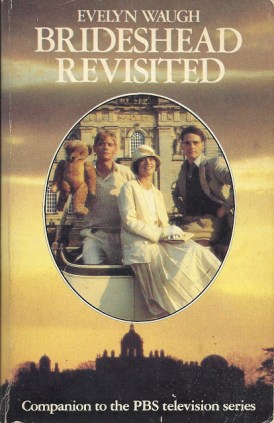
Keeping with my trend of providing movie tie-ins for recent Flashback Friday posts, I will point out that there have been several radio and TV productions of Brideshead Revisited, perhaps most memorably the 1981 TV mini-series starring Jeremy Irons. A word of explanation regarding the picture: Sebastian, the dissolute son of the Marchmains, was notorious at Oxford for his odd habits, among them the constant carrying of a teddy bear named Aloysius. Adorable, right?

Note from your friendly Bookshelf Fantasies host: To join the Flashback Friday fun, write a blog post about a book you love (please mention Bookshelf Fantasies as the Flashback Friday host!) and share your link below. Don’t have a blog post to share? Then share your favorite oldie-but-goodie in the comments section. Jump in!

♥♥♥♥♥♥♥♥

Do you host a blog hop or book blog meme? Do you participate in a meme that you really, really love? I’m building a Book Blog Meme Directory, and need your help! If you know of a great meme to include — or if you host one yourself — please drop me a note on my Contact page and I’ll be sure to add your info!

Flashback Friday: Fail-Safe

Flashback Friday is my own little weekly tradition, in which I pick a book from my reading past to highlight — and you’re invited to join in!

Here are the Flashback Friday book selection guidelines:

  1. Has to be something you’ve read yourself
  2. Has to still be available, preferably still in print
  3. Must have been originally published 5 or more years ago

Other than that, the sky’s the limit! Join me, please, and let us all know: what are the books you’ve read that you always rave about? What books from your past do you wish EVERYONE would read? Pick something from five years ago, or go all the way back to the Canterbury Tales if you want. It’s Flashback Friday time!

My pick for this week’s Flashback Friday:

Fail SafeFailSafeNovel.jpg

Fail-Safe by Eugene Burdick and Harvey Wheeler

(first published 1962)

From Goodreads:

Something has gone wrong. A group of American bombers armed with nuclear weapons is streaking past the fail-safe point, beyond recall, and no one knows why. Their destination — Moscow.

In a bomb shelter beneath the White House, the calm young president turns to his Russian translator and says, “I think we are ready to talk to Premier Kruschchev.” Not far away, in the War Room at the Pentagon, the secretary of defense and his aides watch with growing anxiety as the luminous blips crawl across a huge screen map. High over the Bering Strait in a large Vindicator bomber, a colonel stares in disbelief at the attack code number on his fail-safe box and wonders if it could possibly be a mistake.

First published in 1962, when America was still reeling from the Cuban missle crisis, Fail-Safe reflects the apocalyptic attitude that pervaded society during the height of the Cold War, when disaster could have struck at any moment.

Fail-Safe is one of many Cold War era novels which vividly portray the fear of living in a nuclear age. Concepts like Mutually Assured Destruction were real and terrifying, and to Americans, the Soviets were the ultimate big bad. Fail-Safe perfectly captures the paranoia and helplessness of a populace facing potential annihilation at a moment’s notice.

The title refers to systems that ensure the success of a mission — but when the systems fail, there’s no way to intercede, and politicians world-wide are left to scramble for a solution to a situation that appears to have no ending but the utter destruction of mankind. As the world teeters on the brink of nuclear devastation, both sides work frantically to find a solution to what appears to be a hopeless situation.

I remember reading this book on the edge of my seat, finding it harder and harder to breathe as it went along. Fail-Safe builds in intensity and tension, page by page, until it’s practically unbearable. And oh, that ending!

I won’t give anything away, but if you want to read a book that truly conveys the terror of the Cold War and nuclear brinkmanship, Fail-Safe is an awfully good place to start.

Note from your friendly Bookshelf Fantasies host: To join the Flashback Friday fun, write a blog post about a book you love (please mention Bookshelf Fantasies as the Flashback Friday host!) and share your link below. Don’t have a blog post to share? Then share your favorite oldie-but-goodie in the comments section. Jump in!

♥♥♥♥♥♥♥♥

Do you host a blog hop or book blog meme? Do you participate in a meme that you really, really love? I’m building a Book Blog Meme Directory, and need your help! If you know of a great meme to include — or if you host one yourself — please drop me a note on my Contact page and I’ll be sure to add your info!

Flashback Friday: Tales Of The City

Flashback Friday is my own little weekly tradition, in which I pick a book from my reading past to highlight — and you’re invited to join in!

Here are the Flashback Friday book selection guidelines:

  1. Has to be something you’ve read yourself
  2. Has to still be available, preferably still in print
  3. Must have been originally published 5 or more years ago

Other than that, the sky’s the limit! Join me, please, and let us all know: what are the books you’ve read that you always rave about? What books from your past do you wish EVERYONE would read? Pick something from five years ago, or go all the way back to the Canterbury Tales if you want. It’s Flashback Friday time!

My pick for this week’s Flashback Friday:

Tales of the City (Tales of the City, #1)

Tales of the City by Armistead Maupin

(first published 1978)

From Goodreads:

San Francisco, 1976. A naive young secretary, fresh out of Cleveland, tumbles headlong into a brave new world of laundromat Lotharios, pot-growing landladies, cut throat debutantes, and Jockey Shorts dance contests. The saga that ensues is manic, romantic, tawdry, touching, and outrageous – unmistakably the handiwork of Armistead Maupin.

Author Armistead Maupin originally wrote this book — and the next several in the series — as a serialized column appearing in the San Francisco Chronicle beginning in May of 1976. (You can read the first installment here.) Each chapter represents one newspaper column’s worth of story — so each is quick, zippy, full of fun, and perfectly bite-sized.

This book and the books that follow capture life in San Francisco at a particular time, blending hippies and disco, sexual freedom and discovery, the city’s aristocracy and the bohemian fringe. It’s fun, often hilarious, surprisingly touching, and must have been, for its time, a real shocker — at least for those not a part of the San Francisco “scene”.

There are now eight published volumes in the series, with a ninth, The Days of Anna Madrigal, due out in 2014. (‘ll ‘fess up and admit that I’ve only read the first six books; someday, I intend to catch up!)

Tales of the City continues to fascinate. Since its publication as a newspaper serial, it has been published as a novel (obviously), became a very successful PBS TV production in 1993, and in 2011 debuted on stage as a musical (which I was lucky enough to see — it was wonderful!).

Tales of the City is a ground-breaking portrait of 1970s San Francisco — and also just a really entertaining piece of fiction. Check it out!

Note from your friendly Bookshelf Fantasies host: To join the Flashback Friday fun, write a blog post about a book you love (please mention Bookshelf Fantasies as the Flashback Friday host!) and share your link below. Don’t have a blog post to share? Then share your favorite oldie-but-goodie in the comments section. Jump in!

Flashback Friday: A Town Like Alice

Flashback Friday is my own little weekly tradition, in which I pick a book from my reading past to highlight — and you’re invited to join in!

Here are the Flashback Friday book selection guidelines:

  1. Has to be something you’ve read yourself
  2. Has to still be available, preferably still in print
  3. Must have been originally published 5 or more years ago

Other than that, the sky’s the limit! Join me, please, and let us all know: what are the books you’ve read that you always rave about? What books from your past do you wish EVERYONE would read? Pick something from five years ago, or go all the way back to the Canterbury Tales if you want. It’s Flashback Friday time!

My pick for this week’s Flashback Friday:

A Town Like Alice

A Town Like Alice by Nevil Shute

(first published 1950)

From Goodreads:

Nevil Shute’s most beloved novel, a tale of love and war, follows its enterprising heroine from the Malayan jungle during World War II to the rugged Australian outback.

Jean Paget, a young Englishwoman living in Malaya, is captured by the invading Japanese and forced on a brutal seven-month death march with dozens of other women and children. A few years after the war, Jean is back in England, the nightmare behind her. However, an unexpected inheritance inspires her to return to Malaya to give something back to the villagers who saved her life. But it turns out that they have a gift for her as well: the news that the young Australian soldier, Joe Harmon, who had risked his life to help the women, had miraculously survived. Jean’s search for Joe leads her to a desolate Australian outpost called Willstown, where she finds a challenge that will draw on all the resourcefulness and spirit that carried her through her war-time ordeals.

It’s hard to neatly sum up A Town Like Alice. Part of it is a moving, horrifying account of a death march during World War II, in which civilians women and children suffered and died. Great courage and sacrifice move the story forward, and this segment of the book concludes with terrible events and a tragic outcome. From there, the narrative moves into the story of a woman rebuilding her life, determined to make a difference, and not fitting the mold of a complacent, wealthy Englishwoman. The remainder of the book is filled with adventure, and is part frontier drama and part romance. That’s a lot to fit into a not particularly long book (the mass market paperback version is under 300 pages), but gifted author Nevil Shute pulls it off.

A Town Like Alice takes place in gorgeous, rough, wild settings include Malayan jungles and the Australian Outback. The characters are heroic and steely, and Jean herself is a delight. Nevil Shute’s writing conveys the terror of war and the triumph of human spirit. This is just a lovely, lovely book, and although it’s been many years since I read it, I remember certain parts of it quite vividly, and always list it among my favorites.

Of course, it doesn’t hurt that way back when there was a TV mini-series of A Town Like Alice, with a very photogenic cast:

I have no idea if the TV series itself would be worth watching today or if it would feel tremendously dated, but I’m willing to bet that the book holds up quite nicely. If you’ve read it, let me know what you think!

Note from your friendly Bookshelf Fantasies host: To join the Flashback Friday fun, write a blog post about a book you love (please mention Bookshelf Fantasies as the Flashback Friday host!) and share your link below. Don’t have a blog post to share? Then share your favorite oldie-but-goodie in the comments section. Jump in!

Flashback Friday: The Far Pavilions

Flashback Friday is my own little weekly tradition, in which I pick a book from my reading past to highlight — and you’re invited to join in!

Here are the Flashback Friday book selection guidelines:

  1. Has to be something you’ve read yourself
  2. Has to still be available, preferably still in print
  3. Must have been originally published 5 or more years ago

Other than that, the sky’s the limit! Join me, please, and let us all know: what are the books you’ve read that you always rave about? What books from your past do you wish EVERYONE would read? Pick something from five years ago, or go all the way back to the Canterbury Tales if you want. It’s Flashback Friday time!

My pick for this week’s Flashback Friday:

The Far Pavilions

The Far Pavilions by M. M. Kaye

(first published 1978)

From Goodreads:

After the death of his parents, young Ashton Pelham-Martyn is brought up as a Hindu in a remote corner of British India. As an adult soldier he returns to India, where his love for a princess and his dual heritage make for an epic story of adventure and romance.

This is a huge book, somewhere around 1,000 pages depending on which version you pick up, so in terms of bookshelf space and usefulness as a doorstop, right up there with the Game of Thrones books (yes, I know that’s not what they’re called, but it’s quicker to type) and my beloved Outlander series.

I remember absolutely loving The Far Pavilions when I read it so many years ago. It really is a perfect blend of historical fiction — depicting life and society in India under the British Empire — with a stirring, romantic tale of forbidden love. Ash is a wonderful character, a British boy raised by his Indian nurse after his own parents’ death, with conflicting loyalties and a confused identity. We see him through his youth, his return to British society, and his military service, and his reunion with a long-lost childhood love and his desperate attempt to save her from a cruel fate. The love story of Ash and Anjuli belongs among the ranks of the best tortured, tragic, against-all-odds lovers in fiction.

The Far Pavilions was published during a decade in which big, sweeping historical sagas were dominating the bestseller lists. In a time in which Shogun by James Clavell, The Thorn Birds by Colleen McCullough, and War and Remembrance by Herman Wouk were all hugely popular, it makes sense that so many were drawn to The Far Pavilions as well.

Note from your friendly Bookshelf Fantasies host: To join the Flashback Friday fun, write a blog post about a book you love (please mention Bookshelf Fantasies as the Flashback Friday host!) and share your link below. Don’t have a blog post to share? Then share your favorite oldie-but-goodie in the comments section. Jump in!

Flashback Friday: Dinner At The Homesick Restaurant

Flashback Friday is my own little weekly tradition, in which I pick a book from my reading past to highlight — and you’re invited to join in!

Here are the Flashback Friday book selection guidelines:

  1. Has to be something you’ve read yourself
  2. Has to still be available, preferably still in print
  3. Must have been originally published 5 or more years ago

Other than that, the sky’s the limit! Join me, please, and let us all know: what are the books you’ve read that you always rave about? What books from your past do you wish EVERYONE would read? Pick something from five years ago, or go all the way back to the Canterbury Tales if you want. It’s Flashback Friday time!

My pick for this week’s Flashback Friday:

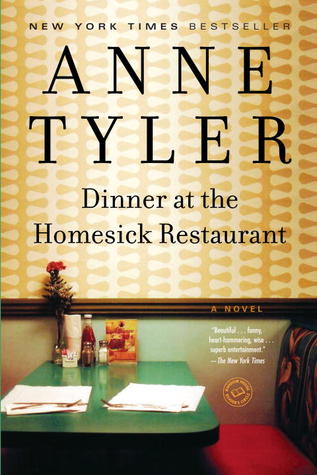
Dinner at the Homesick Restaurant

Dinner at the Homesick Restaurant by Anne Tyler

(first published 1982)

From Goodreads:

Pearl Tull is nearing the end of her life but not of her memory. It was a Sunday night in 1944 when her husband left the little row house on Baltimore’s Calvert Street, abandoning Pearl to raise their three children alone: Jenny, high-spirited and determined, nurturing to strangers but distant to those she loves; the older son, Cody, a wild and incorrigible youth possessed by the lure of power and money; and sweet, clumsy Ezra, Pearl’s favorite, who never stops yearning for the perfect family that could never be his own.

Now Pearl and her three grown children have gathered together again–with anger, hope, and a beautiful, harsh, and dazzling story to tell.

I went through a period in the 1980s/1990s when I just couldn’t get enough of Anne Tyler’s books, and this was the one that started it all for me. No matter the plot, Anne Tyler’s books tend to be about ordinary people just dealing with life, its joys and its disappointments, but full of warmth, honesty, and a fresh tone that makes her writing totally accessible. Soon after reading Dinner at the Homesick Restaurant, I also read A Slipping Down Life, The Accidental Tourist, and Searching for Caleb, and have read other books by this author in the years since.

What makes Anne Tyler’s books memorable are the flawed characters and the challenges and crises they face — some more successfully than others. Her books are not large in scope, but rather portray small slices of life that feel real and possible.

Note from your friendly Bookshelf Fantasies host: To join the Flashback Friday fun, write a blog post about a book you love (please mention Bookshelf Fantasies as the Flashback Friday host!) and share your link below. Don’t have a blog post to share? Then share your favorite oldie-but-goodie in the comments section. Jump in!

Flashback Friday: Misery

Flashback Friday is my own little weekly tradition, in which I pick a book from my reading past to highlight — and you’re invited to join in!

Here are the Flashback Friday book selection guidelines:

  1. Has to be something you’ve read yourself
  2. Has to still be available, preferably still in print
  3. Must have been originally published 5 or more years ago

Other than that, the sky’s the limit! Join me, please, and let us all know: what are the books you’ve read that you always rave about? What books from your past do you wish EVERYONE would read? Pick something from five years ago, or go all the way back to the Canterbury Tales if you want. It’s Flashback Friday time!

My pick for this week’s Flashback Friday:

misery

Misery by Stephen King

(first published 1978)

From Goodreads:

Novelist Paul Sheldon has plans to make the difficult transition from writing historical romances featuring heroine Misery Chastain to publishing literary fiction. Annie Wilkes, Sheldon’s number one fan, rescues the author from the scene of a car accident. The former nurse takes care of him in her remote house, but becomes irate when she discovers that the author has killed Misery off in his latest book. Annie keeps Sheldon prisoner while forcing him to write a book that brings Misery back to life.

I was thinking about Stephen King this week. Because, why not? He’s everywhere! Last week, I happened to catch him on The Colbert Report. This week, I received my copy of his newest book, Joyland. I have Doctor Sleep on preorder for the fall. And I just set my DVR to record Under The Dome for the next several weeks. See what I mean? He’s everywhere!

For Flashback Friday, I thought I’d go back to the late 1970s for the super creepy but not at all paranormal thriller Misery — about fandom gone horribly, horribly wrong. Do you think Stephen King was worrying about his legions of devoted fans when he wrote this? I loved the psychological terror of this book, in which an author is forced to do endless rewrites to please his public — as represented in this case by one psycho lady with an axe. Whoa. Just thinking about it gives me the chills. It may be time to dig up a copy and reread Misery. There’s nothing more satisfyingly scary than a really scary Stephen King book.

A brief housekeeping note: Flashback Friday and other weekly features at Bookshelf Fantasies will be on a wee break next week. (Woo hoo, it’s vacation time!) Check back in two weeks for the next Flashback Friday!

Note from your friendly Bookshelf Fantasies host: To join the Flashback Friday fun, write a blog post about a book you love (please mention Bookshelf Fantasies as the Flashback Friday host!) and share your link below. Don’t have a blog post to share? Then share your favorite oldie-but-goodie in the comments section. Jump in!

Flashback Friday: Les Miserables — the book!

Flashback Friday is my own little weekly tradition, in which I pick a book from my reading past to highlight — and you’re invited to join in!

Here are the Flashback Friday book selection guidelines:

  1. Has to be something you’ve read yourself
  2. Has to still be available, preferably still in print
  3. Must have been originally published 5 or more years ago

Other than that, the sky’s the limit! Join me, please, and let us all know: what are the books you’ve read that you always rave about? What books from your past do you wish EVERYONE would read? Pick something from five years ago, or go all the way back to the Canterbury Tales if you want. It’s Flashback Friday time!

My pick for this week’s Flashback Friday:

Les Misérables

Les Misérables by Victor Hugo

(first published 1862)

From Goodreads:

Introducing one of the most famous characters in literature, Jean Valjean – the noble peasant imprisoned for stealing a loaf of bread – Les Misérables (1862) ranks among the greatest novels of all time. In it Victor Hugo takes readers deep into the Parisian underworld, immerses them in a battle between good and evil, and carries them onto the barricades during the uprising of 1832 with a breathtaking realism that is unsurpassed in modern prose.

Within his dramatic story are themes that capture the intellect and the emotions: crime and punishment, the relentless persecution of Valjean by Inspector Javert, the desperation of the prostitute Fantine, the amorality of the rogue Thénardier and the universal desire to escape the prisons of our own minds. Les Misérables gave Victor Hugo a canvas upon which he portrayed his criticism of the French political and judicial systems, but the portrait which resulted is larger than life, epic in scope – an extravagant spectacle that dazzles the senses even as it touches the heart.

I’m just imagining how many people in the new few years will say, “Les Misérables? Great movie!”  — but how many would actually consider picking up the book?

Yes, it’s massive. (The Signet edition, listed above, has 1,463 pages). And guess what? I’ve actually read it. (Patting self on the back right now…)

Way back when in the dark ages (otherwise known as the late 1980s), during a brief visit to London, I had the opportunity to see the then-new musical Les Mis, from several balconies up and with no knowledge of the plot details ahead of time. I enjoyed the show tremendously, but boy, was I confused. Because I had time on my hands, I decided to read the book. Not the abridged version, thank you very much, but the whole huge doorstop of a book, all 1000+ pages.

And it was worth it. Granted, I probably learned a lot more than I ever wanted to know about the Parisian sewer systems and daily life in a convent, but I also gained the richness of Hugo’s detailed descriptions, so that I finished the book more or less understanding not just the events of the plot, but the feeling of the time and place.

There’s a reason (many reasons, to be more accurate) that Les Misérables is a classic. It’s a compelling portrait of a man’s life, as well as a study of human nature, the good and the bad, courage and weakness, and what it means to take a stand and do right. Beautifully written with unforgettable characters, Les Misérables shouldn’t be missed.

Note from your friendly Bookshelf Fantasies host: To join the Flashback Friday fun, write a blog post about a book you love (please mention Bookshelf Fantasies as the Flashback Friday host!) and share your link below. Don’t have a blog post to share? Then share your favorite oldie-but-goodie in the comments section. Jump in!

Flashback Friday: How I Live Now

Flashback Friday is my own little weekly tradition, in which I pick a book from my reading past to highlight — and you’re invited to join in!

Here are the Flashback Friday book selection guidelines:

  1. Has to be something you’ve read yourself
  2. Has to still be available, preferably still in print
  3. Must have been originally published 5 or more years ago

Other than that, the sky’s the limit! Join me, please, and let us all know: what are the books you’ve read that you always rave about? What books from your past do you wish EVERYONE would read? Pick something from five years ago, or go all the way back to the Canterbury Tales if you want. It’s Flashback Friday time!

My pick for this week’s Flashback Friday:

How I Live Now

How I Live Now by Meg Rosoff

(published 2004)

From Goodreads:

“Every war has turning points and every person too.”

Fifteen-year-old Daisy is sent from Manhattan to England to visit her aunt and cousins she’s never met: three boys near her age, and their little sister. Her aunt goes away on business soon after Daisy arrives. The next day bombs go off as London is attacked and occupied by an unnamed enemy.

As power fails, and systems fail, the farm becomes more isolated. Despite the war, it’s a kind of Eden, with no adults in charge and no rules, a place where Daisy’s uncanny bond with her cousins grows into something rare and extraordinary. But the war is everywhere, and Daisy and her cousins must lead each other into a world that is unknown in the scariest, most elemental way.

A riveting and astonishing story.

I absolutely fell in love with this book when I read it, pretty much from the very first page. While I’ve seen it described as “dystopian” fiction, I’m not sure that I’d categorize it in quite that way. One of the most spellbinding aspects of this story is that it feels completely contemporary — and yet also timeless. It’s easy to imagine these events taking place in today’s world, not necessarily in some unknown future. The story of Daisy and her cousins, unintentionally left on their own to at first enjoy their isolation and then struggle to survive, is moving, beautifully written, and emotionally powerful. I’ve since read all of the author’s other works for young adults, and while How I Live Now remains my favorite, I just can’t help being impressed by the richness and variety of all of her novels.

How I Live Now was the recipient of the 2005 Michael L. Printz Award for Excellence in Young Adult Literature.

And — whoa! In looking up information on How I Live Now for this post, I just discovered that there’s a movie version in production starring Saoirse Ronan! (Jumping up and down in glee… sorry, can’t type any more!)

Note from your friendly Bookshelf Fantasies host: To join the Flashback Friday fun, write a blog post about a book you love (please mention Bookshelf Fantasies as the Flashback Friday host!) and share your link below. Don’t have a blog post to share? Then share your favorite oldie-but-goodie in the comments section. Jump in!