Book Review: My Brilliant Career by Miles Franklin (Classics Club Spin #42)

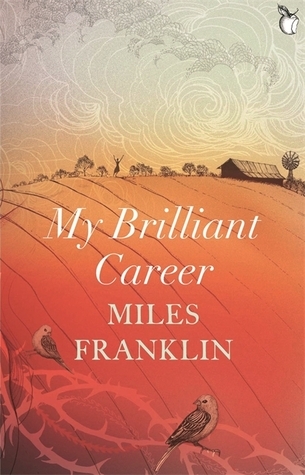
Title: My Brilliant Career
Author: Miles Franklin
Publication date: 1901
Length: 228 pages
Rating:

Rating: 4.5 out of 5.

The fierce, irreverent novel of aspiration and rebellion that is both a cornerstone of Australian literature and a feminist classic

Miles Franklin began the candid, passionate, and contrary My Brilliant Career when she was only sixteen, intending it to be the Australian answer to Jane Eyre . But the book she produced-a thinly veiled autobiographical novel about a young girl hungering for life and love in the outback-so scandalized her country upon its appearance in 1901 that she insisted it not be published again until ten years after her death.

And the synopsis from another edition:

Trapped on her parents’ farm in the hardscrabble Australian outback, sixteen-year-old Sybylla Melvyn loves the bush but not the toil it brings. She longs for refinement, and most of all she longs to achieve great things.

Suddenly she falls under the gaze of wealthy, handsome Harry Beecham and finds herself choosing between the conventional path of marriage and her plans for a ‘brilliant career’.

I don’t remember exactly how I became aware of My Brilliant Career, but once it caught my eye, I just knew I needed to add it to my Classics Club Spin list. I’m so glad that the most recent spin landed on this Australian classic!

This was life—my life—my career, my brilliant career! I was fifteen—fifteen! A few fleeting hours and I would be old as those around me.

In My Brilliant Career, teen-aged Sybylla has little to no say in her own life. One of many children, she experiences a severe downturn in her family’s fortunes when her father’s poor business decisions cause then to lose their vast land holdings and move to a smaller, less promising farm. Things go from bad to worse as their father continues to lose money and livestock, and then drink away what little money remains. When a drought leads to even more ruin, Sybylla is sent to live with her grandmother several days’ journey away, where she finally has the opportunity to explore music, books, and a more rewarding and enjoyable life.

While there, Sybylla catches the eye of a wealthy, attractive nearby landowner. We might expect a whirlwind romance to follow, but Sybylla absolutely does not fit the mold of a romantic heroine. She’s mean and dismissive, considers herself ugly, does not wish to be courted, and both yearns to awaken heightened emotions in her suitor and dreads declarations of love, repeatedly (and harshly) rejecting any talk of marriage. Sybylla doesn’t know exactly where her future lies, but she doesn’t see herself finding happiness as a respectable wife, and certainly doesn’t believe that she could make a husband happy, no matter how much he might believe he loves her.

My Brilliant Career is remarkable for its narrative tone, as well as for the unusualness of its main character and her decisions. This book is considered a groundbreaking classic of Australian fiction as well as of feminist literature. Published under a pseudonym when the author was just 21 years old, this debut novel was the first of many books and other writings to follow in the author’s career.

For more on the significance of My Brilliant Career: https://www.nma.gov.au/defining-moments/resources/my-brilliant-career

I loved the writing, especially Sybylla’s orneriness and humor. Her descriptions of her surroundings can be stunning, evoking the time and place with precision, and using Australian lingo that’s sure to both amuse and befuddle non-Australian readers.

Beyond that, Sybylla’s way of thinking is unique, and I loved the way she expresses herself:

I am afflicted with the power of thought, which is a heavy curse. The less a person thinks and inquires regarding the why and the wherefore and the justice of things, when dragging along through life, the happier it is for him, and doubly, trebly so, for her.

My mother is a good woman—a very good woman—and I am, I think, not quite all criminality, but we do not pull together. I am a piece of machinery which, not understanding, my mother winds up the wrong way, setting all the wheels of my composition going in creaking discord.

Girls! girls! Those of you who have hearts, and therefore a wish for happiness, homes, and husbands by and by, never develop a reputation of being clever. It will put you out of the matrimonial running as effectually as though it had been circulated that you had leprosy. So, if you feel that you are afflicted with more than ordinary intelligence, and especially if you are plain with it, hide your brains, cramp your mind, study to appear unintellectual—it is your only chance.

On making my first appearance before my lover, I looked quite the reverse of a heroine. My lovely hair was not conveniently escaping from the comb at the right moment to catch him hard in the eye, neither was my thrillingly low sweet voice floating out on the scented air in a manner which went straight to his heart, like the girls I had read of. On the contrary, I much resembled a female clown.

The ending of the book startled me, not because it ends with high drama, but rather because the character rejects what seems like her best prospect for change, and chooses to remain in the same family routine of working to scratch out a living on the land. I puzzled over the final chapter quite a bit and reread it several times before feeling satisfied that I got the point.

Overall, I’m really pleased that my most recent spin landed on My Brilliant Career. It makes me eager to explore more Australian fiction of the 20th century — please share any recommendations!

A reading note: I read this book via a free edition available for Kindle… and it was absolutely plagued with typos. If you’re considering reading My Brilliant Career, I’d recommend checking the library for a print edition or an e-book edition from a traditional publisher!

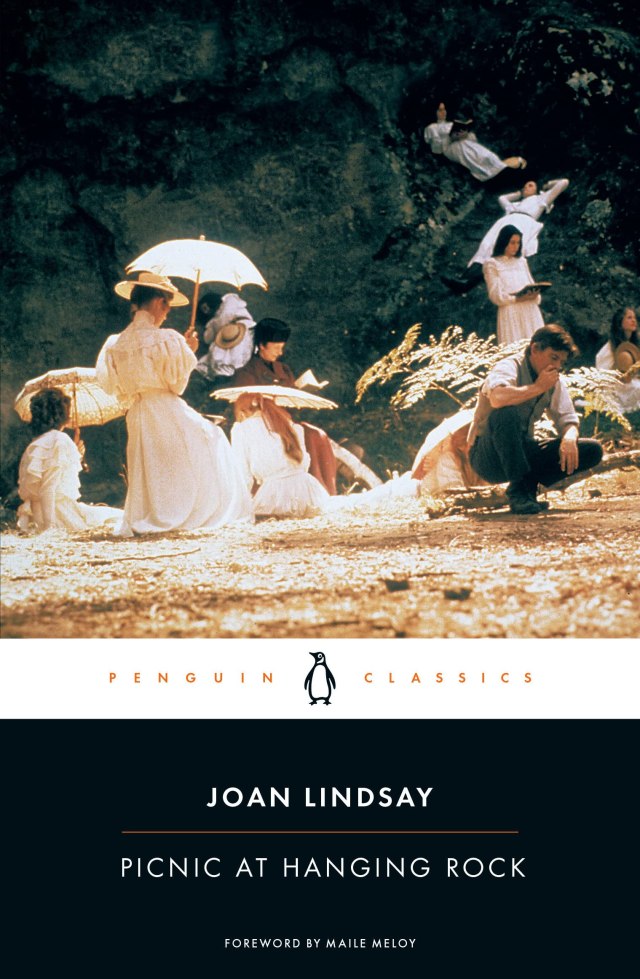
Picnic at Hanging Rock by Joan Lindsay: Book, movie, and TV (Classics Club Spin #33)

This was originally going to be a book review post dedicated to my newest Classics Club Spin book… but then I got carried away! Not only did I read the book, but I also watched the movie and TV mini-series versions as well. Read on for my thoughts on all three (or, for the tl;dr version, jump right to the end!)

Let’s start where all such things should start — the book:

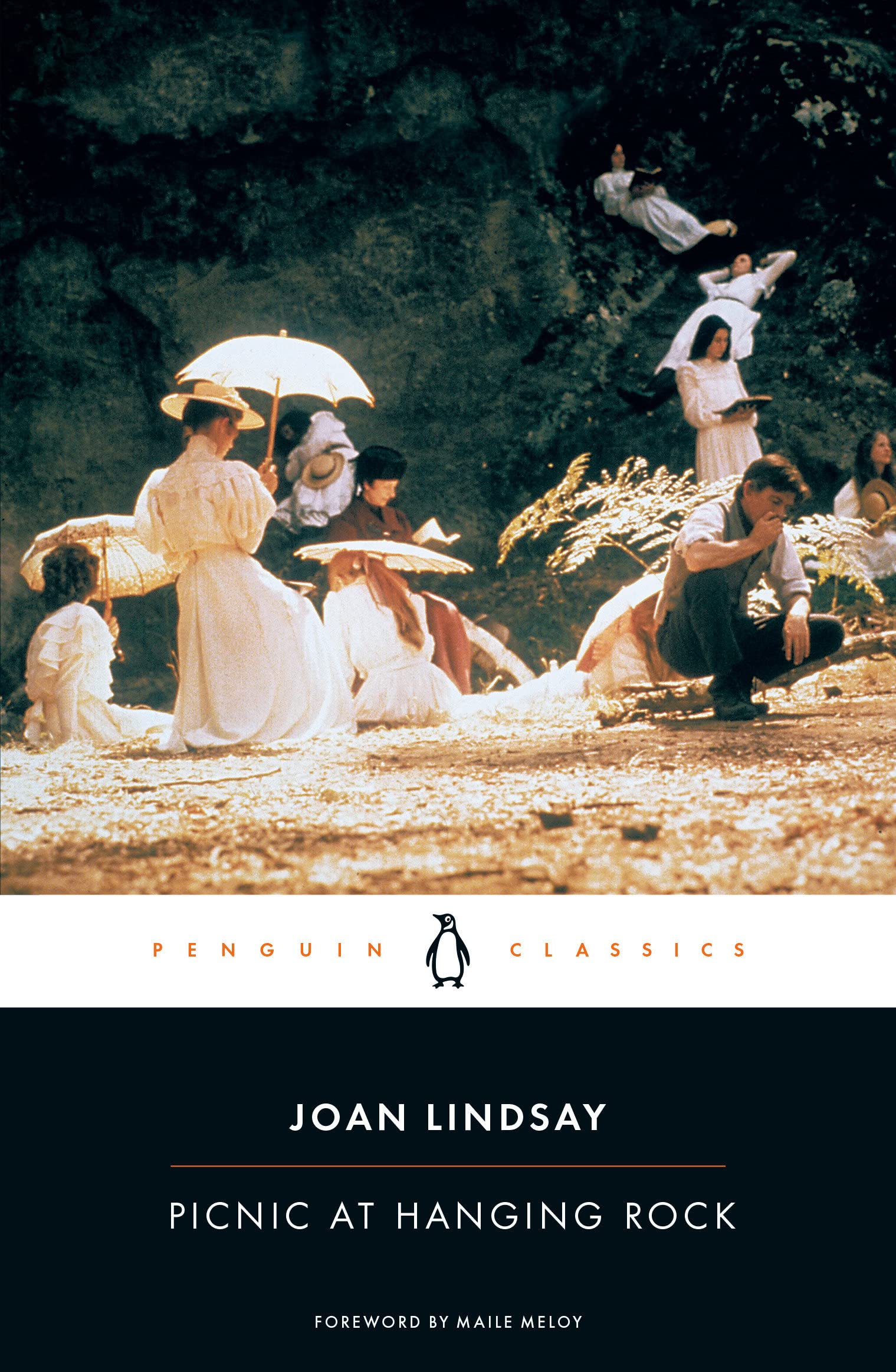
Title: Picnic at Hanging Rock
Author: Joan Lindsay
Publication date: 1967
Length: 204 pages
Rating:

Rating: 4.5 out of 5.

Synopsis (Goodreads):

It was a cloudless summer day in the year 1900. Everyone at Appleyard College for Young Ladies agreed it was just right for a picnic at Hanging Rock. After lunch, a group of three girls climbed into the blaze of the afternoon sun, pressing on through the scrub into the shadows of the secluded volcanic outcropping. Farther, higher, until at last they disappeared. They never returned. . . .

Mysterious and subtly erotic, Picnic at Hanging Rock inspired the iconic 1975 film of the same name by Peter Weir. A beguiling landmark of Australian literature, it stands with Shirley Jackson’s We Have Always Lived in the Castle, Daphne du Maurier’s Rebecca, and Jeffrey Eugenides’ The Virgin Suicides as a masterpiece of intrigue.

Picnic at Hanging Rock is my most recent Classics Club Spin book. This is a book I’ve had my eye on for some time, so I was delighted when its number came up!

This 20th century Australian classic centers around the Appleyard College for Young Ladies, run by headmistress Mrs. Appleyard, a stiff and proper Englishwoman who enjoys the income afforded her by providing a fine finishing school education for the daughters of Australian society’s affluent families.

As the story opens, it’s Valentine’s Day, 1900, and the young women of Appleyard are setting out on a picnic, chaperoned by two teachers. It’s a hot day, and their destination lies hours away by horse-drawn carriage. After the excitement of receiving Valentine’s cards, emotions are running high. The girls are eager for adventure, yet must always remember the expectation that they behave like proper young ladies.

After a picnic at the foot of the towering Hanging Rock, as it’s almost time for the return journey, a few girls beg permission to take a short walk along the stream… and never return. Hours pass; finally, one of the party returns in terror, but with no explanation of what’s actually happened. No sign can be found of the three missing girls, and what’s more, it’s discovered that one of the teachers has also vanished. As night approaches, there’s no choice but to return to the school.

An intense manhunt follows, and while one girl is eventually found — but again, with no memories of what happened to her or the others — there’s no luck in finding the others. Rumors and intrigue spread; the incident becomes known as the College Mystery. Months pass, and the ripples of that fateful day spread and touch more and more people — and the enigmatic Mrs. Appleyard seems to slowly fall apart as well.

The writing in Picnic at Hanging Rock is lush and vivid. The depiction of Hanging Rock is stark, and the author carefully describes not just the rock formations themselves, but all the flora and fauna of the area as well. The contrast between the proper, buttoned-up, virginal girls and the wildness of their environment is vivid — while providing a simulated British boarding school environment, the school cannot help but also expose the girls to the dangerous, venomous, and treacherous landscapes all around them.

This book is quite famous for not actually answering the questions it raises. This isn’t a whodunnit with a big reveal at the end. We don’t know, and never find out, what truly happened to the missing girls. There’s another large question at the end that also doesn’t get answered. People appear in the story, and then fade from it, with the author pointing out at various points that this is where so-and-so’s role ends, and we hear no more from them.

A modern-day reader used to fast-paced thrillers and explosive plot twists might find this book slow, but I actually loved it. The mood builds slowly yet inexorably. There’s intrigue and dread, yet we also gets views of love and passion, disappointments and escapes, jealousies and fears. There’s an insidious sense of doom — from the day of the picnic, everything begins going downhill, even when the connections aren’t obvious.

There’s much debate about what happened to the girls. Were they attacked, murdered, kidnapped? Simply lost, perhaps fallen down a cliff? Were supernatural elements at play? An unpublished final chapter holds the key to the author’s original explanation, but even after reading about it, I think I’m happier with the book not providing answers to the mysteries.

I’m glad to have read Picnic at Hanging Rock. It’s a tautly-written, fairly short novel that contains great writing and creates an eerie, aching mood. Highly recommended.

Next up, the first filmed version of Picnic at Hanging Rock:

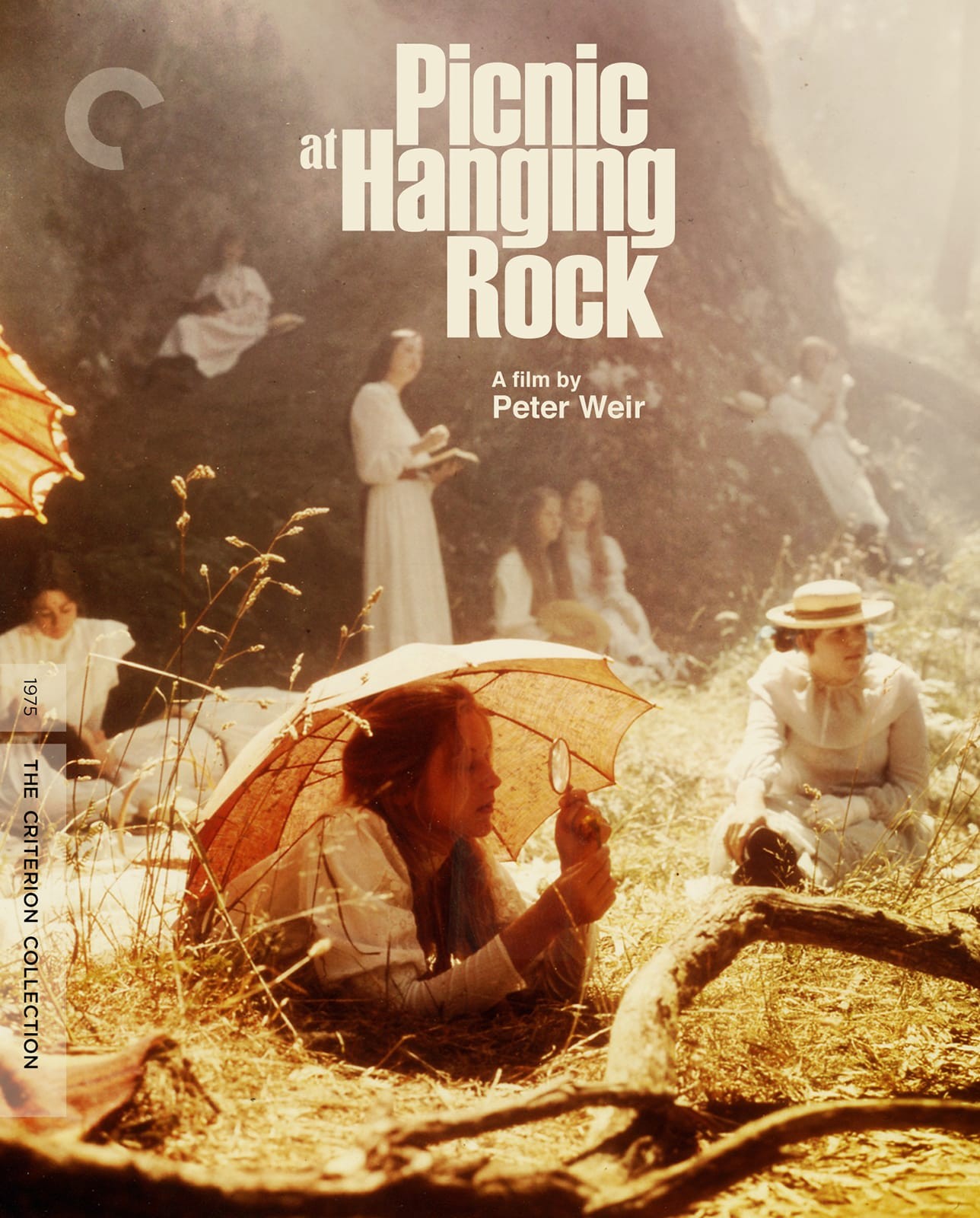
Right after finishing the book, I watched the 1975 film by director Peter Weir, which is considered a movie masterpiece. At the time of its release, Vincent Canby of the New York Times wrote:

HORROR need not always be a long-fanged gentleman in evening clothes or a dismembered corpse or a doctor who keeps a brain in his gold fish bowl. It may be a warm sunny day. the innocence of girlhood and hints of unexplored sexuality that combine to produce a euphoria so intense it becomes transporting, a state beyond life or death. Such horror is unspeakable not because it is gruesome but because it remains outside the realm of things that can be easily defined or explained in conventional ways.

Read full review, here, and an opinion piece written in 2017, here.

The movie delivers on the mood of the book, from start to finish. It’s cinematic in scope and has a dreamlike quality, often focusing in on the girls’ faces, showing their beauty and their overpowering emotions. Emotion rules everything — the girls’ romantic passion while reading Valentine cards, the devotion of a younger girl to an older, the delight of peeling off gloves and shoes as soon as civilizing forces are left behind, and for the young men encountered at the picnic, the obsessive dreams that follow a mere glimpse of a girl of startling beauty.

We also clearly see the downside of these emotional states, as various group scenes turn hysterical or threatening, when heightened emotions turn the girls (or in another instance, local townsfolk) into menacing mobs.

The film captures the book’s contrasts between the British-style manners and rules of the school and the untamable nature of the Australian bush, with gorgeous shots of the girls in white dresses disappearing between stones or coming in contact with insects and lizards. There were times in the book where I couldn’t quite connect the physical descriptions of the landscape with an image in my mind, so seeing the settings in the movie was very powerful.

The movie is just as ambiguous as the book. There’s no attempt to provide answers or tie things up neatly. The point of the movie is the feelings it evokes.

For further reading, here’s an interview piece on the themes of the movie (but proceed with caution — there are plot spoilers): http://www.filmcritic.com.au/reviews/p/picnic_hanging.html

Finally, my 2nd viewing experience — the 2018 mini-series, currently streaming on Prime Video.

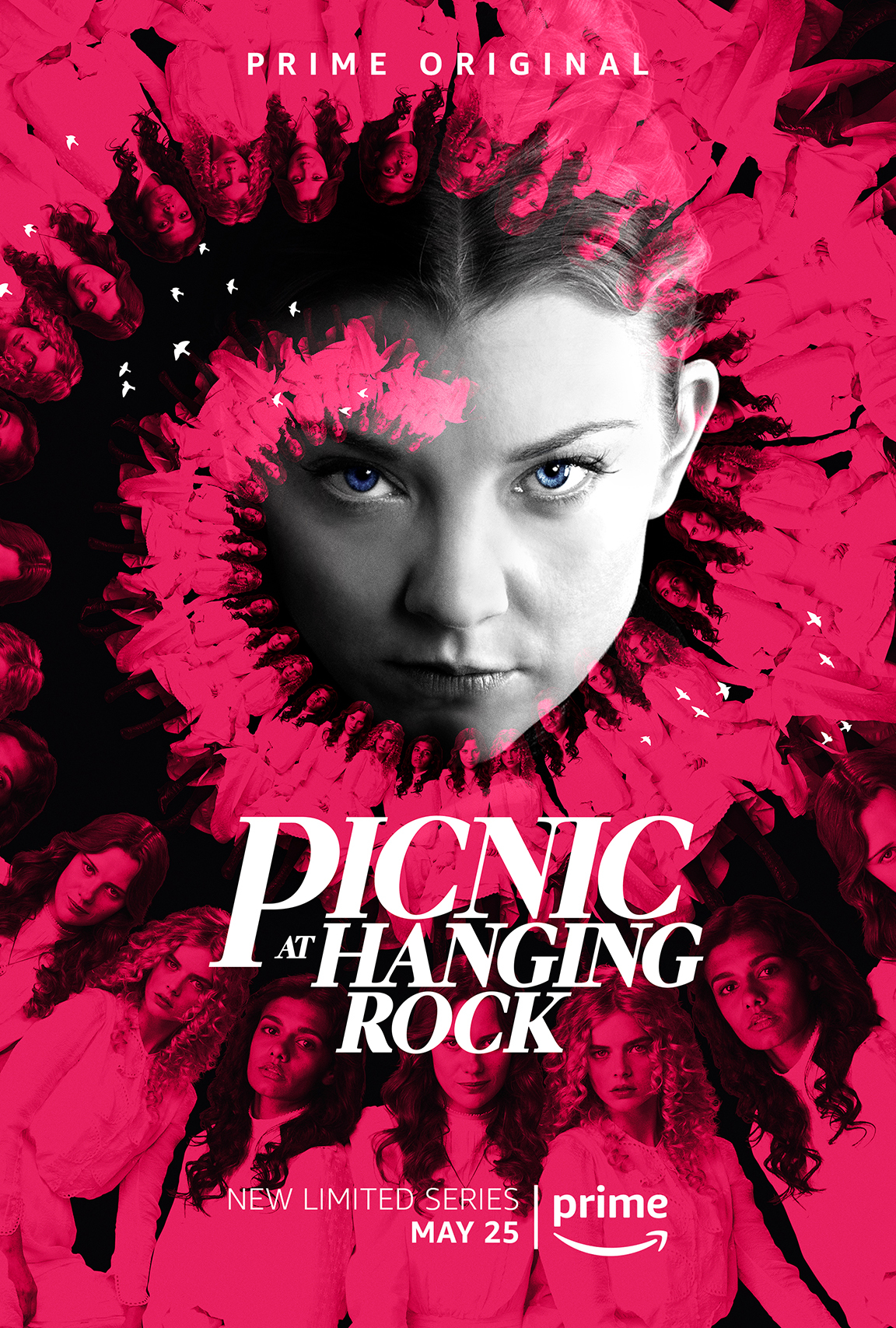
This six-episode TV mini-series stars Natalie Dormer as the domineering headmistress Mrs. Appleyard. Based on the key art alone, it’s clear that this version is going for a very different vibe.

According to the Variety review:

Joan Lindsay’s much-acclaimed 1967 Australian novel “Picnic At Hanging Rock” has already resulted in one stunning adaptation — Peter Weir’s 1975 film of the same name — so a second attempt, this time a television series, may already feel unnecessary. But it doesn’t take long for writers Beatrix Christian and Alice Addison to make the case for their own 2018 “Picnic,” a darker, more mysterious, and extended version that manages to feel updated for our time while still keeping the original 1900 setting.

In “Picnic At Hanging Rock,” the central mystery is laid out immediately: Four young women — three students and their teacher — suddenly vanish on Valentine’s Day, 1900, while on a school picnic at, well, Hanging Rock. The base premise is familiar to fans of crime series, but this is no ordinary drama; it’s eerie and haunting. It’s less dreamy (a quality frequently ascribed to the film) and more of a nightmare that you’ll be eager to dive into.

(For an additional critical take on this mini-series, check out the New York Times review, here.)

Over the course of six episodes, the bones of the plot of Picnic at Hanging Rock remain intact, but the mini-series expands just about every element, creating backstories for many characters, envisioning heaps more romantic entanglements, and showing scenes of events at the Rock that are eerie and perhaps even intriguing, but that don’t ultimately add a whole lot to the story.

The key change, of course, is the character of Mrs. Appleyard. It’s evident early on that she is not what she seems. Rather than an older widowed Englishwoman focused on the profitability of turning out refined young women, here, she’s a scheming con artist posing as a wealthy, respectable woman — but we’re treated to her hidden Cockney accent early on, and through flashbacks, learn much more of her character.

The girls in her care are sympathetic, much more diverse than in the 1975 movie, and more explicitly curious about their own sexuality as well as the eroticism of the untamed world beyond the confines of the school. The cruelty and abuse are much more explicit here as well, and certain subplots and side characters are completely extraneous, either there as deliberate sensationalism or as plot padding.

The middle few episodes sag, and I had to restrain myself from fast-forwarding, but by the end, I did want to see the wrap-up and how it all plays out. The mini-series keeps some (but not all) of the ambiguity of the source material, but the heavy focus on Mrs. Appleyard makes many of the other elements fade into the background, and some of the romantic entanglements seem to serve no purpose other than distraction.

I suppose I’m glad to have watched the mini-series — to satisfy my curiosity and for the sake of completion — but I would have been perfectly fine without it too.

But don’t let me talk you out of checking it out! Here’s the trailer — see if it piques your interest:

Back to the Classics Club Spin:

Yes, I ventured far afield, not just reading my chosen book, but watching two different adaptations as well. And to wrap it all up, I’ll simply say:

THE BOOK: Haunting, eerie, ambiguous, beautiful

THE 1975 MOVIE: Dreamlike and artistic, maybe not suited to 21st century moviegoer tastes, but as an older film, it’s lovely to see. Even when the plot gets lost amidst the gorgeous cinematography, the spell of the movie makes it worthwhile.

THE 2018 MINI-SERIES: OK if you like this sort of thing. It’s all a bit of a muddle, dreamy in parts and then crossing over into a campier gothic feel. (Maybe I’m alone in this reaction — has anyone else seen it?)

The biggest takeaway: Picnic at Hanging Rock is definitely worth reading, and I’m so glad I did.

Can’t wait for the next CCSpin!

My Classics Club Spin book for spring 2023 will be…

Earlier this week, I shared a post with my list of books for the newest Classics Club Spin challenge (see it here), and today, this spin’s number was announced. (For those keeping track, it’s CC Spin #33, and for me personally, #5!)

Hosted by The Classics Club blog, the Classics Club Spin is a reading adventure where participants come up with a list of classics they’d like to read, number them 1 to 20, and then read the book that corresponds to the “spin” number that comes up.

For CCSpin #33, the lucky number is:

And that means I’ll be reading:

Picnic at Hanging Rock by Joan Lindsay (published 1967)

Synopsis:

It was a cloudless summer day in the year 1900. Everyone at Appleyard College for Young Ladies agreed it was just right for a picnic at Hanging Rock. After lunch, a group of three girls climbed into the blaze of the afternoon sun, pressing on through the scrub into the shadows of the secluded volcanic outcropping. Farther, higher, until at last they disappeared. They never returned. . . .

Mysterious and subtly erotic, Picnic at Hanging Rock inspired the iconic 1975 film of the same name by Peter Weir. A beguiling landmark of Australian literature, it stands with Shirley Jackson’s We Have Always Lived in the Castle, Daphne du Maurier’s Rebecca, and Jeffrey Eugenides’ The Virgin Suicides as a masterpiece of intrigue.

I’m so happy with this spin result! I haven’t read many Australian classics, and this is one that I’ve heard so much about over the years. And on a practical note, I was afraid that we’d land on one of my longer options this time — but this book is 204 pages (according to the edition in my Kindle library), and feels really doable!

What do you think of my newest spin book?

Here’s my list of 20 titles for Classics Club Spin #33:

  1. Frenchman’s Creek by Daphne DuMaurier
  2. Cranford by Elizabeth Gaskell
  3. An Old-Fashioned Girl by Louisa May Alcott
  4. Dracula by Bram Stoker
  5. Peony by Pearl Buck
  6. The Tenant of Wildfell Hall by Anne Bronte
  7. Pygmalion by George Bernard Shaw
  8. Howards End by E. M. Forster
  9. The Mysterious Affair at Styles by Agatha Christie
  10. I Capture the Castle by Dodie Smith
  11. Foundation by Isaac Asimov
  12. In Cold Blood by Truman Capote
  13. Herland by Charlotte Perkins Gilman
  14. The Painted Veil by W. Somerset Maugham
  15. Passing by Nella Larsen
  16. The Awakening by Kate Chopin
  17. The Sound of Waves by Yukio Mishima
  18. Picnic at Hanging Rock by Joan Lindsay
  19. The Left Hand of Darkness by Ursula K. Le Guin
  20. A Night to Remember by Walter Lord

My previous Classics Club Spin books:

Are you participating in this Classics Club Spin? If so, what book will you be reading?