Classics Club Spin #41: A change of heart leads me to The Old Man and the Sea by Ernest Hemingway

Title: The Old Man and the Sea
Author: Ernest Hemingway
Publication date: 1952
Length: 128 pages
Rating:

Rating: 5 out of 5.

“A beautiful tale, awash in the seasalt and sweat, bait and beer of the Havana coast. It tells a fundamental human truth: in a volatile world, from our first breath to our last wish, through triumphs and pitfalls both trivial and profound, what sustains us, ultimately, is hope.” —The Guardian

The last of his novels Ernest Hemingway saw published, The Old Man and the Sea has proved itself to be one of the most enduring works of American fiction. The story of a down-on-his-luck Cuban fisherman and his supreme ordeal—a relentless, agonizing battle with a giant marlin far out in the Gulf Stream—has been cherished by generations of readers.

Hemingway takes the timeless themes of courage in the face of adversity and personal triumph won from loss and transforms them into a magnificent twentieth-century classic. First published in 1952, this hugely popular tale confirmed his power and presence in the literary world and played a large part in his winning the 1954 Nobel Prize in Literature.

The Old Man and the Sea is only sort-of my Classics Club spin book…

For the summer spin, my book ended up being My Family and Other Animals by Gerald Durrell. And I was happy about it! It sounded charming, it had been on my to-read list for a while, and I’d been thinking about watching the PBS adaptation (The Durrells in Corfu), so starting with the book seemed like a great idea.

And then I read the first 25% or so… and it just wasn’t for me. I enjoyed the anecdotes about the family, but thought I’d tear my hair out if I had to spend any more time contemplating the insects in the garden and the misadventures of a tortoise. I know people love this book — but not me.

Onward. Rather than give up on the latest spin book entirely, I decided to sub in a book from the same decade that had been on my backup list… and that’s how I ended up with The Old Man and the Sea. Is this breaking the Spin rules? Maybe (probably)… but I figured “my challenge, my rules” and decided that I was okay with this outcome.

It feels a little funny to talk about a Hemingway book based on the plot alone, since there’s such a cult of personality built up around the author — even to the extent of annual competitions such as The International Imitation Hemingway Competition, also known as the Bad Hemingway Contest (which Wikipedia warns us not to confuse with the Hemingway Look-Alike Contest).

I’ve only read one Hemingway novel (A Farewell to Arms, which I thought was wonderful) and have little knowledge or experience with his other works. Of course, I was already aware of the general storyline of The Old Man and the Sea, and I believe we even watched a film version way back in my school days, so I knew how the book would end.

And still, I have to say that I thoroughly enjoyed reading this short novel and thought the writing was pitch-perfect. It’s spare and tense, and captures the feeling of being old, the struggle of man against nature, and the relentlessness of time as the world passes someone by.

In a nutshell, the plot is about the old fisherman Santiago, once considered the greatest of the great, who has had a streak of bad luck and has come back empty-handed from his fishing excursions for over 80 straight days. His faithful companion, a younger boy, has been forced by his family to work on a different boat because Santiago has become unlucky.

Santiago sets out alone to see if his luck will change, and he hooks the biggest fish of his life, then spends three days at sea fighting with his body and spirit to land the fish and bring it back with him.

I found the story quite powerful and engaging, and highlighted passage after passage. As I’ve said, I’m no expert and can’t comment more generally on Hemingway as a writer — but I did love the way he expresses Santiago’s struggles, and the vividness with which he portrays both the old fisherman’s battle and his love for the sea and its creatures.

Here are a few of the lines and passages that stood out for me:

Most people are heartless about turtles because a turtle’s heart will beat for hours after he has been cut up and butchered. But the old man thought, I have such a heart too and my feet and hands are like theirs.

I wish I could show him what sort of man I am. But then he would see the cramped hand. Let him think I am more man than I am and I will be so.

“Fish,” the old man said. “Fish, you are going to have to die anyway. Do you have to kill me too?”

You are killing me, fish, the old man thought. But you have a right to. Never have I seen a greater, or more beautiful, or a calmer or more noble thing than you, brother. Come on and kill me. I do not care who kills who.

And my favorite:

“If the others heard me talking out loud they would think that I am crazy,” he said aloud. “But since I am not crazy, I do not care.”

I’m really pleased that I made the decision to switch books, and I’m happy to have read The Old Man and the Sea. It’s a short book, but one that held me in its spell from start to finish.

Are you a Hemingway fan? If so, do you have a favorite book to recommend?
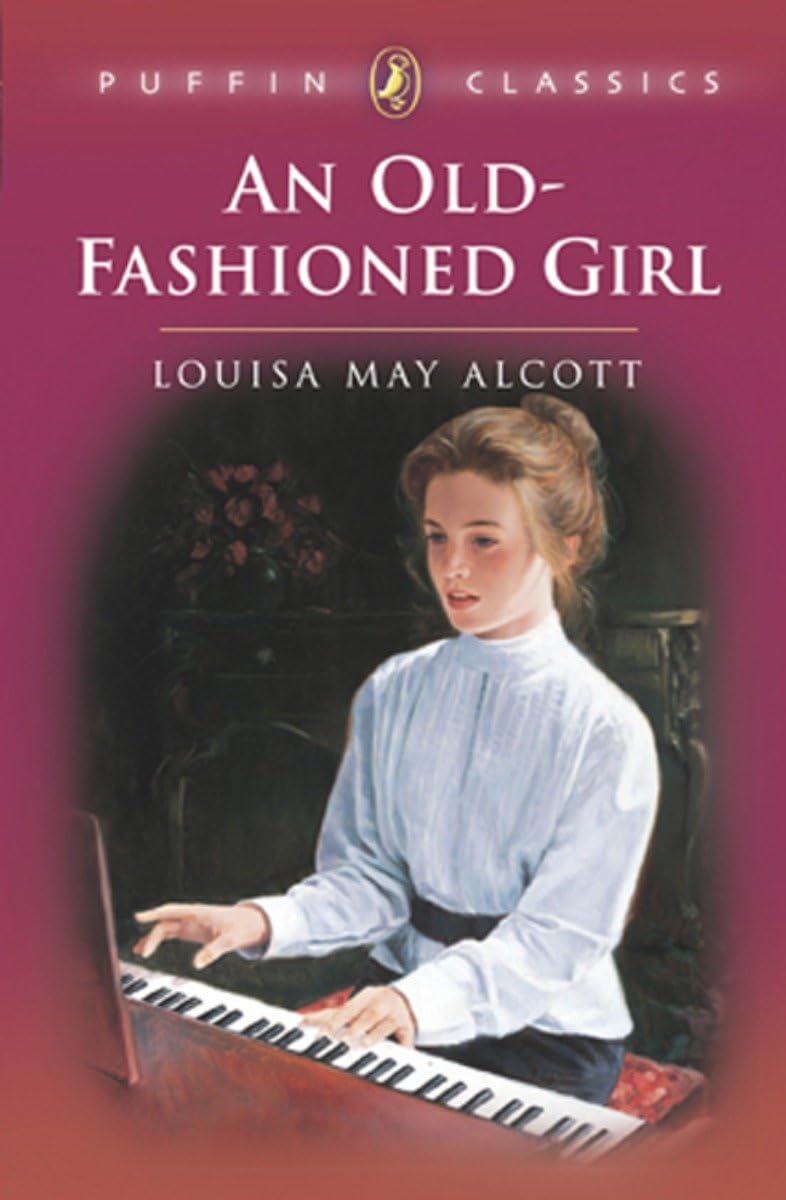
Book Review: An Old Fashioned Girl by Louisa May Alcott (Classics Club Spin #39)

Title: An Old Fashioned Girl
Author: Louisa May Alcott
Publication date: 1869
Length: 224 pages
Rating:

Rating: 4 out of 5.

An Old-Fashioned Girl is a novel by Louisa May Alcott first published in 1869, which follows the adventures of Polly Milton, a young country girl, who is visiting her wealthy city friends, the Shaws. The novel shows how Polly remains true to herself despite the pressure the Shaws’ world puts on her shoulders.

The first six chapters of the novel were serialized in the Merry’s Museum magazine between July and August 1869. Alcott added another thirteen chapters before publishing the novel. The book revolves around Polly Milton, the old-fashioned girl of the title, who visits the wealthy family of her friend Fanny Shaw in the city and is overwhelmed by their fashionable life they lead and disturbed to see how the family members fail to understand one another and demonstrate little affection. She is largely content to remain on the fringes of their social life but exerts a powerful influence over their emotional lives and family relations.

Let’s hear it for another great Classics Club Spin result!

I absolutely went through a Louisa May Alcott phase as a young reader. Beyond Little Women, I read Little Men, Jo’s Boys, Jack and Jill, and (I think) Eight Cousins and Rose in Bloom… but don’t ask me to tell you a thing about most of them. What I know for sure is that I never read An Old-Fashioned Girl — not for any particular reason. Maybe my local library just didn’t have a copy?

In any case, I’m delighted to have read this book, finally… and while it’s not a masterpiece on the level of Little Women, it’s an engaging read that’s more than it initially seems.

An Old-Fashioned Girl seems at times to verge on being too sugary sweet — but then the author adds just enough snark in her commentary to keep it fun and sassy.

For example, this description of a fashionable young lady:

There was a locket on her neck, ear-rings tinkling in her ears, watch and chain at her belt, and several rings on a pair of hands that would have been improved by soap and water.

Plotwise, the tale starts simply enough. 14-year-old Polly is from a hardworking country family, raised to cherish simplicity, goodness, kindness, and doing well by others. It’s a major culture shock for Polly when she goes for an extended visit with Fanny Shaw, a 16-year-old from a wealthy London family. While Fanny offers Polly hospitality, she also is in many ways incomprehensible to Polly. Fanny is immersed in fashion, primping, flirtation, and gossip — none of which hold any interest for Polly, yet Polly is pressured by Fanny to fit in and at least try to make a good impression.

Fanny went to a fashionable school, where the young ladies were so busy with their French, German, and Italian, that there was no time for good English.

Ultimately, old-fashioned Polly is the one who has an impact on the Shaws, finding the goodness in each family member and infusing a sense of fun into the simpler joys of daily life. One especially lovely scene involves the grandmother of the family, who lives in the upper rooms of the Shaw home, surrounded by precious mementos but largely ignored by her boisterous grandchildren. Polly takes a genuine interest in grandma, and manages to find a way to pique the Shaw kids’ interest in a way that creates a warm, lovely connection.

As the author notes in her introduction, An Old-Fashioned Girl was originally a serialized story that ended with Polly returning back home after her visit, and comprised only six chapters. Apparently, Louisa May Alcott’s readers just weren’t having it, and demanded more! The finished book is 19 chapters in all, and picks up the story six years later, when Polly, now a young woman, returns to the city to support herself and help fund her beloved brother’s higher education.

From here, we see a mature Polly with the determination to work for a living, teaching children’s music classes and living in a rented room. She’s kept her core values, and continues to influence the Shaw family in all sorts of ways. Meanwhile, through Polly’s volunteer work, we get a glimpse of women’s lives at the time, from those struggling to get by to those pursuing art, literature, and learning in lieu of seeking the more traditional pathways for women.

An Old-Fashioned Girl is a fairly simple, straightforward read, and as I mention, it occasionally teeters right on the edge of being too utterly nice. Polly is a bit Beth March-ish, minus the extreme shyness and timidity. Dashes of Jo March, perhaps — Polly speaks her mind, and ventures outside the expected norms for girls and young women of the time. Yet she’s unerringly, unalterably good; she’s kind, she sees the best in people, she’s fair, and she cares for those less fortunate and really, anyone who needs anything at all. She makes peace within the Shaw household and helps each family member in just the way they need. She often does come across as too good to be true — except she’s also wise, self-deprecating, and just sharp enough that I couldn’t help but like her and find her fun to be around.

All in all, I’m very happy to have read An Old-Fashioned Girl, and look forward to catching up a bit more with Louisa May Alcott’s book, including the ones I read so long ago.

Who knew? According to IMDb, there was a film version of An Old-Fashioned Girl released in 1949. The images on the movie poster (below) don’t match how I see the characters in my head, but I’d still be curious to check out the movie, if I can find it.