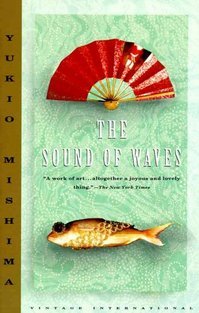
Book Review: The Sound of Waves by Yukio Mishima (Classics Club Spin #38)

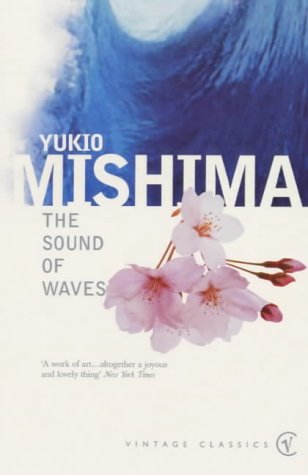
Title: The Sound of Waves
Author: Yukio Mishima
Publication date: 1954
Length: 183 pages
Rating:

Rating: 5 out of 5.

Set in a remote fishing village in Japan, The Sound of Waves is a timeless story of first love. It tells of Shinji, a young fisherman and Hatsue, the beautiful daughter of the wealthiest man in the village. Shinji is entranced at the sight of Hatsue in the twilight on the beach and they fall in love. When the villagers’ gossip threatens to divide them, Shinji must risk his life to prove his worth.

I’ve had The Sound of Waves on my Classics Club spin list since I first started participating a couple of years ago, and I was so happy that its number finally came up!

Here’s why: I first read The Sound of Waves eons ago in a World Lit class in high school, and I remember loving it at the time. The main thing I remembered is that the class reading list seemed to consist of tragedy after tragedy. The whole time we were reading The Sound of Waves, I was holding my breath waiting for something terrible to happen… and it never did. Instead, it was a gentle, lovely story about first love, and it even had a happy ending.

I’ve always thought back on that book with warm feelings, and have wondered whether I’d still appreciate it all these years later. I’ve been wanting to reread it, and just needed a little push to do so… which the Classics Club spin provided.

In The Sound of Waves, the story centers on a small island called Uta-Jima, a fishing village that’s self-contained and bound by traditions, seemingly set apart from the larger world. Although it’s set in the post-war years (and was originally published in 1954), it’s easy to forget and imagine that the story is set much, much earlier. Every so often, reminders of the outside world and its modernity appear, and often feel startling. For the daily lives of the villagers, governed by the tides and the fishing seasons, we can easily imagine that nothing has change for centuries.

Shinji, the elder of two boys, is not yet twenty years old, but is responsible for his mother and brother, ever since his father’s death during the war. Shinji is large and strong, a devoted son, and earnest in his commitment to his family, his employer, the gods, and the people of the island. He’s struck by immediate love when he meets Hatsue, daughter of the wealthiest man on the island. Hatsue has lived away from the island for many years, but when she returns, her beauty and her father’s position make her the most sought after girl, especially since her father has declared that he intends to adopt her potential husband into his family.

Shinji and Hatsue’s love is sincere and pure, but when they become fodder for island gossip, Hatsue’s father bans them from seeing one another and forbids Hatsue to even leave the house. But despite the challenges and the odds stacked against them, they remain true to one another… and yes, there’s a happy ending.

The Sound of Waves is quite lovely, especially in its depiction of the natural beauty of the island and the seas. The author paints pictures with his words, showing us the changing seasons, the trees and plants and fish, the wave patterns, the steep hills and beautiful views that make up the setting.

From time to time the dying fire crackled a little. They heard this sound and the whistling of the storm as it swept past the high windows, all mixed with the beating of their hearts. To Shinji it seemed as though this unceasing feeling of intoxication, and the confused booming of the sea outside, and the noise of the storm among the treetops were all beating with nature’s violent rhythm. And as part of his emotion there was the feeling, forever and ever, of pure and holy happiness.

He also brings to life the villagers themselves, through simple dialogue, descriptions of routines and interactions, and quick sketches that show the inner nature of the people we meet. I particularly enjoyed scenes of the diving women, although the scenes on the fishing boats are also action-packed and compelling.

My one complaint, which is probably irrelevant in the grand scheme of things, is that there are a lot of descriptions of breasts! So many varieties, so many details… I could have done without all this, but that’s really my only quibble.

Other than that… The Sound of Waves is a beautifully written novel, and I’m happy that rereading this book proved to me that it is just as good as I’d remembered!

Once again, a very good outcome from a Classics Club spin.

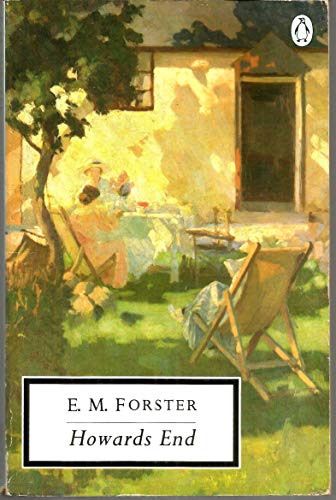
Book Review: Howards End by E. M. Forster (Classics Club Spin #37)

Title: Howards End
Author: E. M. Forster
Publication date: 1910
Length: 246 pages
Rating:

Rating: 5 out of 5.

‘Only connect…’

 Considered by many to be E. M. Forster’s greatest novel, Howards End is a beautifully subtle tale of two very different families brought together by an unusual event. The Schlegels are intellectuals, devotees of art and literature. The Wilcoxes are practical and materialistic, leading lives of “telegrams and anger.” When the elder Mrs. Wilcox dies and her family discovers she has left their country home—Howards End—to one of the Schlegel sisters, a crisis between the two families is precipitated that takes years to resolve. Written in 1910, Howards End is a symbolic exploration of the social, economic, and intellectual forces at work in England in the years preceding World War I, a time when vast social changes were occurring. In the Schlegels and the Wilcoxes, Forster perfectly embodies the competing idealism and materialism of the upper classes, while the conflict over the ownership of Howards End represents the struggle for possession of the country’s future. As critic Lionel Trilling once noted, the novel asks, “Who shall inherit England?”

Forster refuses to take sides in this conflict. Instead he poses one of the book’s central questions: In a changing modern society, what should be the relation between the inner and outer life, between the world of the intellect and the world of business? Can they ever, as Forster urges, “only connect”?

To be honest, I don’t feel especially qualified to “review” Howards End. It’s a beautifully written, thought-provoking, even funny book, and I loved it, really and truly. But I’m no literary expert — not even an English major!! — so I’ll skip any attempt at deep analysis.

Instead, I’ll just mention what I especially liked:

  • The contrast between the Wilcox and Schlegel families. The Wilcoxes are wealthy thanks to the nonstop busy-ness of business. Life is practical, efficient, and sensible. The Schlegels, on the other hand, are dreamers and art-lovers, especially sisters Margaret and Helen. Left comfortably wealthy after the death of their parents, they don’t have to worry about work or practicality. They enjoy discussions of the more esoteric elements of life.
  • Excellent dialogue: Whether it’s scenes of Margaret and Helen engaged in yet another argument, or pointed examples of how obtuse and stubborn the Wilcox eldest son Charles can be, the bickering and disagreements are quite entertaining.
  • Examinations of class, without preachiness: We also meet clerk Leonard Bast, who is desperate to claw his way out of poverty despite his low beginnings and extremely low-class wife. Leonard’s aspirations make him susceptible to the influence of the Schlegels, whose attempt at do-gooderism instead dooms poor Leonard to an even worse situation than where they found him.
  • Lush descriptions of places, especially the beauty of Howards End itself.
  • A wide cast of characters that provides peeks at so many aspects of the society of the time.

A few selections to enjoy:

We are not concerned with the very poor. They are unthinkable and only to be approached by the statistician or the poet. This story deals with gentlefolk, or with those who are obliged to pretend that they are gentlefolk.

A funeral is not death, any more than baptism is birth or marriage union. All three are the clumsy devices, coming now too late, now too early, by which Society would register the quick motions of man.

If a man cannot lead up to passion he can at all events lead down from it […]

The interlude closes. It has taken place in Charles’s garden at Hilton. He and Dolly are sitting in deckchairs, and their motor is regarding them placidly from its garage across the lawn. A short-frocked edition of Charles also regards them placidly; a perambulator edition is squeaking; a third edition is expected shortly. Nature is turning out Wilcoxes in this peaceful abode, so that they may inherit the earth.

I so enjoyed the writing and the story, and heartily recommend Howards End. I’d love to read it again with a book group at some point — there’s so much in it that I’d love to pull apart and really examine at leisure.

As is, I read this book via Serial Reader, intending to stick to one little installment per day (out of 40 installments in total). Instead, by about the halfway point, I was too impatient to take it slowly, and read straight through to the end.

All in all, a very happy experience with this round of the Classics Club Spin!

Several years ago, I watched the excellent four-part adaptation of Howards End, starring Hayley Atwell and Matthew Macfadyen. Now that I’ve read the book, I’d love to watch it again!