Book Review: My Brilliant Career by Miles Franklin (Classics Club Spin #42)

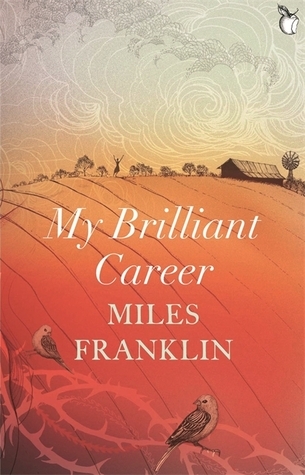
Title: My Brilliant Career
Author: Miles Franklin
Publication date: 1901
Length: 228 pages
Rating:

Rating: 4.5 out of 5.

The fierce, irreverent novel of aspiration and rebellion that is both a cornerstone of Australian literature and a feminist classic

Miles Franklin began the candid, passionate, and contrary My Brilliant Career when she was only sixteen, intending it to be the Australian answer to Jane Eyre . But the book she produced-a thinly veiled autobiographical novel about a young girl hungering for life and love in the outback-so scandalized her country upon its appearance in 1901 that she insisted it not be published again until ten years after her death.

And the synopsis from another edition:

Trapped on her parents’ farm in the hardscrabble Australian outback, sixteen-year-old Sybylla Melvyn loves the bush but not the toil it brings. She longs for refinement, and most of all she longs to achieve great things.

Suddenly she falls under the gaze of wealthy, handsome Harry Beecham and finds herself choosing between the conventional path of marriage and her plans for a ‘brilliant career’.

I don’t remember exactly how I became aware of My Brilliant Career, but once it caught my eye, I just knew I needed to add it to my Classics Club Spin list. I’m so glad that the most recent spin landed on this Australian classic!

This was life—my life—my career, my brilliant career! I was fifteen—fifteen! A few fleeting hours and I would be old as those around me.

In My Brilliant Career, teen-aged Sybylla has little to no say in her own life. One of many children, she experiences a severe downturn in her family’s fortunes when her father’s poor business decisions cause then to lose their vast land holdings and move to a smaller, less promising farm. Things go from bad to worse as their father continues to lose money and livestock, and then drink away what little money remains. When a drought leads to even more ruin, Sybylla is sent to live with her grandmother several days’ journey away, where she finally has the opportunity to explore music, books, and a more rewarding and enjoyable life.

While there, Sybylla catches the eye of a wealthy, attractive nearby landowner. We might expect a whirlwind romance to follow, but Sybylla absolutely does not fit the mold of a romantic heroine. She’s mean and dismissive, considers herself ugly, does not wish to be courted, and both yearns to awaken heightened emotions in her suitor and dreads declarations of love, repeatedly (and harshly) rejecting any talk of marriage. Sybylla doesn’t know exactly where her future lies, but she doesn’t see herself finding happiness as a respectable wife, and certainly doesn’t believe that she could make a husband happy, no matter how much he might believe he loves her.

My Brilliant Career is remarkable for its narrative tone, as well as for the unusualness of its main character and her decisions. This book is considered a groundbreaking classic of Australian fiction as well as of feminist literature. Published under a pseudonym when the author was just 21 years old, this debut novel was the first of many books and other writings to follow in the author’s career.

For more on the significance of My Brilliant Career: https://www.nma.gov.au/defining-moments/resources/my-brilliant-career

I loved the writing, especially Sybylla’s orneriness and humor. Her descriptions of her surroundings can be stunning, evoking the time and place with precision, and using Australian lingo that’s sure to both amuse and befuddle non-Australian readers.

Beyond that, Sybylla’s way of thinking is unique, and I loved the way she expresses herself:

I am afflicted with the power of thought, which is a heavy curse. The less a person thinks and inquires regarding the why and the wherefore and the justice of things, when dragging along through life, the happier it is for him, and doubly, trebly so, for her.

My mother is a good woman—a very good woman—and I am, I think, not quite all criminality, but we do not pull together. I am a piece of machinery which, not understanding, my mother winds up the wrong way, setting all the wheels of my composition going in creaking discord.

Girls! girls! Those of you who have hearts, and therefore a wish for happiness, homes, and husbands by and by, never develop a reputation of being clever. It will put you out of the matrimonial running as effectually as though it had been circulated that you had leprosy. So, if you feel that you are afflicted with more than ordinary intelligence, and especially if you are plain with it, hide your brains, cramp your mind, study to appear unintellectual—it is your only chance.

On making my first appearance before my lover, I looked quite the reverse of a heroine. My lovely hair was not conveniently escaping from the comb at the right moment to catch him hard in the eye, neither was my thrillingly low sweet voice floating out on the scented air in a manner which went straight to his heart, like the girls I had read of. On the contrary, I much resembled a female clown.

The ending of the book startled me, not because it ends with high drama, but rather because the character rejects what seems like her best prospect for change, and chooses to remain in the same family routine of working to scratch out a living on the land. I puzzled over the final chapter quite a bit and reread it several times before feeling satisfied that I got the point.

Overall, I’m really pleased that my most recent spin landed on My Brilliant Career. It makes me eager to explore more Australian fiction of the 20th century — please share any recommendations!

A reading note: I read this book via a free edition available for Kindle… and it was absolutely plagued with typos. If you’re considering reading My Brilliant Career, I’d recommend checking the library for a print edition or an e-book edition from a traditional publisher!

My Classics Club Spin book for fall 2025 will be…

Earlier in the week, I shared a post with my list of books for the newest Classics Club Spin challenge (see it here), and today, this spin’s number was announced. (For those keeping track, it’s CCSpin #42, and for me personally, #14!)

Hosted by The Classics Club blog, the Classics Club Spin is a reading adventure where participants come up with a list of classics they’d like to read, number them 1 to 20, and then read the book that corresponds to the “spin” number that comes up.

For CCSpin #42, the lucky number is:

And that means I’ll be reading:

My Brilliant Career by Miles Franklin
Published 1901

Synopsis:

The fierce, irreverent novel of aspiration and rebellion that is both a cornerstone of Australian literature and a feminist classic

Miles Franklin began the candid, passionate, and contrary My Brilliant Career when she was only sixteen, intending it to be the Australian answer to Jane Eyre . But the book she produced-a thinly veiled autobiographical novel about a young girl hungering for life and love in the outback-so scandalized her country upon its appearance in 1901 that she insisted it not be published again until ten years after her death.

And from another edition:

Trapped on her parents’ farm in the hardscrabble Australian outback, sixteen-year-old Sybylla Melvyn loves the bush but not the toil it brings. She longs for refinement, and most of all she longs to achieve great things.

Suddenly she falls under the gaze of wealthy, handsome Harry Beecham and finds herself choosing between the conventional path of marriage and her plans for a ‘brilliant career’.

My Brilliant Career has been on my to-read list for a few years now. I don’t recall exactly how I first came across this book, but I believe it’s thanks to stumbling across it on someone else’s blog! I’m always up for exploring more Australian fiction, and this early 20th century classic sounds like a book that’s right up my alley

For my 2025 spins, I’ve been focusing on 20th century literature — inspired by a reading challenge to read (at least) one book from each decade of the century. My Brilliant Career was originally published in 1901, and helps me check off one of my remaining decades!

I’m excited to start My Brilliant Career — probably in a few weeks, after I finish up a few more ARCs for upcoming new releases. The deadline to finish this spin book is December 21st, which gives me plenty of time. I’ll be back with my reaction before then.

What do you think of my spin result this time around?

Here’s my list of 20 titles for Classics Club Spin #42:

  1. The House on the Strand by Daphne DuMaurier
  2. The Story of My Life by Helen Keller
  3. A Damsel in Distress by P. G. Wodehouse
  4. The Ivy Tree by Mary Stewart
  5. This Rough Magic by Mary Stewart
  6. The Mysterious Affair at Styles by Agatha Christie
  7. White Fang by Jack London
  8. A Little Princess by Frances Hodgson Burnett
  9. The Secret Garden by Frances Hodgson Burnett
  10. The Mysterious Affair at Styles by Agatha Christie
  11. The Wonderful Wizard of Oz by L. Frank Baum
  12. Something Wicked This Way Comes by Ray Bradbury
  13. The Painted Veil by W. Somerset Maugham
  14. Frederica by Georgette Heyer
  15. The Return of the Soldier by Rebecca West
  16. The Left Hand of Darkness by Ursula K. Le Guin
  17. My Brilliant Career by Miles Franklin
  18. A Damsel in Distress by P. G. Wodehouse
  19. The House on the Strand by Daphne DuMaurier
  20. My Brilliant Career by Miles Franklin

My previous Classics Club Spin books:

Are you participating in this Classics Club Spin? If so, what book will you be reading?

Classics Club Spin #41: A change of heart leads me to The Old Man and the Sea by Ernest Hemingway

Title: The Old Man and the Sea
Author: Ernest Hemingway
Publication date: 1952
Length: 128 pages
Rating:

Rating: 5 out of 5.

“A beautiful tale, awash in the seasalt and sweat, bait and beer of the Havana coast. It tells a fundamental human truth: in a volatile world, from our first breath to our last wish, through triumphs and pitfalls both trivial and profound, what sustains us, ultimately, is hope.” —The Guardian

The last of his novels Ernest Hemingway saw published, The Old Man and the Sea has proved itself to be one of the most enduring works of American fiction. The story of a down-on-his-luck Cuban fisherman and his supreme ordeal—a relentless, agonizing battle with a giant marlin far out in the Gulf Stream—has been cherished by generations of readers.

Hemingway takes the timeless themes of courage in the face of adversity and personal triumph won from loss and transforms them into a magnificent twentieth-century classic. First published in 1952, this hugely popular tale confirmed his power and presence in the literary world and played a large part in his winning the 1954 Nobel Prize in Literature.

The Old Man and the Sea is only sort-of my Classics Club spin book…

For the summer spin, my book ended up being My Family and Other Animals by Gerald Durrell. And I was happy about it! It sounded charming, it had been on my to-read list for a while, and I’d been thinking about watching the PBS adaptation (The Durrells in Corfu), so starting with the book seemed like a great idea.

And then I read the first 25% or so… and it just wasn’t for me. I enjoyed the anecdotes about the family, but thought I’d tear my hair out if I had to spend any more time contemplating the insects in the garden and the misadventures of a tortoise. I know people love this book — but not me.

Onward. Rather than give up on the latest spin book entirely, I decided to sub in a book from the same decade that had been on my backup list… and that’s how I ended up with The Old Man and the Sea. Is this breaking the Spin rules? Maybe (probably)… but I figured “my challenge, my rules” and decided that I was okay with this outcome.

It feels a little funny to talk about a Hemingway book based on the plot alone, since there’s such a cult of personality built up around the author — even to the extent of annual competitions such as The International Imitation Hemingway Competition, also known as the Bad Hemingway Contest (which Wikipedia warns us not to confuse with the Hemingway Look-Alike Contest).

I’ve only read one Hemingway novel (A Farewell to Arms, which I thought was wonderful) and have little knowledge or experience with his other works. Of course, I was already aware of the general storyline of The Old Man and the Sea, and I believe we even watched a film version way back in my school days, so I knew how the book would end.

And still, I have to say that I thoroughly enjoyed reading this short novel and thought the writing was pitch-perfect. It’s spare and tense, and captures the feeling of being old, the struggle of man against nature, and the relentlessness of time as the world passes someone by.

In a nutshell, the plot is about the old fisherman Santiago, once considered the greatest of the great, who has had a streak of bad luck and has come back empty-handed from his fishing excursions for over 80 straight days. His faithful companion, a younger boy, has been forced by his family to work on a different boat because Santiago has become unlucky.

Santiago sets out alone to see if his luck will change, and he hooks the biggest fish of his life, then spends three days at sea fighting with his body and spirit to land the fish and bring it back with him.

I found the story quite powerful and engaging, and highlighted passage after passage. As I’ve said, I’m no expert and can’t comment more generally on Hemingway as a writer — but I did love the way he expresses Santiago’s struggles, and the vividness with which he portrays both the old fisherman’s battle and his love for the sea and its creatures.

Here are a few of the lines and passages that stood out for me:

Most people are heartless about turtles because a turtle’s heart will beat for hours after he has been cut up and butchered. But the old man thought, I have such a heart too and my feet and hands are like theirs.

I wish I could show him what sort of man I am. But then he would see the cramped hand. Let him think I am more man than I am and I will be so.

“Fish,” the old man said. “Fish, you are going to have to die anyway. Do you have to kill me too?”

You are killing me, fish, the old man thought. But you have a right to. Never have I seen a greater, or more beautiful, or a calmer or more noble thing than you, brother. Come on and kill me. I do not care who kills who.

And my favorite:

“If the others heard me talking out loud they would think that I am crazy,” he said aloud. “But since I am not crazy, I do not care.”

I’m really pleased that I made the decision to switch books, and I’m happy to have read The Old Man and the Sea. It’s a short book, but one that held me in its spell from start to finish.

Are you a Hemingway fan? If so, do you have a favorite book to recommend?

My Classics Club Spin book for summer 2025 will be…

Earlier in the week, I shared a post with my list of books for the newest Classics Club Spin challenge (see it here), and a few days ago, this spin’s number was announced. (For those keeping track, it’s CCSpin #41, and for me personally, #13!)

Hosted by The Classics Club blog, the Classics Club Spin is a reading adventure where participants come up with a list of classics they’d like to read, number them 1 to 20, and then read the book that corresponds to the “spin” number that comes up.

For CCSpin #41, the lucky number is:

And that means I’ll be reading:

My Family and Other Animals by Gerald Durrell
(The Corfu Trilogy, Book #1) 
Published 1956

Synopsis:

‘What we all need,’ said Larry, ‘is sunshine…a country where we can grow.

‘Yes, dear, that would be nice,’ agreed Mother, not really listening.

‘I had a letter from George this morning – he says Corfu’s wonderful. Why don’t we pack up and go to Greece?’

‘Very well, dear, if you like,’ said Mother unguardedly.

Escaping the ills of the British climate, the Durrell family – acne-ridden Margo, gun-toting Leslie, bookworm Lawrence and budding naturalist Gerry, along with their long suffering mother and Roger the dog – take off for the island of Corfu.

But the Durrells find that, reluctantly, they must share their various villas with a menagerie of local fauna – among them scorpions, geckos, toads, bats and butterflies.

What fun! I’ve been tempted to read this book ever since seeing promos for the Masterpiece series (The Durrells in Corfu), which aired 2016 – 2019. I held off on watching the series so I could read the book first, and then never got around to that either! So, I’m very happy with this spin result, and if I love the book, maybe I’ll finally get around to the TV version as well.

For my 2025 spins, I’ve been focusing on 20th century literature — inspired by a reading challenge to read (at least) one book from each decade of the century. Once I finish My Family and Other Animals, I’ll be able to check off the 1950s!

At just under 300 pages (Kindle edition), this book shouldn’t take a tremendous amount of time, so I may hold off on starting it for a bit… mainly because I’m swamped with other books from my TBR at the moment.

Overall, I’m really looking forward to reading My Family and Other Animals. The deadline to finish this spin is August 24th. I’ll be back with my reaction before then.

What do you think of my spin result this time around?

Here’s my list of 20 titles for Classics Club Spin #41:

  1. Frenchman’s Creek by Daphne DuMaurier
  2. The Ghost and Mrs. Muir by R. A. Dick
  3. A Damsel in Distress by P. G. Wodehouse
  4. Nine Coaches Waiting by Mary Stewart
  5. Peony by Pearl Buck
  6. White Fang by Jack London
  7. A Little Princess by Frances Hodgson Burnett
  8. The Heart Is a Lonely Hunter by Carson McCullers
  9. The Mysterious Affair at Styles by Agatha Christie
  10. I Capture the Castle by Dodie Smith
  11. My Family and Other Animals by  Gerald Durrell
  12. In Cold Blood by Truman Capote
  13. Something Wicked This Way Comes by Ray Bradbury
  14. The Painted Veil by W. Somerset Maugham
  15. Foundation by Isaac Asimov
  16. Frederica by Georgette Heyer
  17. Dragonwyck by Anya Seton
  18. The Return of the Soldier by Rebecca West
  19. The Left Hand of Darkness by Ursula K. Le Guin
  20. My Brilliant Career by Miles Franklin

My previous Classics Club Spin books:

Are you participating in this Classics Club Spin? If so, what book will you be reading?

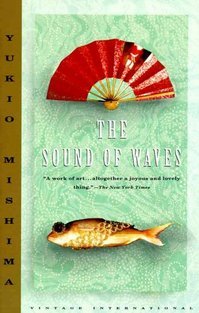
Book Review: The Sound of Waves by Yukio Mishima (Classics Club Spin #38)

Title: The Sound of Waves
Author: Yukio Mishima
Publication date: 1954
Length: 183 pages
Rating:

Rating: 5 out of 5.

Set in a remote fishing village in Japan, The Sound of Waves is a timeless story of first love. It tells of Shinji, a young fisherman and Hatsue, the beautiful daughter of the wealthiest man in the village. Shinji is entranced at the sight of Hatsue in the twilight on the beach and they fall in love. When the villagers’ gossip threatens to divide them, Shinji must risk his life to prove his worth.

I’ve had The Sound of Waves on my Classics Club spin list since I first started participating a couple of years ago, and I was so happy that its number finally came up!

Here’s why: I first read The Sound of Waves eons ago in a World Lit class in high school, and I remember loving it at the time. The main thing I remembered is that the class reading list seemed to consist of tragedy after tragedy. The whole time we were reading The Sound of Waves, I was holding my breath waiting for something terrible to happen… and it never did. Instead, it was a gentle, lovely story about first love, and it even had a happy ending.

I’ve always thought back on that book with warm feelings, and have wondered whether I’d still appreciate it all these years later. I’ve been wanting to reread it, and just needed a little push to do so… which the Classics Club spin provided.

In The Sound of Waves, the story centers on a small island called Uta-Jima, a fishing village that’s self-contained and bound by traditions, seemingly set apart from the larger world. Although it’s set in the post-war years (and was originally published in 1954), it’s easy to forget and imagine that the story is set much, much earlier. Every so often, reminders of the outside world and its modernity appear, and often feel startling. For the daily lives of the villagers, governed by the tides and the fishing seasons, we can easily imagine that nothing has change for centuries.

Shinji, the elder of two boys, is not yet twenty years old, but is responsible for his mother and brother, ever since his father’s death during the war. Shinji is large and strong, a devoted son, and earnest in his commitment to his family, his employer, the gods, and the people of the island. He’s struck by immediate love when he meets Hatsue, daughter of the wealthiest man on the island. Hatsue has lived away from the island for many years, but when she returns, her beauty and her father’s position make her the most sought after girl, especially since her father has declared that he intends to adopt her potential husband into his family.

Shinji and Hatsue’s love is sincere and pure, but when they become fodder for island gossip, Hatsue’s father bans them from seeing one another and forbids Hatsue to even leave the house. But despite the challenges and the odds stacked against them, they remain true to one another… and yes, there’s a happy ending.

The Sound of Waves is quite lovely, especially in its depiction of the natural beauty of the island and the seas. The author paints pictures with his words, showing us the changing seasons, the trees and plants and fish, the wave patterns, the steep hills and beautiful views that make up the setting.

From time to time the dying fire crackled a little. They heard this sound and the whistling of the storm as it swept past the high windows, all mixed with the beating of their hearts. To Shinji it seemed as though this unceasing feeling of intoxication, and the confused booming of the sea outside, and the noise of the storm among the treetops were all beating with nature’s violent rhythm. And as part of his emotion there was the feeling, forever and ever, of pure and holy happiness.

He also brings to life the villagers themselves, through simple dialogue, descriptions of routines and interactions, and quick sketches that show the inner nature of the people we meet. I particularly enjoyed scenes of the diving women, although the scenes on the fishing boats are also action-packed and compelling.

My one complaint, which is probably irrelevant in the grand scheme of things, is that there are a lot of descriptions of breasts! So many varieties, so many details… I could have done without all this, but that’s really my only quibble.

Other than that… The Sound of Waves is a beautifully written novel, and I’m happy that rereading this book proved to me that it is just as good as I’d remembered!

Once again, a very good outcome from a Classics Club spin.

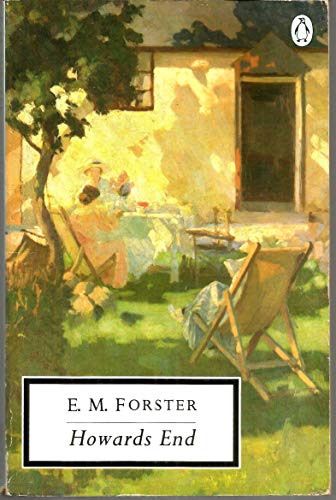
Book Review: Howards End by E. M. Forster (Classics Club Spin #37)

Title: Howards End
Author: E. M. Forster
Publication date: 1910
Length: 246 pages
Rating:

Rating: 5 out of 5.

‘Only connect…’

 Considered by many to be E. M. Forster’s greatest novel, Howards End is a beautifully subtle tale of two very different families brought together by an unusual event. The Schlegels are intellectuals, devotees of art and literature. The Wilcoxes are practical and materialistic, leading lives of “telegrams and anger.” When the elder Mrs. Wilcox dies and her family discovers she has left their country home—Howards End—to one of the Schlegel sisters, a crisis between the two families is precipitated that takes years to resolve. Written in 1910, Howards End is a symbolic exploration of the social, economic, and intellectual forces at work in England in the years preceding World War I, a time when vast social changes were occurring. In the Schlegels and the Wilcoxes, Forster perfectly embodies the competing idealism and materialism of the upper classes, while the conflict over the ownership of Howards End represents the struggle for possession of the country’s future. As critic Lionel Trilling once noted, the novel asks, “Who shall inherit England?”

Forster refuses to take sides in this conflict. Instead he poses one of the book’s central questions: In a changing modern society, what should be the relation between the inner and outer life, between the world of the intellect and the world of business? Can they ever, as Forster urges, “only connect”?

To be honest, I don’t feel especially qualified to “review” Howards End. It’s a beautifully written, thought-provoking, even funny book, and I loved it, really and truly. But I’m no literary expert — not even an English major!! — so I’ll skip any attempt at deep analysis.

Instead, I’ll just mention what I especially liked:

  • The contrast between the Wilcox and Schlegel families. The Wilcoxes are wealthy thanks to the nonstop busy-ness of business. Life is practical, efficient, and sensible. The Schlegels, on the other hand, are dreamers and art-lovers, especially sisters Margaret and Helen. Left comfortably wealthy after the death of their parents, they don’t have to worry about work or practicality. They enjoy discussions of the more esoteric elements of life.
  • Excellent dialogue: Whether it’s scenes of Margaret and Helen engaged in yet another argument, or pointed examples of how obtuse and stubborn the Wilcox eldest son Charles can be, the bickering and disagreements are quite entertaining.
  • Examinations of class, without preachiness: We also meet clerk Leonard Bast, who is desperate to claw his way out of poverty despite his low beginnings and extremely low-class wife. Leonard’s aspirations make him susceptible to the influence of the Schlegels, whose attempt at do-gooderism instead dooms poor Leonard to an even worse situation than where they found him.
  • Lush descriptions of places, especially the beauty of Howards End itself.
  • A wide cast of characters that provides peeks at so many aspects of the society of the time.

A few selections to enjoy:

We are not concerned with the very poor. They are unthinkable and only to be approached by the statistician or the poet. This story deals with gentlefolk, or with those who are obliged to pretend that they are gentlefolk.

A funeral is not death, any more than baptism is birth or marriage union. All three are the clumsy devices, coming now too late, now too early, by which Society would register the quick motions of man.

If a man cannot lead up to passion he can at all events lead down from it […]

The interlude closes. It has taken place in Charles’s garden at Hilton. He and Dolly are sitting in deckchairs, and their motor is regarding them placidly from its garage across the lawn. A short-frocked edition of Charles also regards them placidly; a perambulator edition is squeaking; a third edition is expected shortly. Nature is turning out Wilcoxes in this peaceful abode, so that they may inherit the earth.

I so enjoyed the writing and the story, and heartily recommend Howards End. I’d love to read it again with a book group at some point — there’s so much in it that I’d love to pull apart and really examine at leisure.

As is, I read this book via Serial Reader, intending to stick to one little installment per day (out of 40 installments in total). Instead, by about the halfway point, I was too impatient to take it slowly, and read straight through to the end.

All in all, a very happy experience with this round of the Classics Club Spin!

Several years ago, I watched the excellent four-part adaptation of Howards End, starring Hayley Atwell and Matthew Macfadyen. Now that I’ve read the book, I’d love to watch it again!