
A whale, an app, and me; or, how I finished reading Moby Dick in 79 easy pieces

Hast seen the white whale?

moby-dick-3I have!

I conquered that whale, and good.

Yes, after spending all of my reading life up to now saying, “I should probably read Moby Dick one of these days” but knowing in my heart that I never actually would… I DID IT!

Thanks to the glory of the Serial Reader app (read about it here), I have finally conquered the American classic that I never expected to read.

moby-dick_fe_title_pageSerial Reader is an app that lets you pick a public domain book to “subscribe” to. Each day, a new installment is ready to go. I got kind of used to waking up in the morning and seeing the friendly “Ahoy!” messages (I kid you not) letting me know that the new daily reading chunk was ready and waiting. Each day’s reading was typically short enough to read in 10 – 15 minutes.

Is 10 – 15 minutes something I could spare? Absolutely.

Let’s face it — the idea of reading Moby Dick or certain other massive classics is just way too daunting. I’m not afraid of the content, but I do know myself well enough to know that I’ll push my way through while constantly aching to go back to something that doesn’t feel like I’ve given myself an assignment.

But 10 – 15 minutes? Heck, I could do that over my morning coffee (which is exactly what I did most days).

I did read ahead at least a few days per week, so rather than taking 79 days to read, I finished the book in more like 60, I think.

whales-1472984_1280You probably want to know – how was it? I mean, was the book actually good?

The answer is YES. Surprise, surprise — it’s even funny at parts. Herman Melville can tell a tale, I tell you.

Of course, there are huge chunks in the middle where we have chapter after chapter about whale anatomy, the parts of whaling ships, descriptions of the jobs of every person on board a whaling ship… on and on and on. The early chapters are about our narrator Ishmael, and there are some delightful moments when he befriends the “cannibal” Queequeg, although I was sorry to see their bromance fade from the storyline as the book progresses. Really, if you took out all the parts about categorizing and labeling whale parts, the story of the Pequod and its mad captain Ahab would probably only be about a third as long as Moby Dick is in its entirety.

As to the method of reading the book, the Serial Reader approach has its pros and cons.

PROS: I read the damn book! I really don’t believe I ever would have done it otherwise. The app kept me motivated, with its scoring and little achievement badges and daily encouragements with each segment completed.

CONS: While I read the book (hurray!), I don’t believe I came even close to fully appreciating it. I read it quickly, and it was a very surface-level read. I didn’t dive into the symbolism, the structure, the themes, the references — I read it purely for story. I suppose someone could use the app and still take the time for a deeper dive into each installment, but I didn’t. I approached this read as a limited time commitment, with its allotted 10 – 15 minutes per day, and that’s all I was willing to give.

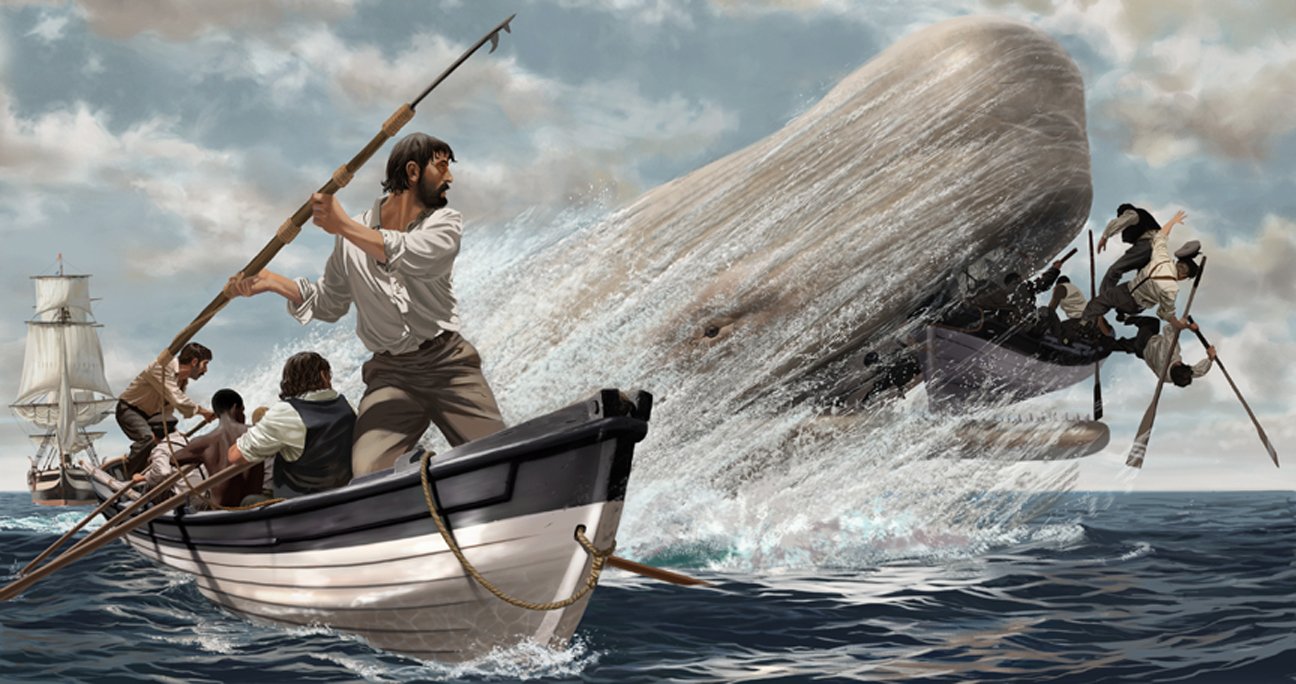
in-the-heart-of-the-sea-whale-xlarge-large_transrp36ti1mfcyr8pmus2fhb17hoduspm84eyl8thpmrlk

Do I recommend it? Again, yes and no.

The Serial Reader app is a great way to tackle books that you might not ordinarily read. But as for Moby Dick, I do believe that I would have gotten much more out of it if I’d read an annotated version, or even looked through an illustrated edition with diagrams of all the whale anatomy and other goodies.

Will I use Serial Reader again?

Oh, I think so. Maybe not right away. I think I need a little free reading time where I’m not keeping up with quite so many narrative threads at once. (See my post about my reading saturation point, here.)

Likewise, I don’t know if I’d want to tackle such a big book this way again. At some points, it really did feel like a chore, and I’m pretty much opposed to anything that makes reading feel like work, not play.

But I do see the value in using the app to make a challenging read more bite-sized and manageable. I could see myself using the app for some classic sci-fi, like Jules Verne or H. G. Wells, or even some random short stories. As for longer classic fiction, I’m not sure. I’ve been saying I want to read Great Expectations for years now and still haven’t done it, so Serial Reader could be the way to get it done — but I think I’ll get more out of it as a reader if I treat it like any other book I want to read, sitting down with the book and a bookmark, and not starting anything else until I’m done… rather than treating it like an assignment with a daily deadline.

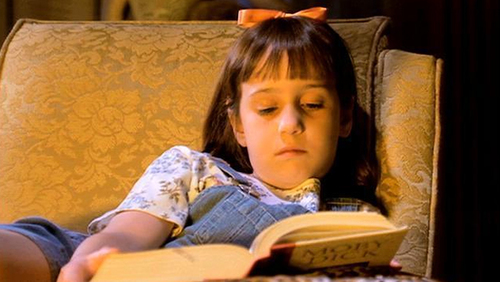
matilda-moby-dick

Meanwhile, back to Moby Dick

I read it, and I enjoyed it, and I’ve been thinking about it quite a bit ever since I finished this week. The book has such a reputation as a heavy, overwhelming read, and I was surprised to find that it’s actually fun, entertaining, moving, and at times, laugh-out-loud funny. Sure, the science is a bit (oh, 150 years or so) behind the times, but for when it was written, it’s really quite remarkable. So what if Melville considers whales to be fish? I’d venture to say that what he presented was deemed accurate at the time.

So, consider me a fan. I met the white whale, and survived to tell the tale.

Save

Save

Saturation point

satpoint

Saturation point…

Might I add another variation of the definition?

  • the stage beyond which no more book content can be absorbed by the reader’s brain.

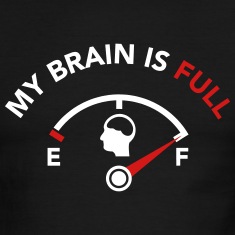
Which pretty accurately describes my current state of being, which can also be described thusly:

brain-full

For the past few years, I’ve been able to successfully juggle multiple books at once — a book for fun, a book for book group, an audiobook for while I drive. I never thought I’d reach the point where my brain feels maxed out, but now I know:

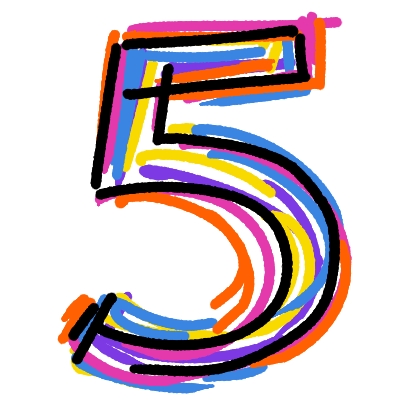
My magic number is: five

Yup, I think I’ve reached my reading saturation point — the point at which my brain will not accept a single additional plot line, character, theme, or main idea. And symbolism? Foreshadowing? Don’t make me laugh.

I haven’t had quite this problem before. I usually do have several books on the go — typically, a big huge book from the Outlander series as part of my group read with Outlander Book Club; a classic read, also with the book club; whatever book I happen to be reading just for me (just for fun), and an audiobook for while I’m driving or exercising.

So why do I suddenly feel maxed out at 5?

Consider this: Of my five current books, 4 — yes, four — are brand-new to me.

The Outlander book (Written in My Own Heart’s Blood) is a re-read, and although we’re reading and analyzing two chapters per week, it’s not taking up a huge amount of grey matter. I already know what happens. It’s not that I don’t have to think about it, but it’s still not taking in new concepts and information.

Then there’s the group classic read. Our last group classic was Emma by Jane Austen, which was oodles of fun — but which I’d read several times before. It was a blast reading it with the group, but again, it was a re-read for me. Hey, if you know any neurologists, can you ask them if re-reading a book uses different parts of the brain than reading a book for the first time? I’m no brain doctor, but I’m betting the answer is yes.

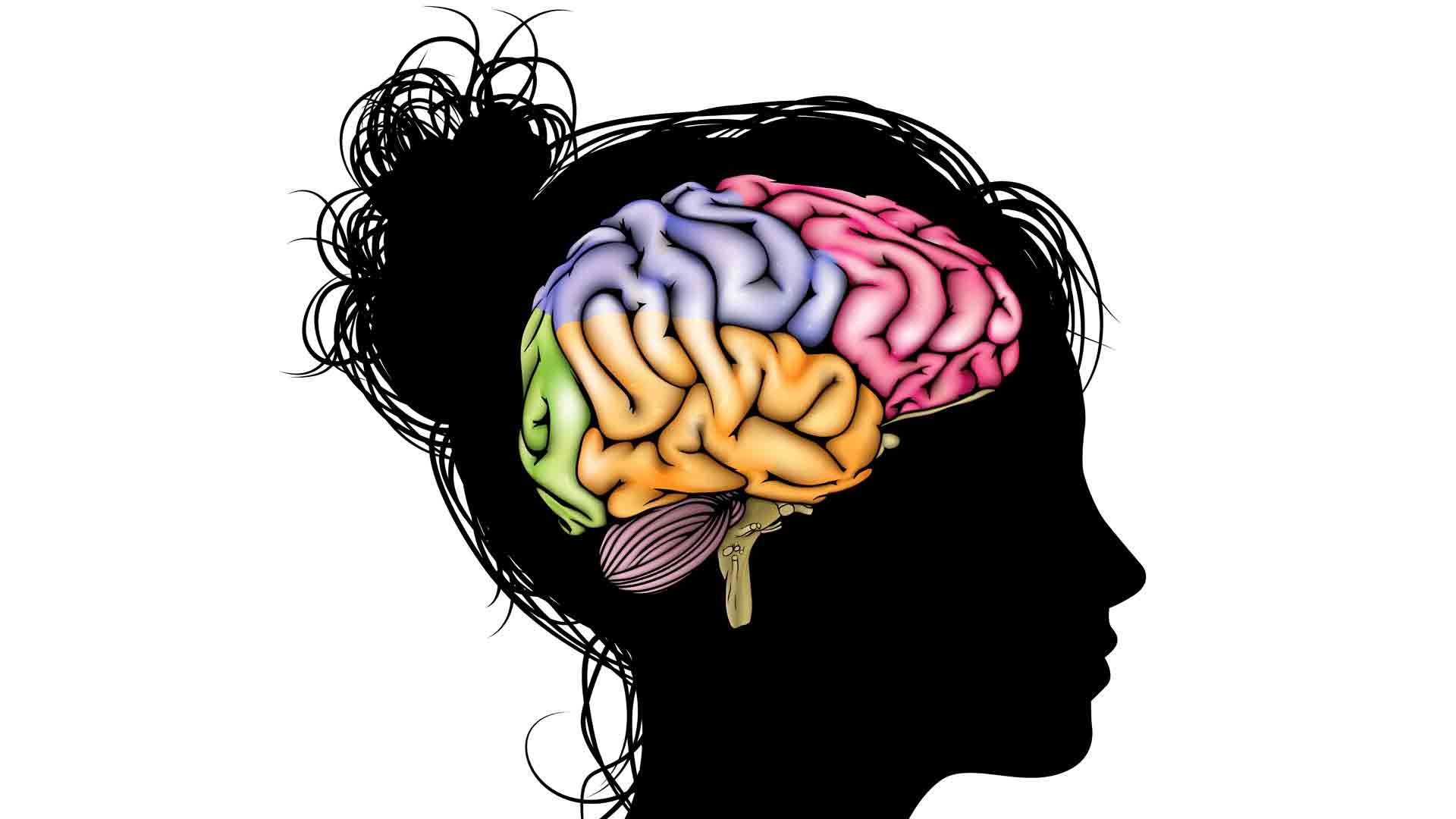
brain-girl

Our current classic read is A Farewell To Arms by Ernest Hemingway… and it’s completely new to me. I know nothing about the plot or characters, and I’m definitely having to put more effort into learning what’s what, getting the rhythm of the writing style, and understanding the shades and nuances of the story.

Then there’s the audiobook. I do a lot of re-reads via audiobook. I find that my mind is often slippery when it comes to listening to books, especially while I’m driving. If there’s bad traffic or I get stuck looking for parking in a crowded neighborhood, I can’t concentrate at all on what I’m listening to. But if I’m listening to the audio version of a book I’ve already read, I can relax, not worry too much about hearing every detail, and just enjoy revisiting something that I loved already the first time around.

At this moment, however, I’m listening to a new-to-me audiobook, The Android’s Dream by John Scalzi. Granted, this is a pretty silly and light-hearted science fiction novel, but even so, I find myself getting caught up in the story… and even when I get out of the car or remove the earbuds from my ears, my brain does not want to disengage.

Plus, there’s my book book — whatever I’m reading right now, either via physical or e-book — my normal, everyday, just because I feel like it book. Basically, my daily reading fix.

And finally, I’m now tackling Moby Dick via the Serial Reader app, and I think it’s this one that’s pushing me over the edge. Don’t get me wrong — I’m really loving Moby Dick! And I love the serial approach to reading such a huge book, getting manageable bites delivered each day.

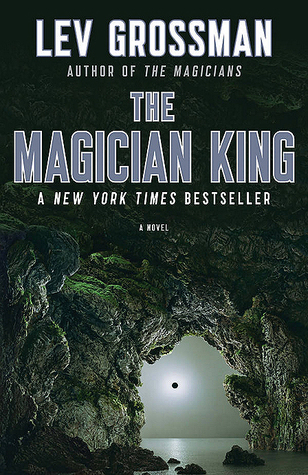
The problem, I think, with my current reading, is that with 4 of my 5 reading commitments being completely new material, my engagement is getting split in way too many directions. I read a bit of Moby Dick, and I want to know more… but then I turn on the car and start listening to The Android’s Dream, and I can’t get the action sequences out of my head. When I have a few minutes of down time, I pick up my current novel (right now, The Magician King by Lev Grossman) and get totally into it… but then in the evening, I read the next day’s chapter of A Farewell To Arms and want more of that too.

brain4So…

Saturation point.

I think I’m there.

Five plotlines and sets of characters may finally represent my breaking point… my saturation point… the point beyond which I absolutely cannot absorb one more detail or shred of story.

Not that I’m willing to drop any of my five reading projects. But man, my head feels full to bursting sometimes.

Remind me to STOP THE MADNESS next time I need to choose an audiobook or rethink my reading commitments. Maybe it’s time to scale back on the amount of new fiction I’m trying to cram into my brain.

Meanwhile…

brain-is-full

I went to a silent reading party… and had a (quiet) blast

File this under “things only a book lover would understand”:

I went to a silent reading party this week, and it was the most fun I’ve had in ages!

What’s not to love? A room full of bookworms (book enthusiasts… book nerds… book freaks… ), drinks all around, silent (but companionable) reading, and raising money for a good cause. I ask you — can you think of a more fun way to spend a Tuesday evening?

(The fact that I can’t says a lot about me, I know.)

So here’s what it’s all about:

Drink, eat, and read. Silently.

Drink, eat, and read. Silently.

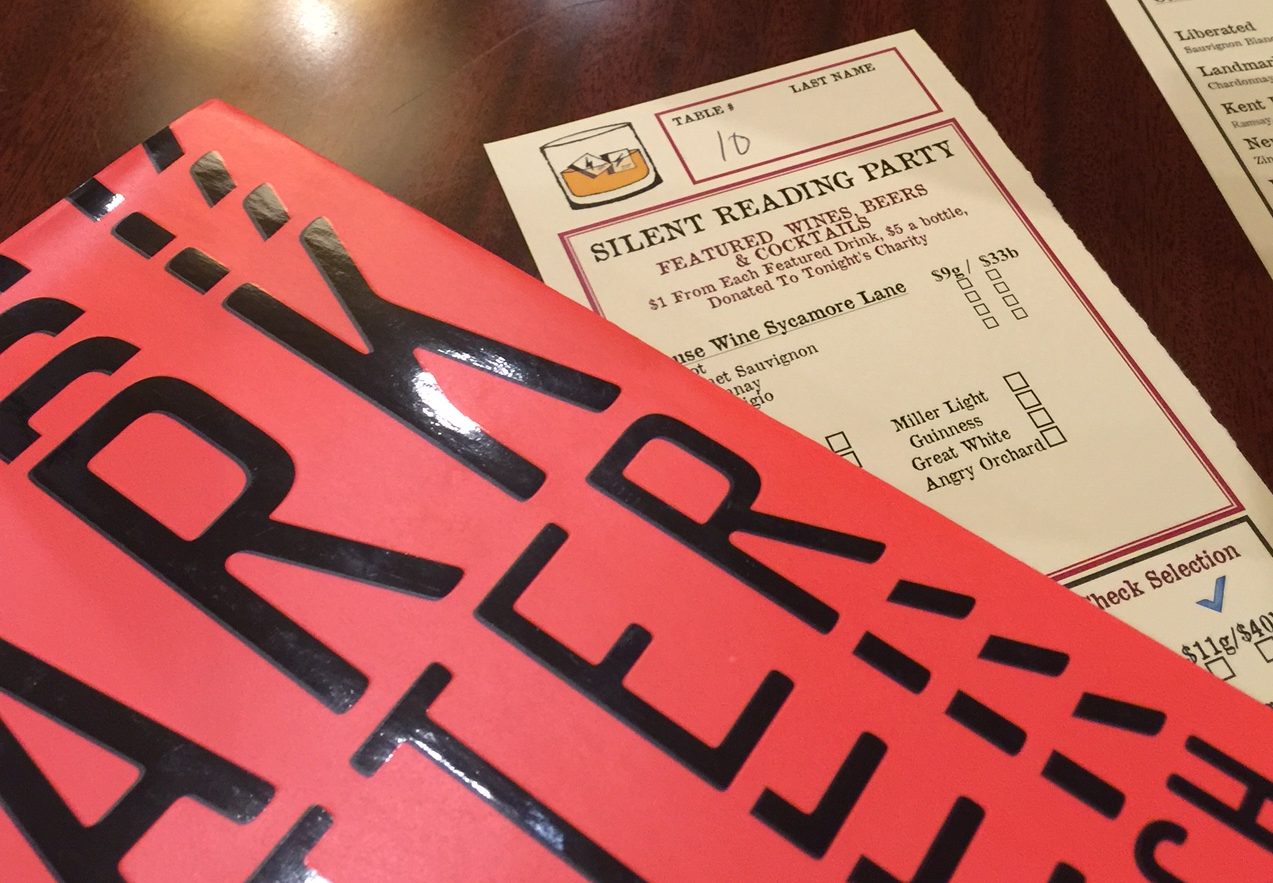
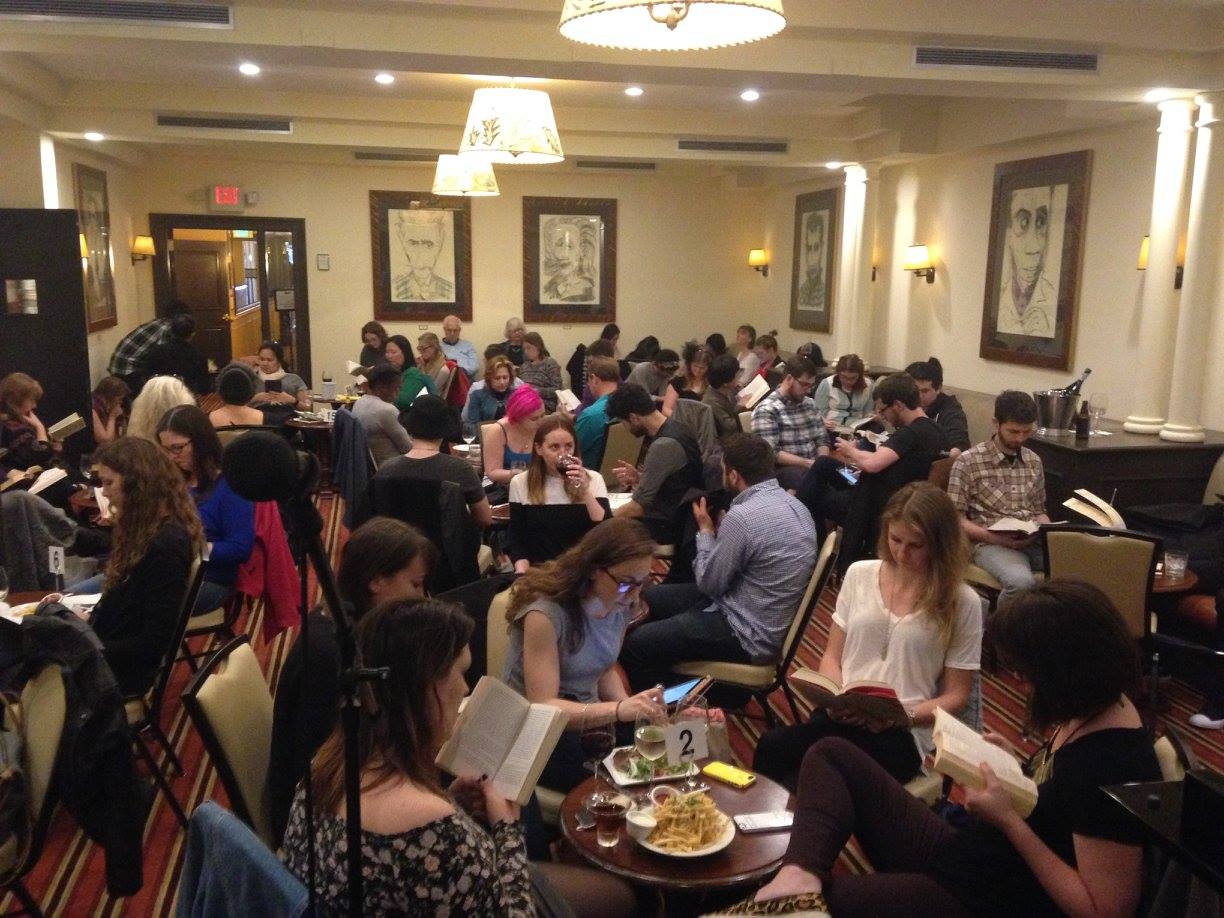
Silent Reading Parties started several months ago here in San Francisco, hosted by Lemony Snicket (Daniel Handler) and Radio Silence. They’re held on the first Tuesday of each month at a downtown hotel — a hotel with a very stylish “library bar”, which feels cozy and bookish as soon as you step inside. Starting at 6 pm, talking stops and reading begins. And the room remains silent. For an hour and a half, there’s light jazz music playing in the background while 40 or so bookish folks sit and read.

Awesome.


Seeing how it’s a bar, there are drinks, of course. There are menu cards on the tables, so you can order drinks and munchies without breaking silence.

And that’s what we did.

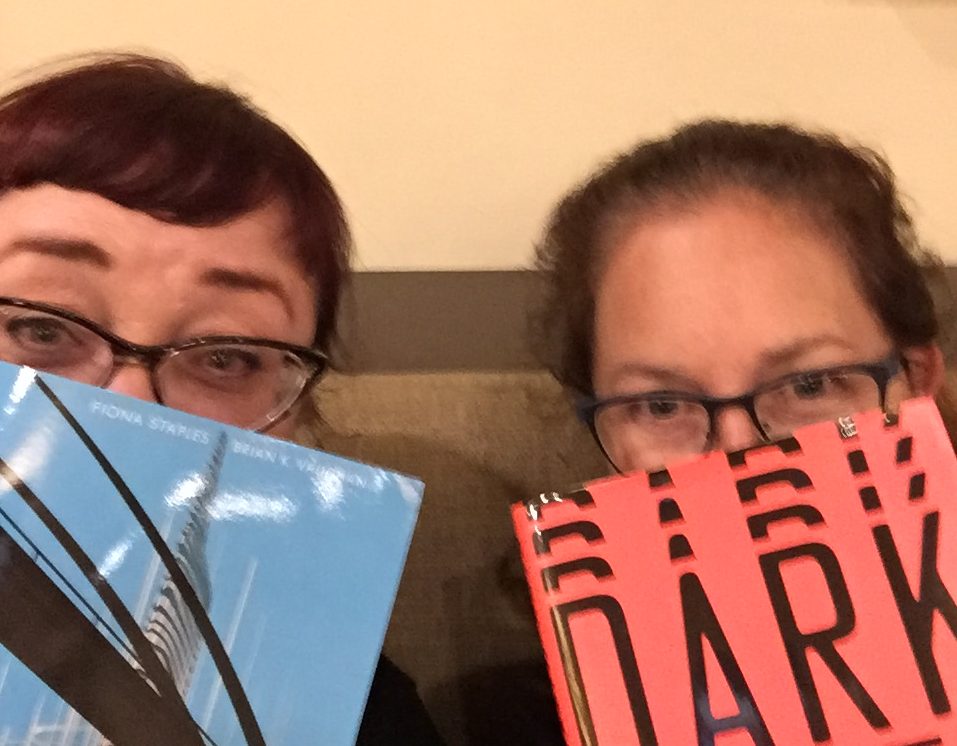
I finished the last few chapters of Dark Matter by Blake Crouch, while my friend read volume six of Saga, then started on the “Weird Junior Edition” of the Worst-Case Scenario Survival Handbook.

We read. Drank some wine. Ate some fries. Grooved to the jazzy tunes. And then at 7:30, the silent time was done, and the readers shook themselves out of their trances. Some stayed and schmoozed, some went on their merry ways. And I’d bet that most will be back next month for more.

All this wild and crazy fun, and a good cause too! A portion of the drinks proceeds plus the contents of a fishbowl full of cash (which Lemony Snicket personally handed round for contributions) all go to support the library of one of our local public elementary schools.

reading-4As if I needed any further inducement to sit and read!

My son thinks I’m weird, and wonders why I couldn’t have just sat at home by myself with a book instead of going out to read. But he doesn’t get it… and I bet anyone reading this post absolutely does.

Booklovers are solitary creatures in their pursuit of great reading — but who says we can’t read alone, together?


Consider me hooked… and absolutely looking forward to next month’s (sssssh… no talking!) party.

read4


Save

Save

Save

Bookish Goodies: Serial Reader app

SerialReader2

Anyone out there using the Serial Reader app?

And more importantly, why am I only discovering it now?

Less than 24 hours ago, I stumbled across Serial Reader, and I think it’s going to change my life.

IMG_3905This very cool app (cool, as in, perfect for book geeks like me) seems like the ideal way to tackle those big, heavy classics that you’ve always vowed to get to… eventually. When you have nothing else to do. Hey wait, doesn’t the oven need cleaning?

I digress.

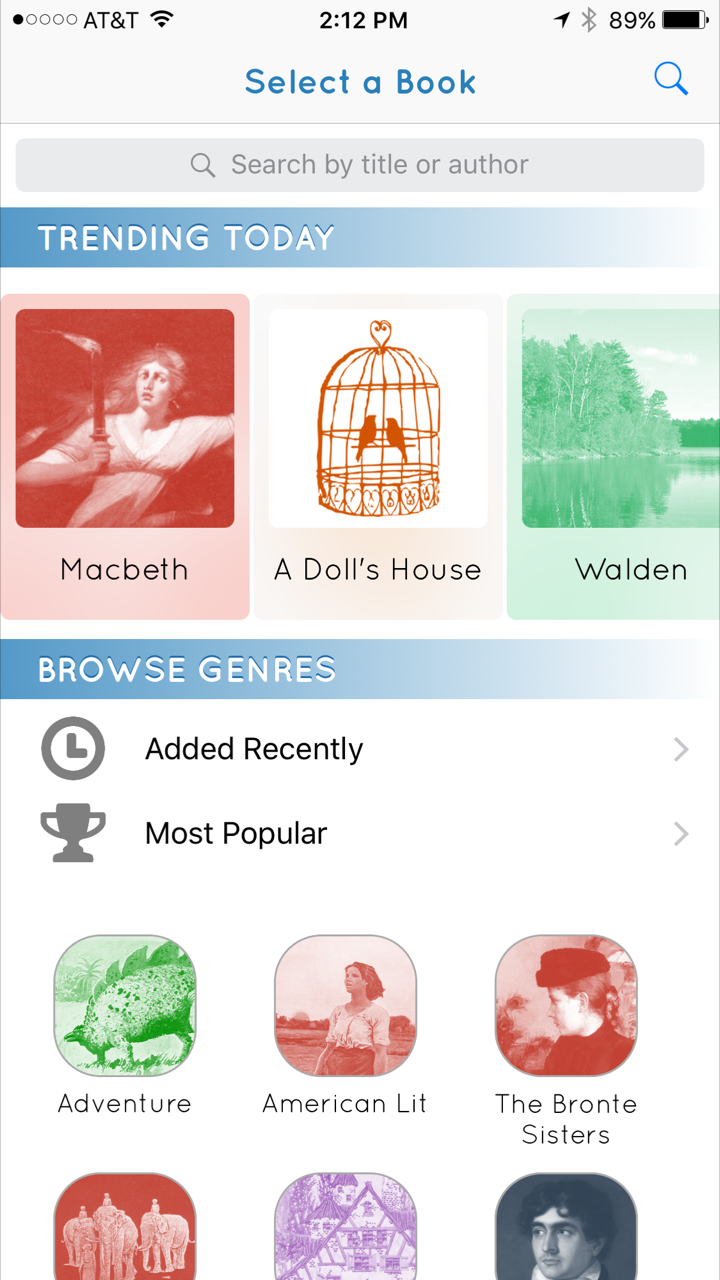
Serial Reader lets you subscribe to a book, set your delivery time, and then receive daily chunks of the book to read. There are tons and tons of titles to choose from, including classics in genres such as fantasy, gothic, and adventure, as well as quirkier categories like “Lost Worlds”, “The High Seas”, and “Retro Futurism”.

I think it’s all rather brilliant, to be honest. Each daily chunk is meant to take about 10 minutes or so. And hey, even if I’m juggling a few other hot reads right now, I can surely fit in 10 minutes for a bite of a classic, right?

IMG_3906At the moment, I’m thinking about biting the bullet and starting Moby Dick. Crazy, right? I watched In the Heart of the Sea last night (good movie!), and started thinking about what a shame it is that I never was exposed to Moby Dick back in my school days… and from there, after poking around online for a bit, I stumbled across a mention of reading Moby Dick via Serial Reader.

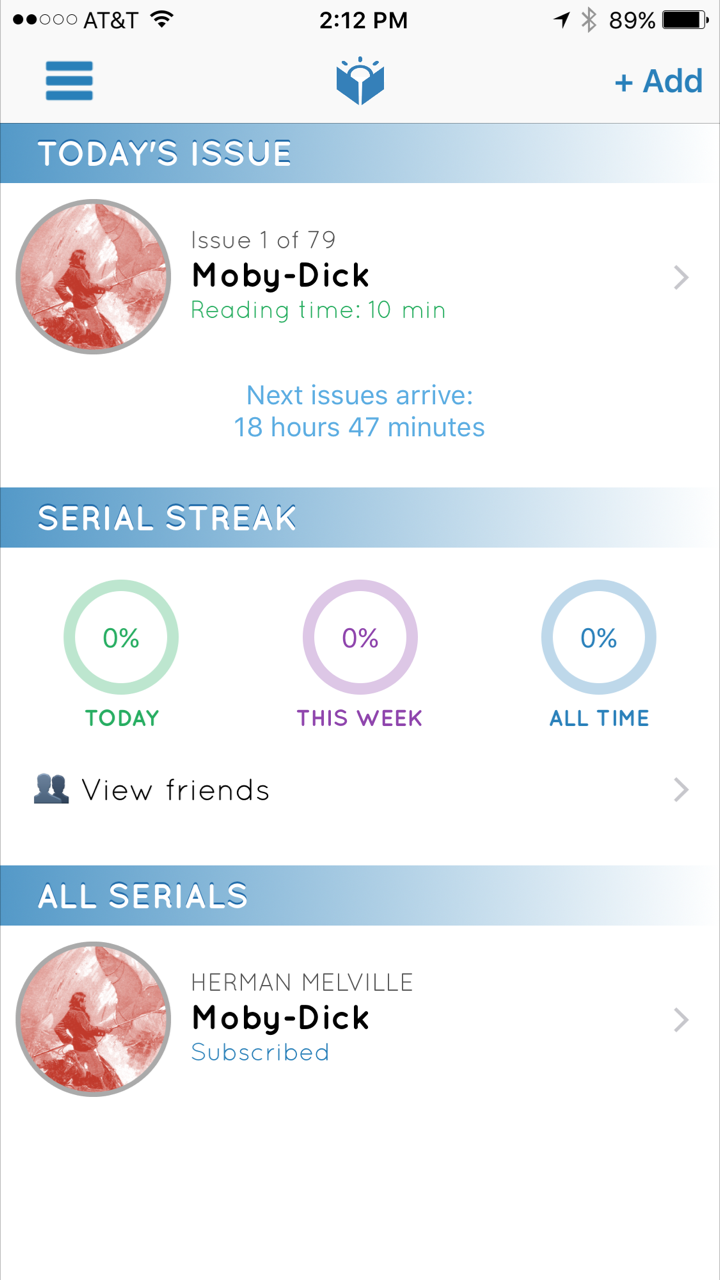
According to the app, the book is broken down into 79 “issues”. This might seem a bit daunting, but for the $2.99 upgrade option, there’s a pause option — which means that if I want to take a break during a busy week and come back to it, I can!

I haven’t quite made up my mind to go for it, at least as far as Moby Dick is concerned. Maybe I’ll end up choosing a different book instead. But either way, I think Serial Reader sounds like a lot of fun, and it definitely seems like an awesome way to make big, intimidating books seem a lot more friendly.

Have you tried Serial Reader? Does this sound like something you’d enjoy?

Wish me luck! If (when) I get started, I’ll definitely report back!

IMG_3907

What do you think? Should I go for it?

Save

Vacation reading! The annual dilemma…

I’m at T minus a week and change until I leave on a trip, and I’ve entered the vacation obsession zone: Do I have enough sunscreen? What if I want one more sundress besides the two already in my packing pile? How many totebags do I really need?

And the biggie…

What books to read???

I love the whole concept of vacation reading. It’s so freeing! I look at it as a time to pull books from my shelves — books that I’ve always meant to read, but never got around to, or books that I just know will make me happy. It’s a weird and random process, but I think I’ve been narrowing it down lately. Here are the top contenders:

I need a King… or two… or three:

mr. mercedesBag of BonesLong Walk

Maybe a little historical fiction:

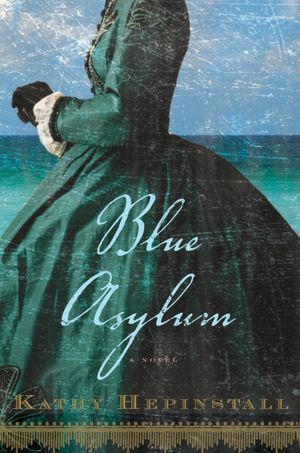
Sandcastle GirlsBlue Asylum

There’s the romance I need to read for book group this month:

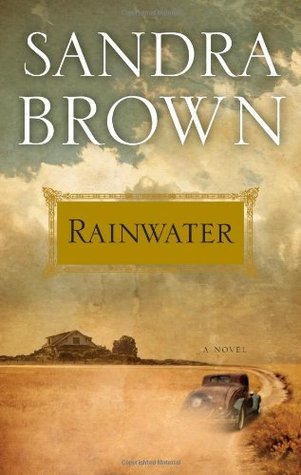
Rainwater

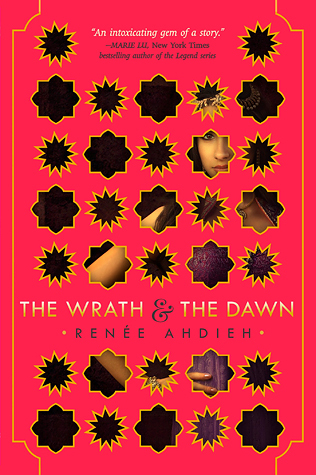
And some of my newer acquisitions that I haven’t had time for yet:

EligibleWrath & the Dawn

Maybe a little fantasy would be a perfect compliment to a sunny, relaxing day:

Gobln EmperorTemeraire 1

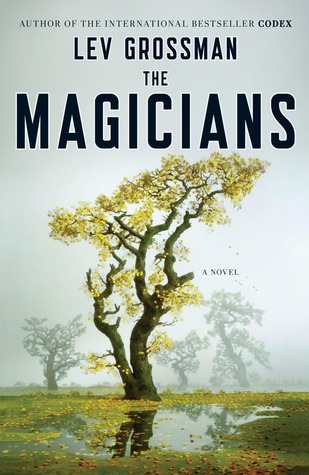
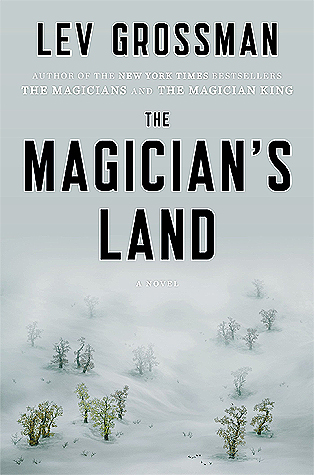
And I am really itching to continue the Magicians series:

MAgician King 2Magician's Land

Did I mention that I’ll only be gone for 10 days? Do you think I might be over doing things just a bit?

Oh yeah, and there are these two, which could help me prepare for a different trip coming up later this summer:

molokaiHonolulu

Eep. So. Many. Choices.

But hey — I still have over a week before I zip up the suitcase. Anything can happen in a week. Maybe an entirely different stack of books will catch my eye between now and then!

When is local too local?

San Francisco. As in, I left my heart…

San Francisco, CA, USA

I’m a transplant, as are a good chunk of the people I meet here in SF. I grew up on the East Coast, but San Francisco has been home for 20+ years now. And obviously, I must love it, since I’ve stayed and put down roots.

It always amuses me when I read books or see movies or TV shows set in my fair city. Sometimes I love it, and sometimes I really don’t. Which brings me to the question:

When is local too local?

Is there such a thing as having too much local content in fiction? When does it enhance, and when does it distract?

SF cableI’ve read plenty of books by now that are set in San Francisco. Because, let’s face it, San Francisco is one of those places that get instant recognition. Golden Gate Bridge, Victorian houses, Alcatraz… they’re all so picturesque, while also being worldwide tourist magnets. So sometimes, key scenes in books will take place with the bridge or the skyline in the backdrop, and that’s about it. But sometimes, the city itself is a part of the story, and that can be a wonderful thing.

Some of my favorites take place in San Francisco. Take for example the Tales of the City series by Armistead Maupin, which is pure and simple an ode to the history and soul and flavor of the city. On a different note, there are the works of Christopher Moore, who sets remarkably weird and wacky supernatural tales in the City by the Bay — and it totally works. I mean, vampire parrots of Telegraph Hill? The Marina Safeway as a key plot location? A heroic Golden Gate Bridge painter? Moore’s books are hilarious, and the way he uses the city’s oddities and quirks (and notable personae, especially the Emperor) are just delightful.

I’ve also read a few great books where the city is just a subtle presence, but one that adds flavor without hitting the big tourist attractions. A recent example is the delightful YA novel Up To This Pointe, which delights in the quieter parts of SF that only residents really know and love — West Portal, the Outer Sunset, and Ocean Beach (my side of town!). The places here aren’t the point of the story, but they do add a sense of home and connection that give the main character roots and a point of origin.

SF grpahic 2Still, sometimes, the local flavor can feel like it’s inserted in order to check items off a list. Maybe it’s when the details are overdone — in one book, every time the characters take public transportation, the specific bus route is named — and I’d find myself veering out of the story and into an internal dialogue about how the N doesn’t actually stop there or no, that’s not the best way to get from the avenues to downtown. In a recent urban fantasy book (which I didn’t enjoy as a whole, and which shall remain nameless), whenever the main character would rush off to save the day, I felt like the story was being narrated by GPS: She took a left on Van Ness, then turned right on Sutter and continued onward for a mile and a half. Not only was it not engaging writing, but again, it completely took me out of the story and into recontructing street maps in my head.

My most recent foray into San Francisco fiction is the new novel All Stories Are Love Stories by Elizabeth Percer (reviewed here). In this book, catastrophic earthquakes that ravish the city serve as a backdrop for a study of characters and their loves and losses. The relationships are interesting enough, but once the quakes hit, all I wanted was to know more. The book does a great job of describing the reasons why huge quakes in SF would be devastating — the crowded design, the unstable ground, the drought, the understaffing of local emergency response, and the reliance on bridges for 2/3 of the entry points to the city. I was interested in the characters, but I couldn’t maintain my focus on them once the local landmarks started coming down and the fires started destroying Chinatown and North Beach. At that point, the SF resident in me just wanted to know more — what was still standing? Did they get the fires out? What happened to the bridges? … and my interest in the main storyline, the characters and their fates, dwindled in the face of the destruction of the place I call home. (I had a quibble with the end of the book as well, which jumps forward a few months and shows the city bouncing back — which is nice, but doesn’t tell me how they got there, and left me feeling that it was a little too rosy to be realistic.)

Don’t even get me started on San Francisco in film. Have you noticed how much movie folks love to destroy San Francisco? Quick, need a scene to show horrific destruction due to aliens/melting of the earth’s core/rampaging apes? Cut to the Golden Gate Bridge! Seriously, it’s kind of ridiculous how often movies use the bridge as shorthand for letting us know that life as we know it is now at serious risk. Can’t they destroy something else once in a while?

street

For me, the local setting in fiction is a mixed bag. When well done, it can absolutely enhance my enjoyment of a good story. I love when the essence, sights and sounds and smells, of a particular neighborhood are used to give texture or groundedness to a story. Rooting the characters in a real place and time can make them seem more alive, and can make the story feel like it could be happening just around the corner. But when the place overrides the story elements, or when the background events seem more attention-worthy than the actual plot, that’s when I start to have trouble with it all.

How about you? How do you feel about reading fiction that’s set in your real-world location, or a place that you know and love? Does it add to your enjoyment, or does it distract you from the plot and characters?

Please share your thoughts!

A note on images: I’d love to give credit where credit is due! All images were found on Pinterest, but original sources were unclear.

DisembARCing

That’s it. I’ve reached my limit. No more!

I hereby declare my freedom to read like a leaf on the wind… (excuse my mélange de metaphors). Watch how I soar!

read_free

Way back when — on January 1st, to be precise — I made all sorts of promises and resolutions. And, well… I suck at resolutions.

I swore that I’d cut back on ARCs and concentrate more on reading the books I already own, and to tell you the truth, I didn’t do an awful job. I did cut back. I paid attention to release dates. I made myself a handy-dandy Excel worksheet so I could track my ARCs. I tried to make sure I didn’t have more than 2 or 3 per month for the first half of 2016, and I did my best to read them all as their publication dates rolled around. And for the most part, I actually did pretty great! Yay me!

yay

But…

buffy but

I’m still frustrated. I’m down to my last 10 ARCs (ignoring the unread ARCs from previous years), and I feel duty-bound to read them — but damn it all, I have so much else I want to be reading.

My books are piling up, and I’m feeling weighted down. And my overall feeling is:

I DON’T WANNA!

I don’t want to read according to a schedule. I don’t want to read what’s next on my calendar. I don’t want to read because I said I would.

I want to read what I want, when I want.

This isn’t anything earth-shattering, and I know I’m not alone. We all get frustrated. It’s the same old, same old story:

so many

I’ll repeat myself:

I’ve had it. I’m done. I need my space.

So yes, I’m going to finish the 10 ARCs still sitting here waiting to be read. After all, they’re all books that I wanted to read — I made sure to only request ARCs for books I’d read anyway, whether in ARC format, fresh from the library, or even requiring actual money to change hands.

But once I’m done, I’m done. I’m not requesting any more ARCs this year. Which feels like a huge step to take, but I mean it. If I want to read a new release that badly, I can get it from the library or bookstore. And once it’s in my hands, I’ll know if I really want to read it at that very minute.

I’m just sick of delaying the books that strike my fancy because there’s an obligation book staring me in the face. So no more!

I’m getting off the ARC train.

DisembARCing.

Starting now.

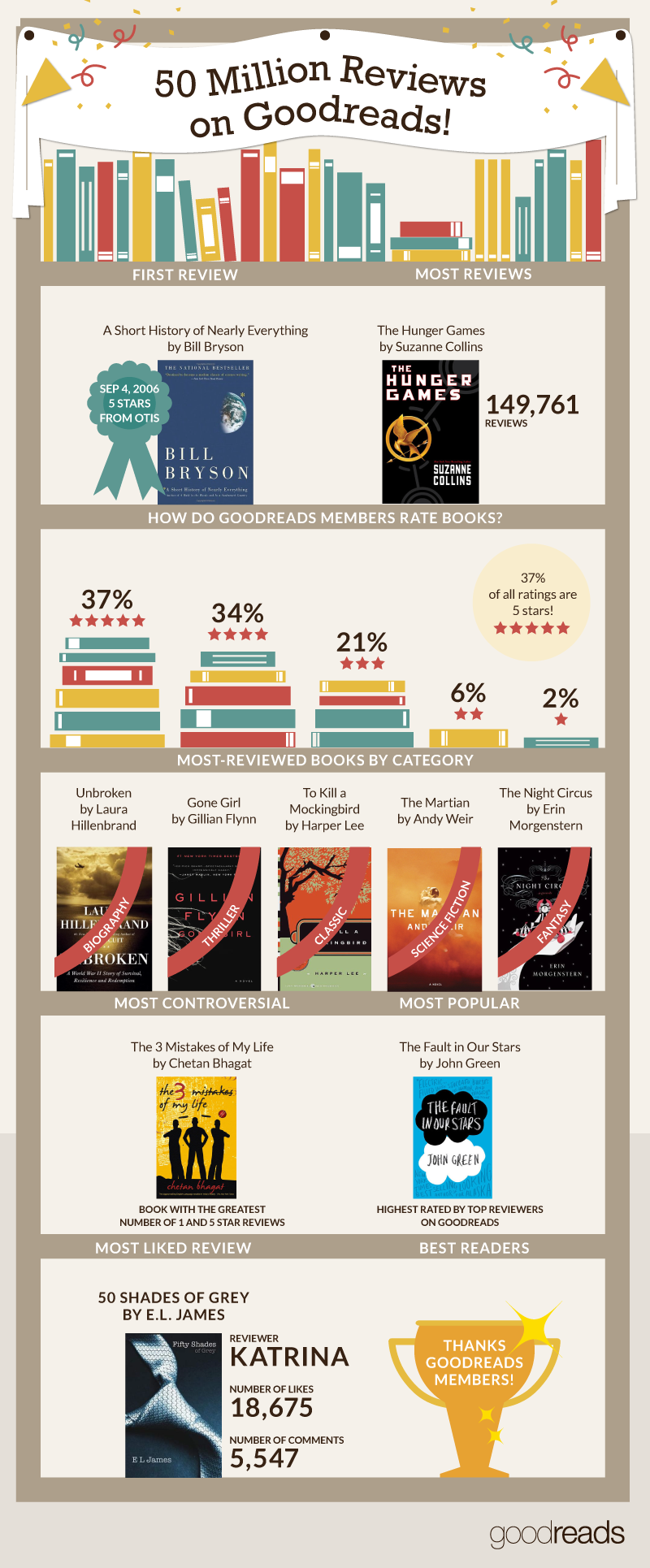
Congratulations to Goodreads!

50 million reviews!

I love having Goodreads in my life. How about you?

GR_graphic

Check out the Goodreads blog post about this milestone here.

Is reading before watching always the best policy?

discuss

I’ve always been a big believer in reading books before seeing the movie or TV adaptations. But lately, I’ve been wondering if that’s necessarily the best approach.

For sure, I don’t enjoy a book nearly as much if I’ve already seen the movie/TV version. But the same can be said for the opposite, and I’m debating whether there are times when reading (or rereading) first doesn’t make sense.

In my case, the issue comes down to enjoyment. How much do I want to really savor the viewing experience for its own sake?

What I find is that when I’ve read the book first, especially if I’ve read it immediately before watching the movie/TV version, is that I spend the entire time watching with a little running commentary going on in the back of my head. I’m so distracted by noticing and cataloguing all the differences from the book that it’s hard to just sit and back and enjoy it for what it is. And at the same time, reading first is like intentionally giving myself spoilers, so the viewing experiences tends to lack the punch it might pack if I’d watched it as something completely fresh and new.

Two examples from last year:

One — I fell in love with Poldark on PBS. (The show, not specifically the character, although… damn. Check out my Poldark love here.) Poldark was completely new to me, and after watching the first episode, I was burning with impatience to know more. So, I dashed right out (or actually, dashed right to Amazon) and got myself the first two books in the series, which correspond to the TV show’s first season. I gobbled up the books and then watched the remaining episodes… and while I loved the books, I missed the sense of suspense that was now missing as I watched. Even worse, the big, dramatic, emotionally intense moments from the show’s finale were flat for me. I could tell that they were very well done, but the emotional impact was missing, because I’d already experienced the feels while reading the book.

Okay, second example: OUTLANDER. I think I’ve given a hint or two (or a thousand) about how much I love everything Outlander. So, season one last year — I obviously love the TV show madly and deeply. As the season progressed, I decided to read along. That is, I started the book from the beginning and read as far as I guessed each week’s episode would cover. Definitely not my first time through the book — it was more like my 4th or 5th. Still, I decided I wanted to have it all fresh in my mind so I could pick up all the little nuances that are straight from the book.

And as an approach, it wasn’t bad. I had a strong appreciation for how much dialogue was word-for-word from the source material, which is especially gratifying when it’s some of the most swoonworthy Jamie-isms. On the flip side, though, rereading right before watching made me hyper-aware of every little deviation, every little omission. And that wasn’t always a good thing.

I ended up watching each episode several times each week. The first time through, I couldn’t shut down the mental gymnastics involved in comparing the book and the show. My little internal calculator was busy tracking every change or every point of staying completely true to the book. I still enjoyed the show, but with distractions. By the second viewing, I could let go of all that. Now that I knew the content, I could sit back and just enjoy it for itself. And by a third time through, it was just a chance to soak up the atmosphere, notice themes and cinematography, and the overall artistry of each episode.

So, here’s where the dilemma comes into play. Season two is fast approaching (TWO WEEKS FROM TODAY), and I haven’t quite decided what to do about it.

I’ve read the source material, Dragonfly in Amber, more than once — but it’s been a couple of years since I last read it. I’m trying to decide whether to read along with the episodes, or just watch the show on its own, perhaps going back to the book for reference afterward. Either approach has its pros and cons, and I’m still up in the air about which path I’ll end up following.

So, share your thoughts and experiences please! Do you watch (or re-watch) before viewing, and how do you think it affects your experience? Are there times when you wish you hadn’t read the book first (or recently)? I’d love to hear some opinions!

Counting up the books: February update


CUTB_2

Welcome to the February edition of Counting Up the Books! In which I take stock, re-set the parameters for my book counting, and decide where I’m going with this crazy monthly counting of books…

But first — the backstory:

This past fall, I wrote a post called Counting Up the Books, talking about two things I love: BOOKS and NUMBERS. That was the beginning of a monthly feature for me, in which I tally up just how many unread books there are in my house and on my Kindle.

Here are my book totals from the past four months, adding in new books and subtracting books read or given away:

October: 539

November: 548 

December: 554

January: 548

You’ll notice that my numbers went up, not down, for a few months there, until finally in January we have tiny baby steps of progress in getting the numbers under control.

In thinking about this book count methodology of mine, I’ve started to reach the conclusion that my approach is a bit flawed. In general, when it comes to my reading habits, I try to avoid absolutes. I don’t participate in challenges. I don’t view my resolutions as rules, but rather, as aspirations.

And I would certainly never put myself on a book buying ban.

Why set myself up for failure? I know I won’t give up buying books for a year, and I won’t even pretend that that’s a realistic expectation. I am, however, making a conscious effort to request fewer ARCs and preorder fewer new releases — largely because I know that I already have a huge backlog of books to be read. Even when a brand new book arrives hot off the presses, I don’t always read it right away, so why do I need to buy it the second it comes out?

All that said, I think if I want to track my progress with reading my shelves, I need to have a fixed baseline as a reference point. And so, arbitrarily, I’m taking my January numbers as point zero. Going forward, my Counting Up the Books tallies will not include newly acquired books. Yes, I’ll keep track of my new arrivals (hurray, a good excuse for another spreadsheet!), but I’m going to use my January count as my 2016 point of departure. Of the 548 books that are on my list as of January, how many will I actually read in 2016? And how many will I give away, sell at the used bookstore, or donate to a good cause?

We’ll see. I’ll be posting a fresh book count at the beginning of each month to track how I do… and at the end of the year, I’ll do a re-count — or hey, I like the word recalibration! That’s it: At the end of December, I’ll recalibrate my book count to add in any new and still unread acquisitions from 2016, and start with a fresh baseline number in January 2017. Make sense?

Which brings us to today. Using 548 as my 2016 starting point, here’s where I stand as of the start of February:

BC 022016

So… like I said — baby steps.

How are your shelves doing this month?

Don’t forget to join me for Shelf Control on Wednesdays, where we highlight books from our shelves that we really want to read!