Flashback Friday: Last Chance To See

NOTE: Flashback Friday will be taking a little pause over the holidays! Look for my next Flashback Friday post on Friday, January 10th.

Flashback Friday is my own little weekly tradition, in which I pick a book from my reading past to highlight — and you’re invited to join in!

Here are the Flashback Friday book selection guidelines:

  1. Has to be something you’ve read yourself
  2. Has to still be available, preferably still in print
  3. Must have been originally published 5 or more years ago

Other than that, the sky’s the limit! Join me, please, and let us all know: what are the books you’ve read that you always rave about? What books from your past do you wish EVERYONE would read? Pick something from five years ago, or go all the way back to the Canterbury Tales if you want. It’s Flashback Friday time!

My Flashback Friday for this week:
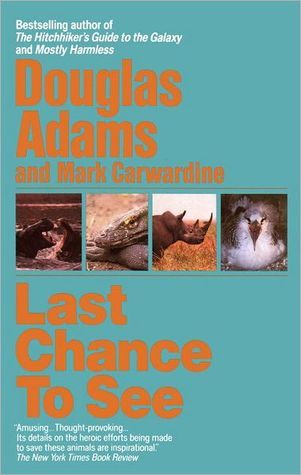
Last Chance to See

Last Chance To See
by Douglas Adams and Mark Carwardine
(published 1990)

Synopsis (Amazon):

Join bestselling author Douglas Adams and zoologist Mark Carwardine as they take off around the world in search of exotic, endangered creatures. Hilarious and poignant – as only Douglas Adams can be – LAST CHANCE TO SEE is an entertaining and arresting odyssey through the Earth’s magnificent wildlife galaxy.

I am so glad that I stumbled cross this non-fiction book by the extraordinary Douglas Adams a couple of years ago. We all know and love Douglas Adams for his incredibly inventive and humorous works of fiction (I mean, does anyone NOT like The Hitchhiker’s Guide To The Galaxy??), but this work of non-fiction is just as funny and entertaining, even in its more serious moments and while delivering not terribly optimistic messages about the fate of the natural world.

The book Last Chance To See grew out of a BBC production in which Douglas Adams traveled with zoologist Mark Carwardine to all sorts of far-flung points around the globe. Their goal was to see, understand, and document the plight of animals so endangered as to be all but assured of extinction. Among the animals visited were komodo dragons, northern white rhinoceroses, mountain gorillas, and more. In each instance, Adams describes the plight of the species and how they got to that point, what’s being done to protect them, and what the future may hold.

It’s often a sad journey, but with Adams’s quirky and wonderful writing, Last Chance To See manages to entertain and challenge the reader. It’s witty, it’s gritty, and it’s just a pleasure to read. I highly recommend Last Chance To See for anyone who enjoys Douglas Adams, as well as for anyone who’d like a fresh take on humanity’s footprint on the animal kingdom and its habitats.

♥♥♥♥♥♥♥♥

Do you host a book blog meme? Do you participate in a meme that you really, really love? I’m building a Book Blog Meme Directory, and need your help! If you know of a great meme to include — or if you host one yourself — please drop me a note on my Contact page and I’ll be sure to add your info!

Flashback Friday: Seventeenth Summer

Flashback Friday is my own little weekly tradition, in which I pick a book from my reading past to highlight — and you’re invited to join in!

Here are the Flashback Friday book selection guidelines:

  1. Has to be something you’ve read yourself
  2. Has to still be available, preferably still in print
  3. Must have been originally published 5 or more years ago

Other than that, the sky’s the limit! Join me, please, and let us all know: what are the books you’ve read that you always rave about? What books from your past do you wish EVERYONE would read? Pick something from five years ago, or go all the way back to the Canterbury Tales if you want. It’s Flashback Friday time!

My Flashback Friday for this week:

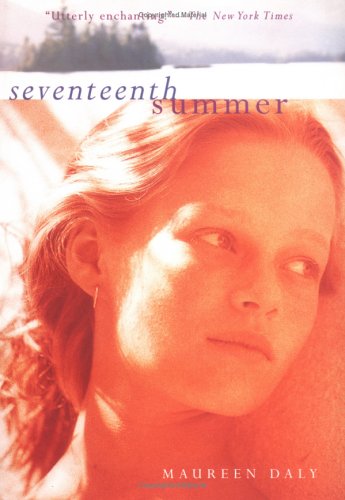
Seventeenth Summer

Seventeenth Summer
by Maureen Daly
(published 1945)

Synopsis (Amazon):

Until the summer before college, Angie Morrow didn’t really date. Her mother didn’t like her to go out much. But no one — not even Angie’s mother — can resist the charm of strikingly handsome Jack Duluth. His good looks grab Angie’s attention from the moment in June when Jack throws Angie a smile at McKnight’s drugstore. And on their first date sailing under the stars — when Jack leans in and whispers to Angie, “You look nice with the wind in your hair,” the strange new feelings begin. Tingles, prickles, warmth: the tell-tale signs of romance. It’s the beginning of an unforgettable summer for Angie, full of wonder, warmth, tears, challenge, and love.

Maureen Daly had created a love story so honest that it has withstood the test of time, winning new fans for more than six decades. Today, this classic is enjoyed by many who think of it as the quintessential love story, and as a glimpse of love in the 1940’s; a refreshing alternative to modern love stories, reflecting the beauty and innocence of new love.

Young adult fiction from before YA was a “thing”, Seventeenth Summer has an innocence to it that is both sweet and old-fashioned. I read this several years ago, at the urging of a colleague who has superb book taste. She remembered this book from her youth, and talked enthusiastically about how much of an impact it had on her at the time. Here’s what I said about it on Goodreads at that point:

I might not have given Seventeenth Summer a second glance, had not a book lover with almost impeccable taste recommended it to me. Written in 1942, Seventeenth Summer is a look into the heart and mind of a 17-year-old Wisconsin girl as she experiences first love over the course of the summer before she starts college. Seventeenth Summer in many ways is quite dated, yet the simplicity of the story in no way diminishes the lovely depiction of the elation, insecurity, and tumult of growing up, falling in love, and ultimately becoming a young woman itching for independence.

Main character Angie spends a lot of time worrying about her reputation, thinking about every nuance of her time with the boy she likes, reveling in the joys of summertime, and just living life on the cusp of adulthood. The author was herself still in her teens when she wrote this book, and there’s a freshness in the attitude that’s unusual when compared to today’s teen novels. It’s a bit jarring reading a book from the early 1940s that’s so totally immersed in the day to day, with no reference to the war consuming so much of the rest of the world at that time — but in a way, that just reinforces both the innocence of the narrative and the feeling that the story, while lovely in its own way, is also ever-so-slightly dated.

I don’t know that I’d recommend Seventeenth Summer to teen readers today. I suspect they’d find it rather bland and uneventful. And yet, it has certainly stayed with women readers of an earlier generation, so clearly it’s a book that was relevant and meaningful in its day. For readers today, I’d say it’s a lovely look back at a particular time, its culture, and its sensibilities. As a snapshot of a by-gone era, it works, with a nostalgic feel that really captures what it must have been like to be a teen at that time, falling in love, with the whole world open and full of wonder.

What older books are on your flashback radar this week? Link up and share!

♥♥♥♥♥♥♥♥

Do you host a book blog meme? Do you participate in a meme that you really, really love? I’m building a Book Blog Meme Directory, and need your help! If you know of a great meme to include — or if you host one yourself — please drop me a note on my Contact page and I’ll be sure to add your info!

Flashback Friday: A Hanukkah Favorite!

Flashback Friday is my own little weekly tradition, in which I pick a book from my reading past to highlight — and you’re invited to join in!

Here are the Flashback Friday book selection guidelines:

  1. Has to be something you’ve read yourself
  2. Has to still be available, preferably still in print
  3. Must have been originally published 5 or more years ago

Other than that, the sky’s the limit! Join me, please, and let us all know: what are the books you’ve read that you always rave about? What books from your past do you wish EVERYONE would read? Pick something from five years ago, or go all the way back to the Canterbury Tales if you want. It’s Flashback Friday time!

Happy Hanukkah! Your turkey may be nothing but leftovers by now, but you’ve still got six more days to chow down on latkes! In honor of the (very early!) festival of lights, I thought I’d highlight a family favorite for this week’s Flashback Friday post:

Hershel and the Hanukkah Goblins

Hershel and the Hanukkah Goblins
by Eric Kimmel
Illustrated by Trina Schart Hyman
(published 1994)

Synopsis (Amazon):

What are the poor villagers to do? The holiday-hating, hill-dwelling hobgoblins are bound and determined to ruin yet another Hanukkah for them. Every year the beasties snuff out the menorah candles, destroy the dreidels, and pitch the potato latkes on the floor. But these wicked wet blankets never counted on someone as clever as Hershel of Ostropol showing up. Using his wits and a few props–pickles, eggs, and a dreidel (a square-shaped top with Hebrew letters on each side)–Hershel manages to outwit all the creepy critters and break the spell. This fabulously creative adaptation of the ancient Hanukkah story in which the Syrians forbade the Jews to worship as they wanted, keeps the spirit of the original while adding a spine-tingling twist. Warmth and humor prevail, even in the midst of hopeless-looking circumstances. Award-winning illustrator Trina Schart Hyman creates lively and witty pictures that pair perfectly with Eric Kimmel’s words to create this Caldecott Honor Book. (Ages 4 to 8)

I have never seen a more rapt group of 6-year-olds than on the day that my son’s teacher asked me to read a Hanukkah story to the class. Once I began the story of Hershel and the icky, creepy, mean creatures who were trying to destroy Hanukkah, they were hooked. Even today, my 11-year-old pulls this one off the shelf for a Hanukkah read-along (although he’d probably be thoroughly embarrassed that I said so). Hershel and the Hanukkah Goblins has it all — scary creatures, an ordinary guy who outsmarts the baddies, and really funny (and a little bit frightening) illustrations as well.

Sure, there are plenty of Hanukkah books to choose from, but how many have goblins? We’ve always loved this book at my house, and I’m glad none of us are too old to enjoy it once again this year!

Happy Friday! I hope you’re enjoying the company of a terrific book… and avoiding the shopping madness!

♥♥♥♥♥♥♥♥

Do you host a book blog meme? Do you participate in a meme that you really, really love? I’m building a Book Blog Meme Directory, and need your help! If you know of a great meme to include — or if you host one yourself — please drop me a note on my Contact page and I’ll be sure to add your info!

Flashback Friday: The Color of Water

Flashback Friday is my own little weekly tradition, in which I pick a book from my reading past to highlight — and you’re invited to join in!

Here are the Flashback Friday book selection guidelines:

  1. Has to be something you’ve read yourself
  2. Has to still be available, preferably still in print
  3. Must have been originally published 5 or more years ago

Other than that, the sky’s the limit! Join me, please, and let us all know: what are the books you’ve read that you always rave about? What books from your past do you wish EVERYONE would read? Pick something from five years ago, or go all the way back to the Canterbury Tales if you want. It’s Flashback Friday time!

Yesterday it was announced that James McBride was awarded the National Book Award for his most recent novel, The Good Lord Bird. In honor of his award, I thought I’d flash back to the author’s first best-seller: his non-fiction tribute to his mother, which was published more than 15 years ago:

The Color of Water: A Black Man's Tribute to His White Mother

The Color of Water: A Black Man’s Tribute to His White Mother
by James McBride
(published 1996)

Synopsis (Amazon):

Who is Ruth McBride Jordan? A self-declared “light-skinned” woman evasive about her ethnicity, yet steadfast in her love for her twelve black children. James McBride, journalist, musician, and son, explores his mother’s past, as well as his own upbringing and heritage, in a poignant and powerful debut, The Color Of Water: A Black Man’s Tribute to His White Mother.The son of a black minister and a woman who would not admit she was white, James McBride grew up in “orchestrated chaos” with his eleven siblings in the poor, all-black projects of Red Hook, Brooklyn. “Mommy,” a fiercely protective woman with “dark eyes full of pep and fire,” herded her brood to Manhattan’s free cultural events, sent them off on buses to the best (and mainly Jewish) schools, demanded good grades, and commanded respect. As a young man, McBride saw his mother as a source of embarrassment, worry, and confusion—and reached thirty before he began to discover the truth about her early life and long-buried pain.

In The Color of Water, McBride retraces his mother’s footsteps and, through her searing and spirited voice, recreates her remarkable story. The daughter of a failed itinerant Orthodox rabbi, she was born Rachel Shilsky (actually Ruchel Dwara Zylska) in Poland on April 1, 1921. Fleeing pogroms, her family emigrated to America and ultimately settled in Suffolk, Virginia, a small town where anti-Semitism and racial tensions ran high. With candor and immediacy, Ruth describes her parents’ loveless marriage; her fragile, handicapped mother; her cruel, sexually-abusive father; and the rest of the family and life she abandoned.

At seventeen, after fleeing Virginia and settling in New York City, Ruth married a black minister and founded the all- black New Brown Memorial Baptist Church in her Red Hook living room. “God is the color of water,” Ruth McBride taught her children, firmly convinced that life’s blessings and life’s values transcend race. Twice widowed, and continually confronting overwhelming adversity and racism, Ruth’s determination, drive and discipline saw her dozen children through college—and most through graduate school. At age 65, she herself received a degree in social work from Temple University.

Interspersed throughout his mother’s compelling narrative, McBride shares candid recollections of his own experiences as a mixed-race child of poverty, his flirtations with drugs and violence, and his eventual self- realization and professional success. The Color of Water touches readers of all colors as a vivid portrait of growing up, a haunting meditation on race and identity, and a lyrical valentine to a mother from her son.

I think the synopsis speaks for itself! I read The Color of Water with a book group about ten years ago, and we were all just blown away by the writer’s honesty, his absolute love and respect for his mother, the insights on what life was like for a boy growing up in such a unique family — and most of all, just really inspired and impressed by Ruth’s courage, love, and determination.

I’m not a big non-fiction reader in general, but every once in a while I’m happy to make an exception. The Color of Water is a memoir that’s as compelling as fiction, with fascinating characters and their incredible journeys. It really is too good to be missed.

Happy Friday, and enjoy your flashbacks!

♥♥♥♥♥♥♥♥

Do you host a book blog meme? Do you participate in a meme that you really, really love? I’m building a Book Blog Meme Directory, and need your help! If you know of a great meme to include — or if you host one yourself — please drop me a note on my Contact page and I’ll be sure to add your info!

Flashback Friday: Alive in Necropolis

Flashback Friday is my own little weekly tradition, in which I pick a book from my reading past to highlight — and you’re invited to join in!

Here are the Flashback Friday book selection guidelines:

  1. Has to be something you’ve read yourself
  2. Has to still be available, preferably still in print
  3. Must have been originally published 5 or more years ago

Other than that, the sky’s the limit! Join me, please, and let us all know: what are the books you’ve read that you always rave about? What books from your past do you wish EVERYONE would read? Pick something from five years ago, or go all the way back to the Canterbury Tales if you want. It’s Flashback Friday time!

My pick for this week’s Flashback Friday:

Alive in Necropolis

Alive in Necropolis
by Doug Dorst
(published 2008)

Synopsis (Goodreads):

A fresh, imaginative debut novel about a young police officer in northern California struggling to keep the peace – and maintain a grip on reality – in a town where the dead outnumber the living.

Colma, California, is the only incorporated city in America where the dead outnumber the living. The longtime cemetery for San Francisco, it is the resting place of the likes of Joe DiMaggio, Wyatt Earp, and aviation pioneer Lincoln Beachey. It is also the home of Michael Mercer, a rookie cop trying to go by the book as he struggles to navigate a new realm of grownup relationships including a shaky romance with an older woman; a growing alliance with his cocky, charismatic partner, Nick Toronto; fading college friendships; and an aching sense of responsibility for a local rich kid who Mercer rescues from a dangerous prank in the cemetery.

But instead of settling comfortably into adult life, Mercer becomes obsessed with the mysterious fate of his predecessor in the police unit, Sergeant Featherstone, who seems to have become confused about whether he was policing the living or the dead. And as Mercer delves deeper into Featherstone’s story, it appears that Mercer’s own sanity is beginning to slip — either that, or Colma’s more famous residents are not resting in peace as they should be.

With all the playful sensitivity of Haruki Murakami and the haunted atmosphere of Paul Auster, but with a voice all his own, Doug Dorst has crafted an irresistible, compelling debut.

Last week, having received a lovely giftcard, I treated myself to S., the new book collaboration between J. J. Abrams and Doug Dorst. I haven’t read it yet, but I’ve definitely been enjoying handling the book, looking at all the odds and ends tucked inside, and wondering how on earth to actually go about reading it.

Meanwhile, looking at S. and reading a bit about how the project came about reminded me of how much I enjoyed reading Doug Dorst’s first novel, Alive in Necropolis. Funny and spooky, this book portrays its ghostly characters with as much “life” as its actual flesh-and-blood characters. The police force and their patrols of the cemetery are quite entertaining, and I loved the writing and the inventiveness in this wonderful novel.

Plus, as a San Francisco resident, Alive in Necropolis gave me a fresh view and a whole new appreciation for the vast cemeteries of Colma!

Happy Friday, and enjoy your flashbacks!

♥♥♥♥♥♥♥♥

Do you host a book blog meme? Do you participate in a meme that you really, really love? I’m building a Book Blog Meme Directory, and need your help! If you know of a great meme to include — or if you host one yourself — please drop me a note on my Contact page and I’ll be sure to add your info!

Flashback Friday: Furies of Calderon

Flashback Friday is my own little weekly tradition, in which I pick a book from my reading past to highlight — and you’re invited to join in!

Here are the Flashback Friday book selection guidelines:

  1. Has to be something you’ve read yourself
  2. Has to still be available, preferably still in print
  3. Must have been originally published 5 or more years ago

Other than that, the sky’s the limit! Join me, please, and let us all know: what are the books you’ve read that you always rave about? What books from your past do you wish EVERYONE would read? Pick something from five years ago, or go all the way back to the Canterbury Tales if you want. It’s Flashback Friday time!

My pick for this week’s Flashback Friday:

Furies of Calderon (Codex Alera, #1)

Furies of Calderon
(Codex Alera, book 1)

by Jim Butcher
(published 2004)

Synopsis (Goodreads):

In the realm of Alera, where people bond with the furies — elementals of earth, air, fire, water and metal, fifteen-year-old Tavi struggles with his lack of furycrafting. But when his homeland erupts in chaos — when rebels war with loyalists and furies clash with furies — Tavi’s simple courage will turn the tides of war.

From Publishers Weekly:

At the start of Butcher’s absorbing fantasy, the first in a new series, the barbarians are at the gates of the land of Alera, which has a distinct flavor of the Roman Empire (its ruler is named Quintus Sextus and its soldiers are organized in legions). Fortunately, Alera has magical defenses, involving the furies or elementals of water, earth, air, fire and metal, that protect against foes both internal and external. Amara, a young female spy, and her companion, Odiana, go into some of the land’s remoter territories to discover if military commander Atticus Quentin is a traitor—another classic trope from ancient Rome. She encounters a troubled young man, Tavi, who has hitherto been concerned mostly with the vividly depicted predatory “herdbanes” that threaten his sheep as well as with his adolescent sexual urges (handled tastefully). Thinking that Amara is an escaping slave, Tavi decides to help her and is immediately sucked in over his head into a morass of intrigues, military, magical and otherwise. Butcher (Storm Front, etc.) does a thorough job of world building, to say nothing of developing his action scenes with an abundance of convincing detail.

Want to understand the vibe of The Codex Alera series? Think Dresden Files thrown into a blender with Game of Thrones. Kind of.

Jim Butcher, known for the ongoing (and totally awesome) Dresden Files series, here creates a fantasy world full of magical powers, human and non-human races, and heavy doses of military adventures and escapades. His characters come with family legacies, inherited struggles and feuds, and secrets galore. There’s a ton of scheming, ruthless manipulation and political maneuvering, and scenes of magical occurrences that practically beg to be filmed and loaded with CGI.

Tavi is a terrific main character, immensely likeable, funny and brave, with the smart-ass attitude we’ve come to expect from Butcher’s heroes. The supporting characters are strong and well-defined, and the action never flags. Plus — romance! Secret identities! Evil forces! Potential destruction of the world!

I love that I was able to read the entire series (six books) straight through, so I could really live in the world of Alera for a sustained reading experience and get to feel that I truly knew the characters, understood the stakes, and was invested in the outcomes.

By the way, Codex Alera has an amazing (and very funny) origin story, which Jim Butcher explains in this clip from 2008’s Comic-con:

Happy Friday, and enjoy your flashbacks!

♥♥♥♥♥♥♥♥

Do you host a book blog meme? Do you participate in a meme that you really, really love? I’m building a Book Blog Meme Directory, and need your help! If you know of a great meme to include — or if you host one yourself — please drop me a note on my Contact page and I’ll be sure to add your info!

Flashback Friday: Dangerous Liaisons

Flashback Friday is my own little weekly tradition, in which I pick a book from my reading past to highlight — and you’re invited to join in!

Here are the Flashback Friday book selection guidelines:

  1. Has to be something you’ve read yourself
  2. Has to still be available, preferably still in print
  3. Must have been originally published 5 or more years ago

Other than that, the sky’s the limit! Join me, please, and let us all know: what are the books you’ve read that you always rave about? What books from your past do you wish EVERYONE would read? Pick something from five years ago, or go all the way back to the Canterbury Tales if you want. It’s Flashback Friday time!

My pick for this week’s Flashback Friday:

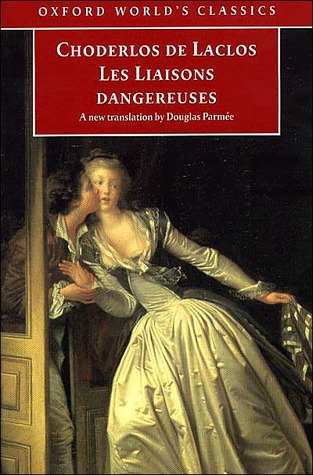
Dangerous Liaisons

Dangerous Liaisons (Les Liaisons Dangereuses)

by Pierre Choderlos de Laclos

(published 1782)

Synopsis:

Published just years before the French Revolution, Laclos’s great novel of moral and emotional depravity is a disturbing and ultimately damning portrayal of a decadent society. Aristocrats and ex-lovers Marquise de Merteuil and Vicomte de Valmont embark on a sophisticated game of seduction and manipulation to bring amusement to their jaded lives. While Merteuil challenges Valmont to seduce an innocent convent girl, he is also occupied with the conquest of a virtuous married woman. Eventually their human pawns respond, and the consequences prove to be more serious-and deadly-than the players could have ever predicted.

I fell head-over-heels in love with the 1988 movie version of Dangerous Liaisons, with all its twisted, sick manipulations and one-upmanship in which other people are sacrificed for the sake of an all-important victory. After seeing the movie, and gasping in amazement at the over-the-top way the characters glory in casually destroying other people’s lives, I knew I had to know more.

Granted, the book doesn’t have the 20th century finishes of the movie, but this epistolary novel has all of the intrigue and mind games you’d expect. Told through letters, we get an inside look into some very twisted minds, and it’s an amazingly complex web that’s woven, in which reputations, marriages, and lives are ruined on a whim.

Of course, I couldn’t read the book without all of these pictures in my head:

According to Wikipedia, there are six different movie adaptations of Dangerous Liaisons, including the much lighter (and less successful, as far as I know) Valmont (1989) and the crazy New York teen version Cruel Intentions (1999), which starred Sarah Michelle Gellar and Reese Witherspoon:

cruel

Not to mention various TV, radio, opera, and ballet versions of the story, and even, apparently, a 2013 e-book called Dangerous Tweets, retelling the story entirely in (yes) tweets. Ooooookay, then.

Have you read the book? Do you have a favorite movie version? What other books could be retold via Twitter?

Happy Friday, and enjoy your flashbacks!

♥♥♥♥♥♥♥♥

Do you host a book blog meme? Do you participate in a meme that you really, really love? I’m building a Book Blog Meme Directory, and need your help! If you know of a great meme to include — or if you host one yourself — please drop me a note on my Contact page and I’ll be sure to add your info!

Flashback Friday: The All-of-a-Kind Family series

Flashback Friday is my own little weekly tradition, in which I pick a book from my reading past to highlight — and you’re invited to join in!

Here are the Flashback Friday book selection guidelines:

  1. Has to be something you’ve read yourself
  2. Has to still be available, preferably still in print
  3. Must have been originally published 5 or more years ago

Other than that, the sky’s the limit! Join me, please, and let us all know: what are the books you’ve read that you always rave about? What books from your past do you wish EVERYONE would read? Pick something from five years ago, or go all the way back to the Canterbury Tales if you want. It’s Flashback Friday time!

My pick for this week’s Flashback Friday:

All-of-a-Kind Family (All-of-a-Kind Family, #1)

All-of-A-Kind Family by Sydney Taylor

(published 1951)

Synopsis:

There’s something to be said for a book that makes you wish you’d been part of a poor immigrant family living in New York’s lower east side on the eve of World War I. Sydney Taylor’s time-honored classic does just that. Life is rich for the five mischievous girls in the family. They find adventure in visiting the library, going to market with Mama, even dusting the front room. Young readers who have never shared a bedroom with four siblings, with no television in sight, will vicariously experience the simple, old-fashioned pleasures of talk, make-believe, and pilfered penny candy. The family’s Jewish faith strengthens their ties to each other, while providing still more excitement and opportunity for mischief. Readers unfamiliar with Judaism will learn with the girls during each beautifully depicted holiday. This lively family, subject of four more “all-of-a- kind” books, is full of unique characters, all deftly illustrated by Helen John. Taylor based the stories on her own childhood family, and the true-life quality of her writing gives this classic its page-turning appeal.

There are five books in Sydney Taylor’s lovely, heart-warming, classic series:

  • All-of-a-Kind Family (1951)
  • More All-of-a-Kind Family (1954)
  • All-of-a-Kind Family Uptown (1958)
  • All-of-a-Kind Family Downtown (1972)
  • Ella of All-of-a-Kind Family (1978)

Through these books, we meet the five sisters and their parents, and get a sweet and savory view of life on the Lower East Side of New York in the early 1900s. The girls live in close quarters, bicker and play, make up stories and get into trouble, and learn important (but not overly preachy) lessons along the way.  The very first chapter in the first book is about the hugely important weekly trip to the library — and between the lovely library lady and the emphasis on having great books to read, it’s a great way to start! Another chapter is about dusting (!!) — and it really is the stuff of legends, for kids who grew up with these books. In order keep dusting fun (I can’t believe I’m writing this…), the girls’ mother hides buttons that they can only find by cleaning super-carefully.

And now I’m praising a book that has us thinking housework is delightful. So not me. But I digress.

library aoakf

The library scene from All-of-a-Kind Family, illustrated by Helen John

The All-of-a-Kind Family books are memorable for the wonderful and distinctive characters, the upbeat look at life in a relatively poor immigrant neighborhood, the non-sentimental view of some of the era’s hardships, and the positive portrayal of life in an American Jewish family. With penny candy stores, Coney Island, pickles, Fourth of July celebrations, and later, very circumspect parties and dating rituals, the books are at once of historical interest and human interest. I think, as a kid reading these books, I didn’t think about the history too much — I was too busy siding with the different girls in their squabbles and plans, worrying about them getting caught when they got into mischief, and wishing I lived in a house full of girls.

So talk about a flashback! The All-of-a-Kind Family series was a huge part of my childhood. My sister and I pored over these books as kids, reenacting key scenes (the button search was a special favorite!) and in general maintaining a fascination with the five sisters. (Ella, we agreed, was glamorous; Henny, on the other hand, was a big trouble-maker — although looking back from the adult perspective, she also probably had the most gumption of the lot!)

Later on, I found myself returning to these books. As a summer camp counselor, I would read a chapter a night to my girls, who despite being almost too cool during the day, really craved the connection these stories offered at bedtime. And still later, the All-of-a-Kind Family books were read-aloud favorites for my daughter and me.

In a way, these books are like a Jewish parallel to the Little House books by Laura Ingalls Wilder. In each, we see a family’s challenges over the course of many years and many books, set in a particular point in America’s history — but written in such a way that kids today won’t feel like they’re being taught, as they’ll be too busy being entertained by the characters’ antics and adventures. In both series as well, the fictional characters are directly based on the authors’ own lives, and perhaps that ring of authenticity is what helps bring these books, with their detailed descriptions of daily life and routines, into such rich and resounding life.

Did you read the All-of-a-Kind Family books as a kid?

And have you ever, for even a second, believed that dusting is fun?

Happy Friday, and enjoy your flashbacks!

♥♥♥♥♥♥♥♥

Do you host a book blog meme? Do you participate in a meme that you really, really love? I’m building a Book Blog Meme Directory, and need your help! If you know of a great meme to include — or if you host one yourself — please drop me a note on my Contact page and I’ll be sure to add your info!

Flashback Friday: Brave New World

Flashback Friday is my own little weekly tradition, in which I pick a book from my reading past to highlight — and you’re invited to join in!

Here are the Flashback Friday book selection guidelines:

  1. Has to be something you’ve read yourself
  2. Has to still be available, preferably still in print
  3. Must have been originally published 5 or more years ago

Other than that, the sky’s the limit! Join me, please, and let us all know: what are the books you’ve read that you always rave about? What books from your past do you wish EVERYONE would read? Pick something from five years ago, or go all the way back to the Canterbury Tales if you want. It’s Flashback Friday time!

My pick for this week’s Flashback Friday:

Brave New World by Aldous Huxley

(published 1932)

Synopsis:

Far in the future, the World Controllers have finally created the ideal society. In laboratories worldwide, genetic science has brought the human race to perfection. From the Alpha-Plus mandarin class to the Epsilon-Minus Semi-Morons, designed to perform menial tasks, man is bred and educated to be blissfully content with his pre-destined role.

But, in the Central London Hatchery and Conditioning Centre, Bernard Marx is unhappy. Harbouring an unnatural desire for solitude, feeling only distaste for the endless pleasures of compulsory promiscuity, Bernard has an ill-defined longing to break free. A visit to one of the few remaining Savage Reservations where the old, imperfect life still continues, may be the cure for his distress…

A fantasy of the future that sheds a blazing critical light on the present–considered to be Aldous Huxley’ s most enduring masterpiece.

Brave New World has been a fixture on high school reading lists for decades now, alongside 1984, Animal Farm, and Lord of the Flies. Does it stand the test of time? I certainly think so. I reread Brave New World about five years ago, and was startled to see how prescient Aldous Huxley was about everything from assisted reproductive technologies to the rampant consumerism prominent in leisure and entertainment activities today. Brave New World is about a dystopian society — but written at a time when the concept was new and shocking, a true cautionary tale.

The class structure and predefined roles, the learning systems and government control, the Savage Reservations and birth control mandates, all are futuristic and yet scarily recognizable. As with so many “required reading” standards, I don’t think I fully appreciated Brave New World when I read it for school. Reading it again as an adult, I was struck by the tight narrative flow, elegant descriptions of a fully-formed social structure, and plot turns that manage to surprise even though dystopian settings are everywhere these days.

Did you read Brave New World in school? How do you think it holds up after all these years?

PS – I amused myself by looking for different versions of the Brave New World cover. The nine above are just a small portion of what I found!


♥♥♥♥♥♥♥♥

Do you host a book blog meme? Do you participate in a meme that you really, really love? I’m building a Book Blog Meme Directory, and need your help! If you know of a great meme to include — or if you host one yourself — please drop me a note on my Contact page and I’ll be sure to add your info!

Flashback Friday: The Hanging Tree

Flashback Friday is my own little weekly tradition, in which I pick a book from my reading past to highlight — and you’re invited to join in!

Here are the Flashback Friday book selection guidelines:

  1. Has to be something you’ve read yourself
  2. Has to still be available, preferably still in print
  3. Must have been originally published 5 or more years ago

Other than that, the sky’s the limit! Join me, please, and let us all know: what are the books you’ve read that you always rave about? What books from your past do you wish EVERYONE would read? Pick something from five years ago, or go all the way back to the Canterbury Tales if you want. It’s Flashback Friday time!

My pick for this week’s Flashback Friday:

The Hanging Tree by David Lambkin

(published 1995)

From Publishers Weekly:

Magic and science, past and present, collide in Lambkin’s fast-paced thriller, which was a bestseller in South Africa. Kathryn Widd, a paleontologist specializing in violence, goes to Kenya to examine an ancient skull and gets involved in a mystery surrounding a death that occurred on a 1908 expedition, led by John Henry Patterson, to the same locale. From her office in present-day Johannesburg, she recounts the tale of her expedition in a foreboding tone. Accompanied by researcher Ray Chinta, museum administrator Victor Macmillan and his beautiful and enigmatic wife, Marion, Widd makes historic discoveries among the fossils that lend disturbing insight into the origins of human violence. But as the expedition continues, the party begins to relive events that occurred during the ill-fated Patterson expedition. Soon, they find their research straying from the exactitude of science into the realm of magic and mysticism. Looking for metaphysical heft, Lambkin juxtaposes scientific theory with black magic, quantum physics and Bach and uses the metaphor of a fugue to add layers of depth. He falls short of illuminating the implied connections among his many competing themes, and his characterizations rarely rise above stereotype. He does, however, deliver a page-turning puzzler filled with suspense and a richly evoked sense of the African landscape.

I first heard of The Hanging Tree one day while driving home from work listening to NPR. The brief review made this book sound like one not to be missed — but going the way things often do, it was several years before I finally came across a copy and remembered hearing about it.

The Hanging Tree is a fascinating but not always smooth read. The writing style took some getting used to, and the storyline was not really what I’d expected. That said, I couldn’t pull myself away. As the book progresses, we follow the story of a modern-day archaeological dig as well as an earlier expedition — but ultimately the story encompasses new discoveries going back to the earliest humans and what this knowledge proves or disproves about us as a species.

Overall, I’d say that The Hanging Tree is an unusual but engrossing reading experience, and while I didn’t always love the narrative voice, by the end I was completely caught up in the story and its shocking developments and outcomes.

♥♥♥♥♥♥♥♥

Do you host a book blog meme? Do you participate in a meme that you really, really love? I’m building a Book Blog Meme Directory, and need your help! If you know of a great meme to include — or if you host one yourself — please drop me a note on my Contact page and I’ll be sure to add your info!