Q&A with the kiddo: A kid’s-eye view of Merits of Mischief by T. R. Burns

Book Review: Merits of Mischief: The Bad Apple by T. R. Burns


From Amazon:

The start of a mischievous new middle-grade series has trouble written all over it.Twelve-year-old Seamus Hinkle is a good kid with a perfect school record—until the day he accidentally kills his substitute teacher with an apple.

Seamus is immediately shipped off to a detention facility—only to discover that Kilter Academy is actually a school to mold future Troublemakers, where demerits are awarded as a prize for bad behavior and each student is tasked to pull various pranks on their teachers in order to excel. Initially determined to avoid any more mishaps, Seamus nonetheless inadvertently emerges as a uniquely skilled troublemaker. Together with new friends Lemon and Elinor, he rises to the top of his class while beginning to discover that Kilter Academy has some major secrets and surprises in store….

Proudly presenting Q&A with the kiddo, courtesy of my 10-year-old son, in which I ask my kiddo to describe a book he’s enjoyed recently and he gives his opinions, more or less unfiltered by mom.

NOTE: THIS Q&A CONTAINS SPOILERS! You have been warned.

Without further ado:

Q: What book do you want to talk about?

A: Merits of Mischief.

Q: What was it about?

A: It was about this boy, Seamus, who threw an apple at a teacher named Ms. Parsippany. He thought she died but she didn’t. He went to this reform school that was actually to teach the kids to be bad. Then he met lots of new friends and pranked all the teachers.

Q: What did you like about the book?

A: There were funny parts. I liked that the kids were supposed to get into trouble [at the school]. I like all the characters except Abe. My favorite character was Lemon, because he always makes fires. Also, because he stands up for people. My favorite teacher was Mystery, because he’s mysterious and really hard to prank.

Q: What didn’t you like about the book?

A: The Good Samaritans [mom’s note: the GS are the school’s police force], because they try to stop the kids from doing bad stuff.

Q: What did you think of the ending?

A: It was stupid. Seamus got an email from outside the school, but all along they said you couldn’t get emails from off-campus. Also, because you find out Ms. Parsipanny’s not really dead, and if she’s not, then Seamus shouldn’t have gotten sent to the school in the first place.

Q: Are you glad you read Merits of Mischief?

A: Yeah.

Q: How would you describe the book?

A: Funny, with lots of action.

Q: Who do you think would like the book?

A: I think most kids would like it. If they’re bad, they’ll love it!

Mom’s two cents: My kid and I are usually in sync about our read-aloud books. We tend to either both enjoy a book, or both be bored or unimpressed. Merits of Mischief was one of the rare books we’ve encountered where we had vastly different experiences reading it. I’ll be back with the mom point of view in a separate review. In terms of reading levels, this book is listed as ages 8 and up, although I think it would be a bit much for an 8-year-old.

So there you have it. We’ll be back with more book opinions from my kiddo, whenever I can get him to talk books again.

A photo montage in honor of The Diviners

I just loved the world of Libba Bray’s The Diviners, and went searching for images to bring 1920s Manhattan to life. Here are some of my favorite finds so far:

Positutely the bee’s knees!

This picture instantly brought Evie to mind for me. Yes, I know Evie is a blonde, but let’s get beyond hair color. What I love about this girl is the sparkle in her eyes, the lovely smile, the sense that this is a girl who’s confident, knows how to have fun, and has a killer sense of humor.

Could one of these lovelies be Theta?

A photo from the Ziegfeld Follies — daring for the time, revealing yet covered up.

Ziegfeld girl, 1919, fifteen years old

Cotton Club, Harlem

Harlem’s Cotton Club, where Memphis and Gabriel would have spent many an evening.

A rally Mabel’s parents might have attended

Street scene in New York, 1920

And lots more flappers, taking life by storm:

Actress Mary Pickford — maybe more of a look for Mabel?

The iconic Louise Brooks


As I find more fabulous flappers, I’ll be sure to add to this collection. And if you come across any terrific photos that remind you of The Diviners, be sure to share your link in the comments. Will I appreciate it? You bet-ski!

Book Review: The Diviners by Libba Bray

Book Review: The Diviners by Libba Bray

Roaring 20s. Jazz Age. Prohibition. Flappers.

Libba Bray perfectly captures the excitement and glamour of 1920s Manhattan in her newest young adult novel, The Diviners. Set in New York in 1926, The Diviners is a long book (500+ pages) with a sprawling cast of characters whose lives intersect amid the outward glitter of jazz clubs, boisterous parties, and daring girls looking to get noticed. The bright lights and loud music mask a darker underbelly, as a nation recovers from war, teeters on the brink of the coming economic disaster, reacts to political activism and division, and fails to take note of the growing blackness creeping into the world.

Main character Evie O’Neill is a sparkling, au courant flapper, a 17-year-old shining star stuck in small-town Zenith, Ohio, until her need to show off at a party gets her “exiled” to live with her eccentric uncle in Manhattan. Evie’s uncle, William Fitzgerald, is the director of the Museum of American Folklore, Superstition, and the Occult — or the Museum of the Creepy Crawlies, as it’s known in popular parlance. A confirmed bachelor, Will oversees a dusty collection that no one visits and give lectures on the occult and the supernatural. When Evie arrives, she’s not content to just sit around a fusty old museum and immediately throws herself into the whirlwind of high times in New York.

Unfortunately, there’s a killer on the loose, who begins leaving a trail of ritually mutilated bodies. The killer is soon dubbed The Pentacle Killer by the sensation-seeking tabloid press, and Evie and her uncle are thrust into the action as they begin consulting with the police on the occult symbolism surrounding the bodies.

Evie crosses paths with an array of memorable characters, including showgirl Theta, who ran away from a troubled past and reinvented herself on the New York stage; Theta’s best friend Henry, a talented piano player with a secret life; Memphis, a good-looking Harlem numbers-runner who longs to be a poet; Memphis’s younger brother Isaiah, prone to odd dreams and prophecies; Jericho, Will’s stoic assistant with his own secrets to keep; and many more.

Secrets abound. Each of the main characters has a hidden gift — a secret power — which must remain guarded. But as the killer works toward the climax of a foretold ritual designed to bring about the end of times, Evie and others are called upon to use their talents to unearth the clues that may empower them to save themselves and their world. This group of people, of diverse backgrounds and with differing talents, soon realize that they are part of a prophecied group called the Diviners, who will play a part in defeating a darkness yet to come.

Libba Bray succeeds beautifully in The Diviners in conjuring forth a time and place gone by. Her descriptions of Manhattans’s sights, smells, and sounds, the glamor of the flapper girls, the allure of hot jazz clubs — all are rendered so precisely that you can feel them come alive. Evie and friends use the lingo of the times to great effect: Evie asks for “giggle water” when she’s looking for a nip of gin; she frequently pronounces things “the bee’s knees” or “the cat’s pajamas”; her speech is peppered with “posititutely” and “you bet-ski”… and it’s all quite delicious. Evie is witty, charming, and quick on her feet (“A murder! Oh, my. Let me just change my shoes.”); she uses her flapper attitude to cope with the grief of her older brother’s death in the Great War, and never lets on that there is a sorrow underneath her fun-times demeanor.

Fabulous too is the looming sense of dread, which grows darker and scarier throughout the book as the killer moves closer and closer to fulfilling the prophecies, and it becomes clear that the threat is beyond human, and may well be unstoppable. The supernatural elements are unveiled bit by bit, and the creepiness amps up as the plot hurtles forward.

The Diviners is both an excellent period piece and a creepy occult murder mystery, with heavy doses of prophecies of doom and mystical dreams of strange times to come. If the book had ended with the resolution of the pentacle killings, it would have made a terrific stand-alone novel. However, it doesn’t end there. The Diviners is the first in a series, and I’m a bit uncertain as to where the story may go or how long the series will end up being. The author has established the group of characters who form the Diviners, and it’s clear that they will continue down the path of fighting some mysterious being whose shape has yet to be fully revealed or understood. I look forward to spending more time with the enchanting Evie and her eclectic group of friends and colleagues. I trust that, in Libba Bray’s deliciously talented hands, the story will continue to be engaging, colorful, and creepy. I just hope that the series will have a strong finish, rather than turning into an open-ended story without an end-point. Still, despite my hesitation over getting involved in a new series, it’s clear that The Diviners is something special, and I look forward to seeing what happens next.

Flashback Friday: The Basic Eight by Daniel Handler

It’s time, once again, for Flashback Friday…

Flashback Friday is a chance to dig deep in the darkest nooks of our bookshelves and pull out the good stuff from way back. As a reader, a blogger, and a consumer, I tend to focus on new, new, new… but what about the old favorites, the hidden gems? On Flashback Fridays, I want to hit the pause button for a moment and concentrate on older books that are deserving of attention.

My rules — since I’m making this up:

  1. Has to be something I’ve (you’ve) read myself (yourself) — oh, you know what I mean!
  2. Has to still be available, preferably still in print
  3. Must have been originally published 5 or more years ago

Other than that, the sky’s the limit! Join me, please, and let us all know: what are the books you’ve read that you always rave about? What books from your past do you wish EVERYONE would read? Pick something from five years ago, or go all the way back to the Canterbury Tales if you want. It’s Flashback Friday time!

My pick for this week’s Flashback Friday:

The Basic Eight by Daniel Handler

(published 1998)

From Amazon:

Flannery Culp is 19, precocious, pretentious and incarcerated. Accused of Satanism and convicted of murder, she and her seven friends (the “Basic Eight”) have been reviled and misunderstood on the Winnie Moprah Show and similar tabloid venues. So Flannery has typed up and annotated the journals of her high school years in order to tell her real story: “Perhaps they’ll look at my name under the introduction with disdain, expecting apologies or pleas for pity. I have none here.” Handler’s sharply observed, mischievous first novel consists of Flannery’s diaries from the beginning of her senior year to the Halloween murder of Adam State and its aftermath. The journals detail Flan’s life in her clique of upper-middle-class San Francisco school friends, who desperately emulate adulthood by throwing dinner parties and carrying liquor flasks. Kate (“the Queen Bee”), Natasha (“less like a high school student and more like an actress playing a high school student on TV”), Gabriel (“the kindest boy in the world” and in love with Flan) and the rest begin experimenting with the hallucinogen absinthe. Squabbles once easily resolved grow deeper and darker when Natasha poisons the biology teacher who has been tormenting Flan. Should the Basic Eight turn on, and turn in, one of their own? Handler deftly keeps the mood light even as the plot careens forward, and as Flan, never a reliable narrator, becomes increasingly unhinged. The links between teen social life, tabloid culture and serious violence have been explored and exploited before, but Handler, and Flannery, know that. If they’re not the first to use such material, they may well be the coolest. Handler’s confident satire is not only cheeky but packed with downright lovable characters whose youthful misadventures keep the novel neatly balanced between absurdity and poignancy. (Publishers Weekly)

The Basic Eight, Daniel Handler’s first novel, is a wicked, funny, snarky story of high school, friendship, cliques, media, and murder. Before he became famous for his hugely successful Lemony Snicket book series, Handler wrote this novel, set in a fictional San Francisco high school not so very different from the real San Francisco high school that he attended.

To call The Basic Eight irreverent is putting it mildly. (Rumor has it that Handler was banned from the high school’s alumni wall of fame based on this book and its absolute skewering of the school’s faculty).

The plot moves in all sorts of weird and wonderful directions. Interspersed throughout are vocabulary lists and essay questions:

1. In this chapter, Flannery writes: “I lead a ridiculous life.” Do you agree with her assessment? Why or why not? Do you lead a ridiculous life? Why or why not?

I’m always surprised that more people haven’t heard of this book. The Basic Eight is dark and twisted, and at the same time, manages to be uproariously funny. Flipping back through the book as I write this and remembering how much fun I had with it, I’m quite tempted to read it all over again. Be warned: this is one of those books that springs so many surprises on you, you’ll want to go back to the beginning as soon as you’re done and see what clues you missed the first time around.

So, what’s your favorite blast from the past? Leave a tip for your fellow booklovers, and share the wealth. It’s time to dust off our old favorites and get them back into circulation! 

Note from your friendly Bookshelf Fantasies host: This is my baby-steps attempt at a blog hop! Join in, post a Friday Flashback on your blog, and share your link below. Don’t have a blog post to share? Then share your favorite oldie-but-goodie in the comments section. Let’s get this party started!


Wishlist Wednesday

And now, for this week’s Wishlist Wednesday…

The concept is to post about one book from our wish lists that we can’t wait to read. Want to play? Here’s how:

  • Follow Pen to Paper as host of the meme.
  • Please consider adding the blog hop button to your blog somewhere, so others can find it easily and join in too! Help spread the word! The code will be at the bottom of the post under the linky.
  • Pick a book from your wishlist that you are dying to get to put on your shelves.
  • Do a post telling your readers about the book and why it’s on your wishlist.
  • Add your blog to the linky at the bottom of the post at Pen to Paper.
  • Put a link back to pen to paper (http://vogue-pentopaper.blogspot.com) somewhere in your post.
  • Visit the other blogs and enjoy!

My Wishlist Wednesday book is:

Etiquette & Espionage by Gail Carriger
(to be published February 2013)

From Amazon:

It’s one thing to learn to curtsy properly. It’s quite another to learn to curtsy and throw a knife at the same time. Welcome to Finishing School.
Fourteen-year-old Sophronia is a great trial to her poor mother. Sophronia is more interested in dismantling clocks and climbing trees than proper manners–and the family can only hope that company never sees her atrocious curtsy. Mrs. Temminnick is desperate for her daughter to become a proper lady. So she enrolls Sophronia in Mademoiselle Geraldine’s Finishing Academy for Young Ladies of Quality.But Sophronia soon realizes the school is not quite what her mother might have hoped. At Mademoiselle Geraldine’s, young ladies learn to finish…everything. Certainly, they learn the fine arts of dance, dress, and etiquette, but the also learn to deal out death, diversion, and espionage–in the politest possible ways, of course. Sophronia and her friends are in for a rousing first year’s education.

Set in the same world as the Parasol Protectorate, this YA series debut is filled with all the saucy adventure and droll humor Gail’s legions of fans have come to adore.

Why do I want to read this?

I am a huge fan of The Parasol Protectorate, Gail Carriger’s brilliant steampunk series in which supernatural beings are a mainstay of Victorian society, proper manners matter, and having the appropriate attire for dirigible travel is but one of many considerations a respectable young lady must keep in mind.

Etiquette & Espionage, book one in Ms. Carriger’s new Finishing School series, is set in the same world as The Parasol Protectorate, although several decades earlier. It is also the author’s first foray into young adult fiction, and I’ll be very curious to see what she does in this genre. (I suppose that means she’ll be toning down the sexy, steamy quotient, alas).

Gail Carriger’s writing is a delight, no matter the subject, and never fails to entertain and move (and give me lots of deliciously quotable lines). As a final note, I’d just add that Ms. Carriger is truly lovely in person. I’ve attended a few of her book signings, and she is consistently warm, funny, friendly, open to questions, and impeccably dressed.

Etiquette & Espionage is one Wishlist Wednesday pick that I know I’ll be reading the second it lands in my hands. My pre-order has been placed. Now I just have to wait for February.

Quick note to Wishlist Wednesday bloggers: Come on back to Bookshelf Fantasies for Flashback Friday! Join me in celebrating the older gems hidden away on our bookshelves. See the introductory post for more details, and come back this Friday to add your flashback favorites!

Bookshelf fanatics, unite!

I’ve been torturing myself lately over systems of shelving books, now that I have brand spanking new bookcases in my house. How to organize? What goes where? I’ve been forced into an arrangement that’s pretty much no method at all — the bookcases with shelves placed closely together are now housing all sorts of mass market paperbacks, and the bookcases with more widely spaced shelves get my hardcovers and trade paperbacks.

Within those sections, all hell breaks loose. I have science fiction cozied up to urban fantasy. Horror is co-mingling with mysteries. One bookcase is pretty much devoted to young adult and children’s fiction, but even there, chaos abounds. Some books are shelved by author, some by theme, some just because that’s where there was a space. Then there’s my favorites bookcase, where Harry Potter books pretty much have a shelf to themselves, Outlander and all of Diana Gabaldon’s other books get their own shelf too, and everything else is just a big mish-mosh. Christopher Moore’s oeuvre sits shoulder-to-shoulder with Stephen King’s recent tomes, Under The Dome and 11/22/63. Mary Doria Russell’s books sit alongside George R. R. Martin. Every time I look at my shelves and think, “There’s got to be a better way,” I get a little scared and overwhelmed and find other things to do. (Organizing sweaters? Sweeping up dust bunnies? Sorting paper clips? Sounds swell!)

So I was heartened to read this piece by Geraldine Brooks, author of some books on my aforementioned favorites shelves. Now instead of just organizing by title, author, genre, color, or size, there’s a whole new set of considerations! How would Christopher Moore feel about being seated next to Stephen King? (I’m guessing they’d have a great time together, actually). I love that people I admire spend time worrying about where to put their books too. See, famous authors are really just like you and me! (but with more bestsellers to their credit, of course)

Just for kicks, I Googled “organizing bookshelves” to see if any other clever, erudite folks had something interesting to say on the subject. Alas, the majority of hits were for home decorating sites and self-improvement publications, telling how to get rid of unwanted clutter, how to make your bookshelves aesthetically pleading, and how to cull all those annoying classics left over from your youth. (I’m projecting a bit here…) Because gods forbid a visitor comes into your home and is shocked by messy books! What might they think?

As I was about to abandon my Google quest of the day, I did stumble across this funny, lovely how-to guide at TheBarking.com, offering twelve approaches for organizing bookshelves, among them:

You could organize the books in order to create an overall aesthetic impression. For instance, you could group according to spine color or size, or arrange the books graphically and, thus, create a literary mosaic of sorts. This is an interesting potential variation—and does have a certain appeal—but is only really feasible in circumstances in which the books are not actually intended to be read.

Clearly, I have my work cut out for me. The beauty of it all is that there’s no rush. I can take books down, put them back, shuffle and swap to my heart’s content. And then, when I’ve had enough, grab something good off the shelf, curl up in a big chair, and get in a smidgin of quality reading time. Bliss.

The Monday agenda

Not a lofty, ambitious to-be-read list consisting of 100+ book titles. Just a simple plan for the upcoming week — what I’m reading now, what I plan to read next, and what I’m hoping to squeeze in among the nooks and crannies.

The fog horns are blowing, the skies are grey. What more could you want on a Monday morning? Perhaps a stack of books, a hot cup of coffee, and a warm quilt?

From last week:

Well, it felt like a productive week…

The Dog Stars by Peter Heller: I really and truly loved this book. Lovely writing and a haunting story. My review is here.

The Revised Fundamentals of Caregiving by Jonathan Evison: Finished a few days ago. Enjoyable and moving, a quirky, sad novel of friendship, loss… and a road trip. My review is here.

I hit the library and picked up my various and assorted hold books, which — inconsiderately — all decided to become available in the same week. I’m going to have to set up a spreadsheet of due dates to help me strategize reading order and set a page-per-day minimum. Kidding… but it might help.

I ended up deciding that The Forgetting Tree was something I’d like to read at some point, but it didn’t need to be right now, so back to the library it went.

Finally, over the weekend, I started The Diviners by Libba Bray, which is just the bee’s knees! An occult mystery set in jazz age Manhattan… delightful!

Drums of Autumn by Diana Gabaldon (group re-read): Keeping on, keeping on.

And this week’s new agenda:

I should finish up The Diviners in the next couple of days. After that, it’ll be time to attack the library pile again.

The next three on the stack are Breed by Chase Novak (sounds like good, creepy horror), The Red House by Mark Haddon, and A Light Between Oceans by M. L. Stedman. It’ll just depend on my reading whim on the day I have to choose.

My son and I are getting closer to the end of his current read-aloud, Merits of Mischief, which he is continuing to enjoy and I am continuing to… not. I can’t wait to be done with this one.

This week’s chapters in my group re-read of  Drums of Autumn by Diana Gabaldon promise plenty of agony and action for the beloved main characters. We’re up to chapters 56 and 57.

I’m hoping to squeeze in a little time over the weekend for a re-read (or at least a skim-through) of The Sparrow by Mary Doria Russell in preparation for an upcoming book discussion. The Sparrow is one of my all-time favorites, and I’ve read it more than once, but it’s been a few years and a refresher would definitely be helpful.

So many book, so little time…

That’s my agenda. What’s yours? Add your comments to share your bookish agenda for the week.

What’s black and red and read all over?

Some of the most striking book covers on my shelves, that’s what.

There’s something about that black and red combination that is so sharp and so eye-catching — maybe that’s why we’re seeing more and more of the black and red look in bookstores these days. I suppose you could credit this one for really popularizing the color combo:

This is not a Twilight post! I’m talking about the color scheme here.

Then publishers decided to Twilight-ify some of the classics, as if adding shiny black and red covers would suddenly make teens salivate over Emily Bronte:

Let’s ignore the “Bella & Edward’s favorite book” caption at upper right, shall we?

They’ve even done it to Austen:

“The Love That Started It All”. Please…

Well, I do have to admit that the black and red look is quite catchy… and perhaps a bit sinister. Does this version imply that there will be blood in Pride & Prejudice? (Gotta love that ampersand, by the way.) Teens who pick this one up expecting sparkles and red eyes may be a tad disappointed.

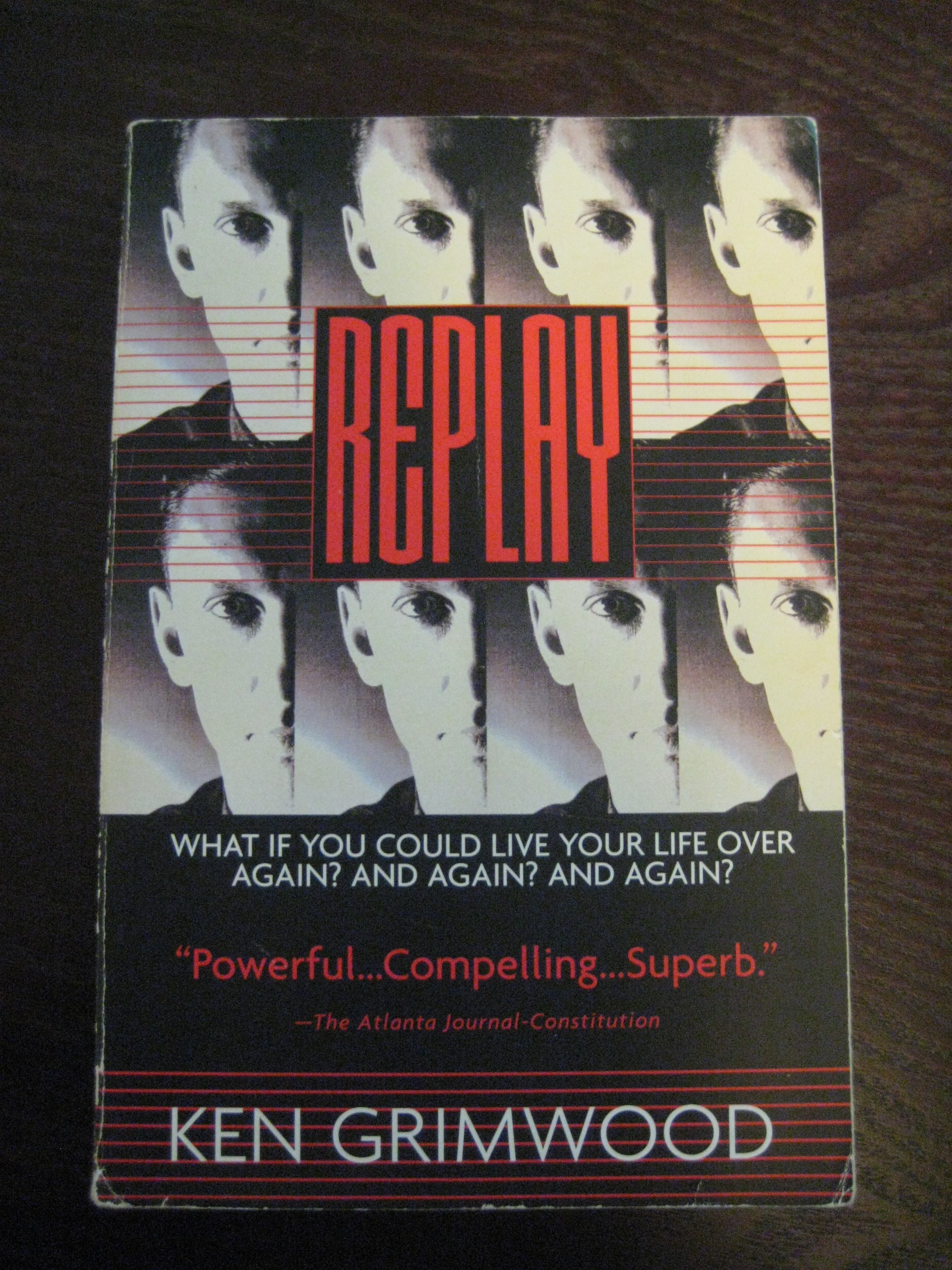
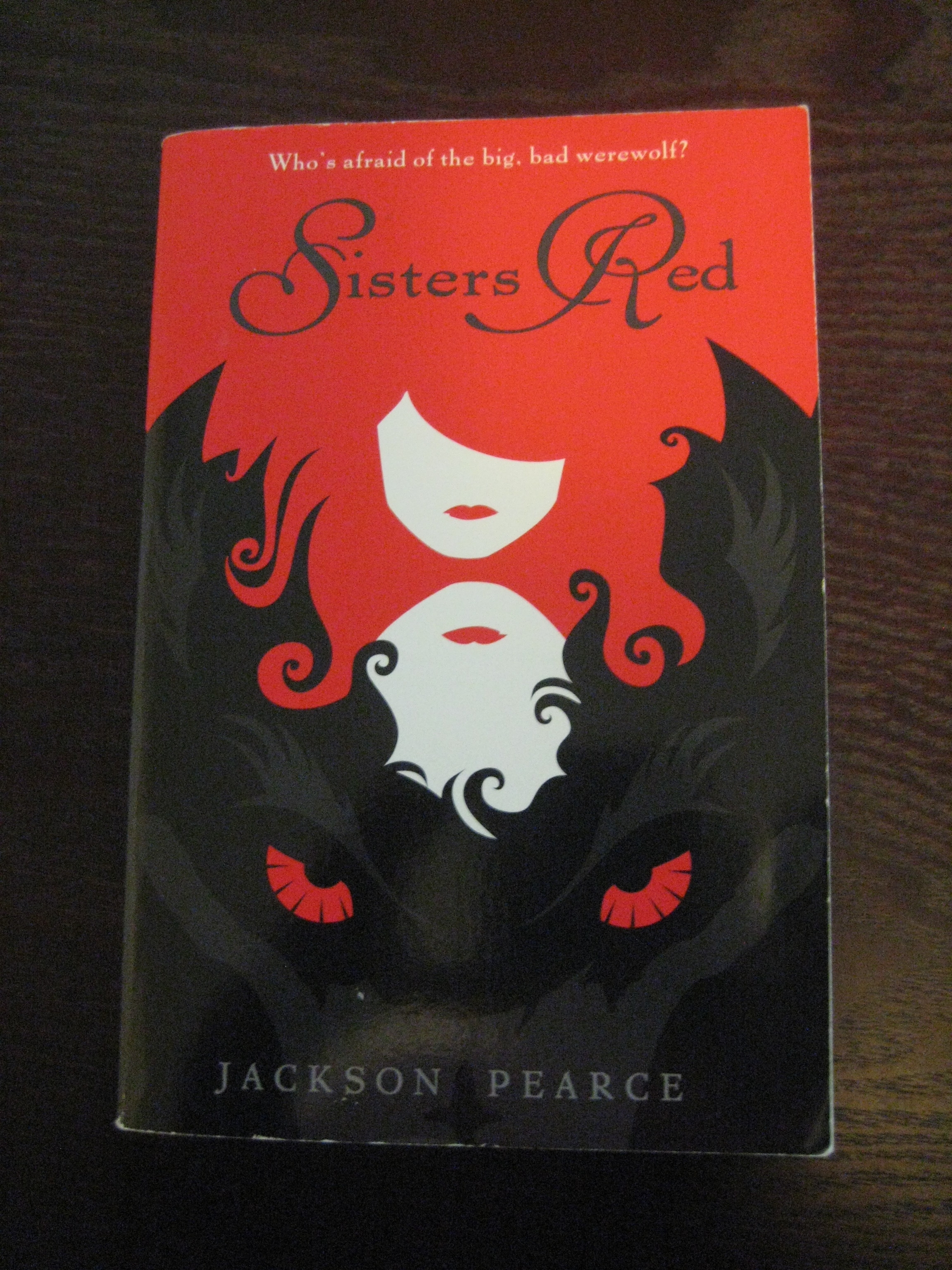
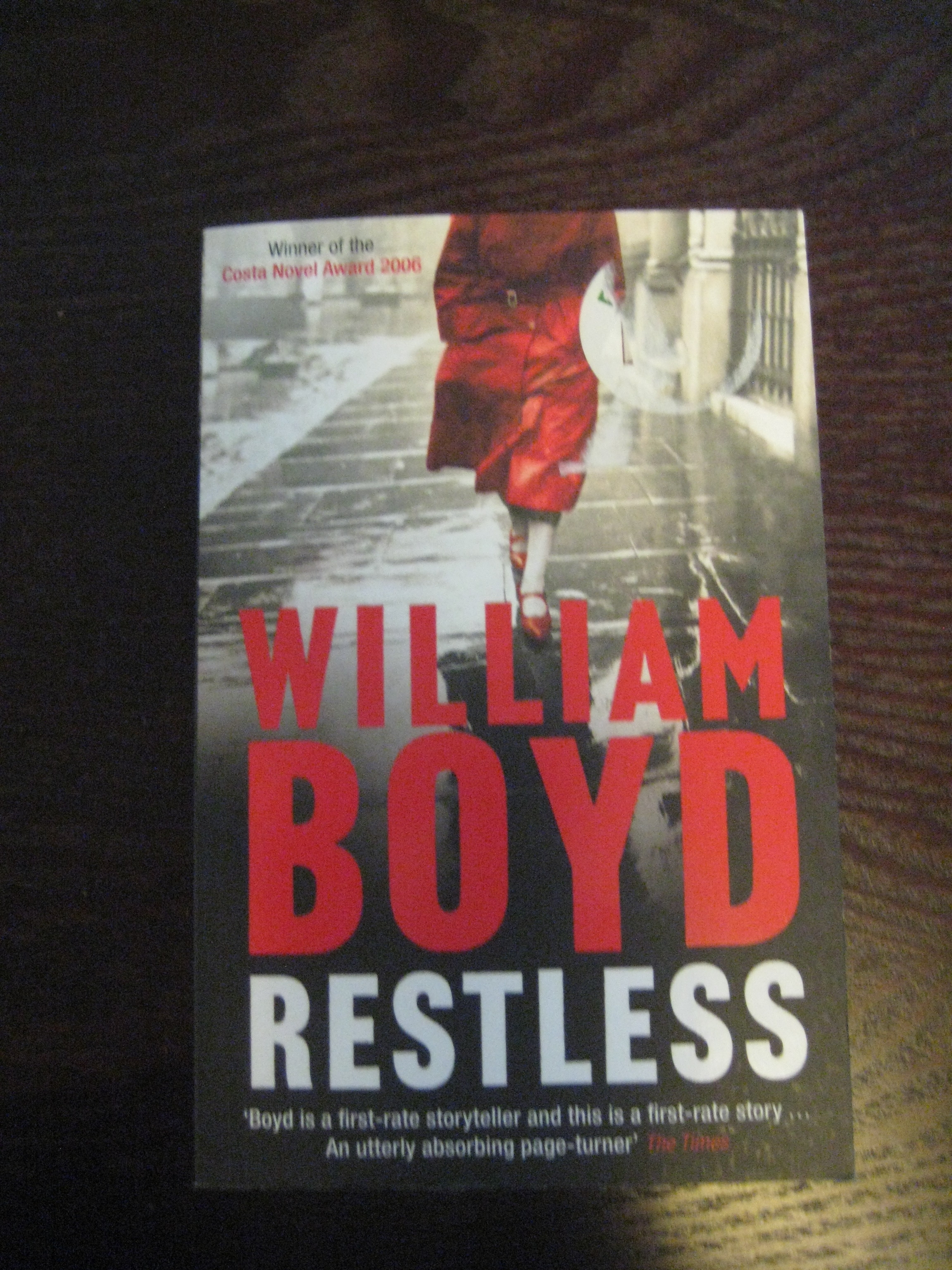
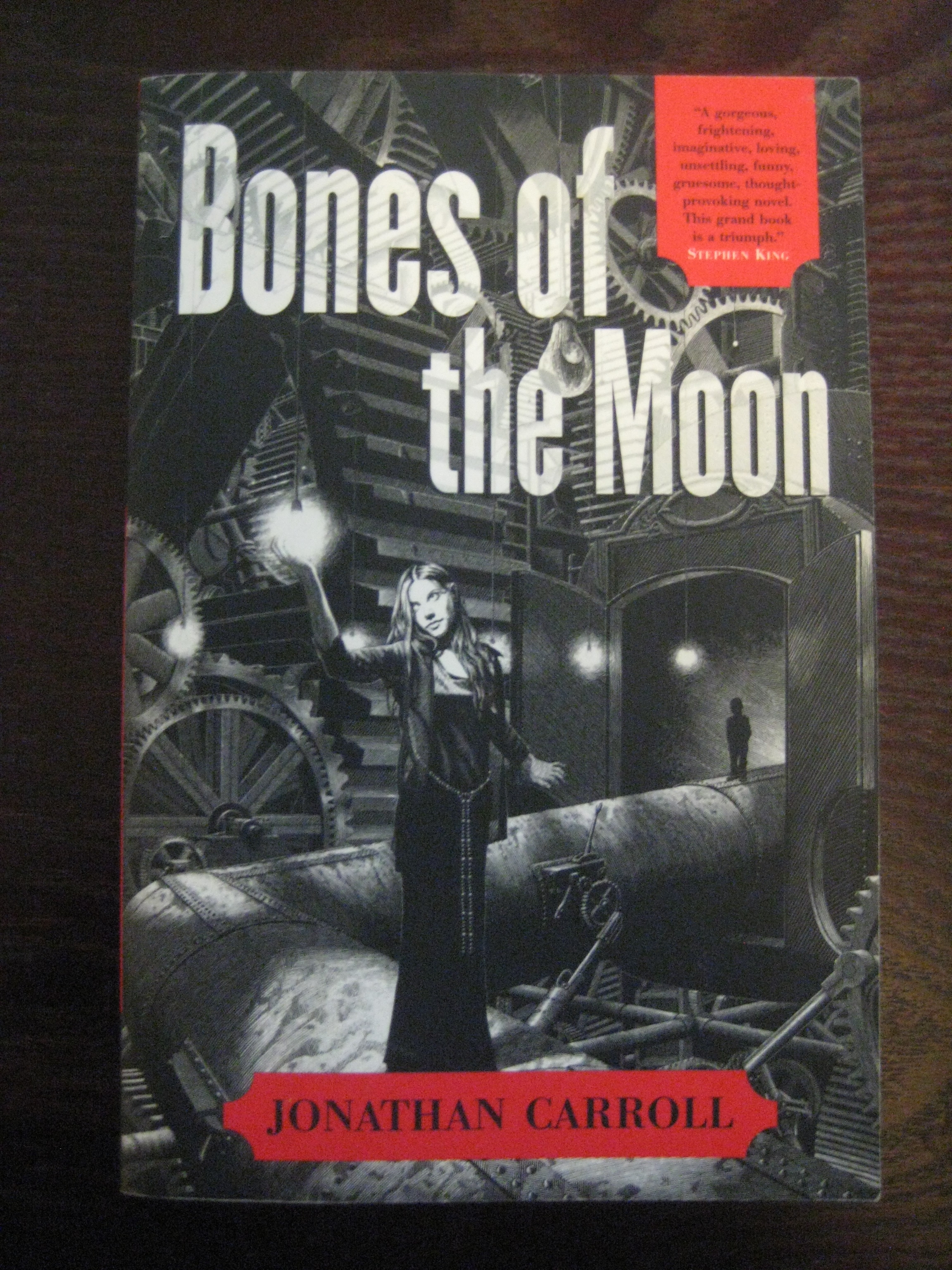
As I was reshelving books this past week, I pulled out some of my favorite red and black covers from my own collection. Excuse the shoddy camera work — that just proves that these are really mine. Here are some from my shelves that I think are most effective:

Replay by Ken Grimwood

A wonderful, awful, disturbing book of timey-wimey weirdness, as a man replays his life over and over again. If you had the ability to change your life, would you? The black and red cover with the repeating half-photo gives me a bit of the chills.

Sisters Red by Jackson Pearce

This YA book is a retelling of Little Red Riding Hood, with a Buffy-style heroine who kicks butt, brings down the monsters, and tries to make a better life for her sister.

Restless by William Boyd

I will admit to not having read Restless, but it sounds fascinating — and I do like the cover. Stark and a bit mysterious.

Bones of the Moon by Jonathan Carroll

Such an odd book, mind-bending at times. I’m still not sure whether it worked for me, but one thing’s certain — I do love the cover.

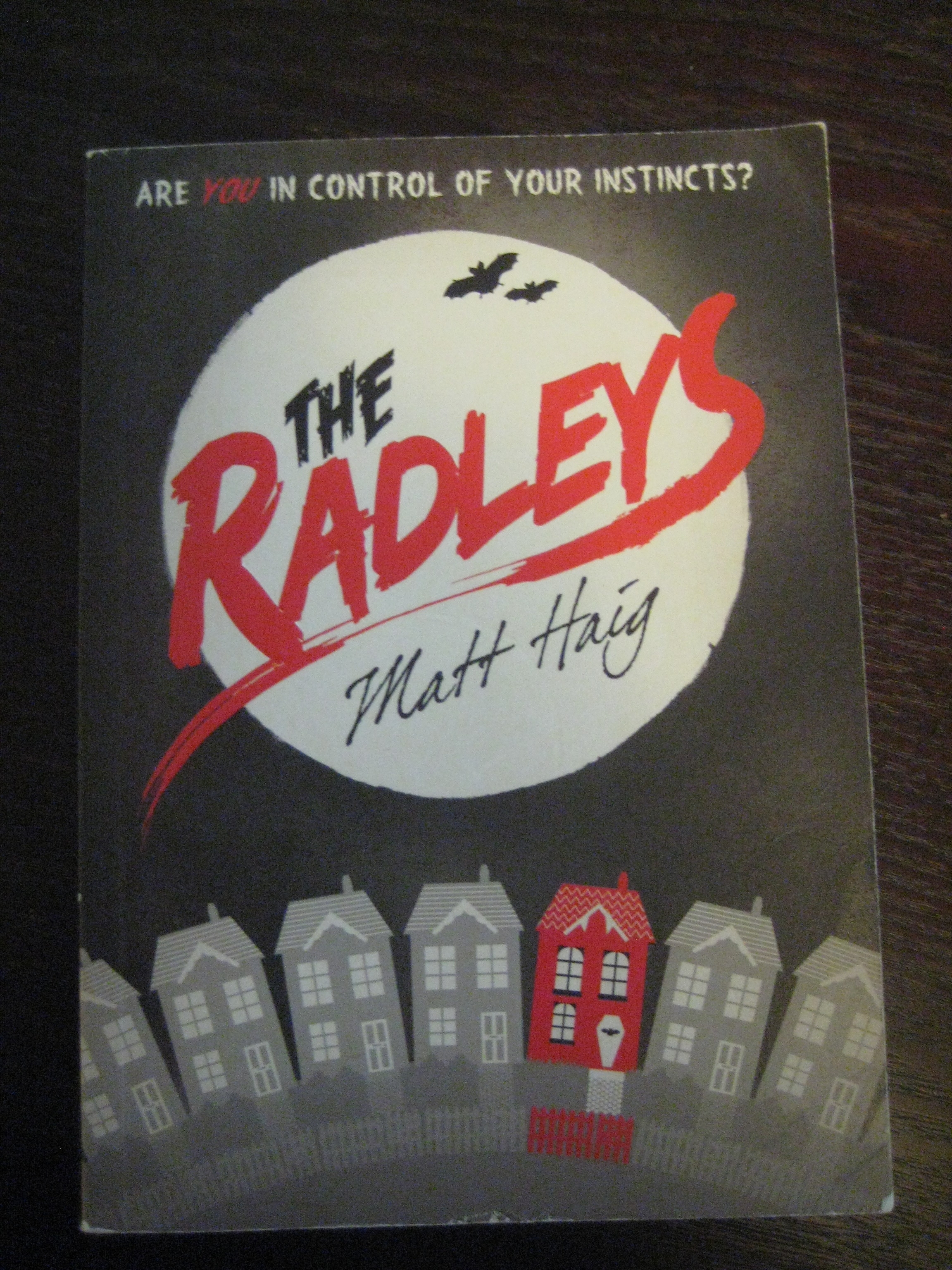
The Radleys, a genre-defying story of vampires living in the suburbs, got a comic-esque cover aimed toward the YA audience in the UK (above), but I actually prefer the US version, which conveys more of a sense of something sinister lurking behind the domestic facade:

The Radleys, with the US version, marketed as adult fiction

Sadly, my more camera was not up to completing its task, so although this book lives on my shelves, I could not get a decent picture of it and had to resort to importing an online version:

The Monsters of Templeton by Lauren Groff

This story of dark secrets in a small town is well-served by the sharp cover art that combines a gothic feel with modern images.

Another that I’ve read, but only as an e-book:

When She Woke by Hillary Jordan

This modern retelling of The Scarlet Letter is hauntingly well-done, and I really love the sharpness of the cover portrait.

Finally, I just came across this image of new editions of classic works by Stephen King:

I think I’ll be dreaming about these tonight. Wouldn’t they look terrific on my shelves?

That’s all I’ve got. How about you? What black and red beauties have caught your eye lately?

Book Review: The Revised Fundamentals of Caregiving by Jonathan Evison

Book Review: The Revised Fundamentals of Caregiving by Jonathan Evison

Benjamin Benjamin Jr. is a certified caregiver, having completed a night-school course offered at a church and mastering essentials like setting professionals boundaries, avoiding burnout, and memorizing helpful mnemonics such as ALOHA (Ask – Listen – Observe – Help – Ask again).  How very much Ben defines himself by his ability to provide care is central to this sad yet funny book.

When we first meet Ben, he is heading out on a job interview for the first time in a very, very long time. On the brink of middle age, he is tapped out, having used up every penny of his savings and with no other option if he wants to make rent on the impersonal, grungy “compartment” in which he resides. As we soon discover, Ben’s life has not always been such a wreck. Until just a few short years earlier, he seemed to have a golden life, true happiness, and everything a man could want — until disaster ripped his life apart and left him empty and hopeless. At the end of his rope, Ben is hired to care for Trevor, a 19-year-old wheelchair-bound muscular dystrophy patient, for whom Trevor provides companionship as well as the day-to-day physical care necessitated by Trevor’s degenerating condition.

Ben is clearly a natural at caregiving. Bodily functions don’t faze him; he cleans Trevor, applies his deodorant, dresses him, and maneuvers him in and out of his chair. Despite his commitment to his so-called professional boundaries, Ben has to constantly remind himself not to push Trevor past his comfort zone, not to goad him to break out of routine and try something new. Eventually, the two head out on a somewhat ill-conceived road trip to visit Trevor’s estranged, accident-prone father in Utah. Along the road, the two are joined by a variety of waifs and strays, all lost in some way and in need of care. Ben becomes a de facto protector and shepherd for his odd assortment of travel companions, as they drive through the American West past landscapes and attractions such as the world’s largest pit and other weird roadside highlights.

As the book progresses, the details of the horrible loss in Ben’s past slowly emerge. It’s no wonder the man is a mess. His grief is unending, his self-blame immense. He believes himself responsible for the destruction that occurred, and cannot see himself as deserving of happiness. Through his caregiving role and his developing relationship with Trevor, a glimmer of light emerges. Ben will never forget the past or stop hurting over his incomprehensible losses, but he can begin to trust himself once more. By book’s end, we see that Ben is perhaps not a totally lost cause after all, and although it will be long, his road to recovery and redemption is within his view, if not yet quite within his grasp.

I hesitate to say any more about the plot, as I believe the emotional impact would be lessened by knowing too much in advance. I found The Revised Fundamentals of Caregiving an affecting story, sad yet with moments of lightness and humor. The writer’s deft skills give sharp focus to the speech, physical traits, and personality quirks of the various secondary characters whose lives intersect with Ben’s, and Ben’s cynicism and bruised soul make him an interesting lens through which we readers can peek into his world.

I did find some awkward phrasings (“And what was I thinking in that instant just before the world went icy black, as I strode toward the front door irritably beneath my mountain of groceries?”) and odd word choices (Trevor diverted — not averted — his gaze), and a weird interlude related to Facebook that just didn’t ring true to life. These are relatively minor quibbles, however. Overall, I found Ben’s voice convincing, and the plot was a touching portrayal of a man’s journey from tragedy towards the first tiny specks of the possibility of finding meaning in life again.

Flashback Friday: My Year of Meats by Ruth Ozeki

It’s time, once again, for Flashback Friday…

Flashback Friday is a chance to dig deep in the darkest nooks of our bookshelves and pull out the good stuff from way back. As a reader, a blogger, and a consumer, I tend to focus on new, new, new… but what about the old favorites, the hidden gems? On Flashback Fridays, I want to hit the pause button for a moment and concentrate on older books that are deserving of attention.

My rules — since I’m making this up:

  1. Has to be something I’ve (you’ve) read myself (yourself) — oh, you know what I mean!
  2. Has to still be available, preferably still in print
  3. Must have been originally published 5 or more years ago

Other than that, the sky’s the limit! Join me, please, and let us all know: what are the books you’ve read that you always rave about? What books from your past do you wish EVERYONE would read? Pick something from five years ago, or go all the way back to the Canterbury Tales if you want. It’s Flashback Friday time!

My pick for this week’s Flashback Friday:

My Year of Meats by Ruth Ozeki

(published 1998)

From Amazon:

The perfect fiction companion to The Omnivore’s Dilemma and In Defense of Food

Now that Michael Pollan’s New York Times bestsellers have opened up a national dialogue about where food really comes from, conscientious readers everywhere will want to devour My Year of Meats. When documentarian Jane Takagi-Little finally lands a job producing a Japanese television show that just happens to be sponsored by the American meat-exporting industry, she begins to uncover some unsavory truths about love, fertility, and a very dangerous hormone called DES. A modern-day take on Upton Sinclair’s The Jungle, veteran filmmaker Ruth Ozeki’s novel has been hailed as “rare and provocative” (USA Today) and “up-to-the-minute” (Chicago Tribune).

You know how being a part of a book group is supposed to widen your reading horizons by exposing you to great works that you might not otherwise have picked up? My Year of Meats is a perfect example of that for me. I’m not a foodie, I hadn’t heard about this book, and I would probably not be drawn to a book with a cow on the cover under normal circumstances. But hey, I’m a cooperative book group member, so when my group selected My Year of Meats as our next book, I obediently picked up a copy. And I’m so glad that I did.

Ruth Ozeki’s first novel packs a powerful punch. At times humorous and tongue-in-cheek, My Year of Meats, in telling the story of a woman learning some hidden truths about a troublesome industry, offers its own exposé of the business of growing, manufacturing, tinkering with, and selling meat. At the same time, this is a work of fiction with engaging lead and secondary characters, a propulsive plot, and terrific writing.

I’ve recommended My Year of Meats to many people over the years, with great success. Be warned: once you read this, you may never look at the steak on your plate in quite the same way again.

So, what’s your favorite blast from the past? Leave a tip for your fellow booklovers, and share the wealth. It’s time to dust off our old favorites and get them back into circulation! 

Note from your friendly Bookshelf Fantasies host: This is my baby-steps attempt at a blog hop! Join in, post a Friday Flashback on your blog, and share your link below. Don’t have a blog post to share? Then share your favorite oldie-but-goodie in the comments section. Let’s get this party started!