It’s Friday! It’s Friday!

Upon waking up this morning and feeling very giddy about the fact that Friday has finally arrived after an excruciatingly long workweek, my first thoughts naturally turned to books. I wondered — have I ever read a book with the word Friday in its title?

I couldn’t come up with any off the top of my head, but a quick perusal of my Goodreads shelves reveals that I have, indeed, read exactly one Friday book, entitled… wait for it… Friday. Herewith, a salute to Friday books:

Friday by Robert A. Heinlein (1982)

My one and only Friday book, read so long ago, in the dark days of the 1980s, that I can barely remember the plot — although I do recall enjoying it quite a bit. I was on a mini-Heinlein bender in those days, and read this one right after discovering I Will Fear No Evil and Stranger In A Strange Land.

The description on Amazon is lamentably brief and not terribly helpful:

Engineered from the finest genes, and trained to be a secret courier in a future world, Friday operates over a near-future Earth, where chaos reigns. Working at Boss’s whimsical behest she travels from far north to deep south, finding quick, expeditious solutions as one calamity after another threatens to explode in her face….

Still, I seem to remember that it was quite fun to read, brimming with typical Heinlein wit and humor. Maybe not his finest, but I think fans of ’80s sci-fi will have a good time with Friday.

A quick search reveals a few other promising Friday titles:

The Friday Night Knitting Club by Kate Jacobs (2007)

From Booklist:

Georgia Walker’s entire life is wrapped up in running her knitting store, Walker and Daughter, and caring for her 12-year-old daughter, Dakota. With the help of Anita, a lively widow in her seventies, Georgia starts the Friday Night Knitting Club, which draws loyal customers and a few oddballs. Darwin Chiu, a feminist grad student, believes knitting is downright old-fashioned, but she’s drawn to the club as her young marriage threatens to unravel. Lucie, 42, a television producer, is about to become a mother for the first time–without a man in her life. Brash book editor KC finds her career has stalled unexpectedly, while brilliant Peri works at Walker and Daughter by day and designs handbags at night. Georgia gets her own taste of upheaval when Dakota’s father reappears, hoping for a second chance. The yarn picks up steam as it draws to a conclusion, and an unexpected tragedy makes it impossible to put down. Jacobs’ winning first novel is bound to have appeal among book clubs.

Oh, and it’s a series. A series about knitting. Okaaaaaay…

Moving on, a non-fiction title that I know has a lot of fans and followers:

Friday Night Lights: A Town, A Team, And A Dream by H. G. Bissinger (1990)

I didn’t read the book; I didn’t watch the TV series. I understand both were great.

From Amazon:

Secular religions are fascinating in the devotion and zealousness they breed, and in Texas, high school football has its own rabid hold over the faithful. H.G. Bissinger, a Pulitzer Prize-winning journalist, enters into the spirit of one of its most fervent shrines: Odessa, a city in decline in the desert of West Texas, where the Permian High School Panthers have managed to compile the winningest record in state annals. Indeed, as this breathtaking examination of the town, the team, its coaches, and its young players chronicles, the team, for better and for worse, is the town; the communal health and self-image of the latter is directly linked to the on-field success of the former. The 1988 season, the one Friday Night Lights recounts, was not one of the Panthers’ best. The game’s effect on the community–and the players–was explosive. Written with great style and passion, Friday Night Lights offers an American snapshot in deep focus; the picture is not always pretty, but the image is hard to forget.

After reading The Blind Side by Michael Lewis (before it was a movie, thank you very much!), I got a lot of mileage out of shocking the people who know me well by announcing that I actually read a football book. I really should read Friday Night Lights, although I’m afraid my friends will start to worry if I read two sports book in my lifetime.

Friday’s Child by Georgette Heyer (1944)

From Amazon:

When the incomparable Miss Milbourne spurns the impetuous Lord Sherington’s marriage proposal (she laughs at him—laughs!) he vows to marry the next female he encounters, who happens to be the young, penniless Miss Hero Wantage, who has adored him all her life. Whisking her off to London, Sherry discovers there is no end to the scrapes his young, green bride can get into, and she discovers the excitement and glamorous social scene of the ton. Not until a deep misunderstanding erupts and Sherry almost loses his bride, does he plumb the depths of his own heart, and surprises himself with the love he finds there.

I’ve never read anything by Georgette Heyer, but I know she has legions of adoring fans. For me personally, I think this would go on the “some day when I really have nothing else to read” pile, but I know there are a lot of avid readers who’d want to gobble this one up right away.

Black Friday by James Patterson (1986)

From Publishers Weekly:

While Patterson’s thriller is slightly out-of-date with its Cold War setting, it remains dramatically contemporary in its vision of a stock market thrown into chaos when a group of saboteurs blows up several Wall Street institutions. Arch Carroll, head of the CIA’s antiterrorist division, and Caitlin Dylan, director of enforcement for the SEC, team up professionally, and later romantically, to locate the Wall Street terrorists before they strike again. Arch travels to Paris and back, as he finds himself on the trail of former colonel David Hudson and his ragtag band of vengeance-seeking Vietnam veterans.

So not for me. But hey, it takes all types, right?

Freaky Friday by Mary Rodgers (1972)

From Amazon:

Annabel thinks her mom has the best life. If she were a grown-up, she could do whatever she wanted Then one morning she wakes up to find she’s turned into her mother . . . and she soon discovers it’s not as easy as it looks.

I can’t believe that I’ve never read this! I’ve seen the Jodie Foster and Lindsay Lohan versions of the movie, both cute in their own ways. I wonder if this book holds up, or if would seem hideously old-fashioned for kids today?

Friday Nights by Joanna Trollope (2008)

From Publishers Weekly:

When a British retiree invites two young single mothers from the neighborhood to her flat, a Friday night tradition begins. As their klatch widens, Trollope’s memorable characters do more than just represent varying female predicaments: they develop as rich individuals who come to triumph over their pasts. Paula has a wary relationship with the married man who fathered their son, Toby: she must move on, yet stay in touch for Toby’s sake. Struggling Lindsay was widowed before she gave birth, while her sister, Jules, is a careless aspiring nightclub DJ with a wild streak. Independent, put-together Blaise contrasts starkly with her often bedraggled business partner, Karen, who barely manages her role as mother and breadwinner. And then there is Eleanor, the catalyst for the gatherings, a no-nonsense older woman who, though full of wisdom and spunk, keeps her thoughts to herself unless asked. When a new man enters Paula’s life, Trollope (Second Honeymoon) masterfully shows how work and romance can tip the scales in female friendships. The result is a careful and compelling examination of one man’s insidious effect on a group of female friends, as memorable as it is readable.

Sounds a little Jane Austen Book Club-y, but I’ve read other novels by Joanna Trollope and found her writing sharp, insightful, and sensitive.

And my final addition for this salute to Fridays:

Friday The Rabbi Slept Late by Harry Kemelman (1964)

From Goodreads:

Rabbi David Small, the new leader of Barnard’s Crossing’s Jewish community, can’t even enjoy his Sabbath without things getting stirred up in a most unorthodox manner: It seems a young nanny has been found strangled, less than a hundred yards from the Temple’s parking lot — and all the evidence points to the Rabbi.

Add to that the not-so-quiet rumblings of his disgruntled congregation, and you might say our inimitable hero needs a miracle from a Higher Source to save him….

It gave me a nostalgic little giggle to see this book pop up in my search. I remember seeing my parents read this and others in the series when I was a kid. A mystery series with a rabbi as the hero? Sounded kind of goofy to me at the time, but based on reader reviews, these books are both award-winning and well-loved by their readers.

So there you have it: Science fiction, thriller, sports, contemporary fiction, Regency-era historical romance, children’s fiction, and a crime-solving rabbi — something for everyone.

Enjoy your Fridays, whatever you may choose to read!

And hey, if you’ve got an exciting book underway for the long weekend, do tell — leave a comment and let us all know what you’re reading this Labor Day weekend.
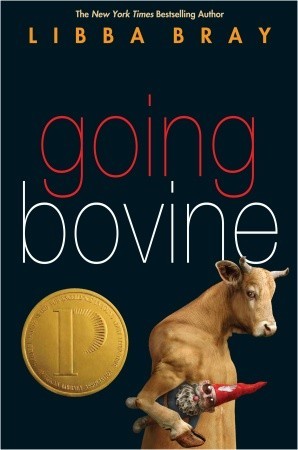
Book Review: Going Bovine by Libba Bray

Book Review: Going Bovine by Libba Bray

Gotta love an author who promotes her book looking this this:

That trailer just cracks me up, and you can get a pretty good sense of just how wacky and weird Libba Bray’s literary creation is by watching her play ukulele in a cow suit.

So… Going Bovine. Big award winner. First published in 2009, it won the 2010 Michael L. Printz Award for young adult fiction. I wanted to love this book, and in parts, I really did.

Going Bovine is the story of Cameron, underachieving nobody shuffling through an underwhelming life: home life unremarkable, school no great shakes, and as for friends — well, they’re more like a group of misfits who tolerate each other because of their common loser/stoner status. Until one day things get weird, Cam starts having seizures and episodes, and ends up in the hospital diagnosed with Creutzfeldt–Jakob disease — that’s mad cow disease to you and me.

Elements of the absurd abound. Cam is below notice in his school until his diagnosis; next day, his school is holding a pep rally in his honor, cheerleaders want to connect with him, and the school faculty seems to think brown and white ribbons (you know, a cow motif) are an appropriate way to show support.

Cam deteriorates rapidly as the out-of-control prions attack his brain, and is soon hospitalized with no hope of recovery. Or is he? In what is either the hallucinations of a slowly dying brain, a journey into a parallel universe, or the craziest buddy road-trip ever, Cam sets out across the South with Gonzo the neurotic dwarf, Dulcie the punk angel, and Balder, the Viking hero/yard gnome. Along the way, they’re chased by fire giants and the sinister United Snow Globe Wholesalers, making pitstops at CESSNAB (The Church of Everlasting Satisfaction and Snack ‘N Bowl), the Daytona Beach Party House, and Putopia (Parallel Universe Travel Office … pia), en route to Disney World, site of Cameron’s happiest childhood memory and the endpoint of Cam’s quest to save the entire world from being sucked into a wormhole.

Libba Bray’s writing crackles with wit, has enough snark and social commentary to delight even the most cynical, and makes the story of a terminally ill teenager pretty fun to read. She sneaks in a lot of insidious little digs, such as the high school teacher prepping his class for the all-important State Prescribed Educational Worthiness standardized test:

Is Don Quixote mad or is it the world that embraces these ideals of the knight-errant that is actually mad? That’s the rhetorical question that Cervantes seems to be posing to us. But for our purposes, there is a right answer, and you need to know that answer when you take the SPEW test.

Or take the CESSNAB sanctuary, where people seek refuge from the harsh world in order to focus on being happy all the time. Everyone bowls a strike, everyone drinks vanilla smoothies, and when they get a hint of stress, they can go bowl some more or maybe buy stuff. As Cam explains:

I take a deep breath; in my head, I list five things I love about myself. “You know what, Gonzo? I want to help you find what I’ve found. Here, have a key chain,” I say, handing him one of the sunny yellow giveaways they hand out whenever you do something even remotely good, like remember to put the toilet seat down. Sometimes they give you a key chain just for showing up.

There’s a lot to love in this book, and ultimately Cam’s journey is both terribly touching and laugh-out-loud funny. And yet, I couldn’t maintain a steady interest throughout. I was completely engrossed for about the first third of the book, and then it just tapered off for me. The road trip elements seem to go on forever, and after a while, it was just all so over the top that it started seeming completely arbitrary. Lots of craziness, lots of hijinks, lots of bursts of insights into the meaning of it all — but as a whole, it was just all a bit too much.

It’s possible that someone in the target demographic for this book might find it profound in ways that I, as an adult, can’t quite get. Maybe I’m not at the right stage of life to fully appreciate all the quirky glories of Going Bovine. In the end, though, I can only assess the book in terms of my own experience, and unfortunately, I just didn’t connect to Going Bovine in the way that I’d hoped.

Save

Save

Maps of fictional worlds

I’m somewhat of a map geek, I suppose. Just this past weekend, I got separated from my loved ones at a flea market when I stopped at a booth featuring historical maps of California and the West… and must have entered a time portal, because when I looked up, fifteen minutes had gone by and my family was nowhere in sight.

But beyond maps of real-life places, I’m especially fond of maps of the worlds I visit in books. It’s just SO COOL to see the author’s world laid out visually, and I tend to get lost in them. I really do want to know the best way to get from the Shire to Mordor, with a detour to Gondor along the way. And just where is Pentos in relation to Westeros? Inquiring minds want to know.

[Side note: One of my big beefs about reading on my Kindle is how annoying it is to try to flip back and forth to check the map every time a new place is mentioned in a book. I’ll take the “stick a finger in the page” method any day.]

I came across this map today, which puts a whole slew of fictional lands into the same world. Neat, right? So apparently Oz is just north of Middle Earth. Who knew?

Here are a few maps of some of my favorite places to visit:

Alera, from Jim Butcher’s Codex Alera series. If you haven’t read these yet, stop whatever you’re doing and read these immediately!

I just did a quick Google search for maps of Westeros, and discovered that every fan and his brother has a map. There are interactive maps, topographical maps, maps with caricatures of the main characters, maps with all the house sigils… you name it, it’s out there. Here’s one that gives the basics of Westeros, although it doesn’t include the lands beyond the sea:

Westeros, from the worlds of A Song of Ice and Fire by George R. R. Martin

Next up, always a classic:

Middle Earth. Again, it seems that there are endless variations of this one available out there on the interwebs.

And for a newer classic:

Fillory, from The Magicians by Lev Grossman

Of course, no round-up of fictional lands would be complete without:

Narnia!

What I want to know now is: Now that I have the map, how do I get there? Do I need a passport? Can I find cheap flights on Orbitz?

What fictional worlds would you love to explore?


Wishlist Wednesday

And now, for this week’s Wishlist Wednesday…

The concept is to post about one book from our wish lists that we can’t wait to read. Want to play? Here’s how:

  • Follow Pen to Paper as host of the meme.
  • Please consider adding the blog hop button to your blog somewhere, so others can find it easily and join in too! Help spread the word! The code will be at the bottom of the post under the linky.
  • Pick a book from your wishlist that you are dying to get to put on your shelves.
  • Do a post telling your readers about the book and why it’s on your wishlist.
  • Add your blog to the linky at the bottom of the post at Pen to Paper.
  • Put a link back to pen to paper (http://vogue-pentopaper.blogspot.com) somewhere in your post.
  • Visit the other blogs and enjoy!

My Wishlist Wednesday book is:

Moloka’i by Alan Brennert
(published 2004)

From Amazon:

This richly imagined novel, set in Hawai’i more than a century ago, is an extraordinary epic of a little-known time and place—and a deeply moving testament to the resiliency of the human spirit.
Rachel Kalama, a spirited seven-year-old Hawaiian girl, dreams of visiting far-off lands like her father, a merchant seaman. Then one day a rose-colored mark appears on her skin, and those dreams are stolen from her. Taken from her home and family, Rachel is sent to Kalaupapa, the quarantined leprosy settlement on the island of Moloka’i. Here her life is supposed to end—but instead she discovers it is only just beginning.
With a vibrant cast of vividly realized characters, Moloka’i is the true-to-life chronicle of a people who embraced life in the face of death. Such is the warmth, humor, and compassion of this novel that “few readers will remain unchanged by Rachel’s story” (mostlyfiction.com).

Why do I want to read this?

Moloka’i has actually been on my to-read list for some time now. I’ve always been fascinated by Hawaiian history, and really enjoy good historical fiction set in Hawaii. The story of the leper colony on the island of Moloka’i is quite moving — and sadly, is quite true.  Alan Brennert has published Honolulu more recently, another piece of historical fiction set in Hawaii in the early 20th century. If I enjoy Moloka’i as much as I anticipate, I’m sure I’ll want to read Honolulu too.

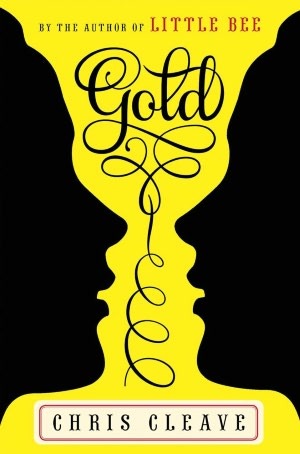
Book Review: Gold by Chris Cleave

gold

When I first read a blurb about Chris Cleave’s new novel, Gold, my initial reaction was basically, “thanks, but no thanks.” A book about athletes? Olympic cycling competitions? Can you actually hear my brain melting?

Luckily, I ended up going with my second, more reasoned reaction, which was more along the lines of “Bicycling? Sounds boring, but… I did like Little Bee, so let’s give it a whirl.” Ha! A whirl! Funny me.

Gold is the story of two British bicycle racers, Zoe and Kate, who have been best friends and arch-rivals since meeting at age nineteen as they joined the elite prospects program of the British national cycling team. Zoe is a damaged soul, who copes with a childhood trauma by pouring everything she has into her competitions. On the track, she’s all power and focus. Off the track, she’s a mess. Kate is kinder and gentler, a fierce competitor but one who also allows herself to feel deeply. Both rise to the top of their sport, competing against each other in the international arena, year after year, to be the one who captures the gold.

Zoe’s extreme need to win is illustrated early on in Gold, when her coach tells her before a race that the worst that can happen is that she wins silver instead of gold, and Zoe responds, “I’d rather fucking die.”

Zoe becomes a superstar after winning four gold medals at the 2004 Athens Olympic Games, while Kate stays home to take care of her infant daughter. Time and again, Kate misses her chance, and as Gold unfolds, the 2012 Olympics represent the final shot for both women – at age 32, Zoe needs to go out with a blaze of glory and Kate is desperate to claim the gold that has narrowly slipped through her fingers throughout her career.

The action in Gold takes place over three pivotal days in the April leading up to the London games. When the IOC makes a sudden rule change, Kate and Zoe’s competition reaches a boiling point, and it becomes clear that only one of them can walk away a winner. As they deal with their hopes, needs, and fears, and their burning thirst for gold, we’re treated to flashbacks that shed crucial light on their tortured past as competitors and friends.

This passage nicely sums up the central internal struggle for Gold‘s characters:

It would be harder for them than they realized, because outside those exalted two minutes of each race, they were condemned to be ordinary people burdened with minds and bodies and human sentimental attachments that were never designed to accelerate to such velocities. They would go through agonies of decompression, like divers returning too quickly from the deep.

Let me stay right up front that I could not put this book down. I started it on Friday night, and finished it on Sunday night right before the stroke of midnight. I stayed up way too late, and even gave up watching some critical TV because I just couldn’t go to bed without knowing how it all ended.

That said, I do have a few minor quibbles about Gold.

Quibble 1: Looming largest is the fact that Zoe is so damaged, so incapable of empathy and compassion, that I had a hard time believing that she and Kate had an actual friendship. Zoe does horrific things to Kate, on and off the track, in order to gain the psychological advantage in competition. Zoe is never “off”; everything she does comes from her need to win. Kate is a feeling, caring woman, and while she takes Zoe in and tries to nurture her, I didn’t quite buy that she would ever trust her.

Quibble 2: Kate is married to Jack, also a gold-medalist in cycling, and their daughter Sophie is an eight-year-old leukemia patient with a Star Wars fixation. I thought the Star Wars elements were a bit overdone; I get that this was supposed to be Sophie’s coping mechanism, but it got in the way of the drama at times and gave Sophie an internal voice that just didn’t ring true for a child her age.

Quibble 3: As an American reader, I wasn’t sure what to make of the superstardom of the British cycling champions. I’m sure I couldn’t name a single American athlete in this sport, and I had to wonder as I read whether cycling really is such a big deal in Britain (note: based on my quick and dirty internet research, the answer would be yes) and whether athletes such as Zoe and Kate really would become faces on billboards, hounded by paparazzi and plastered across tabloids. (This part I couldn’t quite figure out — I’d appreciate enlightenment!)

Quibble 4: The final 10 pages or so seemed a bit tacked on to me, as if the author reached the end and was just trying to tie it all up neatly and quickly. Still, I can’t complain too much. The fact is, I couldn’t stop reading, and once I got to within 50 pages of the end, there was no way I was going to unglue my eyes from this book until I’d read every last word.

Wrapping it all up:

I was concerned that I would be bored by, or at the very least uninterested in, the cycling focus of Gold. Fortunately, I was proven wrong. As a total newbie to the sport of competitive track cycling, I found the descriptions of training regimens, the extreme stress on the body, the physical and psychological strategizing of racing, and the adrenaline-pumping rush of competing in front of a crowd compelling indeed. Being a person whose main form of competition is the annual Goodreads reading challenge, I didn’t think I’d be able to relate to a story about hardcore athletes. Again, I was wrong, and the glimpse into a new world was for me quite fascinating.

I realize I’ve given short shrift in this review to Kate, Jack, and Sophie’s home life and daily struggles. Their family is arguably as much the centerpiece of Gold as the racing is, but I’ve avoided saying too much about this part of the book in order to avoid spoilers and possibly softening the impact of the family’s unfolding calamity for other readers.. Suffice it to say, the relationships were quite lovingly drawn, and I often felt the sorrows of the parents as a punch right to the stomach.

I must say that I wish I’d read Gold when it was released earlier this summer, prior to the London Olympics. I can only imagine how thrilling it would have been to read this book and then watch the real athletes pouring their hearts into their races. Even so, I found myself rushing to Google “Olympic cycling events”  immediately upon finishing this book, and I can tell already that four years from now, when the next Olympics roll around, I’ll be keeping an eye on a new sport.

Save

The Monday agenda

Not a lofty, ambitious to-be-read list consisting of 100+ book titles. Just a simple plan for the upcoming week — what I’m reading now, what I plan to read next, and what I’m hoping to squeeze in among the nooks and crannies.

Continuing with the Monday agenda concept started a few weeks ago, it’s time to see how well last week’s reading agenda worked out and sketch out the plan for the coming week.

From last week:

Going Bovine by Libba Bray: As of early last week, I’d gotten about 2/3 of the way through this bizarre, funny book about a boy with mad cow disease. And then I hit a wall. It’s not that the book stopped being interesting or engaging in any way; I just reached a point where I felt like moving on. Going Bovine is still in my huge messenger bag that I carry everywhere with me, and I haven’t officially given up or anything. It’s just become a “not right now” kind of situtation.

Gold by Chris Cleave. Finished last night a few breath’s shy of midnight (hence the dark circles under my eyes and the failure to watch the True Blood season finale). The review should be along shortly. The fact that I went from half-heartedly picking up the book on Friday to staying up reading way too late on a work-night should tell you something about how I felt about this book.

In graphic novels, I ended up going with the Locke & Key series by Joe Hill. My library had volumes 1 – 4 available, and I gobbled them up. Dark, creepy, compulsively readable, Locke & Key has me hooked. Here’s hoping the wizards at the public library decide to order volume 5 pronto.

Drums of Autumn by Diana Gabaldon (group re-read): Two challenging, thought-provoking chapters. We’re really getting to the good stuff!

And this week’s new agenda:

Every Day by David Levithan: I’ve had this one on pre-order for a while, and it should arrive tomorrow. This was my Wishlist Wednesday book a couple of weeks ago; you can see why I want to read this one here.

Beyond that, for once I can’t say that I have absolute plans. I’ll try to get back into Going Bovine — would love to cross this one off my pending list already. Maybe a young adult novel from my to-read shelf: The Unbecoming of Mara Dyer or Small Damages, perhaps. I have review copies of a few upcoming titles as well, so I should really start digging into some of those. (Thank you, Netgalley!)

In graphic novels, I have the Jack of Fables series ready to go, but seeing how I tend to start a series and then not come up for air until I’m done, I’d better try to get some other reading done first.

Drums of Autumn by Diana Gabaldon (group re-read): Chapters 42 and 43 on deck for this week. Like I said, the good stuff! And by the way, if you’re a fan and want to jump into the conversation, please do! Let me know if you need directions to the online group — I’d be glad to point the way.

So many book, so little time…

That’s my agenda. What’s yours? Add your comments to share your bookish agenda for the week.

A bookish sort of tribute to Neil Armstrong


I was sad to hear the news today about the passing of Neil Armstrong, a true American icon and hero. I’ve always been fascinated by the history of the US space program, from childhood — watching the moon landing on our grainy black-and-white TV — through adulthood, with tragedies and triumphs viewed on television and the internet, visits to air and space museums and the Kennedy Space Center, where we gawked at the lunar capsules and launch pads, and of course, since I’m me, with fact, figures, and fictions absorbed through the pages of books.

And so, I thought I’d give an overview of my own collection of space books — some old, some new — as a tribute to a man who inspired us all to look to the stars (and to practice faux moon jumping in our backyards when no one was looking).


The Right Stuff by Tom Wolfe (1979)

Tom Wolfe’s account of the early development of the US space program, focusing on the Mercury astronauts and what it meant to be the best, is a classic; a combination of history, social commentary, and sharply drawn wit. (I was amused to pull my copy off the shelf for the first time in years and see the hardcover price of $12.95. Ah, those were the days!)

Space by James Michener (1982)

As with all great Michener novels, Space is a heady mix of history and fiction, following the trajectory of space exploration from its post-war inception through the Mercury, Gemini, and Apollo programs, climaxing with a fictional Apollo mission to the dark side of the moon. I loved this book’s combination of historical fact and fictional drama, filled with characters of both national stature as well as the supporting players on the home front. It’s been years since I’ve read this book, but I vividly recall the emotional roller coaster that it took me on.

Packing for Mars by Mary Roach (2010)

Mary Roach cracks me up, plain and simple. A science writer with the phrasing and timing of a stand-up comedian, I don’t think there’s a subject out there that Mary Roach couldn’t make hilarious. In Packing for Mars, she examines the day-to-day challenges of sending human beings into space, an environment our bodies are clearly not cut out for. She answers the question on everyone’s mind (just how do astronauts go to the bathroom?), explains the best options for surviving an elevator crash, and crams in a ton of useful knowledge, all the while being incredibly entertaining.

Two more from my to-read shelf, recent additions from various used book bonanzas of the past year:

Rocket Men: The Epic Story of the First Men on the Moon by Craig Nelson (2009)

I was so happy to find a copy of this one! From the Booklist review:

Using interviews, NASA oral histories, and declassified CIA material, Nelson has produced a magnificent, very readable account of the steps that led to the success of Apollo 11. In the 40 years since the first moon landing and the 52 years since Sputnik was launched, it isn’t always remembered now what an experiment the Apollo program was, nor that the space race was as much a military as a scientific campaign. The space program was launched using the knowledge of rockets available at the end of World War II and former Third Reich scientists working in both American and Soviet programs. When it came to sending men into orbit and beyond, routines and equipment had to be invented and tested in minute increments. Nelson’s descriptions take us back, showing the assorted teams and how they worked together. We meet the astronauts and find out why they were eager to take on this mission, and we also meet the hypercareful technicians, without whom neither men nor craft would have left the ground. Nelson shows, too, how the technology and the politics of the times interrelated. Leslie Fish, songwriter, summed it up perfectly, “To all the unknown heroes, sing out to every shore / What makes one step a giant leap is all the steps before.” Nelson brightly illuminates those steps.

Riding Rockets: The Outrageous Tales of a Space Shuttle Astronaut by Mike Mullane (2006)

After reading Mary Roach’s praise for this memoir, I knew I just had to get a copy. From Amazon:

In 1978, the first group of space shuttle astronauts was introduced to the world — twenty-nine men and six women who would carry NASA through the most tumultuous years of the space shuttle program. Among them was USAF Colonel Mike Mullane, who, in his memoir Riding Rockets,strips the heroic veneer from the astronaut corps and paints them as they are — human.

Mullane’s tales of arrested development among military flyboys working with feminist pioneers and post-doc scientists are sometimes bawdy, often comical, and always entertaining. He vividly portrays every aspect of the astronaut experience, from telling a female technician which urine-collection condom size is a fit to hearing “Taps” played over a friend’s grave. He is also brutally honest in his criticism of a NASA leadership whose bungling would precipitate the Challenger disaster — killing four members of his group. A hilarious, heartfelt story of life in all its fateful uncertainty, Riding Rockets will resonate long after the call of “Wheel stop.”

I owe a great deal of my life-long fascination with the space program to my early memories of Neil Armstrong’s first steps on the moon.

RIP, Neil Armstrong, and thank you.

Coincidence at King’s Cross?

My son and I started a new book this week as his bedtime read-aloud. We’ve made it through about five chapters so far, and here are some key points:

  • There is a special platform at King’s Cross Station in London which leads to a hidden, magical world
  • Regular humans have no idea this magical world exists
  • Our hero is a nice boy being raised by people who are not his parents
  • He lives in the non-magical world, and doesn’t know that he belongs in the world of magic
  • He is not treated very well: he is considered the kitchen boy, works hard dawn to dusk, goes to a run-down, second-rate school, and sleeps in a cupboard
  • The favorite son of the family is a fat, spoiled boy of about the same age, who has a room overflowing with more toys and gadgets than he can possibly ever use or enjoy
  • The fat boy’s mom speaks to him in baby-talk (“Where does it hurt, my pettikins?”), sees him as sensitive and frail, and gives him everything he wants

Sound familiar?

Psych. This is The Secret of Platform 13, written by Eva Ibbotson, and published in 1994… which, by the way, is about three years prior to the introduction of the Boy Who Lived to the rest of the world.

Coincidence? I’m sure this was all hotly debated when Harry Potter first appeared in 1997 (so I’m a little late to the party). And seeing as I’m only about a third of the way through Platform 13, I’m in no position to state whether the similarities continue. It’s a little hard to believe that two different children’s authors came up with such similar elements within such a short time span without there being… oh, let’s call it cross-pollination.

I had a hard time buying it when the author of a bestselling series of vampire books claims to never have read any other vampire fiction. Really? Do you live in a media-less cave, perhaps? Of course, writers of children’s fiction read other writers’ works, and it’s natural to be influenced by what you’ve read, especially when it’s the good stuff. And as far as I can tell, based on the five chapters I’ve read, The Secret of Platform 13 is indeed the good stuff.

It’ll be interesting to see how the story plays out, and whether the seemingly familiar elements will continue to pop up. Somehow, I doubt that we’ll be seeing a wizarding school, a sport played on broomsticks, or a flying motorbike, but I could be wrong.

Genre confusion

It’s finally happened — Facebook is “timelining” me. (Yes, I just used timeline as a verb. I expect a bolt of lightning any minute now.)

One interesting side effect is the random voyage through my personal history that it’s providing. Movies, TV shows, odd things I said that I’m sure I thought were quite witty at the time… it’s all there. A quick scan through my recent Facebook past revealed this forgotten nugget, dated September 16, 2010:

Dawning realization that the book I’m reading may in fact be a romance novel. Bodices have been ripped.

Any idea what I’m talking about? Only one of my all time favorite novels, Outlander by Diana Gabaldon! Of course, at the time, I didn’t yet realize how very much in love I’d fall with this series (and with the main character, Jamie Fraser, but that’s a different topic).

I can be forgiven for my genre confusion, having just read this passage:

Randall slowly drew the knife in a semicircle under one breast. The homespun came free and fell away with a flutter of white chemise, and my breast sprang out. Randall seemed to have been holding his breath; he exhaled slowly now, his eyes fixed on mine.

Followed on the next page by – ta-dum – our hero’s arrival:

“I’ll thank ye,” said a cool, level voice, “to take your hands off my wife.”

By the end of the book, I was hooked, so much so that by October 16, 2010, my status update read:

Have finished four books of a seven-book (so far) series in the past month. Page count: 3926 read, 3740 to go.

What can I say — other than, I’m glad I stuck with it! Despite the ripped bodice and the occasional heaving breast, what I found myself reading was not a romance novel, but a remarkable piece of historical fiction that includes a lovely romance, as well as a crash course in the history of the Jacobite rebellion, battlefield medicine, Scottish culture, and speculative time travel.

So what shelf does Outlander belong on? According to the author (on her website, here):

In essence, these novels are Big, Fat, Historical Fiction, ala James Clavell and James Michener.  However, owing to the fact that I wrote the first book for practice, didn’t intend to show it to anyone, and therefore saw no reason to limit myself, they  include…

history, warfare, medicine, sex, violence, spirituality, honor, betrayal, vengeance, hope and despair, relationships,
the building and destruction of families and societies, time travel, moral ambiguity, swords, herbs, horses,
gambling (with cards, dice, and lives), voyages of daring, journeys of both body and soul…

you know, the usual stuff of literature.

Thanks, Diana G., that clears that up!

So, has this ever happened to you? Have you ever started a book expecting one thing, and found yourself someplace completely different? And if so, were you glad for the detour?

I know I originally picked up my battered, used edition of Outlander because I remembered seeing the title listed in reference to time travel. I’m sure, though, that if the original context had been about romance, I probably never would have thought to give it a try.

So, here’s to trying new genres! Stepping out of our reading comfort zones! Crossing the book store aisles and browsing a new shelf! You just never know where your next new favorite might be lurking.

And thank you, Facebook, for this strange trip down my book-addicted memory lane.

Fictitious fiction, TV-style

Earlier this week, I put together a photo collection of TV characters reading books. Why? Because I wanted to. And I read. And I watch TV. And it gave me a good excuse to search for cool pictures.

The one that was hardest to find was from an episode of Sons of Anarchy [SPOILER ALERT], in which the dearly departed Piney (RIP) sat in his mountain cabin, drinking heavily and reading a Stephen King novel.

Boards were a-buzz the day after the episode originally aired. Shock, outrage, and sorrow were rampant. Me? I wanted to know what book Piney was reading, and so, apparently, did lots of other book-loving viewers. The question kept coming up: Was it The Stand? Nah, not thick enough. Christine? Nah, the artwork didn’t seem right.

Show creator Kurt Sutter was kind enough to put the debate to rest by sharing this image, with the explanation:

February 11, 2012did anyone notice what piney was reading right before clay killed him? asked SK if he wanted to plug a book, he said have piney reading CYCLE ZOMBIES. our art department created this —

Mystery solved! Wouldn’t you love to read Cycle Zombies by Stephen King?